- 1. Overview of the Russian Welding Standard System
- 2. Core Welding Process Standards
- 3. Quality Control and Inspection Standards
- 4. Material and Equipment Standards
- 5. Industry Application Standards
- 6. Key Points for Standard Implementation
- 7. Russian Welding Seam Symbol Standards
- 8. Summary of Russian Standards
- 9. Standard System for Welded Steel Pipes for Oil and Gas Transmission in Russia
- 10. Summary of Russian Welding Standards
Russian welding seam standards usually adopt the State Standard of the Russian Federation (GOST) or the Technical Regulations of the Russian Federation (FZ). These standards specify requirements for welding processes, welding seam quality, welding materials, welding equipment, welding inspection and testing, etc. It should be noted that specific welding seam standards and requirements may vary by industry and product. Therefore, in practical applications, it is necessary to select applicable standards and requirements according to the actual situation.
Overview of the Russian Welding Standard System
The Russian welding technology standards are centered on GOST (ГОСТ) national standards and FZ federal technical regulations, covering the entire process of welding processes, materials, equipment, inspection and quality requirements. The formulation of standards follows the principle of industry segmentation, and different application scenarios (such as pipeline engineering, pressure vessels, building structures) need to match specific technical specifications. For example, the welding of nuclear power equipment must comply with both the GOST R ISO 9712 non-destructive testing standard and special nuclear safety regulations.
Core Welding Process Standards
- Shielded Metal Arc Welding (MMA/SMAW)
GOST 526480-2009 Main Types, Structural Components and Dimensions of Welded Joints for Shielded Metal Arc Welding
Specifies 12 typical structures of welded joints for steel, iron-nickel alloys and nickel-based alloys (such as single-sided flanged butt joints, double-sided beveled butt joints).
Clarifies edge treatment requirements: flange height ≥ 3mm, bevel angle 30°-45°.
Thickness limitations: single-sided welds are applicable to steel plates ≤ 16mm, and double-sided welds are applicable to steel plates ≤ 50mm.
Replaces the old standard GOST 526469-1981, adding exclusion clauses for pipeline welding (not applicable to international standard ISO 1603780).
- Submerged Arc Welding (SAW)
GOST 871379 Basic Types, Structural Elements and Dimensions of Welded Joints for Submerged Arc Welding
Defines U-groove/V-groove parameters: root gap 2-4mm, root face height 1-2mm.
Flux layer thickness control: 30-50mm (flat welding position), 20-30mm (horizontal welding position).
Current density specification: 280-320A/mm² for Φ4mm welding wire.
- Welding of Special Materials
GOST 946775 Types of Coated Metal Electrodes for Shielded Metal Arc Welding of Heat-Resistant Structural Steels
Classifies Cr-Ni-Mo steel electrodes (such as Э42ХНМ, Э50А): tensile strength ≥ 520MPa, impact toughness ≥ 34J at -20℃.
Specifies electrode coating types: rutile-calcium type (ТУ), low-hydrogen type (РЗ).
Quality Control and Inspection Standards
- Welded Joint Performance Testing
GOST 699666 Methods for Determining the Mechanical Properties of Welded Joints:
Tensile test: gauge length 5 times the plate thickness, elongation after fracture ≥ 18%;
Bending test: 180° bend radius 4 times the plate thickness, no cracks;
Impact test: V-notch impact energy ≥ 27J at -40℃.
- Non-Destructive Testing Specifications
GOST 751282 Radiographic Methods for Non-Destructive Inspection of Welded Joints:
Image quality indicator sensitivity: 2% linear identification capability;
Defect grading: classified according to ISO 10042 standard (Grade A ≤ Φ2mm pores, Grade D ≥ Φ5mm pores).
- Process Monitoring Requirements
GOST 324279 Methods for Quality Monitoring of Welded Joints:
Real-time monitoring parameters: current ±5%, voltage ±3%, welding speed ±10%;
Record keeping: process cards and inspection reports shall be archived for 10 years.
Material and Equipment Standards
- Welding Materials
GOST 224670 Technical Specifications for Steel Electrodes:
Chemical composition: carbon content ≤ 0.12% (low-carbon steel electrodes), manganese content 1.0-1.6%;
Diffusible hydrogen content of deposited metal: ≤ 5ml/100g (low-hydrogen electrodes).
- Welding Equipment
GOST 1070580 Technical Regulations for Electric-Welded Steel Pipes:
Power supply characteristics: no-load voltage of arc welding transformer ≤ 80V, frequency of inverter welding machine ≥ 20kHz;
Wire feeding mechanism: speed stability ±2%, wire spool capacity ≥ 15kg.
Industry Application Standards
- Pipeline Engineering
GOST 30752-2001 Welding Technical Conditions for Steel Pressure Pipes:
Circumferential weld reinforcement: ≤ 1.5mm (wall thickness ≤ 10mm), ≤ 3mm (wall thickness > 10mm);
Post-weld heat treatment: 600-650℃ for 2 hours (P91 martensitic steel).
- Shipbuilding
GOST 2787-84 Welding Technical Requirements for Hull Structures:
Tack weld spacing: 300-500mm, length ≥ 50mm;
Fillet weld size: 1/2 of plate thickness and ≥ 6mm (T-joints).
Key Points for Standard Implementation
- Standard selection principle: GOST standards shall be preferred, and international projects shall meet ISO/EN standards simultaneously.
- Certification requirements: Welding Procedure Specification (WPS) shall be certified by Rosstandart.
- Personnel qualifications: Welders shall hold GOST R ISO 9606 series certificates, which shall be re-examined every 2 years.
- Document management: Welding Data Record (WDR) shall include parameters such as ambient temperature and humidity.
The Russian welding standard system is known for its strict process control and material specifications. The update cycle of its standards is usually 5-8 years, and it is necessary to continuously pay attention to the revision announcements issued on the Rosstandart official website. In practical applications, it is recommended to formulate special plans in combination with specific industry guidelines (such as РД 03-613-03 Technical Guidelines for Welding of Nuclear Facilities).
Russian Welding Seam Symbol Standards
- Basic Symbols
Basic symbols are used to indicate welding type, welding method, welding position and welding direction. Basic symbols are divided into the following categories:
1.1 Welding Method Codes
Welding method codes are used to indicate welding methods. For example, the code for shielded metal arc welding is “1”, the code for submerged arc welding is “2”, the code for gas metal arc welding is “3”, the code for electroslag welding is “4”, etc.
1.2 Welding Position Codes
Welding position codes are used to indicate welding positions. For example, the code for flat welding is “1”, the code for horizontal welding is “2”, the code for vertical welding is “3”, the code for overhead welding is “4”, etc.
1.3 Welding Direction Codes
Welding direction codes are used to indicate welding directions. For example, the code for leftward welding is “1”, the code for rightward welding is “2”, the code for upward welding is “3”, the code for downward welding is “4”, etc.
- Supplementary Symbols
Supplementary symbols are used to indicate other parameters and requirements, such as weld shape, weld quality grade, etc. Supplementary symbols include the following categories:
2.1 Weld Shape Symbols
Weld shape symbols are used to indicate weld shapes. For example, the code for straight welds is “1”, the code for fillet welds is “2”, the code for plug welds is “3”, etc.
2.2 Weld Quality Grade Symbols
Weld quality grade symbols are used to indicate weld quality grades. For example, the code for Grade 1 welds is “1”, the code for Grade 2 welds is “2”, the code for Grade 3 welds is “3”, etc.
- Modifier Symbols
Modifier symbols are used to indicate modifications and requirements for welds, such as single-sided welding, double-sided welding, non-destructive testing, etc. Modifier symbols include the following categories:
3.1 Single-Sided Welding Symbol
The single-sided welding symbol is used to indicate the requirement for single-sided welding. The code for single-sided welding is “D”.
3.2 Double-Sided Welding Symbol
The double-sided welding symbol is used to indicate the requirement for double-sided welding. The code for double-sided welding is “S”.
3.3 Non-Destructive Testing Symbol
The non-destructive testing symbol is used to indicate the requirement for non-destructive testing of welds. The code for non-destructive testing is “T”.
Summary of Russian Standards
| Serial Number | Code | Name | Number of Pages | Word Count |
| 1 | GOST 9.032-74 | Unified Standard for Rust and Aging Protection | 13 | 5319 |
| 2 | GOST 9.105-80 | Classification and Basic Parameters of Painting and Spraying Methods | 15 | 7434 |
| 3 | GOST 9.402-2004 | Paints and Coatings – Preparation of Metal Surfaces Before Painting | 49 | 30769 |
| 4 | GOST 164-90 | Technical Specifications for Height Calipers | 10 | 4167 |
| 5 | GOST 166-89 | Technical Regulations for Vernier Calipers | 18 | 6771 |
| 6 | GOST 380-94 | Carbon Steel of Ordinary Quality – Designation | 11 | 3181 |
| 7 | GOST 427-75 | Metal Measuring Straightedges – Technical Specifications | 10 | 3267 |
| 8 | GOST 535-88 | Section Steels and Shaped Steels Made of Carbon Steel of Ordinary Quality – General Technical Specifications | 24 | 9570 |
| 9 | GOST 977-88 | General Technical Regulations for Steel Castings | 51 | 18271 |
| 10 | GOST 1050-88 | Section Steels with Special Surface Treatment and Cold-Worked Steels – General Technical Specifications | 33 | 11366 |
| 11 | GOST 1759.0-87 | Bolts, Screws, Studs and Nuts – Technical Specifications | 21 | 7923 |
| 12 | GOST 1759.5-87 | Mechanical Properties and Test Methods of Nuts | 16 | 4862 |
| 13 | GOST 2246-70 | Steel Electrodes – Technical Specifications | 29 | 11986 |
| 14 | GOST 2712-75 | Technical Regulations for Lubricating Oils | 9 | 2895 |
| 15 | GOST 3242-79 | Methods for Quality Monitoring of Welded Joints | 10 | 3359 |
| 16 | GOST 3749-77 | Technical Specifications for 90° Angle Squares | 12 | 5910 |
| 17 | GOST 4381-87 | General Technical Specifications for Dial Micrometers | 14 | 4194 |
| 18 | GOST 4543-71 | Alloy Structural Steels – Technical Specifications | 47 | 18159 |
| 19 | GOST 5264-80 | Basic Types, Structural Components and Dimensions of Welded Joints for Shielded Metal Arc Welding | 53 | 9915 |
| 20 | GOST 5378-88 | Technical Specifications for Vernier Protractors | 10 | 3008 |
| 21 | GOST 5915-70 | Structure and Dimensions of Hexagonal Nuts with Precision Grade B | 6 | 2523 |
| 22 | GOST 6402-70 | Technical Specifications for Spring Washers | 11 | 3047 |
| 23 | GOST 6996-66 | Welding – Methods for Determining the Mechanical Properties of Joints | 55 | 15876 |
| 24 | GOST 7502-98 | Technical Specifications for Metal Measuring Tapes | 12 | 7963 |
| 25 | GOST 7505-89 | Steel Die Forgings – Tolerances, Allowances and Forging Stock | 54 | 17388 |
| 26 | GOST 7512-82 | Non-Destructive Inspection – Welded Joints – Radiographic Methods | 17 | 8952 |
| 27 | GOST 7564-97 | Rolled Products – Basic Rules for Sampling, Blanking and Sample Preparation for Mechanical and Technological Tests | 15 | 6195 |
| 28 | GOST 7566-94 | Acceptance, Marking, Packaging, Transportation and Storage of Metal Products | 13 | 11120 |
| 29 | GOST 7798-70 | Hexagon Head Bolts – Structure and Dimensions | 21 | 10237 |
| 30 | GOST 8026-92 | Inspection Rulers – Technical Specifications | 11 | 4476 |
| 31 | GOST 8050-85 | Gaseous and Liquid Carbon Dioxide – Technical Conditions | 31 | 15611 |
| 32 | GOST 8420-74 | Paints and Coatings – Method for Determining Conditional Viscosity | 9 | 3192 |
| 33 | GOST 8479-70 | Carbon and Alloy Structural Steel Forgings – General Technical Conditions | 18 | 7339 |
| 34 | GOST 8713-79 | Submerged Arc Welding – Welded Joints – Basic Types, Structural Elements and Dimensions | 66 | 8277 |
| 35 | GOST 8731-74 | Hot-Rolled Seamless Steel Pipes – Technical Specifications | 13 | 4786 |
| 36 | GOST 9087-81 | Submerged Arc Welding Fluxes – Technical Conditions | 10 | 4430 |
| 37 | GOST 9150-2002 | Metric Threads – Basic Standard for Substitutability | 8 | 1567 |
| 38 | GOST 9466-75 | Manual Arc Welding and Surfacing Electrodes – Classification and General Technical Regulations | 27 | 17066 |
| 39 | GOST 9467-75 | Coated Metal Electrodes for Shielded Metal Arc Welding of Heat-Resistant Structural Steels – Types | 9 | 3462 |
| 40 | GOST 10157-79 | Gaseous and Liquid Argon – Technical Specifications | 43 | 21313 |
| 41 | GOST 10243-75 | Steel – Methods for Macrostructure Testing and Evaluation | 35 | 11466 |
| 42 | GOST 10528-90 | Levels – General Technical Conditions | 17 | 7635 |
| 43 | GOST 10529-96 | Theodolites – General Technical Regulations | 19 | 9865 |
| 44 | GOST 10549-80 | Thread Eccentricity, Thread Run-Out, Total Eccentricity, Undercut and Chamfer | 22 | 4756 |
| 45 | GOST 10705-80 | Electric-Welded Steel Pipes – Technical Regulations | 21 | 10615 |
| 46 | GOST 10906-78 | Beveled Washers – Technical Specifications | 7 | 1361 |
| 47 | GOST 10922-90 | Welded Joints of Reinforcing Steels and Embedded Parts in Reinforced Concrete Structures, Reinforcing Steels and Embedded Parts | 31 | 12546 |
| 48 | GOST 11371-78 | Washers – Technical Regulations | 13 | 3047 |
| 49 | GOST 11533-75 | Automatic and Semi-Automatic Flux-Cored Arc Welding, Acute and Obtuse Angle Welded Joints – Basic Types, Structural Components and Dimensions | 20 | 3426 |
| 50 | GOST 11534-75 | Shielded Metal Arc Welding, Acute and Obtuse Angle Welded Joints | 15 | 2367 |
| 51 | GOST 14098-91 | Types, Structures and Sizes of Welded Joints of Reinforcing Steels and Embedded Products in Reinforced Concrete Structures | 19 | 6263 |
| 52 | GOST 14771-76 | Gas Metal Arc Welding – Welded Joints – Basic Types, Structural Components and Dimensions | 33 | 7105 |
| 53 | GOST 14782-86 | Non-Destructive Inspection of Welded Joints – Ultrasonic Methods | 41 | 14135 |
| 54 | GOST 15140-78 | Paints and Coatings – Method for Determining Adhesion | 10 | 4204 |
| 55 | GOST 15150-69 | Classification of External Environmental Climatic Influences, Operating Conditions, Storage and Transportation | 62 | 24945 |
| 56 | GOST 15164-78 | Electroslag Welded Joints – Basic Types, Structural Components and Dimensions | 14 | 3879 |
| 57 | GOST 15590-70 | Bolts with Hexagonal Small Heads and Guiding Necks – Structure and Dimensions | 19 | 7208 |
| 58 | GOST 15591-70 | Hexagonal Small Nut Bolts – Structure and Sizes | 7 | 2077 |
| 59 | GOST 16093-2004 | Metric Threads – Tolerances, Clearance Assemblies | 49 | 16169 |
| 60 | GOST 16350-80 | Soviet Climate – Regional Delimitation and Parameter Statistics of Climatic Factors Affecting Technical Equipment | 121 | 43967 |
| 61 | GOST 18123-82 | General Technical Conditions for Gaskets | 10 | 2990 |
| 62 | GOST 19281-89 | High-Strength Steel Rolled Products – Technical Regulations | 22 | 8038 |
| 63 | GOST 19283-93 | Micronized Talc Powder – Method for Determining Particle Size Distribution | 10 | 3698 |
| 64 | GOST 19425-74 | I-Beams and Special Channel Steels – Specifications | 7 | 2015 |
| 65 | GOST 19903-74 | Hot-Rolled Steel Plates – Specifications | 36 | 11133 |
| 66 | GOST 21104-75 | Non-Destructive Testing – Ferromagnetic Detector Method | 14 | 5629 |
| 67 | GOST 21105-87 | Non-Destructive Testing – Magnetic Particle Method | 17 | 7550 |
| 68 | GOST 21780-83 | System for Ensuring the Accuracy of Geometric Parameters in Construction | 83 | 47481 |
| 69 | GOST 22261-94 | Electrical and Magnetic Quantity Measuring Equipment – General Technical Conditions | 36 | 29714 |
| 70 | GOST 22353-77 | Bolts, Nuts and High-Strength Washers | 24 | 6991 |
| 71 | GOST 23118-99 | General Technical Conditions for Building Steel Structures | 27 | 14833 |
| 72 | GOST 23518-79 | Gas-Shielded Arc Welding, Acute and Obtuse Angle Welding – Basic Types, Structural Components and Sizes | 20 | 2787 |
| 73 | GOST 24379.1-80 | Foundation Bolts – General Technical Regulations, Structure and Dimensions | 35 | 13544 |
| 74 | GOST 24705-2004 | Metric Threads – Basic Sizes | 18 | 3859 |
| 75 | GOST 26047-83 | Marking of Building Steel Structures | 8 | 2735 |
| 76 | GOST 26271-84 | Flux-Cored Electrodes for Arc Welding of Carbon and Low-Alloy Steels – Basic Technical Conditions | 12 | 5009 |
| 77 | GOST 27772-88 | Rolled Products for Building Steel Structures – General Technical Regulations | 24 | 11183 |
| 78 | GOST 28870-90 | Method for Tensile Testing of Thick Rolled Steel Plates in the Thickness Direction | 11 | 3524 |
| 79 | SNiP 2.03.11-85 | Corrosion Protection of Building Structures | 48 | 34715 |
| 80 | SNiP 3.01.01-85 | Organization of Construction Works | 34 | 18639 |
| 81 | SNiP 3.01.03-84 | Geodetic Works in Construction | 21 | 9673 |
| 82 | SNiP 3.01.04-87 | Acceptance for Use of Completed Construction Projects | 32 | 20681 |
| 83 | SNiP 3.03.01-87 | Supporting and Protective Structures | 122 | 75773 |
| 84 | SNiP 3.04.03-85 | Corrosion Protection of Building Structures and Structures | 16 | 11394 |
| 85 | SNiP 52-01-2003 | Concrete and Reinforced Concrete Structures – Basic Rules | 34 | 24374 |
Standard System for Welded Steel Pipes for Oil and Gas Transmission in Russia
Russia and other Commonwealth of Independent States (CIS) countries are rich in oil and gas resources, with numerous long-distance oil and gas pipeline projects. The design and construction of Russian oil and gas pipelines have distinct characteristics, and its standard system for welded steel pipes for oil and gas transmission is also unique. The foreign sections of the above pipeline constructions may adopt the Russian standard system for welded steel pipes for oil and gas transmission, which is quite different from API SPEC 5L (hereinafter referred to as API 5L). Domestic steel pipe factories are mainly based on API 5L, ISO 3183, and GB/T 9711 standards, and lack an in-depth understanding of the Russian standard system.
According to the provisions of the “Federal Law on Standardization of the Russian Federation”, standards are divided into 4 levels: national standards, industry standards, enterprise standards, and standards of scientific and technological associations and other social organizations. After the implementation of the “Law on Technical Regulation” on June 15, 2003, national-level standards uniformly adopted a new name, namely national standards, including: ① GOST R, the national standard of the Russian Federation; ② GOST, the transnational standard of CIS member states adopted as national standards.
In summary, GOST standards generally refer to the standards of the former Soviet Union, and sometimes also refer to the transnational standards of CIS member states. GOST R standards belong to the national standards of the Russian Federation. For example, GOST R 52079 is a national standard of the Russian Federation.
In addition, there are industry standards OCT, which are standards adopted by state management agencies within their jurisdiction. Enterprise standards OTT and CTT are equivalent in status to Russian Federation standards, where OTT is for general provisions and CTT is for special provisions. Finally, TU standards are enterprise standards, which are closer to the technical conditions of pipeline projects for steel pipe standards.
- Composition of Standards for Welded Steel Pipes for Oil and Gas Transmission
1.1 National Standards
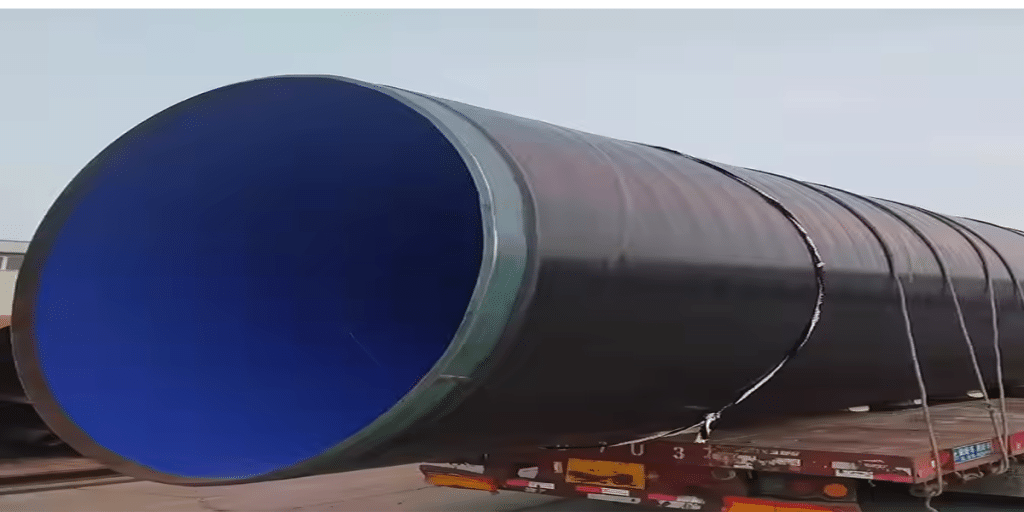
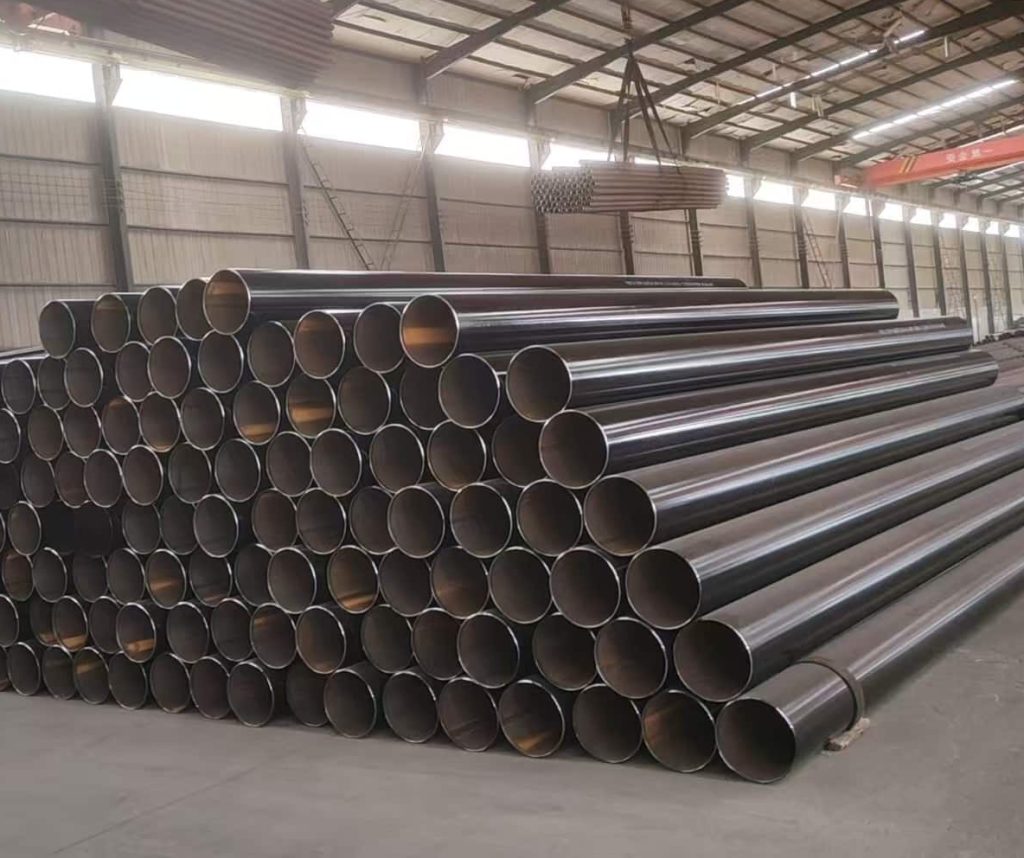
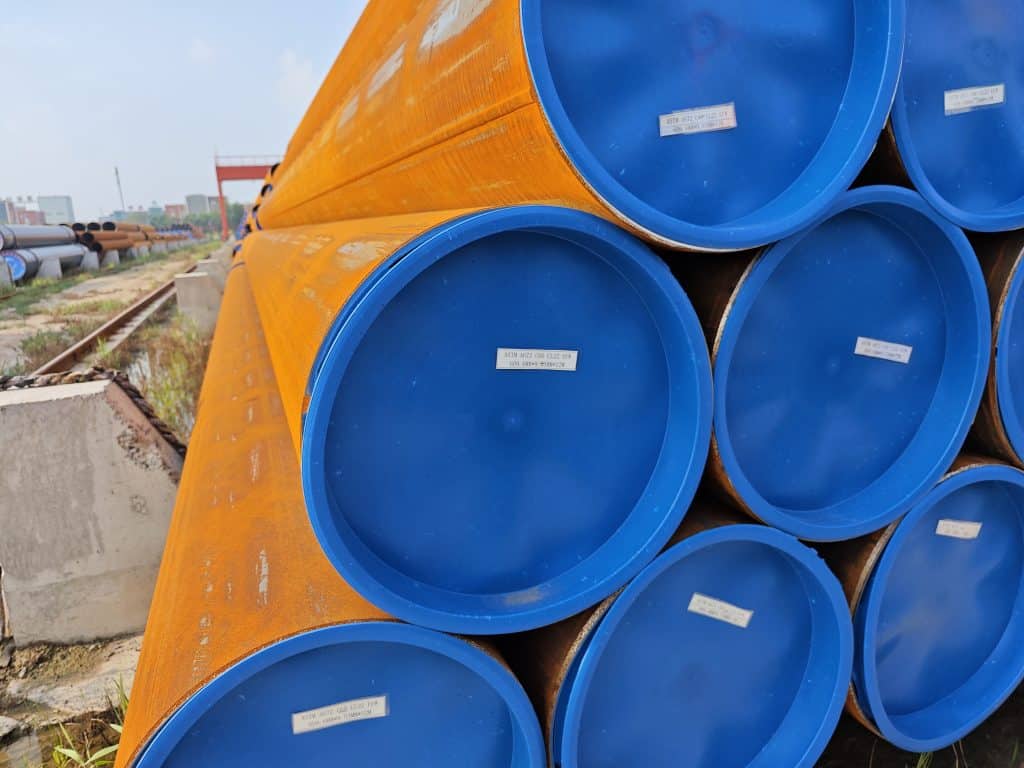
National standard GOST R 52079 Technical Conditions for Welded Steel Pipes for Trunk Gas Pipelines, Oil Pipelines and Petroleum Product Pipelines mainly specifies the pipeline steel grades as K34~K60, the maximum working pressure as 9.8MPa, and the minimum working temperature as -60℃. Scope of application: applicable to straight-seam and spiral-seam welded steel pipes with diameters of 114~1420mm for the construction and maintenance of long-distance gas pipelines, long-distance oil pipelines and long-distance petroleum product pipelines transporting non-corrosive products (natural gas, oil and petroleum products).
1.2 Industry Standards
Industry standards such as OTT-08.00-60.30.00-KTH-013-1-05 General Technical Specifications for Large-Diameter Oil Transmission Pipelines are applicable to single-seam or double-seam straight-seam submerged arc welded pipes and spiral-seam submerged arc welded pipes with diameters of 530~1220mm, designed and constructed in accordance with national standard GOST R 51858, transporting oil under a working pressure of 9.8MPa, and in accordance with СНиП 2.05.06-85* and СНиП ΙΙΙ-42-80* standards.
1.3 Technical Specifications
Project technical specification standards such as Ty 1381-003-47966425—2006 Technical Conditions for Straight-Seam Welded Steel Pipes with Diameters of 610~1420mm and Working Pressure Less Than 9.8MPa for Trunk Gas Transmission Pipelines are applicable to straight-seam submerged arc welded pipes with nominal outer diameters of 610~1420mm and working pressure less than 9.8MPa for trunk gas transmission pipelines produced by Inor Pipe Factory. Steel plates of grades K52, K55, K56 and K60 are adopted, and steel plates of grades X60, X65 and X70 in accordance with API 5L standard can also be used for manufacturing.
1.4 Other Standards
In addition, there are direct adoption of international standards. For example, GOST R ISO 3183—2009 Specification for Line Pipe (IDT ISO 3183—2007).
Summary of Russian Welding Standards
The Russian welding standard system is centered on NAKS certification, uniformly formulated and implemented by the Russian National Welding Administration, and has mandatory and authoritative characteristics. Its main features include:
- Process Standardization
Strictly regulate welding methods, material selection, equipment parameters and process procedures to ensure that welding quality meets design and national standards.
- Comprehensive Quality Control
Covers the entire process of weld appearance, strength testing, joint non-destructive testing, etc., with strict acceptance standards.
- Mandatory Certification of Personnel Qualifications
The NAKS welder certificate is the only legal qualification for employment in Russia, and it is necessary to pass a special examination to evaluate operational skills.
This system is enforced in Russia and gradually affects international welding technology cooperation (such as the docking of Sino-Russian association standards), highlighting its technical rigor and systematicness.