- 1. What Is Hot-Rolled Steel Pipe?
- 2. What Is Cold-Rolled Steel Pipe?
- 3. Core Differences: Cold-Rolled vs. Hot-Rolled Steel Pipe
- 4. Advantages and Limitations of Hot-Rolled Steel Pipe
- 5. Advantages and Limitations of Cold-Rolled Steel Pipe
- 6. Steel Pipe Testing Methods and Standard Requirements
- 7. Cold-Rolled or Hot-Rolled: How to Choose for Procurement
- 8. Why Global Customers Choose LONGMA
- 9. Conclusion
In industries such as oil and gas, building structures, pressure vessels, boiler heat exchange and machinery manufacturing, the manufacturing process of steel pipes directly determines product performance and service life. Among them, cold-rolled steel pipe and hot-rolled steel pipe are the two most common and easily confused process routes in procurement.
For overseas engineering buyers, EPC contractors and industrial equipment manufacturers, incorrect selection of steel pipe processes not only leads to cost waste but may also cause engineering risks such as welding failure, dimensional deviation and low-temperature cracking.
With over 20 years of manufacturing experience, LONGMA provides a comprehensive analysis of the differences between cold-rolled and hot-rolled steel pipes from multiple perspectives, including production process, performance differences, testing standards, application scenarios and procurement risk control, to help customers make professional procurement decisions.
What Is Hot-Rolled Steel Pipe?
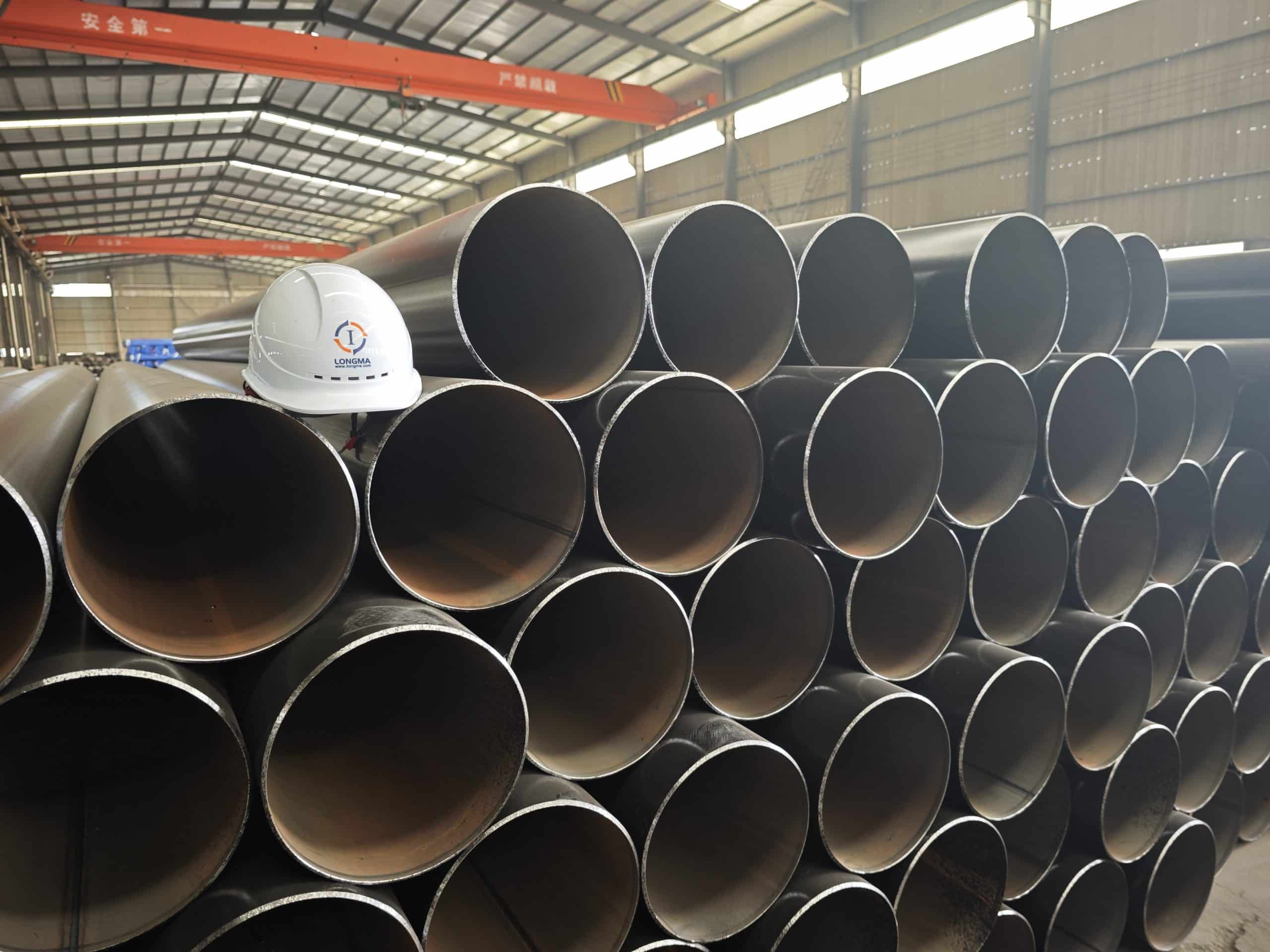
A hot-rolled steel pipe is produced by piercing, rolling and forming a steel billet at high temperatures (generally above the recrystallization temperature).
This process is widely used for:
- API 5L transmission line pipes
- ASTM A53/A53M-22 structural steel pipes
- ASTM A671/A671M fusion-welded pressure pipes
- ASTM A672 large-diameter high-pressure steel pipes
- ASME B16.25 weld bevel steel pipes
The hot-rolled process offers high production efficiency, low cost and suitability for large-diameter production, making it the dominant choice in oil and gas transmission.
What Is Cold-Rolled Steel Pipe?
A cold-rolled steel pipe is further cold-processed from hot-rolled steel pipe at room temperature.
Its main characteristics include:
- Higher dimensional accuracy
- Lower surface roughness
- Superior mechanical properties
- Tighter wall thickness control
Cold-rolled steel pipes are widely used for:
- Hydraulic equipment
- Precision machinery
- Automotive components
- Boiler heat exchange systems
- Stainless steel precision pipes
Cold working is commonly specified in standards such as ASTM A269, ASTM A213 and EN 10219-2:2019 for high-precision industrial piping.
Core Differences: Cold-Rolled vs. Hot-Rolled Steel Pipe
| Comparison Item | Hot-Rolled Steel Pipe | Cold-Rolled Steel Pipe |
| Production Temperature | Hot rolling (above recrystallization temp.) | Cold working (room temperature) |
| Dimensional Accuracy | Moderate | High |
| Surface Quality | With oxide scale | Smooth and fine |
| Mechanical Properties | Good toughness | Higher strength |
| Cost | Lower | Higher |
| Suitable Sizes | Economical for large diameters | Advantageous for small diameters |
| Weldability | Excellent | Good |
| Production Efficiency | High | Relatively low |
| Application Fields | Transmission pipelines, structural engineering | Precision equipment, hydraulic systems |
Advantages and Limitations of Hot-Rolled Steel Pipe
1.Main Advantages
(1) Ideal for Large-Diameter, Heavy-Wall Pipes
Large-diameter transmission pipes under standards such as API 5L-2018(1), ASTM A691/A691M-19 and DIN 30670-2012 typically use hot rolling.
Reasons:
- High forming efficiency
- High material utilization
- Suitable for long-distance transmission projects
- Strong cost control capability
LONGMA’s large-diameter LSAW pipes are widely used in:
- Oil and gas pipelines
- Offshore engineering
- Piling projects
- Urban water supply
(2) Stable Weldability
Hot rolling produces a more uniform grain structure, ensuring stable performance in:
- Submerged arc welding
- High-frequency welding
- Circumferential weld construction
This is especially critical for ASME BPVC Section IX welding procedure qualification.
2.Limitations
- Surface oxide scale
- Moderate wall thickness accuracy
- Higher surface roughness
- Post-production sandblasting or anti-corrosion treatment required
For high-cleanliness systems, further cold working or finishing is often needed.
Advantages and Limitations of Cold-Rolled Steel Pipe
1.Main Advantages
(1) High Dimensional Accuracy
Cold-rolled pipes offer significantly tighter tolerances than hot-rolled products.
EN 10219-2:2019 specifies strict precision requirements:
- Smaller outer diameter tolerance
- Tighter ovality control
- Higher wall thickness uniformity
This is vital for:
- Hydraulic cylinders
- Precision bearings
- Automated equipment
(2) Excellent Surface Quality
Cold rolling produces a smooth surface suitable for:
- Galvanizing
- Polishing
- Electroplating
- Precision welding
It is widely used in automotive manufacturing and stainless steel applications.
2.Limitations
- Higher production cost
- Longer lead time
- Difficulties in large-diameter production
- Higher residual stress
Not the optimal choice for large-scale transmission projects.
Steel Pipe Testing Methods and Standard Requirements
For buyers, understanding process differences is insufficient—verifying the manufacturer’s complete testing system is critical.
LONGMA operates an in-house laboratory qualified to conduct full quality inspections per:
- ASTM A516/A516M-17
- ASTM A671-2001
- ASTM A672-19(1)
- ISO 3183(1)
- NACE MR0175/ISO 15156 specifications
1. Ultrasonic Testing (UT)
Purpose
Detect:
- Delaminations
- Cracks
- Inclusions
- Incomplete penetration
Standards
Per API 5L PSL2 and ISO 3183:
- 100% UT inspection of welds
- Automatic UT scanning of pipe bodies
Procurement Risk Value
UT inspection directly determines suitability for high-pressure transmission systems.
2.Radiographic Testing (RT)
Purpose
Inspect internal weld defects:
- Porosity
- Incomplete fusion
- Cracks
Standards
ASME BPVC Section II Part C (2019) and ASME BPVC Section IX specify weld quality requirements.
LONGMA provides:
- Full weld RT
- Spot-check RT
- Digital imaging RT
3. Hydrostatic Test
Purpose
Verify pressure-bearing capacity and sealing performance.
Standards
ASTM A53/A53M-22 and API 5L mandate hydrostatic testing.
Procedure
- Seal pipe ends
- Fill with water and pressurize
- Hold pressure for inspection
- Check for leakage and deformation
A core quality control step for export steel pipe projects.
Cold-Rolled or Hot-Rolled: How to Choose for Procurement
Choose Hot-Rolled Steel Pipe For:
- Oil and gas transmission
- Large-diameter projects
- Bridge structures
- High-pressure pipelines
- Offshore engineering
Especially economical for API 5L, ASTM A671 and ASTM A691 projects.
Choose Cold-Rolled Steel Pipe For:
- Precision equipment
- Hydraulic systems
- Medical equipment
- Food-grade stainless steel systems
- High dimensional accuracy requirements
Widely specified under EN 10219-2:2019 and ASTM A269.
Why Global Customers Choose LONGMA
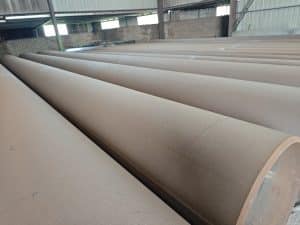
With over 20 years of experience, LONGMA operates mature hot-rolled and cold-rolled production lines and a comprehensive quality control system.
Core strengths:
- Strict adherence to API 5L-2018(1)
- Custom production per ASTM A671/A671M-19
- Complete in-house laboratory testing
- Extensive large-scale project experience
- Third-party inspection support (SGS/BV/TUV)
- Full MTC (material test certificate) provision
For international buyers, a reliable supplier not only “manufactures pipes” but also mitigates project risks.
Conclusion
Neither cold-rolled nor hot-rolled steel pipe is inherently superior—the choice depends on project requirements, budget and performance needs.
Choose hot-rolled if prioritizing:
- Cost control
- Large-diameter transmission
- Weld stability
Choose cold-rolled if prioritizing:
- Precision dimensions
- Surface quality
- Superior mechanical performance
With 20+ years of industry expertise, LONGMA delivers professional selection advice and high-quality steel pipe solutions tailored to standards and engineering needs, supporting global customers in building safer, more efficient and reliable projects.