- 1. What is ASTM A671 Steel Pipe?
- 2. Common Material Grades and Their Applications
- 3. ASTM A671 Class Designations and Heat Treatment Requirements
- 4. Mechanical Property Requirements
- 5. Non-Destructive Examination and Hydrostatic Testing
- 6. How LONGMA Controls ASTM A671 Steel Pipe Quality
- 7. Purchasing Advice: Don’t Compare Price Alone
- 8. Conclusion
In petrochemical plants, low-temperature storage and transportation systems, pressure vessel piping, and large-scale industrial pipeline projects, ASTM A671 steel pipe is widely used for high-pressure service at atmospheric and lower temperatures. Unlike conventional structural welded pipes, ASTM A671/A671M emphasizes comprehensive control over base plate quality, welding integrity, heat treatment, mechanical properties, and non-destructive examination (NDE). Therefore, buyers should evaluate more than just outside diameter, wall thickness, and price—they should also carefully verify the steel grade, Class designation, inspection documentation, and the manufacturer’s quality management system.
With over 20 years of manufacturing experience, LONGMA specializes in the production of round ERW and LSAW/EFW welded steel pipes. We provide professional material selection, heat treatment control, in-house laboratory testing, and third-party inspection support to help customers minimize procurement risks.
What is ASTM A671 Steel Pipe?
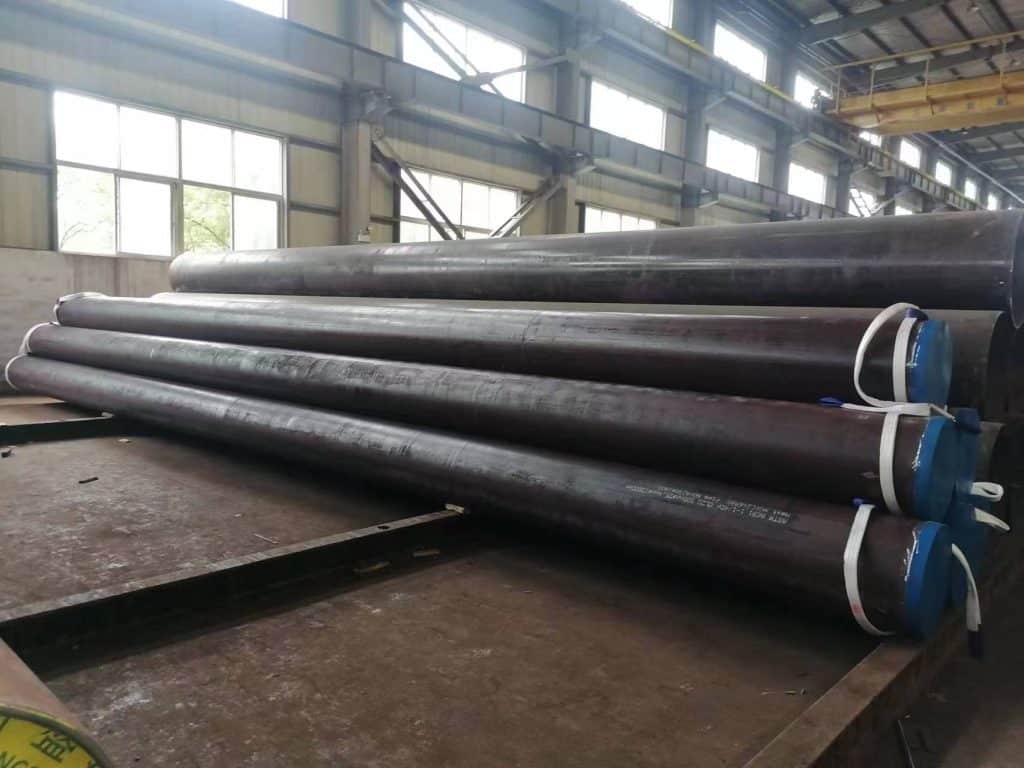
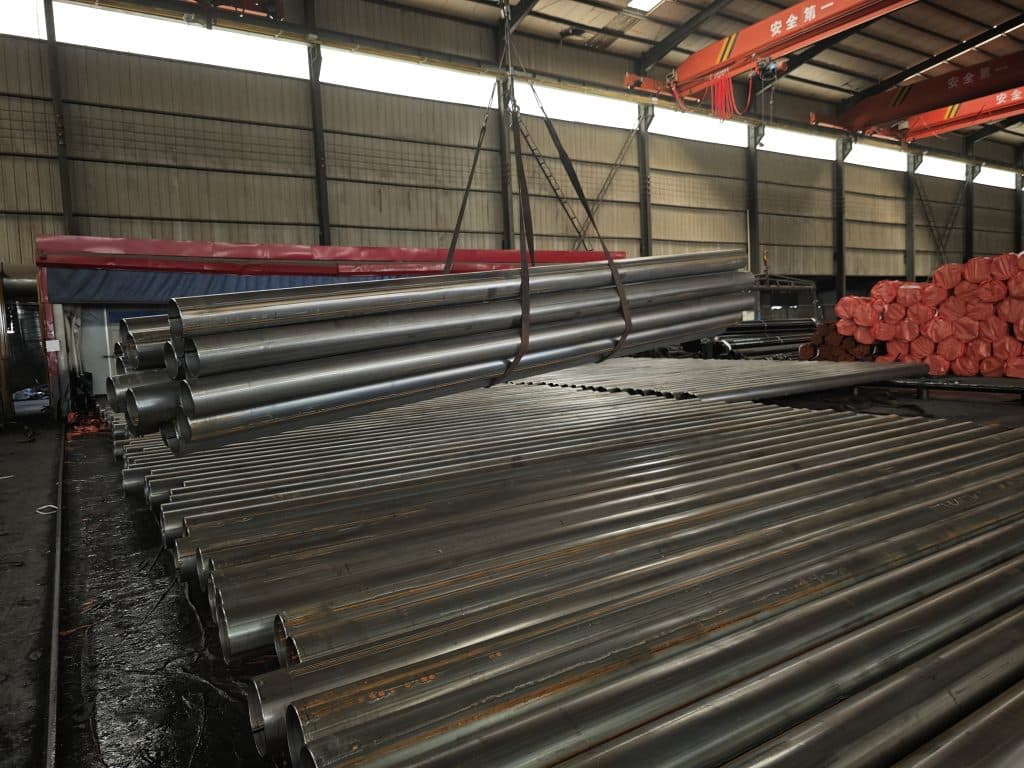
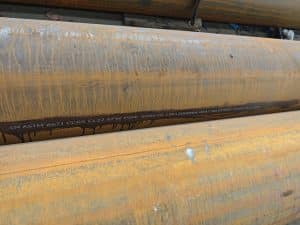
ASTM A671/A671M, titled Electric-Fusion-Welded Steel Pipe for Atmospheric and Lower Temperatures, covers electric-fusion-welded (EFW) steel pipes manufactured from pressure vessel quality steel plates using filler metal.
These pipes are commonly used in applications requiring excellent weld reliability and low-temperature toughness, including:
- LNG facilities
- Low-temperature storage tank piping
- Petrochemical processing plants
- Industrial pipe racks
- Power generation auxiliary piping
Section 1 of the standard defines the scope of application, while Section 1.3 classifies products using the Grade + Class designation.
- Grade specifies the base plate material and strength level.
- Class defines the required heat treatment, radiographic examination, and hydrostatic testing.
This classification is often overlooked by purchasers but has a significant impact on both product quality and pricing.
Common Material Grades and Their Applications
| Grade | Typical Plate Material | Characteristics | Typical Applications |
| CC60 | Medium-strength pressure vessel steel | Excellent weldability and economical | General process piping and pressure systems |
| CC65 | Higher-strength pressure vessel steel | Balanced strength and toughness | Petrochemical plants and storage systems |
| CC70 | High-strength steel plate | Higher pressure resistance with stricter welding requirements | High-pressure and large-diameter pipelines |
| CB60 / CB65 | Steel with enhanced low-temperature toughness | Better impact resistance at low temperatures | Cryogenic piping and cold-region projects |
Selecting the highest grade is not always the best solution.
For example, CC60 is often sufficient for standard pressure piping, while projects operating at low temperatures should focus on impact test temperature, absorbed energy, and heat treatment requirements.
For low-temperature pressure pipelines, toughness of the base metal, weld metal, and heat-affected zone (HAZ) is often more critical than tensile strength alone.
ASTM A671 Class Designations and Heat Treatment Requirements
The Class designation specifies whether the finished pipe requires heat treatment, radiographic examination, and hydrostatic testing.
Sections 1.3.2 and 1.3.3 define the meaning of each Class.
| Class | Heat Treatment | Radiographic Examination | Hydrostatic Test | Purchasing Considerations |
| 10/11/12/13 | Normally none | According to Class | According to Class | Suitable for standard industrial service |
| 20/21/22/23 | Stress-relief heat treatment | According to Class | According to Class | Reduces welding residual stress |
| 30/31/32/33 | Full normalizing | According to Class | According to Class | Improves microstructure and toughness |
| 40/41/42/43 | Normalize and temper | According to Class | According to Class | Suitable for more demanding pressure and temperature conditions |
| 50/51/52/53 | Quenched and tempered | According to Class | According to Class | Highest strength and toughness requirements |
The objective of heat treatment is not simply to increase hardness, but to:
- Improve weld and HAZ microstructure
- Relieve residual welding stresses
- Increase impact toughness
- Improve dimensional stability
For ASTM A671 pipe, heat treatment records should include:
- Furnace identification
- Heating curve
- Holding time
- Cooling method
- Batch traceability
LONGMA maintains complete heat treatment records in accordance with customer specifications and supplies them together with the Mill Test Certificate (MTC) for owner, EPC contractor, and third-party review.
Mechanical Property Requirements
ASTM A671 focuses on the following mechanical properties:
- Tensile strength
- Yield strength
- Elongation
- Guided bend performance
- Low-temperature impact toughness
For EFW steel pipes, compliance of the base plate alone is insufficient—the weld seam and heat-affected zone must also meet the specified requirements.
| Test | Purpose | Standard Requirement | Value for Buyers |
| Tensile Test | Verify strength and ductility | Base metal and welded joint must satisfy grade requirements | Prevent insufficient pressure capacity |
| Guided Bend Test | Evaluate weld ductility and fusion quality | No excessive cracks or open defects permitted | Detect brittle weld behavior |
| Impact Test | Verify low-temperature toughness | Conducted according to specified temperature | Essential for cryogenic service |
| Chemical Analysis | Verify chemical composition | Must comply with plate specification and purchase order | Prevent welding defects and property variations |
LONGMA’s in-house laboratory performs:
- Chemical analysis
- Tensile testing
- Bend testing
- Charpy impact testing
Complete traceability is maintained from the original steel plate heat number through the finished pipe, providing international buyers with greater confidence than pricing alone.
Non-Destructive Examination and Hydrostatic Testing
Chapter 9 of ASTM A671 specifies radiographic examination requirements. Certain Classes require 100% radiographic inspection of the weld seam.
Section 8.3 requires hydrostatic testing for applicable Classes in accordance with ASTM A530/A530M.
These inspections are essential for ensuring pressure integrity.
| Inspection Method | Purpose | Procedure | Detectable Defects |
| RT (Radiographic Testing) | Inspect internal weld quality | Exposure, image evaluation, acceptance | Porosity, slag inclusion, incomplete penetration |
| UT (Ultrasonic Testing) | Detect internal discontinuities | Scanning, defect location, recording | Lamination, cracks, lack of fusion |
| MT (Magnetic Particle Testing) | Detect surface defects | Magnetization, particle application, interpretation | Surface cracks and undercut |
| Hydrostatic Test | Verify pressure tightness | Pressurization, holding, leakage inspection | Leakage and inadequate strength |
To reduce procurement risks, purchasers should clearly specify during the inquiry stage:
- Required Class designation
- Radiographic examination percentage
- Hydrostatic test pressure
- Impact test temperature
- MTC requirements
- Third-party inspection requirements
Doing so prevents suppliers from lowering costs by reducing inspection scope.
How LONGMA Controls ASTM A671 Steel Pipe Quality
LONGMA’s competitive advantage lies not only in manufacturing experience but also in comprehensive process control.
Quality control includes:
- Incoming inspection of pressure vessel steel plates
- Verification of heat numbers, chemical composition, and mechanical properties
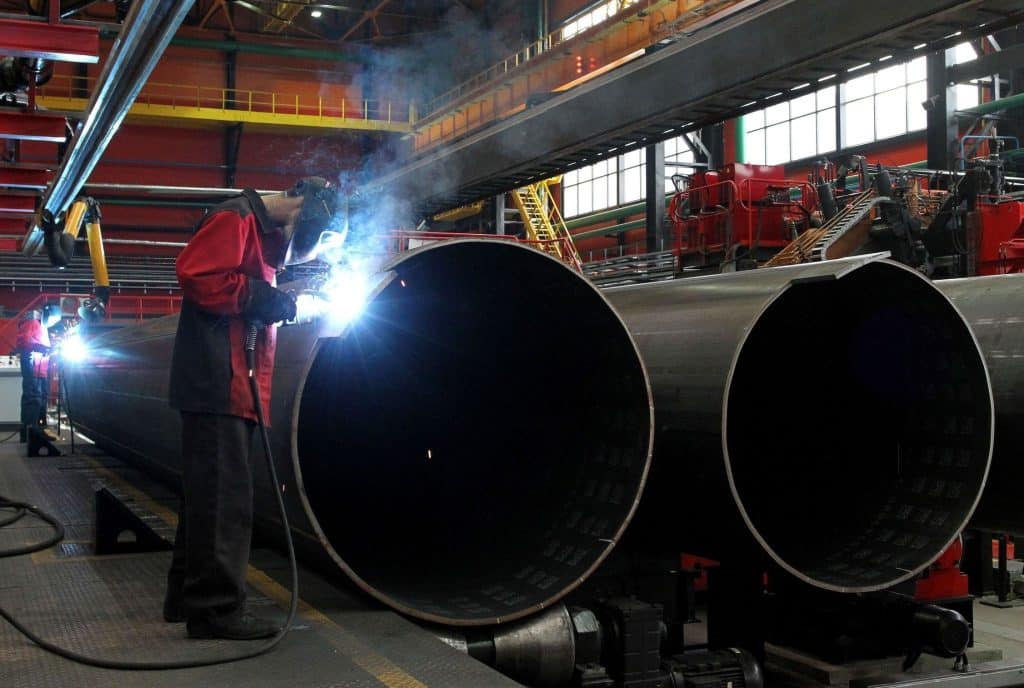
- Welding parameter control
- Groove preparation
- Interpass temperature monitoring
- Heat treatment according to customer specifications
- Preservation of heat treatment records
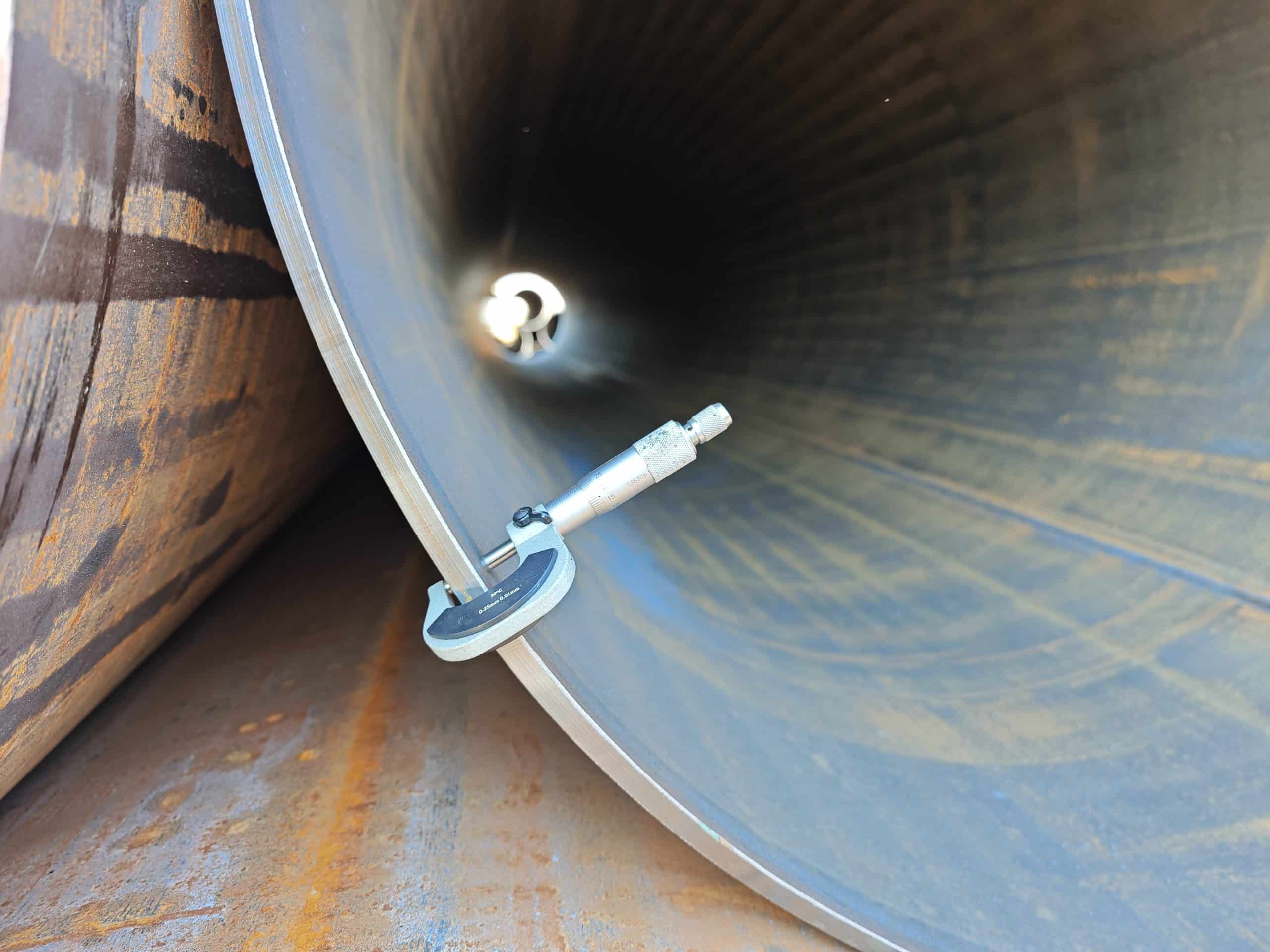
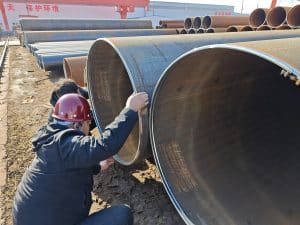
- Final inspection by the in-house laboratory and NDT department
For ASTM A671 projects, LONGMA provides complete documentation including:
| Document | Contents | Purpose |
| Mill Test Certificate (MTC) | Chemical composition, mechanical properties, heat treatment | Material compliance |
| NDT Report | RT, UT, MT results | Weld quality verification |
| Hydrostatic Test Report | Test pressure, holding time, results | Pressure integrity verification |
| Dimensional Inspection Report | OD, WT, Length, Ovality | Installation compatibility |
| Third-Party Inspection Report | SGS, BV, TÜV, etc. | Project acceptance support |
Purchasing Advice: Don’t Compare Price Alone
Low prices for EFW welded steel pipes often result from one or more of the following:
- Lower-grade materials
- Omitted heat treatment
- Reduced inspection requirements
While this may reduce initial procurement costs, it can eventually lead to:
- Weld cracking
- Brittle fracture at low temperatures
- Costly field repairs
- Project acceptance delays
For low-temperature pressure piping, buyers should carefully evaluate whether the supplier possesses:
- Heat treatment capability
- In-house testing laboratory
- Complete NDT facilities
- Export documentation experience
LONGMA assists customers in selecting the appropriate Grade, Class, dimensions, inspection requirements, and documentation in accordance with ASTM A671/A671M, ASME B31.3, and project specifications.
Through fully traceable manufacturing, rigorous inspection, and professional engineering support, we help customers reduce procurement risks.
Conclusion
ASTM A671 represents much more than a steel pipe specification—it is a complete quality assurance system covering materials, welding, heat treatment, inspection, and traceability.
Selecting the correct Grade and Class, together with appropriate heat treatment and inspection requirements, is essential for ensuring the long-term safety and reliability of pressure piping systems.
With more than 20 years of manufacturing experience, LONGMA is committed to supplying reliable round welded steel pipe solutions to customers worldwide. Contact our technical team today for detailed product information, inspection sample reports, or a customized quotation.