- 1. Understanding ASTM A572 Grade 50 and API 5L X52
- 2. ASTM A572 Grade 50 vs API 5L X52: Key Differences
- 3. Mechanical Properties Comparison
- 4. Which Material Is Better for Large Diameter LSAW Steel Pipes?
- 5. Welding Performance Comparison
- 6. Inspection Requirements: Why API 5L Is More Comprehensive
- 7. LONGMA’s Internal Laboratory: Delivering Reliable Quality
- 8. Common Purchasing Mistakes
- 9. Why Global Buyers Choose LONGMA
- 10. Conclusion
Selecting the right material for large diameter steel pipes is one of the most critical decisions in infrastructure, energy, bridge, and marine engineering projects. Two material specifications are frequently discussed during project design and procurement: ASTM A572 Grade 50 and API 5L X52.
Although both materials offer excellent strength and weldability, they are developed for different engineering purposes. Choosing the wrong material may lead to unnecessary costs, design modifications, or even project approval issues.
As a professional ERW and LSAW steel pipe manufacturer with more than 20 years of experience, LONGMA helps EPC contractors, distributors, and project owners select the most suitable material based on actual service conditions rather than simply comparing mechanical properties. This article explains the differences between ASTM A572 Grade 50 and API 5L X52, helping buyers make informed purchasing decisions.
Understanding ASTM A572 Grade 50 and API 5L X52
Before comparing their performance, it is important to understand that these two specifications belong to different categories.
ASTM A572 Grade 50 is a high-strength low-alloy (HSLA) structural steel material specification covering plates, shapes, and bars. It is commonly used as the parent material for manufacturing large diameter LSAW steel pipes, bridge components, offshore structures, and heavy steel fabrications.
API 5L X52, on the other hand, is a pipeline steel pipe specification developed specifically for transporting oil, natural gas, water, slurry, and other fluids under pressure. It defines not only the chemical composition and mechanical properties but also manufacturing methods, inspection procedures, dimensional tolerances, and testing requirements for finished pipes.
Therefore, one important fact should be clarified:
ASTM A572 Grade 50 is a material specification, while API 5L X52 is a finished pipe specification.
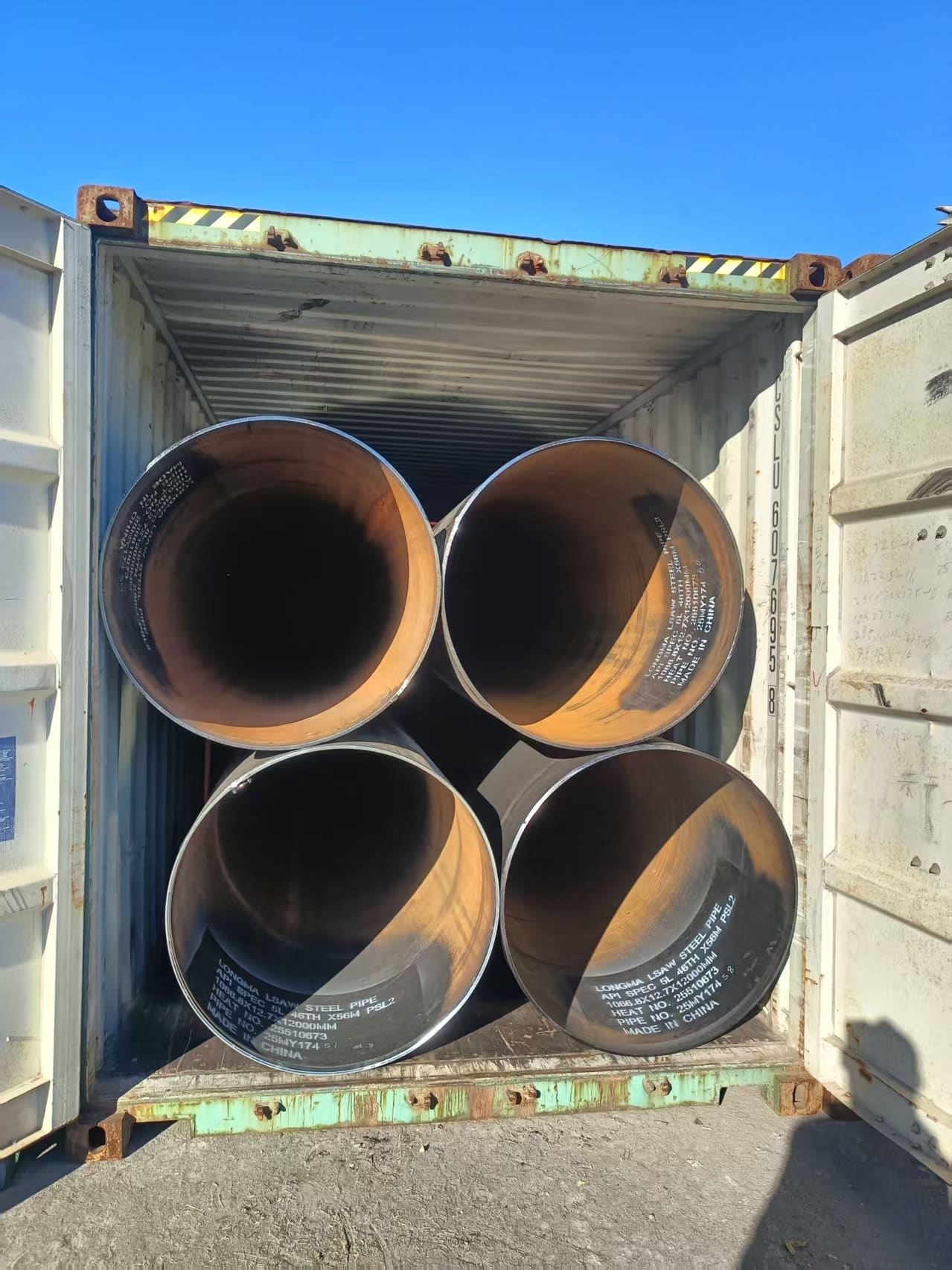
Many international projects manufacture LSAW pipes using ASTM A572 Grade 50 steel plates, but the finished pipes are still required to comply with API 5L or project-specific pipeline standards.
ASTM A572 Grade 50 vs API 5L X52: Key Differences
| Item | ASTM A572 Grade 50 | API 5L X52 |
|---|---|---|
| Standard Type | Structural steel material specification | Line pipe specification |
| Product Form | Steel plate, shapes, bars | Seamless & welded steel pipes |
| Minimum Yield Strength | 345 MPa (50 ksi) | 359 MPa (52 ksi) |
| Primary Application | Structural fabrication | Fluid transportation pipelines |
| Manufacturing Scope | Parent material | Finished steel pipe |
| Inspection Coverage | Material properties | Material + pipe manufacturing + NDT + hydrostatic testing |
Although API 5L X52 offers slightly higher minimum yield strength, the difference is relatively small. The key distinction lies in the intended application rather than mechanical strength alone.
Mechanical Properties Comparison
| Property | ASTM A572 Grade 50 | API 5L X52 PSL2 |
|---|---|---|
| Yield Strength | ≥345 MPa | ≥359 MPa |
| Tensile Strength | 450–620 MPa | 455–760 MPa |
| Weldability | Excellent | Excellent |
| Low Temperature Performance | Good | Better impact requirements under PSL2 |
| Formability | Excellent | Excellent |
For structural projects, ASTM A572 Grade 50 provides excellent strength-to-weight performance, making it ideal for reducing steel consumption while maintaining structural integrity.
For long-distance pipelines, API 5L X52 provides stricter requirements for fracture toughness, pressure performance, chemical composition control, and pipe manufacturing quality.
Which Material Is Better for Large Diameter LSAW Steel Pipes?
The answer depends entirely on the project requirements.
Choose ASTM A572 Grade 50 When:
- Manufacturing bridge tubular members
- Structural columns
- Offshore platforms
- Wind tower foundations
- Marine structures
- Pipe piles
- Large structural tubular sections
These projects emphasize structural strength rather than internal pressure.
Choose API 5L X52 When:
- Oil transmission pipelines
- Natural gas pipelines
- Water transmission systems
- Slurry pipelines
- District heating systems
- Petrochemical facilities
These applications require compliance with pipeline design codes and pressure-service standards.
For many bridge and marine projects, LONGMA manufactures LSAW steel pipes using ASTM A572 Grade 50 plates, while for oil and gas transmission projects, production strictly follows API 5L PSL1 or PSL2 requirements.
Welding Performance Comparison
Both materials are recognized for their excellent weldability due to their controlled carbon equivalent (CE).
However, API 5L introduces additional welding qualification requirements because pipeline integrity is directly related to operational safety.
Typical welding quality controls include:
- Welding Procedure Specification (WPS)
- Procedure Qualification Record (PQR)
- Welder Qualification
- Heat input control
- Post-weld inspection
- Repair welding qualification
For structural steel fabricated from ASTM A572 Grade 50, welding procedures are generally established according to AWS D1.1 or project specifications.
Inspection Requirements: Why API 5L Is More Comprehensive
Many buyers compare only yield strength while overlooking quality assurance requirements.
API 5L requires extensive testing on finished pipes, whereas ASTM A572 primarily verifies the parent material.
| Inspection Method | ASTM A572 Grade 50 | API 5L X52 |
|---|---|---|
| Chemical Analysis | ✔ | ✔ |
| Tensile Test | ✔ | ✔ |
| Charpy Impact Test | Project requirement | Mandatory for many PSL2 applications |
| Hydrostatic Test | Usually not applicable | Mandatory unless otherwise specified |
| Ultrasonic Testing (UT) | Plate inspection if required | Pipe body and weld inspection |
| Radiographic Testing (RT) | Project requirement | Weld inspection where applicable |
| Dimensional Inspection | Material dimensions | Finished pipe tolerances |
| Non-Destructive Testing | Optional | Comprehensive quality control |
This is why API 5L pipes generally command higher prices than structural pipes manufactured from ASTM A572 plates.
LONGMA’s Internal Laboratory: Delivering Reliable Quality
For international EPC projects, inspection capability is often more important than the material itself.
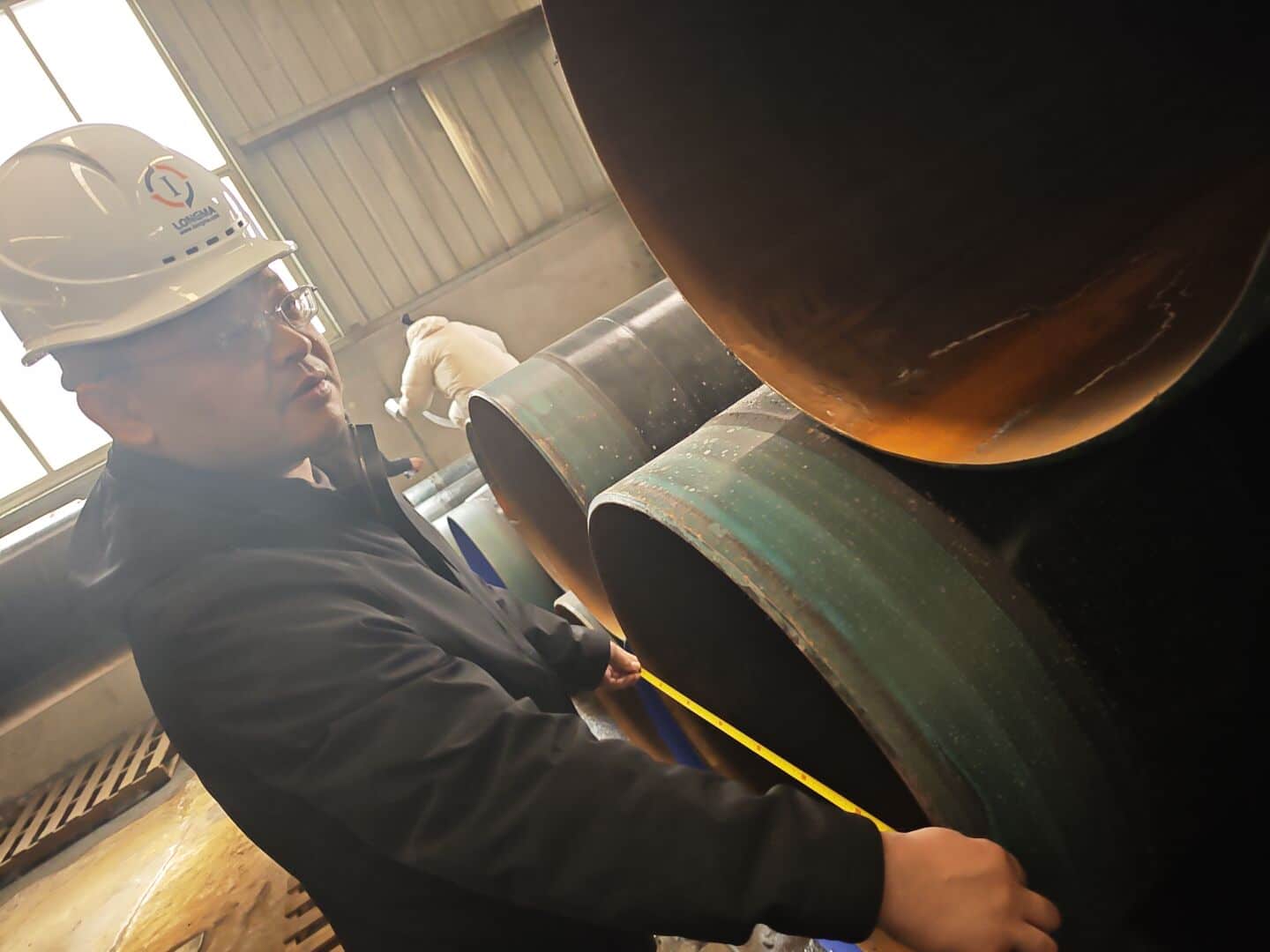
LONGMA operates a comprehensive in-house laboratory covering every stage of production, including:
- Raw material verification
- Spectrometer chemical analysis
- Tensile testing
- Charpy impact testing
- Ultrasonic testing (UT)
- Radiographic testing (RT)
- Magnetic particle testing (MT)
- Hydrostatic pressure testing
- Dimensional inspection
- Weld seam visual inspection
Each production batch is fully traceable from steel plate to finished pipe through heat numbers, production records, inspection reports, and EN 10204 3.1 Material Test Certificates. Third-party inspections by SGS, BV, TÜV, DNV, and other internationally recognized organizations are also available upon request.
Common Purchasing Mistakes
Many overseas buyers mistakenly assume ASTM A572 Grade 50 and API 5L X52 are interchangeable because their yield strengths are similar.
In reality, procurement should consider:
| Procurement Checklist | Recommendation |
|---|---|
| Service Condition | Structural or pressure service? |
| Applicable Standard | Material specification or finished pipe specification? |
| Manufacturing Method | ERW or LSAW |
| Steel Plate Source | Mill certificates available? |
| Inspection Level | PSL1, PSL2, or project specification |
| Coating | Bare, FBE, 3LPE, 3PP |
| Documentation | MTC, NDT reports, third-party inspection |
Clarifying these technical details before production significantly reduces procurement risks and prevents costly project delays.
Why Global Buyers Choose LONGMA
With over 20 years of manufacturing experience, LONGMA specializes in ERW and LSAW large diameter steel pipes for infrastructure and energy projects worldwide.
Our advantages include:
- High-quality steel plates sourced from leading mills
- Advanced JCOE and LSAW manufacturing technology
- Comprehensive in-house laboratory
- Strict compliance with API, ASTM, EN, and ISO standards
- Complete traceability from raw material to finished product
- Third-party inspection support
- Rich experience supplying international EPC projects
Whether your project requires structural steel pipes manufactured from ASTM A572 Grade 50 or transmission pipelines complying with API 5L X52, LONGMA provides tailored manufacturing solutions that balance quality, cost efficiency, and reliable delivery.
Conclusion
Although ASTM A572 Grade 50 and API 5L X52 exhibit similar strength levels, they are designed for fundamentally different purposes. ASTM A572 Grade 50 is an excellent structural steel material widely used for manufacturing large-diameter LSAW steel pipes in bridge, marine, and construction projects, while API 5L X52 is specifically developed for pressure-service pipeline systems.
Rather than selecting materials based solely on yield strength, project owners should evaluate service conditions, applicable standards, inspection requirements, and supplier capabilities.
If you are looking for a trusted manufacturer of large diameter LSAW steel pipes, ASTM A572 Grade 50 structural pipes, or API 5L X52 line pipes, contact LONGMA today. Our engineering team is ready to provide professional material selection advice, technical documentation, inspection support, and competitive quotations to help ensure the success of your next project.