- 1. What Is API 5L PSL1 Pipe?
- 2. 6 Key Technical Differences at a Glance
- 3. Why PSL2 Exists: Failure Cases Behind the Spec
- 4. Chemical Composition and CEV: What Changes Between PSL1 and PSL2?
- 5. Service Condition Decision Matrix: Which Level Fits Your Project?
- 6. How Should Buyers Verify ERW and LSAW PSL2 Compliance?
- 7. Conclusion
- 8. FAQ
- 9. Ready to Specify the Right Pipe for Your Pipeline Project?
API Spec 5L identifies two product specification levels (PSL 1 and PSL 2) for seamless and welded line pipe used in petroleum and natural-gas pipeline transportation. This guide explains how a buyer should distinguish them and what to confirm in a project specification. Always use the edition of API Spec 5L cited by the contract; API announced the 47th edition in June 2026.
What Is API 5L PSL1 Pipe?
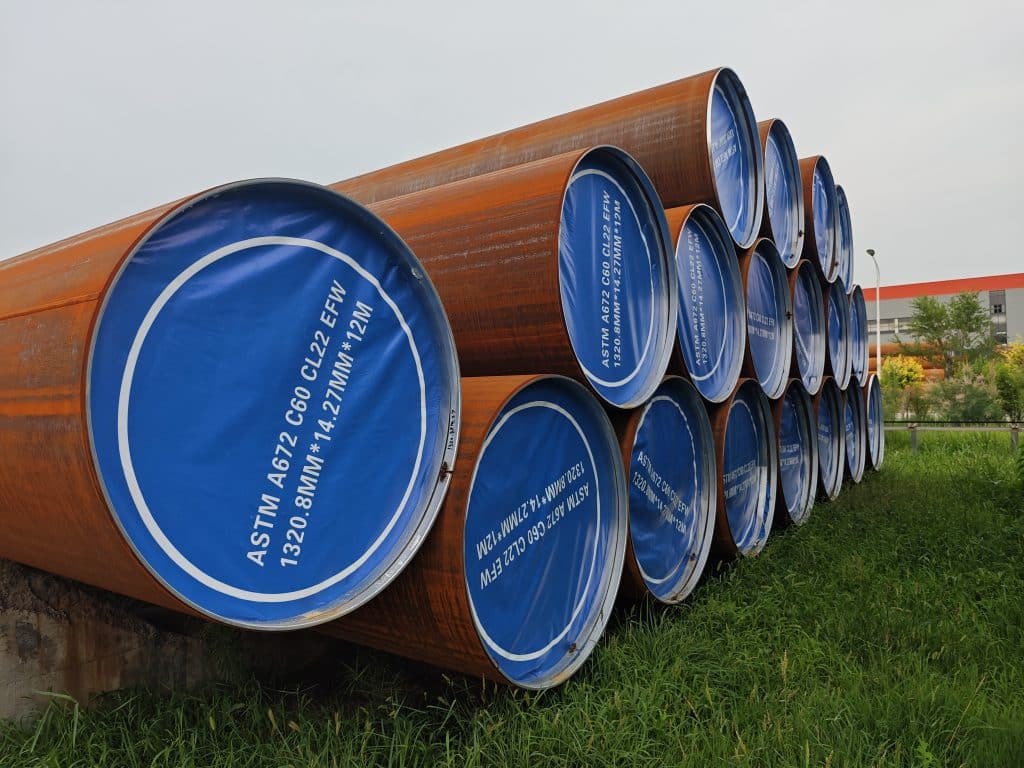
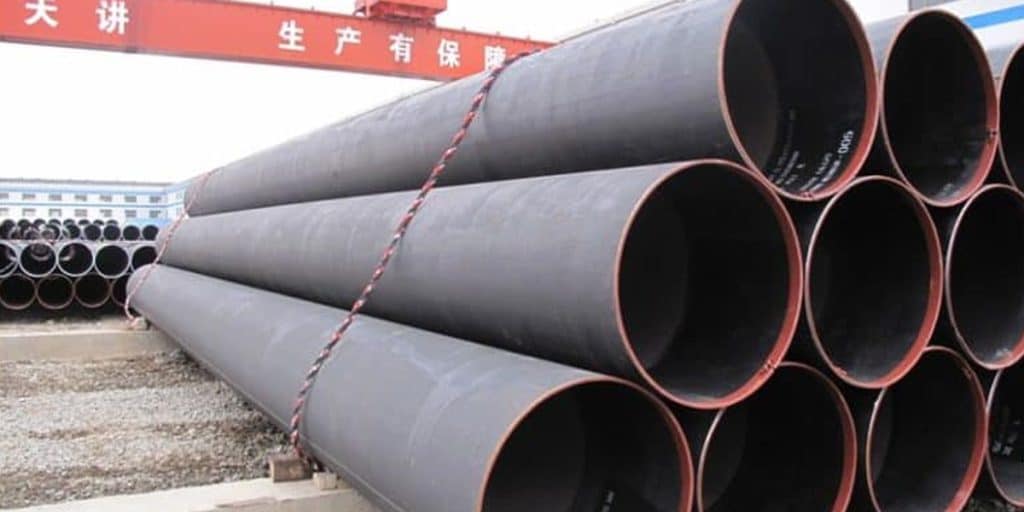
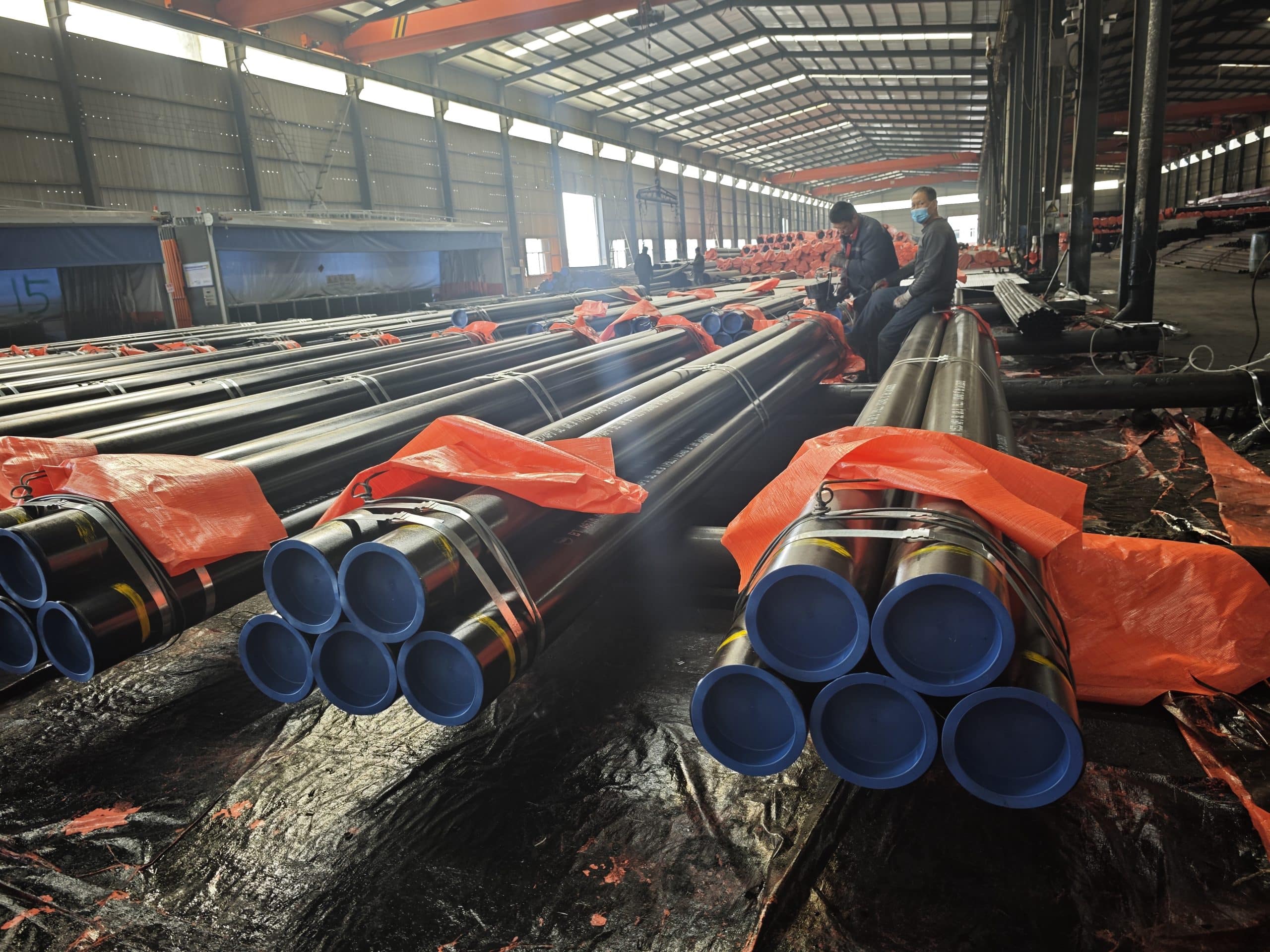
API Spec 5L covers seamless and welded line pipe for pipeline transportation systems in the petroleum and natural-gas industries. PSL 1 and PSL 2 are two product specification levels under that standard. The applicable grade range, delivery condition, dimensions, test scope and supplementary requirements must be read from the governing edition and purchase order; do not infer them from a general comparison article.
6 Key Technical Differences at a Glance
Buyers comparing an API 5L PSL1 pipe against a PSL2 equivalent usually ask for one comparison table before they ask anything else. Here is the side-by-side breakdown engineers request most often during technical review.
| Requirement | PSL1 | PSL2 |
| Quality-control level | Baseline API 5L requirements for the ordered product. | Additional requirements and controls for applicable products; verify the current standard and PO. |
| Chemistry and weldability | Requirements depend on grade and ordered product. | More prescriptive controls may apply; confirm formulae and limits from the governing edition. |
| Toughness / fracture control | Only when specified or otherwise required. | Requirements apply for applicable products, with details set by standard and project specification. |
| Inspection and hydrotest | Scope follows API 5L and the order. | May include additional scope; do not assume a universal 100% requirement. |
| Ordering advice | State grade, size, process and service conditions. | State grade, PSL2, annexes, service conditions and required documentation. |
State the line-pipe grade, PSL level, manufacturing route, dimensions, delivery condition, service conditions and any supplementary annexes in the RFQ. The grades available under each PSL are defined by the governing edition of API Spec 5L and the supplier’s qualified capability.
Why PSL2 Exists: Failure Cases Behind the Spec
PSL 2 is a distinct product specification level with requirements beyond PSL 1 for applicable products. Its purpose is not a substitute for project-specific engineering, fracture-control assessment or material qualification.
Brittle Fracture and Notch Toughness Lessons
Pipeline operators in cold climates and high-pressure transmission service use specified toughness requirements to help manage brittle-fracture risk. A project specification should define the required test temperature, specimen orientation, acceptance criteria and any fracture-control requirements. These values must not be assumed from PSL designation alone.
For PSL2, impact-test, DWTT and related fracture-control requirements must be confirmed against the applicable edition of API 5L and the project specification. Test temperature, absorbed-energy criteria, specimen orientation, wall-thickness triggers and test frequency vary by product and contract requirements. Request the applicable test plan and the underlying results, not only a pass/fail statement.
- Drop-weight tear testing (DWTT) applies once wall thickness crosses a defined threshold, measuring resistance to unstable fracture propagation rather than crack initiation alone.
- API 5L PSL1 and PSL2 are distinct product specification levels. PSL2 introduces additional requirements in areas such as chemical control, toughness, traceability and inspection; the exact test scope depends on grade, size, manufacturing route, applicable annexes and the purchase specification. It is therefore important to state both the grade and PSL level in every RFQ and purchase order.
A complete material requisition and document-review checklist helps reduce the risk of non-conforming supply or avoidable clarification during third-party inspection.
Offshore and Sour Service Incidents
Sour-service and offshore applications require separate material selection and qualification. Tensile and yield results alone do not establish resistance to mechanisms such as sulfide stress cracking or hydrogen-induced cracking.
Common sour-service damage mechanisms include sulfide stress cracking (SSC), hydrogen-induced cracking (HIC) and stress-oriented hydrogen-induced cracking (SOHIC). The applicable qualification and acceptance requirements must be defined in the project specification.
- Sulfide stress cracking (SSC) attacks high-hardness zones under tensile stress, so PSL2 sour pipe carries hardness ceilings the base PSL2 spec does not otherwise require.
- Hydrogen-induced cracking (HIC) forms internal blistering and stepwise cracks from hydrogen trapped at non-metallic inclusions, which is why clean-steel practice and low sulfur content matter as much as strength.
- Stress-oriented hydrogen-induced cracking (SOHIC) combines both mechanisms near the weld zone, making seam quality on ERW and LSAW pipe a direct sour-service risk factor.
PSL designation alone does not establish suitability for sour or subsea service. Specify the applicable sour-service or offshore requirements separately and obtain evidence of compliance for the ordered product.
Chemical Composition and CEV: What Changes Between PSL1 and PSL2?
Carbon Equivalent Limits by Wall Thickness
PSL2 applies more prescriptive chemistry and carbon-equivalent controls than PSL1 for applicable grades and product conditions. The relevant carbon-equivalent formula, limits and product-analysis rules should be confirmed from the governing API 5L edition and the purchase specification, especially where field weldability or sour-service performance is critical.
Where field welding is planned, the purchaser and welding engineer should review the relevant chemical data, welding procedure requirements and project acceptance criteria before procurement.
Charpy V-Notch Impact Testing Requirements
PSL2 introduces impact-toughness requirements for applicable products, but the required sampling, orientation, temperature and acceptance criteria are determined by the governing standard, pipe characteristics and contract requirements. For welded pipe, project specifications may also require testing of weld and heat-affected-zone locations.
The manufacturing and test plan for PSL2 product must be agreed against the governing API Spec 5L edition, manufacturing route and project requirements. It should identify required tests, sampling, acceptance criteria, inspection documents and hold points.
- Test sampling and coupon location: follow the governing standard and approved inspection and test plan.
- Impact testing, where required: follow the approved test plan for temperature, orientation, sampling and acceptance criteria.
- Weld and heat-affected-zone testing, where required: follow the approved test plan and applicable product requirements.
- DWTT or other fracture-control testing, where required: follow the governing standard and project specification.
- Acceptance and retest disposition: follow the governing standard and agreed purchase requirements.
Requesting the raw Charpy data sheet, not just a pass/fail summary, lets a quality manager confirm the actual joule values against project specification rather than trusting a one-line certificate statement.
Service Condition Decision Matrix: Which Level Fits Your Project?
When PSL1 Is Enough
Whether PSL1 is suitable is a project decision. The designer and purchaser should consider the governing code, fluid, pressure, temperature, consequences of failure, welding, corrosion, fracture-control needs and owner requirements.
A purchaser considering PSL1 should confirm the following with the design authority and owner before ordering:
- The design code, pressure, temperature and fluid have been reviewed by the responsible engineer.
- Environmental, installation and consequence-of-failure conditions have been evaluated.
- Any corrosive or sour-service exposure has been assessed and addressed separately.
- The owner’s specification, applicable code and purchase order do not require additional controls.
- The supplier has confirmed that the proposed product and documentation meet the approved requisition.
The purchase order should retain the same technical requirements as the approved requisition, including documentation and traceability.
When PSL2 Becomes Mandatory
High-pressure transmission, offshore or low-temperature service often leads owners and EPC contractors to specify PSL2, but no article can replace the governing design code, operator specification and project material requisition. Confirm the required PSL level, supplementary annexes, NDT scope and qualification documents before bid submission.
The following conditions warrant an early review of whether PSL2 and supplementary requirements are needed; they do not by themselves replace the governing project specification:
- Transmission-pipeline projects subject to applicable national or local regulation.
- Offshore, subsea or other high-consequence installations.
- Higher-grade line pipe or other grades for which the governing standard specifies particular product requirements.
- Low-temperature environments or routes requiring fracture-control assessment.
- Owner or EPC specifications that explicitly call for PSL2 or supplementary annexes.
Confirm the selected level and supplementary requirements before bid submission; an unverified default can create cost, schedule or compliance risk.
Sour Service and NACE MR0175 Considerations
For H2S-containing service, PSL2 alone does not establish sour-service suitability. The purchaser should specify the applicable sour-service standard, exposure conditions, material qualification requirements and any hardness, HIC/SSC or weld-zone testing requirements. Final acceptance must follow the project material specification and applicable NACE/ISO requirements.
How Should Buyers Verify ERW and LSAW PSL2 Compliance?
ERW Manufacturing for PSL2 Compliance
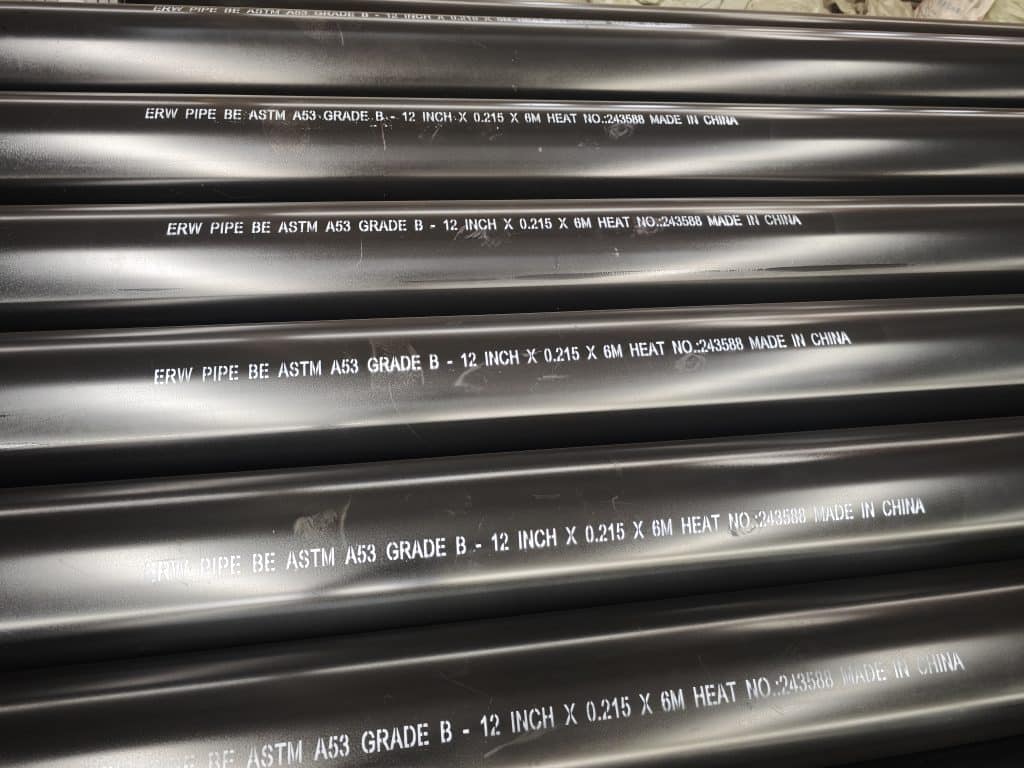
For any proposed ERW product, confirm the manufacturer’s qualified process, applicable product range, inspection and test plan, and documentation against the purchase order. Do not rely on generic process descriptions as evidence of compliance.
The approved manufacturing route and inspection/test sequence for ERW PSL2 product must be confirmed with the manufacturer for the ordered size, grade and requirements.
The purchaser should define the inspection documents, traceability records and any third-party hold or witness points required before production begins.
LSAW Manufacturing for Large-Diameter PSL2 Pipe
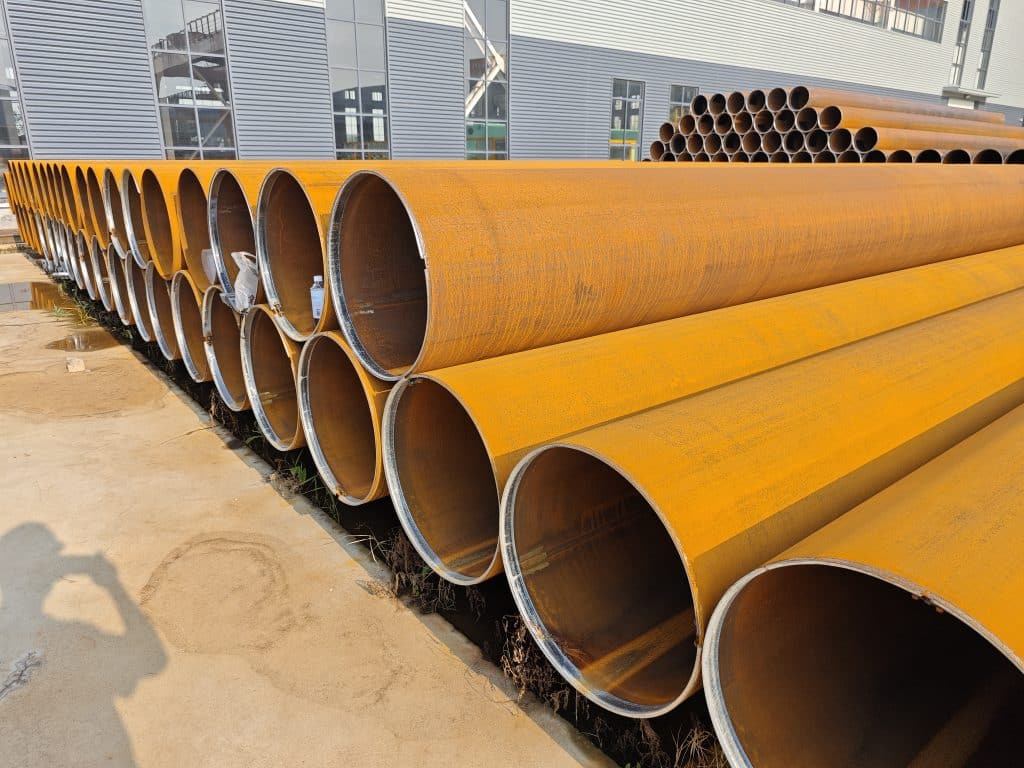
For any proposed LSAW product, confirm the qualified manufacturing route, available size range, inspection and testing scope, and documentation against the purchase order.
The LSAW manufacturing and inspection sequence must be confirmed with the manufacturer for the ordered product and project requirements.
- Plate inspection and edge preparation: follow the approved manufacturing and inspection plan.
- Forming: follow the qualified manufacturing route approved for the ordered product.
- Seam welding: follow the qualified welding procedures and applicable acceptance criteria.
- Mechanical expansion, where used: follow the approved manufacturing procedure.
- Non-destructive examination: apply the scope and acceptance criteria required by the standard and purchase order.
- Hydrostatic testing, where required: follow the governing standard and purchase requirements.
Lead time must be confirmed in the supplier’s quotation after reviewing the size, grade, testing, coating, documentation and delivery requirements.
Conclusion
PSL1 and PSL2 are distinct product specification levels. Select the required level only after reviewing the governing edition of API Spec 5L, the project specification and the intended service. The supplier’s quotation and inspection documents should identify the actual product, tests and records supplied.
FAQ
Can PSL1 pipe be upgraded to PSL2 after manufacturing?
In general, pipe already produced and certified only as PSL1 should not be represented as PSL2. Some additional testing may be possible only where the original material, manufacturing records, sampling and contract requirements demonstrably support it; the mill and purchaser must confirm this against API 5L and the project specification before making any claim.
Does PSL2 pipe automatically include sour service resistance?
No. PSL2 is a mechanical and chemical quality tier, while sour service resistance comes from separate compliance with NACE MR0175/ISO 15156. A project needing H2S resistance should specify both PSL2 and the sour-service annex or standard together in the purchase order.
What grades are available in PSL2 but not PSL1?
Grade X80 ships as PSL2 only, since the specification does not define a PSL1 version of X80. Grades from B through X70 are available in either level, so the buyer must state the PSL designation explicitly on every order.
How long does PSL2 pipe take to deliver compared to PSL1?
PSL2 may require a longer lead time than a comparable PSL1 order because of additional controls and testing. Actual availability depends on size, wall thickness, grade, manufacturing route, coating, testing scope and mill schedule; confirm it in the quotation rather than relying on generic delivery estimates.
Is API Monogram certification required for PSL2 pipe?
API Monogram status is a contractual requirement only when specified by the purchaser, owner or applicable project requirement. Verify the manufacturer’s current licensed scope directly with API and against the order requirements.
Ready to Specify the Right Pipe for Your Pipeline Project?
For a technical quotation, provide the project specification and identify service conditions, size, wall thickness, grade, PSL level, manufacturing route, delivery condition, coating, supplementary requirements and documentation. The supplier should confirm only the capability and compliance it can substantiate in the quotation and final inspection documents.