- 1. Why Do Welding Parameters Matter to Corrosion Resistance?
- 2. ERW/HFW and LSAW Require Different Parameter Control
- 3. How Can Welding Discontinuities Affect Corrosion Risk?
- 4. What Inspection Methods Help Control Welding Quality?
- 5. Corrosion Resistance Also Depends on the Service Environment
- 6. LONGMA’s Quality Control Approach: From Process Parameters to Traceability
- 7. How Can Buyers Reduce Welding and Corrosion-Related Procurement Risks?
- 8. Why Choose LONGMA for Welded Steel Pipe?
- 9. Conclusion
For oil and gas pipelines, water transmission systems, chemical processing facilities, and other industrial applications, corrosion resistance is an important factor in determining the long-term reliability of welded steel pipe. While steel grade, chemical composition, service environment, and external or internal corrosion protection all play important roles, welding quality should not be overlooked.
Welding parameters influence the weld thermal cycle, weld geometry, microstructure, residual stress, and the potential formation of welding discontinuities. Under specific service conditions, these factors can affect the corrosion behavior of the welded joint.
However, it is important to avoid a common misconception: pipeline corrosion resistance is not determined by welding parameters alone. A reliable assessment requires consideration of the material, welding process, weld integrity, and actual service environment.
For steel pipe buyers, the key question is therefore not simply “What welding parameters do you use?” but rather:
Are the welding parameters properly controlled, qualified, inspected, and traceable for the intended application?
Why Do Welding Parameters Matter to Corrosion Resistance?
During welding, localized heating and cooling create a thermal cycle that can change the microstructure and properties of the weld metal and heat-affected zone (HAZ).
Depending on the material and welding process, important parameters may include:
- Welding current and voltage for applicable arc-welding processes
- Welding speed
- Heat input
- Interpass temperature
- Preheating or post-weld heat treatment, where applicable
- Welding frequency and line speed for ERW/HFW production
- Squeeze pressure and other process-specific parameters
The relationship is not simply “lower heat input is better” or “higher heat input is worse.” The appropriate process window depends on the steel grade, wall thickness, welding process, joint design, and intended service.
For fusion-welded applications, ISO 15614-1:2017 provides a framework for welding procedure qualification testing. Its purpose is to demonstrate that a proposed welding procedure can produce a welded joint meeting specified requirements; it is not a corrosion-testing standard. ISO currently lists ISO 15614-1:2017 as the published edition, with Amendment 1:2019 also applicable.
Therefore, the objective is not to minimize heat input blindly, but to maintain a qualified and controlled welding parameter range appropriate for the specific application.
ERW/HFW and LSAW Require Different Parameter Control
One of the most important considerations when evaluating welded steel pipe is the manufacturing process.
LSAW Steel Pipe
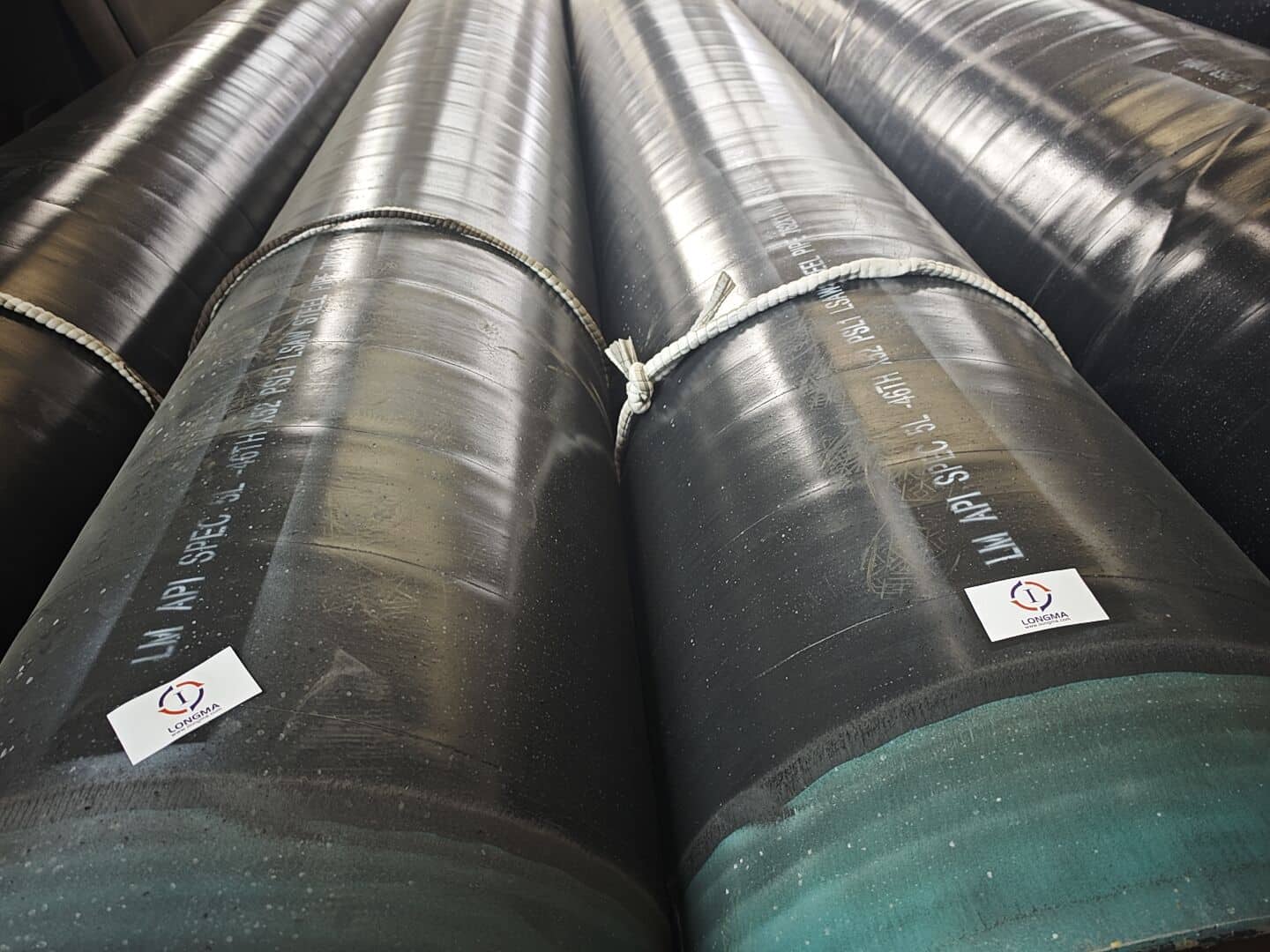
LSAW pipe is produced using longitudinal submerged arc welding. Depending on the production configuration, process control can involve parameters such as:
- Welding current
- Arc voltage
- Welding speed
- Heat input
- Flux and electrode conditions
- Preheating and interpass temperature, where applicable
Changes in these parameters can affect weld penetration, fusion, weld profile, thermal cycling, and the resulting weld and HAZ characteristics.
ERW/HFW Steel Pipe
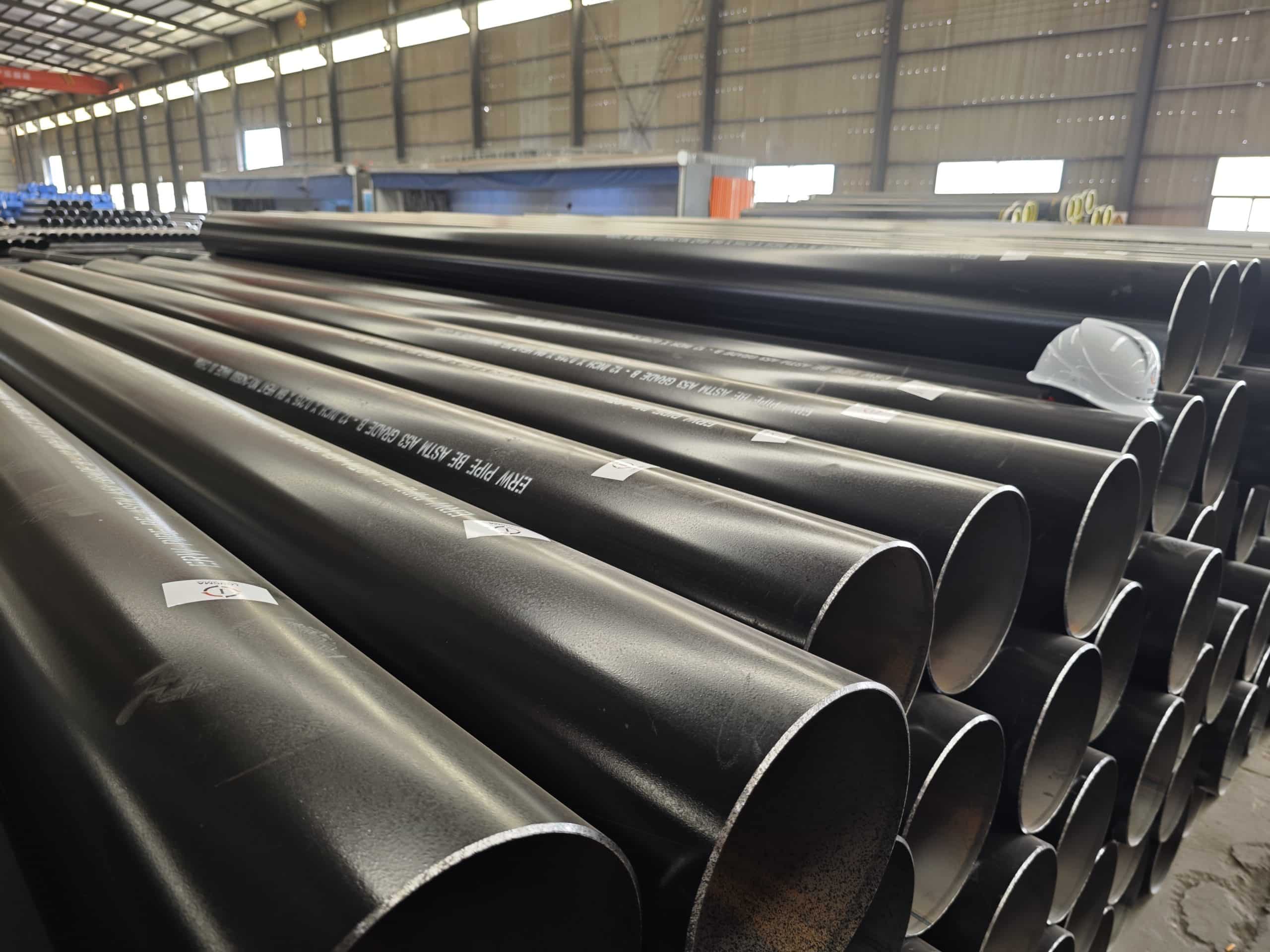
ERW/HFW pipe is produced using resistance welding rather than conventional submerged arc welding. Consequently, process control focuses on different parameters, which can include:
- Electrical power or heat input
- Welding frequency
- Line speed
- Edge condition
- Squeeze pressure
- Heating and forming stability
It would therefore be technically inaccurate to apply the same parameter framework to ERW/HFW and LSAW without considering their different welding mechanisms.
This distinction is particularly relevant for current line pipe procurement. API published the 47th Edition of API Specification 5L in June 2026, with updated requirements covering more than 15 areas, including HFW pipe quality, NDT personnel certification, sour-service requirements, sulfide stress cracking testing, and CO₂ transportation pipelines.
How Can Welding Discontinuities Affect Corrosion Risk?
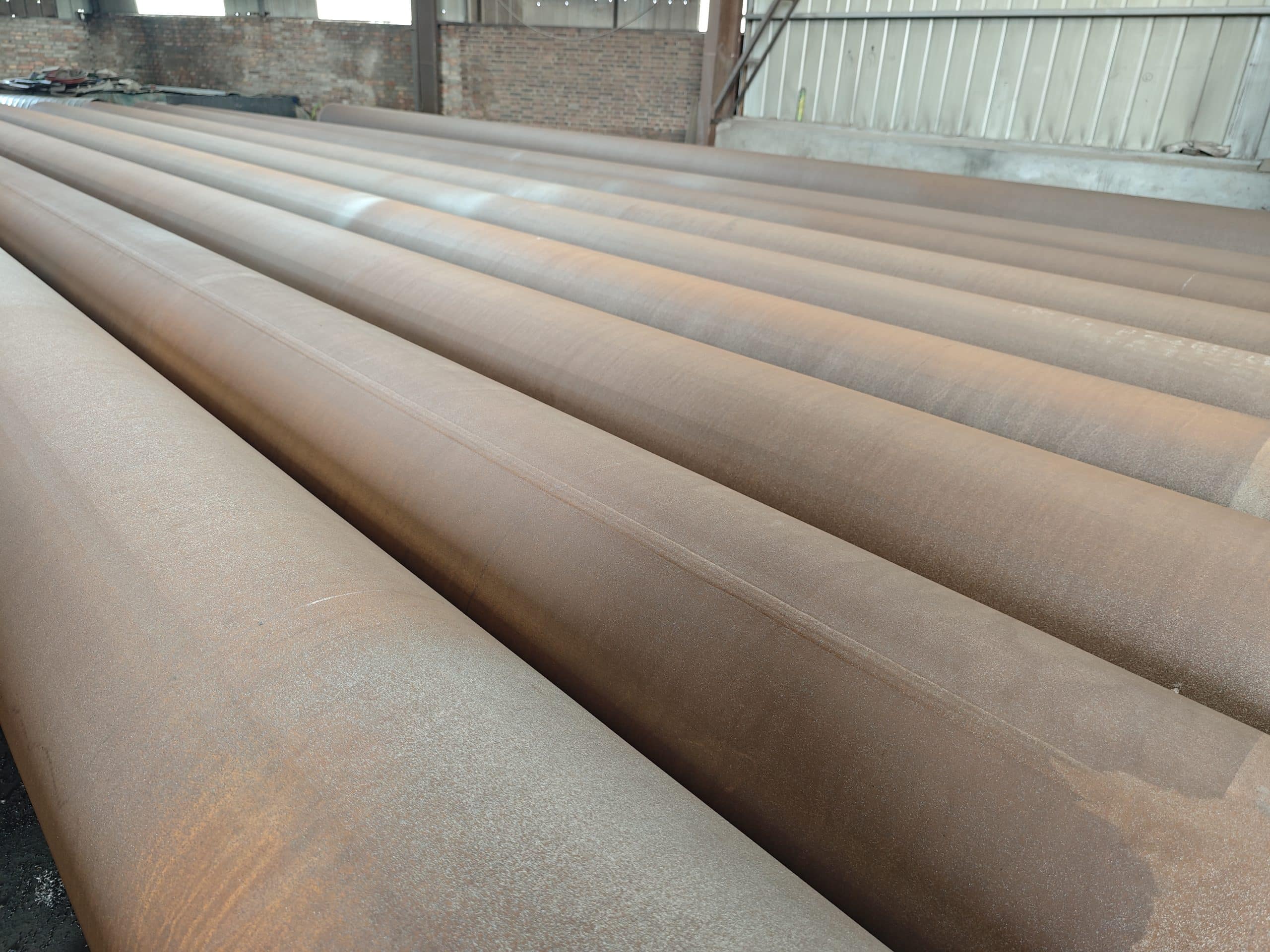
A stable welding process helps reduce the possibility of significant welding discontinuities such as:
- Cracks
- Lack of fusion
- Incomplete penetration
- Porosity
- Undercut
- Abnormal weld geometry
These discontinuities do not automatically mean that a pipe will corrode. However, depending on their type, location, size, and service environment, they may create local stress concentrations, crevices, or sites where corrosive media can accumulate.
ISO 5817:2023 specifies quality levels for imperfections in fusion-welded joints in steel, nickel, titanium, and their alloys within its scope. It defines quality levels B, C, and D, with Level B representing the highest requirement for the finished weld. The standard considers different types of loading, including corrosion and pressure loading.
However, ISO 5817 should not be interpreted as a standalone pipeline corrosion-resistance standard. Meeting a weld quality level does not, by itself, demonstrate that a pipeline is suitable for every corrosive environment.
A more accurate engineering approach is:
Welding Parameters → Thermal Cycle and Weld Integrity → Weld/HAZ Characteristics → Interaction with Service Environment → Corrosion Behavior
What Inspection Methods Help Control Welding Quality?
Inspection is essential because visual appearance alone cannot reveal every type of discontinuity.
Visual Testing — VT
Visual testing is normally the first level of weld inspection. It can identify visible conditions such as:
- Abnormal weld profile
- Surface cracks
- Undercut
- Crater formation
- Other visible surface irregularities
ISO 17637:2016 specifies visual testing of fusion-welded joints in metallic materials. ISO confirmed this edition in 2022, so it remains current.
Magnetic Particle Testing — MT
MT is applicable to ferromagnetic materials and is used to detect surface and near-surface imperfections, including in the weld and heat-affected zone.
ISO 17638:2016 specifies magnetic particle testing techniques but does not establish acceptance levels itself. Acceptance criteria may be obtained from ISO 23278 or the applicable product or application standard.
Penetrant Testing — PT
PT is used to detect discontinuities that are open to the surface, such as cracks, laps, folds, porosity, and certain lack-of-fusion conditions.
ISO 3452-1:2021 specifies general principles for penetrant testing but explicitly states that it is not intended to be used for acceptance criteria.
Ultrasonic Testing — UT
UT can be used to detect specified internal or near-surface imperfections. For welded steel tubes, ISO 10893-11:2011 covers automated ultrasonic testing of weld seams in submerged arc-welded and electric resistance/induction-welded steel tubes.
Importantly, ISO 10893-11:2011 has Amendment 1:2020, which changes the ultrasonic test frequency and acceptance criteria. The amendment should therefore be considered when referencing this standard.
| Inspection Method | Main Purpose | Corrosion-Related Value |
| VT | Surface and weld-profile inspection | Identifies visible surface conditions |
| MT | Surface and near-surface inspection of ferromagnetic materials | Helps detect discontinuities that may affect weld integrity |
| PT | Surface-opening discontinuities | Useful for detecting surface cracks and similar indications |
| UT | Internal and specified near-surface imperfections | Helps identify internal weld discontinuities |
The applicable inspection method, coverage, and acceptance level should always be determined by the product standard and project specification.
Corrosion Resistance Also Depends on the Service Environment
It would be misleading to discuss pipeline corrosion resistance without considering the actual operating environment.
The same welded steel pipe may behave differently under different service conditions. Important factors can include:
- CO₂ concentration
- H₂S exposure
- Chloride concentration
- pH
- Temperature
- Pressure
- Dissolved oxygen
- Flow conditions
- Internal or external corrosion protection
For sour-service applications, for example, material selection and resistance to sulfide stress cracking are important considerations. API’s 47th Edition specifically includes updated requirements related to sour service and sulfide stress cracking testing.
Therefore, buyers should not select pipe based solely on welding parameters. The material, manufacturing process, service environment, corrosion-control strategy, and applicable product requirements should be evaluated together.
LONGMA’s Quality Control Approach: From Process Parameters to Traceability
For a steel pipe manufacturer, reliable quality control begins before the finished pipe reaches the inspection stage.
LONGMA has more than 20 years of steel pipe manufacturing experience and focuses on ERW and LSAW round steel pipes. Its quality-control approach can cover the key stages of production, including:
Raw Material → Forming → Welding → Dimensional Inspection → NDT → Final Inspection → Documentation and Traceability
For applicable projects, LONGMA’s internal quality-control and inspection processes can be used to monitor production quality and verify that products meet the agreed technical requirements.
The important point for buyers is not simply whether a supplier has inspection equipment, but whether the manufacturer can maintain consistent process control and provide traceable quality records.
For example, purchasers should ask:
- Are welding procedures properly established and controlled?
- Are production parameters monitored within the qualified range?
- Are weld seams inspected using the methods required by the applicable specification?
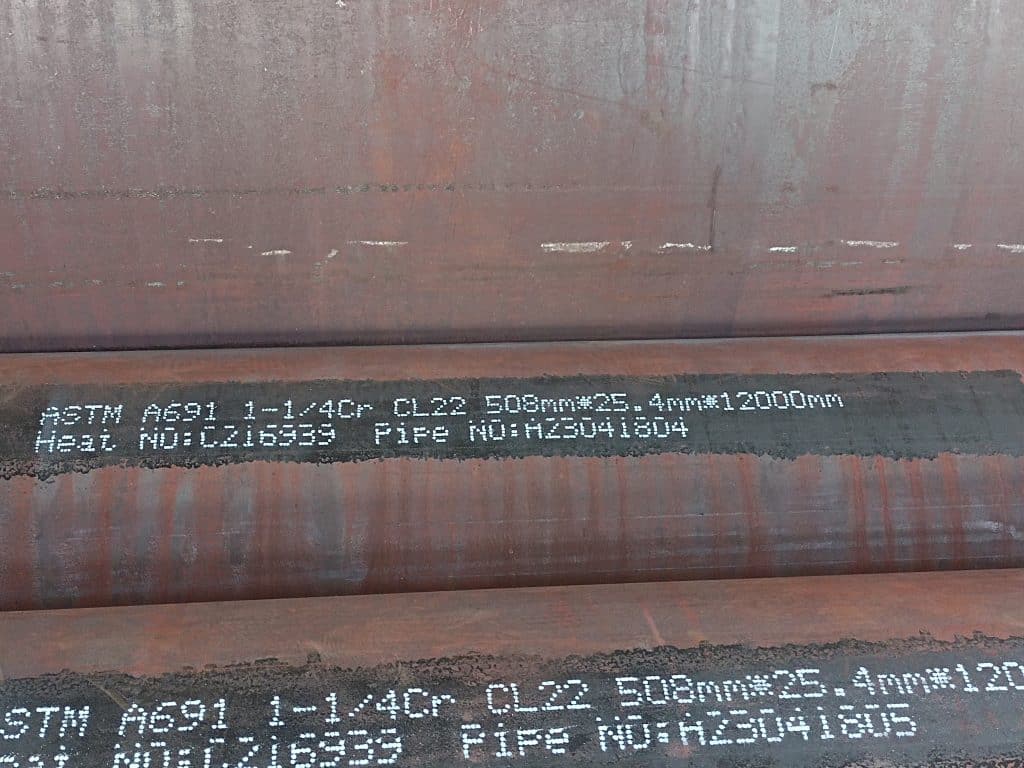
- Can material heat numbers and production batches be traced?
- Are inspection records linked to the finished products?
- Can the supplier provide the required quality documentation?
This approach provides much stronger evidence of manufacturing capability than general claims about “high quality.”
How Can Buyers Reduce Welding and Corrosion-Related Procurement Risks?
When purchasing welded steel pipe, buyers should avoid relying on a single parameter or inspection result.
A practical purchasing checklist should include:
| Purchasing Item | What Buyers Should Confirm |
| Product standard | Standard name and applicable edition |
| Manufacturing process | ERW/HFW or LSAW |
| Steel grade | Grade, delivery condition, and material requirements |
| Welding procedure | Applicable qualified procedure and process controls |
| NDT | Method, coverage, and acceptance criteria |
| Weld quality | Applicable weld imperfection requirements |
| Corrosion environment | CO₂, H₂S, chlorides, temperature, pressure, etc. |
| Documentation | MTC and required inspection records |
| Traceability | Heat number and production-batch traceability |
| Third-party inspection | Scope and witness requirements, if applicable |
For API 5L line pipe, the applicable edition should be stated clearly. This is particularly important now that the 47th Edition has been published. API Spec 5L establishes requirements covering material, manufacturing, inspection, testing, marking, and traceability for seamless and welded line pipe.
A specification such as:
“Pipe shall comply with API 5L.”
is less precise than:
“Pipe shall comply with the specified edition of API Spec 5L, including the required grade, PSL, manufacturing process, inspection, testing, and acceptance requirements.”
Clear purchasing requirements help prevent misunderstandings between the buyer and supplier.
Why Choose LONGMA for Welded Steel Pipe?
Choosing a welded steel pipe supplier is ultimately about managing long-term project risk, not simply comparing unit prices.
With more than two decades of manufacturing experience, LONGMA focuses on ERW and LSAW round steel pipes and emphasizes process control, dimensional inspection, weld inspection, quality documentation, and product traceability.
For projects where corrosion resistance is a critical consideration, LONGMA can work according to the applicable product standard and project specification to help customers select and manufacture suitable welded steel pipe.
The key principle is simple:
Good corrosion performance starts with appropriate material selection and a controlled manufacturing process, but it must be evaluated together with weld integrity and the actual service environment.
By combining controlled welding processes, applicable NDT, quality documentation, and traceability, LONGMA aims to give buyers greater confidence in the consistency and reliability of their steel pipe supply.
Conclusion
Welding parameters are an important part of welded steel pipe quality control, but they should never be treated as the sole determinant of pipeline corrosion resistance.
Current engineering practice requires a broader approach:
Material Selection + Welding Process Control + Weld Integrity + NDT + Service Environment + Traceability
For ERW/HFW and LSAW steel pipes, the appropriate process parameters and inspection requirements are different and should be established according to the applicable product standard, manufacturing process, material, and project conditions.
For buyers, the most reliable supplier is not necessarily the one offering the lowest price, but the one that can demonstrate controlled manufacturing processes, qualified procedures, appropriate inspection, traceable documentation, and consistent product quality.
With more than 20 years of experience in welded steel pipe manufacturing, LONGMA provides ERW and LSAW round steel pipes for demanding industrial and infrastructure applications, with quality control aligned with applicable project requirements.