- 1. Understanding ASTM A53 Specifications for Manufacturing
- 2. Manufacturing Capabilities and Quality Assurance
- 3. Value-Added Fabrication Services
- 4. Packaging, Logistics, and Export Compliance
- 5. Technical Support and Installation Guidance
- 6. Partner with LONGMA for ASTM A53 Manufacturing Services
- 7. Conclusion
- 8. FAQ
ASTM A53 Welded Steel Pipe producers are no longer just producers but full-service suppliers. Providing technical advice, in-house fabrication, quality certification, logistics, and installation support for HVAC, fire protection, and water transfer projects. Contractors work with certified manufacturers to provide expert threading, beveling, hydrostatic testing, and galvanizing services to make sure every step from material specification to final delivery is done well, compliant, and cost-efficient.
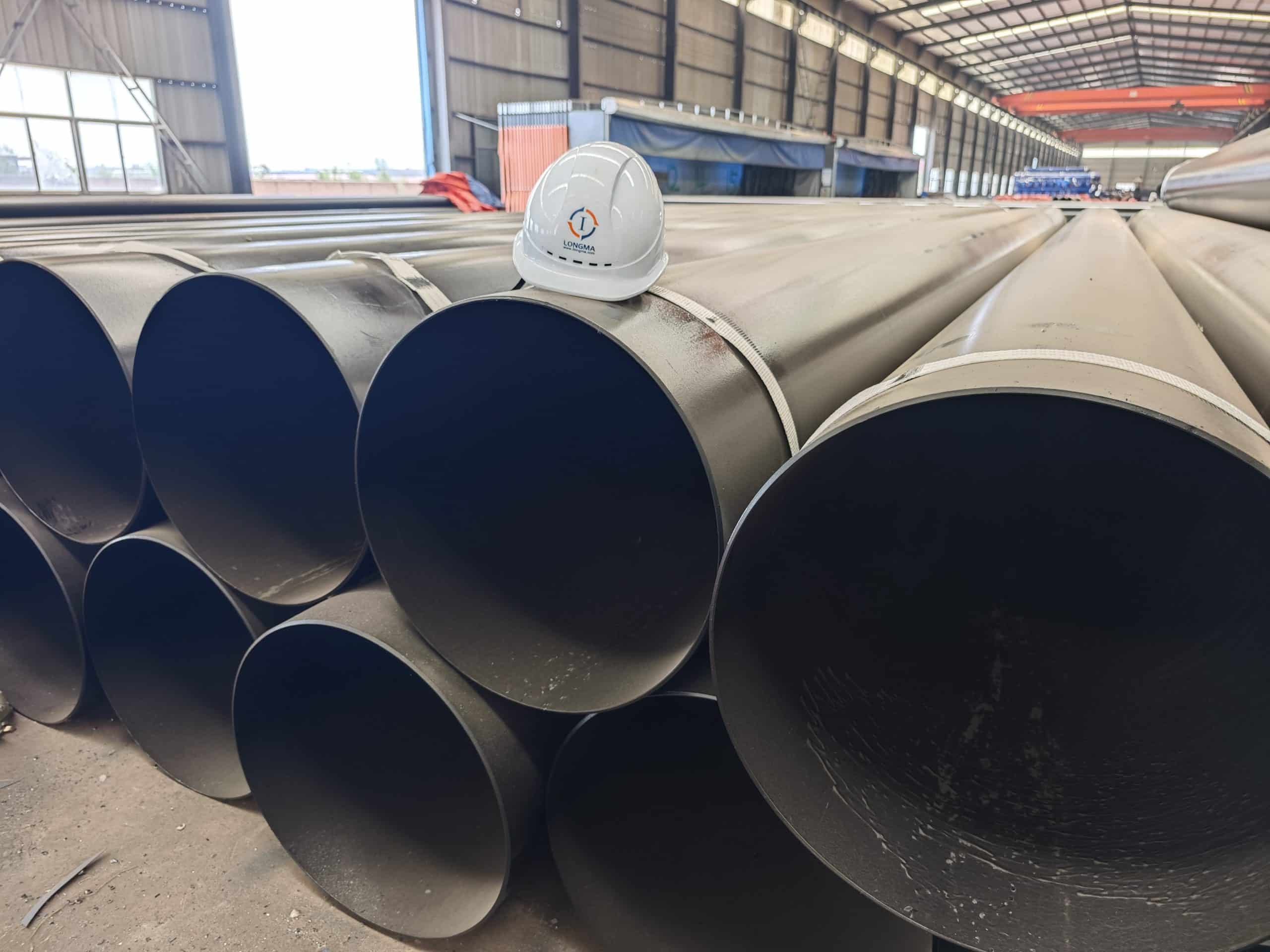
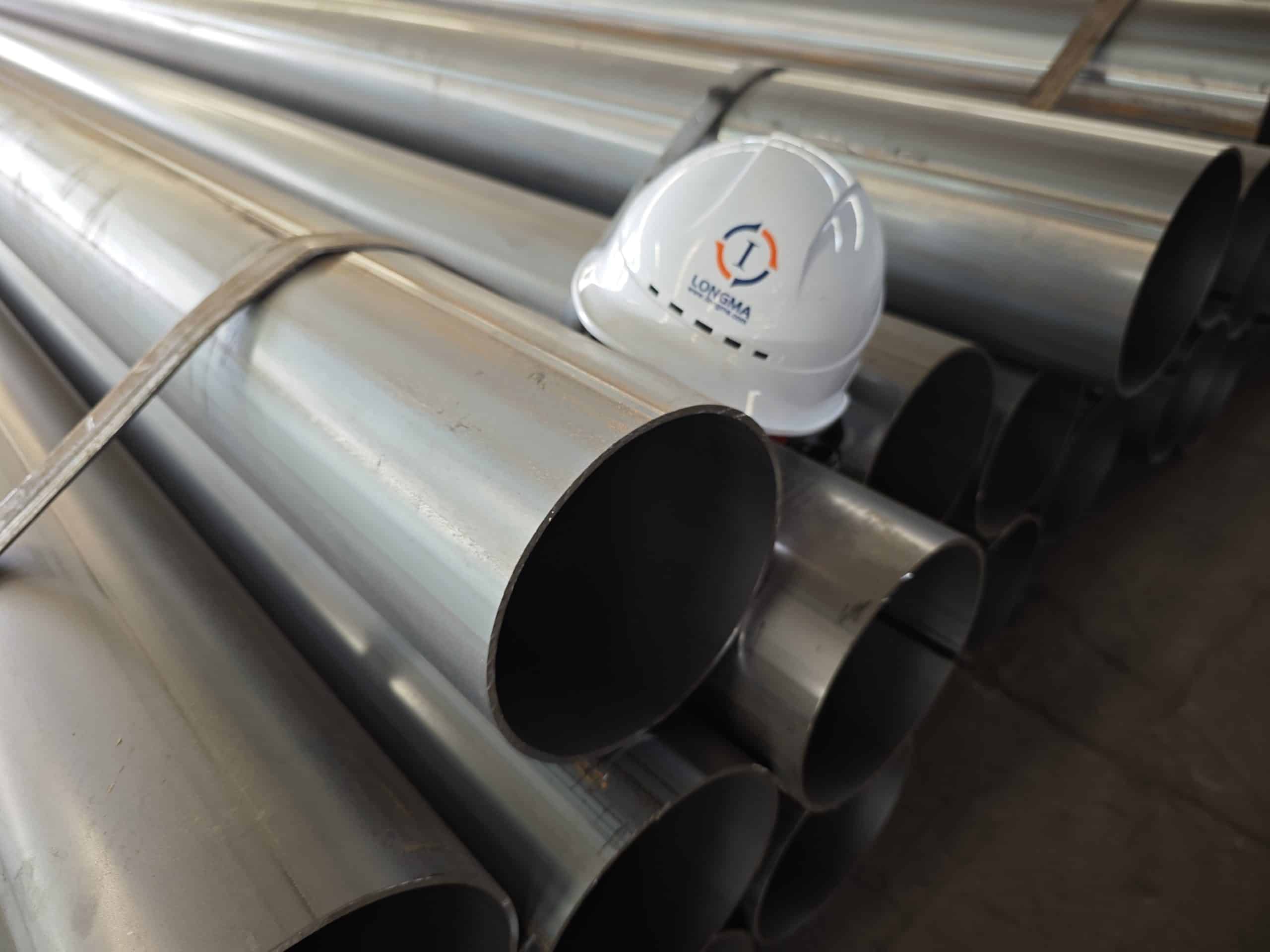
Understanding ASTM A53 Specifications for Manufacturing
Grade A and Grade B ASTM A53/A53M comprise two primary classes with varying mechanical properties. Grade A 30,000 psi minimum yield strength 48,000 psi minimum tensile strength Great for low-pressure applications like gravity flow water pipes and structural supports. Grade B is the most typical grade for pressurized systems, including fire sprinkler systems and commercial plumbing and HVAC pipelines. Tensile strength 60,000 psi minimum. yield strength 35,000 psi minimum. Manufacturers assist customers in choosing grades according to project design pressure, building codes, NFPA rules, etc.
Pressure ratings are affected by wall thickness (schedule), diameter, and operating temperature. The allowable stress is decreased with temperature as per the ASME B31.1 and B31.3 tables. Schedule 40 pipe, Grade B, can tolerate 150 psi at ambient temperatures but cannot take stress over 400°F, when Schedule 80 pipe may be required. The manufacturer provides charts of temperature-pressure ratings based on the current ASME rules for the engineer to check the system design prior to installation. With the right spec, the system will not fail catastrophically, will pass municipal inspections, and will pass third-party commissioning tests.
Property Grade A, Grade B, Min. Tensile Strength 48,000 psi (331 MPa) 60,000 psi (414 MPa) Min. Yield Strength 30,000 psi (207 MPa) 35,000 psi (241 MPa) Typical Applications: Structural, gravity flow Fire sprinklers, pressurized water, HVAC
Manufacturing Capabilities and Quality Assurance
Production Processes and Certification Standards
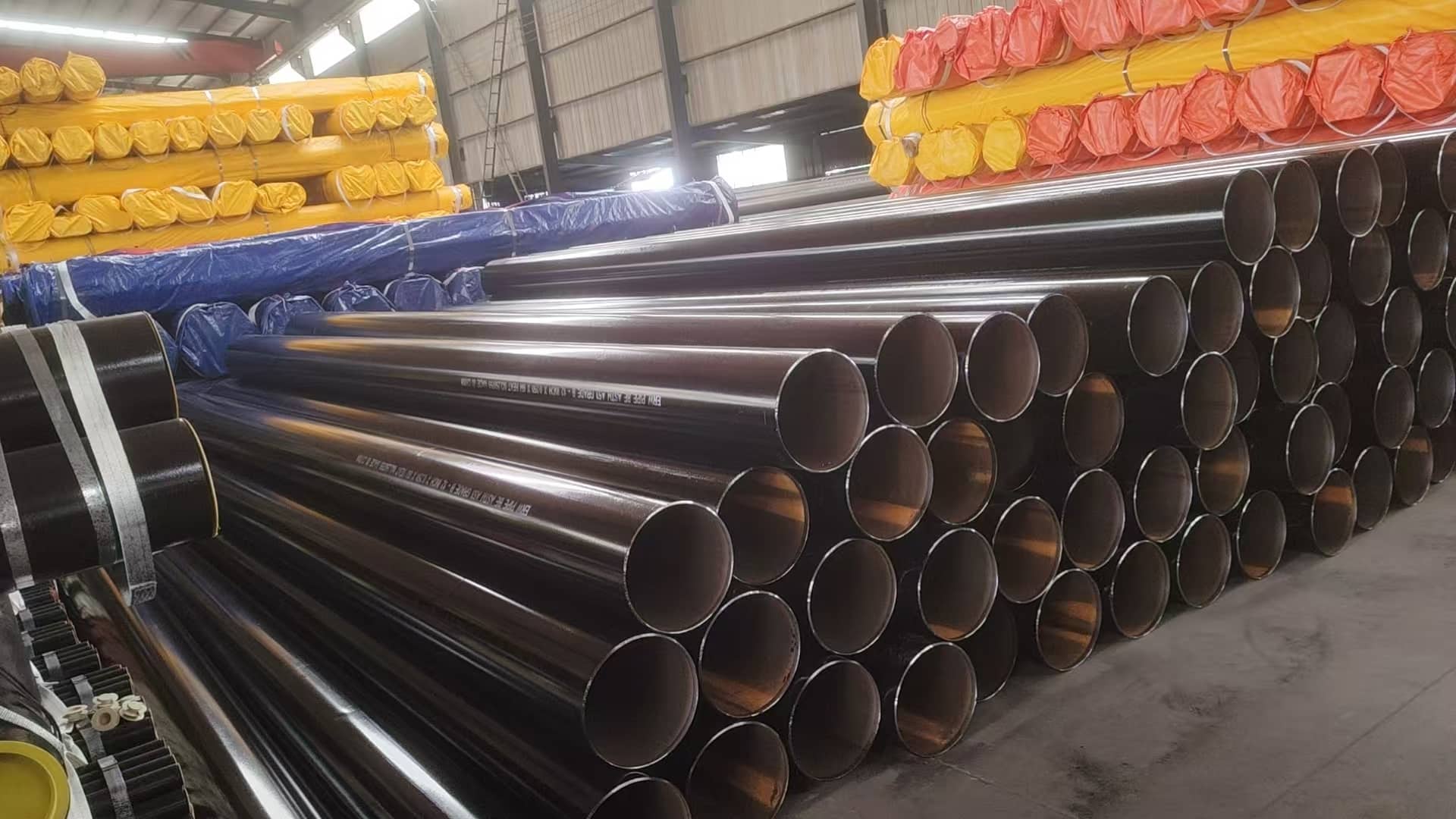
Hot-rolled steel strips are formed into cylindrical forms, and the longitudinal edges are joined by high-frequency resistance welding at regulated pressure and temperature on ERW (Electric Resistance Welded) manufacturing lines operated by certified ASTM A53 manufacturers. The technique creates uniform, flush weld seams with good mechanical qualities and strict dimensional tolerances. “Every step from raw material receiving to final inspection is covered by ISO 9001 quality management systems at top-tier manufacturers, who also hold API or other equivalent certifications demonstrating compliance with international manufacturing standards.
Obtaining raw materials is an important quality control job. We buy steel coils from competent mills with proven chemical composition from reputable producers and verify each coil upon receipt prior to manufacturing. The production sequence is uncoiling, levelling, shaping, welding, seam annealing, sizing, straightening, cutting, and end finishing. For detection of faults in real time, the weld seam undergoes ultrasonic testing on-line at high speed. Those who manage the complete production chain from coil to completed pipe can guarantee constant quality, low lead times, and full traceability for each heat number generated.
Quality Control Testing and Documentation
Every lot of ASTM A53 welded steel pipe is inspected in full to the ASTM A53 specification. The chemical composition has been verified by an optical emission spectroscopy investigation, and the quantities of carbon, manganese, phosphorus, and sulfur are within the specified limits. Tensile tests are conducted to check that the yield strength, the ultimate tensile strength, and the elongation meet the criteria for the grade. Flattening tests prove the ductility of the welds. Flaring of pipe ends verifies the flaring failure. The results are documented on EN 10204 3.1 material test certificates supplied by the manufacturer’s quality department.
EN 10204 3.1 Certificates are the legal documents that may be used for insurance claims, warranty validation, and regulatory and third-party audits. Each certificate is linked to a specific heat number stamped on each length of pipe for full traceability back to the steel melt from the finished product. Some manufacturers will additionally provide EN 10204 3.2 certificates countersigned by independent inspectors such as SGS, Bureau Veritas, or Intertek for those customers who want a little more assurance. All pipe lengths are hydrostatically tested at specified pressures prior to release to inventory or shipment to check for leak tightness.
- Chemical Analysis: Spectrographic identification of C, Mn, P, and S concentration within ASTM A53 limitations.
- Tensile Test: Yield strength, ultimate tensile strength, and elongation are verified on each heat.
- Flattening & Flare Tests: Check weld ductility and end formability without cracking.
- UT Weld Testing online. 100% ultrasonic examination of seams in production.
- Hydrostatic Testing All lengths were hydrostatically tested to assure leak-tightness.
- EN 10204 3.1 Certificates: Complete traceability of heat with recorded test results.
Value-Added Fabrication Services
Threading, Beveling, Cutting, and Grooving
Top ASTM A53 manufacturers provide complete in-house manufacturing, eliminating the need for any third-party processing. NPT threads to ANSI/ASME B1.20.1 requirements for leak-tight couplings in fire sprinkler and plumbing systems are offered by threading services. Pipe end bevels to 30-37.5° angles with 1/16″ land for complete pen butt welds per ASME Section IX. Project-length custom cutting saves on-site labor and waste. Grooving prepares ends for mechanical connection systems used in fire protection and HVAC.
Combining fabrication inside the production plant provides tighter quality control, quicker turnaround, and a cheaper overall cost compared to obtaining raw pipe and separate fabrication. Automated threading and beveling lines provide constant accuracy that cannot be achieved by human field processing, eliminating installation faults and inspection failures. The pipe is classified by size and specification and is clearly labelled. For major projects, manufacturers will sequence manufacturing to fit the construction timeline and deliver the prefabricated spools or cut lengths just-in-time to reduce storage on-site.
Galvanizing and Coating Services
Hot-dip galvanizing is one of the most requested value-added services for ASTM A53 welded steel pipe, especially for domestic water supply, external pipe, and HVAC condensate lines. Manufacturers apply zinc coatings to ASTM A153 specifications with a minimum thickness of roughly 86 microns (3.4 mils), creating a physical barrier and sacrificial anode that protects steel for decades. Galvanized pipe costs 15–20% more than black pipe but has a considerably longer service life in corrosive situations and is thus code-required for many water and outdoor applications.
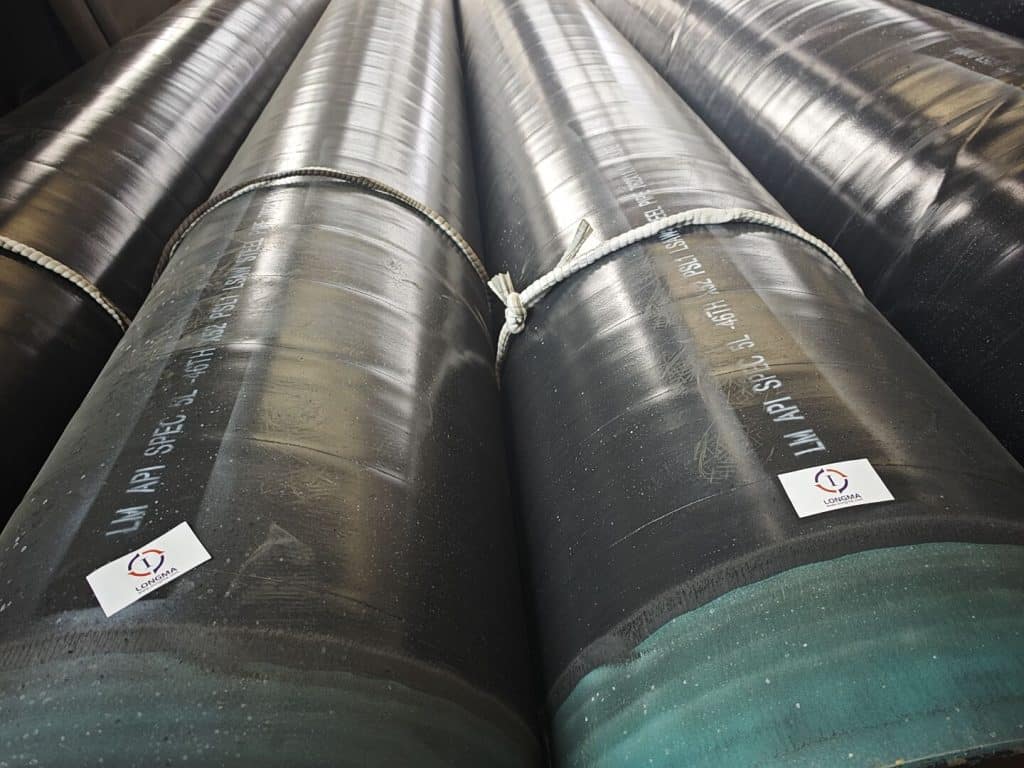
Manufacturers may provide extra exterior coatings, such as fusion-bonded epoxy (FBE), three-layer polyethylene (3LPE), or coal tar enamel in accordance with the American Water Works Association (AWWA) requirements, for underground service or aggressive corrosive conditions, frequently with cathodic protection design assistance. When you need to weld galvanized pipe, manufacturers may strip the zinc out of the weld zone (1–2 inches on each side) to avoid porosity and fume exposure, leaving you with bare-end tubing suitable for field welding and including touch-up paint. All coatings are accompanied by thickness test results and adhesion certifications.
Packaging, Logistics, and Export Compliance
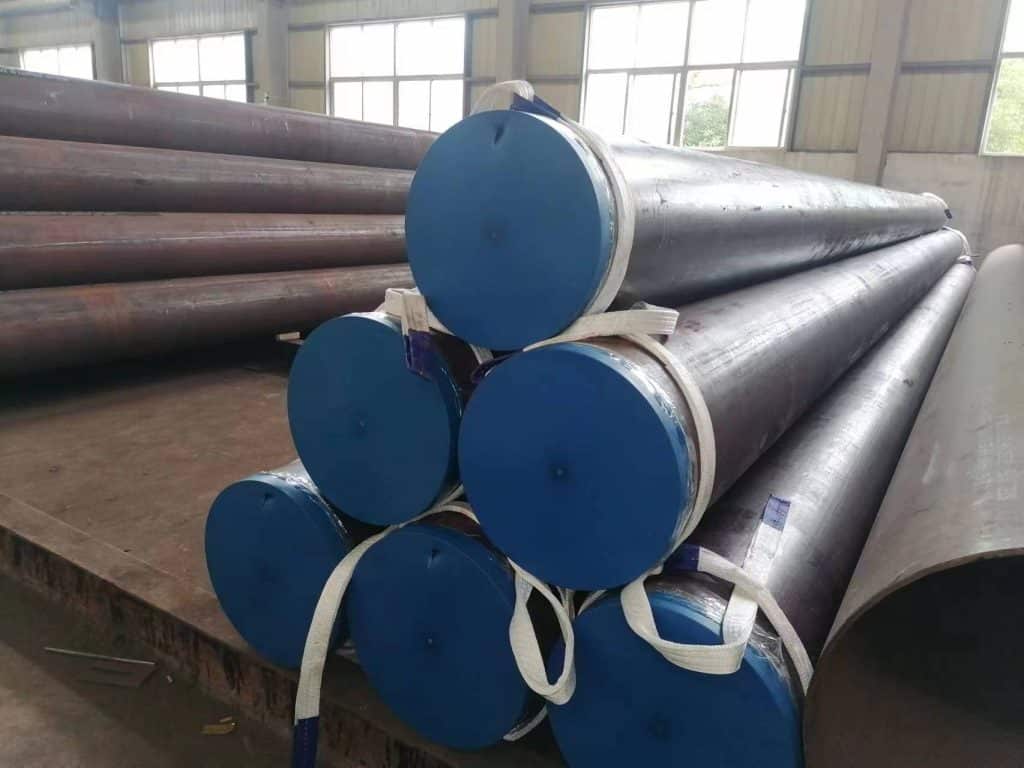
The whole logistical chain from the manufacturing floor to the project site is handled by manufacturers, including bespoke packaging designed to prevent damage during transit. Pipes are strapped together with steel straps, spaced apart with wooden spacers, fitted with end caps to protect threads and bevels and wrapped in anti-corrosion paper or VCI film for ocean shipment. Small and medium diameters are containerized when possible, while big-diameter or long-length pipes need breakbulk or project cargo vessels. Manufacturers have relationships with reputable freight forwarders and shipping providers to guarantee space even during peak periods.
For overseas shipments a comprehensive documentation package will be needed, including a commercial invoice, packing list, bill of lading, certificate of origin, and EN 10204 3.1 certificates. Export-experienced manufacturers will ensure that all documentation matches properly the terms of the letter of credit or purchase order, without mistakes that might lead to delays in payment or customs clearance. Export compliance includes correct HS code classification, correct country of origin declaration, and compliance with anti-dumping levies and import permits. Real-time monitoring of output and vessel departure and planned arrival allows customers to plan ahead.
Technical Support and Installation Guidance
Manufacturers provide technical consulting services to help customers determine the appropriate pipe parameters for ASTM A53 welded steel pipe. This includes recommendations on grade selection (A versus B), scheduling based on design pressure and temperature, coating requirements for different applications, and joining method compatibility (threaded, welded, grooved, or flanged). In cases of unusual conditions such as corrosive fluids, extreme temperatures, or seismic zones, manufacturer metallurgists conduct detailed studies and provide material specifications, welding procedures, or corrosion protection measures. This front-end support helps prevent costly specification errors and ensures that materials meet all applicable code and performance requirements.
Manufacturers provide after-installation help, including troubleshooting for early corrosion, joint leaks, or pressure drops after delivery and installation. This comprises failure mode analysis, basic cause identification, and recommendations for corrective action. Manufacturers also sell replacement parts and instructions for fire protection systems that are periodically inspected under NFPA 25. For welded systems, they provide certified welding procedure specifications (WPS) and welder qualification guidelines to ASME Section IX. This ongoing partnership helps ensure pipe systems you can depend on to perform throughout their service life, increasing asset value and reducing total cost of ownership.
Partner with LONGMA for ASTM A53 Manufacturing Services
Since 2003, LONGMA has been engaged in the production and export of ERW and LSAW steel pipes across the world. We are an ISO 9001 certified facility of 230,000 m², and we manufacture more than 500,000 tons of steel pipes every year. All ASTM A53 welded pipe is manufactured to ASTM A53/A53M requirements with comprehensive EN 10204 3.1 traceability. We provide black and hot-dip galvanized pipe from 2” thru 26” with in-house threading, beveling, custom cutting, grooving, and hydrostatic testing. Ship stock items in 7 days. Custom orders in 45 days. LONGMA provides outstanding production, timely technical help, and reliable delivery for international fire protection, water utility, and MEP projects.
Conclusion
ASTM A53 welded steel pipe manufacturers have become comprehensive solution partners, offering far more than basic production. Their integrated services—from precise manufacturing and rigorous quality certification to in-house fabrication, galvanizing, logistics, and technical consultation—ensure that fire protection, water transmission, and HVAC projects meet regulatory standards, budget targets, and deadlines. By working directly with certified manufacturers, procurement teams and contractors secure reliable materials, expert support, and long-term value that strengthens project outcomes and operational resilience. Contact Email: info@ilongma.com.
FAQ
1. What is the difference between ASTM A53 Grade A and Grade B?
Grade A has a minimum tensile strength of 48,000 psi and yield strength of 30,000 psi. It is great for low-pressure and structural applications. Grade B is the most often used grade for pressured systems, such as fire sprinklers and commercial plumbing and HVAC pipes. Minimum Tensile Strength 60,000 psi Yield Strength 35,000 psi Manufacturers may propose what grade to use according to the design pressure, temperature, and other relevant construction conditions.
2. How do manufacturers ensure quality and traceability?
Certified by ISO 9001 quality management systems, production undergoes chemical analysis, tensile testing, flattening tests, flare tests, online ultrasonic weld inspection, and hydrostatic testing on every manufacturing batch. Each length of pipe is given a heat number and referenced on an EN 10204 3.1 material test certificate with all test results giving complete traceability from the final product back to the initial steel melt. Further assurance may be obtained by third-party inspection by SGS, Bureau Veritas, or Intertek.
3. What in-house fabrication services do manufacturers offer?
All major manufacturers have substantial in-house fabrication capabilities, including NPT threading to ANSI/ASME B1.20.1, beveling for full penetration butt welds, custom cutting to project-specific lengths, grooving for mechanical coupling systems, and end preparation for flanged connections. Fabricating everything at the production plant ensures constant accuracy, less on-site labor, and a cheaper overall project cost than acquiring raw pipe and doing separate secondary processing.
4. What is the typical lead time for ASTM A53 welded pipe?
Standard stock sizes (2” to 8″ Schedule 40 black and galvanized pipe, most common) arrive from stock within 7 days. Custom orders for certain diameters, wall thicknesses, lengths, threading, beveling, or galvanizing often take 30 to 45 days depending on the size of the order and the complexity of manufacturing. When companies have integrated production lines and broad connections with logistical partners, it is typically easier for them to respond quickly to urgent needs, and the real-time tracking systems provide visibility into the state of production and the progress of the delivery.
5. Can manufacturers provide galvanized and coated pipe?
Yeah. Some manufacturers, for example, provide hot-dip galvanized goods to ASTM A153 with a minimum zinc coating thickness of around 86 microns, which may protect steel for decades in wet and corrosive environments. AWWA also allows the use of additional external coatings (fusion-bonded epoxy (FBE), three-layer polyethylene (3LPE), or coal tar enamel) for underground service or extreme corrosive environments. All coating services include thickness test results and adhesion certificates per project specifications.