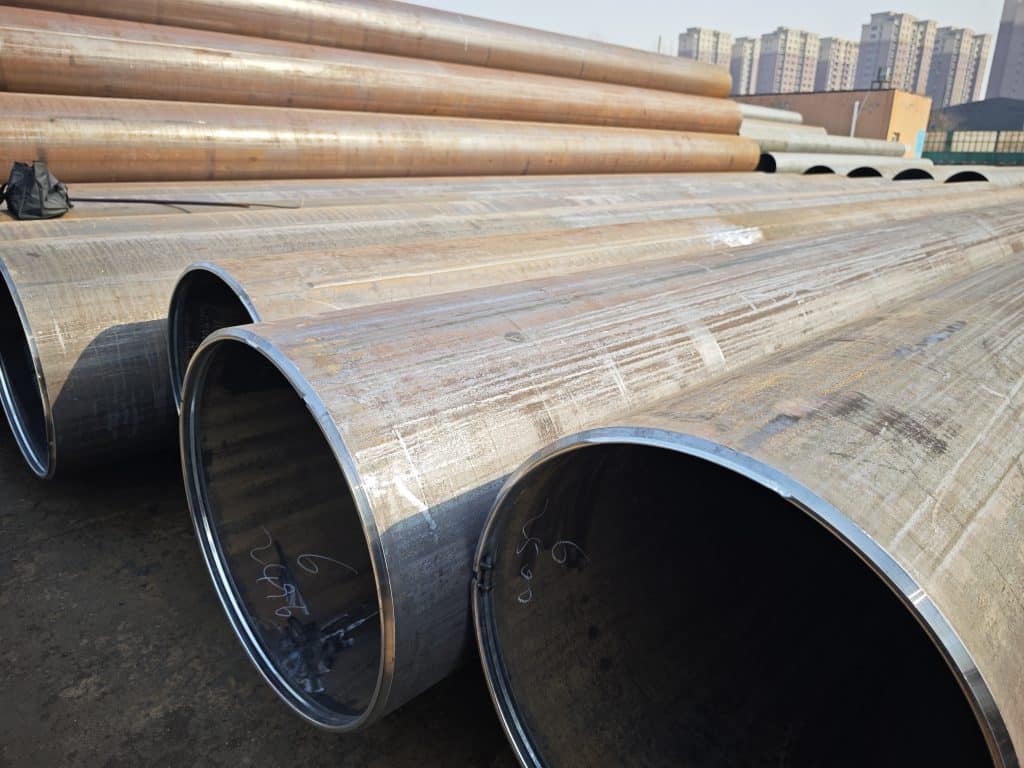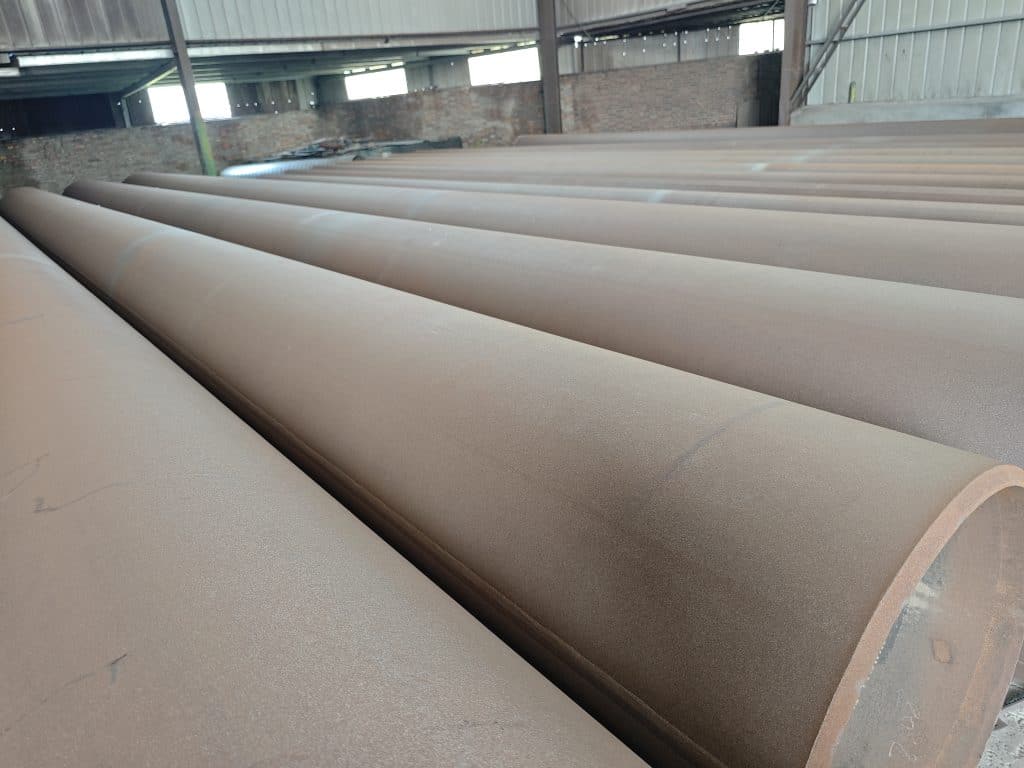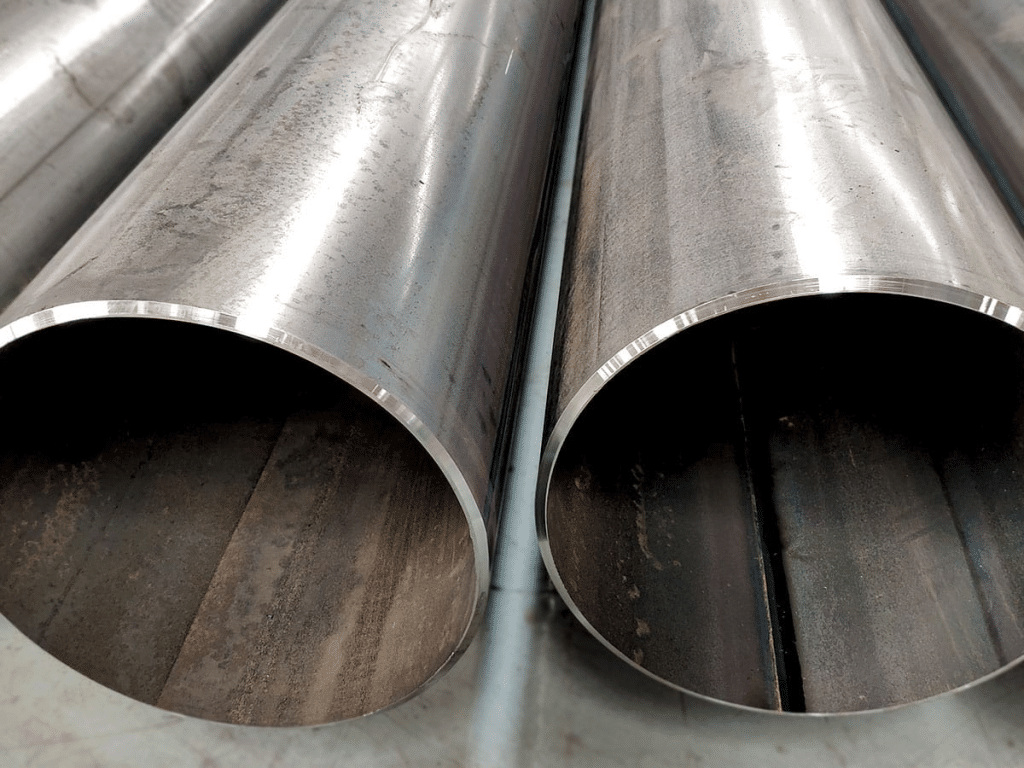
A reliable method for theoretical mass logistics estimates and procurement checks
Carbon steel pipe weight is normally calculated as theoretical mass from the specified outside diameter, wall thickness, length and an adopted steel density. The result supports quotations, freight planning and quantity checks, but it is not the same as the measured shipment weight. Coatings, linings, couplings, end preparation, attachments, dimensional variation and packaging must be considered separately when they apply.
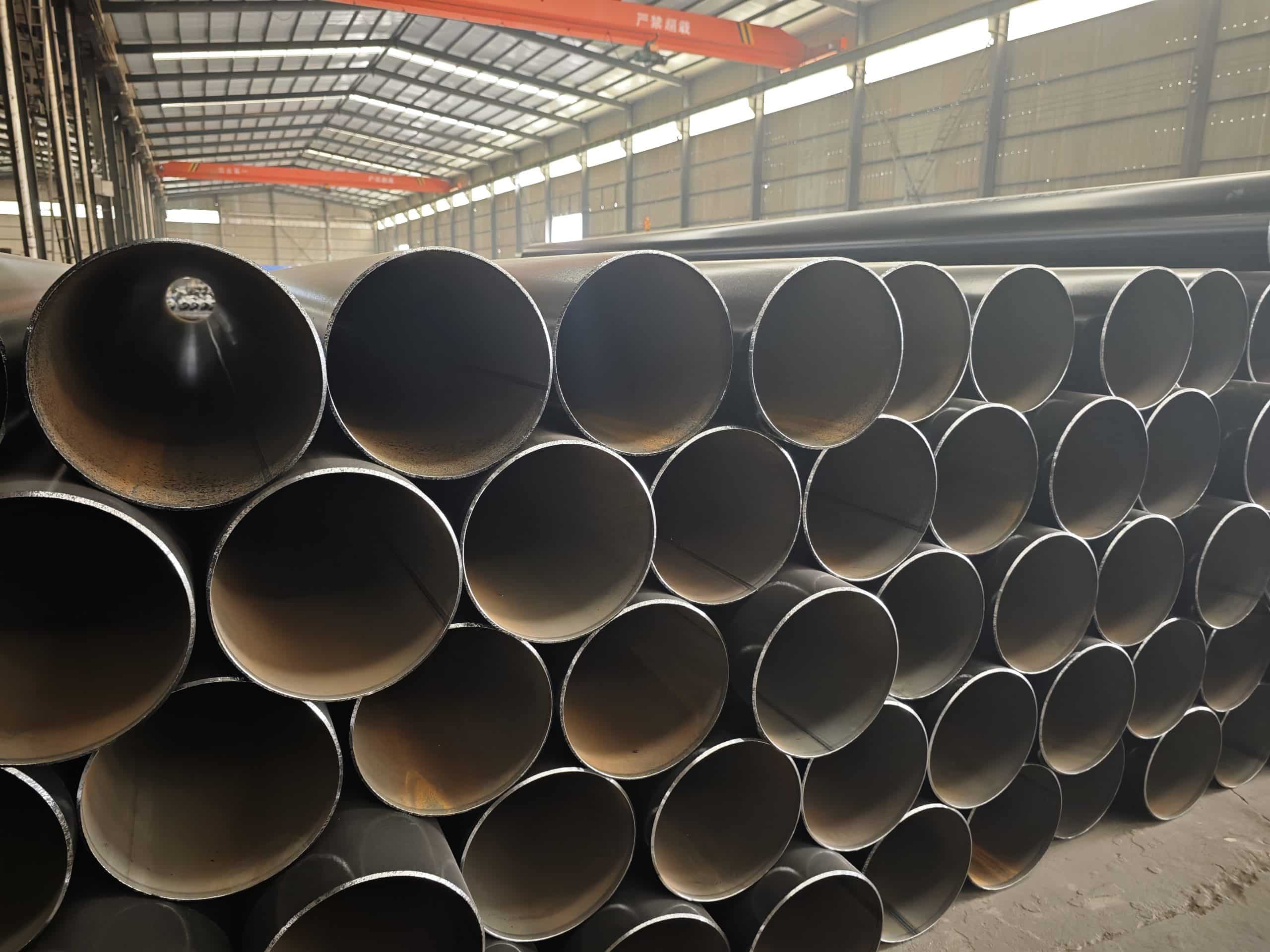
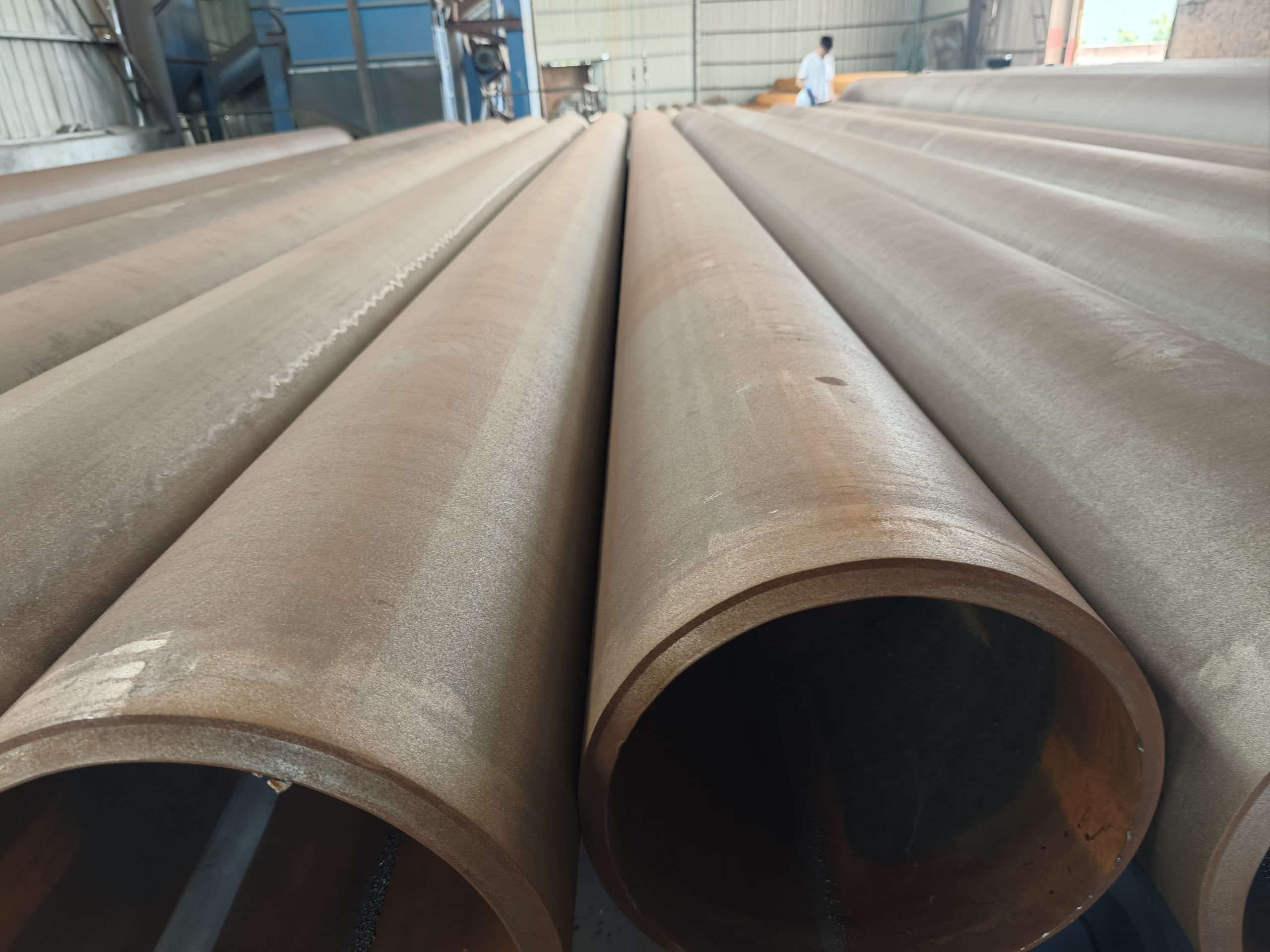
The standard weight formula
For a circular steel pipe with outside diameter D and wall thickness t in millimetres, the nominal cross-sectional steel area is πt(D − t). Using a conventional carbon-steel density of 7,850 kg/m³ gives the following convenient expression for theoretical mass per metre:
W = 0.02466t(D − t)
Here W is in kilograms per metre. The coefficient is rounded, so small differences can occur when a dimensional standard publishes tabulated masses using a more precise conversion or rounding convention. Where a governing dimensional standard provides an official mass table, use that table for contractual work and use the formula as a check.
Worked example and total order mass
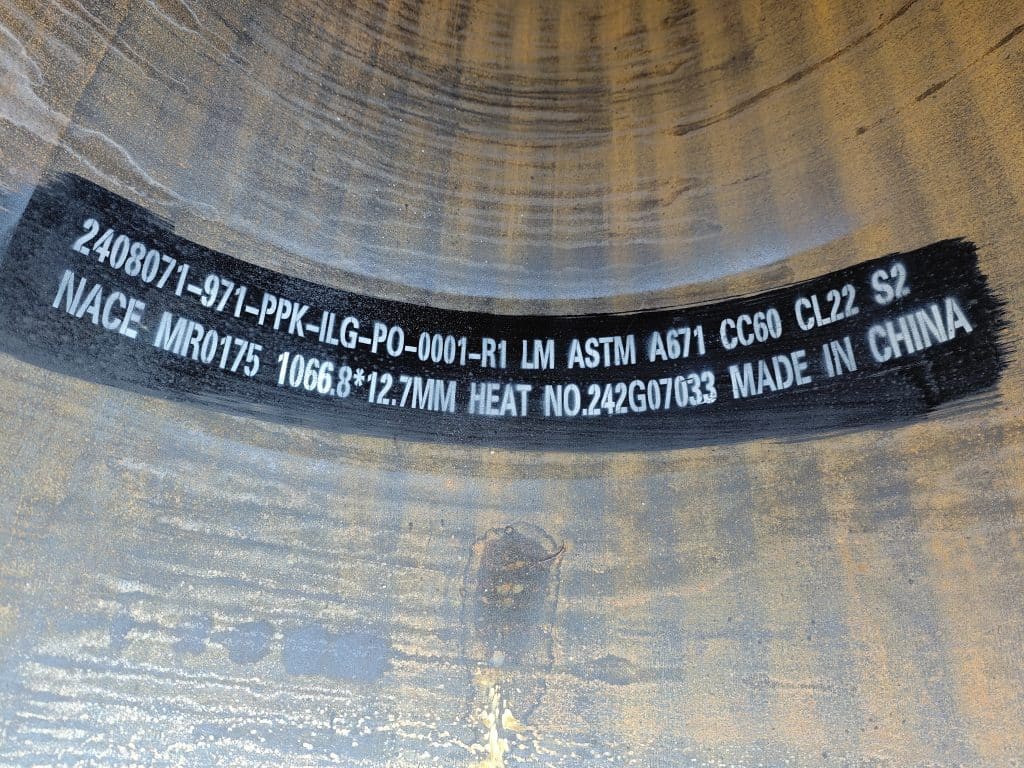
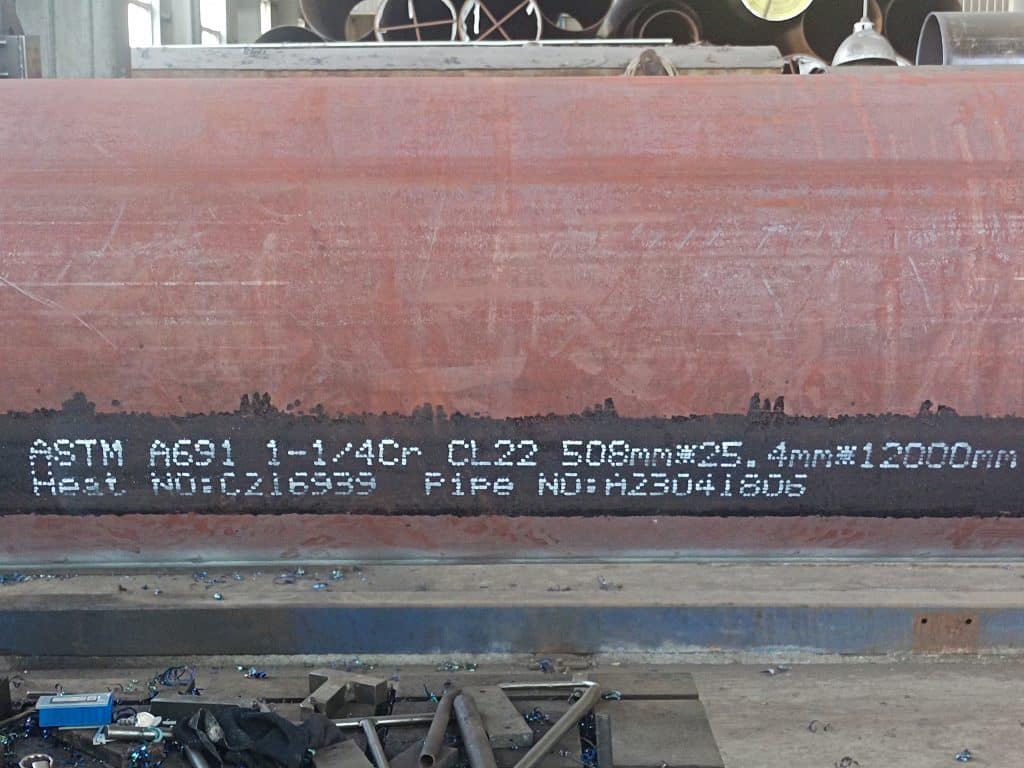
Consider a pipe with an outside diameter of 508.0 mm, a wall thickness of 12.7 mm and a length of 12 m. Its theoretical mass per metre and theoretical mass per pipe are:
W = 0.02466 × 12.7 × (508.0 − 12.7) = 155.1 kg/m
Mass per pipe = 155.1 × 12 = 1,861 kg
For 40 pipes, the nominal theoretical pipe mass is approximately 74,440 kg, or 74.44 tonnes, before adding packaging or accessories. Carry full precision through the calculation and round only the reported result to a level appropriate for the estimate.
| Quantity | Calculation | Theoretical result |
| Mass per metre | 0.02466 × 12.7 × (508.0 − 12.7) | 155.1 kg/m |
| Mass per 12 m pipe | 155.1 × 12 | 1,861 kg |
| Mass for 40 pipes | 1,861 × 40 | 74.44 t |
Choosing dimensions from the correct standard
The formula is only as reliable as its inputs. Outside diameter and nominal wall thickness should come from the purchase specification or the dimensional standard named in the order. Nominal pipe size is not itself the outside diameter. For ASME dimensional series, ASME B36.10M standardizes dimensions and masses for welded and seamless wrought steel pipe; it does not serve as a universal manufacturing-tolerance specification for every product standard.
For line pipe, the purchase order should identify the applicable API 5L edition and any product specification level, grade and supplementary requirements. API published the 47th edition of API Specification 5L in June 2026 and set July 1, 2027 as the Monogram Program effective date. During a transition period, the contract and certification requirements determine which edition applies; it should not be inferred from the order date alone.
Theoretical mass versus actual shipment weight
Theoretical mass assumes ideal nominal geometry and a conventional density. Actual pipe mass varies because product standards permit dimensional tolerances, and real pipes may include coatings, linings, weld reinforcement, couplings or other additions. Seamless, ERW and LSAW pipes with the same outside diameter, wall thickness, length and steel density have essentially the same nominal theoretical mass; manufacturing route alone is not a valid basis for applying an extra weight factor.
| Purpose | Recommended basis | Include separately |
| Engineering estimate | Specified dimensions and applicable design rules | Corrosion allowance where required |
| Commercial quantity check | Contractual theoretical mass or agreed weighing method | Unit conversion and rounding rules |
| Transport planning | Verified packing list or conservative shipment estimate | Coating, caps, dunnage, bundles and accessories |
Do not apply a universal minus 10 percent wall tolerance or a fixed contingency to all pipe. Tolerances and their treatment depend on the product standard, size, manufacturing process and contract. For transport, confirm the supplier’s packing list and comply with carrier, container, lifting and route limits rather than relying only on nominal pipe mass.
Procurement checks that prevent weight discrepancies
A useful purchase order defines whether invoicing is based on theoretical mass, actual scale weight, piece count or another agreed method. It should also state the dimensional standard, product standard and edition, grade, outside diameter, wall thickness, length tolerance, quantity, coating or lining, end condition and required documents. This alignment prevents a correct formula from being applied to the wrong dimensional basis.
- Check that all dimensions use one unit system before calculation.
- Separate bare-pipe mass from coating, lining, fittings, end protectors and packaging.
- Reconcile calculated totals with the quotation and packing list using the same rounding convention.
- Use approved lifting and transport data for operations where safety depends on actual load.
Weight support for LONGMA pipe orders
LONGMA manufactures round ERW and LSAW steel pipe. The company reports a 230,000 square metre production base, annual output exceeding 500,000 tonnes, and more than 60 senior technical staff. Available dimensions and manufacturing route depend on the applicable standard, grade and project requirements and should be confirmed before the weight calculation is finalized.
For a quotation or technical review, send the standard and edition, grade, outside diameter, wall thickness, length, quantity, coating or lining, end condition, documentation requirements and destination to info@ilongma.com. Request the contractual mass basis and packing details if the result will be used for invoicing, lifting or transport planning.