- 1. Understanding ASTM A53 Schedule 40 ERW Pipe Thickness
- 2. Material Properties and Correlation to Pipe Thickness
- 3. ASTM A53 Schedule 40 ERW Pipe Manufacturing Process and Thickness Quality Control
- 4. Comparing ASTM A53 Schedule 40 ERW Pipe to Other Pipe Types
- 5. Procurement Considerations for ASTM A53 Schedule 40 ERW Pipe Thickness
- 6. Conclusion
- 7. FAQ
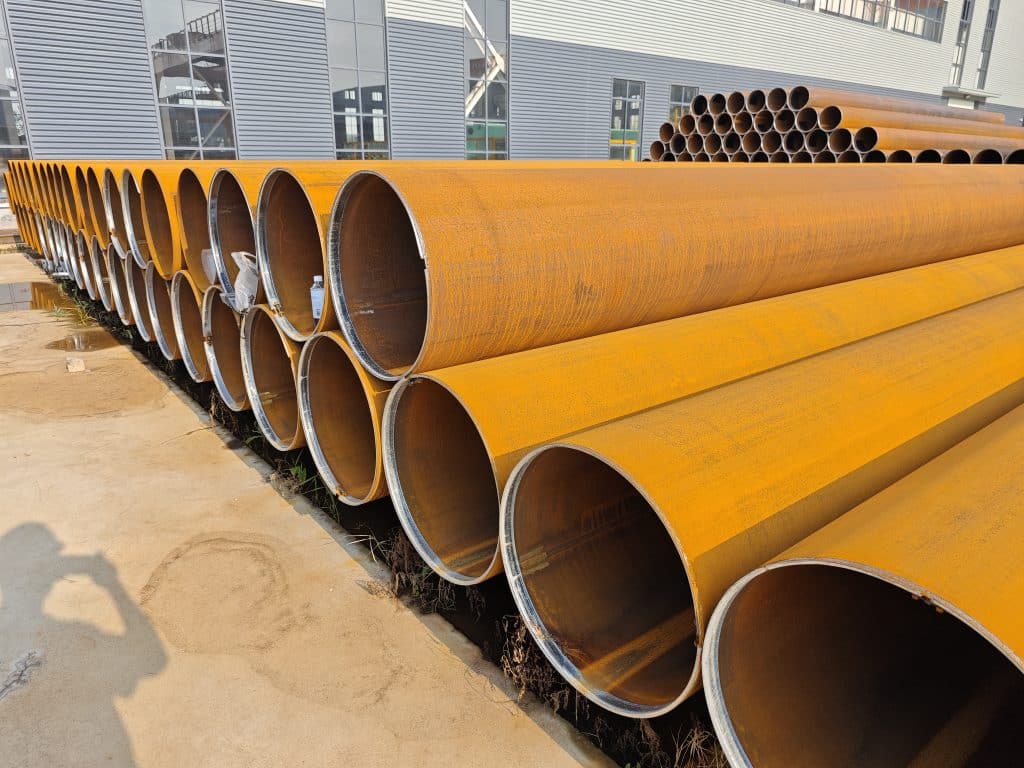
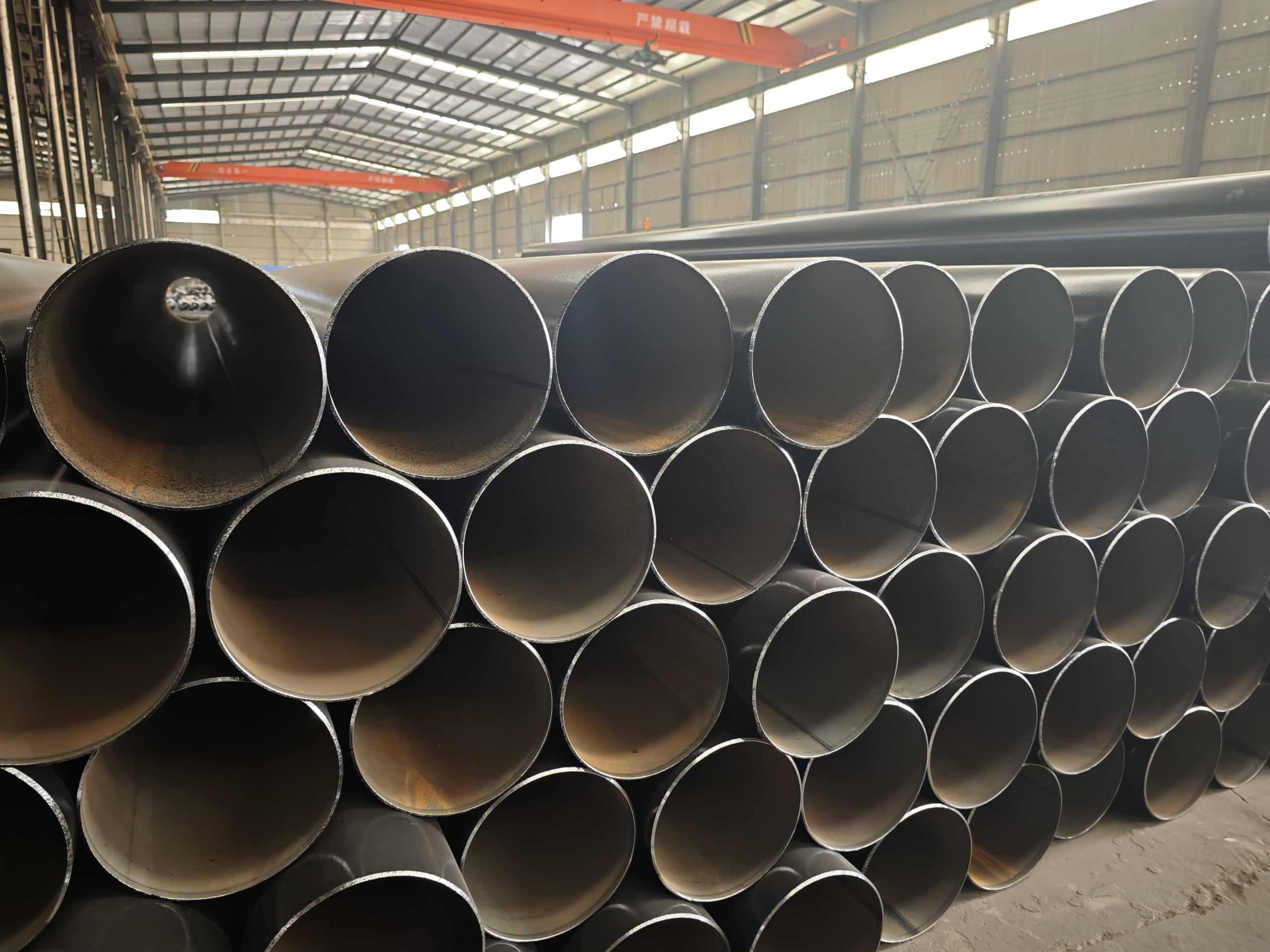
ASTM A53 Schedule 40 ERW pipe has different nominal wall thicknesses for different nominal pipe sizes. Within NPS 1/8 through NPS 16, representative Schedule 40 walls range from 0.068 in. [1.73 mm] to 0.500 in. [12.70 mm]; this is a selected size range rather than the complete dimensional series. For NPS 2 through NPS 8, the nominal walls range from 0.154 in. [3.91 mm] to 0.322 in. [8.18 mm]. Check the applicable dimensional table and A53 wall-thickness tolerance for the ordered size.

Understanding ASTM A53 Schedule 40 ERW Pipe Thickness
Schedule 40 is a wall-thickness series used with NPS in ASME B36.10. Each listed nominal size has a corresponding nominal outside diameter and wall thickness. The schedule number remains 40 across these sizes, but it does not represent one fixed wall thickness or a fixed wall-to-diameter ratio.
What “Schedule” Actually Means in Pipe Sizing?
A schedule number identifies entries in a dimensional table. For the same NPS, a higher applicable schedule generally means a thicker wall. Select the nominal wall from the dimensional series after checking the governing design requirements. Schedule 40, Schedule 80, STD and XS must be compared at the actual size; weight-class designations are not interchangeable with schedule numbers across all diameters.
Schedule 40 Wall Thickness Reference Chart (ASTM A53/A53M-22 / ASME B36.10M)
| NPS (in) | OD (in) | Nom. Wall (in) | Nom. Wall (mm) | Calculated min. wall (in.) |
| ½ | 0.840 | 0.109 | 2.77 | 0.095375 |
| 1 | 1.315 | 0.133 | 3.38 | 0.116375 |
| 2 | 2.375 | 0.154 | 3.91 | 0.134750 |
| 4 | 4.500 | 0.237 | 6.02 | 0.207375 |
| 6 | 6.625 | 0.280 | 7.11 | 0.245000 |
| 8 | 8.625 | 0.322 | 8.18 | 0.281750 |
| 12 | 12.750 | 0.406 | 10.31 | 0.355250 |
| 16 | 16.000 | 0.500 | 12.70 | 0.437500 |
Nominal dimensions: applicable ASME B36.10 Schedule 40 entries. Minimum-wall examples below are calculated as 0.875 times the listed nominal inch wall; use the ordered unit system and applicable conformity rules for acceptance.
Tolerance Rules Every Buyer Should Know
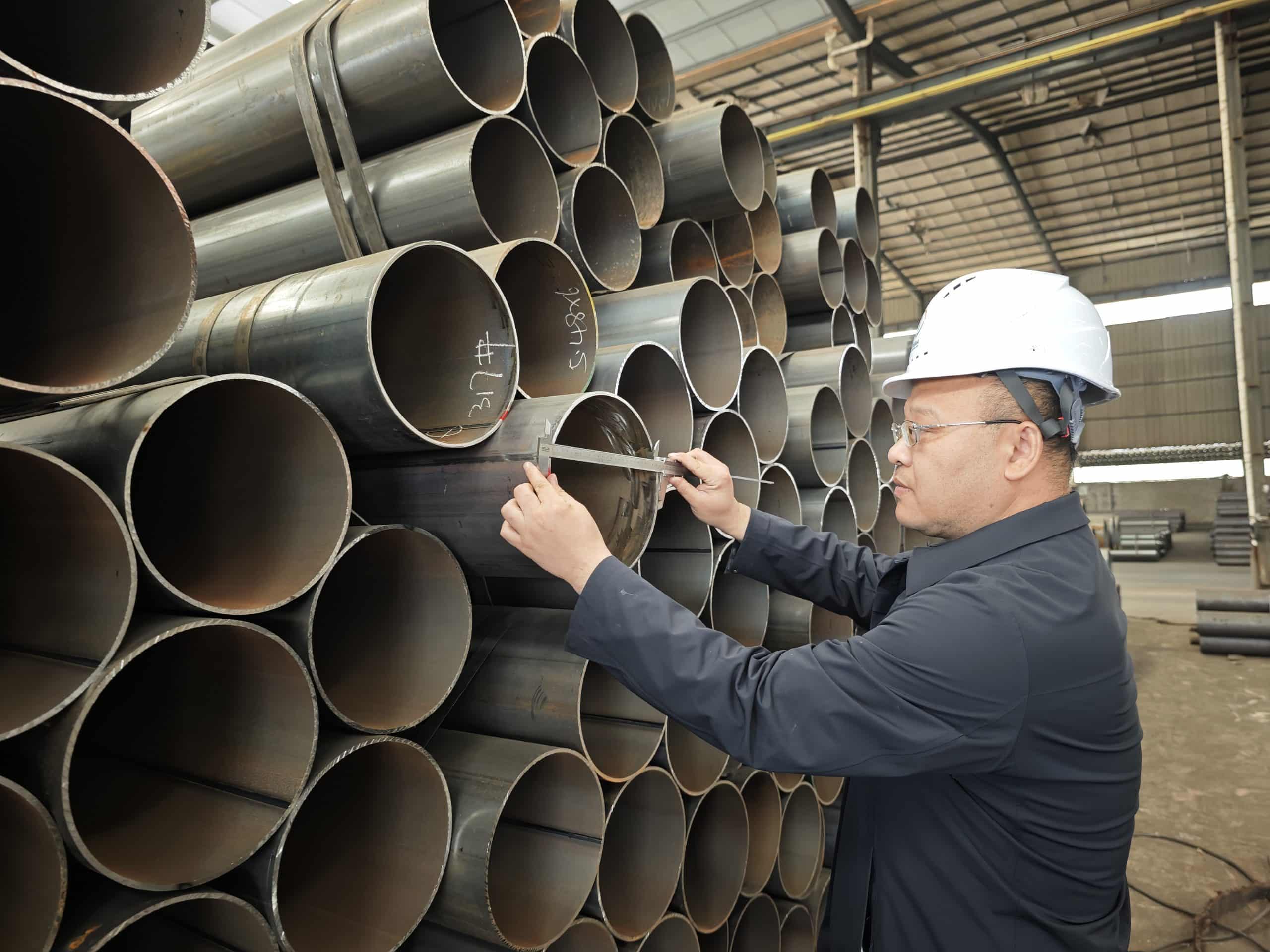
ASTM A53/A53M-22 requires the wall thickness at any point to be no more than 12.5% below the specified thickness. Verify actual wall using suitable calibrated equipment and the agreed inspection procedure. A53 does not state a simple universal positive wall tolerance, but the pipe must also satisfy applicable dimensional and weight requirements. Keep nominal dimensions, measured values and acceptance calculations clearly distinguished.
Material Properties and Correlation to Pipe Thickness
Wall thickness does not exist in isolation. It works together with the pipe’s chemistry and mechanical properties to define how a pipe performs under pressure, temperature, and corrosive exposure.
Chemical Composition of ASTM A53 Grade B
For Grade B ERW pipe, ASTM A53 chemistry includes maximum carbon of 0.30%, manganese of 1.20%, phosphorus of 0.05% and sulfur of 0.045%, subject to the specified adjustments and other element limits. Grade B can be suitable for welding and forming operations within the standard’s conditions. Grade A is preferred where close coiling or cold bending is required; this does not prohibit cold bending of Grade B.
Mechanical Properties and Their Link to Wall Thickness
Grade B has a specified minimum yield strength of 35,000 psi [240 MPa] and minimum tensile strength of 60,000 psi [415 MPa] under ASTM A53/A53M-22. At comparable diameter and design conditions, increased wall thickness can improve pressure capacity. Simplified relationships such as P = 2St/D illustrate the influence of thickness, but allowable operating pressure must be determined using the governing code, its allowable stress and factors, temperature, tolerances and required allowances.
Corrosion Allowance and Schedule 40 Thickness
Corrosion allowance is a design input rather than a value automatically included in Schedule 40. Determine the required pressure wall and additional allowances for corrosion, threading, grooving or other conditions, then account for the applicable manufacturing tolerance when selecting nominal thickness. Whether a Schedule 40 wall is sufficient depends on the actual size, service and design life.
ASTM A53 Schedule 40 ERW Pipe Manufacturing Process and Thickness Quality Control
ERW pipe begins with steel strip or skelp that is formed into a round section and pressure-welded along its length using electrical resistance heating. For Grade B, ASTM A53 specifies weld treatment to at least 1,000°F [540°C] so that no untempered martensite remains, or alternative processing that achieves that condition. Acceptance depends on the required product tests; this treatment does not guarantee identical weld-zone and parent-metal properties.
How Thickness Consistency Is Achieved on the ERW Mill
Incoming strip thickness, forming and sizing controls influence the finished dimensions. LONGMA checks production dimensions and finished-pipe wall thickness using suitable calibrated measurement equipment. Outside diameter and wall thickness are separate measurements; a laser diameter gauge alone does not establish wall thickness. Acceptance follows the applicable A53 requirements and agreed inspection plan.
Ultrasonic Testing and Hydrostatic Verification
Each length of A53 Type E pipe undergoes the required hydrostatic testing, and applicable weld NDT is performed under the product-standard provisions and inspection plan. Test pressures, hold conditions and acceptance criteria must be taken from the ordered specification. The stress basis used for a manufacturing hydrostatic test is not a universal allowable operating stress for the installed system. Inspection records remain traceable to the supplied product.
Certifications That Back Every Pipe Dimension
LONGMA supplies A53 Schedule 40 ERW pipe to the ordered specification and agreed inspection requirements. Where ASME SA-53 compliance is requested, identify the applicable edition and requirements separately. Inspection documentation should connect nominal dimensions, material identity and required test records so buyers and third-party inspectors can assess conformity.
Comparing ASTM A53 Schedule 40 ERW Pipe to Other Pipe Types
To choose the right pipe type, you need to think about both cost and how well it works. Here is a straight comparison to help buying managers make that choice quickly.
Schedule 40 ERW vs. Schedule 80 and XS
For NPS 4, Schedule 80 has a nominal wall of 0.337 in., compared with 0.237 in. for Schedule 40—about 42% greater nominal wall thickness. Actual steel area and weight do not increase by exactly the same percentage. Select Schedule 80 or XS from the dimensional table and design requirements rather than a universal 300 psi threshold. Additional wall may provide a specified allowance but does not change carbon steel’s inherent corrosion resistance.
Schedule 40 ERW vs. ASTM A53 Seamless
ASTM A53 covers ERW Type E and seamless Type S. Type S has no longitudinal weld, while Type E is made from formed strip with a welded seam. Both must meet the applicable requirements for the ordered grade and type. ERW often offers consistent coil-based wall thickness and competitive cost. The design or owner specification determines whether seamless manufacture is required; neither route is automatically superior for every temperature or cyclic-pressure condition.
Schedule 40 ERW vs. API 5L Line Pipe
API 5L is a line-pipe product specification, while ASTM A53 covers suitable mechanical, pressure and ordinary steam, water, gas and air applications. The applicable design code and owner specification determine which product standard to order. API 5L toughness and sour-service requirements depend on PSL and supplementary provisions; they do not apply identically to every API 5L product.
Procurement Considerations for ASTM A53 Schedule 40 ERW Pipe Thickness
Confirming wall thickness at procurement reduces the risk of field replacement. Buyers should agree the dimensions, inspection records and acceptance criteria before placing the order.
The following checks support specification compliance and traceability:
Wall verification: confirm the nominal thickness and applicable tolerance, and review measured inspection records where required. The MTC and supporting reports should demonstrate the ordered conformity; a particular certificate layout or a separate tolerance sentence is not a universal acceptance requirement.
Finish and connection compatibility: galvanized pipe should meet the applicable A53 requirements. Specify NPT to ASME B1.20.1, or another connection to its correct standard. Agree the threading and coating sequence, gauge inspection and protection of exposed areas so both connection and corrosion-protection requirements are met.
Traceability: agree the required markings and heat, lot or product identification in the order and inspection plan. EN 10204 defines inspection-document types; the product specification and contract establish the detailed identification requirements. LONGMA links material and inspection records to the supplied pipe.
These three steps make sure the project stays on track and avoids the most common issues that come up during site acceptance.
Conclusion
Schedule 40 provides nominal wall thicknesses for listed pipe sizes; it does not identify a universal pressure rating or an automatic corrosion allowance. Within the NPS 1/8 to NPS 16 range discussed here, example nominal walls run from 0.068 to 0.500 in. Apply the A53 minimum-wall requirement in the ordered unit system and verify the design separately. Traceable dimensions, material records and test results help procurement teams accept the correct product and avoid replacement work.
FAQ
What is the minimum wall thickness allowed for ASTM A53 Schedule 40 ERW pipe?
Under ASTM A53/A53M-22, minimum wall is generally 87.5% of the specified nominal thickness. For NPS 4 Schedule 40 at 0.237 in., the arithmetic result is 0.207375 in. For a metric order using 6.02 mm, the corresponding calculation is 5.2675 mm. Use the ordered unit system and applicable conformity rules; do not lower the acceptance threshold by uncontrolled rounding. Request the required wall-measurement records.
Does Schedule 40 wall thickness change with Grade A vs. Grade B?
No. The same nominal size and schedule use the same nominal dimensions regardless of Grade A or B. Grade B has higher specified minimum strength. Grade selection still needs to match the design, forming requirements and project specification.
How does Schedule 40 thickness affect pressure rating?
Thickness influences pressure capacity, but Schedule 40 alone does not establish an allowable pressure. Use the governing design code, such as ASME B31.1 or B31.3 where applicable, together with temperature-dependent allowable stress, dimensions, allowances and tolerance. A manufacturing test stress must not be substituted for the design allowable stress.
Can ASTM A53 Schedule 40 ERW pipe be hot-dip galvanized?
Yes. ASTM A53 includes hot-dip galvanized pipe and its coating requirements. Confirm the specified finish, relevant tests and any project additions in the purchase order. Galvanizing does not automatically establish suitability for every sprinkler, outdoor or corrosive application.
Get Accurate Schedule 40 ERW Pipe Specifications from LONGMA
Since 2003, LONGMA has manufactured round ERW and LSAW steel pipes. Our factory covers 230,000 m², with annual output exceeding 500,000 tonnes. We support A53 Schedule 40 ERW orders with agreed black or galvanized finishes, plain or threaded ends, and traceable EN 10204 inspection documentation. Stock sizes can ship in seven days, with standard production commonly taking around 30 days, subject to confirmation. Contact info@ilongma.com or visit www.ilongma.com for dimensions, inspection requirements and a quotation.