- 1. Understanding LSAW Steel Pipe: Definition, Manufacturing, and Standards
- 2. Comparing LSAW Steel Pipe with Other Steel Pipe Types
- 3. Procurement Guide: How to Source LSAW Steel Pipe Globally
- 4. Future Trends in the LSAW Steel Pipe Industry
- 5. Conclusion
- 6. FAQ
- 7. Partner with LONGMA — Your Trusted LSAW Steel Pipe Manufacturer
LSAW steel pipe has promising applications as oil and gas transmission networks expand across challenging terrains and offshore environments. Plate-based forming and submerged arc welding support large-diameter, heavy-wall production. For procurement managers sourcing line pipe for trunk lines, sour service or offshore systems, the practical opportunities depend on qualified materials, weld integrity, coating performance and reliable documentation. Understanding these requirements helps buyers assess both manufacturing capability and future supply needs.
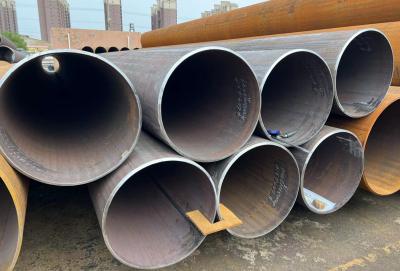
Understanding LSAW Steel Pipe: Definition, Manufacturing, and Standards
What Is LSAW Steel Pipe?
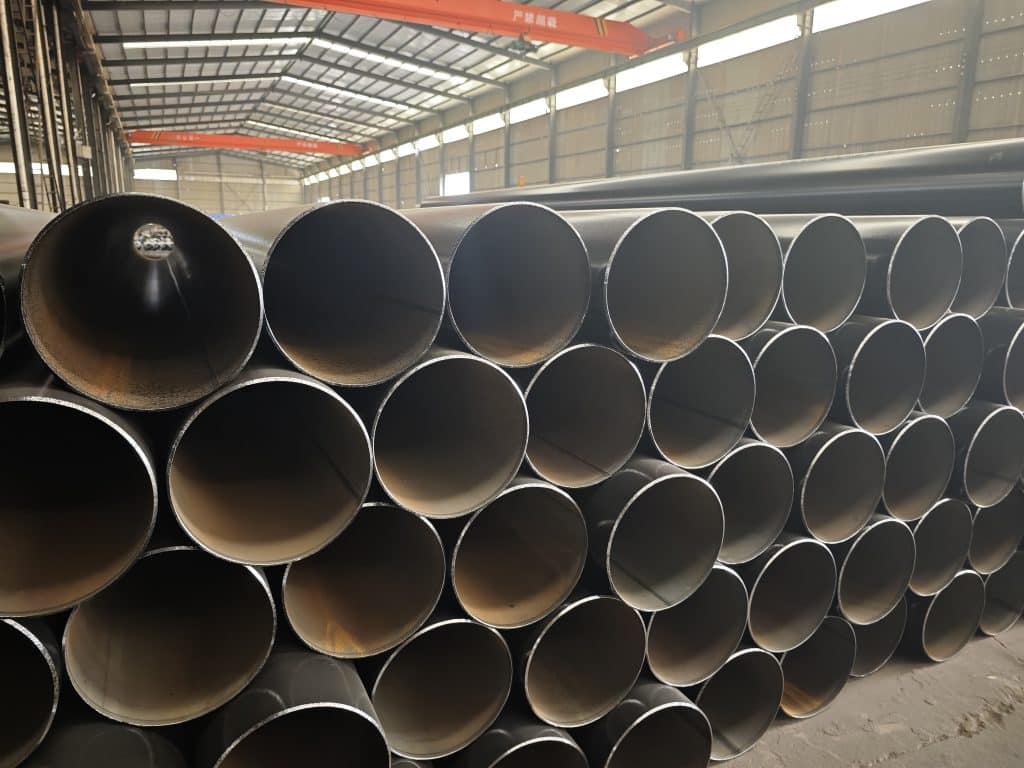
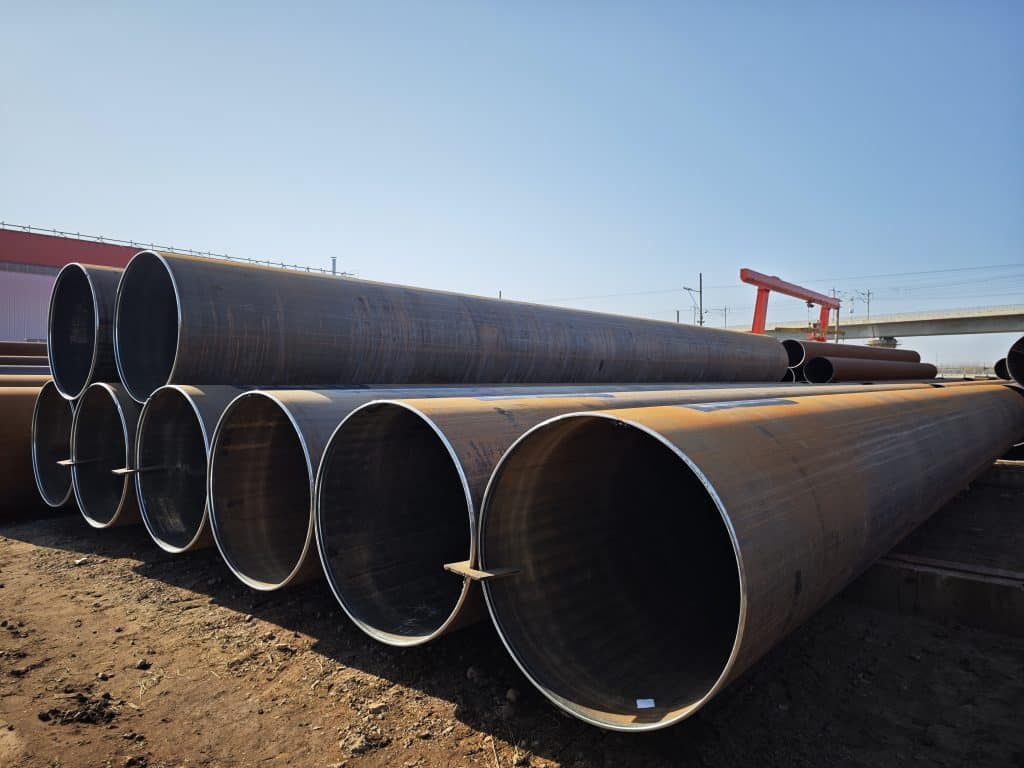
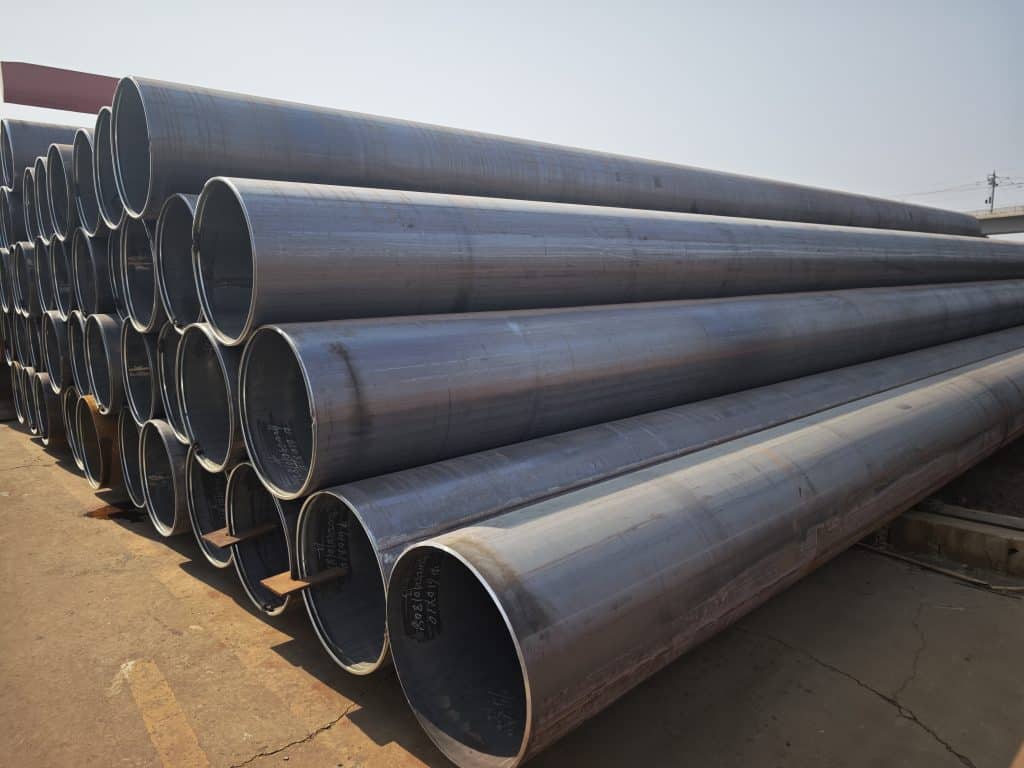
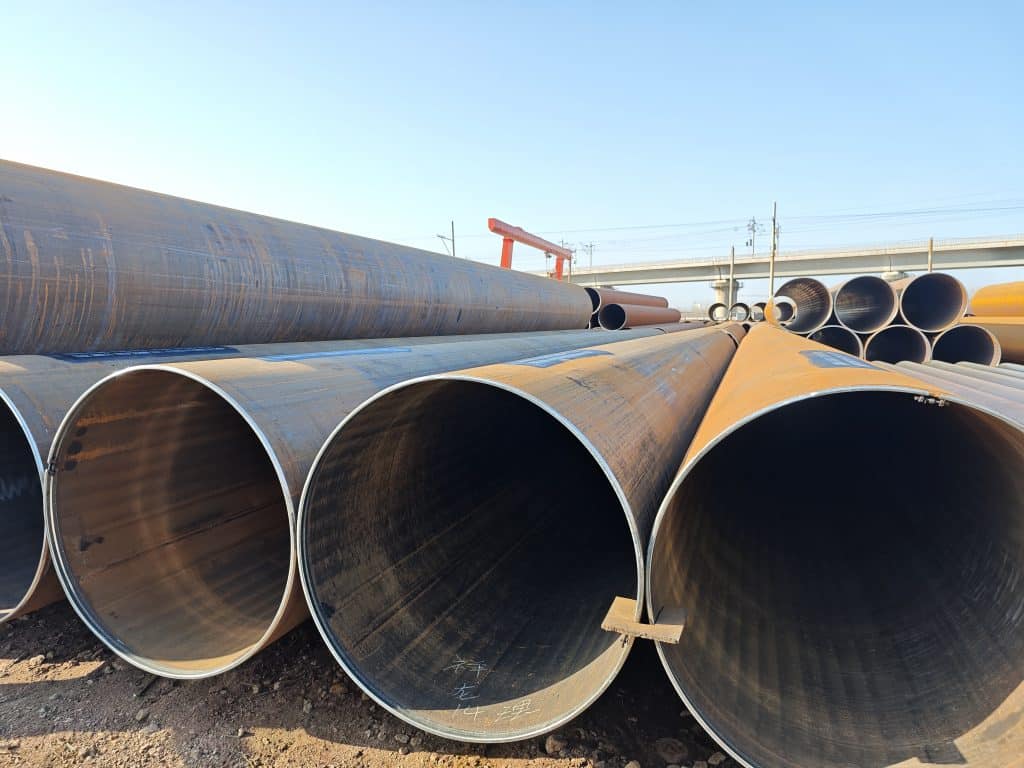
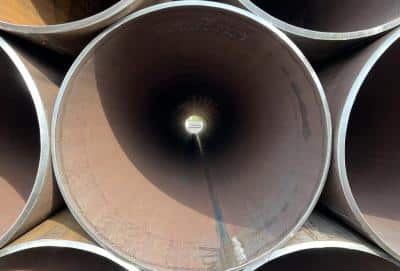
LSAW steel pipe is manufactured by forming individual steel plates into a cylindrical shape using UO or JCO forming, followed by submerged arc welding of the longitudinal seam from the inside and outside. Where mechanical expansion is included, the processes are commonly described as UOE or JCOE. Expansion improves roundness and dimensional consistency and can redistribute residual stresses; it does not replace stress-relief heat treatment. Heat-affected-zone properties depend on the material and welding procedure, rather than seam direction alone.
Manufacturing Process and Key Steps
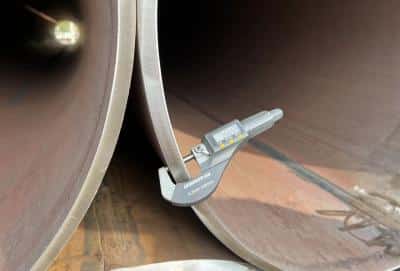
The manufacturing process includes plate inspection, edge preparation, cold forming, tack welding, internal and external submerged arc welding, dimensional control, and applicable expansion, hydrostatic testing and non-destructive examination. Weld inspection must meet the requirements for the ordered product specification level and manufacturing process. LONGMA supports EN 10204 type 3.1 or 3.2 inspection documentation according to the purchase order and agreed inspection plan.
Applicable International Standards
API 5L and ISO 3183 are principal specifications for oil and gas line pipe. Buyers should identify the edition, steel grade, product specification level and delivery condition in the order. API published its 47th edition in June 2026; ISO 3183:2019 supplements API 5L, 46th edition (2018), with stated exceptions and additions. Sour-service orders require additional material and testing requirements appropriate to the operating environment, including API 5L Annex H where specified. Welding-end preparation and coating standards should be identified separately in the purchase specification.
Comparing LSAW Steel Pipe with Other Steel Pipe Types
LSAW vs. ERW: Pressure Rating and Wall Thickness
ERW pipe is produced from strip using resistance welding, commonly by a high-frequency process. Its available diameter and wall thickness depend on the production line. Plate-based LSAW manufacturing is well suited to large diameters and heavy walls. Neither process alone determines pressure capacity: grade, outside diameter, wall thickness, weld quality and the applicable design code must be assessed together. Qualified ERW and LSAW products can both serve demanding pipeline applications.
LSAW vs. SSAW: Seam Geometry and Stress Distribution
SSAW or HSAW pipe has a helical weld, while LSAW pipe has a longitudinal weld. Seam orientation changes the stresses acting across the weld, but does not establish an automatic safety ranking. Under internal pressure, hoop stress acts across a longitudinal seam. Pipe selection should consider the design code, fracture-control requirements, manufacturing qualification and inspection results for the specific route and service conditions.
LSAW vs. Seamless: Size Range and Cost
Seamless pipe can be appropriate for a wide range of pressure applications. For large diameters and heavy walls, LSAW pipe offers a practical manufacturing route, while seamless availability and cost depend on the mill and specification. Buyers should compare technically compliant offers on dimensions, delivery, inspection and total installed cost rather than assume that either process is always less expensive.
Procurement Guide: How to Source LSAW Steel Pipe Globally
Verifying Supplier Qualifications
Supplier qualification should match the tender requirements. Buyers can verify a claimed API Monogram license in the API licensing directory and review its authorized scope and status. ISO 9001 certification, relevant production experience and an agreed inspection and test plan help assess quality management. Environmental and occupational health certifications may also be requested. A third-party inspection report is distinct from a manufacturing license or management-system certificate.
Evaluating Technical Capability and Delivery
Production capacity, stock levels and delivery lead times influence EPC project schedules. LONGMA operates a 230,000 m² factory with annual output exceeding 500,000 tonnes and more than 60 senior technical experts. Stock orders can ship in seven days, regular sizes in around 30 days and custom orders in around 45 days, subject to order confirmation. Heat, batch and product identification support traceability throughout manufacture. The required inspection certificate and any third-party participation should be agreed before production.
Managing Quality Through the Supply Chain
Before shipment, buyers should review hydrostatic testing, weld NDT and the applicable chemical and mechanical test records against the approved inspection plan. LONGMA welcomes source inspection by a client-selected organization such as SGS, Bureau Veritas or Intertek. Carbon-equivalent control supports field weldability, but welding procedures also need to account for wall thickness, hydrogen control, restraint and temperature. Procedure qualification should follow the applicable pipeline code and contract, which may specify API 1104 or ASME Section IX.
Future Trends in the LSAW Steel Pipe Industry
Demand Growth from Energy Infrastructure Investment
In its 2023 report, the International Energy Agency (IEA) said that annual investments in global midstream pipelines exceeded $30 billion USD. There was a lot of growth in the Middle East, Central Asia, and South America, which are all places where Longma’s main clients, SINOPEC, CNPC, PEMEX, PDVSA, and PTTEP, run major pipeline systems. This steady investment in capital immediately supports the steady flow of orders for large-diameter LSAW pipe.
Advances in Sour Service Metallurgy
Development of H₂S-containing resources creates demand for line pipe with qualified sour-service performance. Steel cleanliness, hardness, weld properties and resistance to relevant cracking mechanisms must be assessed for the specified environment. Calcium treatment may be part of a steelmaking route, but should not be described as a universal requirement of ISO 15156. Where specified, HIC testing can follow NACE TM0284, with acceptance criteria defined by the applicable product or project specification. LONGMA can provide agreed HIC and SSC test records for third-party review.
Coating Technology and Environmental Compliance
Three-layer polyethylene coatings combine an FBE primer, an adhesive layer and a polyethylene outer layer. They provide corrosion protection and mechanical resistance for suitable buried or submerged applications. Single-layer FBE is another established option; selection depends on operating temperature, installation conditions and the project coating specification. The appropriate standard and edition should be stated separately for each system, for example ISO 21809-2 for single-layer FBE and the applicable DIN 30670 requirements for polyethylene systems. LONGMA offers coating application and inspection in-house.
Conclusion
LSAW steel pipe has a strong role in energy transmission because plate-based manufacturing supports large diameters, heavy walls and controlled weld inspection. Its prospects depend on infrastructure investment and the ability of suppliers to meet increasingly specific material, toughness, coating and traceability requirements. Buyers should choose the steel grade and PSL together with the service conditions, rather than treat a manufacturing process or certificate as a complete guarantee of suitability.
FAQ
What grades of LSAW pipe does Longma supply?
LONGMA supplies API 5L line pipe across grades from Grade B to X80, subject to manufacturing capability and order confirmation. PSL1 and PSL2 grade ranges must be specified separately; under the 46th-edition framework, X80 is a PSL2 grade. For sour-service PSL2 pipe, designations such as X52NS or X52MS combine delivery-condition and service information. A suffix alone does not replace verification of the ordered chemistry, inspection and environmental limits.
How do I verify that an API 5L certificate is valid?
At api.org, the API keeps a public license database. Buyers should look up the supplier’s license number or business name to make sure the API 5L Monogram is valid and covers the needed pipe sizes and grades. Longma has a valid API 5L license, and purchasing teams can ask for the certificate number to check it themselves before sending out a purchase order.
What surface treatments are available for buried or subsea pipe?
LONGMA offers FBE and 3LPE coatings for suitable buried or submerged applications. Coating selection should consider operating temperature, handling, installation and project requirements. Inspection can include holiday detection, adhesion and other tests required by the selected coating specification. Bare pipe, black paint or varnish may also be supplied; temporary mill protection should not be treated as a permanent pipeline corrosion-protection system.
Can Longma accommodate source inspection by a client-nominated third party?
Yes, SGS, Bureau Veritas, Intertek, or any other inspection body chosen by the client can do source inspections at Longma’s facility. Before production starts, hold points, witness points, and review points are agreed upon in the inspection and test plan (ITP). This is in line with normal EPC quality assurance requirements.
Partner with LONGMA — Your Trusted LSAW Steel Pipe Manufacturer
Since 2003, LONGMA has manufactured and exported steel line pipe. The company has a registered capital of RMB 176 million, a factory covering 230,000 m² and annual output exceeding 500,000 tonnes. We manufacture round ERW and LSAW steel pipes, with the process, dimensions, grade and PSL confirmed for each order. Sour-service requirements, FBE or 3LPE coatings, and third-party inspection can be included in the enquiry. Contact info@ilongma.com or visit www.ilongma.com for a quotation and technical review.