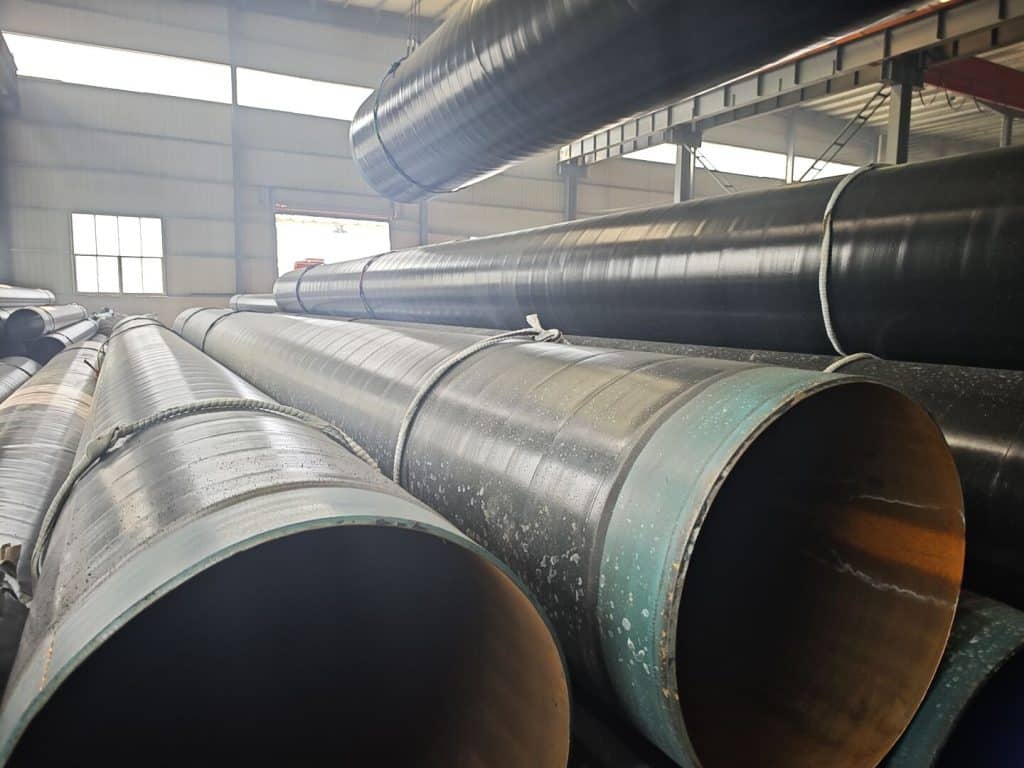
In AS/NZS 1163:2016, C250 and C250L0 have the same specified minimum yield strength of 250 MPa and minimum tensile strength of 320 MPa. The L0 suffix adds a Charpy V-notch impact requirement at 0°C. It therefore identifies an impact-tested grade; it does not indicate a higher strength class. When a project specification requires C250L0, ordinary C250 should not be substituted unless the responsible design authority formally approves the change.
Understanding the L0 Designation
Reading the grade name
AS/NZS 1163 identifies grades of cold-formed structural steel hollow sections. In the designation C250L0, C250 is the strength grade and L0 identifies the specified impact-test quality at 0°C. The grade designation does not define the complete product dimensions, length, surface condition or coating. Those details must be stated separately in the drawing, specification or purchase order.
What the Charpy V-notch test measures
The Charpy V-notch test measures the energy absorbed by a notched test specimen when it is fractured by a pendulum impact. The result provides a measure of impact behaviour under the specified test conditions. It is not a direct measurement of allowable structural load, fatigue life or corrosion resistance. The test temperature and specimen dimensions are essential parts of the result.
C250L0 impact acceptance values
For a full-size 10 × 10 mm specimen tested at 0°C, AS/NZS 1163:2016 specifies a minimum average absorbed energy of 27 J for three tests and a minimum individual result of 20 J. Where reduced-size specimens are used in accordance with the standard, the requirements are 22 J average and 16 J individual for 10 × 7.5 mm specimens, and 18 J average and 13 J individual for 10 × 5 mm specimens. A certificate should identify the test temperature, specimen size and test results so that the correct acceptance values can be applied.
| Charpy specimen size | Test temperature | Average of 3 tests (minimum) | Individual result (minimum) |
| 10 × 10 mm | 0°C | 27 J | 20 J |
| 10 × 7.5 mm | 0°C | 22 J | 16 J |
| 10 × 5 mm | 0°C | 18 J | 13 J |
A result that meets the 0°C requirement does not prove that the material is suitable for every service temperature below 0°C. The engineer must consider the actual design temperature, loading, stress concentration, material thickness, fabrication and governing design requirements.
C250 and C250L0: Key Differences
| Property | C250 | C250L0 |
| Minimum yield strength | 250 MPa | 250 MPa |
| Minimum tensile strength | 320 MPa | 320 MPa |
| Charpy V-notch requirement | No L0 impact requirement | Specified impact test at 0°C |
| Full-size 10 × 10 mm Charpy acceptance | Not specified by the C250 designation | 27 J average of 3; 20 J individual minimum |
| Product dimensions and tolerances | Specified separately under AS/NZS 1163 | Specified separately under AS/NZS 1163 |
Does L0 increase strength?
No. C250L0 does not have a higher specified minimum yield strength or tensile strength than C250. The distinction is the additional impact requirement. Designers should not reduce member dimensions or assume a higher design resistance simply because the L0 suffix is present. Member capacity is determined by the structural design, including section geometry, stability, connections and applicable material factors.
When might a project specify L0?
A project may specify C250L0 where impact properties at 0°C are required by the design basis, project specification or applicable structural requirements. Potential applications include exposed structures, bridges, infrastructure, handling equipment and welded frames, but the standard does not prescribe these uses solely on the basis of the L0 suffix. The responsible engineer selects the grade after considering service temperature, loading, consequences of fracture and project requirements.
What L0 does not establish
The L0 designation does not independently increase yield strength, tensile strength, corrosion resistance, fatigue life, fire resistance or service life. Corrosion protection must be selected for the exposure conditions, while fatigue and fire performance require separate design assessments. Impact testing of the base material also does not automatically establish the toughness of a fabricated weld or heat-affected zone; fabrication procedures and project inspection requirements remain relevant.
Comparing C250L0 with Other Grades and Standards
C250L0, C350L0 and C450L0
Under AS/NZS 1163:2016, the minimum yield and tensile strengths are 250 MPa and 320 MPa for C250L0, 350 MPa and 430 MPa for C350L0, and 450 MPa and 500 MPa for C450L0. Each L0 grade has the specified impact requirement at 0°C. A higher strength grade may affect the member design, but it does not automatically permit a thinner section: stiffness, buckling, connection capacity, fabrication and serviceability must also be checked.
| Grade | Minimum yield strength | Minimum tensile strength | Impact requirement |
| C250L0 | 250 MPa | 320 MPa | 0°C Charpy requirement |
| C350L0 | 350 MPa | 430 MPa | 0°C Charpy requirement |
| C450L0 | 450 MPa | 500 MPa | 0°C Charpy requirement |
C250L0 and ASTM A500
ASTM A500/A500M covers cold-formed welded and seamless carbon-steel structural tubing in rounds and shapes. Its grade designations and mechanical-property requirements differ from AS/NZS 1163, and it does not use the same L0 designation. A grade under ASTM A500 should not be assumed to satisfy a C250L0 requirement. Any proposed alternative requires comparison of the complete standard requirements and written approval from the responsible engineer.
C250L0 and EN 10219 S275J0H
EN 10219-1 specifies technical delivery conditions for cold-formed welded structural hollow sections. S275J0H has a different grade designation and standard framework from C250L0. Although the J0 quality includes an impact requirement at 0°C, a similar impact-energy value does not make the grades equivalent. Yield strength, tensile strength, chemical composition, dimensions, tolerances, testing and certification requirements must all be assessed before any substitution.
Manufacturing, Welding and Quality Documentation
Manufacturing route
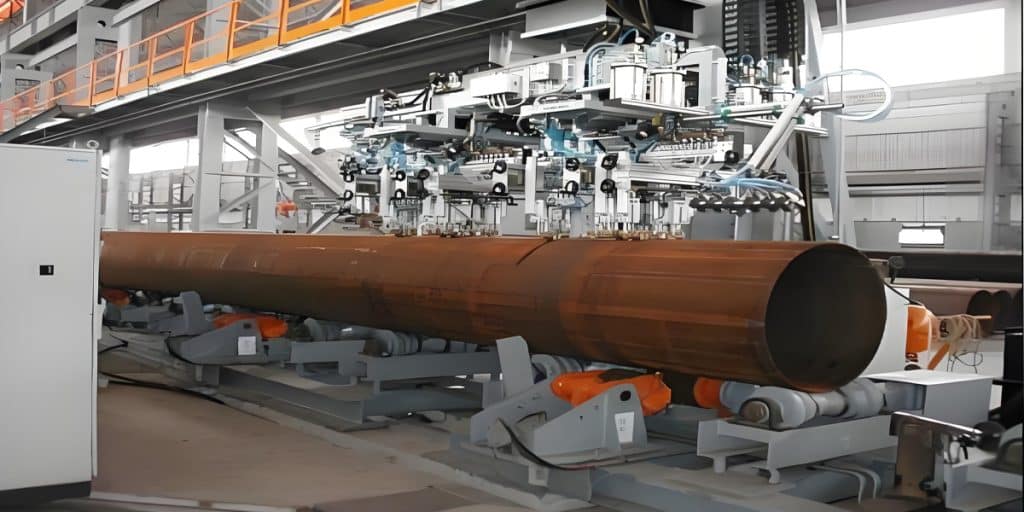
AS/NZS 1163:2016 applies to cold-formed, electric-resistance-welded steel hollow sections for structural purposes. In the ERW process, steel strip is progressively formed into a circular shape and the abutting strip edges are joined by resistance welding to create a longitudinal weld. The product is then processed and tested in accordance with the applicable manufacturing requirements. A description of the process should not imply that two separate finished plates are simply joined together.
Welding and galvanizing
The suitability of C250L0 for a welded structure does not remove the need for an appropriate welding procedure. Fabricators should consider the material certificate, chemical composition, carbon equivalent, wall thickness, joint design, restraint, consumables and inspection requirements. The L0 impact requirement applies to the specified base-material test; it does not automatically certify the impact performance of a weld or heat-affected zone.
Where hot-dip galvanizing is specified, the coating requirements should be stated in the purchase documents and coordinated with the fabricator and galvanizer. AS/NZS 4680 may apply to hot-dip galvanized coatings on fabricated ferrous articles. Vent and drain-hole positions for hollow sections should be agreed during detailing to allow safe and effective galvanizing.
Mill test certificates and traceability
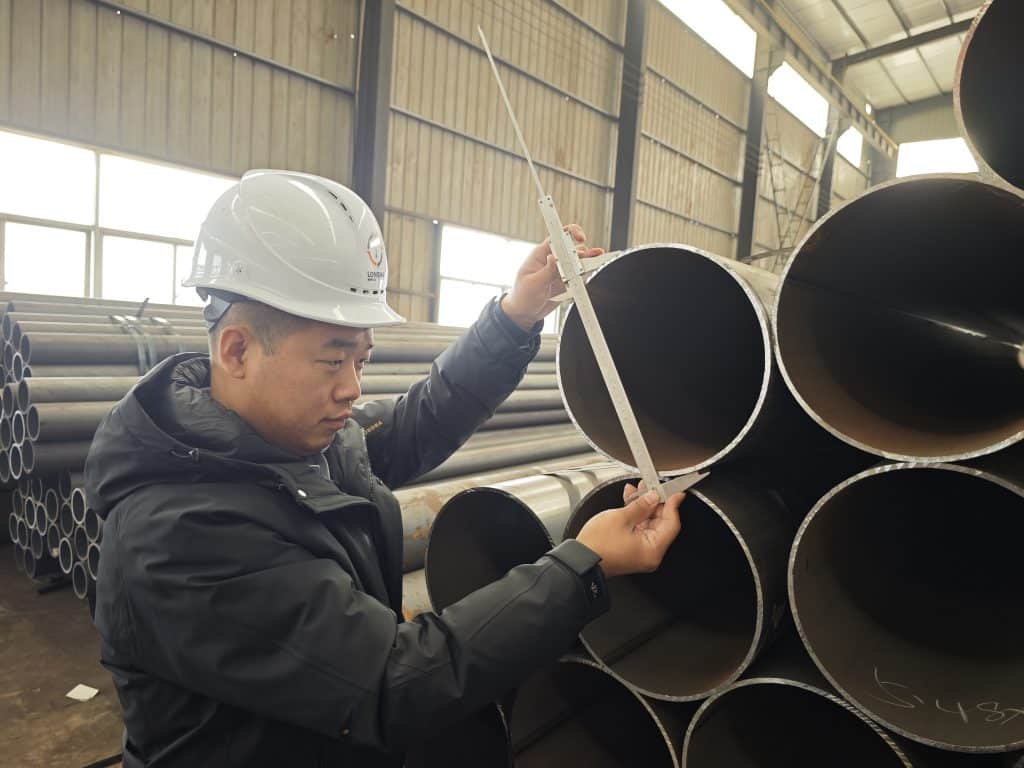
An EN 10204 Type 3.1 inspection certificate is validated by the manufacturer’s authorized inspection representative who is independent of the manufacturing department. For a C250L0 order, review the product standard and grade, dimensions, heat identification, chemical analysis, tensile results and Charpy results, including temperature and specimen size. Check that product markings, bundle tags and shipping documents can be linked to the certificate. The precise document scope should be agreed in the purchase order.
ISO 9001 certification relates to a quality-management system; it is not a substitute for product-specific test results or order documentation. If third-party inspection, witness testing or additional reports are required, define them before placing the order.
How to Specify and Buy C250L0 CHS
Select the section for the design
Confirm that the drawings call for a circular hollow section and identify the required product standard and grade. Then specify outside diameter, wall thickness, length, quantity, tolerances, surface condition, coating and inspection documentation. The member size and grade should be selected by the project engineer using the applicable structural design requirements. LONGMA manufactures round ERW and LSAW steel pipes; square and rectangular hollow sections are not part of its product range.
Prepare a complete request for quotation
A clear request for quotation should state AS/NZS 1163:2016, C250L0, CHS, outside diameter, wall thickness, length, quantity, delivery destination, surface finish or coating, required inspection certificate and any additional inspection requirements. If the project specifies a particular standard edition or amendment, include it explicitly. Avoid using “C250 pipe” as the only material description where the design requires the L0 impact property.
Plan documentation and delivery
Before dispatch, check that the certificate includes the required impact results and that heat numbers match the pipe markings and bundle identification. Confirm the agreed inspection scope, packing method, delivery terms and schedule with the supplier. Delivery timing depends on product availability, specification, production planning, inspection and transport; it should be confirmed for each order rather than assumed from a general lead-time statement.
Conclusion
The principal difference between C250 and C250L0 under AS/NZS 1163:2016 is the specified Charpy V-notch impact requirement at 0°C. Both grades have a minimum yield strength of 250 MPa and a minimum tensile strength of 320 MPa. The L0 suffix does not mean higher strength and does not establish suitability for every sub-zero service condition. Correct grade selection, complete product dimensions, appropriate fabrication controls and traceable test documentation are all necessary to confirm that the supplied CHS meets the project specification.
FAQ
Is C250L0 stronger than C250?
No. Both have a minimum yield strength of 250 MPa and a minimum tensile strength of 320 MPa. C250L0 adds the specified Charpy impact requirement at 0°C.
What does 27 J at 0°C mean for C250L0?
For a full-size 10 × 10 mm Charpy specimen, the average of three test results must be at least 27 J, and no individual result may be below 20 J. Reduced-size specimens have corresponding lower acceptance values under the standard.
Does passing the 0°C Charpy test guarantee use at lower temperatures?
No. The test demonstrates compliance at the specified test temperature and specimen conditions. Suitability at a lower design temperature requires a separate engineering assessment.
What is the difference between C250 and C350?
C250 has minimum yield and tensile strengths of 250 MPa and 320 MPa. C350 has minimum yield and tensile strengths of 350 MPa and 430 MPa. The appropriate grade depends on the structural design.
Can S275J0H or ASTM A500 replace C250L0?
Not automatically. Similar strength or impact values do not establish equivalence between different product standards. The complete requirements must be compared and the substitution approved by the responsible engineer.
What should a C250L0 certificate show?
It should identify the standard and grade, dimensions, heat number, chemical analysis, tensile-test results and Charpy test temperature, specimen size and absorbed-energy results, as applicable to the order.
Request C250L0 CHS from LONGMA
For a C250L0 CHS enquiry, send the required standard and grade, outside diameter, wall thickness, length, quantity, destination and inspection requirements to info@ilongma.com. LONGMA can confirm the relevant product scope, manufacturing route and order documentation. Visit https://www.ilongma.com/ for company and product information.