- 1. Why Choose Circular Hollow Sections?
- 2. C350L0 Mechanical Properties and Impact Requirements
- 3. Dimensions and Section Selection
- 4. Designing CHS for Columns, Trusses and Bracing
- 5. Comparing Grades and Preparing a Purchase Specification
- 6. Welding, Corrosion Protection and Quality Control
- 7. Conclusion
- 8. FAQ
- 9. Request a C350L0 CHS Quotation from LONGMA
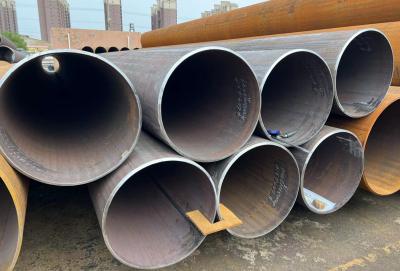
C350L0 circular hollow sections (CHS) combine a specified minimum yield strength of 350 MPa with a Charpy V-notch impact requirement at 0°C under AS/NZS 1163:2016. These properties can make the grade relevant to structural applications where both strength and specified impact performance are required. The circular profile has the same principal second moment of area about any centroidal axis through its cross-section, but this geometric symmetry does not eliminate member buckling or local wall instability. Structural design must consider the complete member, its connections and its loading.
Why Choose Circular Hollow Sections?
Section symmetry and structural behaviour
A circular hollow section has a closed cross-section and is geometrically symmetric about its principal centroidal axes. This can be useful where members are subject to loads from different directions or torsion. Its structural response still depends on outside diameter, wall thickness, member length, restraints, imperfections, connection details and load combinations. A CHS column can fail by overall buckling, while a relatively slender wall may also be susceptible to local buckling. The section shape alone is not a substitute for design checks.
Structural hollow sections and pipe for fluid service
AS/NZS 1163 specifies requirements for cold-formed, electric-resistance-welded steel hollow sections intended for structural purposes. A product manufactured to a fluid-service pipe standard is not automatically compliant with AS/NZS 1163, even if its outside diameter and wall thickness appear similar. The governing product standard and grade should be stated in the project specification and purchase order. Where a product is required to comply with more than one standard, each requirement must be demonstrated separately.
Typical structural applications
CHS members are used in applications such as trusses, columns, bracing, space frames, tower structures, platform supports and industrial frames. C350L0 may be specified where the design requires the C350 strength grade together with the L0 impact-test requirement. These are potential applications rather than uses mandated by the material standard. The engineer responsible for the structure determines the required grade and impact properties from the design actions, service conditions, design temperature and applicable design standard.
C350L0 Mechanical Properties and Impact Requirements
Strength and elongation
Under AS/NZS 1163:2016, C350 and C350L0 have a minimum yield strength of 350 MPa and a minimum tensile strength of 430 MPa. For circular hollow sections, the specified minimum elongation depends on the outside-diameter-to-wall-thickness ratio (dₒ/t). It is 16% where dₒ/t is not greater than 15, 18% where dₒ/t is greater than 15 and not greater than 30, and 20% where dₒ/t exceeds 30. The applicable value must be selected using the product dimensions and the standard’s test provisions.
| Property | C350 / C350L0 requirement for CHS |
| Minimum yield strength | 350 MPa |
| Minimum tensile strength | 430 MPa |
| Minimum elongation | 16%, 18% or 20%, depending on dₒ/t |
| L0 impact test temperature | 0°C |
| Full-size Charpy specimen (10 × 10 mm) | Average of 3 tests: at least 27 J; individual result: at least 20 J |
What the L0 designation means
The L0 suffix identifies a grade with a specified Charpy V-notch impact requirement at 0°C. For a full-size 10 × 10 mm specimen, the required absorbed energy is at least 27 J as the average of three tests, with no individual result below 20 J. Where reduced-size specimens are used in accordance with the standard, the corresponding requirements are 22 J average and 16 J individual for 10 × 7.5 mm specimens, and 18 J average and 13 J individual for 10 × 5 mm specimens. The specimen dimensions and reported results should therefore be checked together; “27 J” alone does not describe every permitted specimen size.
Passing the specified test at 0°C demonstrates compliance with that test requirement. It does not, by itself, establish suitability for every lower service temperature or every fracture-critical application. The design temperature, stress state, material thickness, fabrication details and project requirements remain relevant.
Chemistry, weldability and inspection documents
AS/NZS 1163 includes chemical-composition and carbon-equivalent requirements as well as mechanical testing. Carbon equivalent is one factor used when assessing weldability; it does not independently determine the welding procedure or remove the need for fabrication controls. Welding requirements should be established under the applicable project welding standard and specification, taking account of material thickness, joint restraint, consumables, heat input and preheat requirements where applicable.
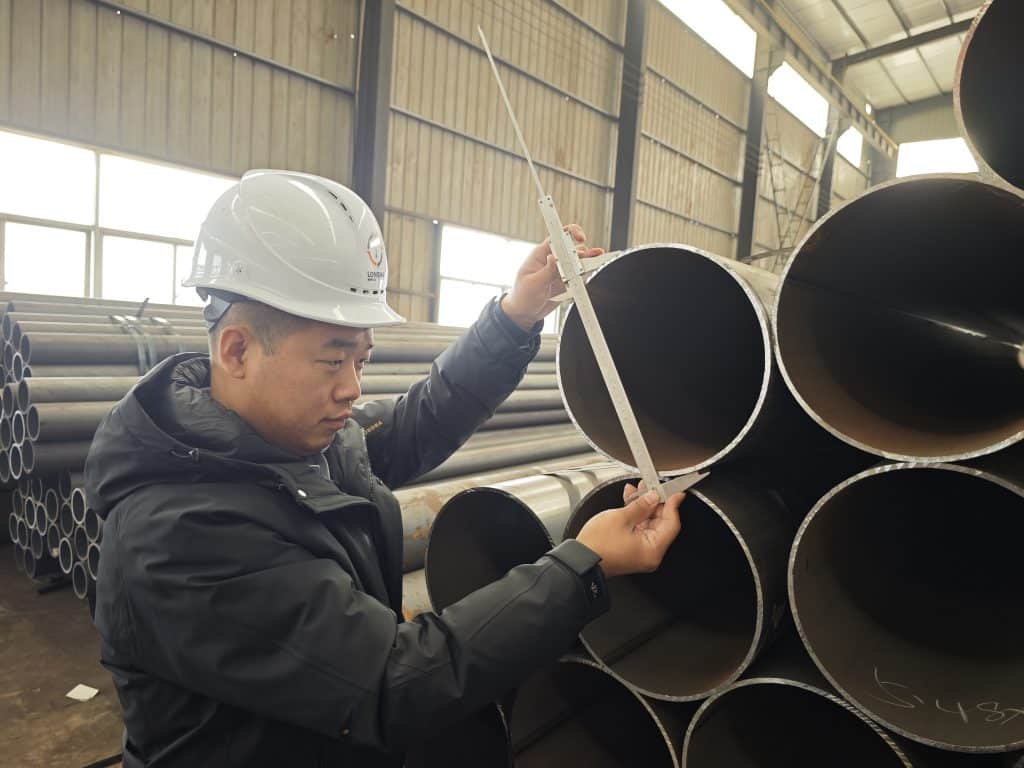
For a C350L0 order, review the inspection certificate for the specified grade, product dimensions, heat identification, chemical analysis, tensile-test results and Charpy results, including test temperature and specimen size. The certificate and product markings should provide a traceable link between the supplied material and its test records. Any additional inspection or third-party witnessing should be agreed before production.
Dimensions and Section Selection
How dimensions affect design
The outside diameter and wall thickness determine the cross-sectional area and influence section properties such as second moment of area, radius of gyration and section modulus. They also affect local slenderness, connection capacity, fabrication and corrosion allowance. For a circular tube with outside diameter D and wall thickness t, the nominal cross-sectional area is A = π(D − t)t. The theoretical mass per unit length can be estimated from the area multiplied by the adopted steel density. Using 7,850 kg/m³, a convenient expression is approximately 0.02466 × t × (D − t) kg/m, where D and t are in millimetres.
For example, a CHS with an outside diameter of 168.3 mm and a wall thickness of 6.4 mm has a calculated area of approximately 3,255 mm² and a theoretical mass of approximately 25.6 kg/m. The latter is mass per unit length, not density. Actual delivered mass can differ because of dimensional tolerances, length, surface treatment and other product-specific factors.
Dimensional tolerances
For CHS supplied to AS/NZS 1163:2016, the external-diameter tolerance is ±1%, subject to a minimum of ±0.5 mm and a maximum of ±10 mm. The wall-thickness tolerance is ±10%; for outside diameters greater than 406.4 mm, the permitted thickness deviation is also subject to a maximum of ±2 mm. Out-of-roundness is limited to 2% where the diameter-to-thickness ratio does not exceed 100. Where that ratio exceeds 100, the out-of-roundness tolerance is to be agreed between the manufacturer and purchaser. Straightness is limited to 0.20% of total length, applying in any one plane. The standard also requires the mass per unit length of individual lengths to be not less than 0.96 times the specified mass.
Designing CHS for Columns, Trusses and Bracing
Columns: member stability
Column design requires more than a comparison of yield strengths. The engineer needs the design axial force, member length, effective length, end restraints, section properties and relevant imperfections. Slenderness and overall buckling resistance must be assessed under the applicable structural design standard. Local wall slenderness and the possibility of local buckling must also be considered. Although the CHS cross-section is axisymmetric, the member’s restraints, loading and connection eccentricities can produce different demands in the structure.
Trusses and welded joints
In a truss, chords and web members transfer forces through their connections. CHS-to-CHS joints may use direct-welded T-, Y-, X- or K-configurations, but their capacity depends on joint geometry, member dimensions, material properties and loading. Chord-wall plastification, punching shear, local failure and weld capacity can govern before the connected members reach their nominal section strength. Connection design should follow the applicable design rules and their stated limits of application.
Bracing and erection
Bracing members may be subject to tension, compression or load reversal. Compression resistance depends on member slenderness and restraint, while connection eccentricity and joint stiffness can affect the force distribution. Fabrication drawings should define end preparations, connection details and erection tolerances. The selected section should be checked as part of the complete structural system rather than chosen solely by mass per metre.
Comparing Grades and Preparing a Purchase Specification
C350L0 should not be treated as interchangeable with another grade solely because the nominal yield strength or impact energy appears similar. Standards can differ in chemical limits, mechanical-property requirements, dimensions, tolerances, testing frequency and acceptance rules. For example, EN 10219 S355J2H and ASTM A500 grades are specified under different product standards and do not automatically satisfy AS/NZS 1163 C350L0 requirements. Any substitution requires a documented technical assessment and approval by the responsible design authority.
| Designation | Product standard | Minimum yield strength | Minimum tensile strength | Impact requirement |
| C350L0 | AS/NZS 1163:2016 | 350 MPa | 430 MPa | 0°C Charpy requirement |
| C350 | AS/NZS 1163:2016 | 350 MPa | 430 MPa | No L0 impact requirement |
| S355J2H | EN 10219-1 | Depends on specified thickness and standard provisions | As specified by EN 10219-1 | J2 impact quality at −20°C |
| ASTM A500 Grade B / C, round | ASTM A500/A500M | Grade-specific | Grade-specific | No equivalent L0 designation |
A clear purchase order should identify AS/NZS 1163:2016, grade C350L0, CHS profile, outside diameter, wall thickness, length, quantity, applicable length and dimensional tolerances, surface condition or coating, marking, inspection documents and any agreed third-party inspection. If galvanizing is required, specify the coating standard and whether galvanizing takes place before or after fabrication. Venting and drainage provisions for hollow components should be coordinated with the fabricator and galvanizer.
Welding, Corrosion Protection and Quality Control
The welding procedure should be selected and qualified for the project requirements. Material grade alone does not establish a complete welding procedure. The fabricator should consider the material test certificate, joint design, thickness, restraint, consumables, preheat and interpass controls, heat input and required inspection. Visual examination and any additional non-destructive testing should be specified by the applicable code or project documents.
Corrosion protection should be selected for the exposure environment, design life and maintenance strategy. Options may include paint systems, hot-dip galvanizing or a duplex system. Where hot-dip galvanizing is specified, AS/NZS 4680 may be relevant to the coating requirements for fabricated ferrous articles. Hollow-section vent and drain-hole locations must be designed with the fabricator and galvanizer; they should not be added without considering the structural details.
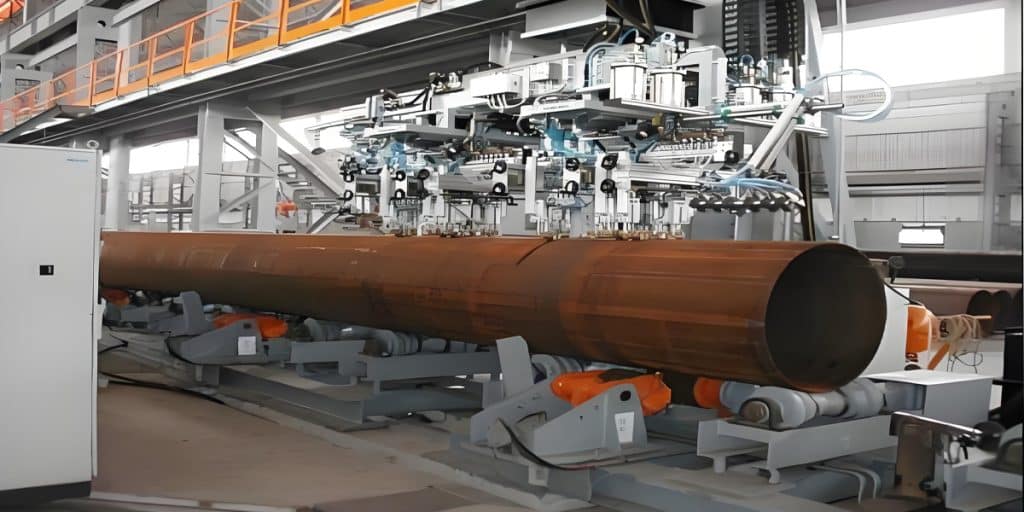
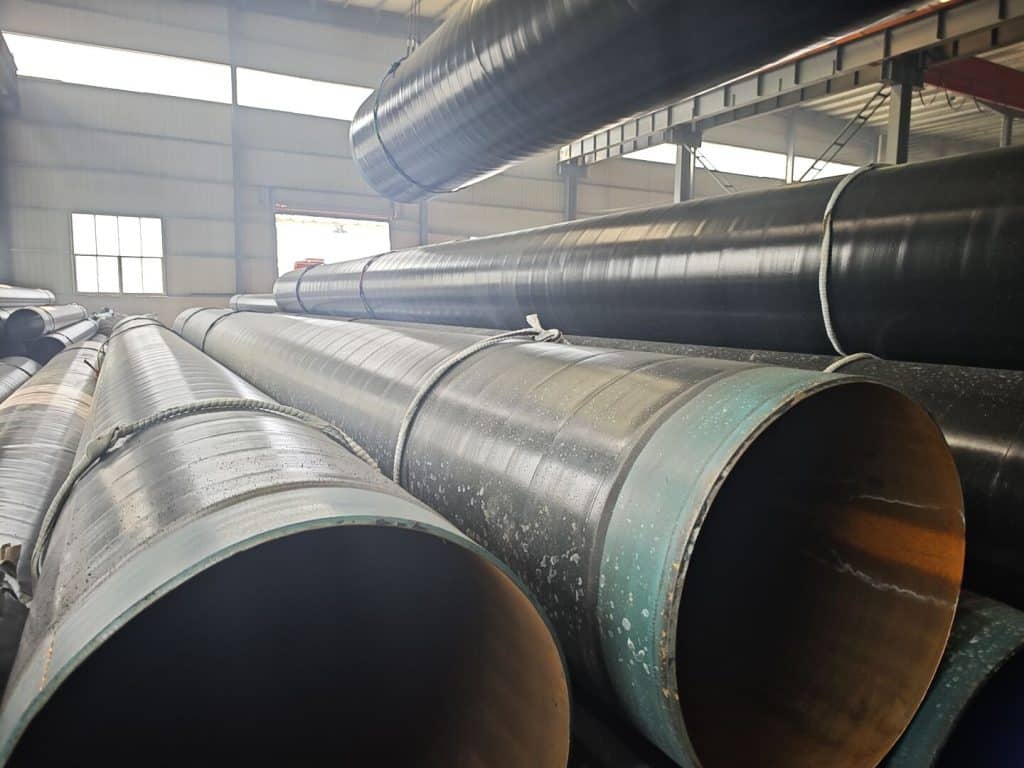
LONGMA manufactures round ERW and LSAW steel pipes and operates a quality-control system that includes an internal laboratory. The company’s stated facility area is 230,000 m² and its annual output exceeds 500,000 tonnes. Product availability, applicable manufacturing route, inspection scope and certification should be confirmed against the specific enquiry and order.
Conclusion
C350L0 CHS is a structural hollow-section grade with a minimum yield strength of 350 MPa, a minimum tensile strength of 430 MPa and a specified Charpy V-notch impact requirement at 0°C. The applicable elongation requirement depends on the CHS diameter-to-thickness ratio, and impact acceptance depends on specimen size as well as average and individual test results. For trusses, columns and bracing, the final selection must account for member stability, local buckling, connection capacity, fabrication and service conditions. A complete purchase specification and traceable inspection documentation help ensure that the supplied product matches the project requirement.
FAQ
What is the difference between C250 and C350?
Under AS/NZS 1163:2016, C250 has a minimum yield strength of 250 MPa and a minimum tensile strength of 320 MPa. C350 has a minimum yield strength of 350 MPa and a minimum tensile strength of 430 MPa. The appropriate grade depends on the structural design; higher yield strength alone does not determine the capacity of a complete member.
What does C350L0 mean?
C350 identifies the 350 MPa minimum yield-strength grade. L0 adds the specified Charpy V-notch impact requirement at 0°C. For full-size 10 × 10 mm specimens, the requirement is an average of at least 27 J from three tests, with an individual minimum of 20 J.
Can another structural tube standard replace C350L0?
Not automatically. The complete requirements of both standards, including chemistry, mechanical properties, impact testing, dimensions and tolerances, must be compared and the substitution approved by the responsible engineer.
What should be checked on a C350L0 certificate?
Check the standard and grade, dimensions, heat identification, chemical analysis, tensile results and Charpy test temperature, specimen dimensions and absorbed-energy results. Confirm that the product markings can be linked to the certificate.
Does a circular section eliminate buckling?
No. Its cross-section is symmetric, but a CHS member can still fail by overall buckling or local wall buckling. Member length, restraint, loading, imperfections and section slenderness must be assessed.
Request a C350L0 CHS Quotation from LONGMA
For a C350L0 CHS enquiry, provide the required standard and grade, outside diameter, wall thickness, length, quantity, destination, surface condition and inspection requirements. LONGMA can review the enquiry and confirm the available product scope, manufacturing route, documentation and delivery schedule. Contact info@ilongma.com or visit https://www.ilongma.com/.