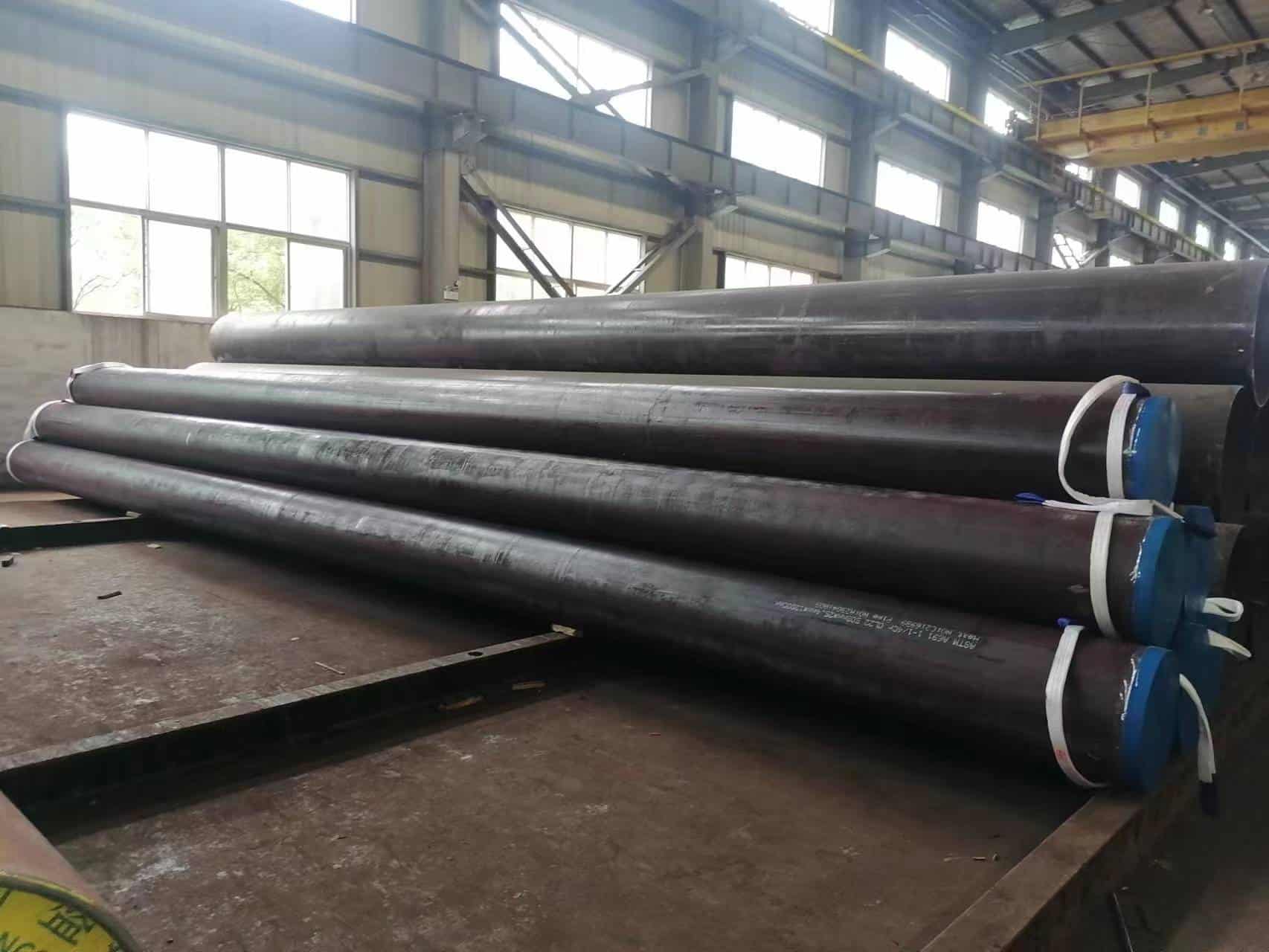
- 1. Why Do Steel Pipe Forming Defects Affect Engineering Safety?
- 2. What Are the Common Defects in Steel Pipe Forming?
- 3. Why Does Out-of-Tolerance Ovality Easily Lead to Rework?
- 4. How Does Uneven Wall Thickness Affect Steel Pipe Service Life?
- 5. Why Are Weld Defects the Biggest Concern for Buyers?
- 6. How Does LONGMA Reduce Defect Risks Through Online Inspection?
- 7. How Does the In-House Laboratory Verify Steel Pipe Quality?
- 8. Ultrasonic Testing (UT)
- 9. X-Ray Testing (RT)
- 10. How Does Hydrostatic Testing Verify Steel Pipe Reliability?
- 11. Why Are More and More International Customers Choosing LONGMA?
- 12. Conclusion
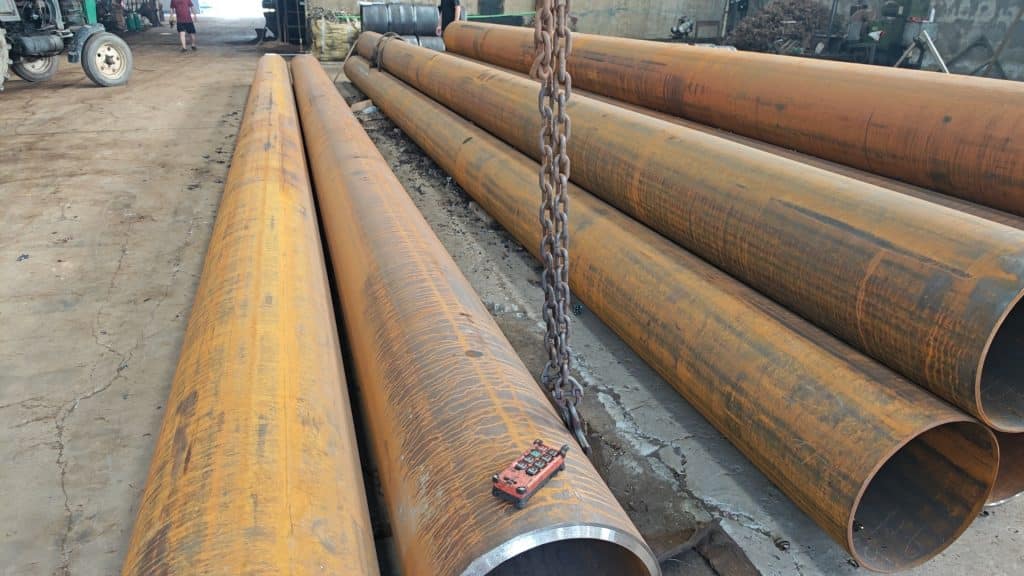
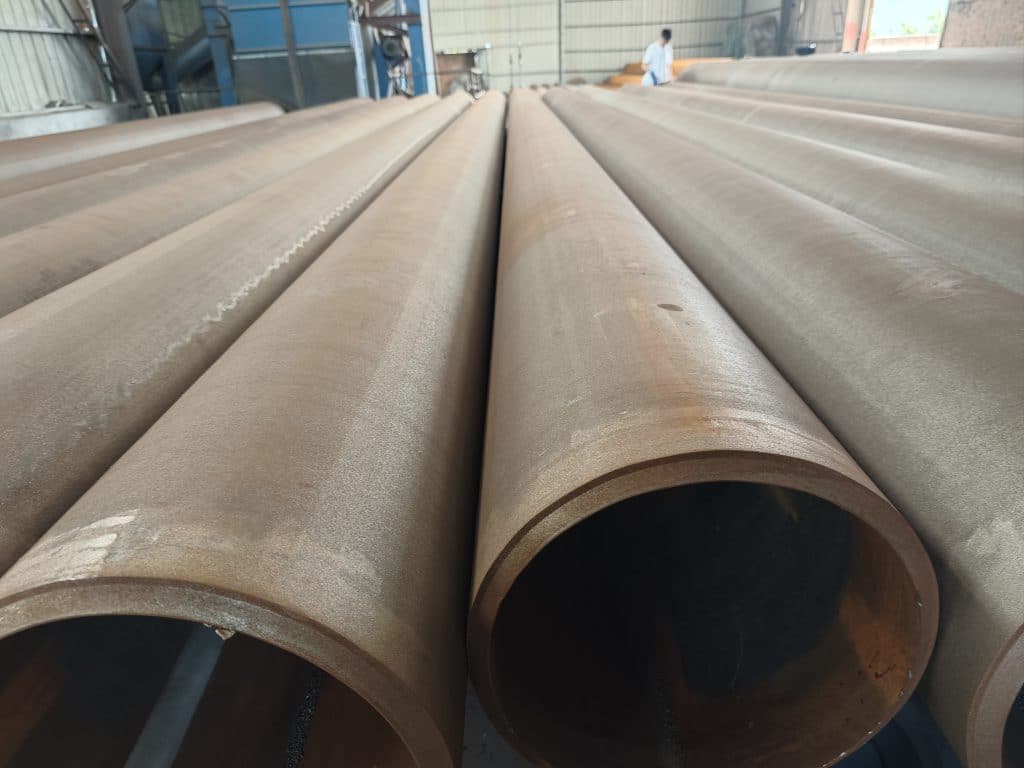
In oil and gas transmission, offshore engineering, urban pipe networks, and high-pressure vessel projects, the quality of steel pipes depends not only on raw materials but also closely on the forming process. For international buyers, defects generated during the steel pipe forming stage are often the main causes of subsequent welding failures, pressure test leaks, and project rework.
Especially in projects involving API 5L steel pipes, LSAW steel pipes, and pipeline steel pipes, any dimensional deviations, weld defects, or local deformations in steel pipes will not only increase on-site installation difficulty but also affect the long-term safe operation of the entire transmission system.
Therefore, a growing number of overseas EPC clients are no longer only focusing on price when selecting a steel pipe manufacturer; instead, they are paying more attention to:
- Automated forming capabilities
- Online inspection systems
- Welding stability
- In-house laboratory systems
- International standard implementation capabilities
As a professional steel pipe supplier with over 20 years of industry experience, LONGMA continuously provides high-quality welded steel pipes and API 5L steel pipes to global customers through automated production lines, intelligent online inspection equipment, and a complete quality control system.
Why Do Steel Pipe Forming Defects Affect Engineering Safety?
During steel pipe manufacturing, steel plates undergo multiple processes including:
- Roll forming
- Roller pressing adjustment
- Welding and shaping
- Heat treatment
- Dimensional correction
Instability in any of these links can lead to defects in steel pipe production.
Many problems in engineering projects, such as:
- Weld cracking
- Hydrostatic test failures
- Anti-corrosion coating peeling
- Pipe end misalignment
often originate from early forming defects.
For oil and gas pipeline projects, the cost of repairing such issues in the later stage is extremely high, so international buyers are increasingly focusing on quality control capabilities in steel pipe manufacturing.
What Are the Common Defects in Steel Pipe Forming?
Different steel pipe production processes may result in different types of defects.
The following are the most common issues in welded steel pipe manufacturing.
| Common Defects | Main Causes | Impacts on Engineering |
| Out-of-tolerance ovality | Uneven forming pressure | Difficult installation |
| Uneven wall thickness | Unstable roller pressing control | Reduced pressure-bearing capacity |
| Weld misalignment | Centering error | Welding stress concentration |
| Surface cracks | Raw material issues or forming stress | Risk of later cracking |
| Incomplete fusion in welds | Abnormal welding parameters | Leakage risk |
| Wave deformation | Unstable conveying tension | Difficult anti-corrosion construction |
These issues require special control in API 5L steel pipe and LSAW steel pipe projects.
Why Does Out-of-Tolerance Ovality Easily Lead to Rework?
During pipeline steel pipe installation, unstable roundness of steel pipes directly affects on-site pairing accuracy.
For example:
- Inaccurate pipe end alignment
- Uneven weld gaps
- Unstable operation of automatic welding equipment
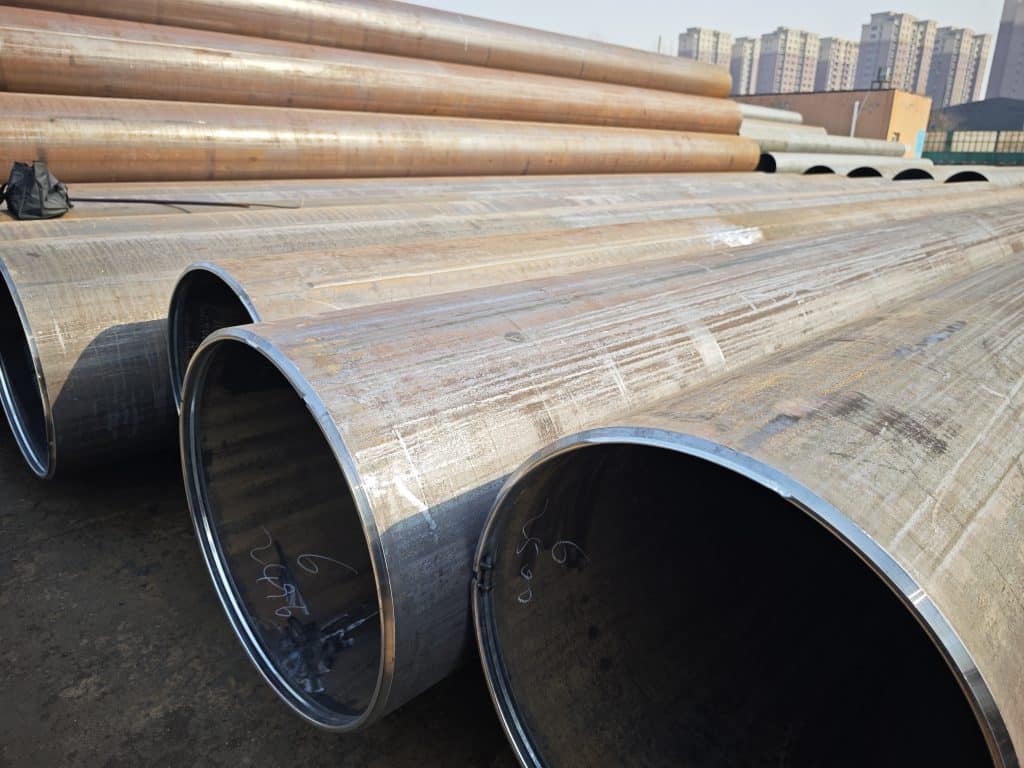
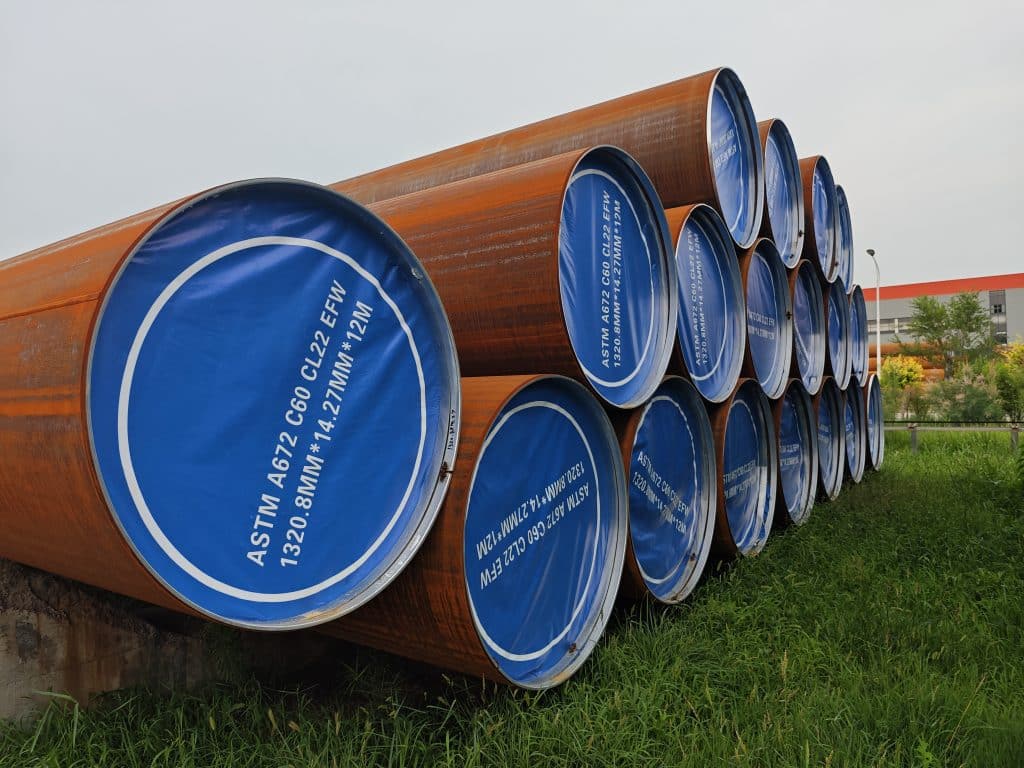
Particularly in large-diameter LSAW steel pipe projects, ovality problems may cause on-site rework of the entire batch of steel pipes.
LONGMA’s automated forming system enables real-time adjustment of:
- Roller pressing pressure
- Conveying speed
- Forming angle
to improve the dimensional consistency of welded steel pipes.
In accordance with API 5L and ISO 3183 standards, the outer diameter and ovality of steel pipes must be controlled within strict tolerance ranges.
How Does Uneven Wall Thickness Affect Steel Pipe Service Life?
Many buyers only focus on the “average wall thickness” of steel pipes while ignoring the risk of local thinning.
In fact, uneven wall thickness is often more dangerous in high-pressure steel pipe projects.
This is because locally thinned areas are prone to:
- Stress concentration
- Accelerated corrosion
- Fatigue cracks
LONGMA’s high-speed steel pipe production line adopts:
- Online laser thickness measurement
- Automatic roller pressing control
- Real-time dimensional feedback
to improve the wall thickness uniformity of API 5L steel pipes.
Compared with the traditional manual machine adjustment method, the automated system effectively reduces batch quality fluctuations.
Why Are Weld Defects the Biggest Concern for Buyers?
Welds are always the core of quality control in welded steel pipe manufacturing.
The biggest concerns of many overseas customers are:
- Is the weld stable?
- Is the inspection reliable?
- Can it pass third-party inspection?
Especially in submerged arc welded pipe projects, unstable control of welding heat input can easily lead to:
- Incomplete fusion
- Porosity
- Cracks
- Weld deviation
Therefore, LONGMA uses an automatic submerged arc welding (SAW) system to automatically control:
- Current
- Voltage
- Welding speed
- Wire feed rate
All welding procedures are strictly qualified in accordance with ASME BPVC Section IX standards.
How Does LONGMA Reduce Defect Risks Through Online Inspection?
Modern steel pipe manufacturing has shifted from “manual random inspection” to “full-process online control”.
LONGMA’s online inspection system enables real-time monitoring of:
| Inspection Item | Inspection Purpose |
| Outer diameter inspection | Control dimensional deviations |
| Wall thickness inspection | Prevent local thinning |
| Weld tracking | Improve welding stability |
| Ovality inspection | Reduce installation risks |
Compared with traditional random inspection, online inspection can detect problems earlier and automatically adjust equipment parameters.
For large oil and gas pipeline projects, this real-time control capability significantly reduces the risk of engineering rework.
How Does the In-House Laboratory Verify Steel Pipe Quality?
What international buyers truly care about is not “whether the equipment looks advanced”, but:
- Are the inspection data reliable?
- Can the products pass third-party inspection?
- Is long-term operation stable?
Therefore, LONGMA has established a complete in-house laboratory system to conduct full-process quality verification on welded steel pipes and pipeline steel pipes.
Ultrasonic Testing (UT)
UT is mainly used to detect:
- Laminations
- Cracks
- Incomplete penetration
- Internal inclusions
In accordance with API 5L PSL2 and ISO 3183 requirements:
Welds are usually subject to 100% ultrasonic testing.
LONGMA’s automatic UT system enables continuous scanning, improving inspection stability and reducing the risk of manual missed detection.
X-Ray Testing (RT)
RT is particularly critical in ASTM A671 and high-pressure steel pipe projects.
It is mainly used to inspect:
- Porosity
- Incomplete fusion
- Weld cracks
LONGMA’s digital RT system improves defect identification efficiency and establishes a complete quality traceability record.
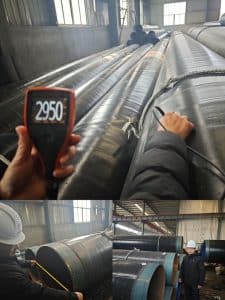
How Does Hydrostatic Testing Verify Steel Pipe Reliability?
Even if dimensional inspection is qualified, steel pipes still need to pass hydrostatic testing to verify their actual pressure-bearing capacity.
In accordance with API 5L and ASTM A53 standards:
Export pipeline steel pipes usually require a hydrostatic test.
LONGMA’s automated hydrostatic system records in real time:
- Test pressure
- Pressure holding time
- Leakage data
further reducing the risk of engineering operation.
Why Are More and More International Customers Choosing LONGMA?
In the global steel pipe supplier market, a truly reliable supplier needs not only production capacity but also:
- Automated production lines
- Online inspection systems
- Complete in-house laboratories
- API 5L standard implementation capabilities
- Full-process quality traceability system
LONGMA supports:
- SGS inspection
- BV inspection
- TUV inspection
- Third-party on-site inspection
helping overseas EPC clients reduce procurement risks and project rework costs.
Conclusion
Steel pipe forming defects affect not only the appearance of products but also the long-term operational safety of welded steel pipes and pipeline steel pipes directly.
With the development of automated steel pipe manufacturing and intelligent online inspection technologies, modern API 5L steel pipes can achieve higher levels of dimensional stability and welding reliability.
With over 20 years of industry experience, advanced automated production equipment, and a complete in-house laboratory system, LONGMA is continuously providing global customers with high-quality solutions for LSAW steel pipes, submerged arc welded pipes, and high-pressure steel pipes, helping customers reduce procurement risks and enhance engineering safety.