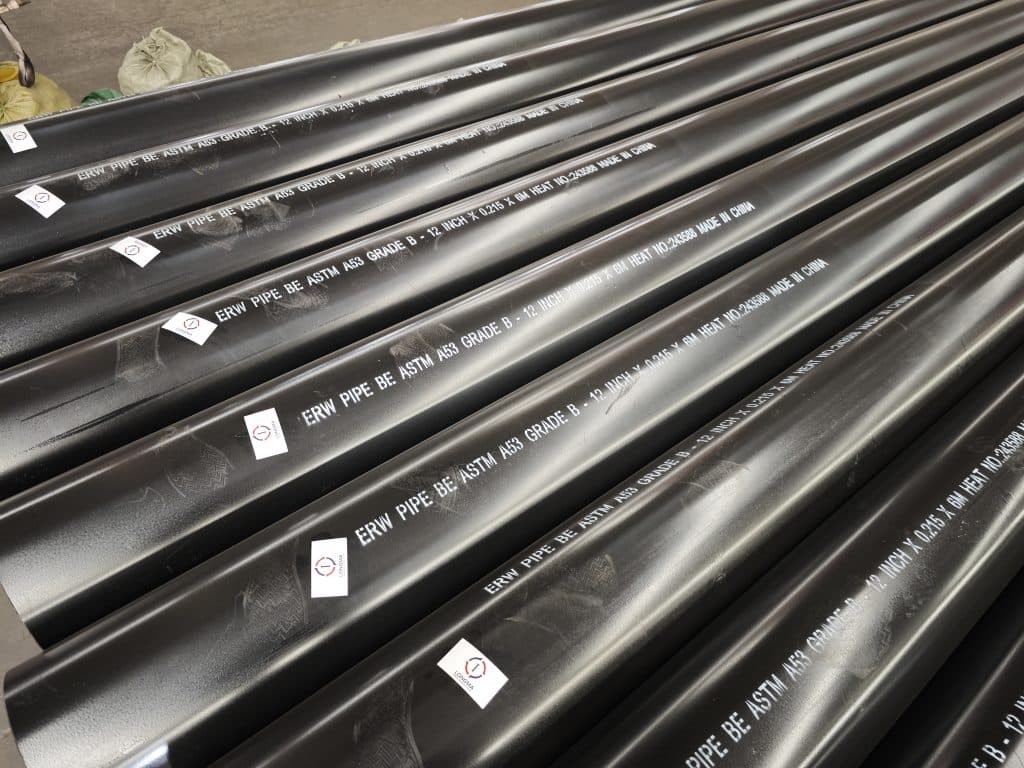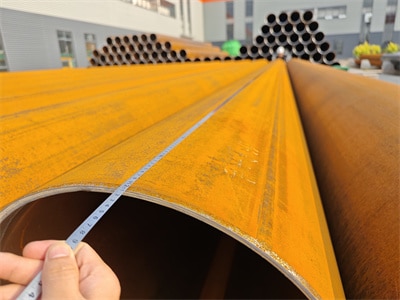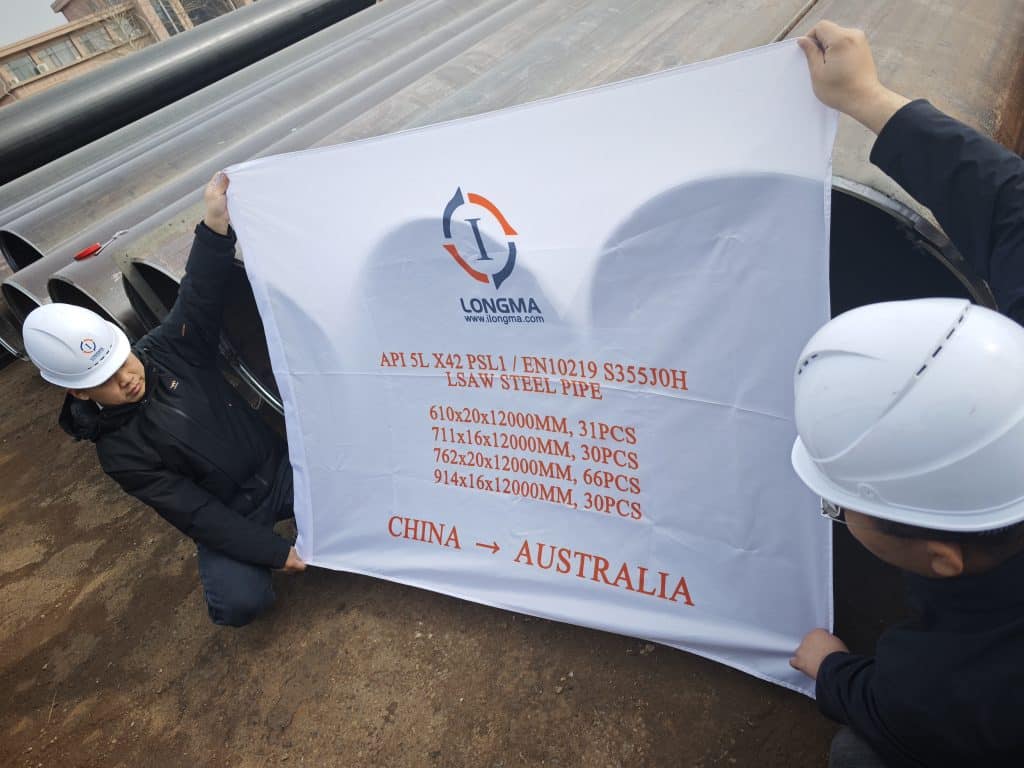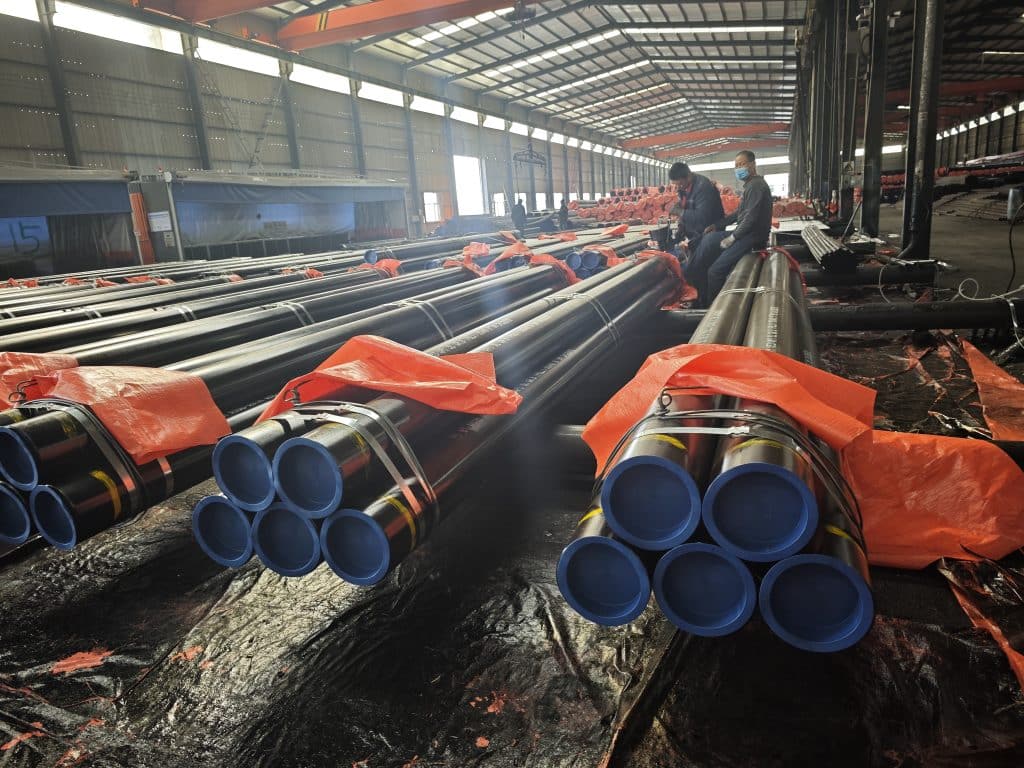
- 1. Why Is Surface Treatment Before Welding Critical?
- 2. Comparison of Common Pre-Welding Surface Treatment Processes
- 3. How Shot Blasting Improves Weld Quality
- 4. Why Bevel Grinding Determines Weld Quality
- 5. Why Degreasing and Pickling Are Increasingly Important
- 6. How LONGMA Controls Welding Risks via Its In-House Laboratory
- 7. Why More International Clients Choose LONGMA
- 8. Conclusion
In oil and gas transmission, offshore engineering, pressure vessels, and large steel structure projects, steel pipe welding quality is always one of the top concerns for buyers. Many overseas projects experience weld cracking, porosity, incomplete fusion, and even pipeline leaks—not always due to the steel itself, but because surface preparation before welding was inadequate.
Especially for projects under international standards such as API 5L, ISO 3183, ASTM A53, and EN 10219, the surface condition before welding directly affects:
- Weld fusion quality
- Coating adhesion
- Hydrostatic test results
- Long-term pipeline operational safety
For international buyers, choosing a steel pipe manufacturer with proven pre-welding surface treatment capabilities and a robust quality control system is often more critical than comparing prices alone.
With over 20 years of industry experience, LONGMA delivers stable and reliable welded steel pipe and API 5L steel pipe products worldwide through automated surface treatment equipment, intelligent welding systems, and a complete in-house laboratory.
Why Is Surface Treatment Before Welding Critical?
During production, transportation, and storage, steel pipe surfaces typically accumulate:
- Mill scale
- Rust
- Oil and grease
- Moisture
- Dust
- Residual anti-corrosion coatings
These contaminants disrupt arc stability during welding and lead to internal weld defects.
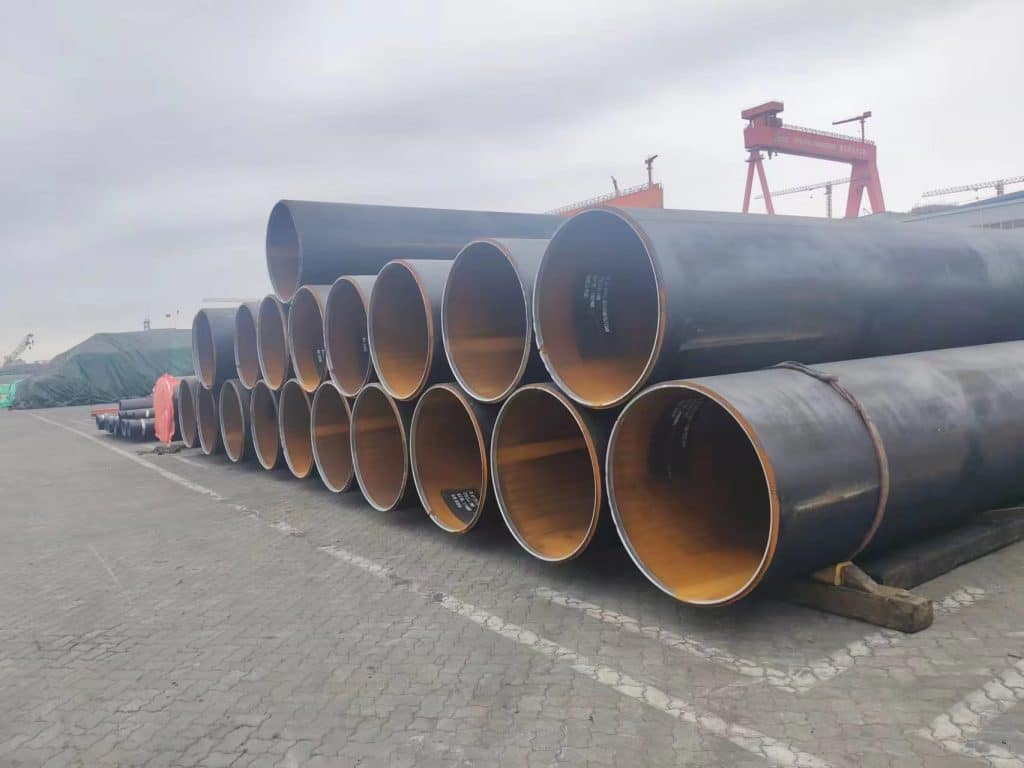
For example, in LSAW steel pipe projects, oxide layers or oil on the bevel area often cause:
- Weld porosity
- Incomplete fusion
- Crack propagation
- Reduced weld strength
In oil and gas pipeline projects, such issues can later result in shutdowns, rework, and even project claims.
This is why an increasing number of international EPC clients focus heavily on suppliers’ pre-welding processes and inspection capabilities when sourcing welded steel pipe.
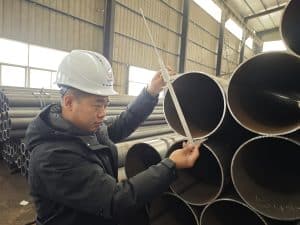
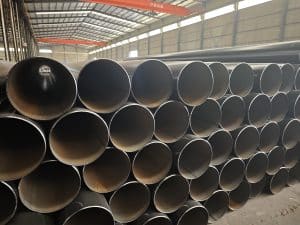
Comparison of Common Pre-Welding Surface Treatment Processes
Surface treatment requirements vary by project, material, and standard. LONGMA customizes processes based on pipe application, material, and project specifications.
| Surface Treatment | Main Purpose | Typical Applications | Common Standards |
| Shot Blasting | Remove mill scale and rust | API 5L steel pipe | ISO 8501 |
| Bevel Grinding | Improve weld fusion quality | LSAW steel pipe | ASME B16.25 |
| Degreasing | Remove oil and grease | Precision steel pipe | ASTM A53 |
| Pickling | Remove oxide layers | Stainless steel pipe | EN 10219 |
| Wheel Blasting | Enhance coating adhesion | Pipeline steel pipe | DIN 30670 |
Compared to manual cleaning, modern automated surface treatment significantly improves steel pipe manufacturing consistency and batch uniformity.
How Shot Blasting Improves Weld Quality
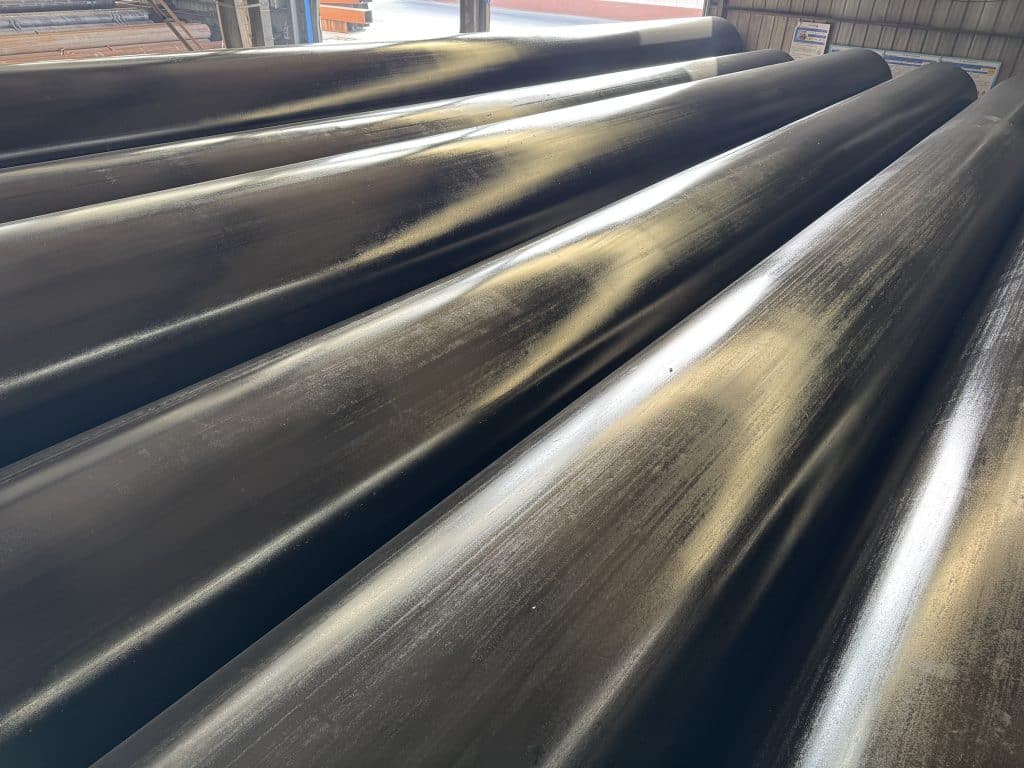
Shot blasting is one of the most critical pre-welding processes for welded steel pipe and submerged arc welded pipe.
Key objectives:
- Remove surface oxide layers
- Eliminate rust and impurities
- Improve cleanliness in the welding zone
- Enhance adhesion of subsequent anti-corrosion coatings
LONGMA’s automated shot blasting line processes steel pipe surfaces continuously with precise roughness control.
Per ISO 8501 and DIN 30670-2012, oil and gas transmission projects typically require Sa2.5 cleanliness (“near-white metal”).
This grade effectively reduces welding defects in API 5L steel pipe and improves adhesion of 3LPE coatings.
Why Bevel Grinding Determines Weld Quality
Many welding problems stem not from poor workmanship, but from inconsistent bevel quality.
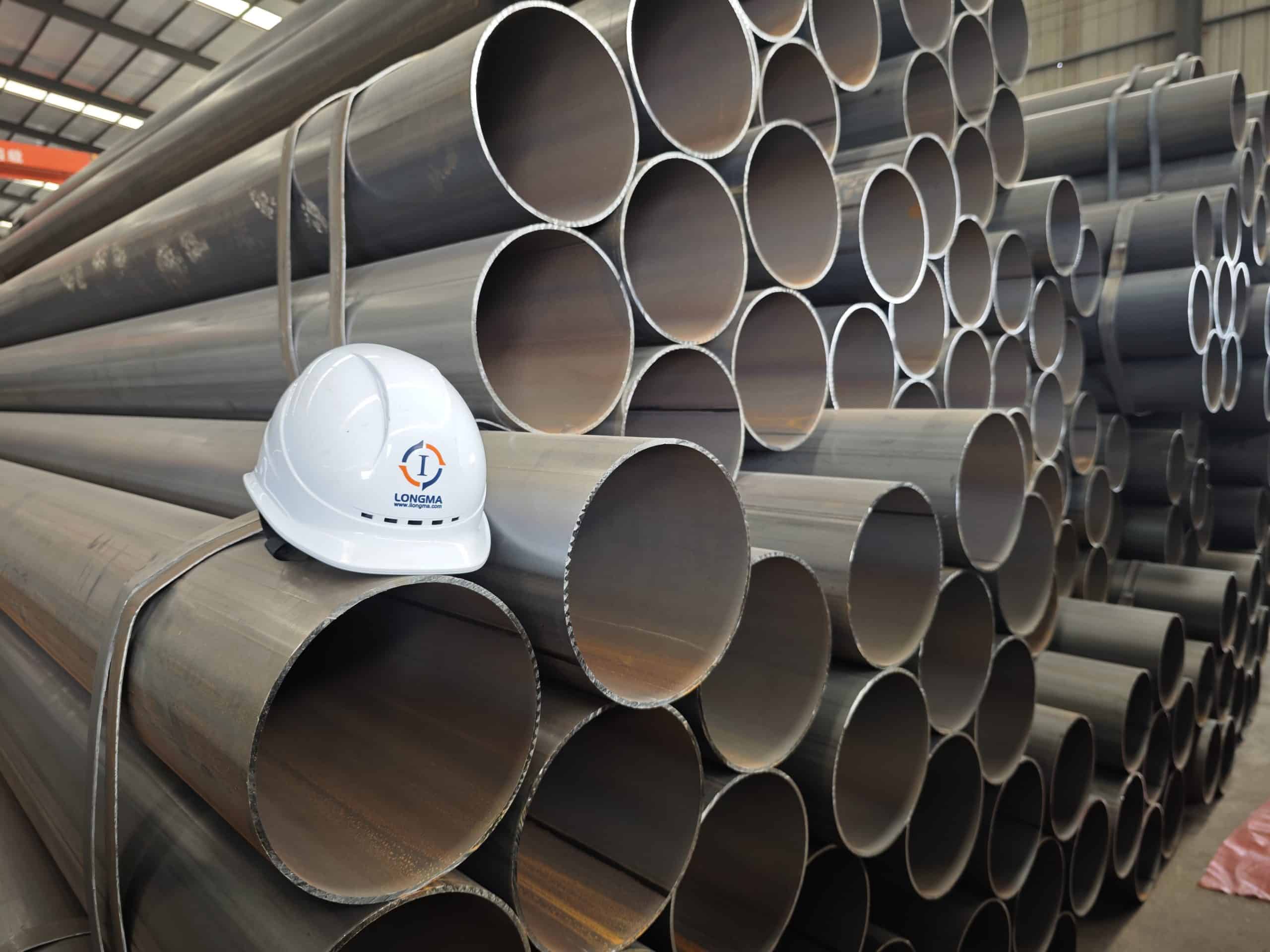
Especially in large-diameter LSAW steel pipe projects, bevel defects such as:
- Burrs
- Oxide layers
- Pitting
- Irregular edges
often lead to insufficient weld penetration and stress concentration.
During steel pipe production, LONGMA automatically grinds and trims weld bevels.
Per ASME B16.25, bevel angle, root face, and surface flatness must meet welding procedure requirements.
Automated equipment consistently controls:
- Bevel angle
- Pipe end dimensions
- Weld gap
far more reliably than manual grinding, ensuring uniform quality for welded steel pipe.
Why Degreasing and Pickling Are Increasingly Important
With the growth of high-pressure transmission and high-cleanliness industrial systems, degreasing and pickling have become more critical.
Even small amounts of oil can compromise weld quality in stainless steel pipe, boiler pipe, and heat exchanger pipe projects.
LONGMA applies tailored processes:
- Solvent degreasing
- Alkaline cleaning
- Pickling and passivation
Especially for EN 10219 and ISO 3183 projects, high-cleanliness surfaces not only support quality welding but also reduce long-term corrosion risks.
How LONGMA Controls Welding Risks via Its In-House Laboratory
Buyers worry less about whether surface treatment is done, and more about:
- Is the process actually followed?
- Are there hidden defects in the weld zone?
- Are inspection data reliable?
LONGMA operates a full in-house laboratory for end-to-end inspection after pre-welding treatment.
- Ultrasonic Testing (UT)
Detects:
- Delaminations
- Cracks
- Incomplete penetration
- Internal inclusions
Per API 5L PSL2 and ISO 3183, welds typically require 100% UT inspection.
LONGMA’s automated UT system provides continuous scanning, minimizing human error.
- Radiographic Testing (RT)
Critical for ASTM A671 and high-pressure steel pipe projects.
Inspects for:
- Porosity
- Incomplete fusion
- Weld cracks
LONGMA uses digital RT for faster defect detection and full traceability.
- Hydrostatic Test
Even visually sound welds require hydrostatic testing to verify sealing integrity.
Per API 5L and ASTM A53, export pipeline steel pipe undergoes mandatory hydrostatic testing.
Automated systems record real-time:
- Pressure changes
- Hold time
- Leakage status
reducing operational risks in service.
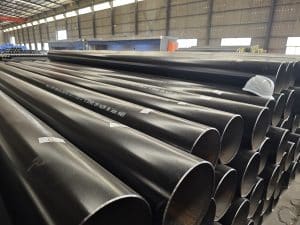
Why More International Clients Choose LONGMA
In the global steel pipe supplier market, reliable manufacturers must deliver more than production capacity:
- Automated surface treatment equipment
- Stable welding processes
- In-house laboratory capabilities
- Adherence to international standards
- Full quality traceability
LONGMA strictly complies with:
- API 5L
- ASTM A53
- ISO 3183
- EN 10219
- ASME BPVC Section IX
and supports third-party inspections by SGS, BV, TUV, etc.
For overseas EPC and large oil/gas projects, this means lower rework risk, reliable delivery, and safe long-term operation.
Conclusion
Pre-welding surface treatment is far more than cleaning—it is a key step determining welded steel pipe quality and engineering safety.
From shot blasting and bevel grinding to degreasing/pickling, plus UT, RT, and hydrostatic testing, LONGMA improves steel pipe manufacturing stability and reliability through automated production and a complete in-house laboratory.
With over 20 years of expertise, LONGMA delivers high-quality API 5L steel pipe, LSAW steel pipe, and pipeline steel pipe solutions worldwide, helping clients reduce procurement risk and enhance project quality.