- 1. Understanding API 5L X52 PSL1 and PSL2 Line Pipes
- 2. Key Differences Between PSL1 and PSL2 API 5L X52 LSAW Pipes
- 3. Comparison with Other Pipe Types and Grades
- 4. Procurement Considerations for API 5L X52 PSL1 and PSL2 LSAW Pipes
- 5. Conclusion
- 6. FAQ
- 7. What coating options are available for X52 PSL2 LSAW pipe?
- 8. Partner with LONGMA for Your Next API 5L X52 Line Pipe Order
When procurement teams specify X52 LSAW line pipe, PSL1 and PSL2 identify different levels of product requirements. Both include chemical and mechanical requirements, hydrostatic testing and applicable weld inspection. PSL2 adds tighter controls, including requirements for toughness, carbon equivalent and mechanical-property limits. The distinction is not that PSL1 welded pipe is exempt from NDT. The edition, dimensions, delivery condition and supplementary requirements must be stated in the purchase order.
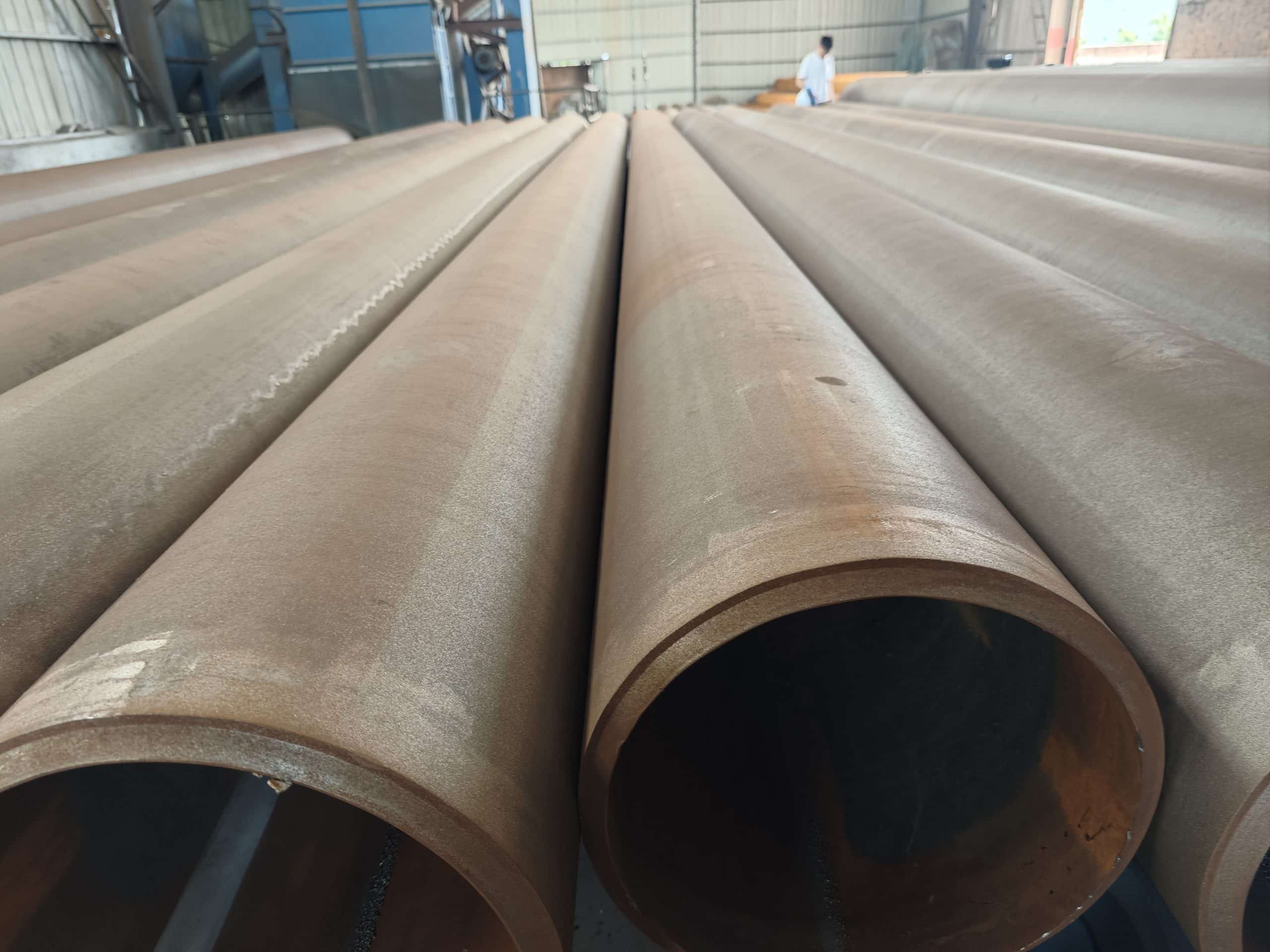
Understanding API 5L X52 PSL1 and PSL2 Line Pipes
What API 5L X52 Actually Defines?
API 5L X52 corresponds to the L360 strength designation. The specified minimum yield strength is 360 MPa and minimum tensile strength is 460 MPa under the commonly used 46th-edition framework. These are minimum material properties, not a pipeline pressure rating. PSL2 also controls applicable upper strength limits and other properties. The design pressure must be established using the relevant design code, dimensions and service conditions.
How LSAW Manufacturing Affects Performance?
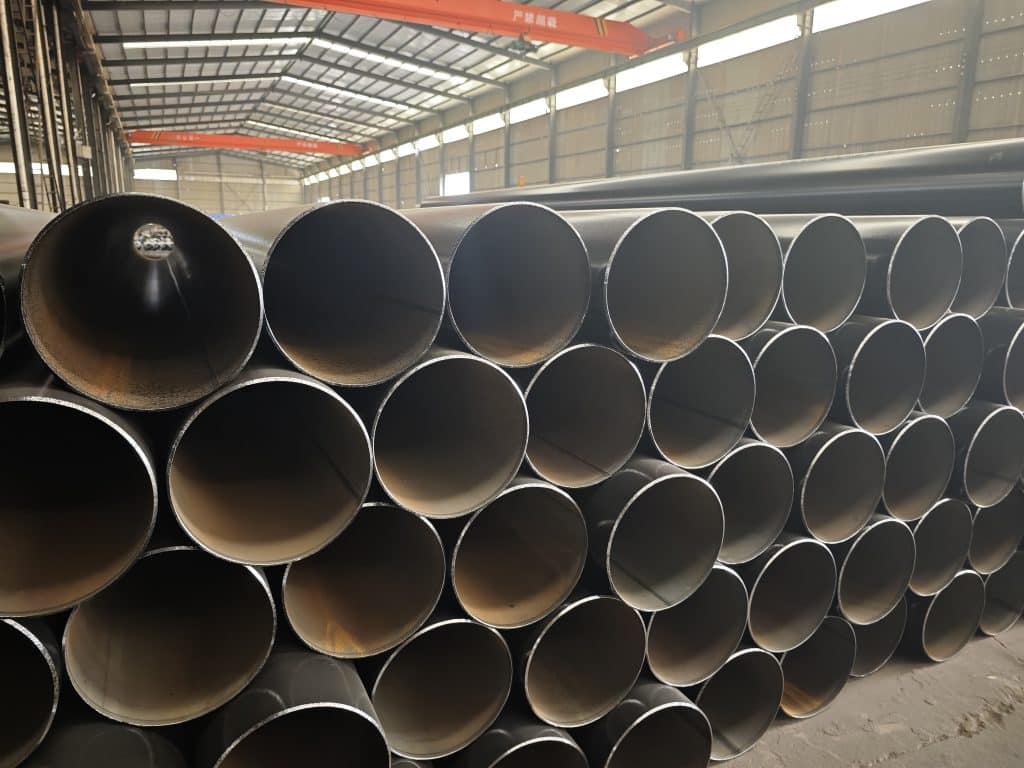
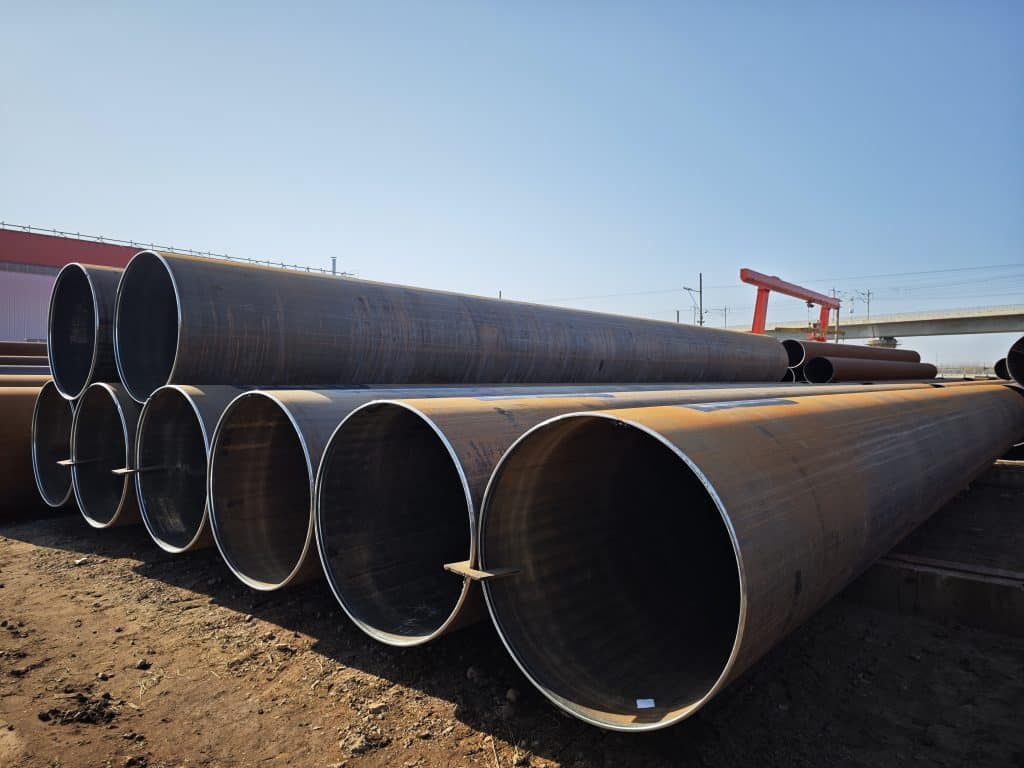
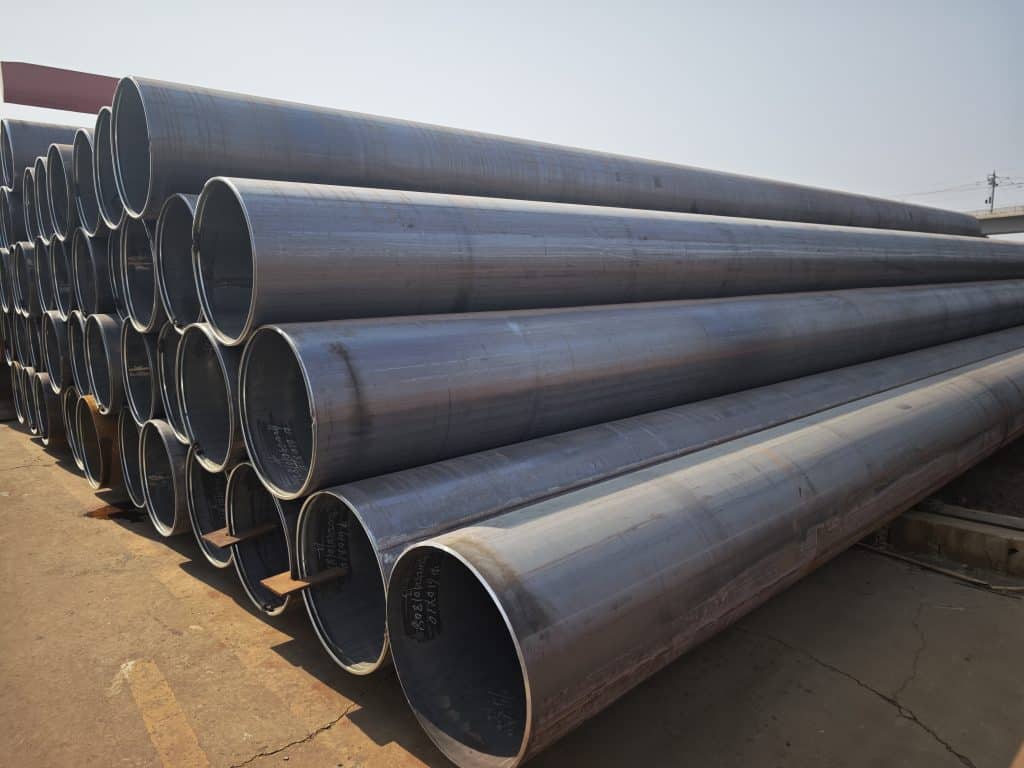
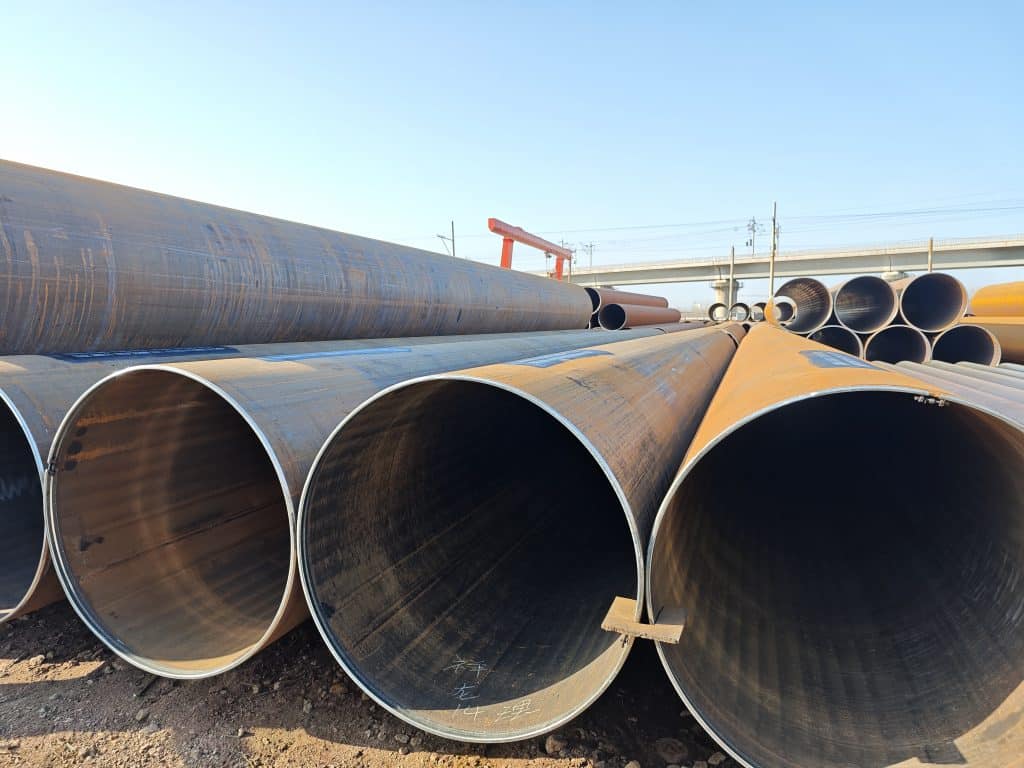
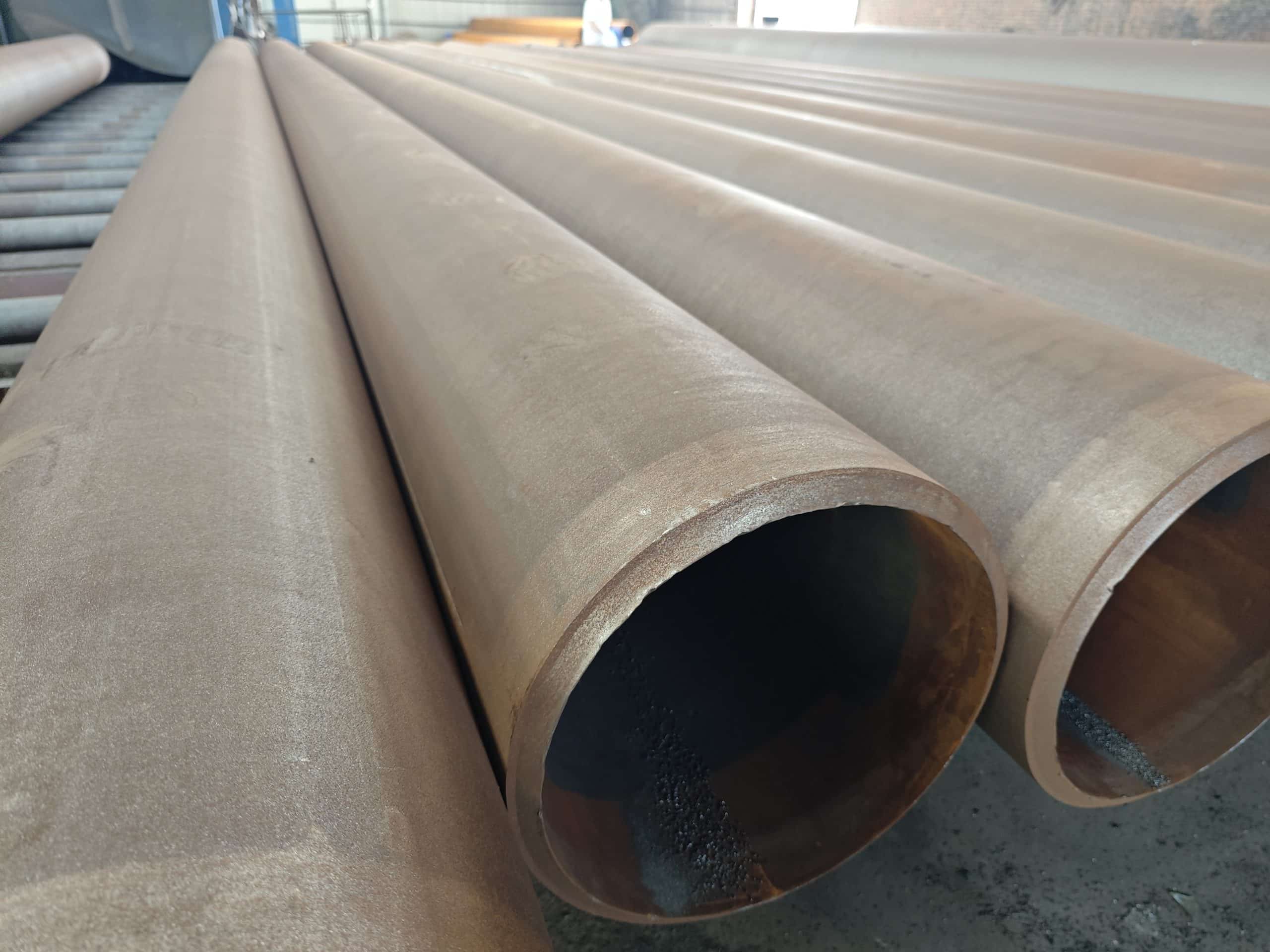
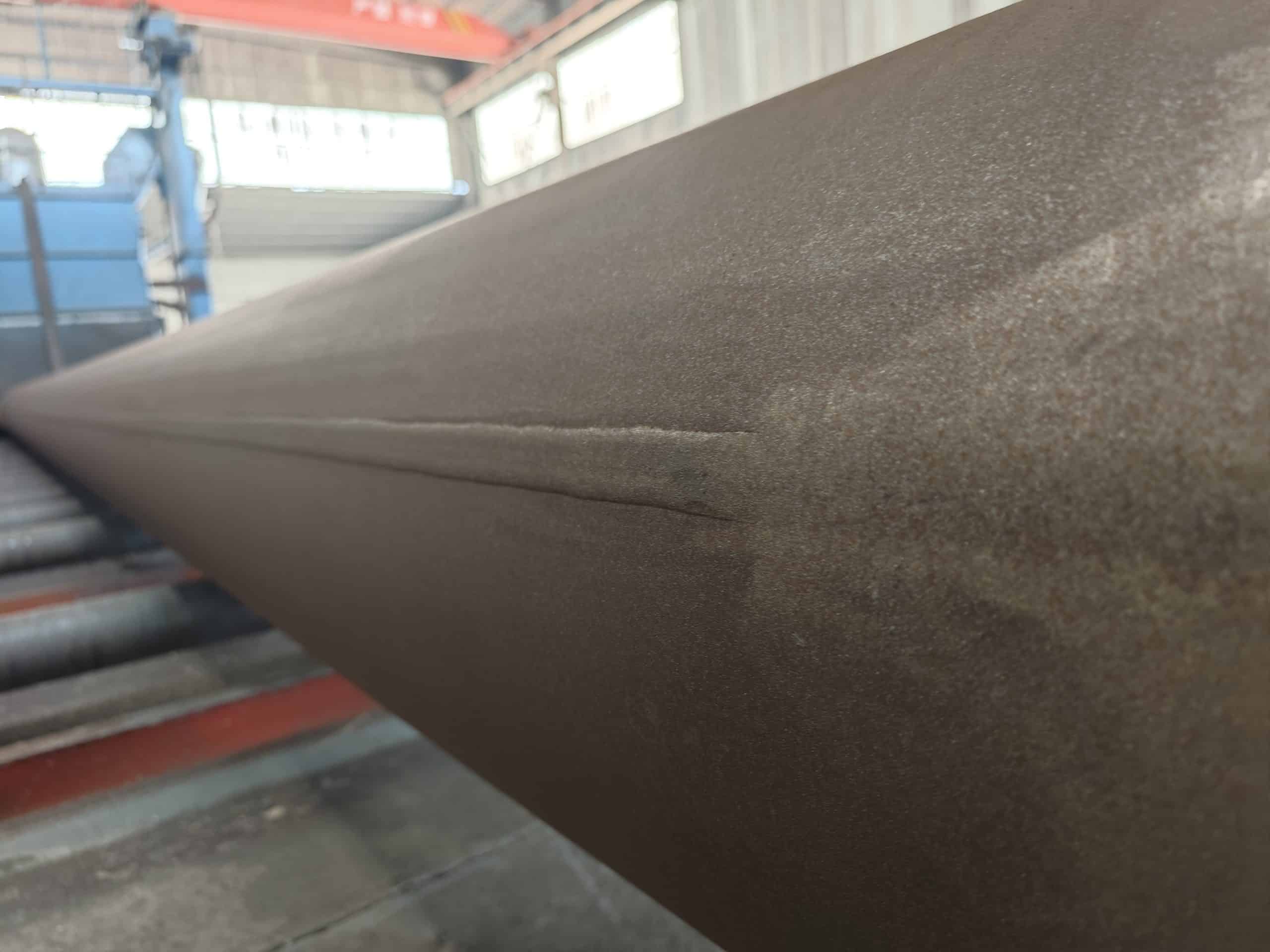
LSAW pipe is manufactured by forming steel plate into a cylindrical shape and welding the longitudinal seam by submerged arc welding from the inside and outside. JCOE and UOE routes include mechanical expansion, which improves dimensional control and affects residual stress distribution. LSAW is well suited to large-diameter, heavy-wall pipe, but pressure capacity and service suitability depend on the finished product and design requirements. LONGMA manufactures round ERW and LSAW pipe; available dimensions and lengths are confirmed by process and order. Schedule numbers are dimensionless designations and must be tied to the relevant nominal size and dimensional standard.
Certification and Testing Protocols at a Glance
The inspection certificate should report the ordered grade, heat identification and required test results. EN 10204 type 3.1 and type 3.2 certificates have different validation arrangements; type 3.2 is not automatically mandatory for PSL2. PSL2 toughness and carbon-equivalent requirements must be applied with their dimensional and other applicability conditions. Sour-service orders require further material qualification and environmental assessment; a single hardness value or a grade suffix is not sufficient proof of suitability. Third-party participation should be agreed in the inspection and test plan.
Key Differences Between PSL1 and PSL2 API 5L X52 LSAW Pipes
Chemical Composition Limits
PSL2 applies more restrictive chemical controls than PSL1, but the exact limits depend on the grade, manufacturing route, delivery condition and specified thickness. Limits for seamless pipe must not be substituted for those for X52 welded pipe. Carbon equivalent is assessed using the applicable formula and selection rules; IIW carbon equivalent and Pcm are not interchangeable values. The purchase specification and MTC should identify the relevant analysis and acceptance limits. Buyers should check the actual standard tables and footnotes rather than use one simplified carbon, sulfur or phosphorus limit for every X52 product.
Mechanical and Impact Testing Requirements
Both PSL levels share the X52 minimum yield and tensile strengths, while PSL2 includes additional controls such as applicable maximum strengths and yield-to-tensile ratio. Charpy impact requirements are another important distinction. For PSL2, the applicable pipe-body, weld and heat-affected-zone tests must be determined from the ordered product, dimensions and standard provisions. Test temperature, specimen size and required absorbed energy need to be specified or derived as required by the standard. PSL1 does not impose the same general toughness requirements, although a purchaser may request additional tests.
NDT and Quality Assurance Differences
SAW welds require applicable NDT under API 5L at both PSL1 and PSL2 levels. Hydrostatic testing and visual examination do not replace weld NDT. PSL2 includes additional inspection requirements, but weld examination, pipe-end lamination examination and pipe-body inspection must be described separately. The required use of ultrasonic or radiographic methods, coverage and any supplementary examinations depend on the manufacturing route, applicable annexes and purchase specification. LONGMA maintains identification from steel-plate heat and batch records to finished-pipe numbers for source inspection and traceability.
Comparison with Other Pipe Types and Grades
X52 vs. Higher Grades (X60, X70)
A higher specified yield strength can permit a thinner calculated wall under otherwise comparable design conditions. The final wall thickness must also satisfy allowances, tolerances, stability, installation and other code requirements. A change from X52 to X60 or X70 does not itself reduce the number of field girth welds, which depends mainly on pipe lengths and route length. Higher grades should be compared on total project cost, weldability, toughness and availability. More complex heat treatment or a longer lead time should not be assumed for every higher-grade order.
LSAW vs. ERW for Large-Diameter Applications
ERW uses electrical resistance heating to join strip edges, commonly through a high-frequency welding process. EFW is a different term and should not replace ERW in this comparison. LSAW uses filler-metal submerged arc welding and can offer large-diameter, heavy-wall manufacturing capability. Both qualified processes can produce line pipe for demanding applications. A double-sided SAW seam should not be claimed to have an inherently lower leakage risk than a compliant ERW seam; material, welding qualification, inspection and design requirements govern the comparison.
Procurement Considerations for API 5L X52 PSL1 and PSL2 LSAW Pipes
Supplier Qualification and Certification Verification
Supplier qualifications should match the tender. Where an API Monogram license is required, verify the current authorization and scope through the API licensing directory. LONGMA holds API and ISO management-system certifications, which customers can review during qualification. These credentials should be assessed together with production capability, product test results and the agreed inspection plan.
Lead Times and Logistics Planning
Stock X52 PSL1 orders can ship in seven days, common production sizes in around 30 days and custom or sour-service orders in around 45 days, subject to confirmation. State the diameter, wall thickness, grade, delivery condition, PSL, coating and inspection certificate at the RFQ stage. Sour-service designations should be specified in full, such as X52NS or X52MS where applicable. Agree transport, documentation and inspection arrangements early enough to support the project schedule.
Documentation Package for Third-Party Audits
The documentation package should match the purchase order and inspection plan. It normally records heat analysis, required mechanical tests, dimensions, hydrostatic tests and applicable NDT; PSL2 documentation also includes relevant toughness and carbon-equivalent results. Use the agreed EN 10204 certificate type. A type 3.2 certificate involves validation by the specified independent representatives and is not simply an extra mandatory certificate for every PSL2 order. Coating reports must identify the correct standard for the coating supplied, with traceability to the affected pipe.
Conclusion
Selecting PSL1 or PSL2 affects the required material controls, inspection and documentation. PSL2 is often specified for more demanding transmission service, but PSL is not itself a low-pressure or high-pressure classification. Sour-service and offshore projects may require additional provisions beyond the base PSL2 requirements. Procurement teams should use the project design basis and owner specification to establish the grade, delivery condition, PSL and supplementary requirements before requesting quotations.
FAQ
What is the primary technical difference between PSL1 and PSL2?
PSL2 adds controls on toughness, carbon equivalent and mechanical properties, together with more demanding inspection provisions. PSL1 SAW pipe still has applicable weld NDT requirements. The precise comparison must use the same standard edition, manufacturing route and dimensional range.
Can X52 PSL1 LSAW line pipe be used for sour service?
Standard X52 PSL1 certification alone does not demonstrate suitability for sour service. Where sour-service pipe is ordered to API 5L Annex H, the corresponding PSL2 and supplementary requirements apply. Material selection must also account for the actual H₂S-containing environment and the applicable ISO 15156 requirements.
What NDT does LONGMA perform on PSL2 LSAW pipes?
LONGMA provides weld UT, applicable pipe-end lamination examination, hydrostatic testing and other examinations according to the ordered standard and approved inspection plan. RT is performed where required by those provisions or the purchase specification; it should not be assumed to be optional in every case.
What coating options are available for X52 PSL2 LSAW pipe?
LONGMA offers bare pipe, varnish, black paint, FBE and 3LPE coating options. The coating system, application standard, temperature range and inspection requirements should be selected for the project. DIN 30670 relates to polyethylene coating systems and should not be used as a blanket specification for standalone FBE.
Partner with LONGMA for Your Next API 5L X52 Line Pipe Order
Since 2003, LONGMA has supplied steel line pipe to oil companies and EPC contractors in the Middle East, Southeast Asia and Latin America. Our factory covers 230,000 m², with annual output exceeding 500,000 tonnes. We manufacture round ERW and LSAW pipe and support traceable inspection documentation and agreed third-party inspection. Send the diameter, wall thickness, grade, PSL, service conditions and coating requirements to info@ilongma.com or visit www.ilongma.com for a quotation.