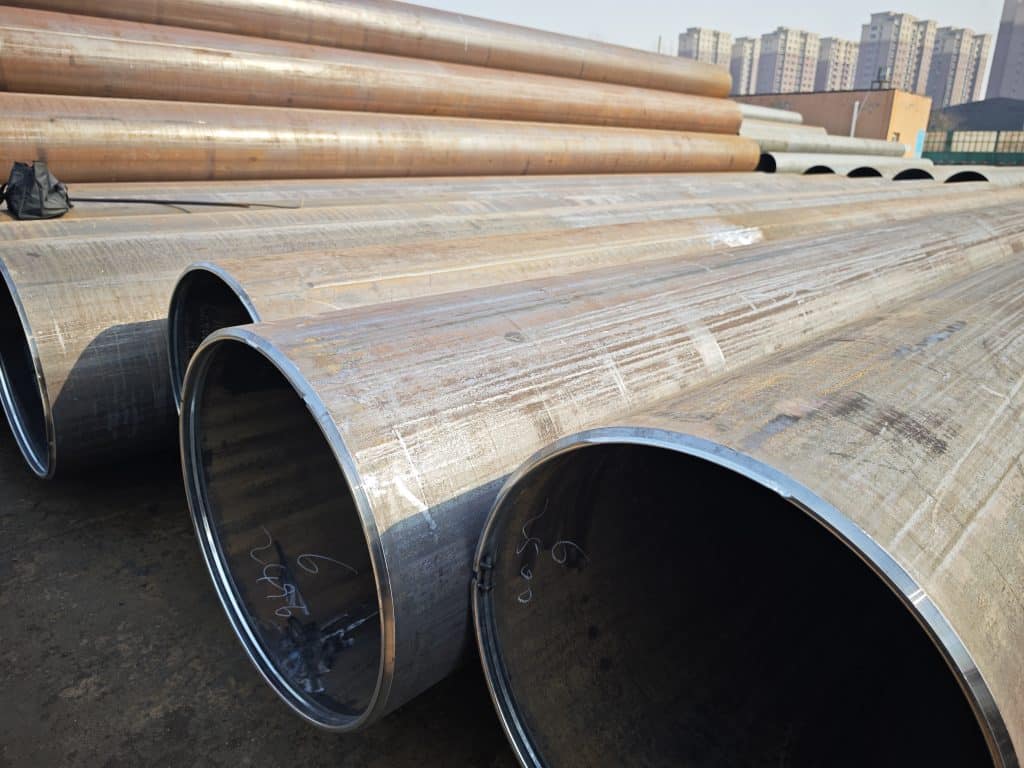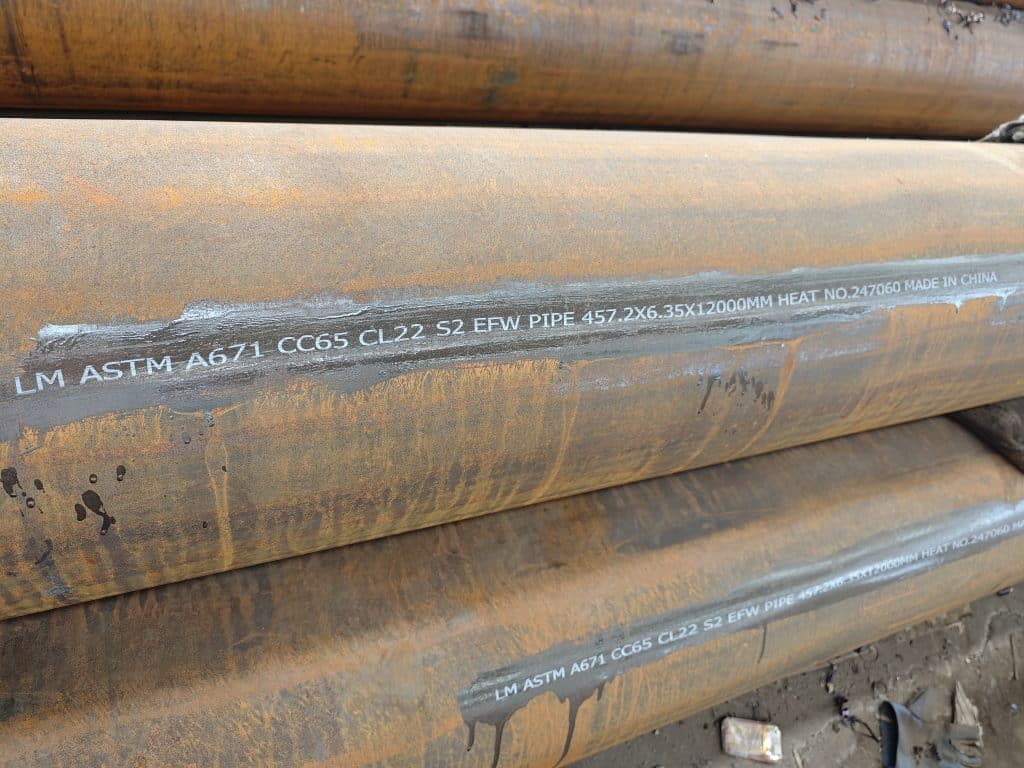
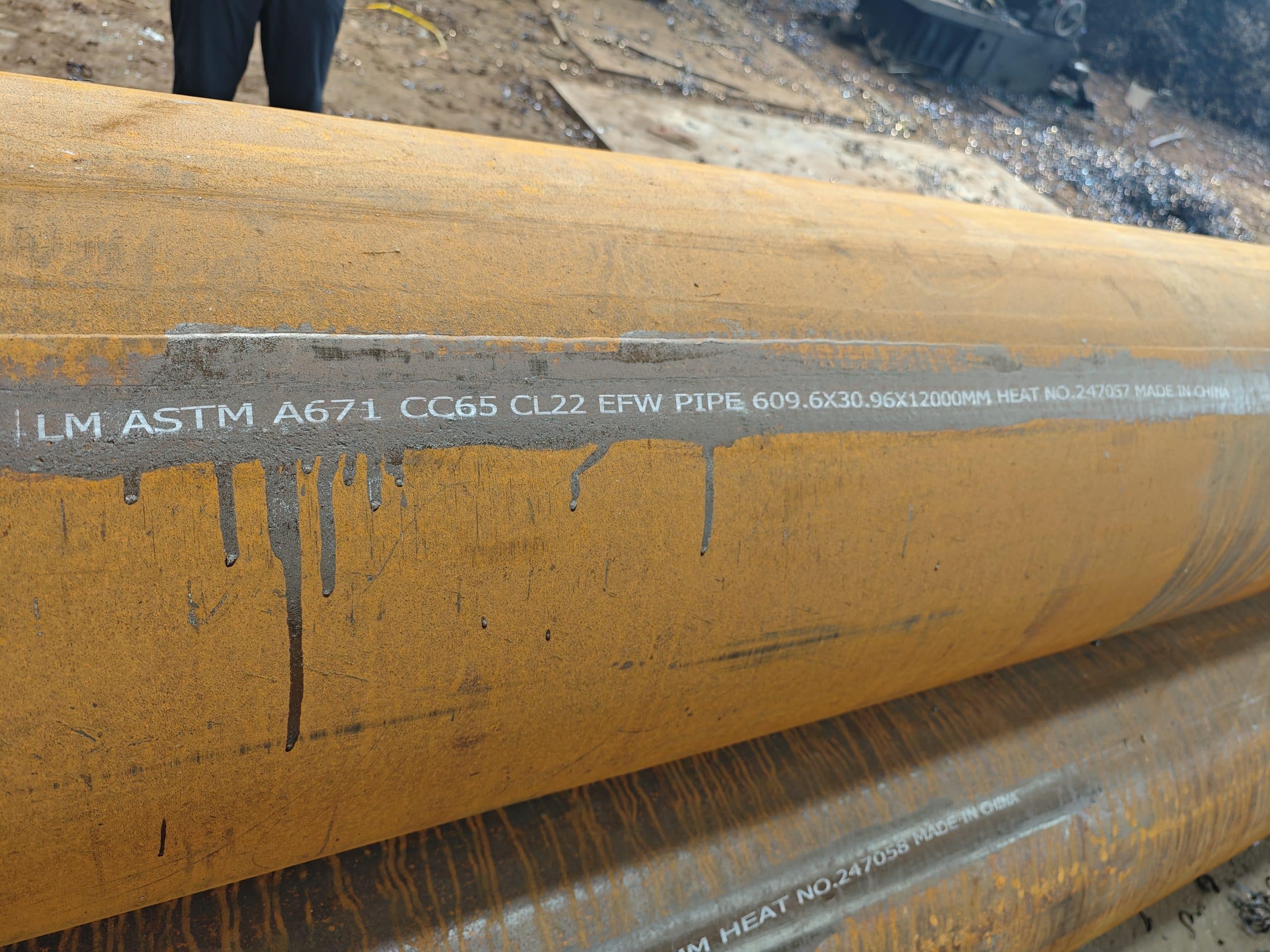
Understanding ASTM A671 CC60 Class 22
ASTM A671/A671M covers electric-fusion-welded steel pipe made from pressure-vessel-quality plate for atmospheric and lower-temperature service. The CC60 grade identifies the specified plate material, while Class 22 identifies a particular combination of manufacturing, heat-treatment and examination requirements. These designations should be checked separately against the edition stated in the purchase order. Compliance with the product specification does not establish a completed piping system’s design pressure. That determination belongs to the applicable design code, such as ASME B31.3 for process piping or ASME B31.1 for power piping, together with the service conditions and project requirements.
The designation should be read as a complete material specification rather than as a pressure rating. CC60 identifies the specified plate-material grade, while Class 22 identifies a particular combination of manufacturing, heat-treatment and examination requirements. The relevant edition and purchase-order provisions must be checked together. A pipe that satisfies the material specification is not automatically suitable for every operating temperature, fluid or pressure. Those decisions belong to the responsible engineer under the applicable piping or pressure-equipment design code.
Is Hydrostatic Testing Required?
Hydrostatic testing is an important part of the product acceptance framework for ASTM A671 pipe. Whether a particular length must be hydrostatically tested, and whether an alternative is permitted, must be established from the exact edition of ASTM A671/A671M and the purchase specification. A buyer should not assume that a general agreement between supplier and purchaser automatically overrides a mandatory product-standard requirement. The purchase order should explicitly identify the applicable edition, grade, class, test requirements and any permitted supplementary or alternative provisions. Class 22 heat treatment and weld examination must also be verified against the applicable class table; descriptions such as “normalized or as-welded” or “spot or 100% RT/UT” should not be treated as interchangeable choices without checking that table.
For purchasing purposes, the key question is not simply whether the supplier offers a hydrostatic test. The technical offer should state the required test route under the contracted edition, including any standard-permitted alternative or supplementary examination. A proposed departure from the specification should be reviewed before manufacturing begins. An agreement between buyer and seller cannot, by itself, override mandatory provisions of the governing standard or project code. This distinction prevents an inspection plan from promising a level of compliance that the supporting test records cannot demonstrate.
How Mill Hydrostatic Test Pressure Is Determined
The mill test pressure depends on the prescribed product-standard method and relevant pipe dimensions and material properties. The manufacturer should document the basis used, including the nominal or specified wall thickness basis, outside diameter, applicable stress criterion, any pressure limits and the required holding period. A quoted pressure without a calculation basis cannot establish compliance. Mill hydrostatic testing is distinct from the pressure test performed on an installed piping system. Field testing follows the applicable construction code and considers the completed system, including field welds, fittings, valves and connections. Neither test pressure can be assumed to exceed the other in every project because their calculation rules and purposes differ.
A mill hydrostatic test evaluates an individual manufactured pipe, whereas a field pressure test evaluates the assembled piping system, including girth welds, fittings and other installed components. Their pressures and durations may differ because they follow different rules and serve different purposes. A test certificate should never be treated as a stand-alone maximum allowable operating pressure. Design pressure must be established separately using the relevant allowable stress, dimensions, wall-thickness allowances, joint factors where applicable, temperature and service conditions. Where a purchaser supplies a target pressure, the mill should confirm that the value and procedure conform to the product specification before testing.
Inspection, Acceptance and Defect Handling
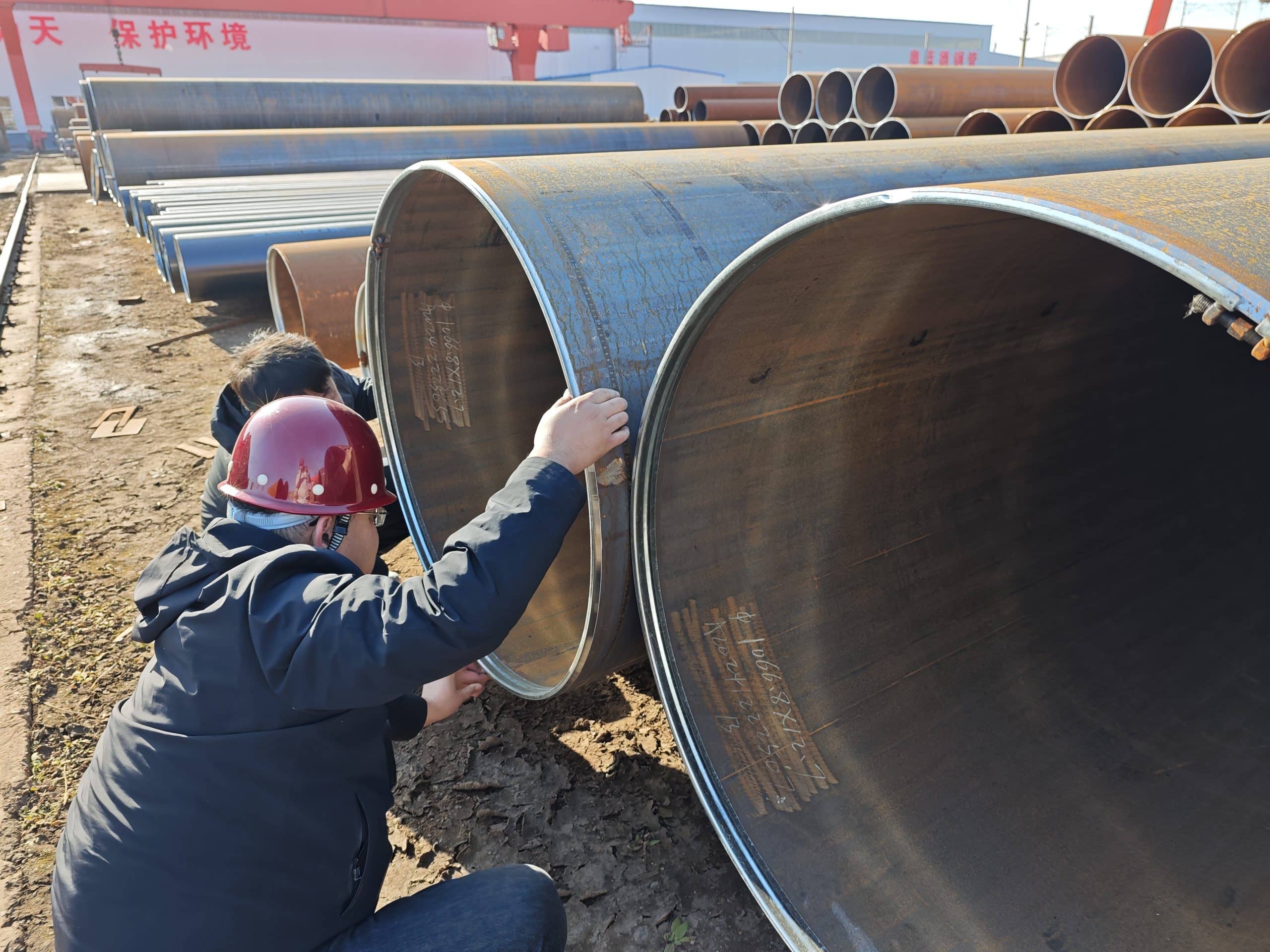
During hydrostatic testing, the pipe is filled with the specified test liquid, air is removed where required, and pressure is raised and maintained according to the approved procedure. Personnel inspect for leakage or other unacceptable conditions using the acceptance criteria in the governing standard and purchase order. Pressure changes must be interpreted with reference to the test setup and temperature effects; a single reading should not be used as a substitute for the prescribed acceptance criteria. If a pipe fails, the manufacturer should identify and record the defect, assess whether repair is allowed, complete any approved repair procedure and perform the required re-examination and retesting before release. Hydrostatic testing does not replace radiographic or ultrasonic examination: pressure testing assesses pressure-boundary integrity, while volumetric examination detects specified internal discontinuities that may not leak during a pressure test.
Before pressurization, operators should verify end closures, calibrated instruments, pressure limits, personnel exclusion arrangements and the condition of the test equipment. Pressure should be increased under a documented procedure and held for the specified duration. Observations should be evaluated against the acceptance criteria in the applicable standard and purchase order, rather than a generic ‘pass’ statement. If leakage or another unacceptable condition is found, the affected pipe should be identified and segregated. Any repair must be permitted by the relevant requirements, documented, inspected as necessary and followed by the required retesting before release.
Hydrostatic Testing vs Pneumatic Testing
Hydrostatic testing uses a relatively incompressible liquid and generally stores substantially less energy than a comparable gas-pressure test. Pneumatic testing uses compressed gas and therefore requires particularly careful hazard assessment, isolation and protective measures. A field construction code may allow pneumatic testing under defined conditions, but this does not by itself authorize substitution for an ASTM product-standard mill test. Buyers should establish any alternative test route from the applicable product standard and project documents before manufacturing begins.
Documentation and Procurement Checklist
A useful inspection package identifies the pipe number and heat number, ASTM edition, CC60 grade and Class 22, dimensions, test medium, achieved pressure, holding period, test date, instrument identification and calibration status, and the acceptance result. It should also include the applicable material test certificate, heat-treatment records, weld examination results and traceability documentation required by contract. Buyers should reconcile these records with the inspection and test plan rather than relying solely on a one-line statement that the pipe was “hydrotested.” LONGMA supports round welded steel pipe projects with traceable manufacturing and inspection documentation. Its manufacturing site covers 230,000 m², with annual output exceeding 500,000 tonnes. Product-specific capabilities and inspection scope should be confirmed in the technical offer.
For traceability, inspection records should connect the finished pipe to the original plate heat and to the applicable welding and heat-treatment records. Buyers should check whether the certificate identifies the actual test pressure, pressure unit, duration, date and calibrated gauge or recording device. The inspection and test plan should also specify hold points, witness requirements and the handling of nonconforming products. EN 10204 type 3.1 and 3.2 inspection documents have different validation arrangements; the contract should identify which type is required. Clear documentation reduces disputes when pipe is received, installed or audited months after shipment.
Frequently Asked Questions
Does ASTM A671 CC60 Class 22 pipe always require a mill hydrostatic test? Check the specified edition and its permitted testing provisions; do not assume an informal waiver is sufficient.
Does a mill hydrostatic test replace the field pressure test? No. They apply to different stages and follow different requirements.
Can radiographic testing replace a hydrostatic test? Only where the governing product specification expressly permits an alternative and its conditions are satisfied.
Does passing a hydrostatic test establish the maximum operating pressure? No. The allowable design pressure must be calculated under the applicable design code.
What should an RFQ include? Specify the ASTM edition, grade and class, OD, wall thickness, length, service conditions, examination scope, test requirements and inspection documents.