- 1. What Is FBE Coating and How Does It Work?
- 2. How FBE Coating Protects Steel Pipe From Corrosion
- 3. FBE Coating vs 3LPE Coating: Key Differences Explained
- 4. Typical Applications of FBE Coated Steel Pipe
- 5. FBE Coating Thickness and Performance Standards
- 6. Key Advantages and Limitations of FBE Coated Pipe
- 7. Related Coating Case Study on a Middle East Water Project
- 8. How to Specify FBE Coating for B2B Pipe Orders?
- 9. FBE Coated Steel Pipe Pricing Factors
- 10. Quality Verification, Inspection, and Documentation
- 11. Conclusion
- 12. FAQ
- 13. Request an FBE Coated Steel Pipe Quote Today
FBE coated steel pipe is carbon or alloy steel pipe protected by a heat-cured fusion bonded epoxy layer that resists moisture, soil chemicals, and oxygen exposure. This guide explains how the coating works, how it compares with 3LPE and galvanized options, and what buyers should specify before placing an order. You will find standards references, a project case study, pricing factors, and a quality checklist built for procurement teams managing pipeline, water, and heating projects across the Middle East, Southeast Asia, and beyond. The goal is simple: give you enough detail to write a specification sheet without guessing.
What Is FBE Coating and How Does It Work?
A lot of people who are new to FBE want to know what makes it different from regular paint. How it’s used and how strong the link is is the short answer. In this part, it talks about what the covering is and how it works.
FBE Coated Steel Pipe Meaning and Scope
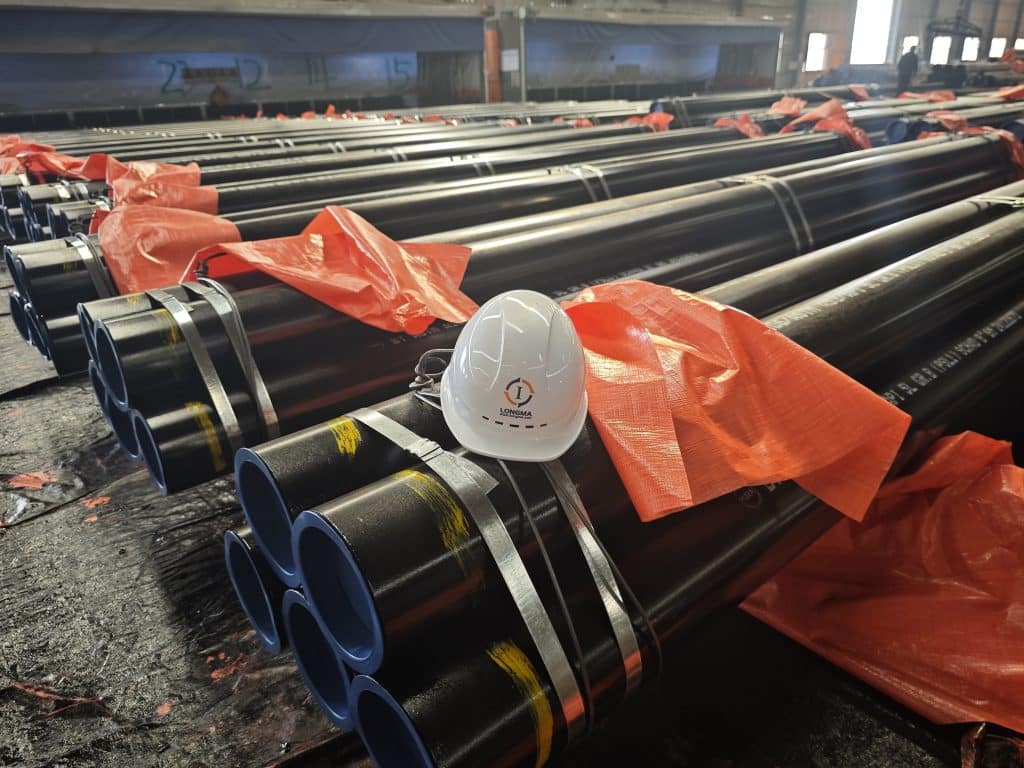
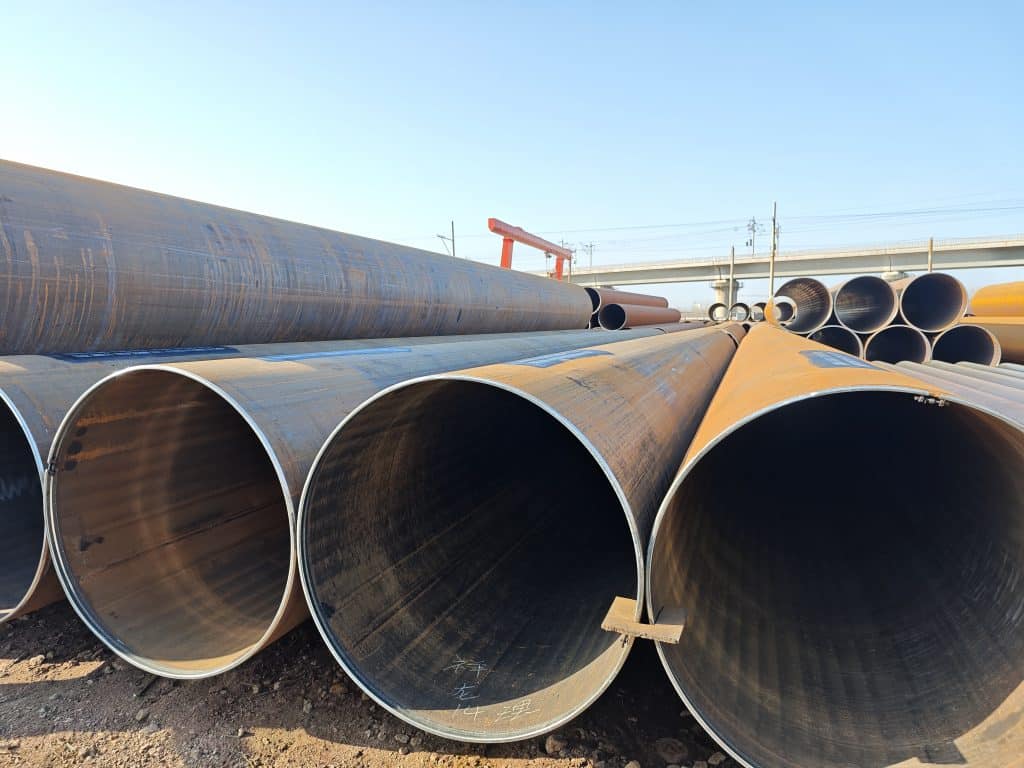
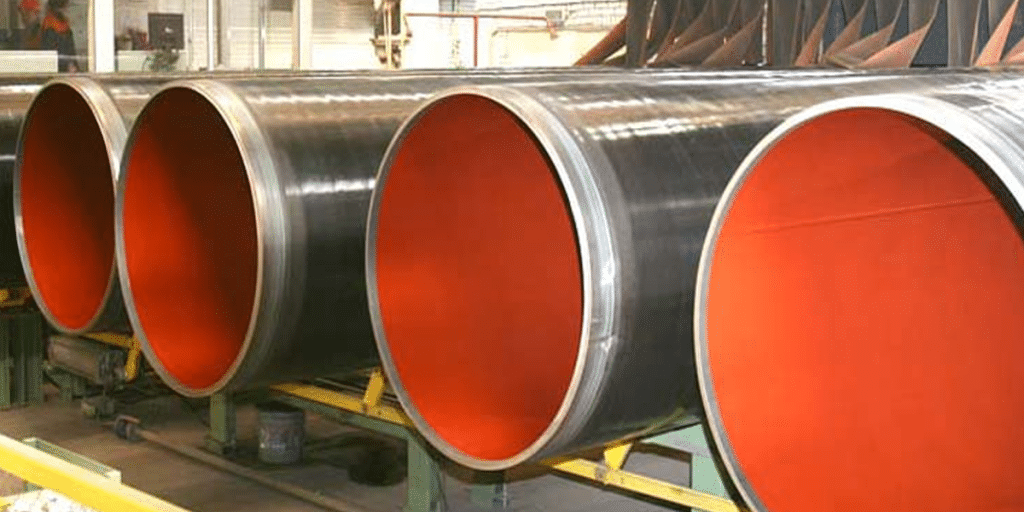
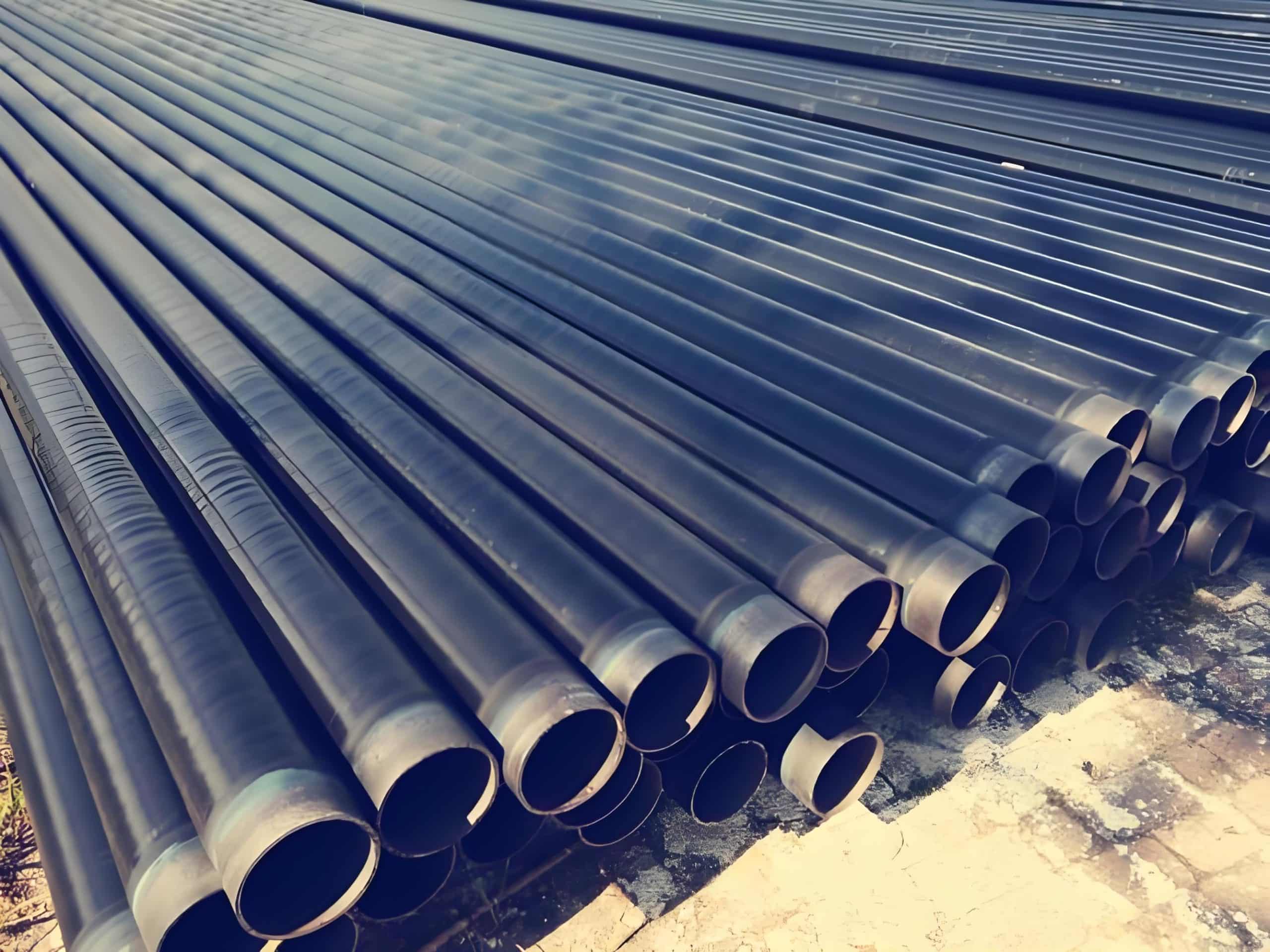
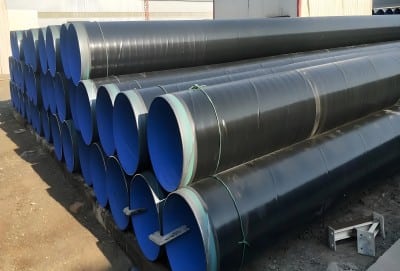
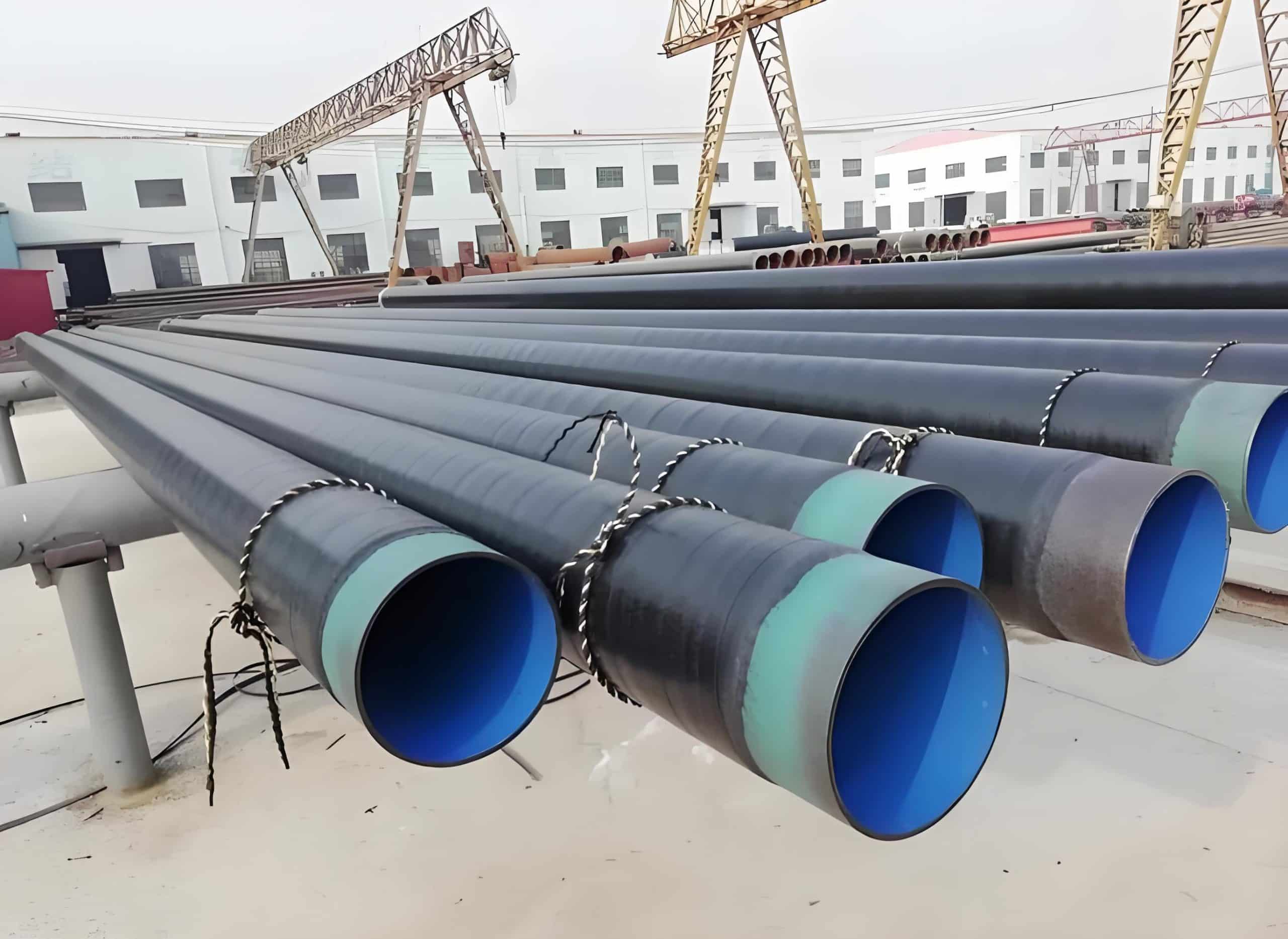
It is a thermoset powder coating that is put on steel that has been cleaned and heated above the resin’s melting point. This is called fusion bonded epoxy (FBE). The powder melts when released, moves across the surface, and then sets into a tough film. The term “FBE coated steel pipe” refers to pipes that have this coating on the outside. For certain flow or chemical-resistance needs, the pipes can also have an FBE covering on the inside.
FBE is a heat-cured powder coating rather than liquid epoxy paint applied by brush or roller. Hot-dip galvanizing instead forms a zinc coating. In 3LPE and 3LPP, an FBE primer is combined with an adhesive and an outer polyethylene or polypropylene layer. Base-pipe selection, such as API 5L line pipe or another specified product, is a separate decision.
FBE Coating Process for Steel Pipe
For every lot of work, the most effective finishing lines do the same set of steps:
Pipe inspection and dimensional check confirm the outside diameter, wall thickness, and length match the order before coating begins, preventing rework later in the process.
Remove oil and grease by suitable pretreatment before abrasive blasting. Blast cleaning removes rust and mill scale and produces the specified surface profile; verify cleanliness, dust and soluble salts as required.
Preheating raises the pipe to the temperature range needed for proper powder flow and cure, generally between 180°C and 250°C depending on the resin system.
Electrostatic or other qualified powder-spray equipment applies FBE evenly to the heated steel surface. Application settings and coverage must follow the approved coating procedure.
Fusion and curing allow the powder to melt, flow, and chemically cross-link into a hard film within a set time window.
Cooling, inspection, repair, and documentation close out the batch, including holiday testing and thickness checks before the FBE coated steel pipe moves to storage or shipment.
How Fusion Bonded Epoxy Coating Works
FBE adheres to properly prepared steel and forms a barrier that limits contact with water, oxygen and relevant chemicals. Performance depends on preparation, cure, exposure and mechanical damage. Coating integrity tests, including holiday detection and adhesion testing, are therefore central to acceptance. Buried and submerged systems also require the project’s corrosion-control design, including cathodic protection where specified.
How FBE Coating Protects Steel Pipe From Corrosion
A coating designation alone does not establish corrosion performance. Application quality, installation, exposure and soil conditions all matter.
Corrosion Mechanisms Addressed by FBE
There are a few ways that steel can rust that FBE stops. These ways can damage steel that is hidden or underwater. Here are some of them:
External moisture and oxygen contact, which trigger the electrochemical reaction that forms rust on bare steel within weeks under humid conditions.
Soil-side corrosion in buried pipelines, where variable soil resistivity and moisture content accelerate metal loss at low points and transition zones.
Salt spray and marine-adjacent exposure near coastal pipeline routes, ports, and offshore platform risers where chloride levels are higher than inland soil.
Mild chemical exposure from fertilizers, de-icing salts, or industrial runoff, subject to the specific chemical-resistance data published by the coating manufacturer.
Factors Affecting FBE Coated Pipe Service Life
The place where it’s used and the quality of the finish both affect how long it will last. There is no way for a seller to give an exact number of years for each job. It’s important to look at how clean the steel surface and anchor profile were before coating, how thick the final coating is, and the temperature at which it cures. You should also consider the resistivity and moisture level of the soil at the burial depth, how long it was stored above ground before being installed, how it was handled and backfilled on site, the quality of the field joint coating at pipe connections, and the operating temperature in relation to the coating’s qualified range.
Wet, saline and low-resistivity soils can present increased corrosion risk at coating defects. Soil assessment supports coating and cathodic-protection design. Use suitable backfill and handling procedures; slower backfilling is not inherently beneficial.
Corrosion Protection Verification
Verification includes visual inspection, dry-film thickness measurement, holiday detection, adhesion and the impact, flexibility and cathodic-disbondment tests required by the specification. Verify cure using the prescribed method, such as differential scanning calorimetry where required; a solvent rub is not automatically an equivalent substitute. Document repairs and retest repaired areas before shipment.
FBE Coating vs 3LPE Coating: Key Differences Explained
When people look at covering systems for the first time, they often think that thicker is better. The real comparison is based on how the things are used, what kind of dirt they have, and how simple it is to fix them.
FBE Vs 3LPE Comparison Table
| Criterion | FBE Coated Pipe | 3LPE Coated Pipe |
| Coating structure | Fusion bonded epoxy, usually single layer | Epoxy primer, adhesive layer, polyethylene outer layer |
| Main strength | Adhesion and corrosion resistance | Corrosion resistance plus mechanical protection |
| Mechanical resistance | Good, more vulnerable to severe impact | Generally higher during transport and backfilling |
| Flexibility | Suitable within qualified bending limits | Verify system-specific flexibility and bending limits |
| Repair | Straightforward with approved repair epoxy | Requires compatible multi-layer repair systems |
| Typical use | Buried, submerged, water, oil, and gas pipelines | Long-distance pipelines, aggressive soil |
| Cost factors | Lower coating complexity | Higher material and processing cost |
| Temperature limits | Project- and formulation-specific | Depends on epoxy, adhesive, and PE grade |
FBE Pipe Versus Epoxy-Painted and Galvanized Steel Pipe
FBE powder melts and cures on heated steel to form an organic barrier. Liquid epoxy uses a different application and curing process, while galvanized pipe relies on a zinc layer that provides barrier and sacrificial protection. Selection depends on exposure, application quality and the relevant specification. ISO 21809-2, CSA Z245.20 or AWWA C213 may apply to the relevant FBE system; DIN 30670 addresses polyethylene coating systems rather than standalone FBE.
Single-Layer FBE Versus Dual-Layer FBE
Single-layer FBE is a good way to keep many underground gas and water lines from rusting when the dirt isn’t too bad. With dual-layer FBE, a second powder coat makes it stronger against impact and wear. This is important on roads with rocky backfill or rough handling. Check the project standard to see if dual-layer FBE is allowed before you define it. Not all standards agree with the method. People who want to buy should also look at how thick it is overall, how well the layers fit together, and the test method used to see how strong the bond is between the layers.
Typical Applications of FBE Coated Steel Pipe
It depends on the job what covering method makes the most sense. Here are the three types of buyers that LONGMA sees most often in export markets.
Oil, Gas, and Energy Pipelines
FBE protects suitable buried oil, gas, water-injection and utility pipelines. The base-pipe standard, such as API 5L, and the coating specification are separate requirements. ISO 21809-2 addresses external single-layer FBE for buried or submerged pipeline transportation systems. Specify compatible field-joint coatings, repair procedures and cathodic-protection requirements; coating adhesion does not establish pipeline electrical continuity.
Water Transmission and Underground Utilities
A type of steel pipe called FBE coated steel pipe is used for buried city utility lines, fire water systems, potable water infrastructure, and carrying raw water. Small distribution lines are here, as well as big transmission mains that are over 1,400 mm across. People who want to buy FBE should not assume that all grades are safe for contact with drinking water. Instead, they should ask for the necessary local license or potable water contact paperwork. A lot of city contractors in Vietnam, Indonesia, and the Gulf area use 3LPE or FBE on the outside and liquid epoxy that can be touched with potable water on the inside.
Three B2B Use-Case Scenarios
It helps to separate the three main types of buyers into groups based on their needs:
OEM and equipment integrators need repeatable dimensions, coating compatibility with downstream fittings, batch traceability back to the steel heat number, and coordination with skid or valve assembly schedules.
Distributors and trading companies need standard sizes in stock, predictable packaging for container loading, flexibility to mix order sizes, and export documentation ready for customs clearance in multiple countries.
End users and plant operators, including water utilities and district heating operators, prioritize corrosion risk over the project lifetime, installation condition records, inspection reports for warranty support, and total maintenance cost rather than unit price alone.
FBE Coating Thickness and Performance Standards
This part talks about both thickness and standard compliance, which are the two things that the owner looks at to decide if the coating is good enough.
Typical FBE Coating Thickness Requirements
The thickness is based on the diameter of the pipe, the condition of the substrate, the service environment, whether the design is single- or dual-layer, and the needs of the project. People shouldn’t rely on a number from a general product page because it doesn’t work in all places. Instead, they should ask for a written minimum and goal thickness.
| Specification Item | Buyer Should Define |
| Coating system | Single-layer FBE, dual-layer FBE, or approved alternative |
| Nominal thickness | Project-required minimum and target in microns |
| Surface preparation | Abrasive type, cleanliness grade, surface profile |
| Temperature | Application, curing, storage, and operating limits |
| Testing | Thickness, holiday, adhesion, impact, flexibility, cure |
| Repair | Approved repair material and acceptance criteria |
Relevant Standards and Test Methods
ISO 21809-2 addresses external single-layer FBE for buried or submerged pipeline transportation systems; use the edition specified by the project. CSA Z245.20 and AWWA C213 may apply in their respective scopes. API 5L specifies line pipe, while ASTM A106/A106M specifies seamless carbon-steel pipe for high-temperature service. These base-pipe standards do not replace a coating specification. LONGMA manufactures round ERW and LSAW pipes; seamless pipe is mentioned here for comparison only. Agree the governing specification, edition, tests and acceptance criteria before production.
Destination and End-Use Requirements
Confirm destination-market and end-use requirements for the actual supplied product. CE marking, chemical declarations and potable-water contact approvals apply only where relevant to the product, material and application; there is no single universal approval for all FBE-coated pipe. Request the technical data sheet, safety data sheet, agreed conformity documents and required test reports. Drinking-water contact requires the applicable local acceptance for the actual lining or coating system.
Key Advantages and Limitations of FBE Coated Pipe
It’s only fair to compare things if you give both sides. This is what FBE does well and what it needs to do more of.
Main Advantages of FBE Coated Steel Pipe
People choose FBE for a number of good reasons:
Strong adhesion to properly prepared steel keeps the coating bonded even under long-term soil contact and moderate soil movement.
An effective barrier against moisture and soil corrosion reduces the rate of metal loss compared with bare steel pipe left unprotected.
Factory-controlled application produces more consistent film thickness than field-applied liquid coatings exposed to weather and inconsistent surface prep.
Lower coating complexity than multilayer systems can mean fewer compatibility issues during field joint coating and repair work.
Compatibility with cathodic protection design supports long-distance pipeline systems where full electrical continuity planning is required.
Limitations and Potential Risks
FBE doesn’t always work. If you move and handle it roughly, if the film is bent a lot after coating, if you store it above ground for a long time without wrapping it, if the coating is exposed to a lot of UV light, if it is used at temperatures above what is recommended, or if the coating and backfill installation are not managed properly, it might not work as well. Most of the time, 3LPE or 3LPP is better for mechanical protection in these situations, but they cost more to make.
Risk-Mitigation Checklist for Buyers
Make sure the handling and storage instructions are clear in the purchase order before the coating starts to get damaged. When lifting bare coating, use padded equipment and approved slings instead of chains. Check the coating’s condition after transport and again before installation. Only fix breaks and mechanical damage using the coating manufacturer’s approved method. Write down that the field-joint coating is compatible with the factory-applied system. Finally, confirm with the project engineer the cathodic protection design and commissioning requirements. With these steps, most of the reports of damage to the covers that come up during checks of pipeline installations will be taken care of.
Related Coating Case Study on a Middle East Water Project
The following LONGMA water-project case concerns external 3LPE and internal liquid epoxy, rather than standalone FBE. Its inspection, traceability and transport practices are relevant to procurement of coated pipe.
Project Background and Coating Requirements
In 2024, a Gulf-region water contractor ordered 18 kilometers of 711 mm outside-diameter steel pipe for a raw-water transmission line. The project specified external 3LPE to the agreed DIN 30670 requirements and an internal liquid-epoxy lining with the required water-contact acceptance. EN 10204 3.1 documentation and third-party inspection at two production stages were also required. The contractor’s concern was coating protection during a 4,500-kilometer sea route and subsequent desert-road transport.
Inspection Data and Results
LONGMA checked coating thickness on each pipe length before holiday testing. Of the 1,240 lengths in the order, 99.4% passed holiday testing on the first attempt; the remaining 0.6% were repaired and retested before packing. Reported external 3LPE thickness was 2.3 mm against the project’s specified minimum of 2.0 mm, rather than a universal DIN minimum. The receiving report recorded transport-related coating damage on less than 0.3% of lengths.
Zhang Wei, the QA Manager responsible for the order, stated, “The holiday test data gave our site engineer confidence to sign off on the receiving inspection right away.” “Full traceability from heat number to coating batch number meant we could answer every question from the owner’s monitoring consultant within the same site visit.”
Lessons for Procurement Teams
If someone wants to buy FBE coated steel pipe or 3LPE pipe for a similar route, they should know these three things. First, padding in the boxes and a written check during shipping cut down on coating damage claims more than the thickness of the coating itself. Additionally, it is more reliable to ask for first-pass holiday test rates from a supplier’s most recent production run than to just believe that the standards are met. Third, EN 10204 3.1 paperwork that is linked to batch numbers speeds up owner sign-off, which in this case reduces the time needed for review on-site from days to hours.
How to Specify FBE Coating for B2B Pipe Orders?
Back and forth slows down quotes, but a clear description sheet can stop this from happening. The steps for professional, business, and source review are on the following lists.
Technical Specification Checklist
A full purchase specification should include the pipe standard, such as API 5L or ASTM A106, the steel grade and delivery condition, the outside diameter, wall thickness, length, and tolerance; the manufacturing method, such as seamless, ERW, LSAW, or SSAW; the coating type (external, internal, or both); the FBE system type and coating thickness; the operating temperature and environmental exposure; the test methods and acceptance criteria; and the needs for marking, end protection, packaging, and repairs. Make sure all of the above areas are filled out before you send the request. This will help you get quotes faster and more accurately.
Procurement, Logistics, and Commercial Terms
Alongside technical requirements, agree minimum quantity, mixed-size availability, inspection, payment terms, documentation, packing and delivery. LONGMA can dispatch available stock in as little as seven days; standard orders may take around 30 days and custom orders around 45 days, subject to size, coating scope and confirmed production scheduling.
Supplier Capability and Evaluation
Find out how much the seller can really make before you look at prices. Check to see how much the finishing line can hold and what types of pipes it can handle. Review the quality management plans and records of inspections. Make sure you can follow the steel heat number from the beginning to the end, when the pipe is coated. Make sure that the inspectors have been trained and that the test equipment has been calibrated. Ask to see examples of inspection reports from a similar order that was just completed. Lastly, look at how long they’ve been exporting, how well they package items, how well they deliver, and what the guarantee terms are. People who can show you calibration certificates and batch-level traceability are usually safer to work with in the long term than people who can only give you a generic product sheet.
LONGMA has been in business since 2003, with stated capital of RMB 176 million and a factory covering 230,000 m². With more than 60 senior technical personnel, it has annual output exceeding 500,000 tonnes of round ERW and LSAW steel pipes. Its project experience includes SINOPEC, CNPC, PEMEX, PDVSA and PTTEP. Heat, batch and product identification support traceability from raw material to coated pipe within its ISO 9001 quality management system.
Reach a Project Specialist for Your Next Order
Getting a coating quotation should not take weeks of emails. Send LONGMA your pipe dimensions, coating system and specification for a quotation covering lead time and documentation. LONGMA supplies FBE-coated round ERW and LSAW pipes and can provide sample inspection records. Contact info@ilongma.com or visit www.ilongma.com.
FBE Coated Steel Pipe Pricing Factors
The first question that almost all of them ask is about price. This is why quotes vary from one provider to another and from one place to another.
What Determines FBE Coated Steel Pipe Price
Prices per meter or per ton depend on the type of steel, the price of raw materials at the time, the diameter of the pipe, the thickness of the wall, the manufacturing method, the type of FBE powder, the coating thickness and whether a two-layer coating is needed, the order quantity compared to the minimum production batch size, the packaging, the freight, the insurance, the destination duties, the third-party inspection and certification fees, the movement of the currency, the payment terms and Incoterms, and the type of steel. They are so different that two quotes for the same pipe size are at least 15% off when you look at them line by line.
How to Compare Supplier Quotations
When you compare quotes that are similar, you avoid future confusion that will cost you a lot of money:
| Quote Item | Verification Question |
| Base pipe | Is the grade, standard, size, and wall thickness identical? |
| Coating | Is thickness, system type, and standard clearly stated? |
| Testing | Are holiday, adhesion, thickness tests included in price? |
| Documentation | Are MTCs, coating reports, inspection records included? |
| Delivery | Is the price EXW, FOB, CFR, CIF, or DAP? |
| Quantity | Does the quote meet the required MOQ and batch size? |
| Warranty | Are repair, storage, installation exclusions defined? |
Cost-Planning Guidance
The prices of things like steel, plastic, freight, and money change every month, so prices that are made public should not be taken as gospel. Ask for a price that is current and has an expiration date. Most of the time, this takes 15 to 30 days for normal FBE coated pipe sales. Make separate line items for the costs of the pipe, the coating, the testing, the logistics, the duties, and the installation before you compare suppliers. Don’t just look at the price per meter; also compare the total cost of delivery and the amount of maintenance that will be needed over the life of the pipeline. Write down the quote’s validity, escalation clauses, wait time, and payment goals before you put down a deposit.
Quality Verification, Inspection, and Documentation
A covering claim turns into a fact that can be checked when there is proof. This part talks about what records to look for and how to read flaws that happen often.
Factory Inspection and Test Plan
A good test plan should include the steel that comes in and the mill’s certificates, the pipe’s dimensions, grade, and weld quality if needed, as well as surface cleanliness and profile measurements, preheat and curing parameter logs, coating thickness and visual condition checks, holiday detection and documented repair, adhesion, impact, flexibility, or cathodic-disbondment tests if the project specification calls for them, and finally, packing, marking, and loading inspections. People who buy something and send outside testers should get the test plan ahead of time so that the inspection hold points don’t clash with the production schedule.
Traceability and Technical Records
As long as a supplier can fully track a pipe, they can find out who made the coating powder, what the product code is, and what batch number the finished pipe belongs to. Some other things they can keep track of are records for cleaning and applying the surface, certificates for inspecting tools, records for problems and repairs, mill test certificates and coating test reports, a certificate of conformity and packing papers, and photo or digital inspection records for important orders. People can settle a warranty claim months after the product was installed because of this set of records, not memory or loose notes.
Common Defects and Mitigation
Not happy with your coating? It’s easy to figure out why:
| Potential Defect | Likely Cause | Mitigation |
| Holiday or pinhole | Incomplete coverage, surface contamination | Improve blast cleaning, verify spray coverage |
| Low adhesion | Poor blast profile, moisture, incorrect cure | Verify surface profile and cure temperature logs |
| Uneven thickness | Irregular powder application, pipe geometry | Control application rate, inspect multiple points |
| Blistering | Moisture, contamination, unsuitable exposure | Control preheat, storage humidity, chemical fit |
| Handling damage | Inadequate lifting or packaging | Use padded supports, approved handling procedures |
During plant checks, these five types of flaws make up most of the covering rejection reports that are looked at. A supplier will likely be easier to work with for a long time if they keep track of these rates and share them with the public instead of hiding behind a general warranty statement.
Conclusion
FBE coated steel pipe provides a factory-applied corrosion barrier for suitable buried, submerged and water-service applications. Its performance depends on the qualified coating system, surface preparation, application, handling and corrosion-control design. Compare FBE with 3LPE where impact, abrasion or backfill conditions are important. Before requesting quotations, define the base pipe, coating system, inspection plan, documentation and transport requirements. Compare delivered cost and project suitability alongside price per meter.
FAQ
What is FBE coated steel pipe?
You can get steel pipe that has an epoxy layer on it that has been heat-cured and joined together. This is called “FBE coated steel pipe.” The coating keeps water, chemicals, dirt, and corrosion from the outside from getting into pipes that are buried or submerged.
Is FBE coating suitable for buried pipelines?
Yes. Many underground and hidden pipes use FBE as long as the coating method is right for the type of soil, the temperature range, and how the pipes will be handled on site. For long-term success, it’s still important that the backfill is good and the field joints are secure.
What is the difference between FBE and 3LPE coated pipe?
Most FBE is made up of a single layer of fusion-bonded epoxy. 3LPE, on the other hand, has an epoxy base, a glue layer, and a polyethylene top layer. Most of the time, 3LPE is better at protecting against mechanical damage, while FBE is simpler to install and coat.
What standards apply to FBE coated steel pipe?
ISO 21809-2 talks about FBE coatings that go on the outside of pipelines that are underground or underwater. Pipe standards, such as API 5L or ASTM A106, talk about the steel pipe itself, but not what kind of coating is needed.
How thick is FBE coating on steel pipe?
The coating method, the size of the pipe, the work area, and the needs of the project all affect the thickness. Buyers shouldn’t just use a general industry number; they should write down a minimum and goal width in the purchase order.
How is FBE coating tested?
Common checks include visual inspection, dry-film thickness, holiday detection, adhesion, cure assessment and specified impact or flexibility tests. Inspect and retest repaired areas. The test methods, sampling and acceptance criteria must follow the agreed coating specification.
What information does a supplier need for an FBE pipe quotation?
Tell them the pipe standard, steel grade, diameter, wall thickness, length, coating system, goal thickness, number, testing and paperwork that are needed, destination port, shipping terms, and lead time you want. This will help them give you the best price.
Request an FBE Coated Steel Pipe Quote Today
LONGMA supplies round ERW and LSAW pipe with agreed FBE, 3LPE, 3LPP, liquid-epoxy, galvanized and other protective finishes. ISO 9001 concerns the quality management system; product acceptance follows the specified pipe and coating requirements. Each order can be traced to its material and coating batches. Email info@ilongma.com with the dimensions, coating standard and required delivery date, or visit www.ilongma.com. Our team will respond within one business day with quotation details.