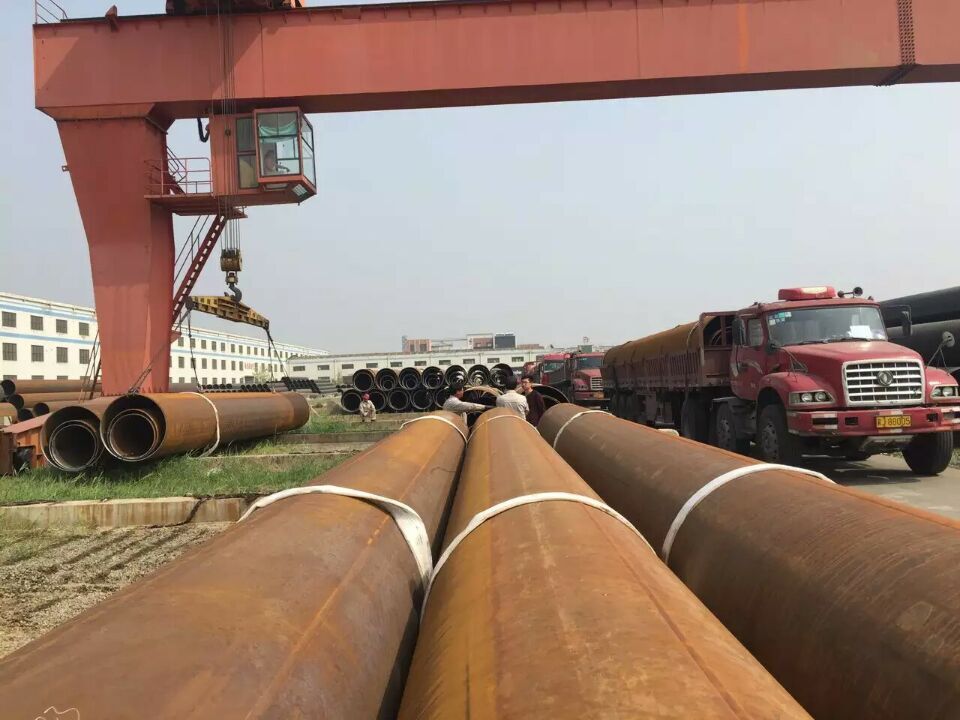
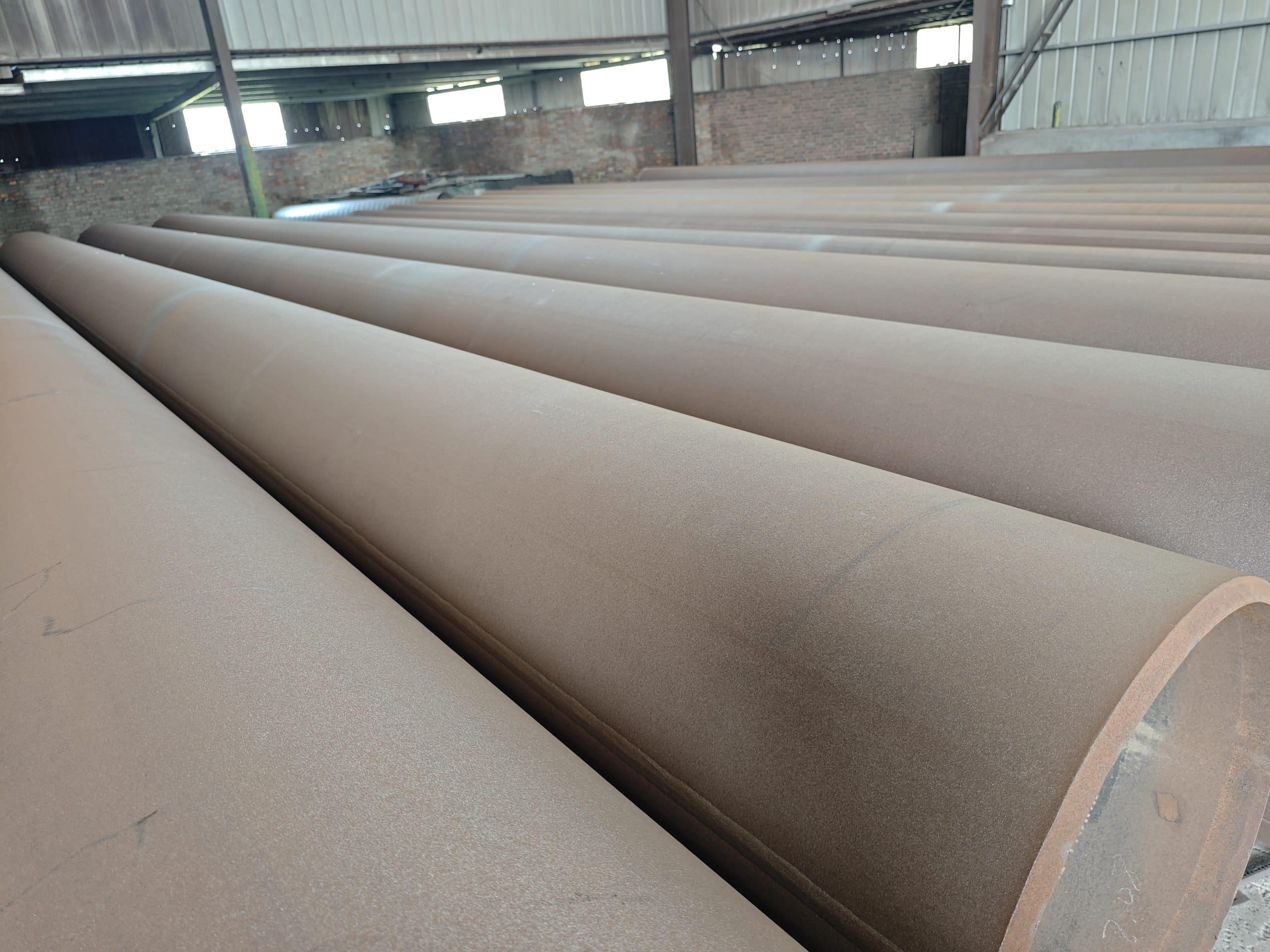
- 1. ASTM A252/A252M Steel Pipe Piles
- 2. Core Steel Weight Formula
- 3. Should You Add a Wastage Factor?
- 4. Grade Selection Does Not Automatically Reduce Wall Thickness
- 5. Corrosion Allowance Must Be Project-Specific
- 6. Procurement Checklist
- 7. Why ASTM A252/A252M Is Commonly Specified for Pipe Piles
- 8. FAQ
- 9. LONGMA Steel Pipe Pile Supply
For a steel pipe pile foundation, the basic quantity calculation starts with outside diameter (OD), nominal wall thickness (t), pile length (L) and number of piles (N). The most useful purchasing calculation is the theoretical mass per meter of a circular steel pipe, followed by the total ordered length. Any allowance for cutting, splicing or contingency should be project-specific rather than treated as a universal percentage.
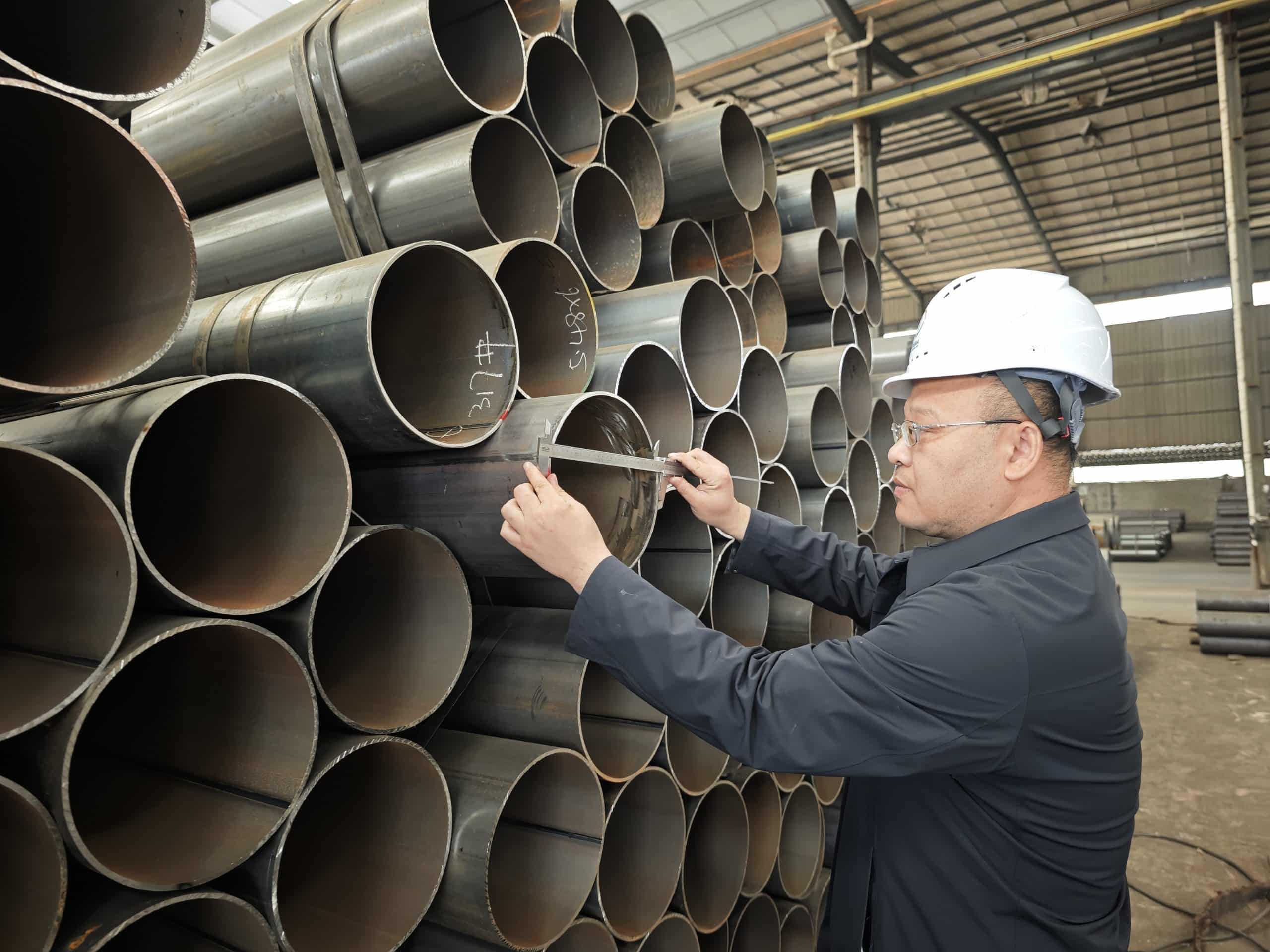
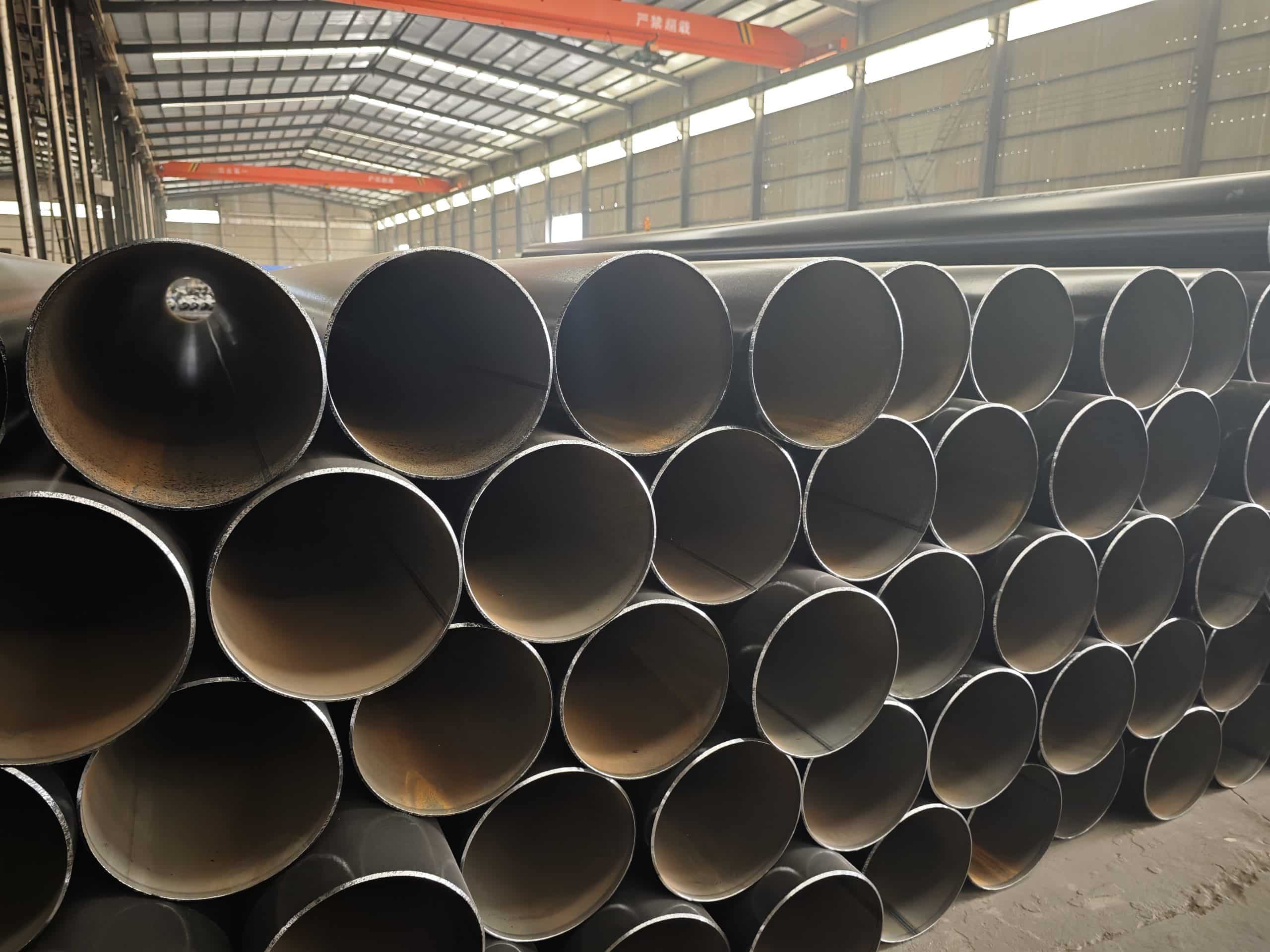
ASTM A252/A252M Steel Pipe Piles
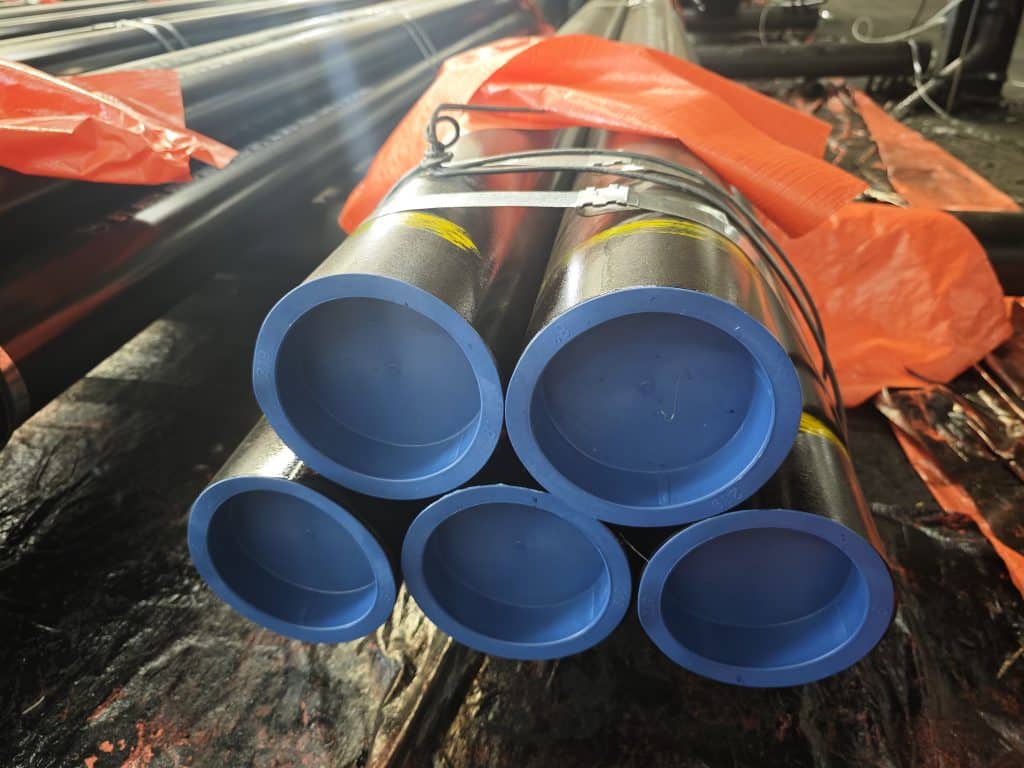
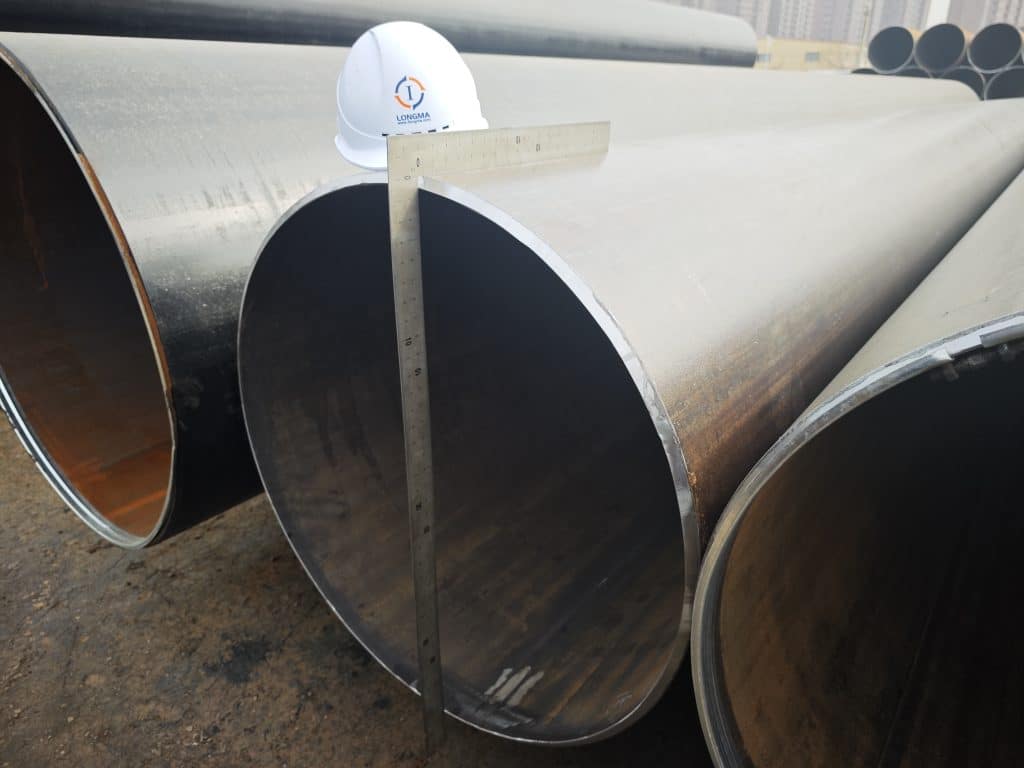
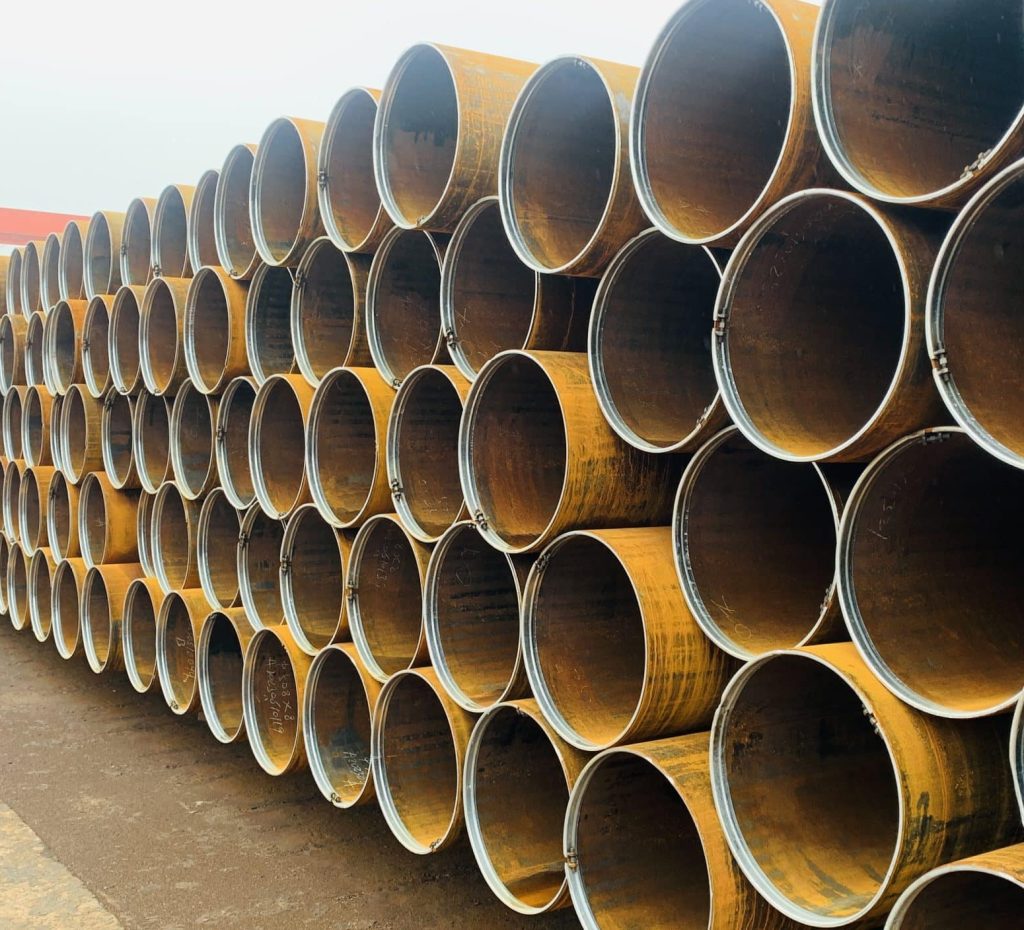
ASTM A252/A252M-26 covers nominal-wall cylindrical steel pipe piles used either as permanent load-carrying members or as shells for cast-in-place concrete piles. The standard covers welded and seamless products. The selected grade, dimensions and pile design must come from the project engineer; material grade alone does not determine the required wall thickness.
| Grade | Minimum Yield Strength | Minimum Tensile Strength |
| Grade 1 | 30,000 psi (205 MPa) | 50,000 psi (345 MPa) |
| Grade 2 | 35,000 psi (240 MPa) | 60,000 psi (415 MPa) |
| Grade 3 | 45,000 psi (310 MPa) | 66,000 psi (455 MPa) |
The SI values above are rounded engineering equivalents for reader convenience. Contract compliance should follow the unit system and values stated in the applicable purchase specification.
Core Steel Weight Formula
For OD and wall thickness expressed in millimeters, a convenient theoretical mass formula for carbon-steel pipe is:
Weight per meter (kg/m) = 0.02466 × (OD − t) × t
where OD and t are in millimeters. The factor is derived from the cross-sectional area of a circular pipe and a conventional steel density of approximately 7,850 kg/m³.
Total theoretical weight (kg) = kg/m × pile length (m) × number of piles
Worked Example
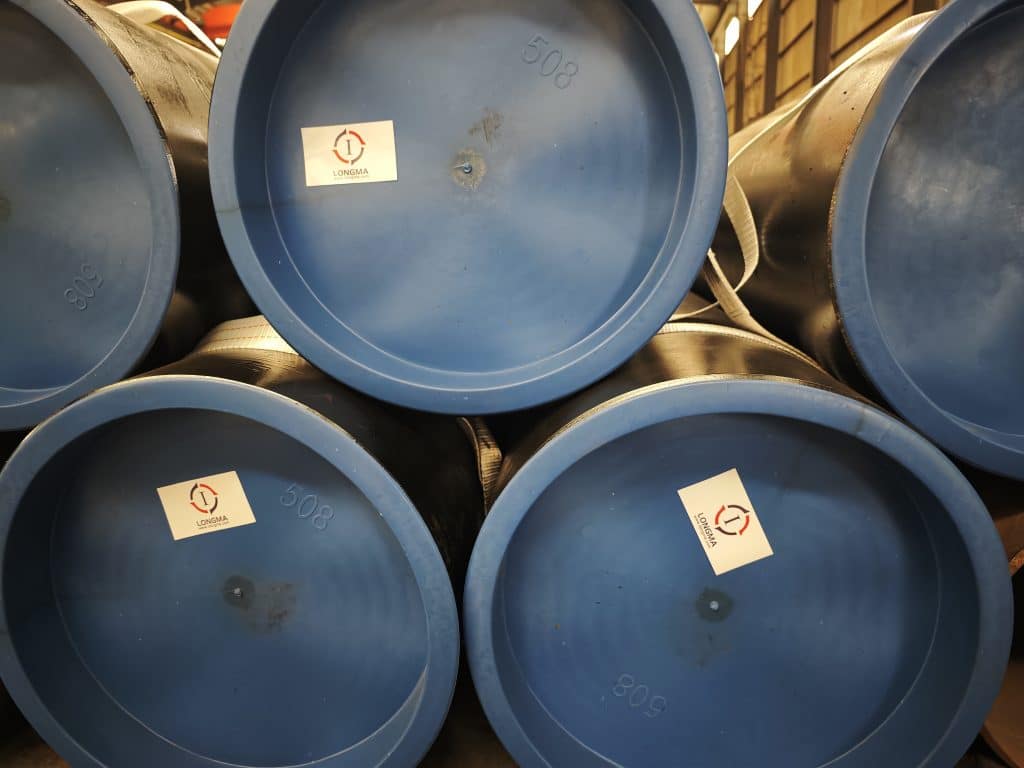
Assume 50 pipe piles with OD 508 mm, nominal wall thickness 12.7 mm and pile length 12 m:
- Theoretical mass per meter = 0.02466 × (508 − 12.7) × 12.7 ≈ 155.1 kg/m
- Theoretical mass per 12 m pile ≈ 1861.4 kg
- Total theoretical mass for 50 piles ≈ 93.1 metric tons
This is a theoretical purchasing estimate based on nominal dimensions. Actual delivered mass can differ because of permitted dimensional tolerances and measured length. For commercial settlement, inspection and structural acceptance, use the requirements stated in the purchase order, applicable standard and project documents.
Should You Add a Wastage Factor?
Do not automatically add a fixed 3–5% to every pile order. Allowance depends on the pile schedule, available mill lengths, splice locations, cutting plan, driving method, site tolerances, damaged-end trimming and the project’s contingency policy. The purchasing team should calculate the base theoretical quantity first, then add only the allowance justified by the construction plan.
Grade Selection Does Not Automatically Reduce Wall Thickness
A higher-strength grade may provide design flexibility, but it does not automatically permit a reduction in wall thickness. Pipe-pile design can be governed by axial capacity, bending, local buckling, drivability, handling stresses, corrosion allowance, connection details, fatigue and geotechnical conditions. Any wall-thickness optimization must therefore be performed by the responsible engineer under the applicable structural and foundation design requirements.
Corrosion Allowance Must Be Project-Specific
Marine, tidal, buried and industrial environments can require additional corrosion protection. Coatings, cathodic protection and corrosion allowance may be used separately or together, but a universal 3–6 mm corrosion allowance should not be assumed. The required allowance should come from the design life, expected exposure, corrosion assessment and project specification.
Procurement Checklist
- Use the pile schedule and design drawings as the controlling source for OD, wall thickness, length and quantity.
- Confirm the required ASTM A252/A252M grade and the edition stated in the purchase order.
- Calculate theoretical mass from nominal dimensions and keep the calculation unit system consistent.
- Plan mill lengths and splice locations before ordering to reduce offcuts.
- Verify MTC heat traceability and dimensional inspection records.
- Define any coating, end preparation, welding, NDT or third-party inspection requirements in the purchase specification.
- Do not reduce wall thickness or add a corrosion allowance without the responsible engineer’s design basis.
Why ASTM A252/A252M Is Commonly Specified for Pipe Piles
ASTM A252/A252M is specifically written for cylindrical steel pipe piles. That makes it a more direct procurement reference for pipe-pile material than specifications primarily intended for other services. Selection of the final pile system, however, remains a design decision and should not be based on the material standard alone.
FAQ
- What information is required to calculate steel quantity?
At minimum: OD, nominal wall thickness, pile length and pile count. A construction allowance, if any, should be added separately from the theoretical steel quantity.
- Should actual delivered weight equal theoretical weight exactly?
Not necessarily. Theoretical weight uses nominal dimensions, while actual mass reflects measured dimensions and length within the permitted tolerances.
- Can Grade 3 automatically replace Grade 2 with a thinner wall?
No. A grade change and wall-thickness change require engineering verification against the complete structural, geotechnical, installation and durability design.
- How should marine corrosion be included?
Use the corrosion protection and allowance specified by the project engineer based on exposure and design life; do not apply a universal thickness allowance.
LONGMA Steel Pipe Pile Supply
LONGMA manufactures round welded steel pipe, including ERW and LSAW products, for infrastructure and foundation applications according to the applicable purchase specification. The production base covers approximately 230,000 square meters, with annual production exceeding 500,000 tons. Buyers can submit the pile schedule, grade, OD, wall thickness, length, end preparation, coating and inspection requirements for technical review and quotation.