- 1. What is ASTM A671 Steel Pipe?
- 2. Grade and Performance Selection of ASTM A671 Steel Pipes
- 3. Size and Wall Thickness Selection
- 4. Key Quality Testing and ASTM Standard Requirements
- 5. Difference Between ASTM A671 and ASTM A672
- 6. Supplier Capability: A Key Factor in High-Pressure Pipeline Projects
- 7. Conclusion
In industries such as petrochemical, power generation, natural gas transportation, and refineries, high-pressure pipeline systems impose extremely strict requirements on material strength, weldability, and long-term reliability. Steel pipes manufactured under the ASTM A671 standard have become an important choice for many high-pressure pipeline projects due to their excellent mechanical properties and stable welding performance.
However, different projects vary in pressure levels, temperature environments, and corrosion conditions. Therefore, selecting the appropriate grade and class of ASTM A671 EFW welded pipe is critical. This article analyzes the topic from multiple perspectives—including material performance, grade selection, inspection standards, and supplier capabilities—to help engineering procurement professionals make more reliable decisions while also introducing LONGMA’s quality control advantages in this field.
What is ASTM A671 Steel Pipe?
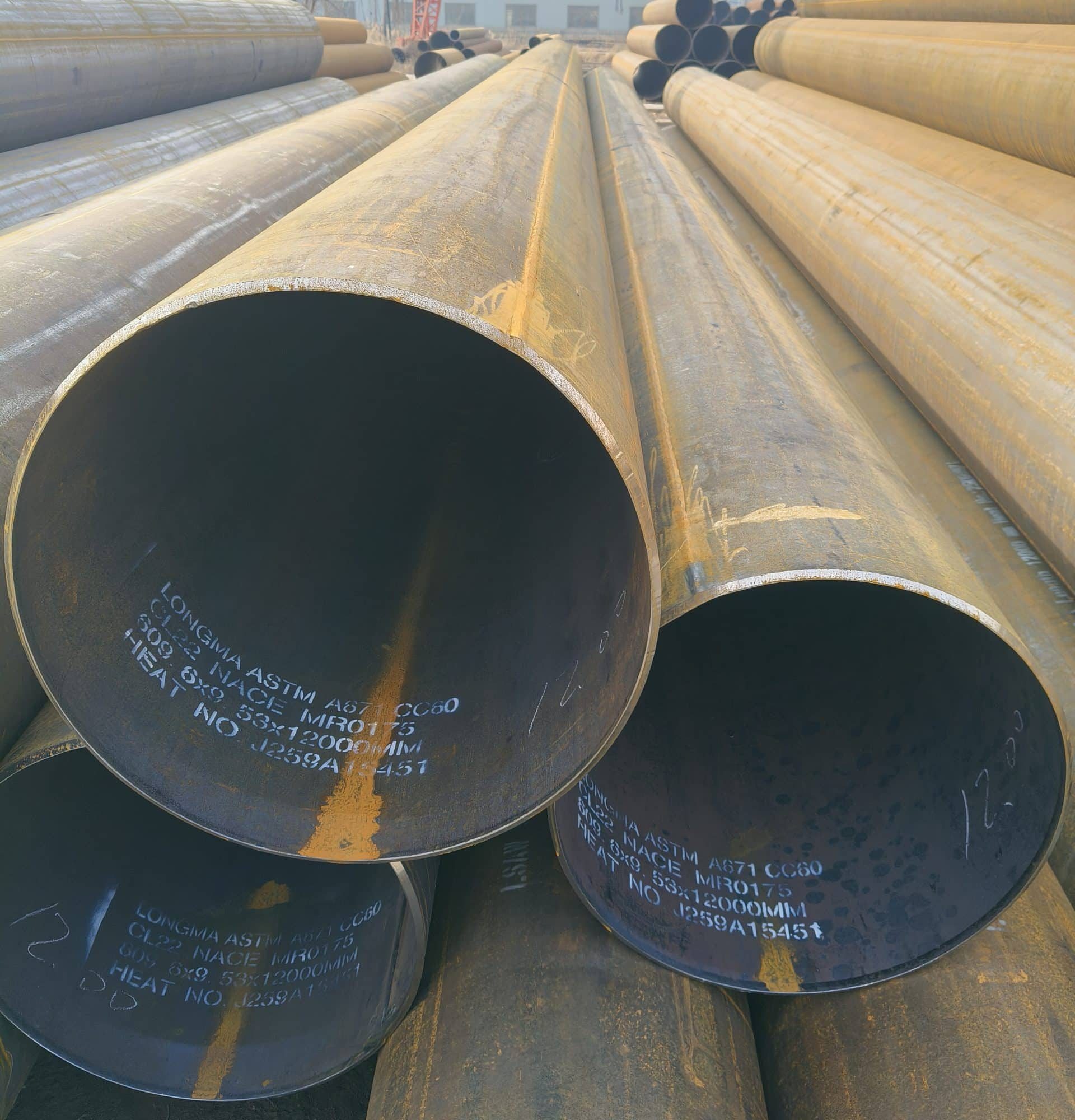
ASTM A671 is a standard published by ASTM International that specifies the manufacturing and testing requirements for electric-fusion-welded (EFW) steel pipes used in pressure applications. The pipes are typically manufactured using pressure-vessel steel plates such as ASTM A516 as the base material. After forming and welding, the pipes undergo heat treatment to ensure stable mechanical properties.
ASTM A671 steel pipes are widely used in:
- Oil and gas transmission pipelines
- High-pressure refinery pipelines
- Power plant steam systems
- LNG and chemical processing facilities
In practical engineering applications, ASTM A671 CC60 CL22 is one of the most commonly used grades. It achieves a good balance between strength and toughness, making it widely used in medium-to-high pressure service conditions.
Grade and Performance Selection of ASTM A671 Steel Pipes
When selecting ASTM A671 steel pipes, it is essential to understand the meaning of Grade and Class.
- Grade: Indicates the strength level of the base plate material
- Class: Represents welding and inspection requirements
The following table shows the characteristics of common grades:
| Grade | Common Class | Minimum Yield Strength (MPa) | Typical Application |
| CC60 | Class 22 | ≥240 | High-pressure refinery pipelines |
| CC65 | Class 22 | ≥260 | High-temperature steam systems |
| CC70 | Class 11 | ≥275 | High-strength pressure pipelines |
For example, in refinery or chemical plant installations, ASTM A671 CC60 CL22 is frequently selected because it can withstand high pressure while maintaining excellent weldability.
In addition, ASTM A671 EFW welded pipe can produce large-diameter thick-wall pipes through electric fusion welding technology—something that seamless pipes often cannot achieve economically.
Size and Wall Thickness Selection
For high-pressure systems, pipe size and wall thickness directly affect operational safety. Engineering design typically determines wall thickness based on pressure calculations.
Below is a typical example of an ASTM A671 pipe size chart:
| Outside Diameter (mm) | Wall Thickness Range (mm) | Typical Application |
| 406 | 8 – 25 | Chemical transportation |
| 610 | 10 – 30 | Refinery pipelines |
| 914 | 12 – 40 | Long-distance transmission |
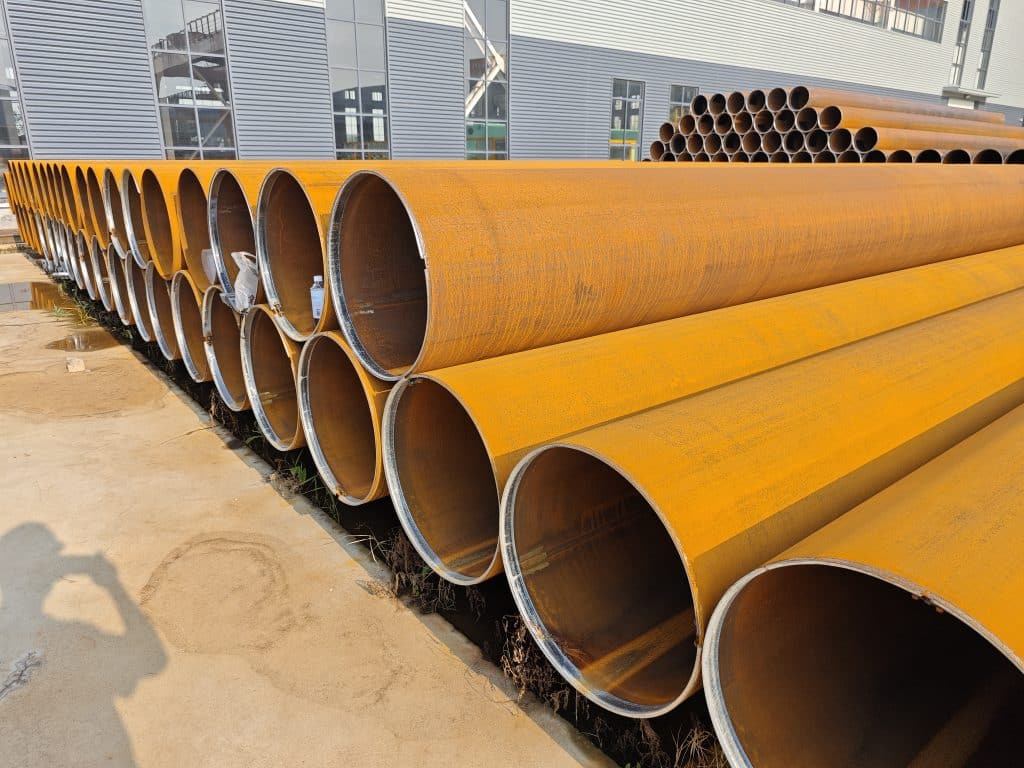
Large-diameter pipeline systems usually adopt ASTM A671 EFW welded pipe because this welding process ensures structural stability while reducing manufacturing costs.
Key Quality Testing and ASTM Standard Requirements
The most critical issues in high-pressure pipelines are safety and reliability. According to ASTM standards, ASTM A671 pipes must undergo strict inspections.
| Test Method | Standard Reference | Purpose |
| Hydrostatic Test | ASTM A999 | Verify pressure resistance |
| Ultrasonic Testing (UT) | ASTM E213 | Detect internal defects |
| Radiographic Testing (RT) | ASTM E94 | Inspect weld quality |
| Tensile Test | ASTM A370 | Verify mechanical properties |
| Impact Test | ASTM A370 | Verify low-temperature toughness |
For grades such as ASTM A671 CC60 CL22, weld seams typically require 100% nondestructive testing to ensure there are no defects such as porosity, cracks, or lack of fusion.
Difference Between ASTM A671 and ASTM A672
During project procurement, engineers often compare ASTM A671 vs A672. Although both are EFW pipes, they are designed for different service environments.
| Standard | Main Application | Working Temperature |
| ASTM A671 | Pressure pipelines at ambient or medium temperature | ≤ 400°C |
| ASTM A672 | High-temperature and high-pressure pipelines | ≤ 500°C |
Therefore, the appropriate standard should be selected based on the actual operating conditions.
Supplier Capability: A Key Factor in High-Pressure Pipeline Projects
In addition to the material itself, the manufacturing capability and quality management system of the supplier are equally important. Experienced manufacturers can ensure that products meet standards and project timelines.
LONGMA’s advantages include:
- More than 20 years of steel pipe manufacturing experience
- Complete ASTM A671 EFW welded pipe production lines
- Automated welding and online ultrasonic inspection systems
- Advanced heat treatment facilities
- Comprehensive in-house laboratory testing system
LONGMA’s laboratory can perform chemical analysis, mechanical testing, nondestructive inspection, and hydrostatic testing to ensure that every batch of ASTM A671 pipes complies with international standards.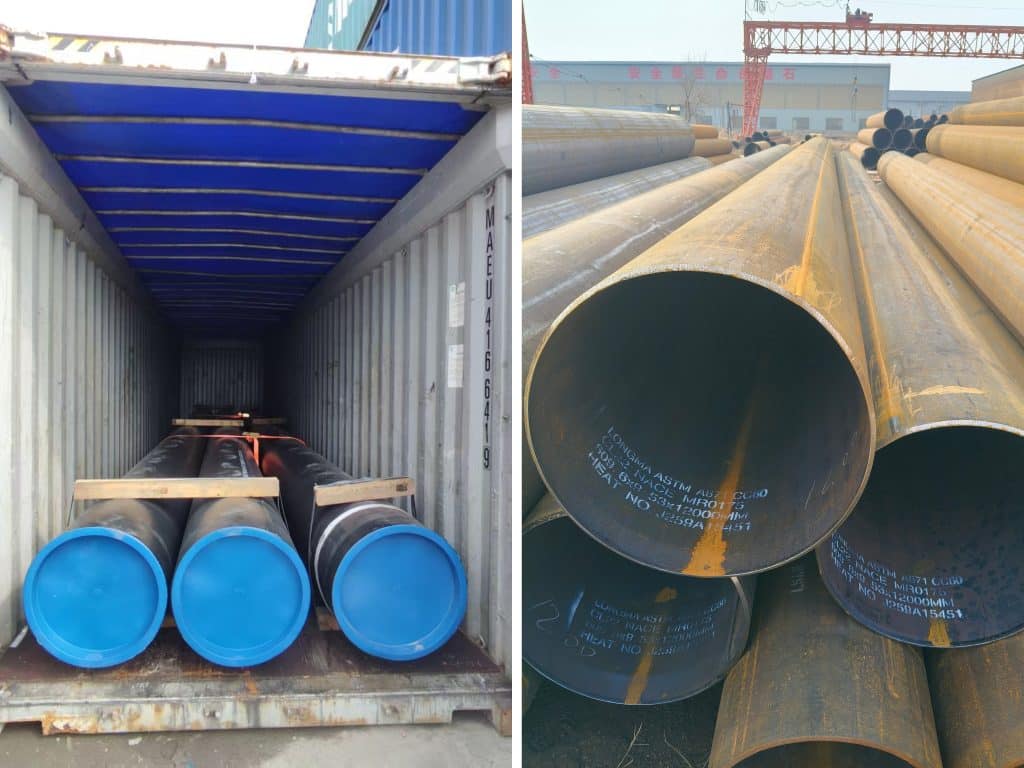
Conclusion
Selecting the right pipeline material for high-pressure applications requires a comprehensive evaluation of pressure levels, temperature conditions, pipe dimensions, and quality inspection requirements.
Generally speaking:
- ASTM A671 CC60 CL22 is suitable for most refinery and chemical pressure pipelines
- ASTM A671 EFW welded pipe is ideal for large-diameter high-pressure transmission systems
- Choosing an experienced manufacturer can significantly reduce engineering risks
With its strict quality control system and extensive project experience, LONGMA has become a key supplier for numerous global energy and petrochemical projects. If you are looking for a reliable ASTM A671 pipe supplier, LONGMA can provide stable, safe, and internationally compliant steel pipe solutions for your projects.