- 1. Basic ASTM A672 Standard and Export Applicability
- 2. Major International Standards for ASTM A672 Steel Pipe Export
- 3. Essential Certification Requirements (Mandatory for Export)
- 4. Inspection Methods and ASTM Standard Requirements
- 5. ASTM A671 vs A672: Selection Recommendations for Export Projects
- 6. In-House Laboratory: Core Guarantee for Export Quality
- 7. LONGMA’s Export Advantages and Quality System
- 8. Export Procurement Recommendations
- 9. Conclusion
In global petroleum, natural gas, power and chemical projects, procurement of pressure piping materials not only focuses on performance but also must comply with stringent international standards and certification requirements. As a major type of electric fusion welded (EFW) carbon steel pipe, ASTM A672 steel pipes are widely exported to markets in the Middle East, Southeast Asia, Europe and Africa.
This article systematically analyzes the key elements required for ASTM A672 pipe export from the perspectives of international standard systems, certification requirements, inspection specifications and supplier capability assessment, helping purchasers avoid risks and select high-quality suppliers such as LONGMA with over 20 years of experience.
Basic ASTM A672 Standard and Export Applicability
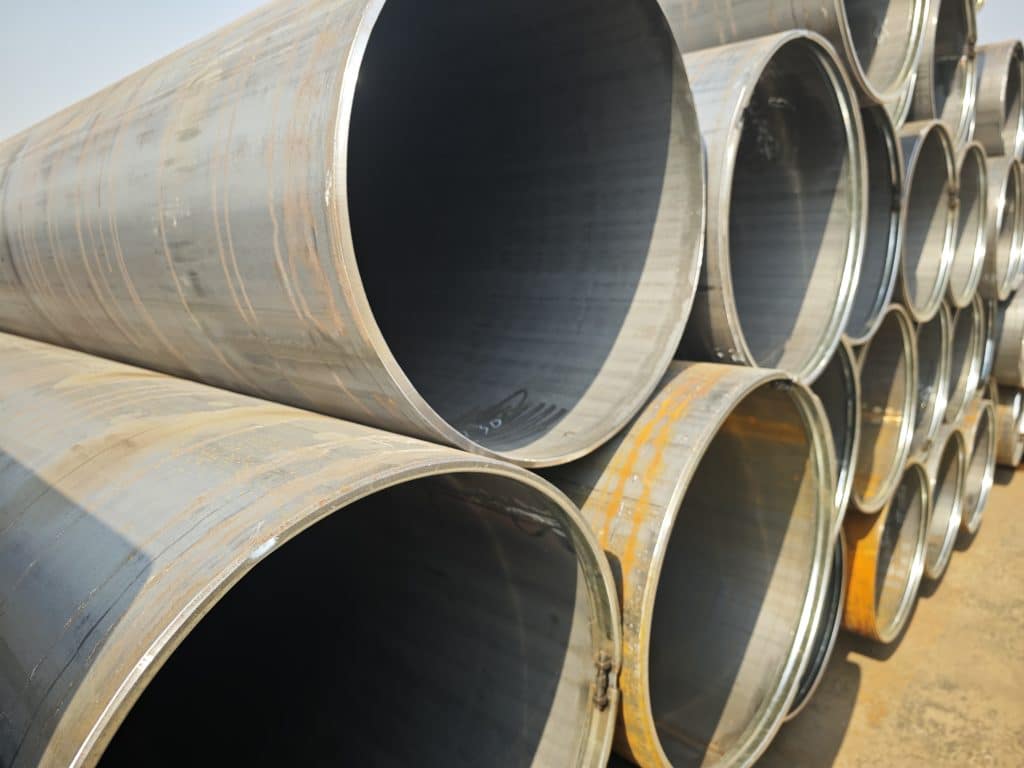
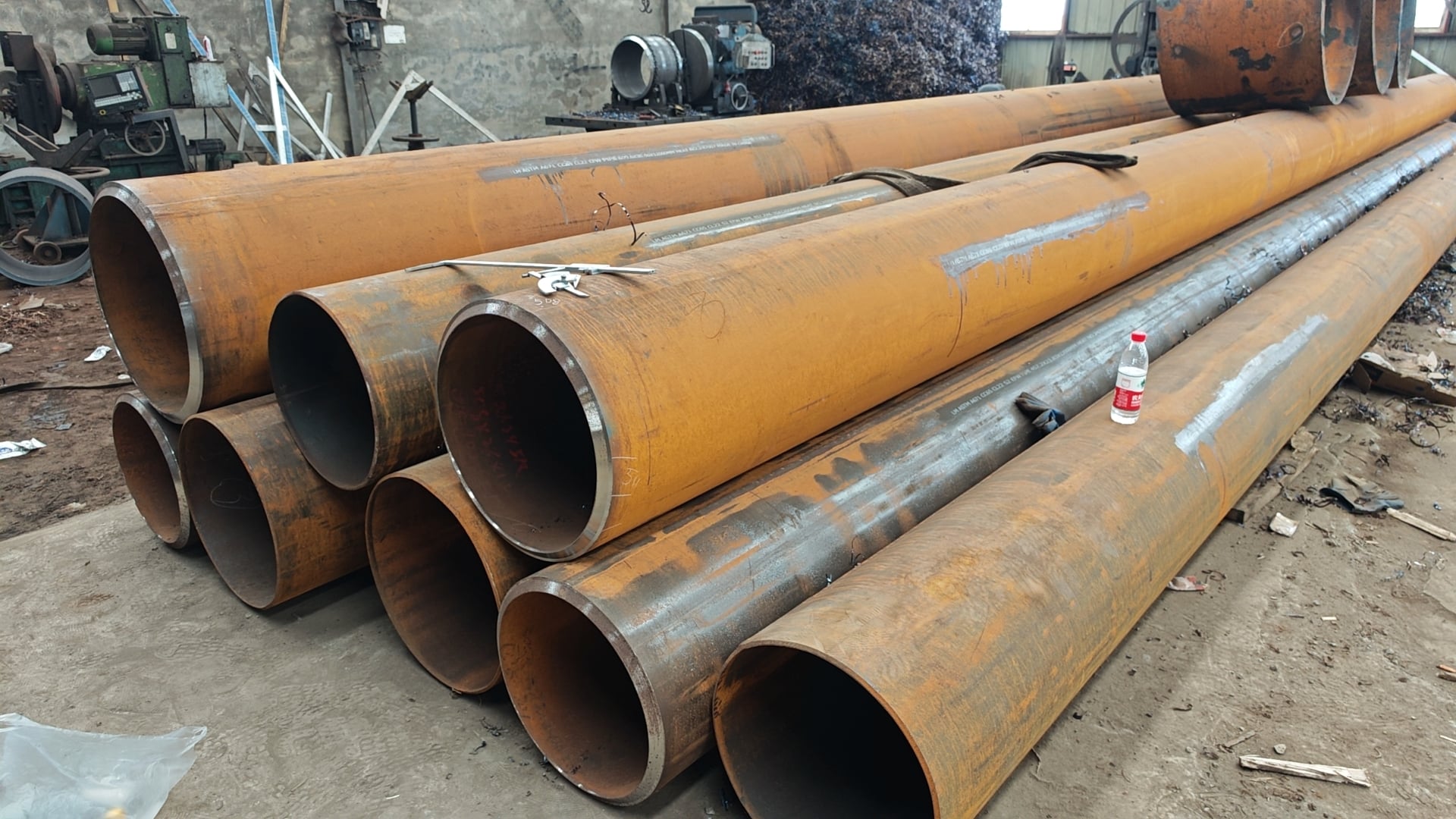
The ASTM A672 specification applies to electric fusion welded steel pipes manufactured from pressure vessel steel plates, with main features including:
- High strength and good weldability
- Suitable for medium-to-high temperature and medium-to-high pressure environments
- Widely used in international EPC projects
Common export grades include:
- ASTM A672 C60 CL22
- ASTM A672 C65 CL22
- ASTM A672 C70
Among them, ASTM A672 C60 CL22 and ASTM A672 C65 CL22 are the most stable products in international demand.
Major International Standards for ASTM A672 Steel Pipe Export
In actual export, compliance with ASTM A672 specification alone is often insufficient; additional project or regional standards must also be met.
Comparison of Common International Standards
| Standard System | Standard Name | Applicable Regions | Main Function |
| ASTM | ASTM A672 | Global | Basic manufacturing standard |
| ASME | ASME Section II / VIII | Power stations, pressure vessels | Material and design specifications |
| EN | EN 10217 | Europe | Pipe manufacturing standard |
| ISO | ISO 3183 | Oil and gas industry | Pipeline transportation standard |
For export projects, ASTM A672 material usually needs to meet ASTM + ASME or EN requirements simultaneously.
Essential Certification Requirements (Mandatory for Export)
International buyers typically require the following certifications when purchasing ASTM A672 pipe:
- Material Certification (MTC)
- EN 10204 3.1 / 3.2 certificate
- Covering chemical composition and mechanical properties
- Third-Party Inspection (TPI)
Common inspection bodies:
- SGS
- BV (Bureau Veritas)
- TUV
- Project Certification
| Certification Type | Application Scenario |
| PED (Pressure Equipment Directive) | European projects |
| ISO 9001 | Quality management system |
| API Q1 | Petroleum industry |
These certifications are important criteria for evaluating the reliability of ASTM A672 exporters.
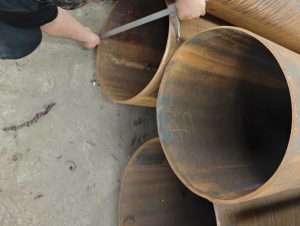
Inspection Methods and ASTM Standard Requirements
To meet international project requirements, the ASTM A672 specification stipulates strict inspection procedures.
- Ultrasonic Testing (UT)
Purpose
Detect internal defects in steel plates and welds
Implementation Steps
- Scan weld areas
- Analyze echo signals
- Evaluate defect grades
Standard Basis
ASTM A672 references ASTM A578 / A435
- Radiographic Testing (RT)
Purpose
Verify the internal structural integrity of welds
Process
- Radiographic exposure
- Film imaging
- Defect assessment
100% RT coverage is normally required for ASTM A672 C65 CL22 export projects.
- Hydrostatic Test
Purpose
Verify the pressure-bearing capacity of ASTM A672 pipe
Implementation Steps
- Water filling and pressurization
- Pressure holding and inspection
This test is mandatory before delivery.
ASTM A671 vs A672: Selection Recommendations for Export Projects
In international projects, engineers often compare ASTM A671 and A672:
| Item | ASTM A671 | ASTM A672 |
| Material | Alloy steel | Carbon steel |
| Cost | High | More economical |
| Application | High-temperature environments | Medium-to-high temperature environments |
For most export projects, ASTM A672 carbon steel offers a better balance of performance and cost.
In-House Laboratory: Core Guarantee for Export Quality
For international purchasers, the availability of an in-house laboratory is a key criterion for judging supplier capability.
Standard Laboratory Capabilities
- Chemical composition analysis (spectrometer)
- Tensile and impact testing
- UT/RT non-destructive testing
- Hydrostatic testing equipment
These inspection methods ensure every batch of ASTM A672 C60 CL22 or ASTM A672 C65 CL22 products meets international standards.
LONGMA’s Export Advantages and Quality System
With over 20 years of experience as a steel pipe manufacturer, LONGMA has significant advantages in ASTM A672 pipe export:
Core Competitiveness
- Strict compliance with ASTM A672 specification
- In-house laboratory covering full-process inspection
- Support for third-party inspections (SGS/BV/TÜV)
- Complete quality traceability system
With these strengths, LONGMA has become a leading China ASTM A672 exporter for many international projects.
Export Procurement Recommendations
When selecting suppliers, focus on:
- Complete certification system (ISO/PED)
- Support for third-party inspection
- Experience in supplying large-scale projects
- In-house laboratory capability
In wholesale ASTM A672 procurement, stable quality and certification competence are far more critical than price.
Conclusion
In global engineering projects, ASTM A672 pipe must not only meet basic manufacturing standards but also comply with multiple international certifications and inspection requirements. In particular, ASTM A672 C60 CL22 and ASTM A672 C65 CL22 have become mainstream products in the export market.
Choosing ASTM A672 exporters with complete certification systems and quality control capabilities such as LONGMA will effectively reduce project risks and ensure smooth project delivery.