- 1. ASTM A691 Standard and Export Background
- 2. Comparison of Major International Standard Systems
- 3. Core Certification Requirements
- 4. Inspection Methods and Standard Requirements
- 5. Common Export Issues and Procurement Risks
- 6. LONGMA’s Export Solutions
- 7. Summary: Compliance Is Key to Successful Export
In global energy and chemical engineering projects, steel pipes must not only meet performance requirements but also comply with stringent international standards and certification systems. ASTM A691 products, designed for high-temperature and high-pressure (HTHP) service, have much higher export thresholds than ordinary steel pipes. For buyers, understanding the international certification requirements for ASTM A691 pipe is critical to mitigating project risks and ensuring smooth acceptance.
This document provides an in‑depth analysis of international standard systems, certification mandates, inspection methods, and procurement risks. Combined with LONGMA’s practical capabilities, it helps you select more reliable suppliers.
ASTM A691 Standard and Export Background
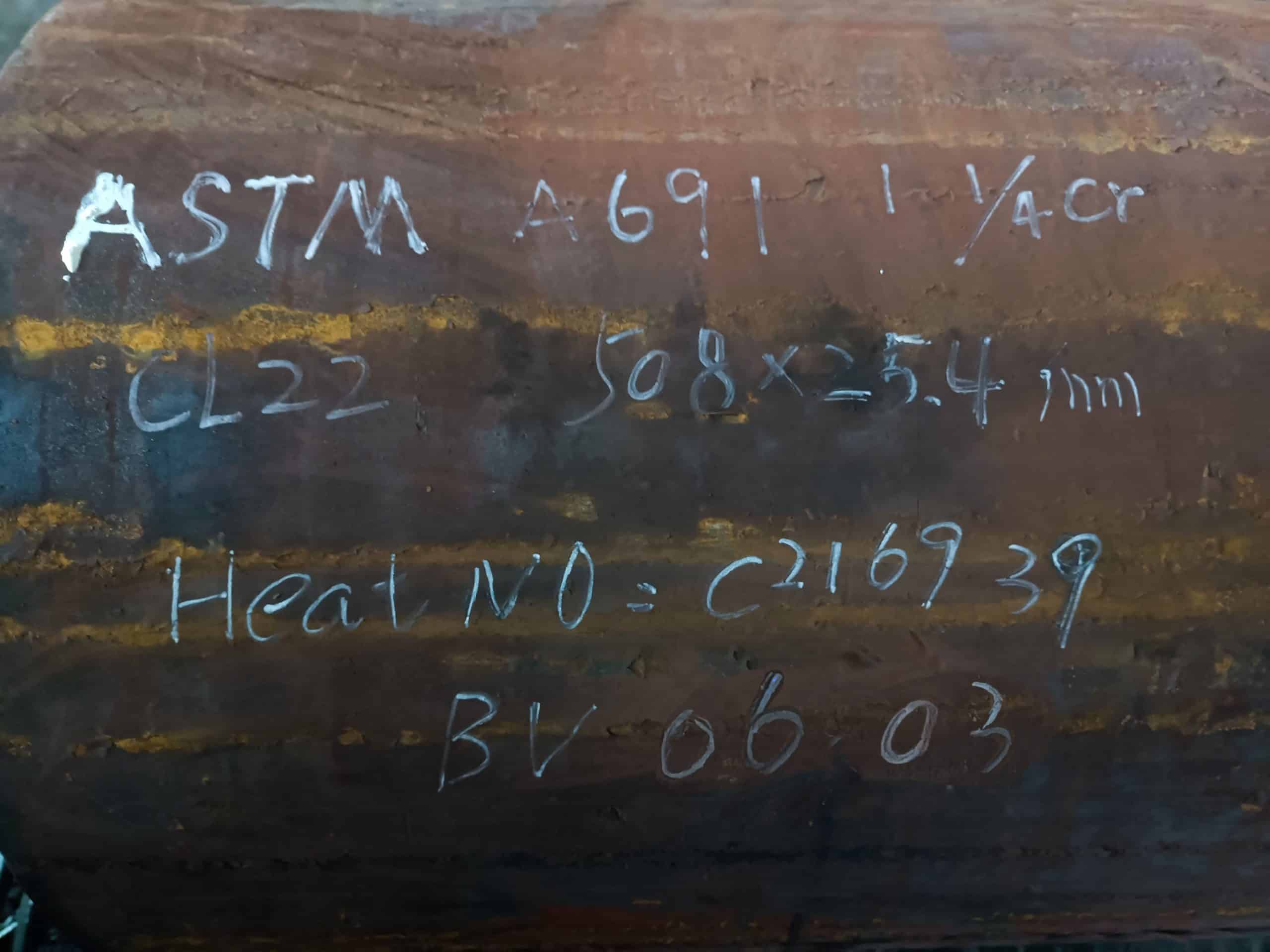
ASTM A691 is the specification for electric‑fusion‑welded (EFW) alloy steel pipes, mainly used in HTHP environments such as power plant boilers, refinery units, and hydrogenation systems.
Common export grades include:
- ASTM A691 CL32
- ASTM A691 Grade 2.1 4Cr
- ASTM A691 Grade 2.1 4Cr Gr 32
For the European market (e.g., ASTM A691 pipes & tubes in Spain), dual compliance with ASTM and EN standards is typically required.
Comparison of Major International Standard Systems
Requirements for steel pipes vary by country and region; exports must meet multiple standards.
- ASTM vs. EN Standards
| Item | ASTM A691 | EN Standards (e.g., EN 10217) |
| Material System | Alloy steel (A387) | P235GH, 16Mo3, etc. |
| Inspection Requirements | Strict (especially CL32) | Emphasis on PED compliance |
| Application | HTHP service | Pressure equipment |
Key point: ASTM A691 pipes exported to Europe usually need to meet both EN standards and the PED Directive.
- Relationship Between ASME and ASTM
- ASTM: Material specification
- ASME: Design and application code (e.g., ASME Boiler & Pressure Vessel Code)
For pressure vessel projects, ASTM A691 materials must comply with ASME design requirements.
Core Certification Requirements
- PED (Pressure Equipment Directive 2014/68/EU)
Applicable to the European market; a mandatory key certification for export.
Requirements include:
- Material traceability
- Factory quality system certification
- Third‑party inspection by a Notified Body
PED is compulsory for ASTM A691 pipes & tubes in Spain.
- ISO Management System Certifications
| Standard | Content |
| ISO 9001 | Quality management system |
| ISO 14001 | Environmental management |
| ISO 45001 | Occupational health and safety |
- Third‑Party Inspection Certifications
Common bodies:
- SGS
- Bureau Veritas (BV)
- TÜV
These ensure the authenticity and reliability of ASTM A691 pipe inspection data.
Inspection Methods and Standard Requirements
Export‑grade ASTM A691 products must undergo rigorous testing.
- Chemical Composition Analysis (ASTM A751)
Purpose: Verify material composition
Key point: For ASTM A691 Grade 2.1 4Cr Gr 32, Cr and Mo contents must comply with the standard.
- Mechanical Property Testing (ASTM A370)
| Item | Requirement |
| Tensile Strength | ≥ 515 MPa |
| Yield Strength | ≥ 310 MPa |
| Elongation | ≥ 18% |
- Non‑Destructive Testing (NDT)
| Method | Standard | Requirement |
| UT | ASTM A435 | Full body inspection |
| RT | ASTM E94 | 100% weld inspection |
| MT | ASTM E709 | Surface defect detection |
ASTM A691 CL32 normally requires 100% RT + UT.
- Heat Treatment Verification (ASTM A691)
Processes:
- Normalizing
- Tempering
Purposes:
- Improve microstructural stability
- Enhance high‑temperature performance
For ASTM A691 Grade 2.1 4Cr, heat treatment is a major audit item for export certification.
Common Export Issues and Procurement Risks
❗ Standard Mismatch
Meeting only ASTM but not EN/PED, resulting in failed customs clearance or acceptance.
❗ Incomplete Inspection
Non‑compliance with ASTM A691 CL32, jeopardizing project acceptance.
❗ Missing Documentation
Lack of MTC, NDT reports, or third‑party certificates.
❗ Insufficient Material Traceability
Inability to provide complete production records.
LONGMA’s Export Solutions
With over 20 years of experience, LONGMA has a complete system for ASTM A691 pipe exports:
✔ In‑House Laboratory (Core Advantage)
- Spectrometric analysis (ASTM A751)
- Mechanical property testing (ASTM A370)
- Impact testing equipment
- Full UT / RT / MT inspection
All ASTM A691 CL32 products undergo full‑process inspection and data traceability.
✔ Complete Certification System
- ISO 9001 certified
- PED compliance support
- Third‑party inspection (SGS / BV / TÜV)
✔ European Project Experience
LONGMA has successfully delivered multiple ASTM A691 pipes & tubes in Spain projects and is familiar with EU certification procedures and documentation requirements.
✔ Documentation & Service Support
Provide complete export documents:
- EN 10204 3.1 / 3.2 certificates
- Material Test Certificate (MTC)
- NDT reports
- Heat treatment records
Summary: Compliance Is Key to Successful Export
For high‑end engineering projects, meeting only material performance is insufficient. Compliance with ASTM, EN, PED, and third‑party inspection requirements is mandatory to bring ASTM A691 products smoothly into the global market.
Especially in HTHP applications, the combination of ASTM A691 Grade 2.1 4Cr Gr 32 and ASTM A691 CL32 is the optimal choice for safety and compliance.