- 1. Understanding Galvanized Steel Pipe in Drinking Water Systems
- 2. Safety Considerations: Is Galvanized Steel Pipe Safe for Drinking Water?
- 3. Material Selection: A Practical Comparison
- 4. Procurement Guide: How to Source Safe Galvanized Steel Pipes for Drinking Water
- 5. Maintaining and Enhancing the Safety of Galvanized Steel Pipes in Water Use
- 6. Conclusion
- 7. FAQ
- 8. Partner With LONGMA for Certified Anti-Corrosion Steel Pipe Solutions
Galvanized steel pipe has a long history in water-distribution and building-plumbing systems, but the answer to whether it is suitable for drinking water is not a simple yes or no. Suitability depends on local plumbing codes, the age and condition of the pipe, water chemistry, corrosion behavior, and the health-effects certifications required for materials that contact potable water. ASTM A53/A53M addresses steel pipe product requirements; it should not be treated as a substitute for potable-water health-effects certification.
Understanding Galvanized Steel Pipe in Drinking Water Systems
What Is a Galvanized Steel Pipe?
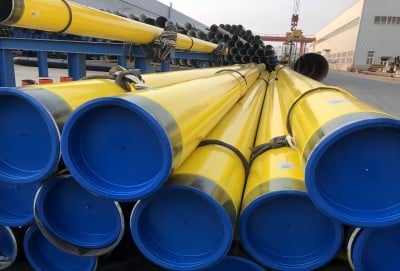
Galvanized steel pipes are carbon steel pipes that have been dipped in molten zinc at around 450°C, which produces a zinc-iron alloy coating that is metallurgically bound to both sides. The technique, according to ASTM A53-2024, provides a coating weight of at least 1.8 oz/ft2 (550 g/m2). The zinc layer bonds in layered stages — gamma, delta, zeta, and eta — each adding incrementally to barrier and sacrificial cathodic protection. Water distribution is most often specified by Schedule 40 wall thickness under ANSI/ASME B36.10M, which provides a balance of structural stiffness and sufficient internal bore for flow capacity.
How the Zinc Coating Protects the Steel Substrate
The protection system works on two levels at the same time. The zinc serves as a physical barrier to moisture and dissolved oxygen. When the coating is mechanically damaged, the adjacent zinc preferentially oxidizes, sacrificing itself to protect the exposed steel. This self-healing action is a significant benefit over organic coatings that merely break, allowing corrosion to undercut the layer. In regulated industrial conditions, this chemical enhances service life by 20 to 50 years compared with uncoated black steel pipe.
Safety Considerations: Is Galvanized Steel Pipe Safe for Drinking Water?
Zinc Leaching and Regulatory Position
The main water-quality concern with galvanized pipe is the interaction between the zinc coating, the underlying steel, and the water chemistry. Soft or acidic water can accelerate zinc dissolution and internal corrosion. The U.S. EPA lists zinc under its Secondary Drinking Water Standards, which address aesthetic effects such as metallic taste rather than establishing a primary health-based maximum contaminant level. Older galvanized systems may also require evaluation for lead-related risks where they are or were connected downstream of lead service lines or lead-containing components. For new potable-water projects, compliance should be assessed against the applicable plumbing code and required drinking-water contact certifications.
Lifespan Under Real Water Conditions
If the dissolved oxygen in the water is high or the water is left sitting stagnant, situations prevalent in building plumbing, internal corrosion of zinc-coated galvanized steel pipe speeds up. In residential settings, galvanized supply lines often experience severe tuberculation after 40 to 70 years under neutral pH circumstances, according to research published by the American Water Works Association. AWWA C200 and C210 standards for larger-diameter coated pipes with additional liquid epoxy internal lining in industrial water supply mains have far longer service cycles because the epoxy completely protects the zinc from direct contact with the water.
Material Selection: A Practical Comparison
Procurement engineers routinely rate stainless steel, PVC, and coal tar epoxy-coated options against zinc-coated steel. Each material has a certain performance envelope:
- Stainless steel pipe, such as material specified to ASTM A312 where appropriate, offers strong corrosion resistance in many water environments, but material selection should be based on water chemistry, pressure, temperature, fabrication, regulatory requirements, and lifecycle cost. A fixed claim that stainless steel costs three to five times more than galvanized carbon steel is not reliable across sizes, grades, regions, and market conditions.
- PVC and HDPE avoid metallic corrosion and can perform well in many water and buried-service applications. However, direct comparisons with steel should not be based on tensile strength alone. Pressure class, temperature, diameter, surge conditions, joint design, burial loads, installation method, and the governing waterworks standard all affect suitability. Steel remains advantageous in many large-diameter or mechanically demanding applications, while thermoplastic pipe can be preferable in others.
- AWWA standards distinguish among different protective systems for steel water pipe. AWWA C203 covers coal-tar protective coatings and linings, while AWWA C210 covers liquid-epoxy coatings and linings. These standards specify requirements for their respective systems; they should not be described as universally recommending one coating for every underground water-main application. The coating or lining must be selected for the service environment and project specification.
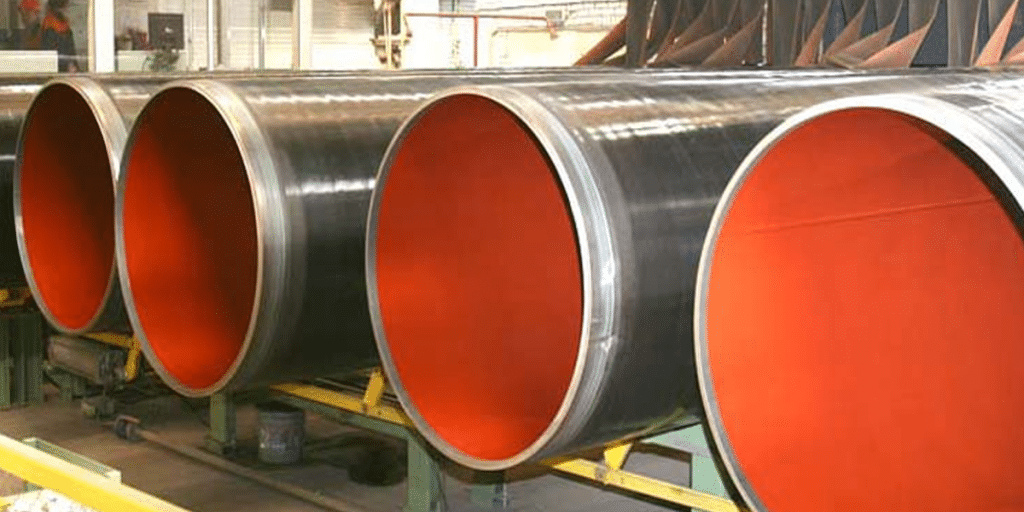
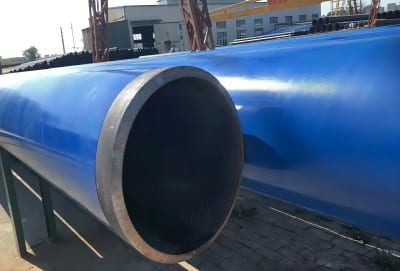
For industrial and municipal water transmission, internally lined and externally coated steel pipe can provide effective corrosion protection when the systems are properly selected, applied, inspected, and maintained. A liquid-epoxy lining and an external polyethylene or other compatible coating may be suitable for certain large-diameter buried pipelines, but no coating combination is ‘always superior.’ Water chemistry, soil conditions, operating temperature, pressure, installation method, design life, and potable-water certification requirements must be considered.
Procurement Guide: How to Source Safe Galvanized Steel Pipes for Drinking Water
Key Standards and Specifications to Verify
The most important criteria in engineering evaluations and third-party audits in selecting zinc-coated or anti-corrosion-coated galvanized steel pipe for water supply are the following specifications:
- ASTM A53-2024 covers dimensional tolerances, weight of zinc coating, and mechanical characteristics of welded and seamless galvanized pipe up to NPS 26.
- AWWA C200 covers steel water pipe 6 in. (150 mm) and larger, while AWWA C210 covers liquid-epoxy coatings and linings for steel water pipe and fittings. For municipal procurement, the applicable pipe, lining, coating, joint, and installation standards should be identified individually in the project specification rather than treating C200/C210 as a single combined requirement.
- Where a 3LPE external coating is specified, procurement documents should identify the applicable coating standard, required coating class/thickness, qualification tests, and acceptance criteria. DIN 30670 applies to polyethylene coatings on steel pipes and fittings, but individual peel-strength values and test conditions should be taken directly from the project-specified edition and coating system rather than presented as a universal requirement for every 3LPE water project.
- For components, coatings, or linings that will contact drinking water, purchasers should verify the health-effects certification required by the authority having jurisdiction. NSF/ANSI/CAN 61 is widely used in North America for drinking-water system components, but certification requirements depend on the product, jurisdiction, and project specification. ASTM A53/A53M compliance alone does not establish potable-water health-effects compliance.
- EN 10204 3.1 Mill Test Certificates provide material traceability from heat to completed pipe, allowing full audit compliance on government-supported infrastructure projects.
Third-party inspection reports by SGS, Bureau Veritas, or other accredited bodies should be provided for qualified anti-corrosion pipe suppliers to verify the coating thickness uniformity, cathodic disbondment resistance, and impact strength within the specified thickness range (2.9 mm to 4.2 mm depending on operating pressure and burial depth).
Evaluating Supplier Capability
Certification paperwork should be available, but a good manufacturer will also have in-line production monitoring, comprehensive heat-number traceability, and a documented non-conformance management system. Since 2003, LONGMA has been producing anti-corrosion ERW and LSAW galvanized steel pipes with an annual output of more than 500,000 tons and a manufacturing plant of 230,000 square meters. The firm is ISO 9001 certified and provides EN 10204 3.1 MTCs on all items provided with coating systems that may be customized to DIN 30670, ISO 21809, AWWA, and CSA project criteria.
Maintaining and Enhancing the Safety of Galvanized Steel Pipes in Water Use
Proper installation significantly increases the operating integrity of coated pipe. Use PTFE tape instead of pipe dope, which contains petroleum solvents that may deteriorate the zinc surface, on threaded joints of zinc-coated pipe. If field joints are cut or threaded, cold galvanizing compound must be applied promptly to reestablish the continuity of cathodic protection – a process similar to field joint coating (FJC) standards in pipeline construction according to ISO 21809.
Water-system owners should establish inspection intervals through a risk-based maintenance program considering pipe age, water chemistry, corrosion history, operating conditions, criticality, and applicable utility requirements. Ultrasonic wall-thickness measurement can be useful where accessible, but a universal 10-15 year inspection interval should not be assumed for every galvanized system. Flushing, water-quality management, internal inspection, sampling, or other methods may also be appropriate depending on the system.
Conclusion
Galvanized steel pipe played an important historical role in water infrastructure, but modern potable-water projects require a more complete evaluation of corrosion, water chemistry, regulatory acceptance, and drinking-water contact certification. For large-diameter steel water pipelines, properly specified internal linings and external coating systems can provide robust corrosion protection. The defensible procurement approach is to identify the governing steel-pipe standard, select the lining and external coating for the actual environment, and verify any required NSF/ANSI/CAN 61 or other jurisdictional health-effects certification.
FAQ
1. Does galvanized steel pipe contain lead?
Modern manufacturing controls can reduce impurities in galvanized products, but ASTM A53/A53M compliance by itself should not be presented as proof that a pipe is safe for potable-water contact or free from lead-related concerns. For drinking-water service, purchasers should verify the applicable plumbing-code requirements and any required NSF/ANSI/CAN 61 certification. Existing galvanized lines should also be evaluated in the context of the overall service-line and plumbing history, particularly where lead components may have been present upstream.
2. How long does zinc-coated pipe last in buried water service?
Service life varies widely with soil resistivity, pH, chlorides, moisture, water chemistry, coating condition, cathodic protection, installation quality, and maintenance. It is therefore better to avoid a universal life-expectancy figure. For buried steel water pipe, the corrosion-control system should be designed for the actual environment and inspected according to the owner’s integrity or maintenance program.
3. Can galvanized pipe handle hot water systems?
Galvanized pipe can be used at elevated water temperatures only where the material, coating, joints, and system design are suitable for the specified service. Zinc corrosion behavior changes with temperature and water chemistry, so a universal 65°C or 80°C cutoff should not be applied without a project-specific basis. Likewise, ISO 21809-1 is an external polyolefin coating standard for buried or submerged pipeline transportation systems and should not be cited as a general hot-water rating standard for FBE-coated water pipe.
4. What replaces galvanized pipe in modern water systems?
Modern water systems may use several alternatives depending on diameter, pressure, water chemistry, installation method, and local requirements. Examples include liquid-epoxy-lined steel pipe under an applicable AWWA coating/lining specification, steel pipe with a suitable external corrosion-protection system, stainless steel, ductile iron, PVC, or HDPE. No single material or coating universally replaces galvanized pipe; the project specification and potable-water compliance requirements govern the selection.
Partner With LONGMA for Certified Anti-Corrosion Steel Pipe Solutions
LONGMA has supplied compliant anti-corrosion steel pipe to major energy and infrastructure clients, including SINOPEC, CNPC, and PEMEX, since 2003. Whether your project requires hot-dip galvanized pipe, 3LPE-coated transmission pipe, or liquid epoxy-lined water mains, our team delivers certified solutions with full EN 10204 3.1 traceability and third-party inspection support. Contact our technical team at info@ilongma.com to request a customized quotation from a trusted galvanized steel pipe supplier.