- 1. Overview of the ASTM A672 Standard
- 2. Chemical Composition and Material Characteristics of ASTM A672
- 3. Mechanical Property Analysis of ASTM A672
- 4. Key Inspection Methods and ASTM Standard Requirements
- 5. ASTM A671 vs A672: How to Choose?
- 6. Internal Laboratory and Quality Control System
- 7. Key Considerations When Purchasing ASTM A672 Steel Pipes
- 8. Conclusion
In petroleum, natural gas, power generation, and chemical processing facilities, the selection of pressure pipeline materials directly affects the safety and long-term stability of the system. ASTM A672 steel pipe, as an Electric-Fusion-Welded (EFW) carbon steel pipe, is widely used in medium- and high-pressure transmission systems and high-temperature pipeline projects.
This article analyzes the core characteristics of ASTM A672 material from multiple perspectives, including material properties, mechanical performance, inspection methods, and quality control systems. Combined with practical manufacturing experience, it helps procurement engineers evaluate supplier capabilities more clearly and reduce purchasing risks.
Overview of the ASTM A672 Standard
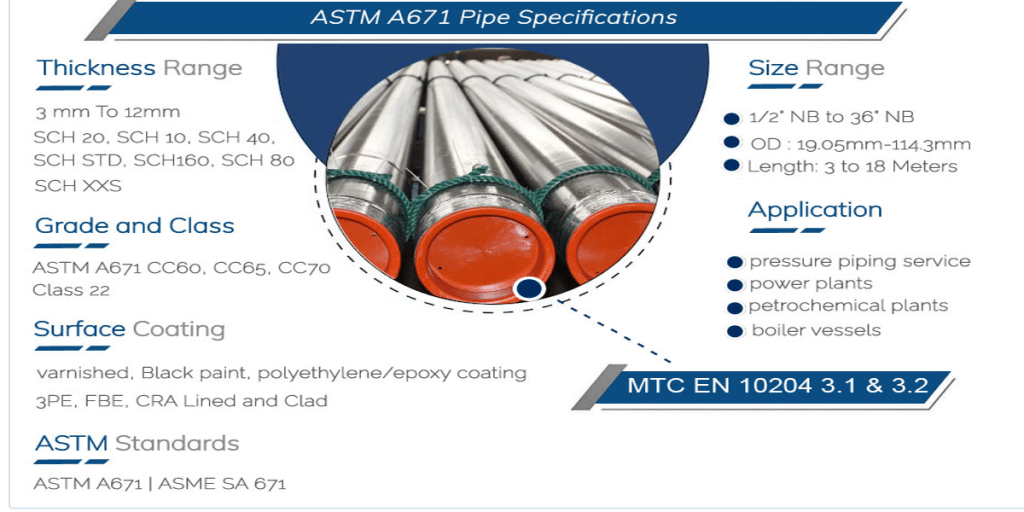
The ASTM A672 specification covers Electric-Fusion-Welded (EFW) steel pipes manufactured from pressure vessel quality steel plates. The typical manufacturing process includes:
- Steel plate forming
- Double Submerged Arc Welding (DSAW) or Electric-Fusion Welding
- Weld heat treatment
- Non-destructive testing and pressure testing
This manufacturing process enables ASTM A672 pipe to achieve high strength, excellent weldability, and stable dimensional accuracy.
Common Grades
In practical engineering applications, commonly used grades include:
| Grade | Common Class | Main Characteristics | Typical Applications |
| ASTM A672 C60 | CL22 | Medium strength, good weldability | Oil transmission pipelines |
| ASTM A672 C65 | CL22 | Higher yield strength | High-pressure steam pipelines |
| ASTM A672 C70 | CL32 | High-strength grade | Power plant boiler systems |
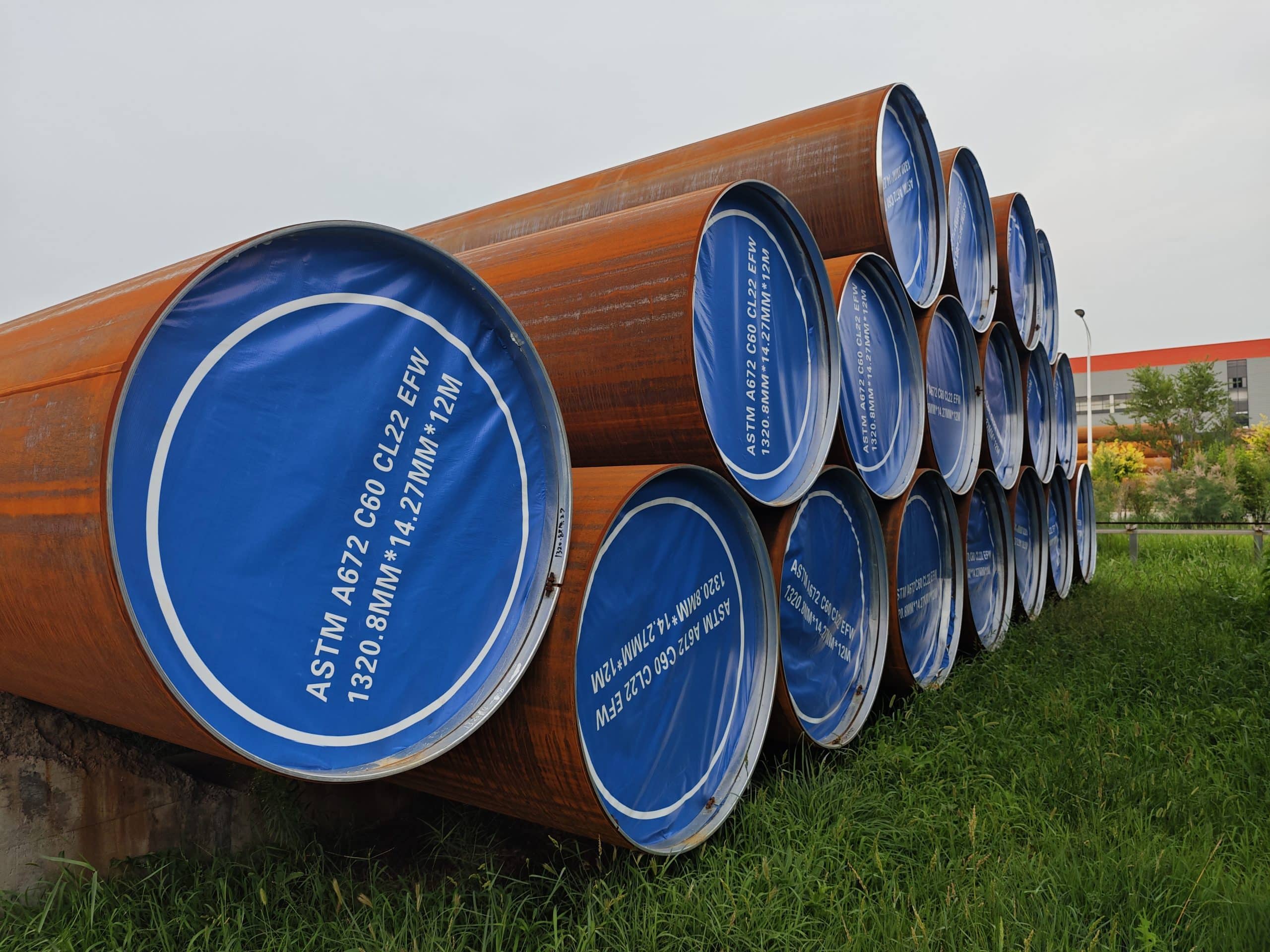
Among them, ASTM A672 C60 CL22 and ASTM A672 C65 CL22 are the most frequently purchased specifications in engineering projects.
Chemical Composition and Material Characteristics of ASTM A672
The ASTM A672 chemical composition mainly depends on the grade of steel plate used. Taking the common ASTM A672 C60 CL22 as an example, its base material typically comes from pressure vessel steel plates.
| Element | Content Range (%) |
| C | ≤0.30 |
| Mn | 0.90 – 1.50 |
| P | ≤0.035 |
| S | ≤0.035 |
| Si | 0.10 – 0.35 |
Material Performance Characteristics
- Good Weldability
Low carbon content ensures that cracks are less likely to occur during welding. - Excellent High-Temperature Strength
Maintains stable performance in power plants and petrochemical installations. - Strong Pressure Resistance
Suitable for transporting high-pressure fluids.
Therefore, ASTM A672 carbon steel pipes are commonly used for:
- Oil and natural gas transmission
- Chemical plant pipelines
- Power plant steam systems
Mechanical Property Analysis of ASTM A672
In pressure pipeline design, ASTM A672 C60 yield strength is one of the key parameters engineers focus on.
Typical Mechanical Properties
| Grade | Yield Strength (MPa) | Tensile Strength (MPa) | Elongation |
| ASTM A672 Grade C60 | ≥415 | ≥585 | ≥20% |
| ASTM A672 C65 | ≥450 | ≥620 | ≥18% |
| ASTM A672 C70 | ≥485 | ≥655 | ≥18% |
These properties enable ASTM A672 pipe to maintain structural stability under high-pressure operating conditions.
Key Inspection Methods and ASTM Standard Requirements
To ensure the quality of ASTM A672 material, the standard requires strict testing procedures. The following are several core inspection methods:
- Ultrasonic Testing (UT)
Purpose:To detect internal weld defects such as slag inclusions, lack of fusion, and cracks.
Execution Steps
- Scan the weld area using an ultrasonic probe
- Record the reflected signals
- Evaluate defect levels according to the applicable standards
Standard Reference:The ASTM A672 standard references ASTM A435 / A578 for testing steel plates and weld seams.
- Radiographic Testing (RT)
Purpose:To confirm the internal structural quality of the weld seam.
Inspection Procedure
- Place an X-ray or gamma-ray source
- Place a film on the opposite side of the weld
- Analyze defects after imaging
In the production of ASTM A672 C65 CL22 pipes, radiographic testing usually covers 100% of the weld seam.
- Hydrostatic Test
Purpose:To verify the pressure resistance capability of ASTM A672 pipe.
Execution Steps
- Fill the pipe with water
- Increase pressure to the specified design pressure
- Hold the pressure for a certain period and check for leakage
This test is a critical step in ensuring the safety of pressure pipelines.
ASTM A671 vs A672: How to Choose?
Many engineers compare ASTM A671 vs A672 standards.
| Comparison Item | ASTM A671 | ASTM A672 |
| Steel Type | Alloy steel | Carbon steel |
| Applicable Temperature | High-temperature environments | Medium-to-high temperature environments |
| Manufacturing Method | EFW | EFW |
| Typical Applications | High-temperature power plant pipelines | Petrochemical pipelines |
If the project mainly requires carbon steel materials, ASTM A672 carbon steel pipes usually provide better cost advantages.
Internal Laboratory and Quality Control System
For buyers, whether a supplier has an internal laboratory is often an important indicator of manufacturing capability.
A mature ASTM A672 EFW factories typically has the following testing capabilities:
- Spectrometric chemical composition analysis
- Impact testing machine
- Tensile testing machine
- Ultrasonic testing system
- X-ray radiographic inspection system
Through these facilities, complete quality verification can be carried out for ASTM A672 C60 CL22 or ASTM A672 C65 class 22 pipes.
LONGMA’s Quality Control Advantages
As a steel pipe manufacturer with more than 20 years of experience, LONGMA has significant advantages in quality control:
- Complete ASTM A672 specification production process
- Independent material testing laboratory
- 100% weld seam non-destructive testing
- Full quality traceability system
As a result, LONGMA has become an important China ASTM A672 exporter for many international projects.
Key Considerations When Purchasing ASTM A672 Steel Pipes
When selecting suppliers, it is recommended to focus on the following factors:
- Whether the supplier has complete ASTM A672 specification certification
- Whether a comprehensive internal laboratory is available
- Whether full inspection reports are provided
- Whether the supplier has experience in large-scale project supply
These criteria can effectively reduce procurement risks.
Conclusion
Overall, ASTM A672 pipe, with its excellent material properties, reliable mechanical performance, and mature manufacturing process, plays an important role in the petroleum, chemical, and power industries. In particular, ASTM A672 C60 CL22 and ASTM A672 C65 CL22 are the most widely used grades in pressure pipeline engineering.
If you are looking for reliable ASTM A672 exporters or planning to wholesale ASTM A672 steel pipes, LONGMA, with over 20 years of manufacturing experience, can provide stable, traceable, high-quality products and professional technical support to customers worldwide.
Feel free to contact us to obtain:
- ASTM A672 technical data sheets
- Project quotation solutions
- Third-party inspection reports
- Customized pipeline solutions
Our engineering team will provide safe and reliable steel pipe products for your projects.