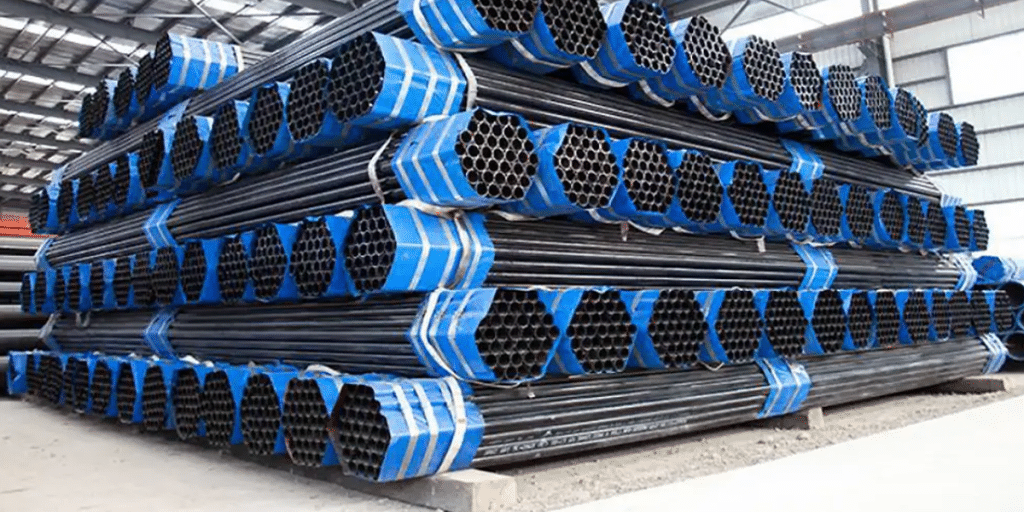
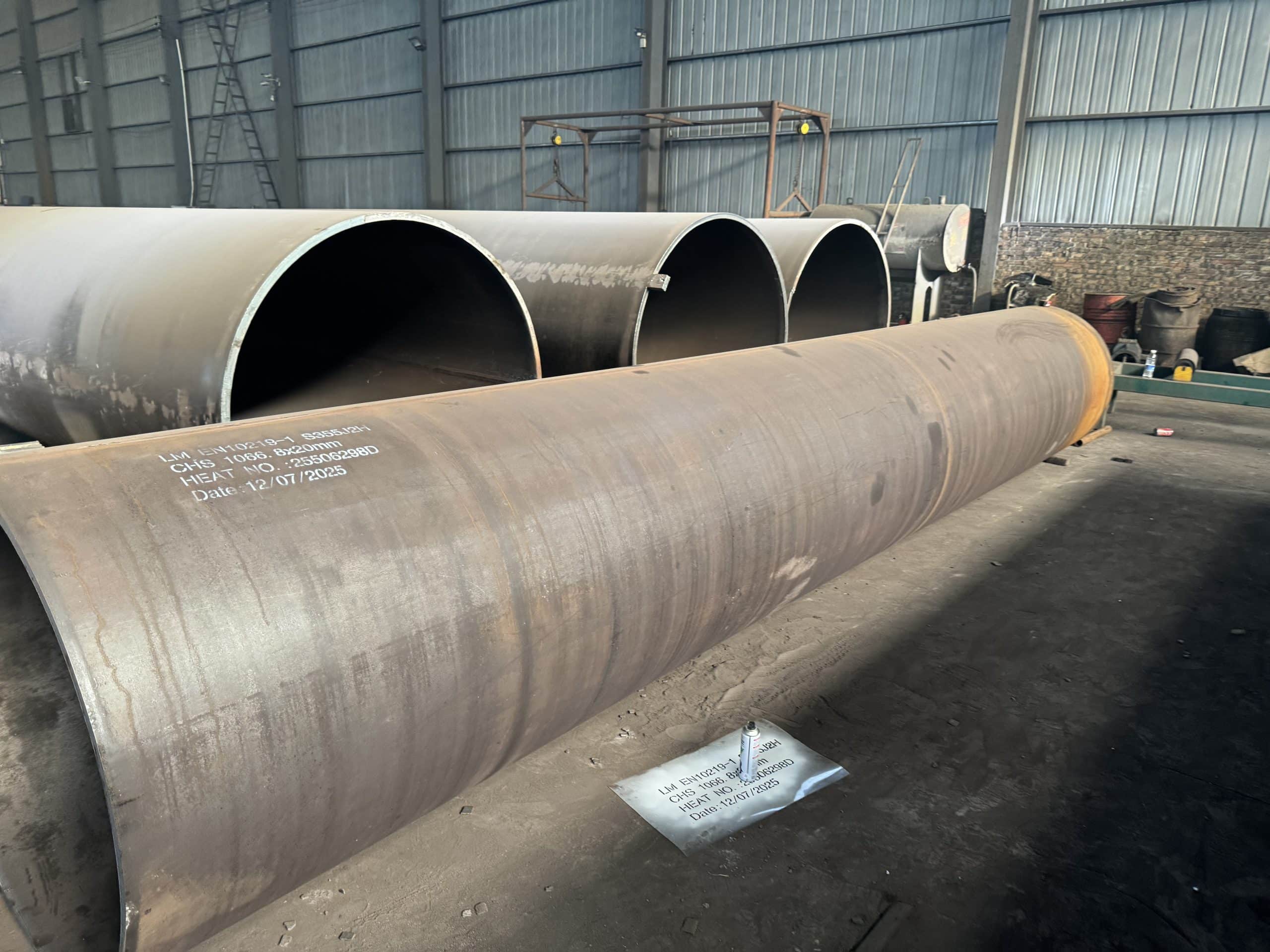
In structural steel selection and engineering procurement, the delivery condition determines the actual performance of the material on site. This article, written by LONGMA with 20+ years of manufacturing and quality-control experience, systematically introduces the performance parameters of S355K2 and S355K2+N, the key differences from S355J2 (s355k2 vs s355j2), and common ASTM equivalent references, helping procurement engineers better control risk and cost.
What is S355K2?
S355K2 is a non-alloy structural steel defined under EN 10025-2 (Material no. 1.0596). It belongs to the S355 family along with S355J2, but the “K2” designation represents a stricter impact toughness requirement: Charpy V-notch impact test at −20°C with a minimum value of 40 J (compared with J2’s 27 J).
Therefore, s355k2 provides superior low-temperature toughness.
Common delivery conditions include +AR (As Rolled), +N (Normalized / Normalized Rolled), and +M (Thermomechanically Rolled).
S355K2+N means the steel has undergone normalizing or equivalent rolling to achieve more uniform microstructure and stable mechanical properties.
Key Mechanical and Chemical Parameters (S355K2 / S355K2+N)
The following are common reference values (final values must follow purchasing specifications and mill MTC):
| Item | S355K2 / S355K2+N Reference Value |
| Minimum Yield Strength ReH | 355 MPa |
| Tensile Strength Rm | 470–630 MPa |
| Impact (−20°C) | K2: ≥40 J |
| Typical Chemical Composition | C ≤0.20% (reference) |
| Delivery Condition | +AR / +N / +M (per producer or purchase order) |
Note: S355K2 may appear on the MTC as s355k2+n or s355k2 depending on the contract. If the requirement is specific, the delivery condition must be written clearly into the purchase order and validated by matching test reports.
S355K2 vs S355J2: What’s Different?
Although both belong to the S355 family, the most important differences lie in low-temperature impact requirements and micro-alloying control:
- Impact energy:S355K2 (“K2”) requires 40 J @ −20°C, while S355J2 (“J2”) requires 27 J @ −20°C.
Therefore s355k2 has better low-temperature anti-brittle performance than s355j2. - Application environment:For harsher low-temperature conditions or higher safety-factor structures, s355k2 or s355k2+n should be selected first; for normal structures or room-temperature applications, s355j2 is commonly used.
- Cost & availability:Due to stricter impact requirements, s355k2 typically costs more than s355j2.
Procurement engineers should clearly specify s355k2 vs s355j2 technical requirements and acceptance criteria in the P.O. to avoid disputes.
ASTM Equivalent Recommendation
In the ASTM system, S355K2/S355K2+N is commonly compared with ASTM A572 Grade 50 (both belong to HSLA structural steels with similar strength levels).
However, equivalent does not mean identical—especially for low-temperature impact and micro-alloy composition.
Therefore, it is recommended to specify:
“S355K2+N or equivalent (ASTM A572 Gr.50), must provide -20°C / 40J Charpy impact report.”
Inspection & Quality Control
To ensure reliability in engineering applications, LONGMA recommends and performs the following tests in its internal laboratory (original records available per ASTM/EN chapter requirements):
- Chemical Analysis (OES)— verifies that chemical composition matches EN 10025-2 requirements.
- Tensile Test (ASTM E8 / ASTM A370)— validates Re, Rm, A% and other mechanical indicators.
- Impact Test (ASTM E23 / EN equivalent)— verifies 40 J @ −20°C for K2 or 27 J for J2.
- Hardness & Metallography— evaluates heat-treatment effectiveness and grain size.
- NDT (UT / MT / PT / RT)— 100% inspection for critical components or sampling per contract.
LONGMA’s “internal laboratory + EN 10204 3.1 MTC” greatly reduces the uncertainty caused by “s355k2 vs s355j2” and provides sample location maps and raw data for third-party verification.
Procurement & Engineering Recommendations
| Scenario | Recommended Material |
| Cold climate / low-temperature service / offshore | S355K2+N / S355K2M (first choice) |
| General construction / room-temperature structures | S355J2 or S355K2 (if budget allows) |
| Cost-sensitive, non-load-bearing parts | S355K2+AR or S355J2+AR (state “not for low-temperature use”) |
In the purchase order, always specify:
delivery condition (s355k2 n / s355k2+n / +AR), impact temperature and minimum value, inspection frequency, and witness responsibility (buyer/third-party).
This avoids quality disputes effectively.
Why Choose LONGMA?
As a manufacturer with 20+ years of experience, LONGMA provides more than just supply:
- Complete chemical, tensile, impact, hardness, UTtesting before delivery, with EN/ASTM dual-standard MTC.
- Provides S355K2 vs S355J2 comparison reportsand recommendations.
- Supports third-party witness(SGS, BV, TUV) and offers contract clause templates to help buyers embed risk control into the procurement process.
Conclusion
Choosing the correct delivery condition (s355k2+n / s355k2+ar / +M) is far more important than simply looking at the “grade name.”
To ensure long-term reliability under welding, low-temperature, and fatigue conditions, the P.O. should clearly specify the delivery condition and impact acceptance value of s355k2.
Contact LONGMA to obtain sample MTCs, technical comparison tables, and procurement-clause templates. We provide optimized recommendations tailored to your project conditions.