- 1. Why Do S355J2+N, S355J2+AR, and S355J2M Exist Under the Same S355J2 Grade?
- 2. Core Differences Among S355J2+N, S355J2+AR, and S355J2M
- 3. Is the Higher Cost of S355J2M Worth It?
- 4. LONGMA Internal Laboratory: Ensuring Every MTC Matches Actual Material Performance
- 5. Application Recommendations for the Three Delivery Conditions
- 6. Conclusion: Choosing the Correct Delivery Condition Reduces 80% of Engineering Risk
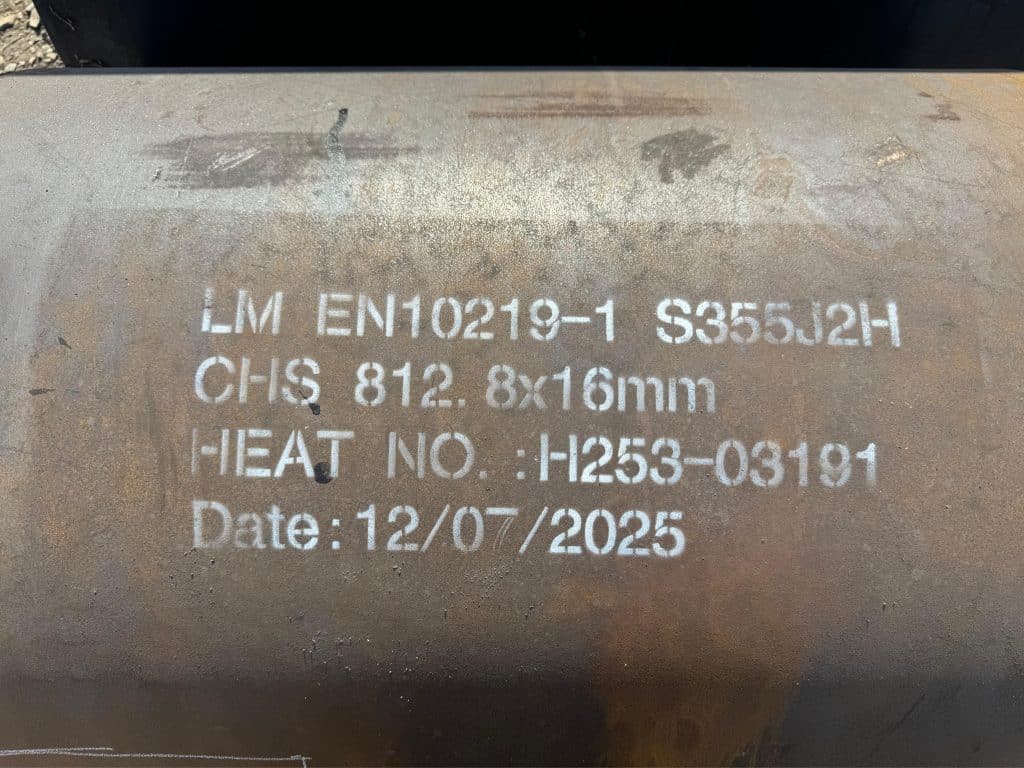
In the EN 10025-2 standard system, the S355 series is one of the most widely used structural steels. However, even though they all belong to S355J2, different delivery conditions such as S355J2+N, S355J2+AR, and S355J2M result in significantly different performance and application scenarios. Many buyers focus only on the grade itself while ignoring how heat treatment/delivery conditions affect performance, weldability, impact toughness, and even the final product lifespan.
This article analyzes the differences among the three from heat treatment methods, application scenarios, performance variations, internal testing, and risk control. It aims to help you reduce procurement risks and demonstrate LONGMA’s capability as a steel pipe manufacturer with over 20 years of production experience.
Why Do S355J2+N, S355J2+AR, and S355J2M Exist Under the Same S355J2 Grade?
The “J2” in S355J2 indicates that its impact toughness at -20°C meets EN 10025 requirements. However, its actual performance depends on the delivery condition:
| Delivery Condition | Full English Name | Heat Treatment | Characteristics |
| S355J2+N | Normalized or Normalized Rolled | Normalizing or normalized rolling | Uniform structure, stable performance, excellent weldability |
| S355J2+AR | As Rolled | As-rolled condition | Lower cost, greater performance fluctuation |
| S355J2M | Thermomechanically Rolled | TMCP process | High strength, high toughness, superior low-temperature performance |
In engineering applications, choosing the wrong delivery condition directly affects weld deformation, fatigue life, load-bearing capacity, low-temperature impact performance, etc. Therefore, understanding the differences is essential.
Core Differences Among S355J2+N, S355J2+AR, and S355J2M
Below are the key distinctions among the three conditions — the factors that buyers care about most.
- Heat Treatment Processes and Performance Stability
| Item | S355J2+N | S355J2+AR | S355J2M |
| Heat Treatment | Normalizing | As-rolled | Thermomechanical controlled rolling |
| Performance Stability | ★★★★★ | ★★★ | ★★★★★ |
| Stress Distribution | Uniform | Non-uniform | Excellent |
| Low-Temperature Impact | Excellent | Medium | Excellent (some grades can reach -50°C) |
Explanation:
- S355J2+N undergoes normalizing treatment, making grain structure more uniform; therefore it is widely used in structural engineering and is the designated material in many EPC projects.
- S355J2+AR has no heat treatment; its performance relies on raw material quality and rolling process, which introduces engineering risks. It is commonly used for structures with low mechanical requirements.
- S355J2M is a TMCP material widely used in advanced engineering applications, especially trusses, bridges, and pressure-bearing structures.
- Mechanical Property Differences
Below are typical performance requirements according to EN 10025:
| Item | S355J2+N | S355J2+AR | S355J2M |
| Yield Strength (ReH) | 355 MPa | 355 MPa | 355 MPa (more stable) |
| Tensile Strength (Rm) | 470–630 MPa | 470–630 MPa | 450–600 MPa (more controlled) |
| Impact Energy (-20°C) | ≥27 J | ≥27 J | ≥27 J or higher |
| Weldability | Excellent | Medium | Excellent, with less deformation |
- s355j2+n mechanical properties are significantly more stable, with the best impact toughness and weldability among the three conditions.
- For structural components, especially in low-temperature regions, buyers typically prefer S355J2+N or S355J2M.
- S355J2+AR, although having the same chemical composition, has greater performance dispersion due to insufficient heat treatment.
- What Is “S355J2 AR meaning”? Where Are the Procurement Risks?
Many customers frequently ask:
What is the S355J2 AR meaning, and why is it cheaper than +N?
“AR” means As Rolled, indicating that the product has not undergone any heat treatment and is simply cooled after rolling. This causes:
- Non-uniform grain structure
- Higher internal stress
- Greater deformation during welding
- Unstable impact toughness
- Significantly weaker low-temperature performance compared to +N or M materials
Therefore, the lowest cost is the biggest advantage of S355J2+AR — but also its greatest risk.
For bridges, pressure structures, offshore platforms, lifting equipment, etc., S355J2+AR should be avoided.
Is the Higher Cost of S355J2M Worth It?
S355J2M uses TMCP technology and offers significant advantages:
- Higher low-temperature toughness
- Smaller HAZ in welding
- Better plate shape
- Lower residual stress
Typical applications:
- Large structural components
- Complex welded assemblies
- Steel bridges
- Offshore structures
If customers require excellent weldability, deformation control, and low-temperature performance, S355J2M is the optimal choice.
LONGMA Internal Laboratory: Ensuring Every MTC Matches Actual Material Performance
To eliminate concerns such as “materials not meeting standards” or “inaccurate MTC values,” LONGMA uses its in-house laboratory to perform the following tests and can follow specific ASTM chapters upon request:
Routine Tests (EN 10025 + ASTM E8 / E23 / A370)
- Tensile testing (ASTM E8)
- Charpy impact test (ASTM E23)
- Hardness testing (ASTM A370)
- Chemical analysis (ARL spectrometer)
Welding Procedure Qualification (EN 15614 / ASME IX)
- Weld tensile test
- Bend test
- Macro-etch examination
NDT Testing (ASTM E1444, ASTM E709, ASTM E1067)
- Magnetic particle testing
- Ultrasonic testing
- Penetrant testing
This “internal laboratory + standardized procedure” approach significantly increases customer trust, especially for international clients.
Application Recommendations for the Three Delivery Conditions
| Material | Recommended Applications | Not Recommended Applications |
| S355J2+N | Structural components, bridges, low-temperature environments, heavy welded structures | Projects with extremely limited budgets |
| S355J2+AR | General supports, light structures, non-pressure parts | Bridges, pressure equipment, low-temperature environments, heavy-duty structures |
| S355J2M | Offshore platforms, high-weld-volume projects, low-temperature structures, critical components | Cost-restricted projects |
Conclusion: Choosing the Correct Delivery Condition Reduces 80% of Engineering Risk
For many global customers, S355 is just one grade — but in actual engineering applications, delivery condition is more critical than the grade itself.
LONGMA’s 20+ years of experience show that:
- Selecting correctly between S355J2+N, S355J2+AR, and S355J2M
- Is more important than simply comparing chemical compositions
- And directly reduces risks of weld cracking, fatigue failure, and low-temperature brittleness
If you are unsure which condition to choose, feel free to contact LONGMA. We can recommend the most suitable option based on project standards, welding requirements, load conditions, and budget.