- 1. LSAW and ERW Pipes: Definitions and Manufacturing Processes
- 2. Performance and Application Differences Between LSAW and ERW Pipes
- 3. Cost, Supply Chain, and Procurement Insights for LSAW and ERW Pipes
- 4. Making the Right Choice: When to Choose LSAW Pipe vs. ERW Pipe
- 5. Quality Assurance and Inspection of Longitudinal Submerged Arc Welded Pipes
- 6. Conclusion
- 7. FAQ
- 8. Partner With LONGMA for Your Next Pipeline Project
If you work in oil and gas pipeline procurement, you’ve probably been asked this question more than once: Should I go with a longitudinal submerged arc welded pipe or an ERW pipe for my project? It is determined by the pressure class, wall thickness, diameter range and service environment. LSAW pipe is made of heavy steel plate, formed by JCOE or UOE process and welded by submerged arc welding along one straight seam, therefore it is the first option for large-diameter and high-pressure transmission pipe lines. ERW pipe is made by roll-forming hot-rolled coil and joining by electric resistance welding, providing precise dimensional tolerances at cheaper cost for small- to medium-diameter systems. Both kinds are controlled by API 5L (2018 edition) under product specification levels PSL1 and PSL2.
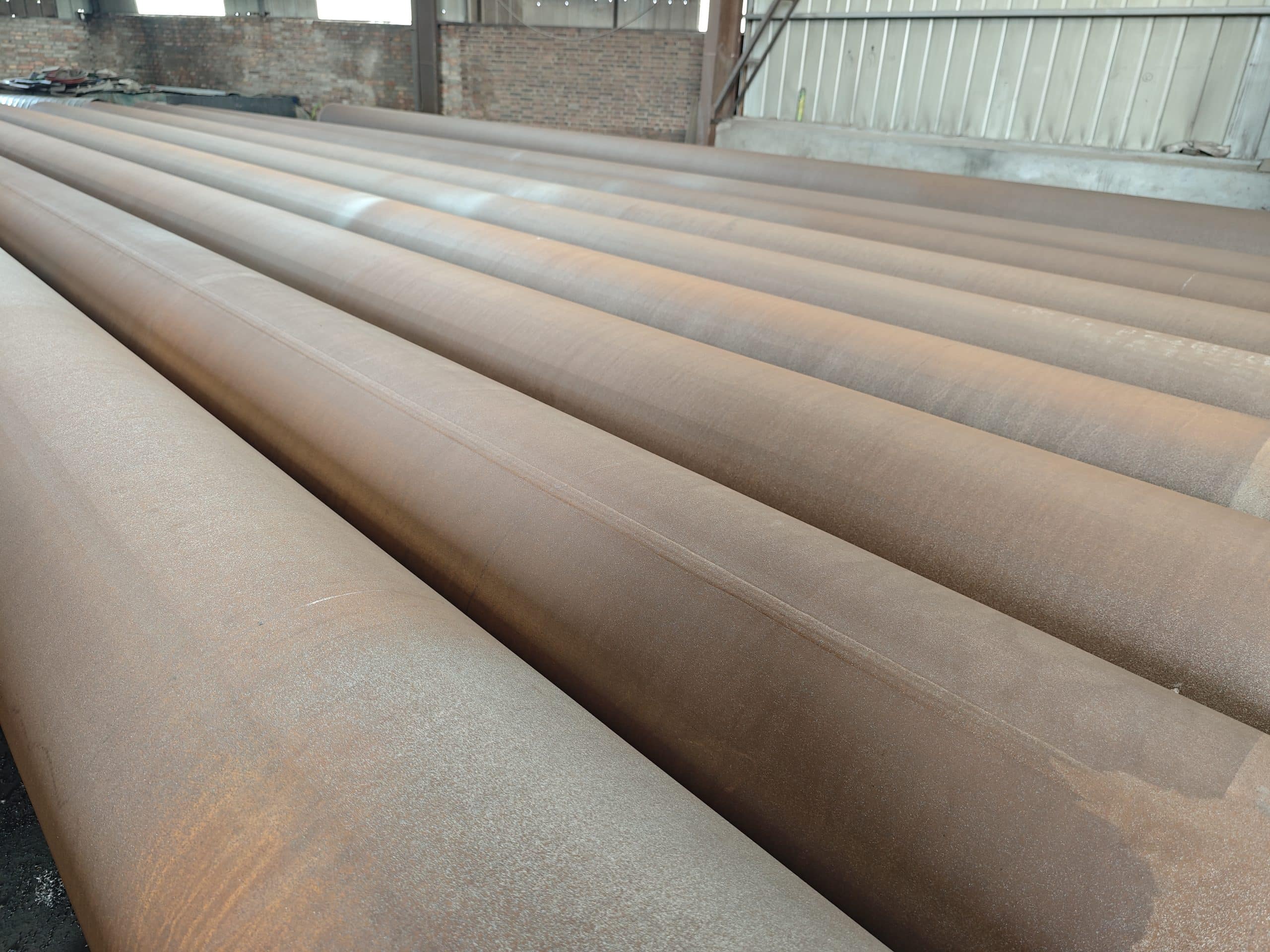
LSAW and ERW Pipes: Definitions and Manufacturing Processes
Before comparing performance, it’s helpful to know how each pipe is made. This is because the way the pipes are made directly affects the wall shape, the weld character, and the grades that are offered.
How LSAW Pipe Is Made
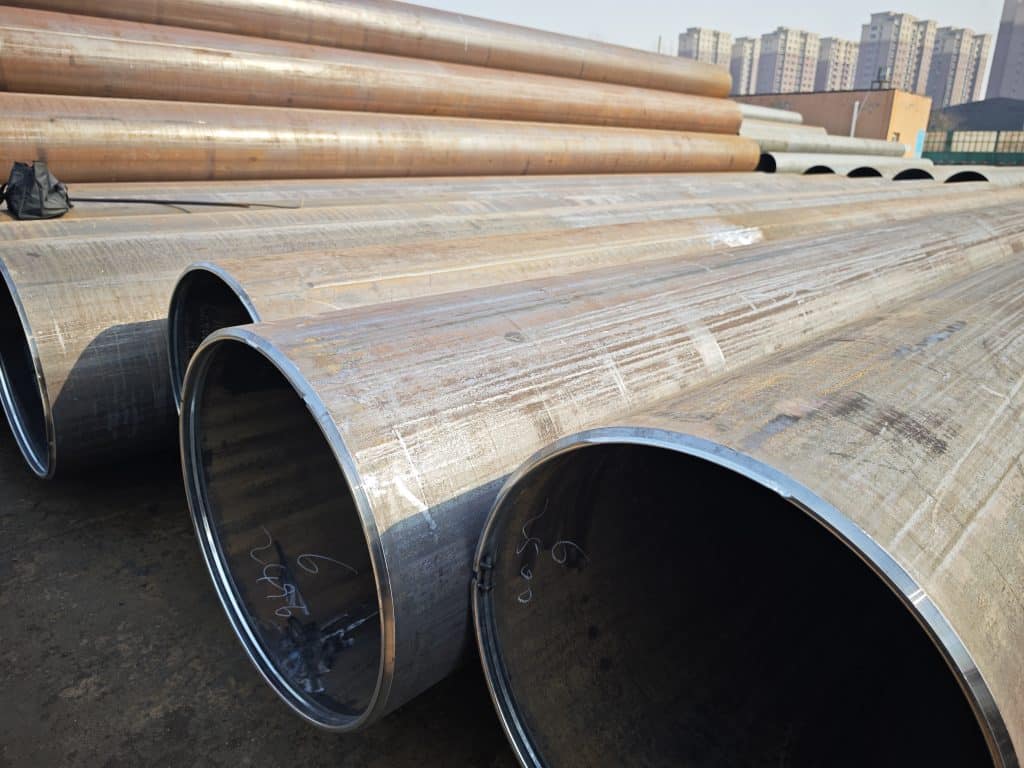
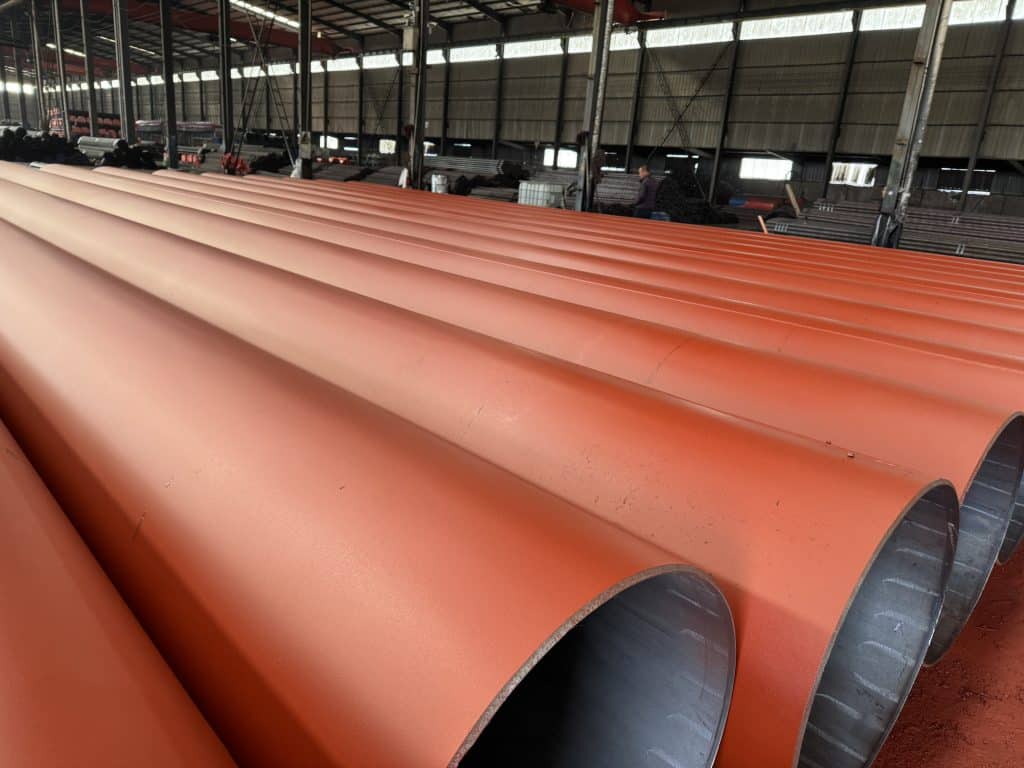
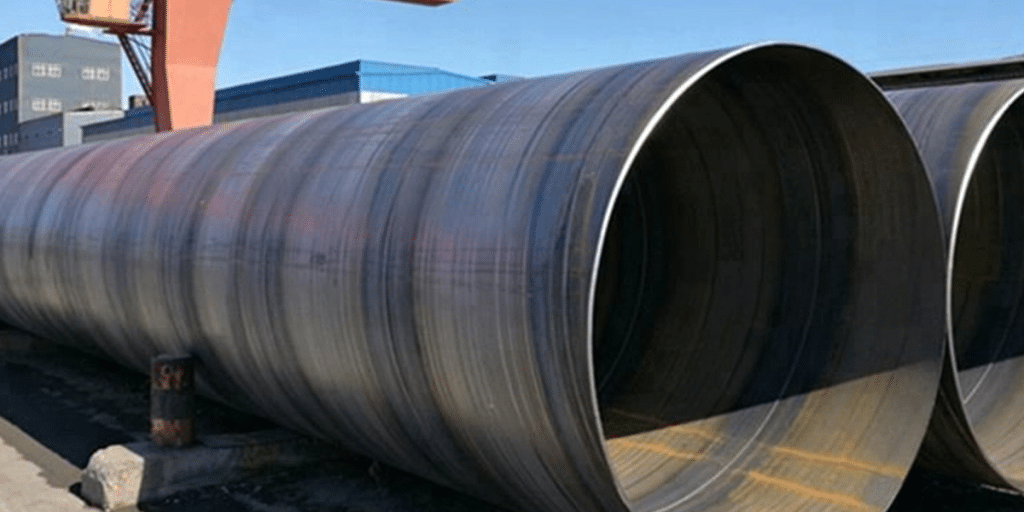
LSAW pipe is formed from steel plate using processes such as JCOE or UOE, followed by longitudinal submerged arc welding. JCOE progressively presses the plate into a circular shape; UOE uses U-pressing and O-pressing before welding and expansion where specified. Plate thickness, outside diameter, and expansion requirements depend on mill capability and the order specification, rather than one universal API 5L size range.
How ERW Pipe Is Made
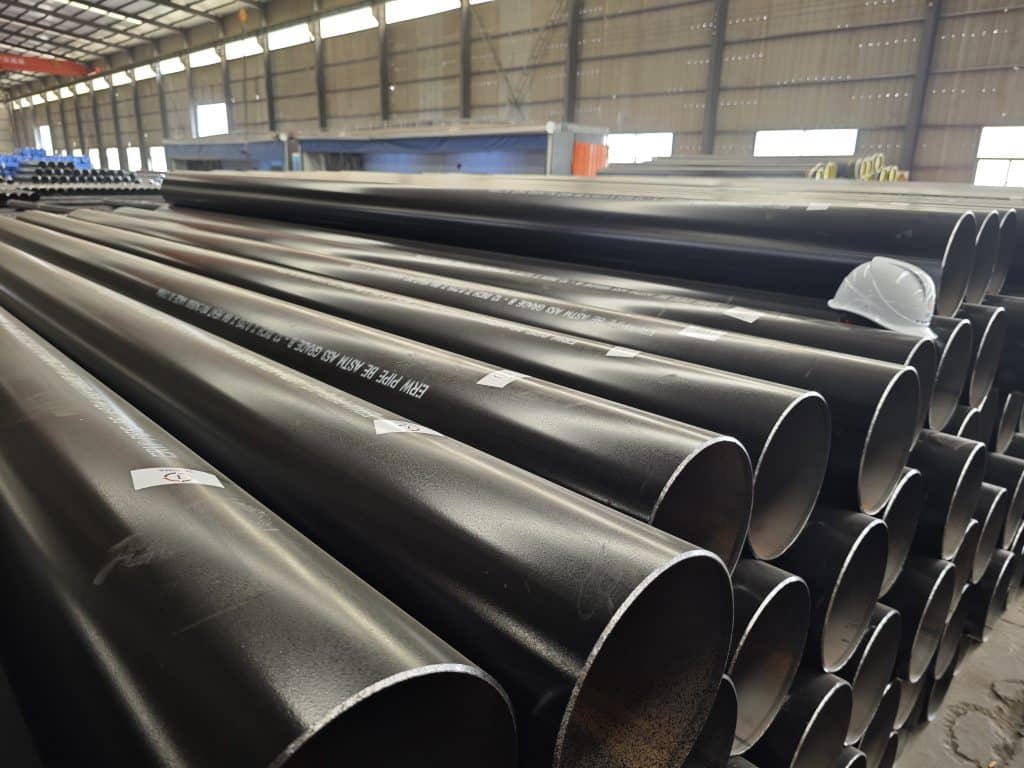
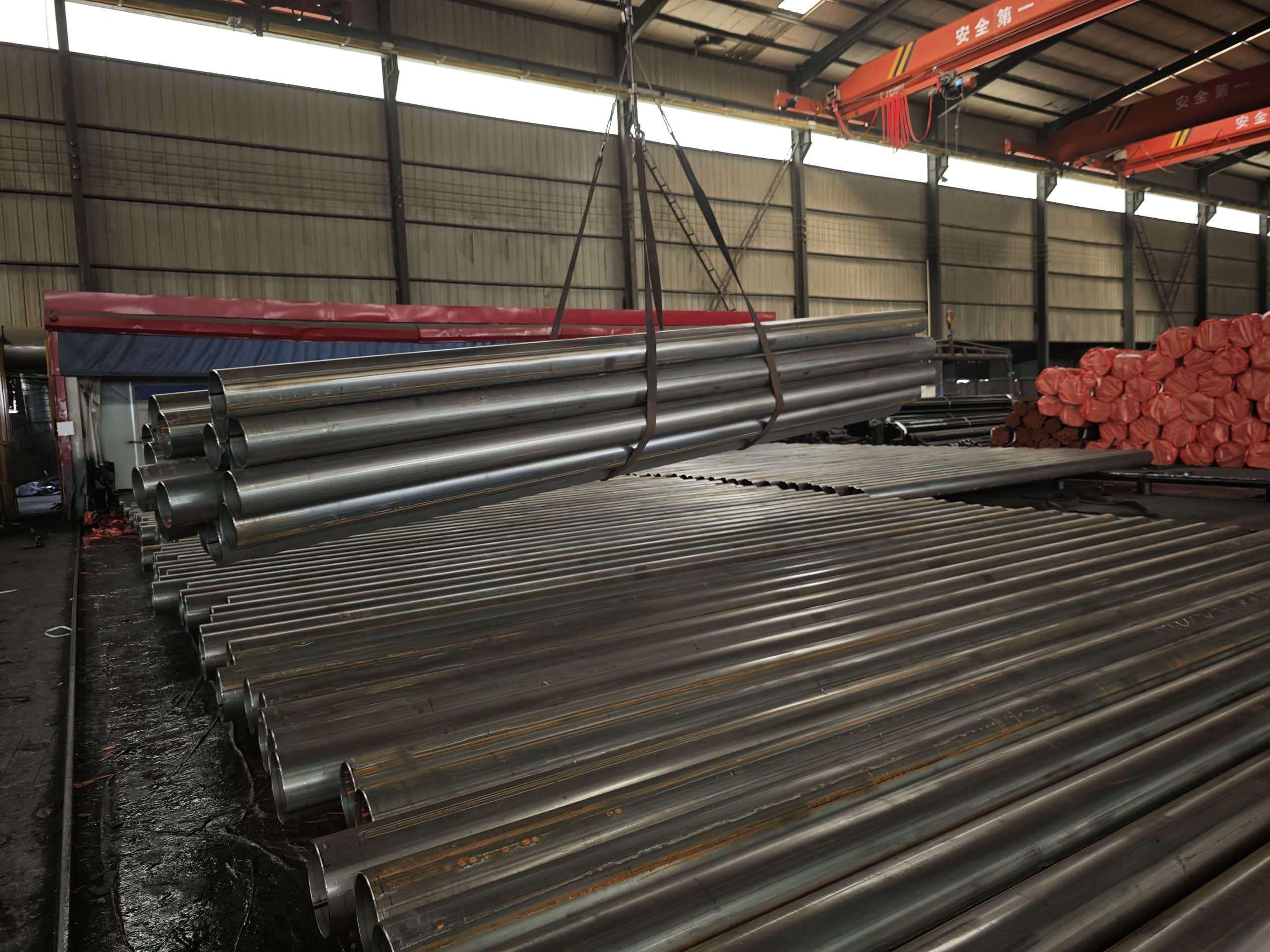
ERW pipe is generally produced by continuously roll-forming steel strip or coil and joining its edges by electric resistance welding, commonly using high-frequency current without filler metal. The weld is then processed and examined as required. Available diameters and wall thicknesses depend on manufacturing capability and the applicable product specification.
Grade and Specification Coverage
API 5L specifies distinct requirements for PSL1 and PSL2 line pipe. Grade availability depends on the specified PSL, grade designation, manufacturing process, and applicable edition; not every grade is permitted in both PSLs. Additional toughness, chemistry, weld examination, and sour-service requirements must be established from the relevant provisions and purchase order rather than assumed for every grade.
Performance and Application Differences Between LSAW and ERW Pipes
When you know about the history of manufacturing, you can directly compare performance. The main technical differences are shown in the table below:
| Parameter | LSAW Pipe | ERW Pipe |
| Outer diameter range | Mill- and specification-dependent | Mill- and specification-dependent |
| Wall thickness | Mill- and specification-dependent | Mill- and specification-dependent |
| Weld type | Double-sided SAW | High-frequency electric resistance |
| Typical grades | Grade B – X80 | Grade B – X70 |
| Pressure rating | Design-dependent | Design-dependent |
| Unit cost | Higher | Lower |
| Lead time | 30–45 days custom | 7–30 days |
Strength and Pressure Resistance
Neither LSAW nor ERW has an inherently higher allowable pressure rating solely because of its welding process. Pressure containment depends on steel grade, diameter, wall thickness, temperature, weld quality, and the governing pipeline design code. LSAW is often practical for larger diameters and heavier walls, while ERW is often efficient for smaller and medium diameters; the feasible choice must be confirmed for each project.
Typical Application Sectors
When the width is less than 24 inches, ERW pipe works well in systems that distribute gas, pump water, and collect water. Longitudinal submerged arc welded pipe is used for most onshore trunk lines, offshore export pipelines, and subsea flowlines. For these types of pipes, the wall thickness, impact toughness at temperatures below zero, and dimensional stability under external pressure are all important specs that must be met.
Cost, Supply Chain, and Procurement Insights for LSAW and ERW Pipes
Cost is always brought up, but focused only on unit price can make it hard to see how much the whole job will cost. In your RFQ process, you should look at these things.
Raw Material and Manufacturing Cost
Longitudinal submerged arc welded pipe needs heavy plate, which is a more expensive raw material, and a press-forming line that costs more money. Slit coil is used in ERW pipe because it costs less per ton and can be made more quickly. Most of the time, LSAW pipe costs 15–30% more per metric ton than ERW pipe of the same grade. However, ERW is not available for diameters larger than 24 inches, so the cost comparison is no longer useful.
Making the Right Choice: When to Choose LSAW Pipe vs. ERW Pipe
ERW is often cost-effective for smaller and medium diameters within mill capability. LSAW is often appropriate for larger diameters and heavier walls. Confirm feasibility and total project cost rather than relying on fixed diameter or thickness cutoffs.
Before they send out a purchase order, procurement teams can use this useful checklist:
- Diameter and wall: Confirm OD and WT against the applicable API 5L dimensional requirements and confirmed mill capability.
- Design pressure: Calculate the required wall thickness under the applicable pipeline code, such as ASME B31.4 or B31.8, and verify that the selected manufacturing route meets all material and dimensional requirements.
- Service environment: Assess H₂S exposure against the applicable sour-service requirements and specify the necessary material controls, qualification tests, and documentation, including HIC testing where required by the project.
- Impact toughness: Specify the required Charpy test temperature and acceptance criteria based on the applicable API 5L grade, PSL, design conditions, and project requirements; do not assume a universal −20 °C requirement.
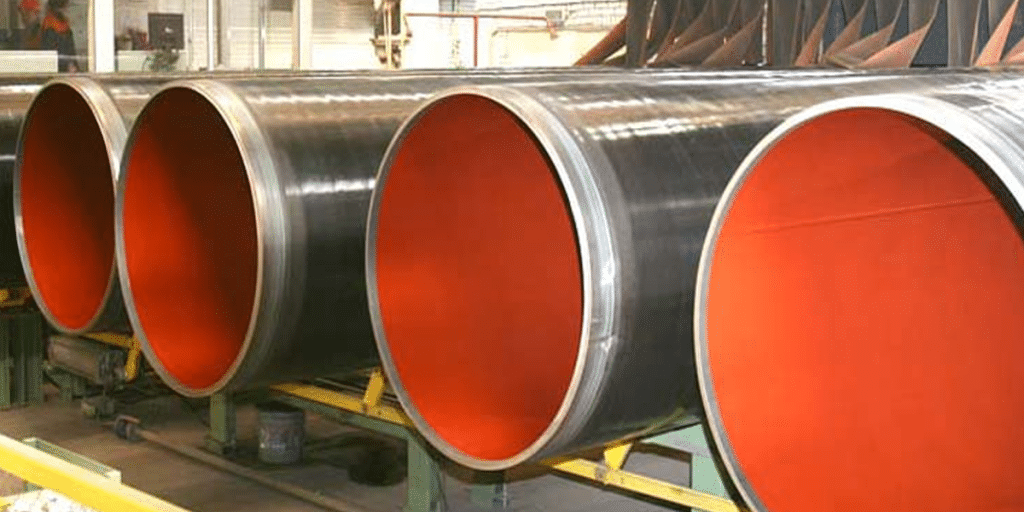
- Coating system: Confirm coating standard — DIN 30670 for 3LPE, CSA Z245.21 for FBE — and request adhesion and cathodic disbondment test data.
- Traceability: Request EN 10204 3.1 MTC as a minimum; ask for 3.2 (witnessed by a nominated third party) for high-consequence-area pipelines.
When used during the RFQ stage, these six checkpoints give your technical team a solid foundation to evaluate supplier submissions without having to wait for the full technical evaluation cycle.
Quality Assurance and Inspection of Longitudinal Submerged Arc Welded Pipes
Quality assurance is required by law for LSAW pipe that is going to be used in a gas transmission project. From the buyer’s point of view, this is what a well-run production process should look like:
Certifications and Standards Compliance
An ISO 9001 quality management system is used to make every LONGMA longitudinal submerged arc welded pipe. The API Monogram license for API 5L covers everything that needs to be done for production. LONGMA lets owner-designated inspectors do source inspections for projects that need third-party certification. These inspectors have full access to production records, heat numbers, and test certificates.
Non-Destructive Testing Protocol
As per API 5L (2018) PSL2, the weld seam must go through 100% automatic ultrasonic testing (AUT). LONGMA also does radiological testing (RT) on weld ends, flux spots, and any other area that AUT flags. Full-length UT scanning is used to check the seams on the pipe body. Testing for hydrostatic pressure is done on all pipes, and the test pressure is calculated according to API 5L Section 9.4.
Conclusion
Three things determine whether LSAW or ERW pipe is better: the diameter, the wall thickness, and the operating pressure. For devices that move and collect things up to 24 inches, ERW pipe is faster, more accurate in size, and cheaper. A longitudinal submerged arc welded pipe has the wall thickness, weld consistency, and pressure capacity that projects for main lines and export pipelines. Both types can be tracked, confirmed, and delivered on time to protect your project goals as long as they are made to API 5L PSL2 standards and go through full NDE and hydrostatic testing.
FAQ
Why is LSAW pipe preferred for high-pressure gas transmission?
LSAW pipe is commonly selected for large-diameter or heavy-wall transmission lines because plate forming and submerged arc welding provide suitable manufacturing options. Weld integrity, residual stress, toughness, and allowable pressure still require verification under the specified product and design standards.
Can ERW pipe be used for sour service?
Yes. When manufactured to API 5L PSL2 with controlled sulfur content, hardness limits per NACE MR0175 / ISO 15156, and HIC testing per NACE TM0284, ERW pipe in grades up to X65 can be specified for sour service in H₂S-containing environments.
How does JCOE differ from UOE forming?
JCOE is a press-based, step-by-step forming process suited to thicker walls and medium production volumes. UOE uses a hydraulic U-press, O-press, and mechanical expansion in sequence and is typically faster for thinner-wall, higher-volume production. Both processes produce API 5L-compliant longitudinal submerged arc welded pipe.
Partner With LONGMA for Your Next Pipeline Project
Since 2003, LONGMA has been making API 5L ERW and LSAW pipe. It has a 230,000 m² plant, 176 million RMB in listed capital, and makes 500,000 tons of steel every year. LONGMA is a reliable supplier of longitudinal submerged arc welded pipes that has worked with SINOPEC, CNPC, PEMEX, PDVSA, PTTEP, and many other companies around the world. It takes 7 days to ship stock pipes, and 45 days to ship special requests. To get a quote or set up a source inspection, email our technical team at info@ilongma.com or go to www.ilongma.com.