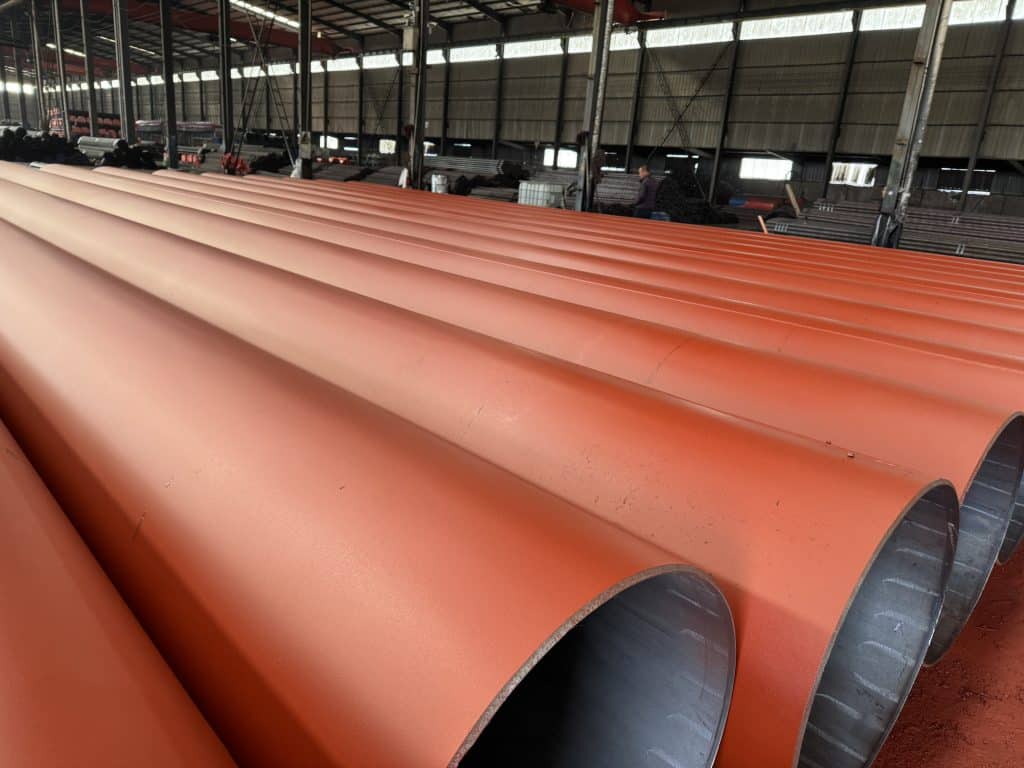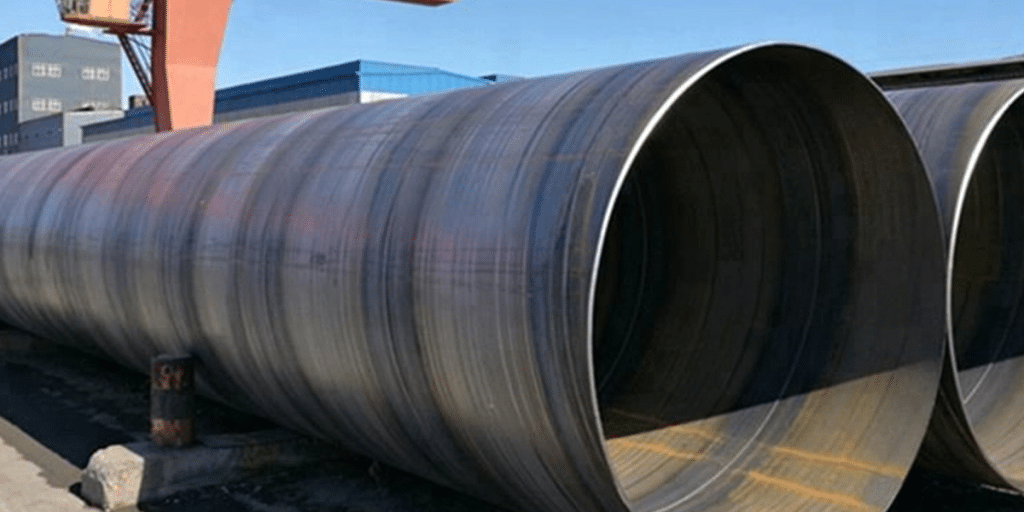
- 1. Defining Offshore vs. Onshore Pipeline Pipes
- 2. Materials and Engineering Standards: Offshore vs. Onshore
- 3. Installation and Maintenance Processes: What Sets Them Apart?
- 4. Comparing Cost, Procurement, and Supplier Considerations
- 5. Conclusion
- 6. FAQ
- 7. Get Certified API 5L Pipe from LONGMA — Request a Quote Today
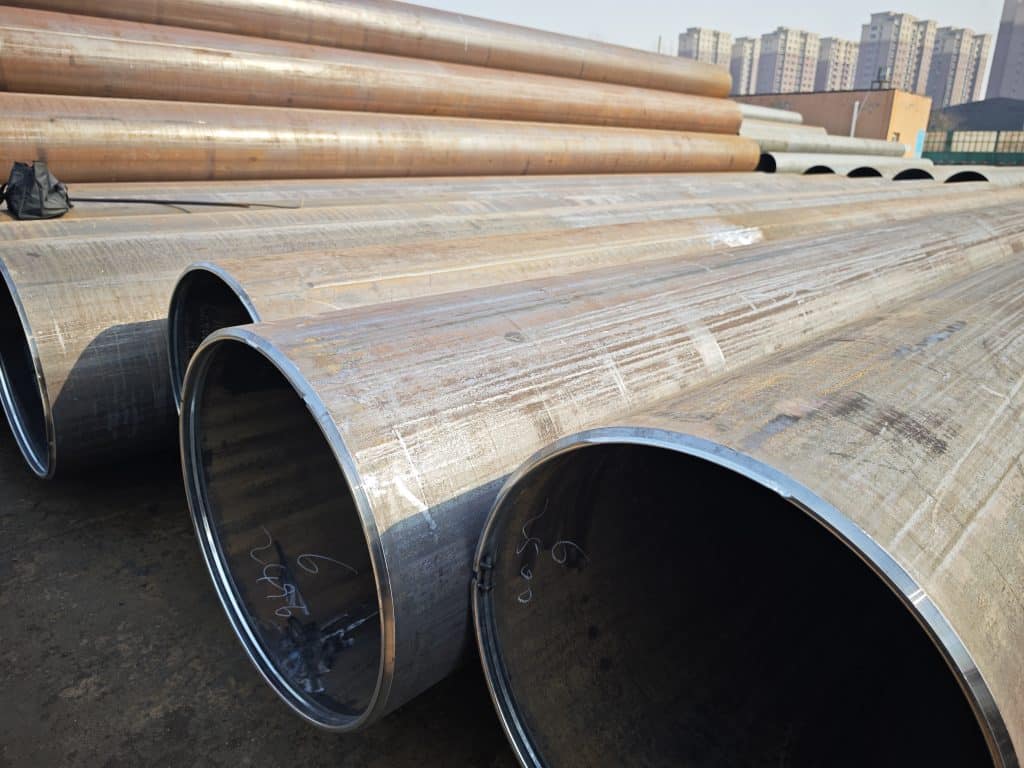
The difference between offshore and onshore pipeline pipe comes down to the operating environment each system must survive. An offshore pipeline pipe runs across seabeds, through tidal zones, or in deep-water fields where saltwater corrosion, hydrostatic pressure, and subsea fatigue loads govern every design decision. Onshore pipelines cross land-based terrain—deserts, mountains, or industrial corridors—where soil chemistry, thermal cycling, and ground movement are the primary concerns. Both categories fall under API 5L (API Specification 5L, 2018 edition), yet their wall thickness, coating systems, steel grade, and inspection protocols differ enough that the two pipe types are not interchangeable.
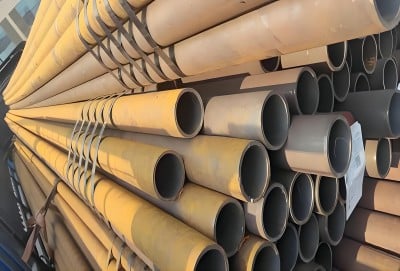
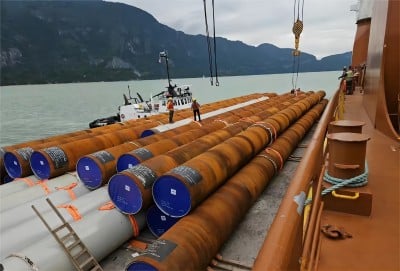
Defining Offshore vs. Onshore Pipeline Pipes
What Makes Offshore Pipelines Unique?
Offshore pipelines must account for seawater exposure, external hydrostatic pressure, seabed conditions, and installation and cyclic loads. In deep water, external-pressure collapse and local buckling can govern wall-thickness selection. Corrosion risk depends on exposure, coating integrity, cathodic protection, and operating conditions. No particular API 5L strength grade is automatically required solely because the pipeline is offshore.
What Defines Onshore Pipeline Requirements?
Onshore pipelines transport oil, gas, and other specified fluids across varied terrain. Ground movement, frost heave, seismic conditions, third-party interference, and location-specific risks affect design. ASME B31.8 is commonly used for applicable gas transmission systems, while ASME B31.4 addresses applicable liquid and slurry transportation systems; ordinary water pipelines require their own applicable design requirements. Material grade and wall thickness are selected by engineering assessment.
How Do Regulatory Standards Apply to Each?
API 5L is a line-pipe product specification and does not itself establish the complete design rules for offshore or onshore pipeline systems. Submarine pipelines may be designed to DNV-ST-F101, while applicable gas and liquid transportation systems may use ASME B31.8 or ASME B31.4. The governing code and project specification determine design factors, loading assessments, installation requirements, and acceptance criteria.
Materials and Engineering Standards: Offshore vs. Onshore
Steel Grades and Chemical Composition
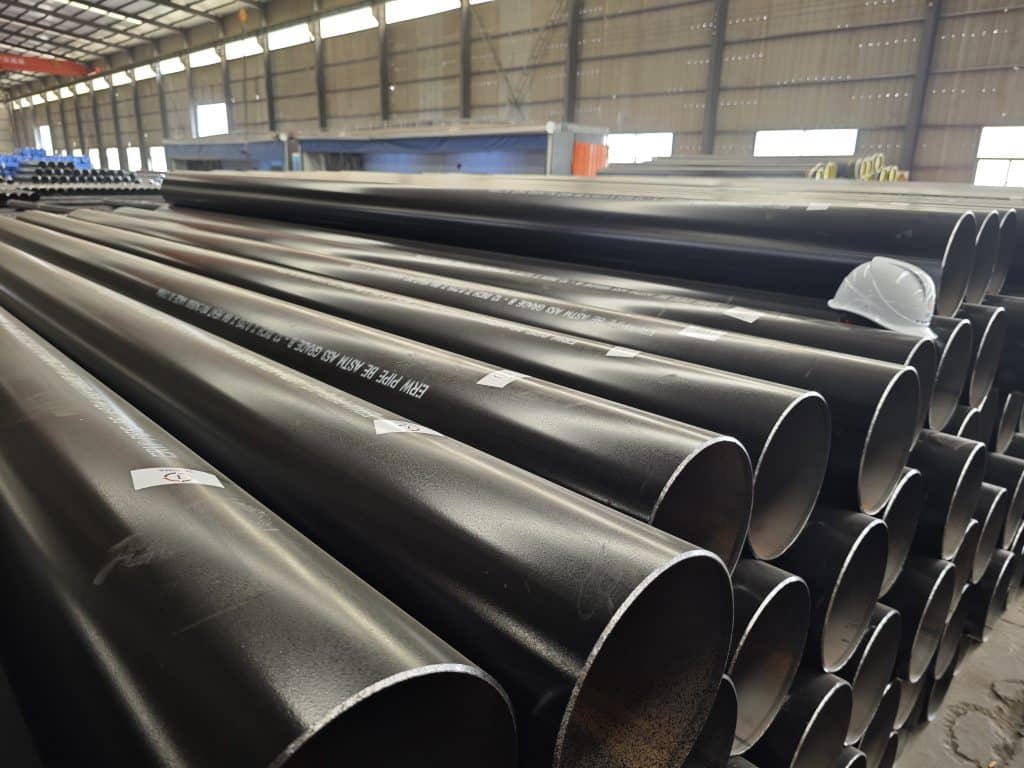
API 5L PSL2 includes additional material and testing requirements compared with PSL1, subject to the specified grade and manufacturing route. Offshore projects may specify grades such as X65 or X70, but no single grade or Charpy energy and temperature combination applies to every subsea pipeline. Strength, toughness, fatigue resistance, installation loads, and external-pressure resistance must be assessed for the particular design. LONGMA supplies ERW and LSAW round steel pipes for project-specific requirements.
Coating Systems for Corrosion Protection
It is easy to tell which offshore pipeline pipe and which are for use ashore by the coating they have on the outside. This is what kind of finish works best in each situation:
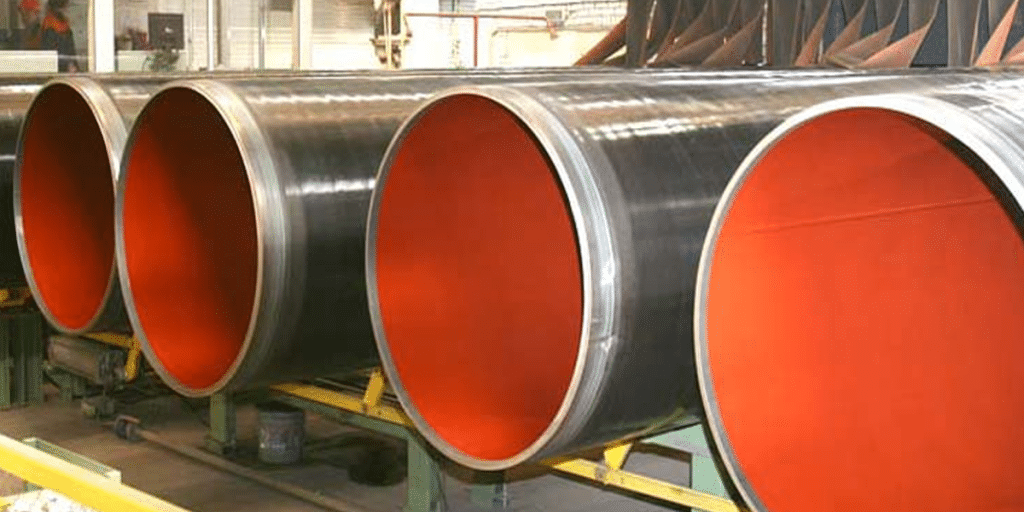
- 3LPE (Three-Layer Polyethylene): Standard choice for buried onshore pipelines; DIN 30670 (2012) governs minimum peel strength and holiday-free requirements.
- 3LPP (Three-Layer Polypropylene): Used offshore and in high-temperature subsea lines above 80 °C where polyethylene softens.
- FBE (Fusion-Bonded Epoxy): Applied as a single-layer coating for onshore lines or as the primer layer in 3LPE/3LPP systems.
- Concrete Weight Coating (CWC): Applied over corrosion coating for offshore pipes to provide negative buoyancy and mechanical protection on the seabed.
Installation and Maintenance Processes: What Sets Them Apart?
Offshore Pipe Laying Methods
Offshore pipelines may be installed by S-lay, J-lay, or reel-lay methods, depending on water depth, pipe dimensions, vessel capability, and installation loads. LSAW or ERW suitability depends on the project requirements, including ovality, weld properties, and strain capacity. Post-installation inspection can use remotely operated vehicles and inline inspection tools where suitable. Cathodic protection monitoring frequency is established by the integrity-management plan.
Cathodic Protection Differences
Both offshore and onshore pipelines may use cathodic protection. Offshore systems often use sacrificial anodes, while onshore systems commonly use impressed-current systems; the design must account for coating condition, electrical continuity, and environmental conditions. Applicable subsea cathodic protection guidance should be selected for the system, including DNV-RP-F103 where relevant. Sour-service material requirements must be assessed separately.
Comparing Cost, Procurement, and Supplier Considerations
Cost Drivers for Each Pipeline Type
It costs more per kilometer to build an underwater pipeline because the walls are bigger, the coatings are better, and the testing is tighter. For illustration, offshore and onshore projects with the same diameter and internal design pressure may require different wall thicknesses because external pressure, installation loads, stability, and other conditions differ. Any numerical comparison must be supported by project-specific calculations. Heavy steel plate is used in the JCOE method to make LSAW pipes. This method can handle wall widths from 6 mm to 100 mm, which is a big range. Pipes made from hot-rolled coils are a cheap option for small to medium-sized lines on land when the wall thickness needs to be within the range of what can be made with ERW.
Conclusion
Even though both offshore and onshore pipelines follow the API 5L standard, they are very different in the grades they use, the coating systems they use, the thickness of their walls, how they are put together, and how they are checked. Offshore pipeline pipe requires stronger steels, thicker coatings, and more thorough testing due to the harshness of the sea environment. Onshore pipes are made to be cheap and flexible enough to work in a variety of terrains. To meet safety standards and project deadlines, materials must be fully traceable and inspection records must be approved. Suppliers must also be able to be contacted. It’s safer to buy something from a maker whose quality processes are written down and whose specifications cover all of them, from Grade B ERW to X80 LSAW. This is true for both types of projects.
FAQ
Can offshore pipeline pipe be used for onshore applications?
Yes, offshore pipeline pipe may be used onshore if its material, dimensions, weld quality, coating, and documentation satisfy the applicable onshore design code and project specification. Offshore-specific features may add cost without providing an advantage in the intended onshore service.
What corrosion protection is standard for subsea pipelines?
Subsea pipelines may use FBE, 3LPE, or 3LPP corrosion coatings as appropriate to operating temperature and project requirements, together with a properly designed cathodic protection system. Concrete weight coating may be added for on-bottom stability and mechanical protection where required.
Get Certified API 5L Pipe from LONGMA — Request a Quote Today
It has been making API 5L ERW and LSAW steel pipes since 2003. They help oil companies and EPC firms in Latin America, Southeast Asia, and the Middle East with their transmission systems and certified offshore pipeline pipes. LONGMA knows how to sell offshore pipeline pipes and is ready to help you with your next project. They can handle up to 500,000 tons of goods a year, fully trace their goods according to EN 10204 3.1/3.2, and let outsiders check their sources. You can email our team at info@ilongma.com or visit www.ilongma.com to find out prices and more.