- 1. The Main Difference Is the Standard Scope
- 2. API 5L Grade B
- 3. ASTM A106 Grade B
- 4. Mechanical Properties: Use the Applicable Standard Unit System
- 5. Chemistry and Weldability
- 6. PSL1 and PSL2 Apply to API 5L, Not ASTM A106
- 7. Sour Service
- 8. Pipeline Service vs. High-Temperature Process Service
- 9. Can API 5L Grade B and ASTM A106 Grade B Be Substituted?
- 10. API Monogram and Documentation
- 11. How to Choose Between API 5L Grade B and ASTM A106 Grade B
- 12. LONGMA API 5L Grade B Pipe Supply
- 13. Conclusion
- 14. FAQ
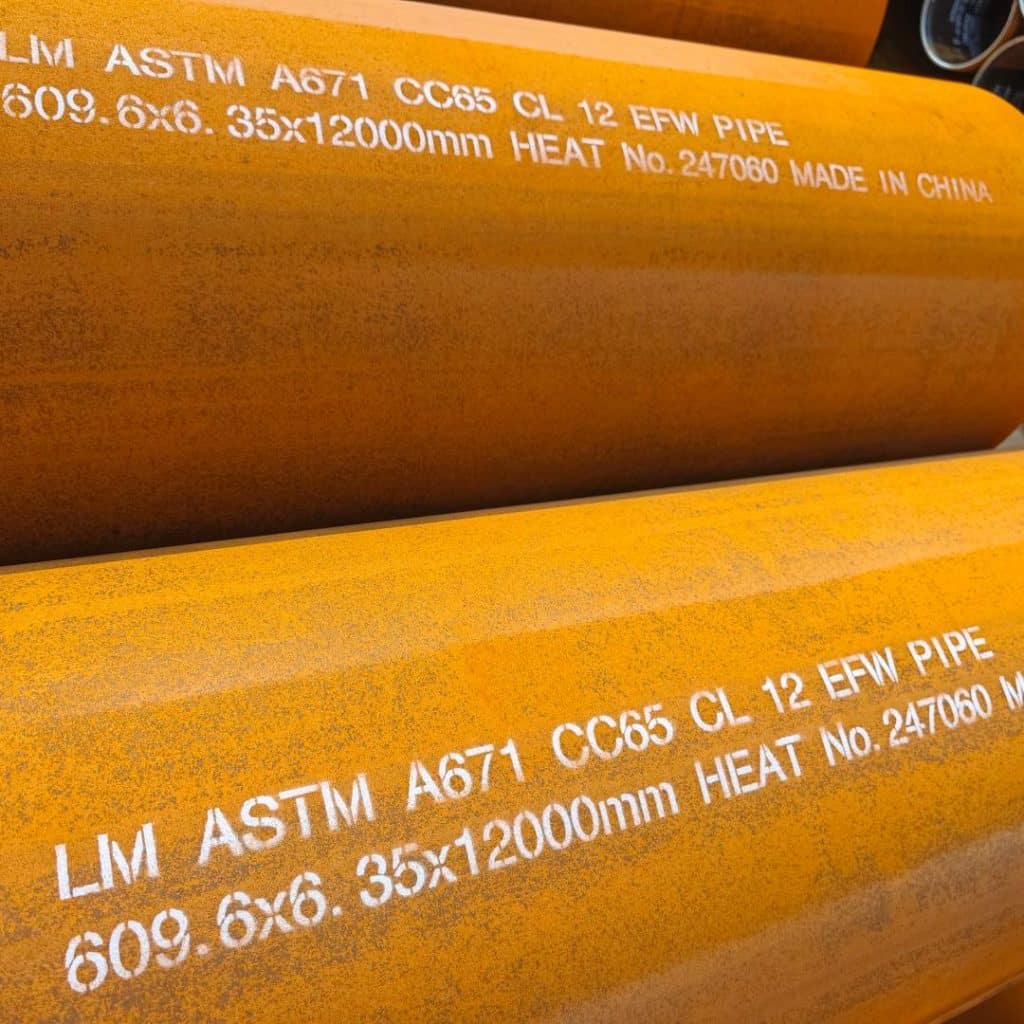
API 5L Grade B and ASTM A106 Grade B are both carbon-steel pipe materials, but they are specified for different primary purposes. API 5L is a line-pipe specification for pipeline transportation systems and covers seamless and welded pipe. ASTM A106/A106M covers seamless carbon-steel pipe for high-temperature service. Similar grade names do not make the two specifications automatically interchangeable.
The current active editions include API Specification 5L, 47th Edition, published in 2026, and ASTM A106/A106M-26. Procurement teams should always use the edition required by the project or contract.
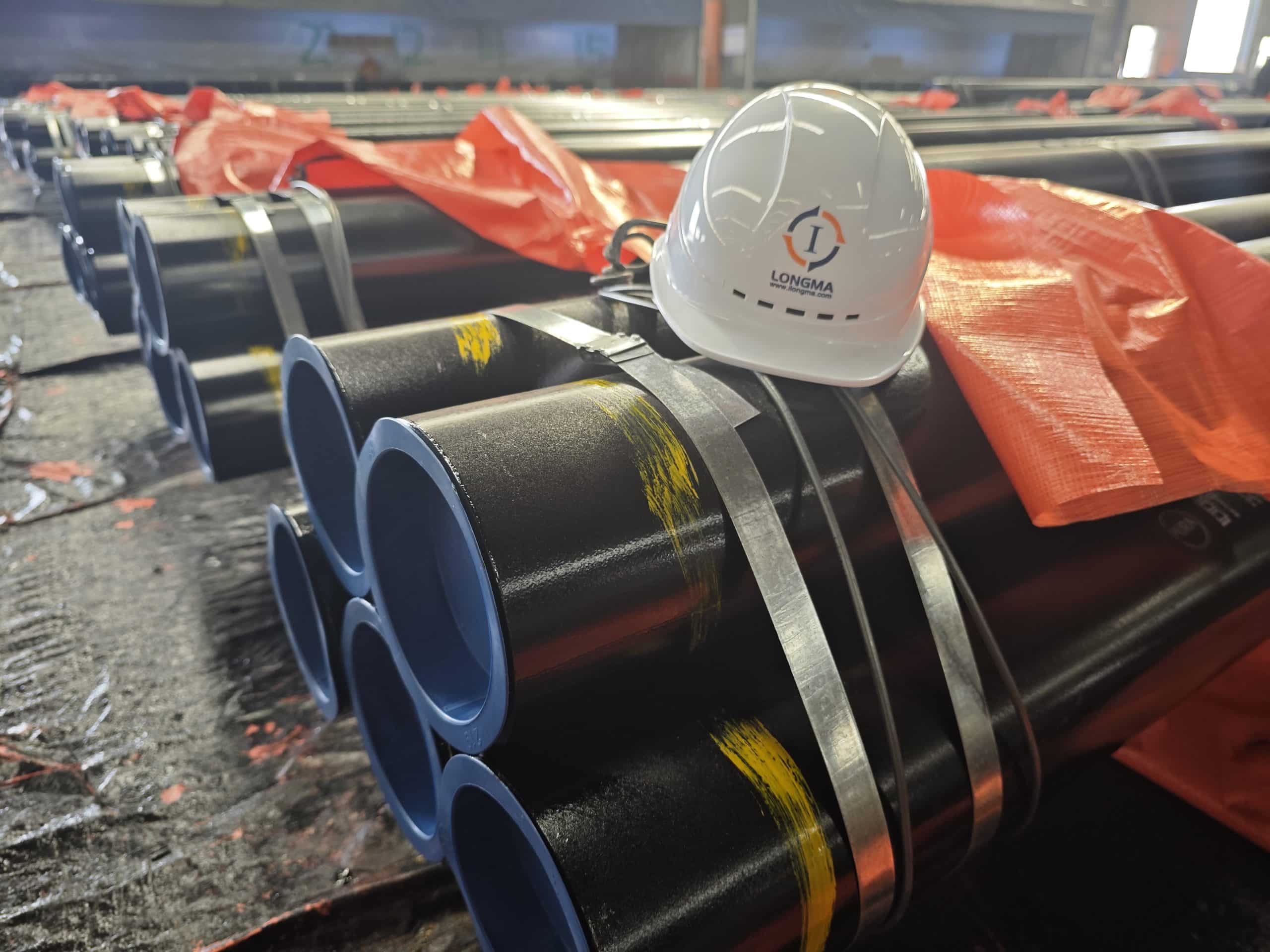
The Main Difference Is the Standard Scope
| Item | API 5L Grade B | ASTM A106 Grade B |
| Primary standard scope | Steel line pipe for pipeline transportation systems | Seamless carbon-steel pipe for high-temperature service |
| Manufacturing routes | Seamless and welded routes permitted by the specification | Seamless |
| Product specification levels | PSL1 and PSL2 | No API PSL1/PSL2 system |
| Typical procurement focus | Pipeline grade, PSL, dimensions, manufacturing route, inspection, testing, and supplementary requirements | High-temperature-service material specification, dimensions, heat treatment/testing as applicable |
| Automatic substitution? | No | No |
API 5L Grade B
API Specification 5L establishes requirements for seamless and welded steel line pipe, including material, manufacturing, inspection, testing, marking, and traceability requirements. The 47th Edition introduced updates across several areas, including sour service, chemical element ranges, HFW quality, impact toughness, and sulfide stress cracking testing.
API 5L Grade B can be ordered at the applicable product specification level and with the manufacturing route permitted by the project. LONGMA focuses on round ERW and LSAW API 5L line pipe.
ASTM A106 Grade B
ASTM A106/A106M is a specification for seamless carbon-steel pipe for high-temperature service. ASTM identifies the material as suitable for welding, bending, flanging, and similar forming operations when appropriate procedures are used. Because A106 is a seamless-pipe specification, it should not be described as an ERW or LSAW product.
ASTM A106/A106M is an ASTM material specification. ASME publishes the corresponding SA-106 specification for applications governed by the ASME Boiler and Pressure Vessel Code. It is therefore more accurate to distinguish ASTM A106 from ASME SA-106 than to call ASTM A106 an ‘ASME-certified grade.’
Mechanical Properties: Use the Applicable Standard Unit System
Both standards contain grade-specific mechanical-property requirements, but procurement documents should use the values stated in the applicable edition and unit system. Mathematical conversion between inch-pound and SI values should not be substituted for the standard’s own specified values. This is especially important when a contract, MTC, or third-party inspection report is checked against a particular standard designation.
For a website comparison, the safer engineering message is that the two Grade B designations can have similar strength levels while still differing in scope, manufacturing route, product requirements, testing, and intended service.
Chemistry and Weldability
Chemical requirements differ between API 5L and ASTM A106/A106M. For API 5L PSL2 products, carbon-equivalent or Pcm controls may apply according to the product and current specification. Carbon equivalent is an important input in weldability assessment, but it does not by itself determine field weldability. Wall thickness, hydrogen control, heat input, preheat, joint restraint, consumables, and the qualified WPS/PQR also matter.
For field or fabrication welding, the welding procedure should be qualified for the actual material and service rather than relying only on the grade name.
PSL1 and PSL2 Apply to API 5L, Not ASTM A106
PSL1 and PSL2 are API 5L product specification levels. ASTM A106 Grade B does not use the PSL system. PSL2 introduces additional controls beyond PSL1, but the exact requirements depend on the applicable API 5L edition, product, grade, dimensions, and manufacturing route. It is not accurate to summarize every PSL2 pipe as receiving one identical UT, RT, Charpy, or sour-service test package.
Sour Service
Sour-service requirements should be specified separately from the basic Grade B designation. For API 5L line pipe, the applicable sour-service provisions and project requirements should be identified in the purchase order. ISO 15156 may also be relevant to material selection for H2S-containing oil and gas production environments.
ASTM A106 Grade B does not become a sour-service-qualified material simply because its strength resembles API 5L Grade B. If an A106 material is proposed for an H2S-containing system, its suitability must be evaluated under the governing design code, material-selection requirements, and project specification.
Pipeline Service vs. High-Temperature Process Service
API 5L is written for line pipe used in pipeline transportation systems, while ASTM A106/A106M is written for seamless carbon-steel pipe for high-temperature service. This difference in scope is more useful than a generic claim that one material is ‘better’ than the other.
The actual suitability of a material for a piping or pipeline system is determined by the governing design code, project specification, design temperature and pressure, corrosion conditions, required product standard, and engineering approval. A website article should therefore not assign a universal maximum service temperature to ASTM A106 Grade B or state that API 5L can never be used in process piping.
Can API 5L Grade B and ASTM A106 Grade B Be Substituted?
Not automatically. Similar strength does not establish equivalence. A substitution must be reviewed against the governing design code, product specification, chemistry, mechanical properties, dimensions, manufacturing route, heat treatment, testing, documentation, and owner requirements.
Dual certification may be possible only when the manufactured pipe independently satisfies all applicable requirements of both specifications and the required certification is supported by the manufacturer and accepted by the purchaser.
API Monogram and Documentation
The API Monogram Program is a voluntary licensing program. Some purchasers or projects require Monogrammed product, while others specify API 5L compliance without making the Monogram a universal requirement. When the purchase order requires API Monogrammed pipe, buyers should verify that the originating manufacturer holds the applicable active license.
Inspection documentation should also follow the purchase order. EN 10204 3.1 or 3.2 documents should be requested only where applicable to the project and agreed inspection arrangement.
How to Choose Between API 5L Grade B and ASTM A106 Grade B
- Identify the governing design code and product specification.
- Determine whether the service is pipeline transportation or high-temperature process service.
- Confirm whether seamless or welded pipe is permitted.
- Check the required grade, dimensions, temperature, pressure, and corrosion conditions.
- Define PSL and supplementary requirements when API 5L is specified.
- Define sour-service requirements separately when H2S-containing service is involved.
- Confirm MTC, inspection, NDE, hydrostatic testing, and third-party witnessing requirements.
- Do not approve substitution based only on similar yield or tensile strength.
LONGMA API 5L Grade B Pipe Supply
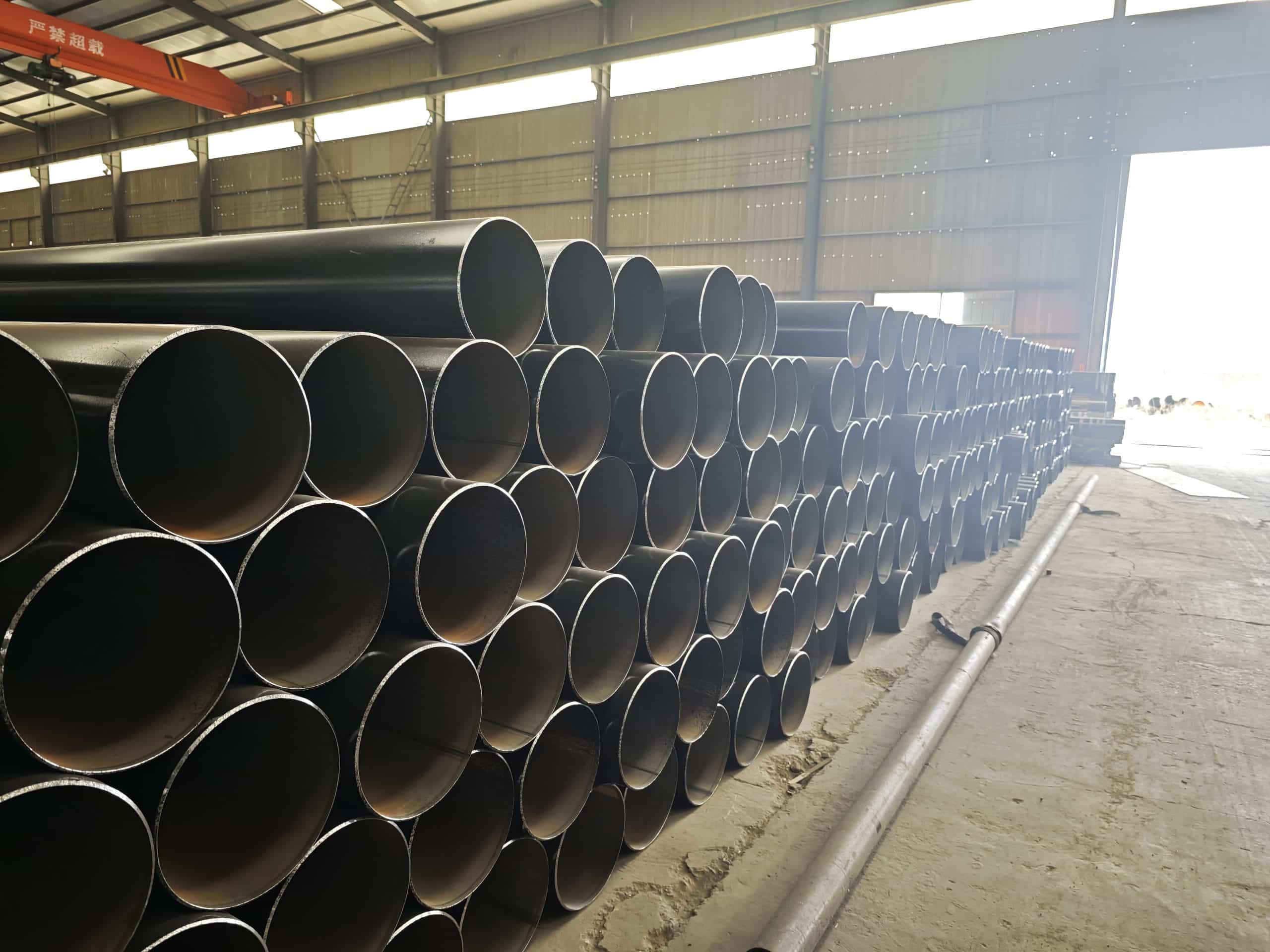
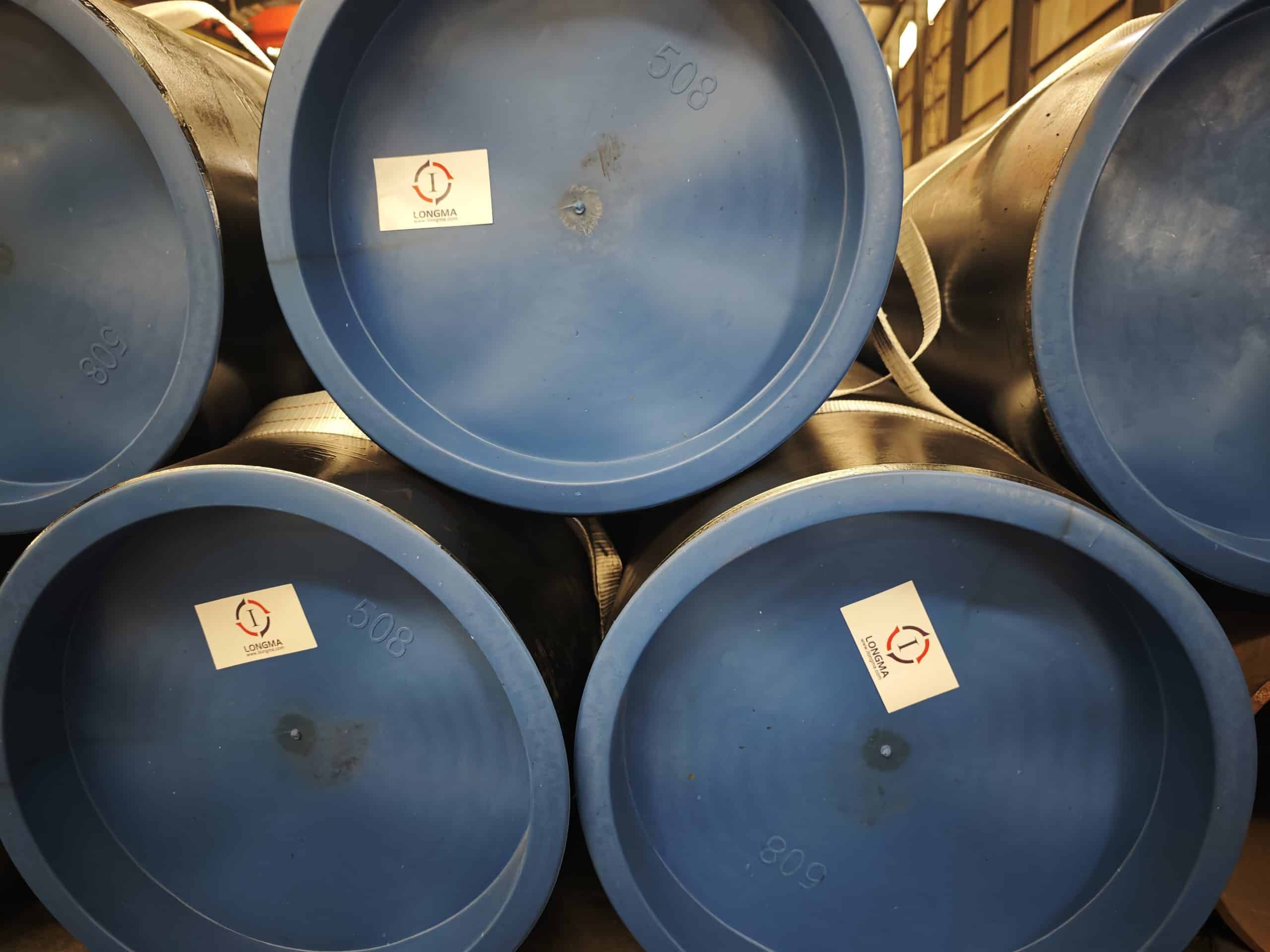
LONGMA manufactures round ERW and LSAW steel pipe for pipeline projects. The production base covers approximately 230,000 square meters, with annual production exceeding 500,000 tons. For API 5L Grade B inquiries, LONGMA can review the required edition, PSL, dimensions, manufacturing route, coating, inspection, and documentation requirements against the customer’s purchase specification.
Because LONGMA focuses on welded round pipe, ASTM A106 seamless pipe should be treated in this article as a comparison material rather than presented as a LONGMA-manufactured product.
Conclusion
API 5L Grade B and ASTM A106 Grade B should not be selected by comparing strength values alone. API 5L is primarily a line-pipe specification covering seamless and welded products, while ASTM A106/A106M is a seamless carbon-steel pipe specification for high-temperature service. The correct choice depends on the governing design code, project specification, manufacturing route, service conditions, testing, and purchaser requirements.
FAQ
- Is API 5L Grade B the same as ASTM A106 Grade B?
No. They are different product specifications with different scopes and manufacturing requirements, even though some mechanical properties may appear similar.
- Is ASTM A106 Grade B seamless or welded?
ASTM A106/A106M covers seamless carbon-steel pipe for high-temperature service.
- Can ASTM A106 Grade B be used in a pipeline?
That decision cannot be made from the grade name alone. The governing pipeline code, project specification, owner requirements, and product-standard requirements must be satisfied.
- Can API 5L Grade B be used for high-temperature process piping?
It should not be assumed suitable solely because it is Grade B. The governing piping code and project material specification must establish whether the material is permitted for the design conditions.
- Is an API Monogram mandatory for every API 5L order?
No. The API Monogram Program is voluntary, although a purchaser or project may specifically require Monogrammed product.
- Can one pipe be dual-certified to API 5L Grade B and ASTM A106 Grade B?
Only when the pipe independently satisfies all applicable requirements of both specifications and the dual certification is supported by the manufacturer and accepted by the purchaser.