- 1. Overview of ASTM A672 Standard and Inspection System
- 2. Raw Material Inspection Standards
- 3. Key Testing Methods and ASTM Standard Requirements
- 4. Acceptance Specifications and Procedures
- 5. Comparison of Inspection Requirements: ASTM A671 vs A672
- 6. In‑House Laboratory: The Key to Acceptance Reliability
- 7. Quality Control and Testing Advantages of LONGMA
- 8. Procurement Recommendations: How to Reduce Acceptance Risks
- 9. Conclusion
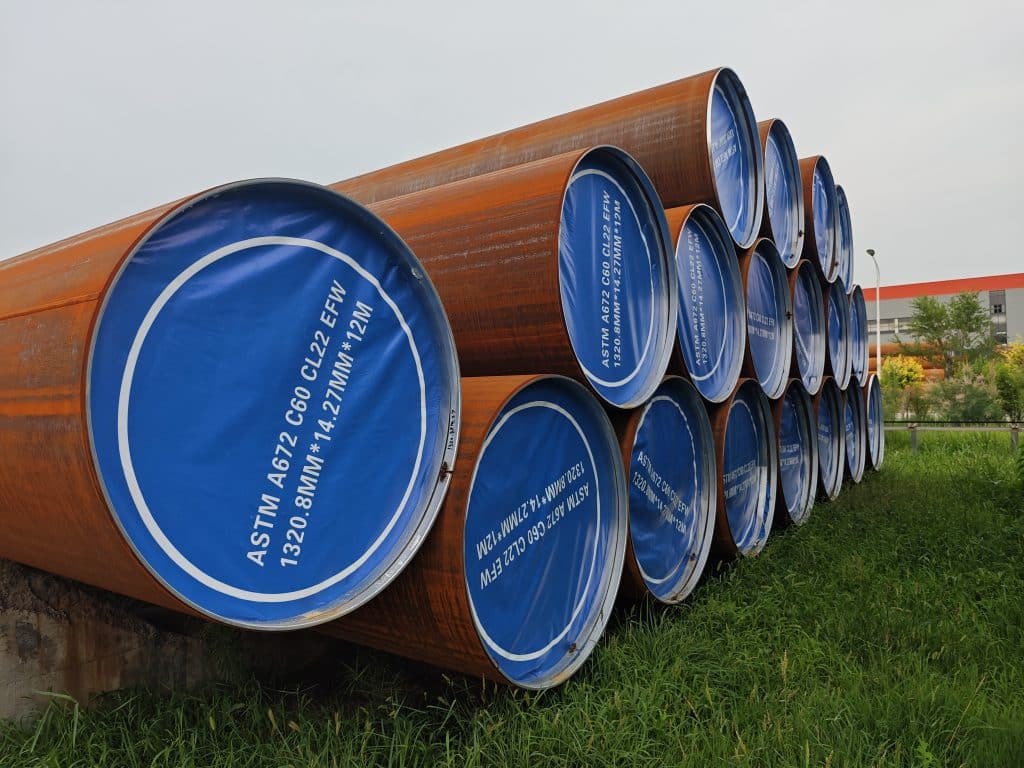
In petroleum, natural gas, power and chemical engineering, the quality of steel pipes is directly related to system safety and long‑term operational stability. As one of the important standards for electric fusion welded (EFW) carbon steel pipes, ASTM A672 steel pipes are widely used in medium‑ and high‑pressure piping systems. For purchasers, mastering the complete inspection standards and acceptance specifications is the key to reducing risks and ensuring smooth project delivery.
This article deeply analyzes the core requirements of the ASTM A672 specification from multiple perspectives including standard system, inspection methods, acceptance procedures and quality control system, and helps you select reliable suppliers.
Overview of ASTM A672 Standard and Inspection System
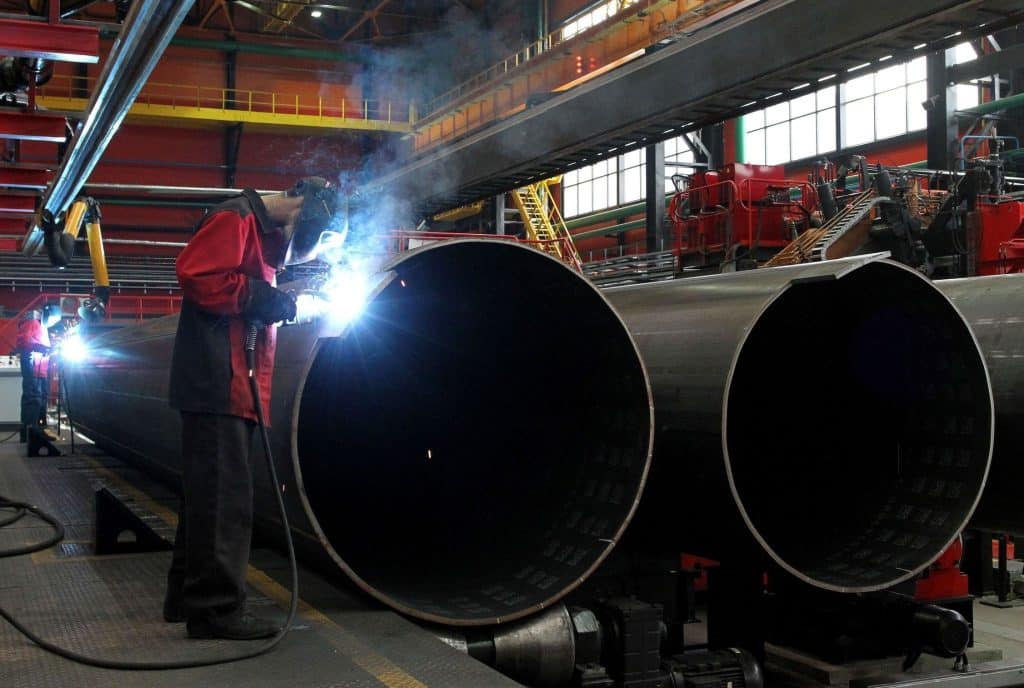
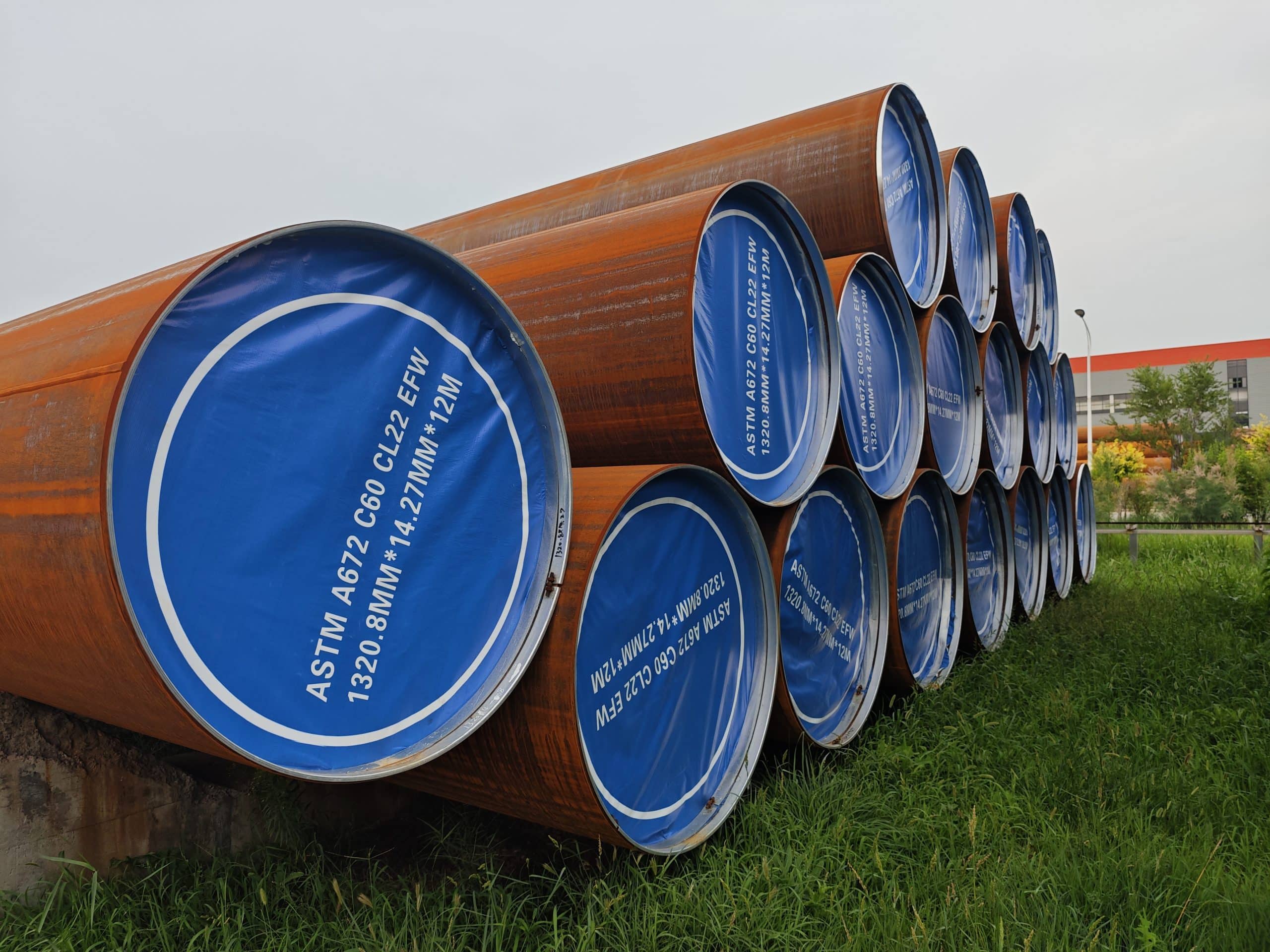
The ASTM A672 specification applies to electric fusion welded steel pipes manufactured from pressure vessel steel plates. Its inspection system runs through the entire production process, including:
- Raw material inspection
- Welding quality control
- Non‑destructive testing
- Mechanical property testing
- Factory acceptance
This system ensures that every ASTM A672 pipe meets the application requirements of pressure pipelines.
Raw Material Inspection Standards
The quality of raw materials directly determines the performance of the final product. Typical ASTM A672 materials (such as C60) shall meet the following requirements:
- Chemical Composition Control
| Element | Content (%) |
| C | ≤0.30 |
| Mn | 0.90–1.50 |
| P | ≤0.035 |
| S | ≤0.035 |
These indicators ensure that ASTM A672 carbon steel has good weldability and strength.
- Material Documentation Requirements
- EN 10204 3.1 Material Test Certificate
- Heat number traceability information
- Chemical composition and mechanical property reports
For ASTM A672 C60 CL22 and ASTM A672 C65 CL22, these documents are the basis for acceptance.
Key Testing Methods and ASTM Standard Requirements
Strict testing is explicitly required by the ASTM A672 specification during production and acceptance.
- Ultrasonic Testing (UT)
Purpose
Detect internal defects in steel plates and welds (cracks, slag inclusions, etc.)
Implementation Steps
- Scan the weld area with a probe
- Record reflected signals
- Evaluate defect levels in accordance with standards
Standard Reference
ASTM A672 references ASTM A578 / A435
- Radiographic Testing (RT)
Purpose
Verify the internal structural integrity of welds
Testing Procedure
- Place the radiation source
- Perform film imaging
- Analyze defects
100% RT inspection is usually required for ASTM A672 C65 CL22 projects.
- Hydrostatic Test
Purpose
Verify the pressure resistance of ASTM A672 pipes
Implementation Steps
- Fill with water and pressurize
- Maintain pressure and check for leakage
This test is mandatory before delivery.
- Mechanical Property Testing
| Item | Requirements (C60) |
| Yield Strength | ≥415 MPa |
| Tensile Strength | ≥585 MPa |
Among them, the yield strength of ASTM A672 C60 is one of the important acceptance indicators.
Acceptance Specifications and Procedures
The following procedures shall be followed during project acceptance:
- Acceptance Flow
- Document review (MTC, inspection reports)
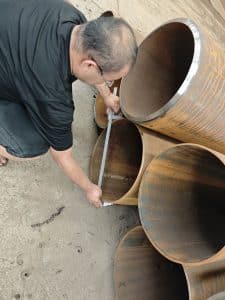
- Visual inspection (welds, dimensions)
- Confirmation of non‑destructive testing reports
- Confirmation of hydrostatic test records
- Random sampling and re‑inspection
- Acceptance Priority Comparison
| Item | Qualified Standard | Risk Points |
| Material Composition | Complies with standards | Segregation |
| Weld Quality | Free of defects | Cracks |
| Inspection Reports | Complete | Data falsification |
| Dimensional Tolerances | Complies with specifications | Installation difficulties |
A standardized acceptance process can effectively reduce procurement risks.
Comparison of Inspection Requirements: ASTM A671 vs A672
| Item | ASTM A671 | ASTM A672 |
| Material | Alloy Steel | Carbon Steel |
| Testing Complexity | High | Medium |
| Cost | High | More economical |
For most projects, ASTM A672 carbon steel is more cost‑effective while meeting inspection requirements.
In‑House Laboratory: The Key to Acceptance Reliability
For purchasers, whether a supplier has an in‑house laboratory directly determines the credibility of product quality.
Standard Laboratory Capabilities
- Chemical composition analysis (spectrometer)
- Tensile testing machine
- Impact testing equipment
- UT/RT inspection systems
- Hydrostatic testing equipment
These capabilities ensure that ASTM A672 C60 CL22 and ASTM A672 C65 CL22 products meet standard requirements.
Quality Control and Testing Advantages of LONGMA
As a steel pipe manufacturer with more than 20 years of experience, LONGMA has significant advantages in ASTM A672 pipe quality control:
Core Capabilities
- Strictly implement the ASTM A672 specification
- Self‑built in‑house laboratory (covering full‑process testing)
- 100% non‑destructive testing of welds
- Complete quality traceability system
With stable quality, LONGMA has become a leading global ASTM A672 exporter, providing reliable products for many large‑scale projects.
Procurement Recommendations: How to Reduce Acceptance Risks
When purchasing ASTM A672 pipes, it is recommended to focus on the following:
- Whether complete inspection reports are provided
- Whether third‑party inspection (SGS/BV) is supported
- Whether there is relevant project experience
- Whether an in‑house laboratory is available
In wholesale ASTM A672 procurement, quality reliability is far more important than price.
Conclusion
In pressure pipeline engineering, the inspection standards and acceptance specifications of ASTM A672 pipes are important guarantees to ensure the safe operation of projects. Strictly implementing the ASTM A672 specification and selecting suppliers with a complete quality system can effectively reduce risks.
If you are looking for a reliable China ASTM A672 exporter, LONGMA will provide you with high‑quality products and professional inspection support to help your project be implemented smoothly.