- 1. Application Advantages of ASTM A691 in High-Temperature Systems
- 2. Key Points for Material Selection Design
- 3. Pipeline Structure and Stress Design
- 4. Welding and Heat Treatment Design
- 5. Key Inspection Methods and Standard Requirements
- 6. Procurement Risks and Design Misconceptions
- 7. Engineering and Quality Advantages of LONGMA
- 8. Conclusion: Design and Materials Are Equally Important
In power plants, oil refineries, and petrochemical facilities, high-temperature piping systems operate long-term at temperatures above 400°C or even higher, imposing extremely stringent requirements on material performance and structural design. As electric fusion welded alloy steel pipes dedicated to high-temperature and high-pressure service conditions, ASTM A691 has become a core material in critical units. This paper systematically analyzes the key design points of ASTM A691 pipes in high-temperature systems from the perspectives of material selection, structural design, stress control, inspection standards, and procurement risks, and demonstrates the technical and quality advantages of LONGMA in this field.
Application Advantages of ASTM A691 in High-Temperature Systems
ASTM A691 pipes are typically manufactured from ASTM A387 alloy steel plates, featuring:
- Excellent high-temperature resistance (up to 500–600°C)
- Good creep resistance
- Stable weldability
- High reliability for critical equipment
In particular, ASTM A691 Grade 2.1 4Cr Gr 32 is widely used in high-temperature steam pipelines due to its Cr-Mo alloying elements.
Key Points for Material Selection Design
Material selection is the core of design in high-temperature systems.
- Comparison of Different Grades
| Grade | Alloying Elements | Recommended Temperature Range | Application Scenario |
| ASTM A691 Grade 2.1 4Cr | Cr + Mo | 450–550°C | General high-temperature pipelines |
| ASTM A691 Grade 2.1 4Cr Gr 32 | High Cr + Mo | 500–600°C | Main steam systems |
| ASTM A691 CL32 | Depends on base material | High-temperature & high-pressure | Critical equipment |
Design Recommendation:
For main steam or high-pressure systems, ASTM A691 Grade 2.1 4Cr Gr 32 shall be prioritized.
- Key Factors for Material Selection
- Operating temperature and pressure
- Corrosive environment (sulfur and oxygen content)
- Service life requirements
- Design safety factor
In high-temperature environments, the creep resistance of ASTM A691 pipes is superior to that of conventional carbon steel.
Pipeline Structure and Stress Design
- Thermal Expansion and Stress Control
Thermal expansion must be considered in high-temperature pipeline design:
- Install expansion joints or bends for compensation
- Control the position of fixed supports
- Avoid stress concentration
- Wall Thickness and Pressure Calculation
In accordance with ASME B31.1 / B31.3 standards:
| Parameter | Key Design Point |
| Internal pressure | Determines minimum wall thickness |
| Temperature | Affects material strength |
| Corrosion allowance | Usually increased by 1–3 mm |
Selecting the appropriate wall thickness of ASTM A691 pipes can significantly improve system safety.
Welding and Heat Treatment Design
- Welding Process Control
- Use low-hydrogen welding consumables
- Control preheating and interpass temperature
- Prevent cold cracking
- Post-Weld Heat Treatment (PWHT)
Standard Basis: ASTM A691
Purposes:
- Relieve residual stress
- Improve microstructural stability
- Enhance high-temperature performance
For ASTM A691 Grade 2.1 4Cr, PWHT is a critical step to ensure long-term operational safety.
Key Inspection Methods and Standard Requirements
High-temperature piping systems have extremely high quality requirements and must undergo strict inspections.
- Chemical Composition Analysis (ASTM A751)
- Purpose: Verify the content of alloying elements
- Key Point: Cr and Mo contents must comply with standards
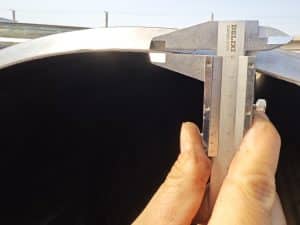
- Mechanical Property Testing (ASTM A370)
| Item | Purpose |
| Tensile test | Verify strength |
| Elongation | Verify ductility |
| Impact test | Verify toughness |
- Non-Destructive Testing (NDT)
| Method | Standard | Application |
| UT | ASTM A435 | Detect internal defects |
| RT | ASTM E94 | Weld quality inspection |
| MT | ASTM E709 | Surface crack detection |
For export projects (e.g., ASTM A691 pipes & tubes in Spain), 100% RT inspection is usually required.
- Inspection Class
| Class | Inspection Requirement |
| CL10 | Basic inspection |
| CL22 | Intermediate level |
| CL32 | 100% non-destructive testing |
ASTM A691 CL32 is the preferred grade for high-temperature and high-pressure systems.
Procurement Risks and Design Misconceptions
❗ Incorrect Material Grade Selection
Failure to choose ASTM A691 Grade 2.1 4Cr Gr 32 increases the risk of high-temperature failure.
❗ Neglect of Heat Treatment
Skipping PWHT impairs long-term stability.
❗ Insufficient Inspection
Non-compliance with ASTM A691 CL32 inspection requirements leads to potential safety hazards.
❗ Inadequate Supplier Capability
Lack of laboratory and inspection capabilities makes quality assurance impossible.
Engineering and Quality Advantages of LONGMA
As a steel pipe manufacturer with over 20 years of experience, LONGMA has significant advantages in the field of ASTM A691 pipes for high-temperature pipelines:
✔ In-House Laboratory Assurance
- Spectrometry analysis (ASTM A751)
- Mechanical testing (ASTM A370)
- Impact testing equipment
- Full UT / RT / MT inspection system
All ASTM A691 CL32 products undergo full-process inspection.
✔ Strict Process Control
From raw materials (A387) to finished products, every ASTM A691 Grade 2.1 4Cr product is guaranteed to comply with standards.
✔ International Project Experience
LONGMA has successfully delivered multiple European projects, including ASTM A691 pipes & tubes in Spain, meeting the requirements of high-end engineering.
✔ Technical Support Capability
Provide customers with material selection advice and design optimization solutions to reduce engineering risks.
Conclusion: Design and Materials Are Equally Important
In high-temperature piping systems, reasonable design and high-quality materials are equally important. Scientific selection of ASTM A691 grades, optimized structural design, and strict implementation of inspection standards can significantly improve system safety and service life.
Especially in critical systems, the combination of ASTM A691 Grade 2.1 4Cr Gr 32 and ASTM A691 CL32 is an ideal choice for highly reliable operation.