- 1. Why Is Surface Defect Inspection So Important?
- 2. Common Surface Defects in Steel Pipe Production
- 3. Visual Testing (VT): The First Line of Quality Control
- 4. How Automated Vision Systems Improve Inspection Accuracy
- 5. Magnetic Particle Testing (MT): Detecting Surface Cracks
- 6. Penetrant Testing (PT): Ideal for Non-Magnetic Materials
- 7. Eddy Current Testing (ET): A Critical Tool for High-Speed Production Lines
- 8. How LONGMA’s In-House Laboratory Ensures Reliable Inspection
- 9. Why Surface Inspection Capability Reflects Supplier Strength
- 10. Conclusion
In industries such as oil and gas transmission, offshore engineering, chemical processing, and large-scale infrastructure construction, steel pipe quality directly impacts project safety and service life. Among various quality indicators, surface defects are often one of the most visible concerns for international buyers and one of the leading causes of quality disputes.
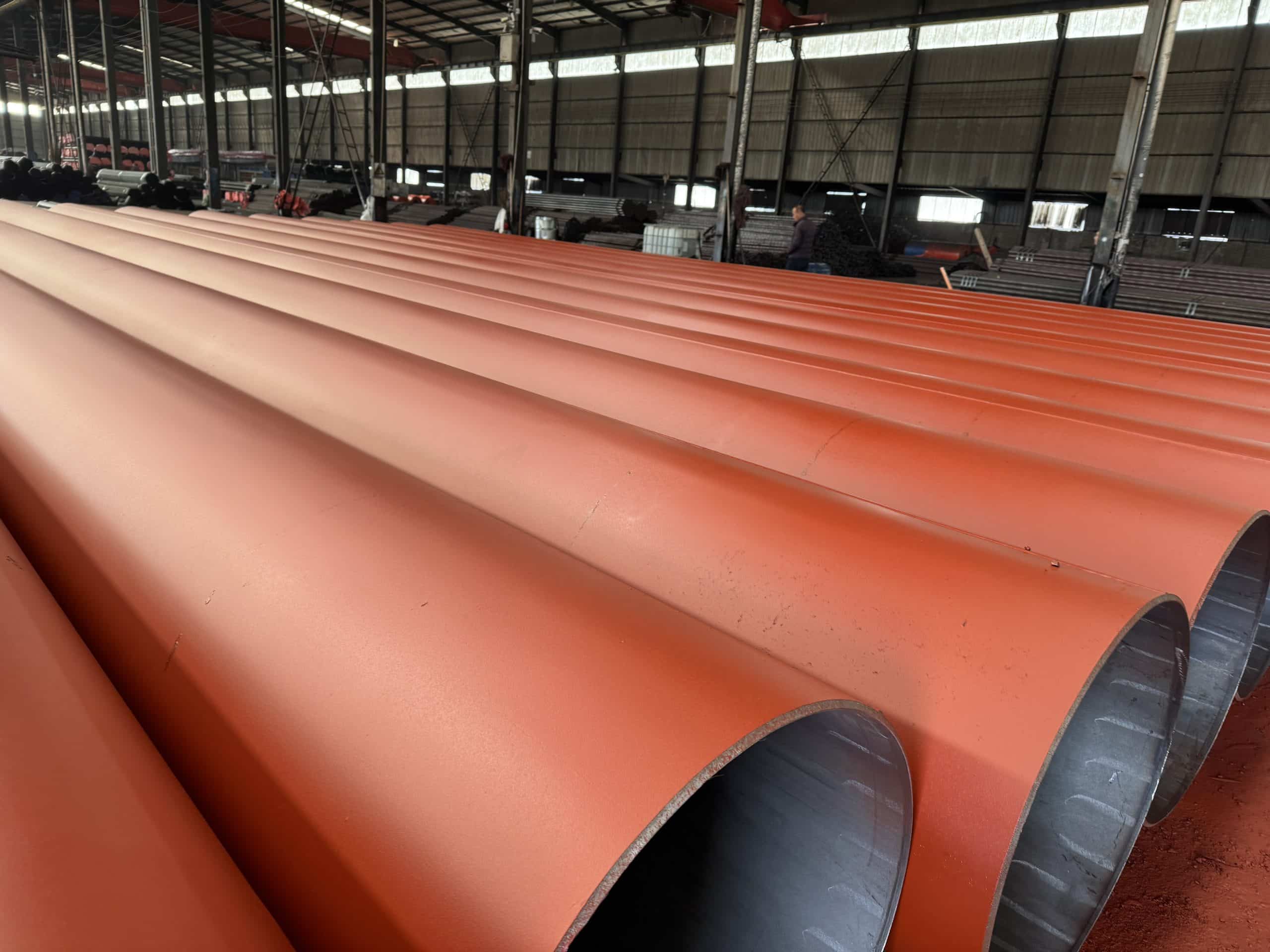
Whether for API 5L steel pipe, LSAW steel pipe, or structural steel pipe, surface defects such as cracks, laps, scratches, inclusions, or corrosion can negatively affect welding performance, coating adhesion, and long-term pressure-bearing capability.
For EPC contractors and engineering procurement teams, the biggest concerns are often:
- Are there hidden defects in the steel pipes?
- Are the inspection results reliable and traceable?
- Can the products pass third-party inspections?
- Will quality issues lead to claims or project delays?
As a result, advanced surface defect inspection technologies have become a key indicator of a steel pipe manufacturer’s capabilities.
With more than 20 years of manufacturing experience, LONGMA utilizes automated inspection equipment, intelligent defect-recognition systems, and a comprehensive in-house laboratory to achieve full-process quality control—from raw materials to finished products—providing customers worldwide with reliable steel pipe solutions.
Why Is Surface Defect Inspection So Important?
Many buyers focus primarily on chemical composition and mechanical properties. However, in real-world applications, many failures originate from surface defects.
For example:
- Cracks may propagate under high-pressure service conditions.
- Scratches can reduce coating adhesion and corrosion resistance.
- Laps may create stress concentration points.
- Surface weld defects can compromise non-destructive testing results.
According to standards such as API 5L, ISO 3183, and ASTM A53, steel pipe surfaces must be free of imperfections that could affect performance.
Therefore, high-quality steel pipe manufacturing requires not only advanced production equipment but also a rigorous inspection system.
Common Surface Defects in Steel Pipe Production
Different manufacturing stages may introduce different types of surface imperfections.
| Defect Type | Primary Cause | Potential Risk |
| Cracks | Forming stress, raw material defects | Pressure failure |
| Scratches | Handling and processing friction | Coating failure |
| Laps | Rolling process abnormalities | Stress concentration |
| Inclusions | Steelmaking or welding defects | Reduced strength |
| Scale | Heat treatment processes | Welding difficulties |
| Pits | Corrosion or mechanical damage | Reduced service life |
If not detected promptly, these defects may only become apparent during hydrostatic testing or field installation, resulting in costly repairs and project delays.
Visual Testing (VT): The First Line of Quality Control
Visual Testing (VT) is the most fundamental and widely used inspection method in the steel pipe industry.
Inspection Purpose
VT is used to identify:
- Surface cracks
- Scratches
- Laps
- Weld abnormalities
Inspection Procedure
- Clean the pipe surface.
- Provide adequate illumination.
- Scan the surface manually or using automated vision systems.
- Record and evaluate defect indications.
According to ASTM E165 and ISO 17637, visual inspection should be conducted under sufficient lighting conditions.
To improve consistency and efficiency, LONGMA has upgraded traditional visual inspection with automated vision systems.
How Automated Vision Systems Improve Inspection Accuracy
With the rise of smart manufacturing, many leading steel pipe suppliers have adopted machine-vision technologies.
Compared with manual inspection:
| Item | Manual Inspection | Automated Vision Inspection |
| Inspection Speed | Slower | Continuous high-speed |
| Data Recording | Limited | Fully automated |
| Consistency | Operator-dependent | Highly stable |
| Detection of Small Defects | Limited | More accurate |
LONGMA’s automated vision inspection system combines high-resolution industrial cameras with AI-powered image recognition to perform 360-degree real-time inspection of pipeline steel pipe surfaces, significantly improving defect detection rates.
Magnetic Particle Testing (MT): Detecting Surface Cracks
For ferromagnetic materials, Magnetic Particle Testing (MT) is one of the most effective methods for detecting surface and near-surface cracks.
Inspection Principle
After magnetization, discontinuities create leakage magnetic fields that attract magnetic particles, revealing defect locations.
Typical Applications
- API 5L steel pipe
- Welded steel pipe
- High-pressure steel pipe
Inspection Procedure
- Surface preparation.
- Magnetization.
- Application of magnetic particles.
- Observation and interpretation.
- Documentation of results.
According to ASTM E709, MT can detect fine cracks that may not be visible to the naked eye.
Penetrant Testing (PT): Ideal for Non-Magnetic Materials
For stainless steel and non-magnetic materials, Penetrant Testing (PT) is commonly used.
Inspection Purpose
PT helps identify:
- Open surface cracks
- Fine porosity
- Surface-breaking defects
Inspection Procedure
- Surface cleaning.
- Application of penetrant.
- Removal of excess penetrant.
- Application of developer.
- Interpretation of indications.
According to ASTM E1417, PT is widely applied in the inspection of stainless steel pipe and precision steel pipe products.
Eddy Current Testing (ET): A Critical Tool for High-Speed Production Lines
In modern steel pipe production, Eddy Current Testing (ET) has become an essential online inspection method.
Advantages of ET
- Non-contact inspection
- Suitable for high-speed production lines
- Detection of surface and near-surface defects
- Highly automated operation
Particularly in the production of cold drawn steel pipe and precision steel pipe, ET can quickly identify micro-cracks, pinholes, and other small defects.
According to ASTM E309, ET is widely used for precision tube quality control.
How LONGMA’s In-House Laboratory Ensures Reliable Inspection
For international buyers, the question is not simply whether inspection is performed, but:
- Are the inspection results trustworthy?
- Is the data fully traceable?
- Can the products pass third-party audits?
To address these concerns, LONGMA has established a comprehensive in-house laboratory for product verification and quality assurance.
Laboratory capabilities include:
- Automated Ultrasonic Testing (UT)
- Digital Radiographic Testing (RT)
- Eddy Current Testing Systems
- Metallographic Analysis Equipment
- Mechanical Property Testing Equipment
The laboratory operates in accordance with internationally recognized standards, including:
- API 5L
- ISO 3183
- ASTM A53
- ASTM A252
Each batch of steel pipe is accompanied by complete quality records to ensure full traceability.
Why Surface Inspection Capability Reflects Supplier Strength
For large-scale oil and gas pipeline projects, a truly reliable steel pipe manufacturer does more than produce pipes—it proactively identifies risks before they become costly problems.
Compared with post-production repairs and field failures, a comprehensive inspection system offers significant advantages:
- Reduced project risk
- Improved product consistency
- Greater customer confidence
- Higher third-party inspection pass rates
This is one of the key reasons why more international customers choose LONGMA as their long-term steel pipe supplier.
Conclusion
In modern steel pipe manufacturing, surface defect inspection has evolved from a basic quality-control step into a critical technology for ensuring project safety and product reliability.
From Visual Testing (VT) and Magnetic Particle Testing (MT) to Penetrant Testing (PT) and Eddy Current Testing (ET), each inspection method plays a vital role in minimizing defects and maximizing performance.
Backed by more than 20 years of industry experience, advanced automated inspection systems, and a comprehensive in-house laboratory, LONGMA continues to provide high-quality API 5L steel pipe, LSAW steel pipe, and pipeline steel pipe products to customers worldwide, helping them reduce procurement risks and improve project success rates.