- 1. 1. What Is ASTM A671/A671M? Key Parameters at a Glance
- 2. 2. Grade and Class: Incorrect Selection Directly Compromises Pressure Safety
- 3. 3. Seven Factors That Determine A671 Pipe Pressure Performance
- 4. 4. Weld Inspection: The Core of A671 Pressure Pipe Reliability
- 5. 5. Heat Treatment: The Overlooked Guarantee of Pressure Performance
- 6. 6. Hydrostatic Testing: The Most Direct Verification of Pressure Performance
- 7. 7. International Procurement Checklist for ASTM A671/A671M Steel Pipe
- 8. 8. FAQ: ASTM A671 Pressure Pipe — Frequently Asked Questions
- 9. About LONGMA: A Reliable ASTM A671/A671M Pressure Pipe Supplier
Applications: LNG Terminals · Cryogenic Pressure Piping · Petrochemical Plants · Compressed Air Systems · Large-Diameter Industrial Transmission
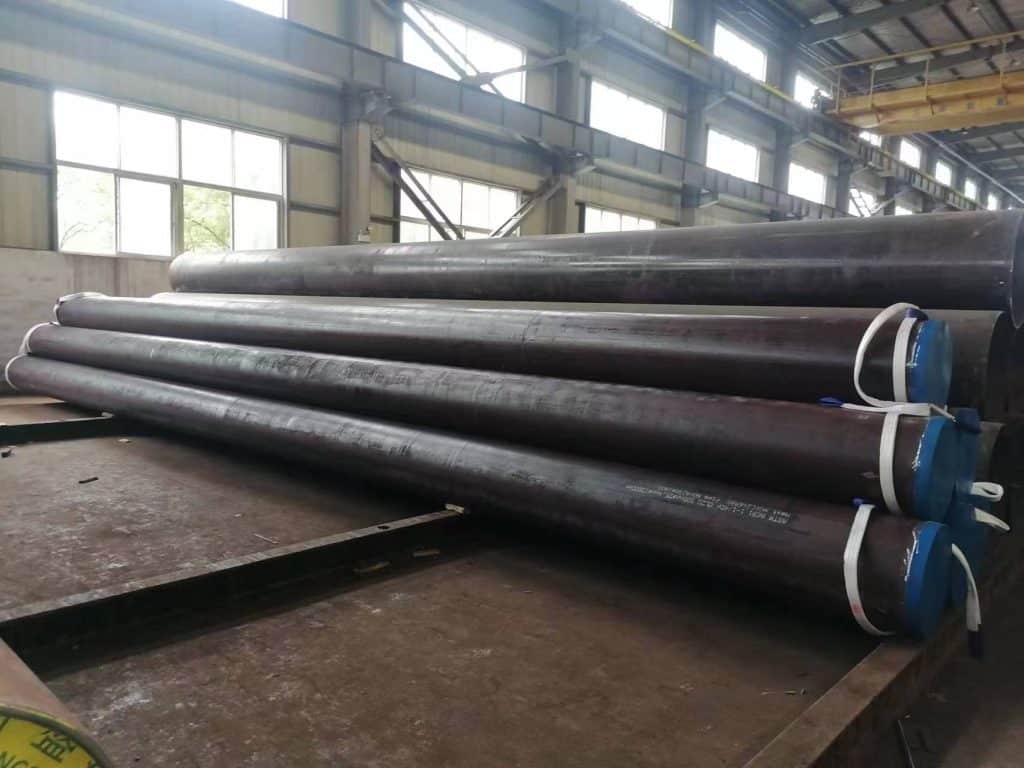
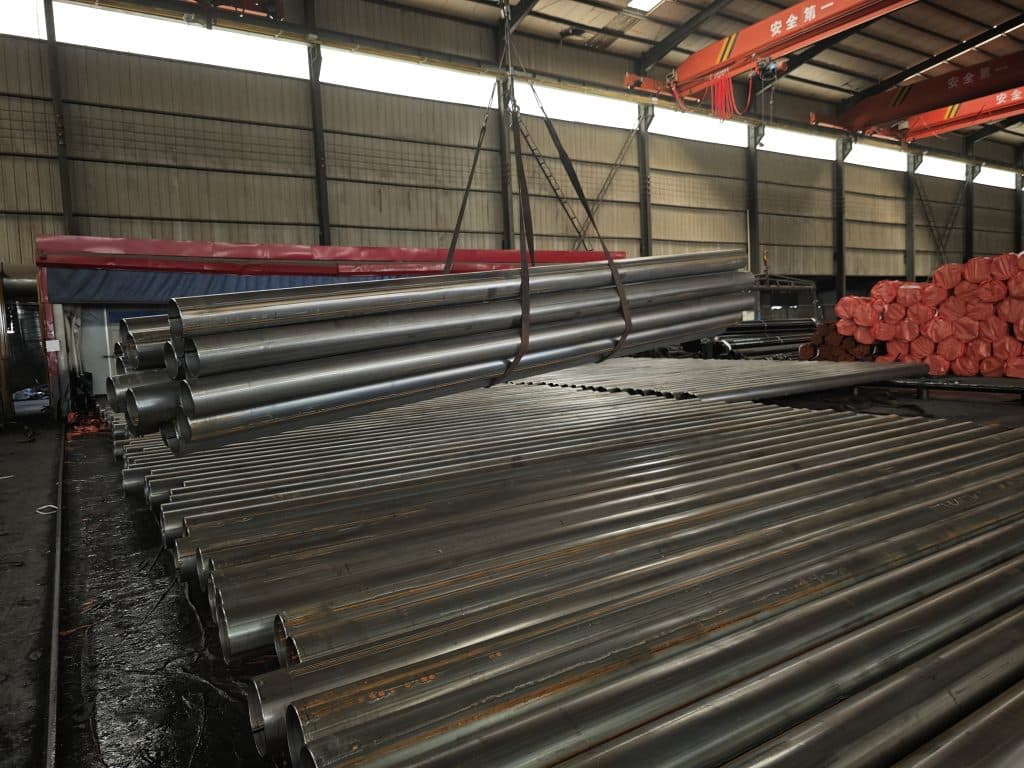
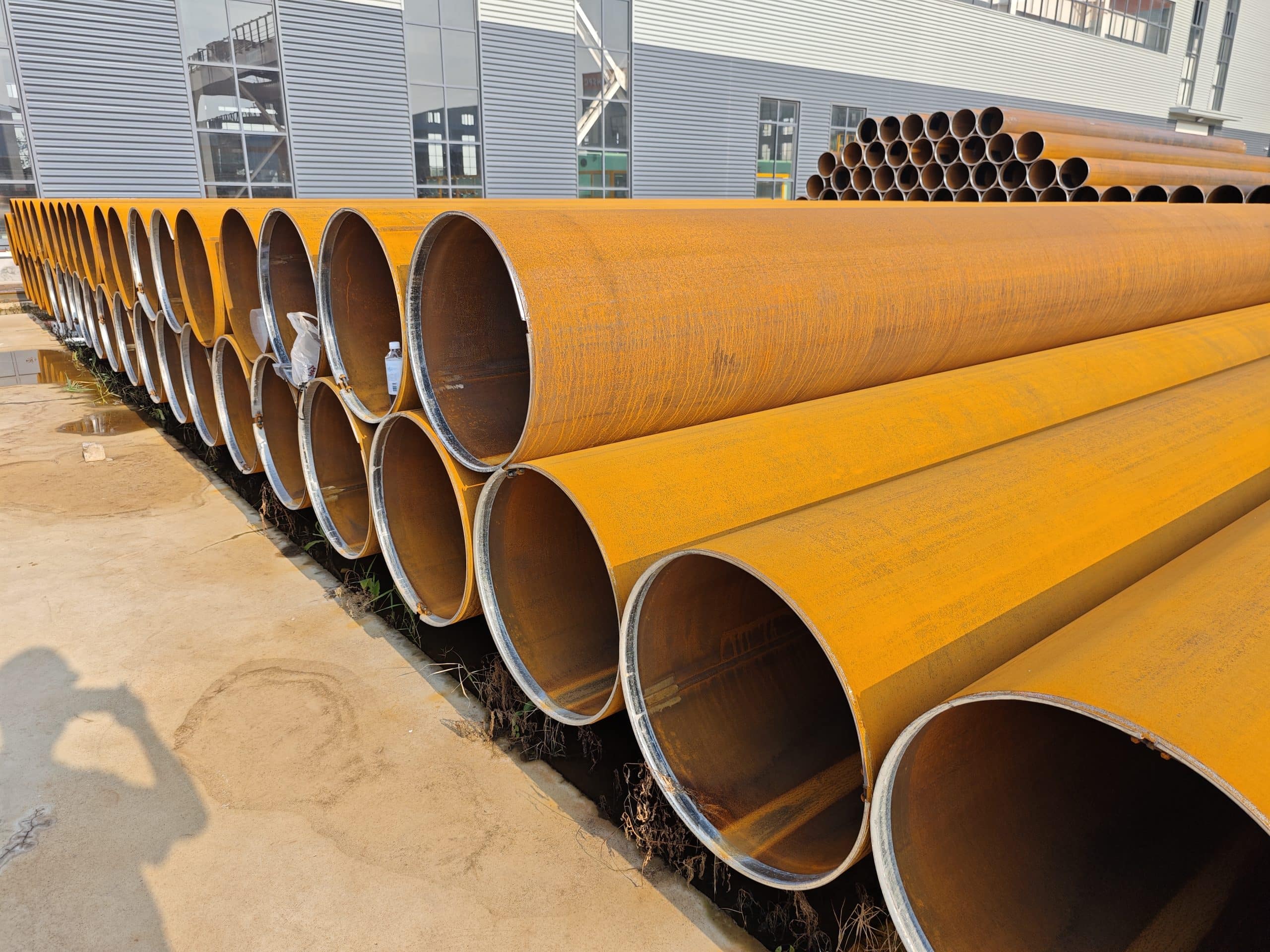
ASTM A671/A671M is a widely specified standard for electric-fusion-welded (EFW) steel pipe in international engineering projects. Its full title is Standard Specification for Electric-Fusion-Welded Steel Pipe for Atmospheric and Lower Temperatures — designed for high-pressure service at ambient and sub-ambient temperatures. The standard requires pipe to be manufactured from pressure-vessel-quality steel plate and uses a Grade/Class system to define base material strength, heat treatment condition, weld inspection requirements, and pressure testing.
This guide systematically covers ASTM A671 pressure performance requirements — including Grade/Class selection, weld inspection, hydrostatic testing, heat treatment control, and a complete international procurement checklist — to help EPC buyers and engineers eliminate delivery risks on high-pressure pipeline projects.
💡 Quick Navigation: Standard Overview → Grade/Class → Pressure Performance Factors → Weld Inspection → Heat Treatment → Hydrostatic Testing → Procurement Checklist → FAQ
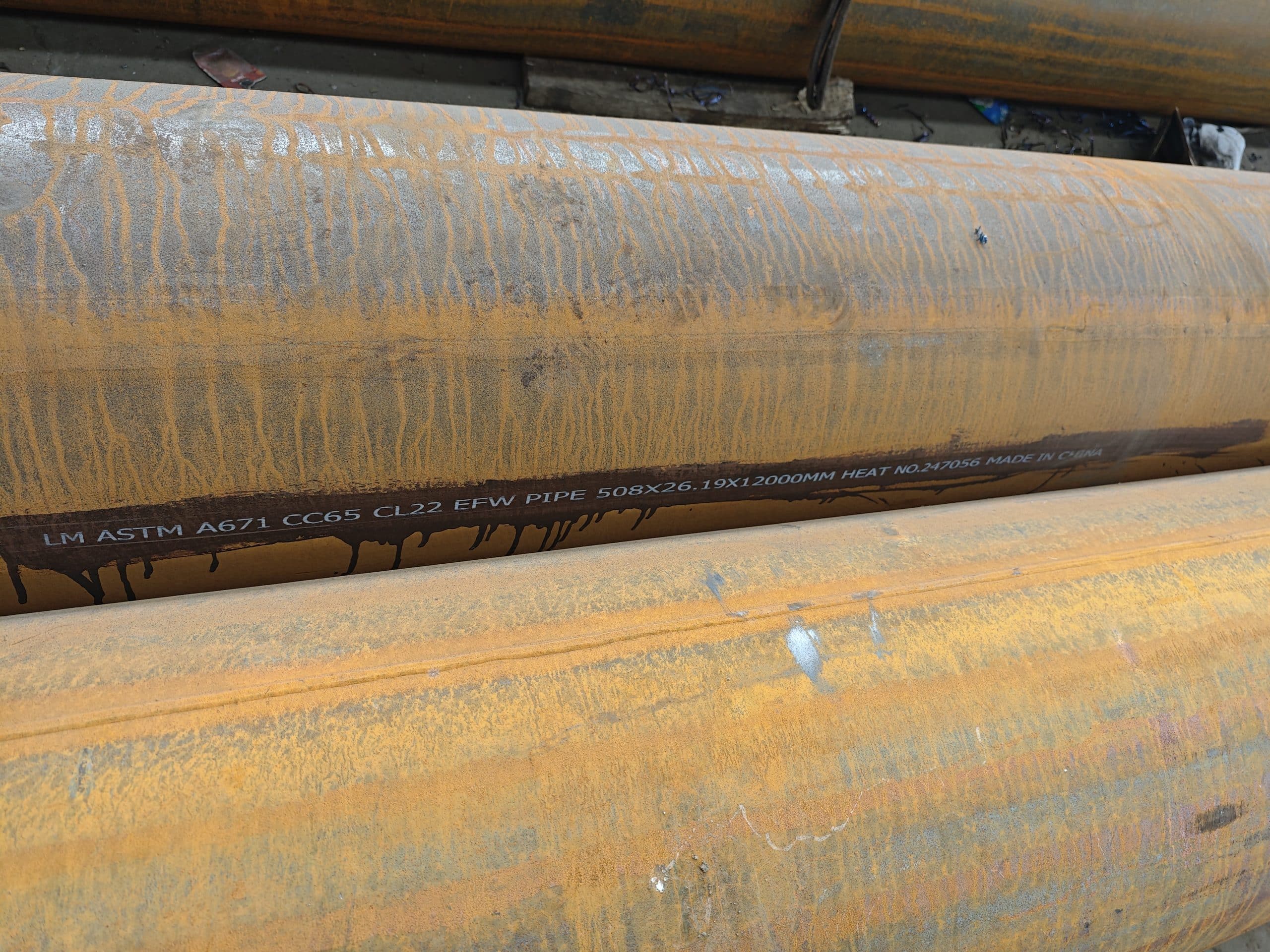
1. What Is ASTM A671/A671M? Key Parameters at a Glance
ASTM A671/A671M is an electric-fusion-welded pipe standard — not to be confused with standard ERW pipe. Its defining characteristics are: filler-metal EFW welding process, pressure-vessel-quality steel plate as the base material, and tiered requirements for heat treatment, radiographic testing, and pressure testing.
| Parameter | ASTM A671/A671M Details |
| Full Title | EFW Steel Pipe for Atmospheric and Lower Temperatures |
| Welding Process | Electric-Fusion Welding with filler metal (EFW) |
| Base Material | Pressure-Vessel-Quality steel plate |
| Service Temperature | Ambient and lower temperatures |
| Typical Service | High-pressure service, cryogenic pipelines, large-diameter transmission |
| Classification System | Grade (base material type) + Class (heat treatment / inspection / test requirements) |
| Common Products | Large-diameter welded pipe, pressure piping |
💡 Procurement note: Simply writing “ASTM A671 CC60” is not sufficient. A complete specification should include: ASTM A671/A671M + Grade + Class + OD + WT + Length + Heat Treatment + RT/UT requirements + Hydrostatic Test + Third-Party Inspection.
2. Grade and Class: Incorrect Selection Directly Compromises Pressure Safety
In ASTM A671, Grade specifies the type and strength level of the steel plate used. Class defines the heat treatment, weld radiographic inspection, and pressure testing requirements applied during manufacturing. Together, they determine the overall pressure reliability of the finished pipe.
| Classification Dimension | Definition | Key Procurement Focus |
| Grade | Base steel plate grade | Determines strength, toughness, and low-temperature impact performance |
| Class | Manufacturing and heat treatment condition | Affects residual stress level and weld seam reliability |
| RT Requirement | Radiographic testing of weld seams | Evaluates internal weld quality (porosity / inclusions / incomplete penetration) |
| Pressure Test | Hydrostatic or pneumatic test | Verifies pressure-tight integrity of the finished product |
2.1 Common Grades and Typical Applications
| Grade | Strength Characteristics | Typical Application |
| CC60 | Moderate strength, good weldability | General industrial pressure piping, municipal large-diameter water supply |
| CC65 | Higher strength | Petrochemical plants, compressed air systems, medium-to-high-pressure transmission |
| CC70 | High strength, thick-wall pipe | High-pressure transmission, large-diameter heavy-wall pipe, severe service |
| Low-Temperature Grades | Emphasis on impact toughness | LNG terminals, cryogenic storage and transport, cold-region projects |
Important: Higher grade does not automatically mean “better.” Higher-strength grades typically impose stricter preheat, heat treatment, and inspection requirements — increasing both procurement cost and lead time. Grade selection should be based on design pressure, temperature, and media characteristics.
3. Seven Factors That Determine A671 Pipe Pressure Performance
Pressure capacity is not governed by a single parameter — it is the result of multiple factors working together. All seven of the following must be controlled without exception:
| Factor | Role in Pressure Performance | Procurement Risk if Neglected |
| Base Material Strength | Establishes the fundamental pressure-bearing capacity | Grade mismatch causes design pressure to go unmet |
| Wall Thickness | Governs design pressure and safety margin | Under-thickness or non-uniform wall |
| Weld Seam Quality | Determines whether the weld zone becomes the weakest point | Lack of fusion, slag inclusions, porosity |
| Heat Treatment Condition | Reduces residual stress, stabilizes microstructure | Wrong Class or non-compliant heat treatment process |
| Nondestructive Testing | Detects internal defects, reduces failure risk | Inadequate test method or missing records |
| Hydrostatic Test | Directly verifies seal integrity and pressure capacity | Pipes not tested individually, or incomplete records |
| Dimensional Tolerance | Affects actual wall thickness and load distribution uniformity | OD/WT deviation exceeds standard limits |
4. Weld Inspection: The Core of A671 Pressure Pipe Reliability
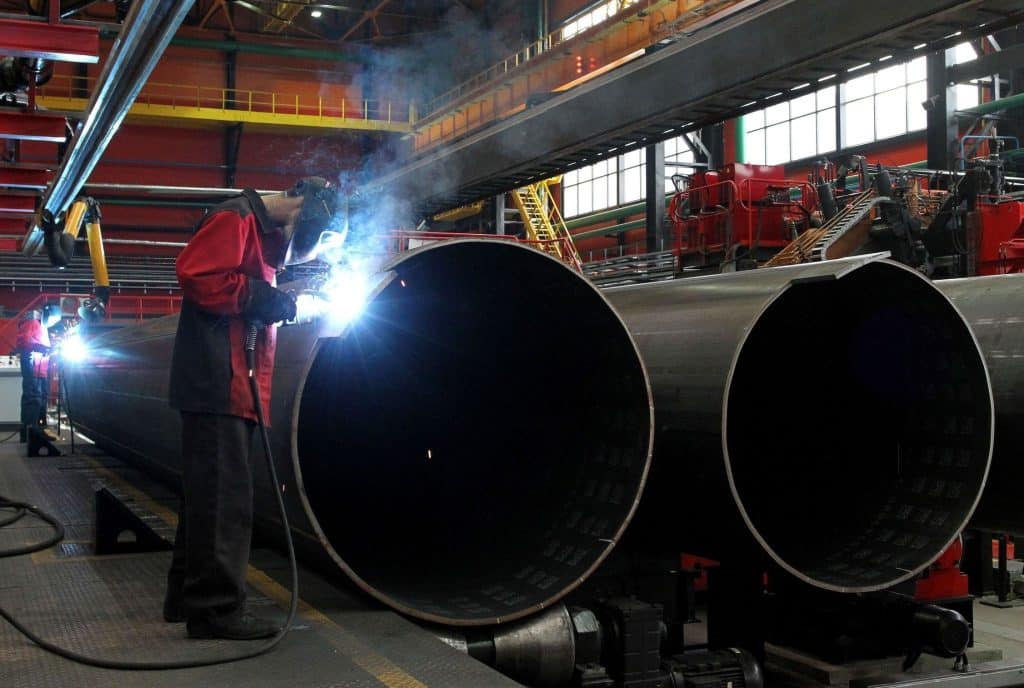
Because ASTM A671 is an EFW pipe standard, the weld seam is the area of the pipe that requires the most rigorous verification of pressure performance. Under high-pressure service conditions, any weld defect can become the initiation point of a pipeline failure.
| Inspection Method | Purpose | Typical Defects Detected | Applicable Zone |
| Radiographic Testing (RT) | Inspect internal weld defects | Porosity, slag inclusions, incomplete penetration | Full weld length |
| Ultrasonic Testing (UT) | Inspect pipe body and weld discontinuities | Laminations, cracks, lack of fusion | Weld seam and pipe body |
| Magnetic Particle Testing (MT) | Inspect surface and near-surface defects | Surface cracks, undercut | Weld seam surface |
| Visual Inspection | Assess weld profile and appearance | Weld spatter, misalignment, abnormal reinforcement height | Weld seam exterior |
💡 Procurement recommendation: Require the supplier to provide RT film evaluation reports and UT inspection records for every batch, cross-referenced to MTC document numbers — establishing a fully traceable weld quality record.
5. Heat Treatment: The Overlooked Guarantee of Pressure Performance
Heat treatment is not an optional add-on — it is a core component of the ASTM A671 Class system. For thick-wall, large-diameter, or cryogenic pressure pipe, heat treatment reduces welding residual stress, improves microstructural uniformity, and enhances overall mechanical properties.
| Heat Treatment Type | Primary Effect | Value for Pressure Performance | Applicable Scenario |
| As-Welded (no heat treatment) | Maintains post-weld condition | Acceptable for some low-risk applications | Thin wall, low pressure, ambient temperature |
| Stress Relieving (SR) | Reduces welding residual stress | Minimizes stress concentration and delayed cracking | Medium-to-heavy-wall welded pipe |
| Normalizing (N) | Grain refinement, improved toughness | Enhances microstructural stability | Medium-to-high strength grades |
| Normalizing + Tempering (N+T) | Optimizes strength-toughness balance | Suited for demanding pressure service | High-strength and low-temperature grades |
Critical note: Heat treatment requirements must be explicitly written into the purchase document via the Class designation at the procurement stage. They cannot be added after production is complete — doing so may require remanufacture or cause delivery delays.
6. Hydrostatic Testing: The Most Direct Verification of Pressure Performance
The hydrostatic test is the most direct method for verifying the pressure-tight integrity of finished pipe, and is one of the core inspection requirements of ASTM A671/A671M. For high-pressure piping, test records must be fully traceable to the heat number, batch, and MTC document.
| Test Step | Operation | Control Focus | Significance to Buyer |
| End Sealing | Seal both pipe ends | Prevent fixture leakage from interfering with results | Ensures test validity |
| Water Fill & Air Purge | Fill with water and expel all air | Eliminate air compression safety risk | Ensures test safety |
| Pressurization | Gradually increase to specified test pressure | Control pressurization rate | Prevents impact damage to pipe |
| Pressure Hold | Maintain pressure for the specified duration | Monitor pressure stability | Detects micro-leaks |
| Inspection | Check pipe body and weld seam for leakage | Zero leakage permitted | Determines product acceptance |
| Record & Archive | Generate hydrostatic test report | Cross-reference to heat number and MTC | Supports acceptance and traceability |
7. International Procurement Checklist for ASTM A671/A671M Steel Pipe
The checklist below covers every critical confirmation item for high-pressure pipeline procurement. It can be used directly when drafting an RFQ or Purchase Order:
| Procurement Item | Required Specification / Notes |
| Standard & Edition | ASTM A671/A671M (specify edition year) and applicable project code |
| Grade | CC60 / CC65 / CC70 or other (clearly state base material strength grade) |
| Class | Heat treatment type, RT requirement, and pressure test requirement (must not be omitted) |
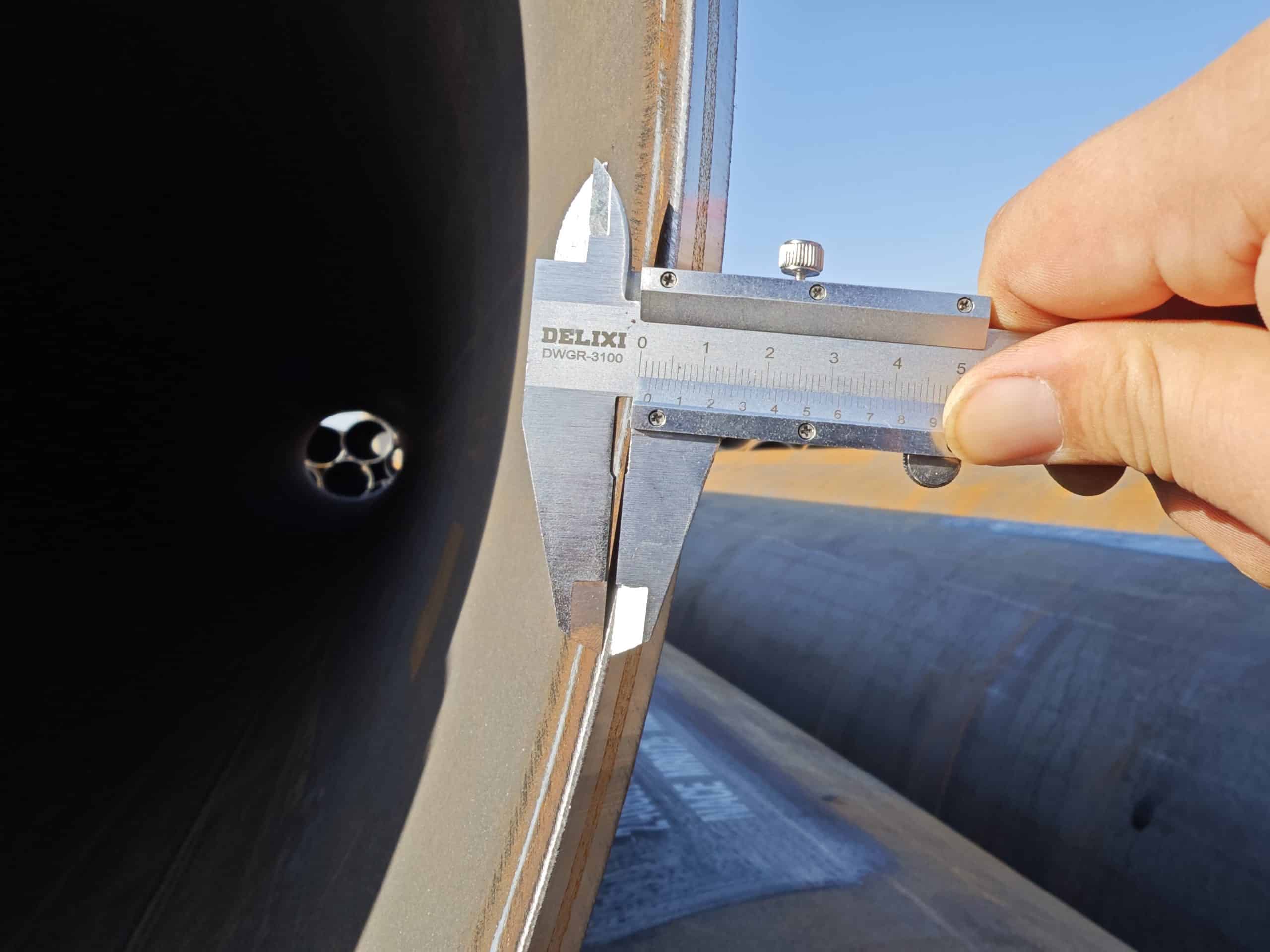
| Outside Diameter (OD) | OD ×× mm with permitted tolerance |
| Wall Thickness (WT) | WT ×× mm with permitted tolerance and theoretical weight per meter |
| Length | Fixed length (×× m) or random length (SRL/DRL), with end finish type |
| Design Conditions | Design pressure, design temperature, media type |
| Nondestructive Testing | RT + UT + MT (state method, coverage percentage, and acceptance criteria) |
| Pressure Test | Hydrostatic test pressure value, hold duration, and record requirements |
| Heat Treatment | State heat treatment type and temperature range per Class requirement |
| Low-Temperature Impact | Charpy impact test temperature and minimum energy requirement (where applicable) |
| Quality Documents | MTC (EN 10204 3.1) / NDT Report / Hydrostatic Test Record / Heat Treatment Record |
| Third-Party Inspection | SGS / BV / TÜV / DNV or project-nominated inspection body |
8. FAQ: ASTM A671 Pressure Pipe — Frequently Asked Questions
Q1: What is the core difference between ASTM A671 and ASTM A53?
ASTM A53 covers black and galvanized pipe for general industrial, fire protection, and municipal applications (ERW or seamless), with relatively flexible base material requirements. ASTM A671 is specifically for high-pressure EFW pipe — the base material must be pressure-vessel-quality plate, and the Grade/Class system enforces tiered heat treatment and inspection requirements. ASTM A671 is the appropriate choice for critical pressure piping such as LNG facilities, petrochemical plants, and cryogenic service.
Q2: What are the specific Class designations in ASTM A671, and what does each mean?
The Class system defines a combination of heat treatment condition, radiographic inspection coverage, and pressure test requirements. Common Class designations include: as-welded with spot RT, stress-relieved with 100% RT, normalized, and others. The specific Class must be determined by the project code (such as ASME B31.3) and owner requirements — buyers should not default to the lowest available Class.
Q3: Is 100% radiographic inspection required for A671 pipe?
This depends on the Class selected. Certain Class designations require 100% RT of the full weld seam; others require only spot inspection. For high-pressure or cryogenic critical piping, it is strongly recommended to select a Class that mandates 100% RT and to require the supplier to provide a complete set of film evaluation reports with traceable record numbers.
Q4: What is the difference between EFW (electric-fusion welding) and ERW (electric-resistance welding)?
ERW generates heat by pressing the strip edges together under electrical resistance — no filler metal is added. It is commonly used for small-to-medium diameter pipe (such as ASTM A53). EFW adds filler metal, achieving fuller metallurgical fusion between the weld and the base material. This makes EFW better suited for large-diameter, heavy-wall, and high-pressure pressure piping — which is why ASTM A671 mandates the EFW process.
Q5: Is Charpy impact testing required for low-temperature A671 pipe?
Yes. A671 pipe intended for cryogenic service — such as LNG terminals or cold-region transmission — typically requires Charpy V-notch (CVN) impact testing at the project-specified temperature, verifying that material toughness meets or exceeds the minimum energy requirement. The impact test temperature and acceptance energy value must be explicitly stated in the PO at the procurement stage.
Q6: What A671-specific content should appear in the Mill Test Certificate?
An ASTM A671 MTC issued to EN 10204 3.1 should include: plate heat number and chemical composition, mechanical test results (tensile / impact), heat treatment records (temperature and duration), weld RT report reference numbers, hydrostatic test pressure and records, dimensional inspection data, standard compliance declaration, and the manufacturer’s authorized signature. Third-party inspection reports should also be attached for export projects.
About LONGMA: A Reliable ASTM A671/A671M Pressure Pipe Supplier
LONGMA has over 20 years of experience manufacturing round LSAW and ERW steel pipe, with proven large-volume production and export capability for ASTM A671/A671M pressure piping. Our services include:
▸ Material selection support: recommending the appropriate Grade/Class combination based on project pressure, temperature, and media conditions
▸ Full manufacturing process control: welding parameter management, heat treatment execution, and in-process NDT inspection
▸ Comprehensive in-house laboratory: chemical analysis, tensile/impact testing, ultrasonic thickness measurement, hydrostatic testing, RT/UT evaluation
▸ EN 10204 3.1 Mill Test Certificates + third-party inspection support (SGS / BV / TÜV / DNV)
▸ Complete export documentation for smooth customs clearance, project acceptance, and engineering traceability
If you are sourcing ASTM A671/A671M pressure pipe, A671 EFW welded steel pipe, or large-diameter pressure piping, contact LONGMA for specification confirmation, a quotation, sample inspection reports, or project-specific technical guidance.