- 1. What Is the Steel Pipe Annealing Process?
- 2. Why Does Annealing Affect Welding Performance?
- 3. How Does Annealing Improve Welding Performance?
- 4. How Does LONGMA Verify Annealing Effectiveness?
- 5. How Does Non-Destructive Testing Ensure Welding Quality?
- 6. What Do Buyers Often Overlook When Selecting a Steel Pipe Supplier?
- 7. Why Do Global Customers Choose LONGMA?
- 8. Conclusion
In oil and gas transmission, offshore engineering, power generation projects, and large-scale infrastructure developments, the quality of welded steel pipes directly determines the safety, reliability, and service life of the entire project. For buyers, steel pipe dimensions and pricing are important considerations, but welding performance is equally critical when evaluating a supplier’s manufacturing capabilities.
One of the key factors affecting welding performance is the steel pipe annealing process.
With more than 20 years of steel pipe manufacturing experience, LONGMA utilizes scientifically controlled heat treatment processes, comprehensive in-house laboratory testing systems, and rigorous quality control procedures to ensure that every steel pipe delivers excellent weldability and long-term service reliability.
This article provides an in-depth analysis of how annealing affects welding performance and helps buyers understand how to select a steel pipe supplier with proven quality assurance capabilities.
What Is the Steel Pipe Annealing Process?
Annealing is an important heat treatment process in which steel is heated to a specified temperature, held for a predetermined period, and then cooled slowly. The purpose is to improve the material’s microstructure and mechanical properties.
Depending on product requirements, steel pipe annealing processes generally include:
| Annealing Type | Characteristics | Typical Applications |
| Full Annealing | Produces a uniform microstructure | Heavy-wall steel pipes |
| Isothermal Annealing | Shortens processing time | Alloy steel pipes |
| Stress Relief Annealing | Eliminates residual stress | Welded steel pipes |
| Spheroidizing Annealing | Improves machinability | High-carbon steel pipes |
Relevant standards include:
- ASTM A530
- API 5L
- ISO 3183
- ASME Section VIII
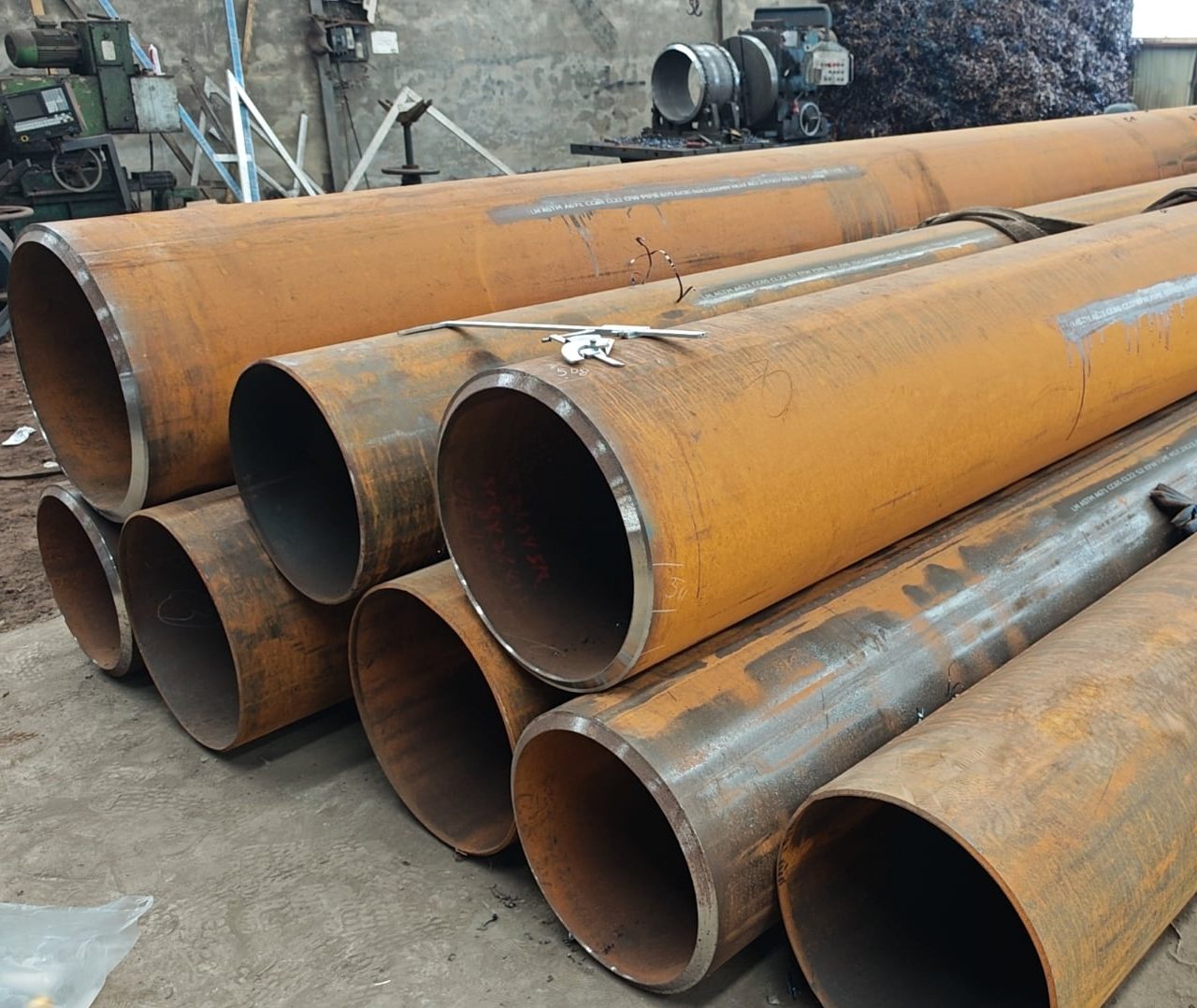
For LSAW steel pipes and API 5L line pipes, annealing is primarily used to optimize weld zone microstructures and improve welding performance.
Why Does Annealing Affect Welding Performance?
During forming and welding operations, steel pipes may develop:
- Residual stress
- Grain coarsening
- Non-uniform microstructures
- Hardening in the Heat-Affected Zone (HAZ)
These issues can result in:
- Weld cracking
- Welding distortion
- Reduced toughness
- Stress corrosion cracking
A properly controlled annealing process can effectively mitigate these problems.
Comparison of Microstructural Conditions Before and After Annealing
| Item | Non-Annealed Pipe | Annealed Pipe |
| Grain Size | Non-uniform | Uniform and refined |
| Residual Stress | High | Low |
| Risk of Welding Distortion | Higher | Lower |
| Weld Toughness | Moderate | Improved |
| Crack Sensitivity | High | Low |
For pipeline projects requiring field welding, annealing treatment often has a direct impact on construction quality and long-term performance.
How Does Annealing Improve Welding Performance?
- Reducing Welding Residual Stress
Localized high temperatures generated during welding create significant thermal stresses.
If residual stresses are not adequately relieved, they may lead to:
- Delayed cracking
- Cold cracking
- Stress corrosion cracking
LONGMA employs precisely controlled annealing processes with uniform heating and slow cooling to effectively relieve internal stresses within the steel pipe.
Benefits include:
- Improved welding stability
- Reduced crack susceptibility
- Extended service life
- Optimizing Heat-Affected Zone (HAZ) Microstructures
The Heat-Affected Zone is often the most vulnerable area of a welded joint.
According to:
- API 5L PSL2
- ISO 3183 Annex H
The HAZ may develop:
- Martensitic structures
- Bainitic hardening
- Excessive grain growth
Following annealing treatment:
- Grain structures become more uniform
- Hardness decreases
- Toughness improves
As a result, the overall performance of the welded joint is significantly enhanced.
- Improving Low-Temperature Impact Toughness
For natural gas pipelines, LNG projects, and pipelines operating in cold climates, low-temperature toughness is critical.
Relevant standards include:
- ASTM A370
- API 5L PSL2
After annealing, steel pipes typically exhibit:
- Higher impact energy absorption
- Better resistance to brittle fracture
- Improved low-temperature service performance
This is one of the key reasons why heat treatment processes must be strictly controlled for high-grade line pipe steels.
How Does LONGMA Verify Annealing Effectiveness?
Many manufacturers claim to possess heat treatment capabilities, but the true measure of quality lies in verification and testing.
LONGMA has established a comprehensive in-house laboratory system.
Chemical Analysis Laboratory
Testing standards:
- ASTM E415
- ISO 9556
Testing items:
- Carbon (C)
- Manganese (Mn)
- Silicon (Si)
- Phosphorus (P)
- Sulfur (S)
- Alloying elements
These tests ensure that material compositions comply with applicable specifications after heat treatment.
Mechanical Testing Laboratory
Standards:
- ASTM A370
- ISO 6892-1
Testing items include:
| Test Item | Purpose |
| Yield Strength | Verify load-bearing capability |
| Tensile Strength | Verify ultimate strength |
| Elongation | Evaluate ductility |
| Impact Test | Assess low-temperature toughness |
Systematic testing confirms whether the annealing process has achieved the desired results.
Metallurgical Laboratory
Standards:
- ASTM E3
- ASTM E112
Testing procedures:
- Sample cutting
- Mounting
- Grinding
- Polishing
- Etching
- Microscopic examination
Analysis focuses on:
- Grain size
- Heat-Affected Zones
- Weld microstructures
- Inclusion ratings
Microstructural analysis provides direct verification of annealing quality.
How Does Non-Destructive Testing Ensure Welding Quality?
Even when annealing is carefully controlled, weld inspection remains essential.
Ultrasonic Testing (UT)
Standards:
- ASTM E213
- ISO 10893-10
Inspection objectives:
- Lamination detection
- Crack detection
- Lack of fusion detection
Radiographic Testing (RT)
Standards:
- ASTM E94
- ISO 10893-7
Inspection objectives:
- Porosity detection
- Slag inclusion detection
- Incomplete penetration detection
LONGMA performs 100% weld seam non-destructive testing.
Through comprehensive quality control, project risks and costly rework can be significantly reduced.
What Do Buyers Often Overlook When Selecting a Steel Pipe Supplier?
Many procurement decisions focus primarily on:
- Steel pipe pricing
- Delivery schedules
- Product specifications
However, critical factors affecting project safety are often overlooked:
✔ Whether standardized annealing processes are implemented
✔ Whether the manufacturer maintains an in-house laboratory
✔ Whether complete NDT inspections are performed
✔ Whether products comply with API 5L and ISO 3183 requirements
In reality, the cost of field weld repairs often exceeds the initial price difference between suppliers.
Selecting a manufacturer with advanced heat treatment capabilities can significantly reduce:
- Welding failure risks
- Construction delays
- Pipeline operational risks
Why Do Global Customers Choose LONGMA?
After more than two decades of development, LONGMA has established a comprehensive steel pipe manufacturing system featuring:
- Automated JCOE production lines
- API 5L-compliant manufacturing systems
- Professional heat treatment facilities
- Intelligent welding management systems
- Full-process quality traceability systems
- Comprehensive in-house laboratories
From raw material procurement to final delivery, every stage of production is conducted in strict accordance with international standards.
Whether supplying API 5L steel pipes, LSAW pipes, large-diameter transmission pipes, or customized project solutions, LONGMA remains committed to providing reliable, high-performance steel pipe products to customers worldwide.
Conclusion
The steel pipe annealing process is far more than a simple heat treatment operation. It is a critical factor influencing welding performance, service life, and overall project safety.
Through scientifically controlled annealing procedures, rigorous quality inspections, and comprehensive laboratory verification systems, LONGMA continuously enhances weldability and product reliability, delivering trusted steel pipe solutions for global energy, oil and gas transportation, and infrastructure projects.
If you are seeking a steel pipe supplier with proven technical expertise, stringent quality assurance, and extensive international project experience, LONGMA is a reliable long-term partner. Contact us today for product catalogs, third-party inspection reports, project references, and the latest quotations.