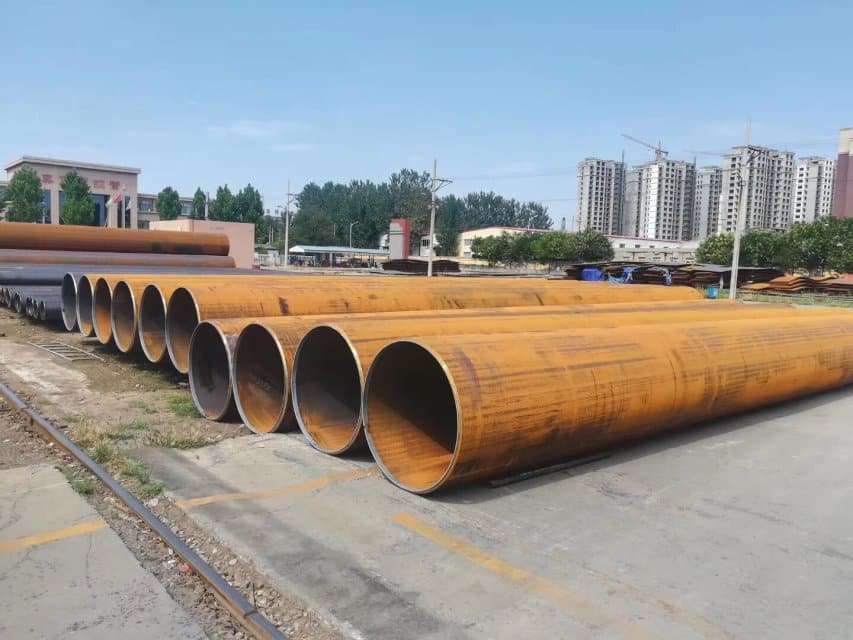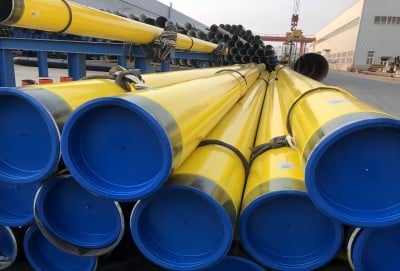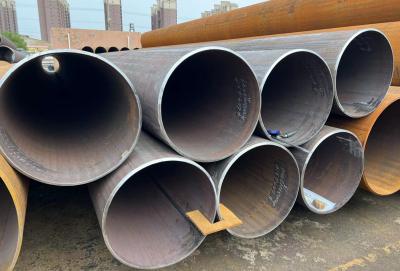
When you buy line pipes for critical oil & gas infrastructure, you need to be very clear on material requirements. API 5L steel pipe (API 5L material) is the standard for steel pipe used in fluid transmission. It covers a wide range of steel grades and manufacturing techniques to sustain high pressure and long-distance transmission. By “material type,” we mean the exact combination of steel grade (from Grade B to X80), product specification level (PSL1 or PSL2), and manufacturing technology (ERW or LSAW) that determine the mechanical strength, chemical composition, and suitability of a pipe for your project. Procurement managers and EPC contractors may use information about these attributes to match technical needs with supplier skills, ensuring compliance, safety, and cost-efficiency from day one.
What Is API 5L Steel Pipe Material?
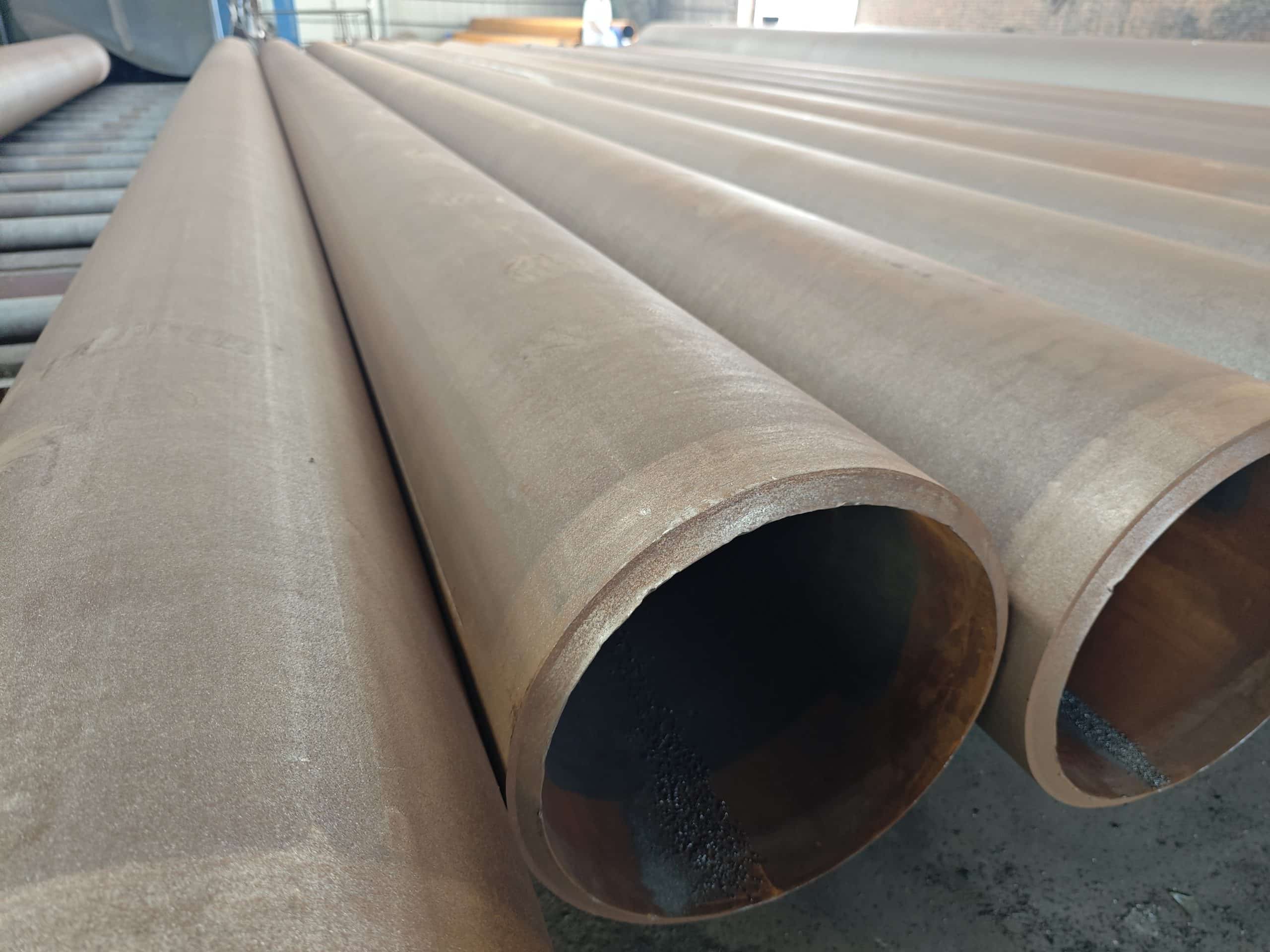
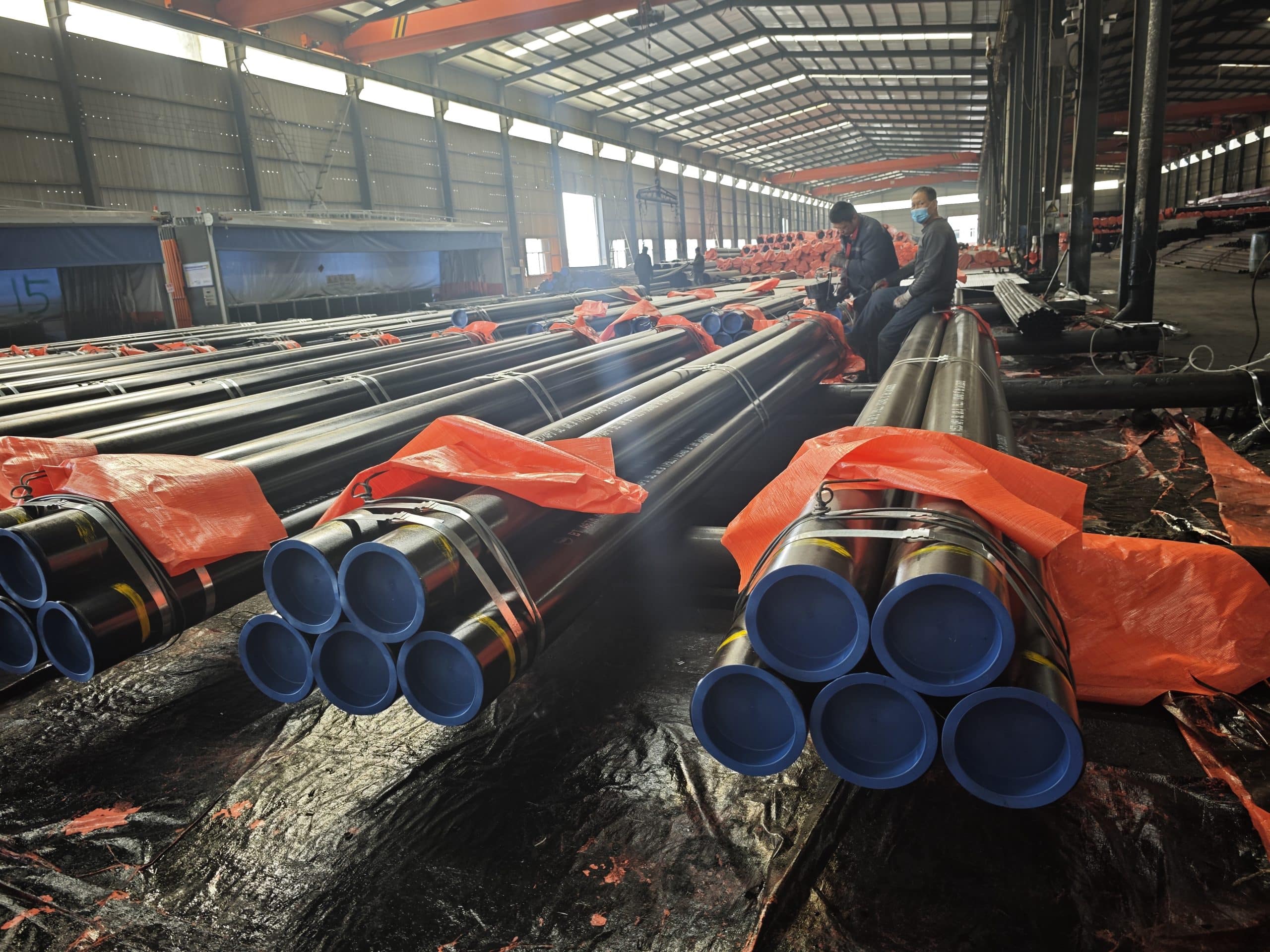
API 5L steel pipe material is produced according to the 5L specification of the American Petroleum Institute (API). API is the international standard for line pipe used to move oil, gas, and water in the energy sector. This standard applies to two kinds of products, seamless pipe and welded pipe. The industry uses the LSAW (Longitudinal Submerged Arc Welded) and ERW (Electric Resistance Welded) technologies for their proven dependability, production efficiency, and excellent cost economics. Regardless of the production method, all API 5L pipes must comply with the constraints in chemical composition, mechanical property standards, and dimensional tolerances before being approved and released for service.
API 5L is intended to establish a uniform technical vocabulary to allow purchasers, engineers, and regulators of different nations to securely specify, acquire, and inspect line pipe. API 5L standard covers all the steps from selection of raw materials and techniques of melting to the requirements of final hydrostatic testing and labelling. This removes ambiguity in procurement contracts and decreases the chance of mismatch of materials on key pipeline infrastructure. API 5L is the core material base for all future design and construction options for a cross-country natural gas trunk line, a produced water collection system, or an offshore riser.
API 5L Specification Scope
PSL1 vs PSL2: Product Specification Levels
Product Specification Level (PSL) PSL1 and PSL2 API 5L standard have two different product specification levels, PSL1 and PSL2, which are intended to meet different risk profiles and operating conditions for the oil and gas industry. PSL1 is the default quality. PSL1 is suitable for general-purpose pipe applications when operating pressures are moderate and consequences of failure are acceptable. In comparison, PSL2 has far more restrictive limits in terms of chemical composition (lower maximums for carbon, sulfur, and phosphorus), more mechanical testing (including Charpy V-notch impact testing and hardness testing), and 100% nondestructive testing (NDT) of weld seams for structural integrity. The choice of these two levels is one of the most important decisions to be made in the selection of pipeline materials, as it has a direct impact on the procurement cost as well as the long-term operating safety.
| Parameter | PSL1 | PSL2 |
| Chemical Composition | Standard limits; broader tolerance range | Tighter controls; lower C, S, P maxima; carbon equivalent (CEV) capped |
| Tensile Testing | Required (yield, tensile, elongation) | Required with stricter acceptance criteria |
| Charpy V-Notch Impact Test | Not mandatory | Mandatory at specified test temperature |
| Hardness Testing | Not required | Required (maximum hardness limits) |
| Weld Seam NDT | Optional / agreed | Mandatory 100% ultrasonic or radiographic testing |
| Dimensional Tolerances | Standard | Tighter wall thickness and ovality tolerances |
| Typical Applications | General-purpose, moderate-pressure lines | High-pressure, sour service, critical infrastructure |
Procurement teams should pick their PSL on the basis of a complete risk assessment that includes design pressure, operating temperature, fluid corrosivity (including H₂S content), pipeline site (onshore or offshore, inhabited or remote), and the regulatory framework applicable to the project. PSL2, however, is often the better choice for high-pressure transmission lines, sour service environments, or environmentally sensitive areas crossing pipelines because the higher testing and tighter material controls greatly reduce the likelihood of in-service failure, despite the higher unit cost. For less essential applications such as water distribution or non-critical gathering lines, PSL1 may provide an acceptable compromise between performance and cost. Always make sure the PSL matches the design code used for the project. Usually it will be ASME B31.4 for liquids or ASME B31.8 for gas. That is important for regulatory approval.
Manufacturing, Testing, and Marking Requirements
The API 5L standard has detailed criteria for each process of API 5L steel pipe production, including steel making and casting, forming, welding, heat treatment, size, and finishing. For welded pipes the standard specifies multiple welding techniques (ERW, LSAW, or spiral-weld SAW) and states that welders and welding operations must be certified according to recognized requirements. HEAT TREATMENT: Heat treatment requirements vary by grade and PSL level. The higher strength classes, like X70 and X80, are usually obtained with controlled rolling or normalizing to get the desired microstructure and mechanical properties. PSL2 pipes may require PWHT (post-weld heat treatment) to decrease residual stresses and improve toughness. The whole production procedure is recorded, and the Mill Test Certificate (MTC) issued is the main quality document attached to every shipment.
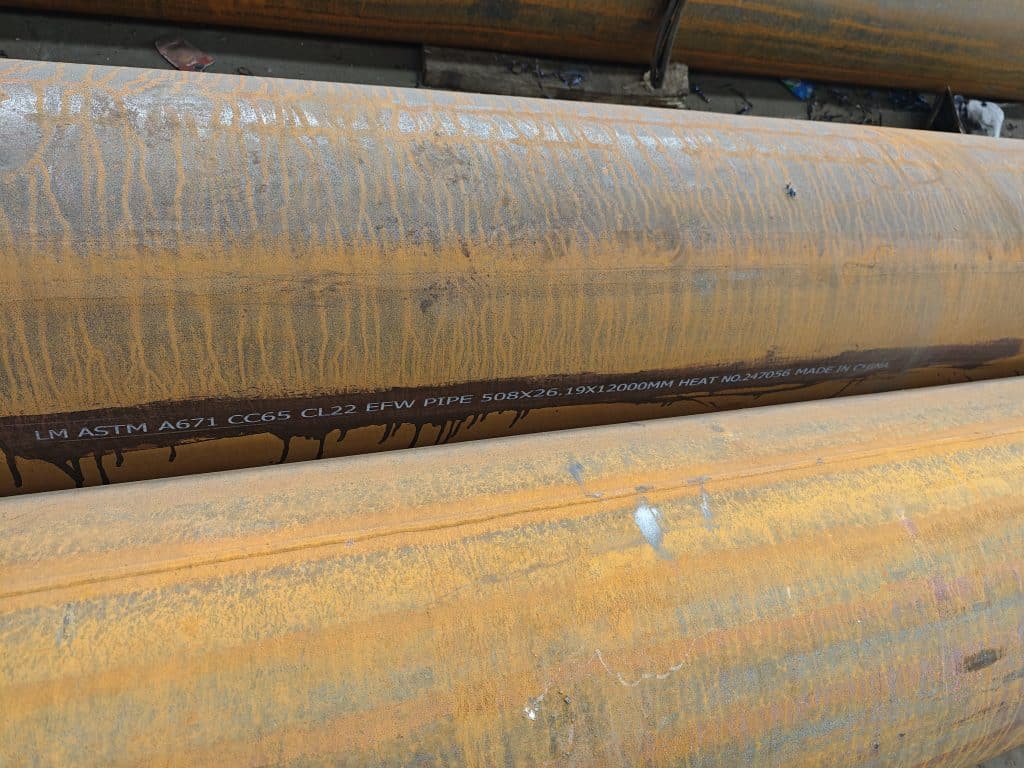
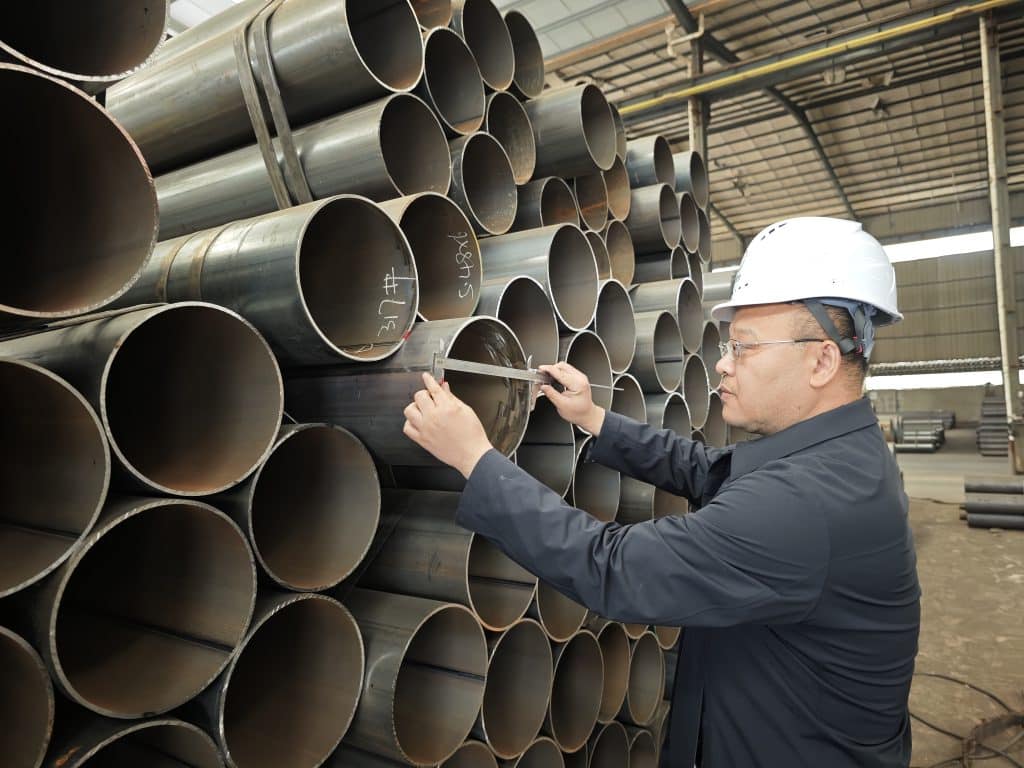
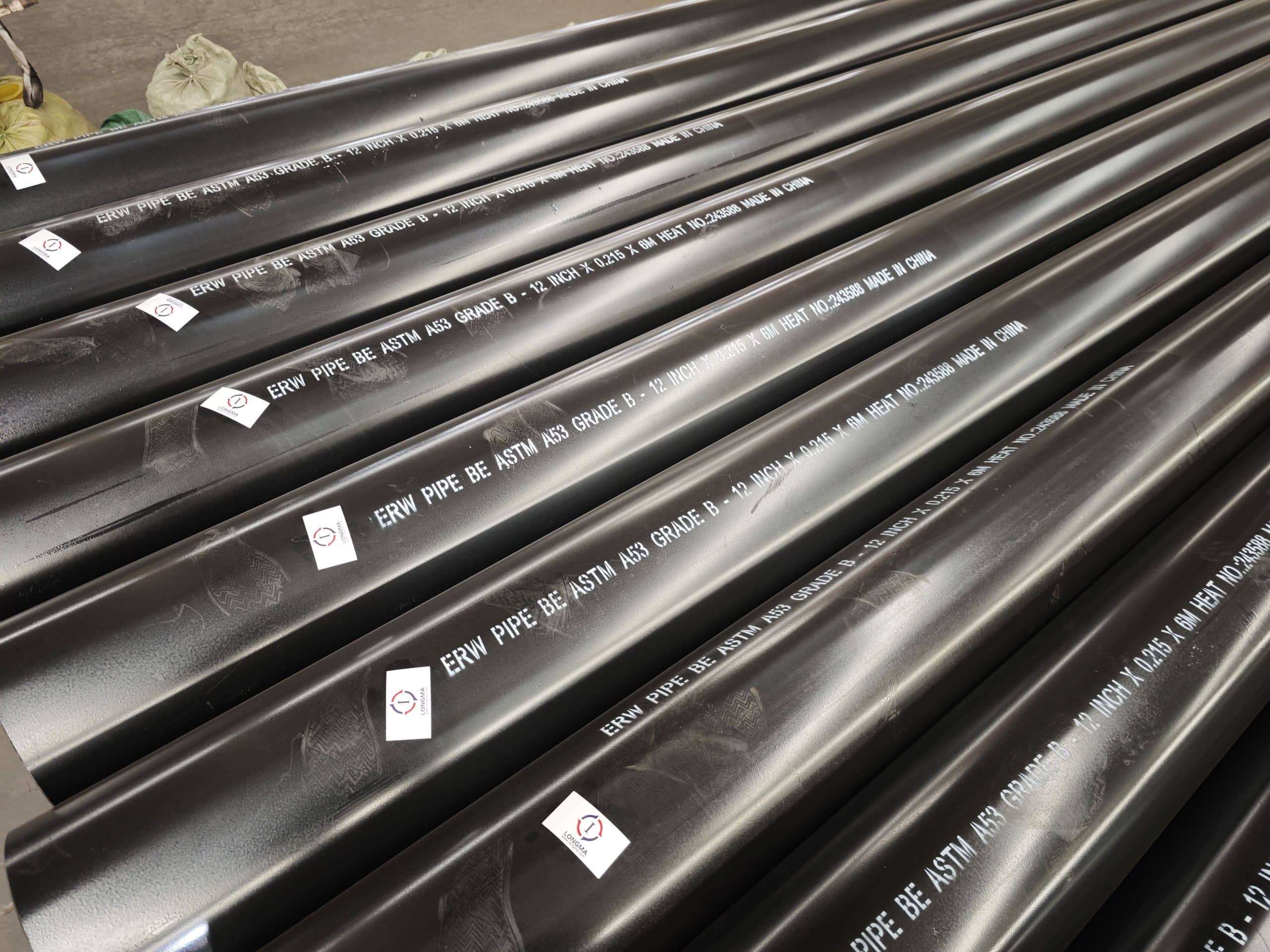
API 5L testing and inspection Each pipe is tested destructively and non-destructively to guarantee that it meets the mechanical and metallurgical criteria. Destructive testing includes tensile tests (yield strength, ultimate tensile strength, and elongation), Charpy V-notched impact tests (for PSL2), hardness surveys, and guided bend tests for weld certification. Non-destructive testing includes ultrasonic or radiographic testing of weld seams, ultrasonic or electromagnetic testing of base metal for laminations, and hydrostatic pressure testing for leak tightness. Finally, each pipe should be permanently marked with the manufacturer name or brand, the API monogram (if licensed), the steel grade, the PSL level, the heat number, the pipe size, and the manufacturing technique. The traceability should be complete from the completed pipeline back to the original melt of the steel.
Steel Grades from Grade B to X80: Selection Guide
Grade Classification and Strength Progression
API 5L grade is directly related to the minimum yield strength of the steel in thousands of pounds per square inch (ksi). This makes it extremely simple to learn and recall the load-bearing capabilities of the materials. Grade B is the lowest yield grade of 35 ksi (241 MPa) and is the entry grade most often used for low-pressure applications such as water distribution, fuel gas service lines, and non-critical process piping. X42 (42 ksi / 290 MPa) X52 (52 ksi / 359 MPa) These are the workhorse grades for oil and gas gathering and transmission lines at moderate pressure. The X56, X60, and X65 offer increasing strength for medium- to high-pressure applications. High-strength grades X70 (70 ksi / 483 MPa) and X80 (80 ksi / 552 MPa) are employed exclusively on big-diameter, high-pressure, long-distance transmission pipes, where a decrease in wall thickness leads to a substantial savings in material cost, shipping, and welding time. The procedure of manufacturing is the more complicated, the higher is the number of the grade. Higher grades need more precise thermomechanically controlled rolling (TMCP) and more accurate alloy composition control and testing to achieve the greater strength requirements without sacrificing toughness and weldability.
The upgrading from grade B to X80 is not a linear increase in strength but a change in steel metallurgy and processing technique. The API 5L steel pipe may be produced from a very simple chemistry of either ordinary normalized or controlled-rolled microalloyed steel, primarily using manganese and modest amounts of niobium for strength at the lower grades (Grade B to X52). The mid-range grades (X56 to X65) need more advanced TMCP processing with rapid cooling to achieve the appropriate ferrite-pearlite or acicular ferrite microstructure. This demands a compromise between strength and toughness. Ultra-low carbon chemistry and precision microalloying of niobium-vanadium-titanium combined with advanced TMCP and ultra-fast cooling result in the highest grades (X70 and X80) with a predominantly bainitic or acicular ferritic microstructure for exceptional strength and low-temperature toughness. The metallurgical improvement has a direct impact on procurement: better grades come with a price premium, longer lead times, and welders with specific knowledge, as well as more stringent welding procedure standards (WPS). It is crucial to understand these tradeoffs to pick the least expensive grade that will yet fulfill the design pressure and safety standards for the project.
Factors Influencing Grade Selection
Selecting the right API 5L grade is a procedure that calls for careful assessment of a number of related factors. The first of them is the pipeline design pressure, derived from the applicable code (ASME B31.4 for liquids, ASME B31.8 for gas). For each candidate grade, the necessary wall thickness is calculated using the design pressure, nominal pipe diameter, and given design factor. A higher grade indicates that the same pressure may be sustained by a thinner wall, which decreases steel weight and cost but may increase the complexity of field welding. Another key aspect is the operating temperature. Pipeline grades proven to provide low-temperature Charpy impact toughness are required for arctic or high-altitude situations. High-temperature service may further limit the choice of grades due to difficulties associated with creep and strain aging. Important are also the corrosivity of the fluid to be transported and of the surrounding environment—fluids with H₂S (sour service) need grades with controlled hardness and HIC/SSC resistance, usually PSL2 with NACE MR0175 compliance, while CO₂-rich streams may require corrosion-resistant alloy (CRA) cladding or lining. Finally, the choice of grade is influenced by the pipeline route and construction technique. Directional drilled (HDD) crossings, steep terrain, and seismic zones impose higher strain demands that favor grades with superior ductility and strain capacity.
- Design Pressure & Diameter: Higher pressure and bigger diameter generally favor higher strength classes (X65-X80) to reduce the wall thickness and weight.
- Operating Temperature Cold-climate pipes need proven low-temperature Charpy impact toughness: the test temperature must be compatible with minimal ambient conditions.
- Fluid Corrosivity (H₂S / CO₂): NACE MR0175/ISO 15156 compliant sour service, hardness ≤22 HRC, HIC/SSC testing—usually PSL2 grades.
- Pipeline Route & Geohazards: Seismic zones, landslide-prone locations, and HDD crossings need strong ductility and strain capacity; see geotechnical evaluations.
- Construction Method: S-lay, J-lay, or reel-barge installation has various plastic strain requirements. Verify that the grade has the requisite strain capacity.
- Regulatory and Code Requirements: • Match grade and PSL level to ASME B31.4/B31.8, local pipeline safety requirements, and project owner standards.
- Total Cost of Ownership: Trade off premium for better quality material against savings in wall thickness, shipping, welding consumables, and building time.
Conclusion
To navigate around API 5L material categories, you need to know how various kinds of steel, their requirements, and how they are created all fit together. This course walked you through the science of buying materials so you know what to look for, what certifications mean, and how to be sure what you purchase is suitable for the task. API 5L steel pipe can cost a lot of money, so it is crucial to choose the correct partner to ensure your pipeline is always compliant, dependable, and cost-efficient. Focusing on validated licensing, stringent quality management, and frank communication, purchasing teams may cut down on risks and develop supply lines that support project objectives and enhance operations.
FAQ
1. What is the difference between PSL1 and PSL2?
The PSL1 is used for typical purposes that need conventional quality requirements, such as error checking in measurements and simple tensile testing. PSL2 includes more stringent requirements on chemical composition (lower carbon, sulfur, and phosphorous), requires Charpy V-notch impact testing to determine toughness, stricter size tolerances, and non-destructive testing of the weld seam. PSL2 pipes are more costly, but they perform better in high-pressure, critical service, or sour service, where failure would be disastrous.
2. Can API 5L pipes handle corrosive environments?
Uncoated plain carbon steel API 5L pipes will rust in air or in the ground, whereas coated pipes (3LPE, FBE, epoxy) will not. sour service pipe NACE MR0175/ISO 15156. This implies they have to be able to change hardness, reshape defects (calcium treatment), and pass hydrogen-induced cracking (HIC) and sulphur stress cracking (SSC) tests to make sure they operate. Galvanic corrosion of buried or submerged equipment is prevented by exterior coatings and cathodic protection systems.
3. How do I verify a supplier’s certification and reliability?
Checking the API Composite List for licensing using the API logo to verify the license is still valid. Ask for copies of your ISO 9001, ISO 14001, and ISO 45001 certifications to ensure you know what they cover and they are still valid. Check third-party inspection records of existing projects to see whether they fulfill requirements. Source checks may be conducted in person or online. “The ones you do in person should focus on the quality control systems, the traceability processes, and the records of how the testing equipment was calibrated. Get references from professionals in your industry, and contact prior customers to find out how well you performed, how helpful your technical assistance was, and how fast you solved issues with quality.
Partner with LONGMA for Certified API 5L Steel Pipe Solutions.
The choice of material for the line pipes has an impact on the cost of the project, its compliance with the schedule, and the safety of the workers. LONGMA has supplied API 5L PSL1 and PSL2 authorized pipes to oil and gas projects all over the globe since 2003. That is why we have big names in the business world, including SINOPEC, CNPC, PEMEX, and PDVSA, trusting us. Our production expertise includes ERW and LSAW, and we can produce over 500,000 tons of steel a year, allowing us to satisfy a broad spectrum of project requirements from conventional grades to specialized sour service demands. Order with us; you may follow your order thoroughly with EN 10204 3.1/3.2 material certifications, comprehensive NDT documentation, and aid for third-party verification. Whether you require thick-walled LSAW pipes for a trunk line or low-cost ERW pipes for a distribution network, it doesn’t matter. Our technical staff can help you choose the best materials for the work, arrange the quickest delivery periods (stock pipes ship in 7 days), and assist with source checks. Get in touch with us at info@ilongma.com to talk about your needs with a knowledgeable seller of API 5L steel pipes who wants your project to succeed.