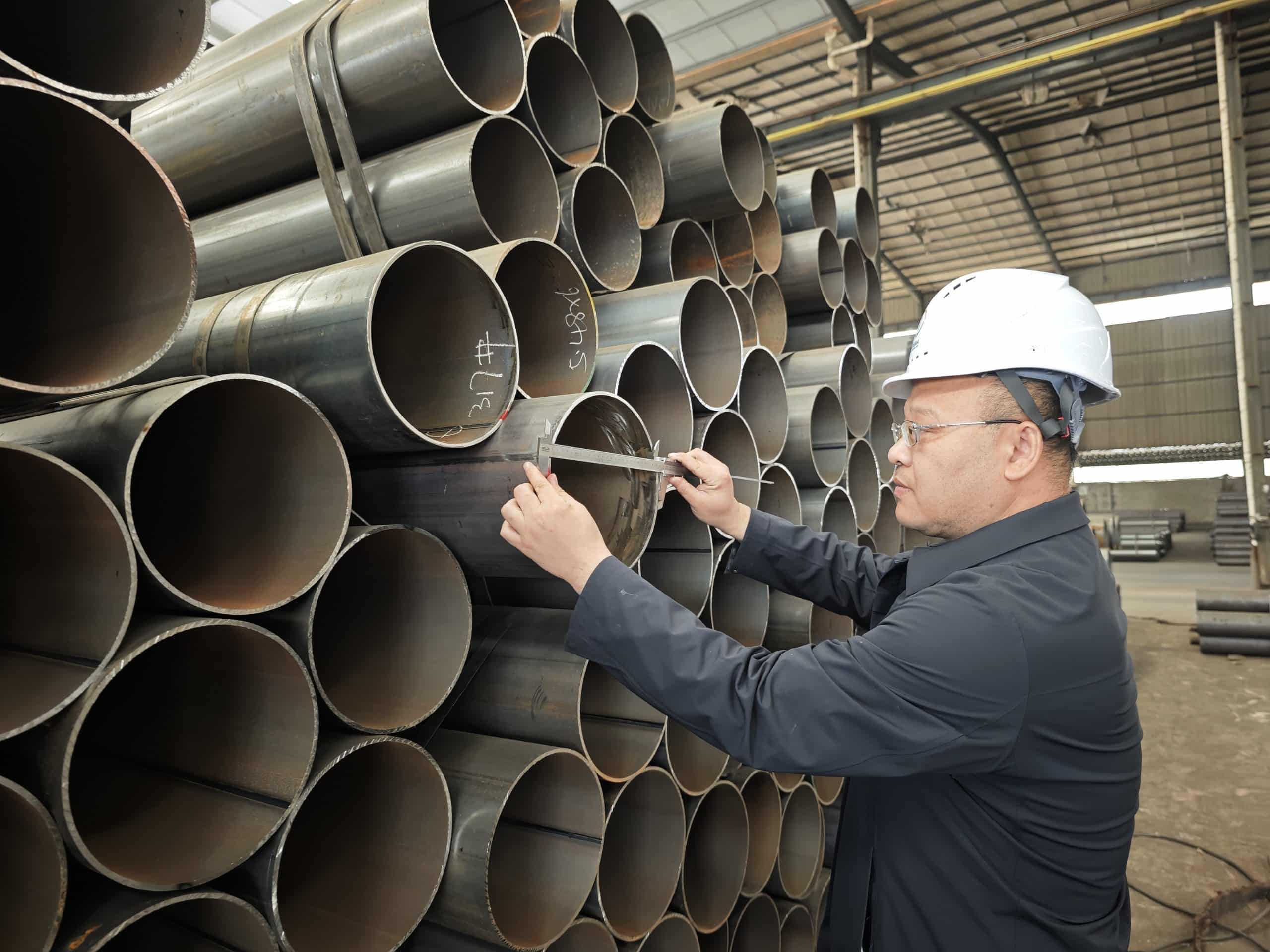
- 1. ERW/HFW Pipe: Coil-Fed Resistance Welding
- 2. EFW and LSAW: Fusion Welding with Filler Metal
- 3. ERW vs. EFW/LSAW: Practical Comparison
- 4. Do ERW and EFW Have Different Strength?
- 5. Inspection and NDE
- 6. Sour-Service Considerations
- 7. Cost and Supply Considerations
- 8. How to Choose Between ERW and EFW/LSAW
- 9. Coating Standards Should Be Matched to the Coating System
- 10. LONGMA ERW and LSAW Manufacturing
- 11. Conclusion
- 12. FAQ
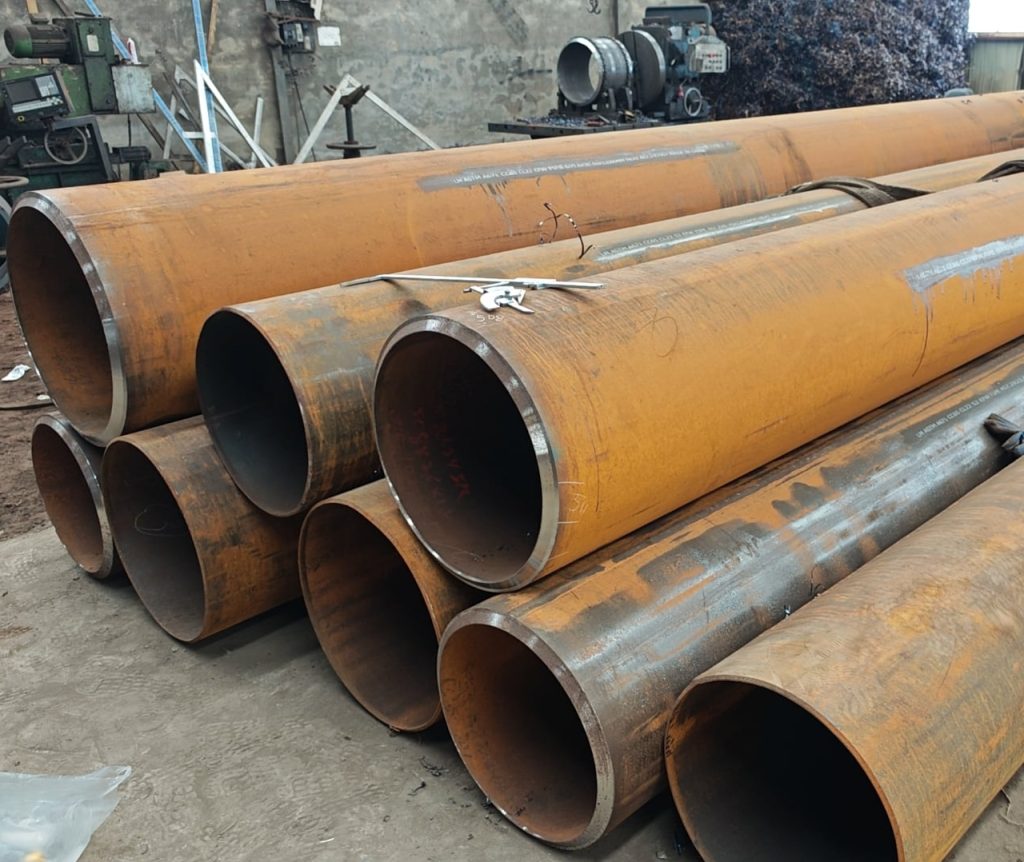
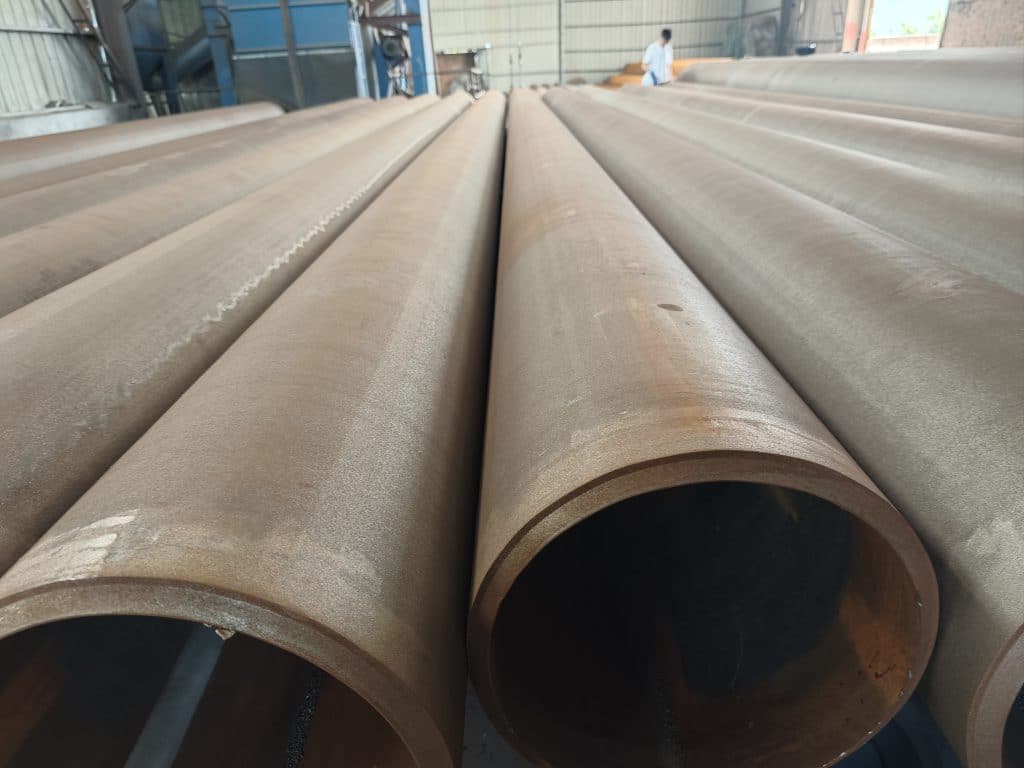
ERW and EFW describe different welded-pipe manufacturing concepts. ERW/HFW pipe forms strip or coil into a pipe and joins the longitudinal edges by resistance/high-frequency welding and forge pressure without conventional filler metal. Electric-fusion-welded (EFW) pipe uses a fusion-welding process with added filler metal. Longitudinal submerged-arc welded (LSAW) pipe is a common plate-based longitudinal fusion-welded route, but the terms EFW and LSAW should not be treated as universal synonyms.
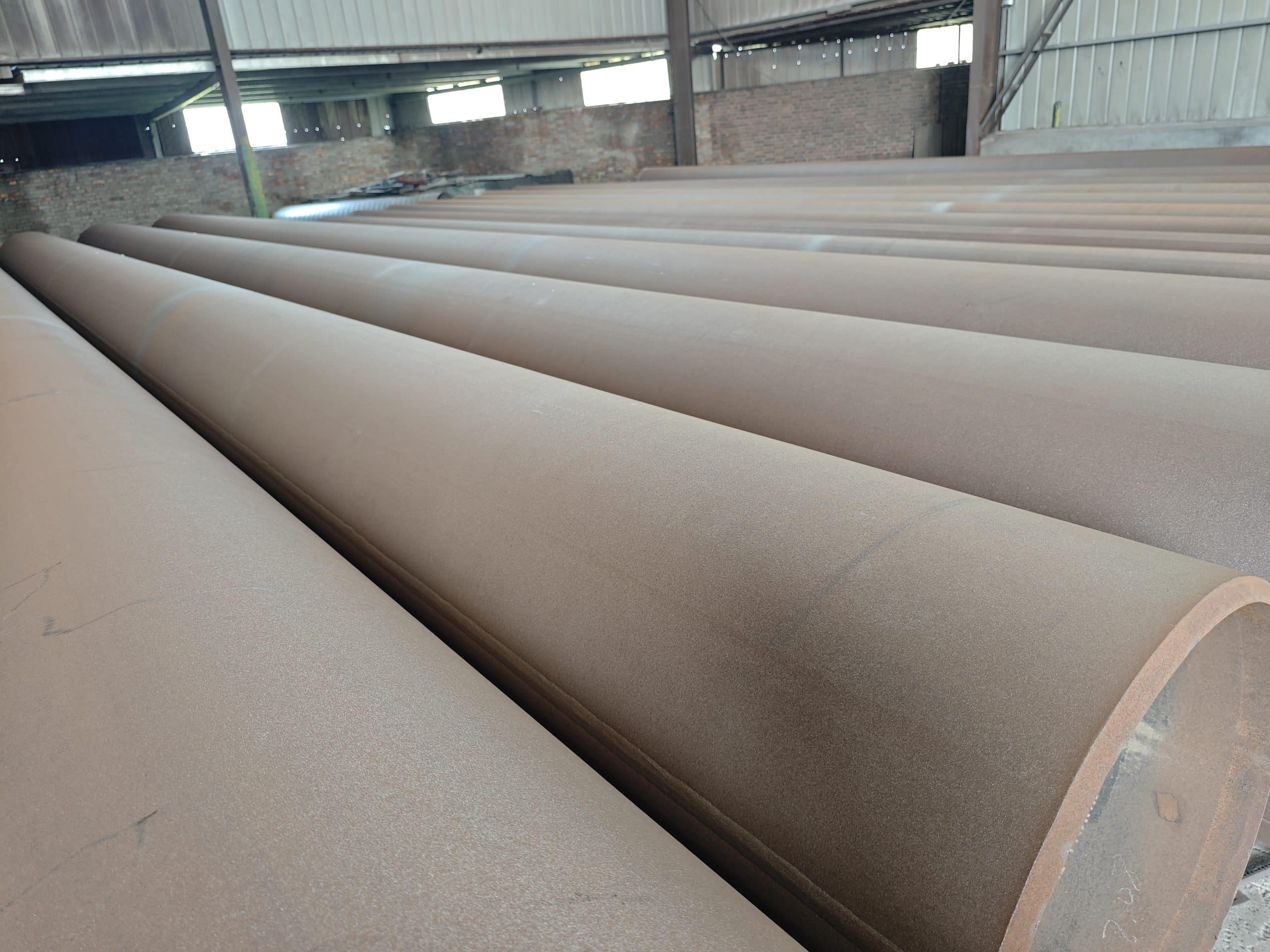
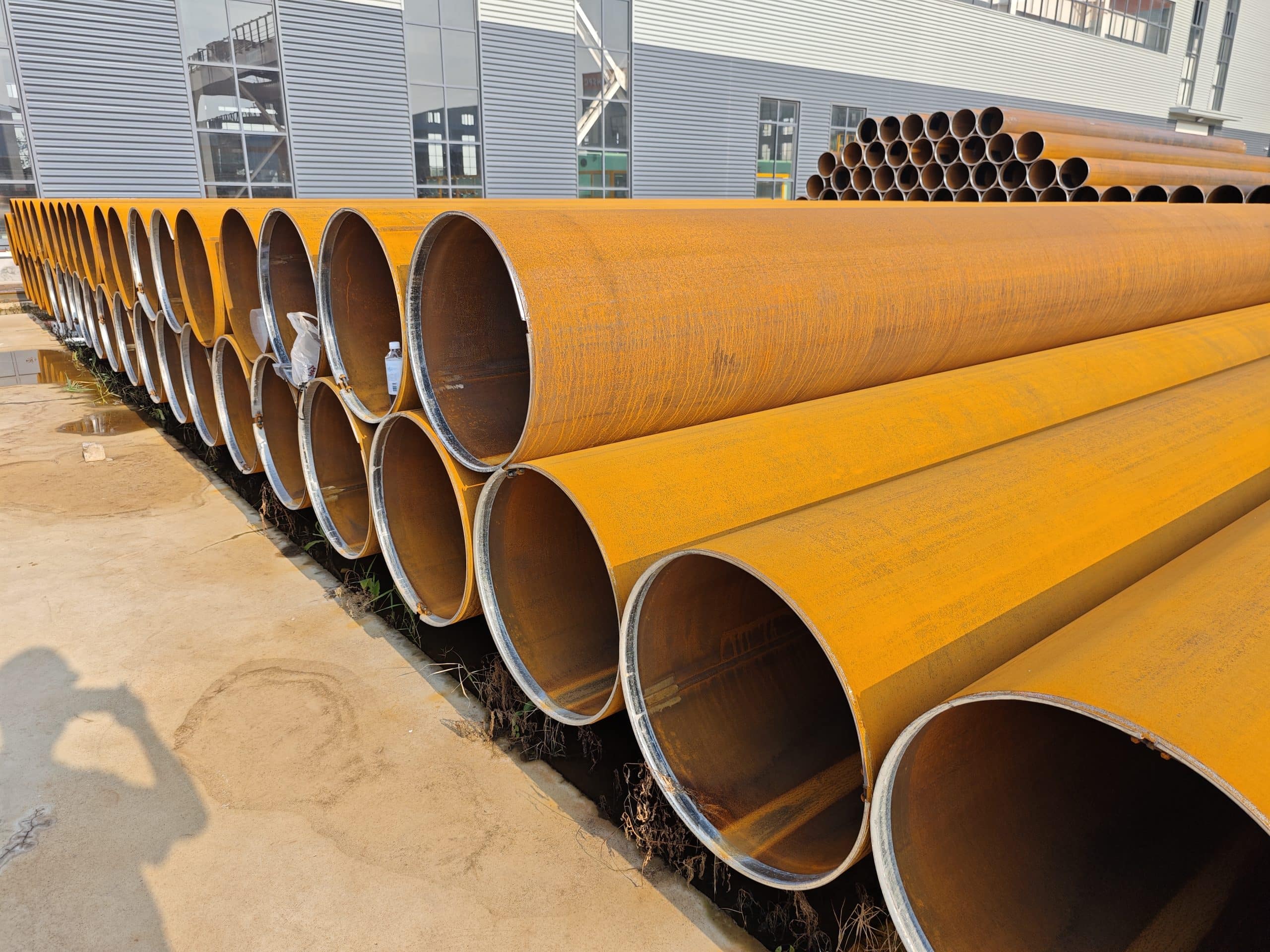
ERW/HFW Pipe: Coil-Fed Resistance Welding
In ERW/HFW production, strip or coil is progressively formed into a cylindrical shape. Electrical heating is concentrated at the strip edges and squeeze pressure forms the longitudinal weld. The process does not use conventional arc-welding filler metal at the longitudinal seam. Weld flash is removed as required by the product and manufacturing process.
Where required, weld-seam heat treatment is used to control the weld-zone microstructure and properties. It is more accurate to describe this as weld-seam heat treatment or seam normalization where applicable rather than assuming that every ERW pipe receives generic post-weld heat treatment (PWHT) or that heat treatment makes every weld property identical to the base metal.
EFW and LSAW: Fusion Welding with Filler Metal
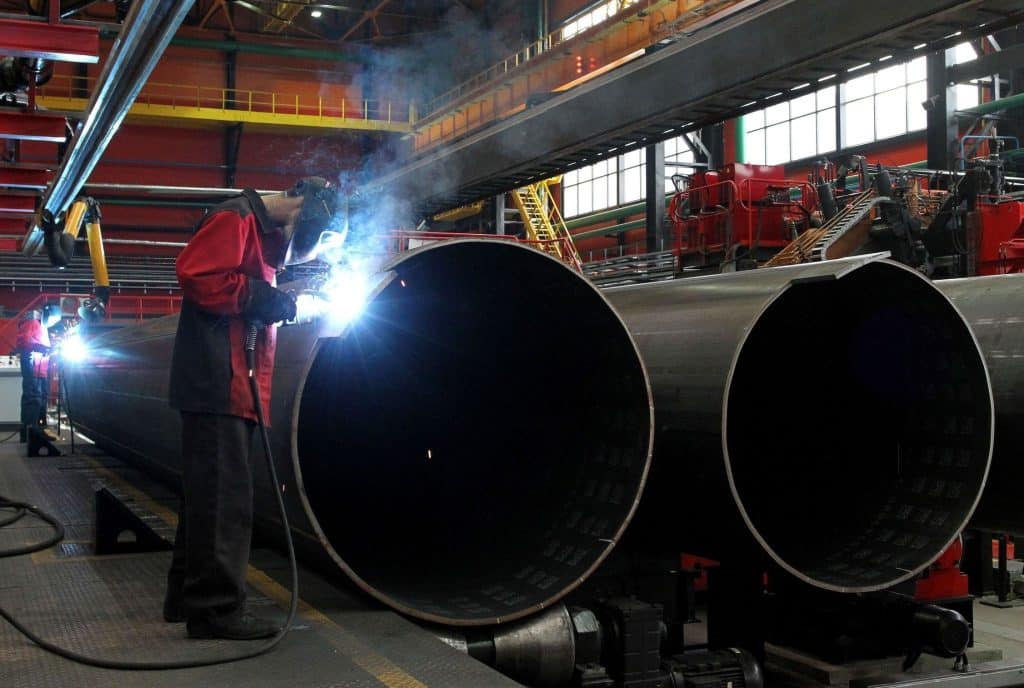
EFW is a broader fusion-welded pipe category in which filler metal is added during welding. Plate-based LSAW pipe is formed from steel plate and longitudinally welded by submerged-arc welding, typically with weld metal deposited using wire and flux. ASTM specifications such as A671/A671M, A672/A672M and A691/A691M cover electric-fusion-welded pipe for their respective service scopes, while API 5L also covers welded line pipe.
ERW vs. EFW/LSAW: Practical Comparison
| Feature | ERW/HFW | EFW / Plate-Based LSAW |
| Starting material | Strip or coil | Steel plate |
| Weld mechanism | Resistance/high-frequency heating plus forge pressure | Fusion welding with filler metal |
| Filler metal at longitudinal seam | No conventional filler metal | Yes |
| Production mode | Continuous coil-fed production | Individual plate forming and welding |
| Typical selection driver | Suitable dimensions, grade, specification and mill capability | Suitable dimensions, grade, specification and mill capability, often including large-diameter/heavy-wall projects |
| Quality acceptance | Applicable product specification and purchase order | Applicable product specification and purchase order |
Do ERW and EFW Have Different Strength?
Manufacturing route alone does not establish the allowable pressure or overall strength of a finished pipeline. Mechanical properties are controlled by the specified grade and product requirements, while pressure design also depends on OD, wall thickness, design factor, temperature and the governing design code. Both ERW/HFW and fusion-welded line pipe can be supplied to demanding specifications when the manufacturing route is permitted and the required properties are demonstrated.
Inspection and NDE
NDE requirements differ with the product specification, PSL, manufacturing route, dimensions and supplementary purchaser requirements. API Spec 5L 47th Edition, published in 2026, includes updates related to HFW pipe quality, NDE personnel certification, magnetic particle testing and other inspection topics. Therefore, a website article should not reduce all ERW and EFW orders to one universal UT/RT checklist.
- Confirm the applicable product standard and edition.
- Confirm PSL and manufacturing route where API 5L is specified.
- Define weld-seam and pipe-body NDE according to the applicable requirements.
- Confirm hydrostatic testing requirements.
- Specify mechanical, toughness and supplementary testing as required.
- Define MTC and third-party inspection requirements in the purchase order.
Sour-Service Considerations
Both welded manufacturing routes may be considered for sour-service projects when the applicable product and project requirements are satisfied. Sour-service qualification should not be summarized as a universal HRC 22 or HV10 250 rule. Chemistry, hardness, HIC/SSC testing and weld-zone requirements should be checked against the current specification for the actual grade, product, test location and service condition.
Cost and Supply Considerations
ERW/HFW’s continuous coil-fed process can provide manufacturing efficiency within suitable product ranges, while plate-based LSAW involves individual plate forming and submerged-arc welding. This does not mean ERW always has the lowest landed cost. Material prices, dimensions, grade, order quantity, testing, coating, logistics and delivery schedule can change the commercial comparison.
How to Choose Between ERW and EFW/LSAW
- Follow the project specification and governing product standard first.
- Confirm OD, wall thickness, grade and design conditions.
- Check the manufacturer’s qualified dimensional and grade range instead of assuming a universal 24-inch ERW limit.
- Confirm NDE, hydrostatic test, toughness and supplementary requirements.
- Evaluate coating and corrosion-control requirements separately from the welding process.
- Compare total technical and commercial scope rather than pipe price alone.
Coating Standards Should Be Matched to the Coating System
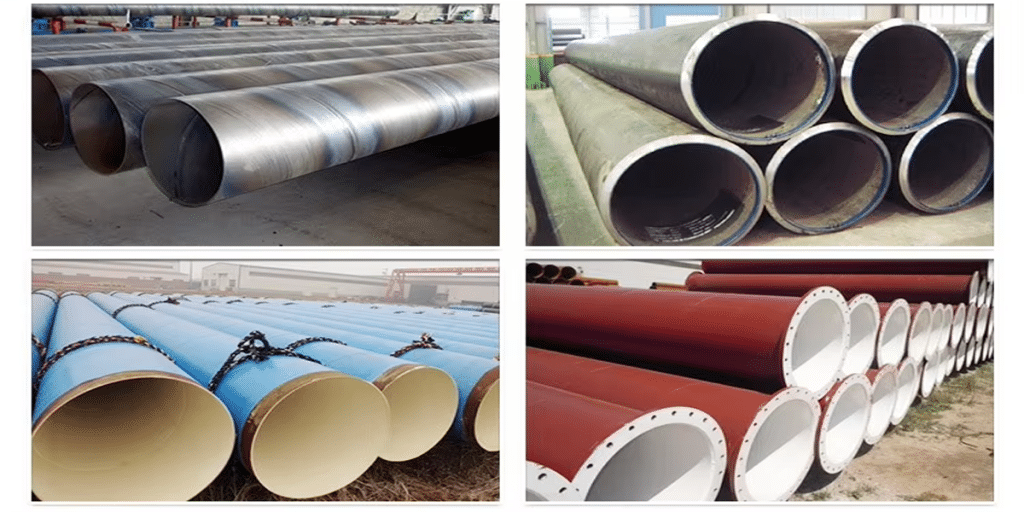
DIN 30670-1:2024-01 applies to factory-applied extruded polyethylene coatings. It should not be cited as the governing standard for every FBE, polypropylene or generic epoxy coating. Buyers should identify the actual coating system and then specify the corresponding standard or project coating specification.
LONGMA ERW and LSAW Manufacturing
LONGMA manufactures round ERW and LSAW steel pipe. Its production base covers approximately 230,000 square meters, with annual production exceeding 500,000 tons. For each inquiry, the applicable standard, grade, PSL, dimensions, manufacturing route, NDE, coating and inspection-document requirements should be reviewed against the purchase order. This provides a stronger basis for procurement than universal claims about diameter, pressure or delivery time.
Conclusion
The fundamental difference between ERW and EFW is the welding mechanism: ERW/HFW joins heated edges under pressure without conventional filler metal, while EFW uses fusion welding with filler metal. LSAW is an important longitudinal submerged-arc welding route used for plate-based pipe, but EFW and LSAW should not be treated as interchangeable terms in every context. The correct product is determined by the applicable standard, dimensions, grade, design conditions and qualified manufacturing capability.
FAQ
- Is ERW pipe suitable for demanding oil and gas applications?
It can be when the project specification permits the manufacturing route and the pipe satisfies the applicable grade, PSL, inspection, testing and design requirements.
- Is LSAW the same thing as EFW?
LSAW is a longitudinal submerged-arc welding route and is a fusion-welded process using filler metal. EFW is a broader category, so the terms should not automatically be treated as exact synonyms.
- Is 24 inches the universal maximum diameter for ERW pipe?
No. Manufacturing limits are mill-specific. A 24-inch figure should only be used when it accurately describes a particular manufacturer’s qualified range.
- Is ERW always cheaper than LSAW?
No. Production efficiency can differ, but total cost depends on material, dimensions, grade, quantity, testing, coating, logistics and other order requirements.