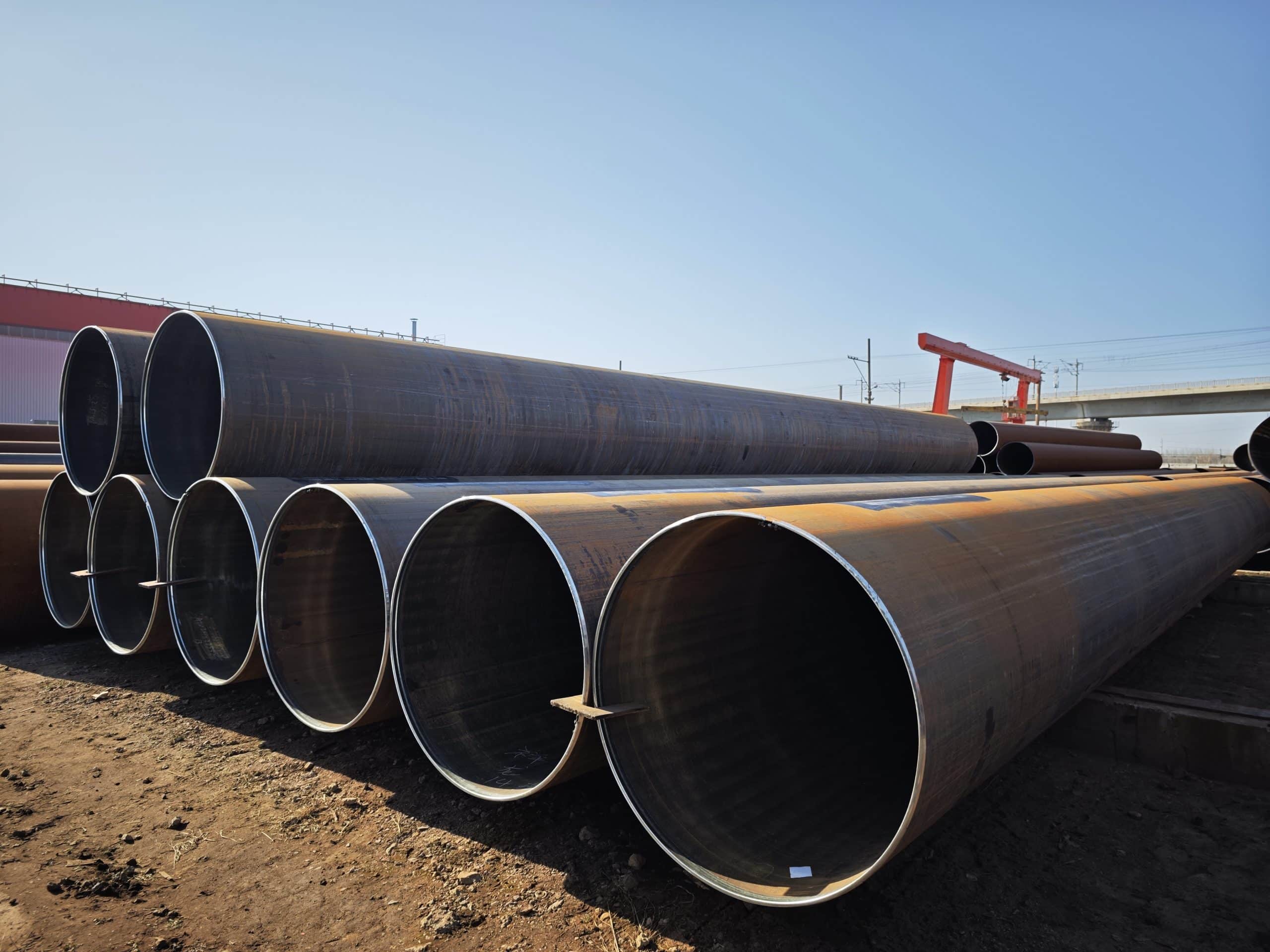
When purchasing industrial plumbing, knowing the dimensions of large diameter steel pipe is vital for project success. Pipes with large diameters are usually larger than 16 inches (400 mm) in outer diameter and are described by their outer diameter (OD), wall thickness and length. These standards have a direct influence on system integrity, pressure capacity and installation efficiency in oil and gas, power generating and petrochemical applications. Accurate dimensions data guarantees that the pipe fits the design requirements, avoids expensive field adjustments and maintains operational safety across the service life of the pipe. Proper dimension design also helps in reducing the delay in construction and also in integrating the existing infrastructure components smoothly.
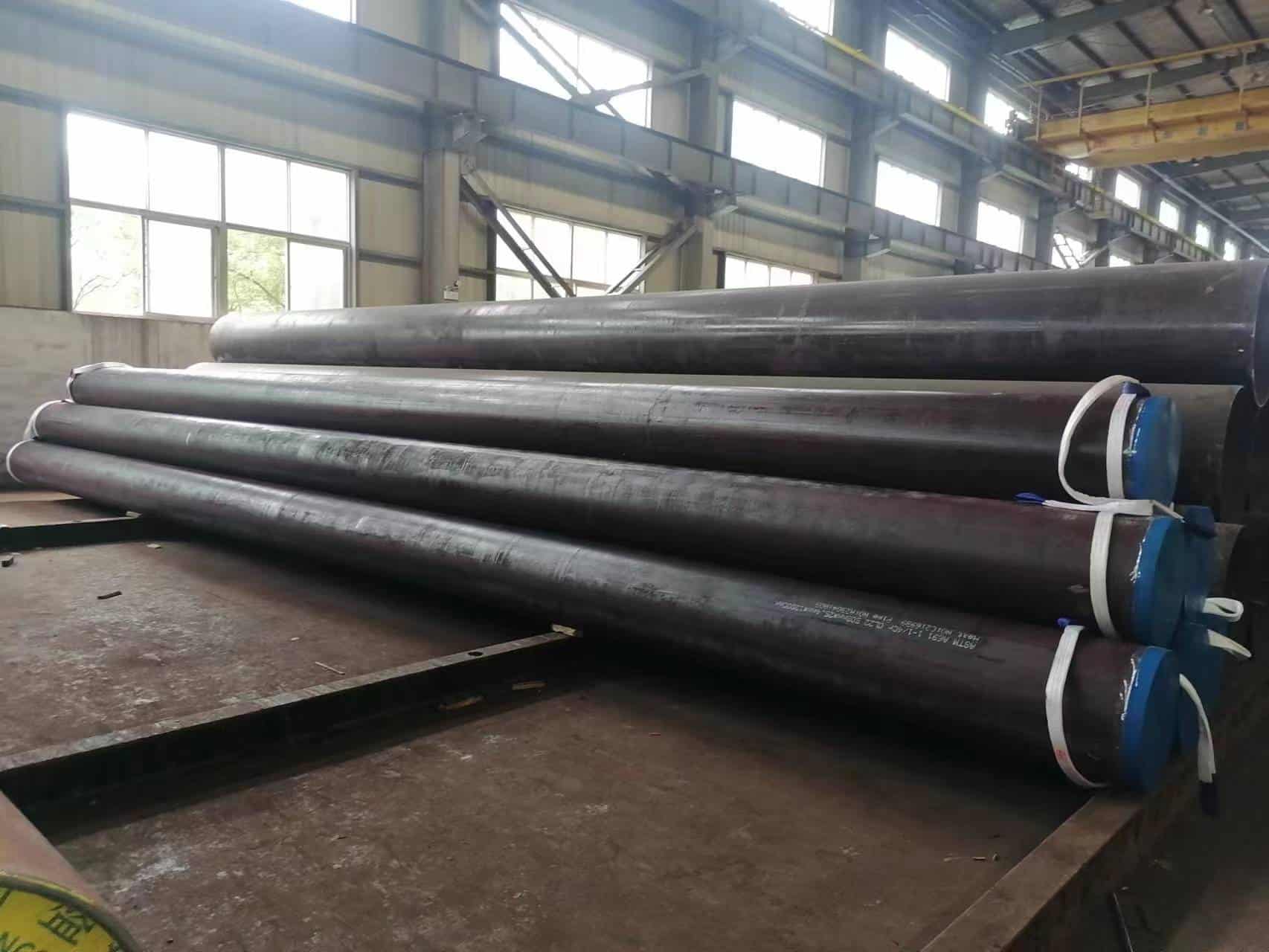
Large Diameter Steel Pipe Dimensions
Core Dimensional Parameters and Industry Standards
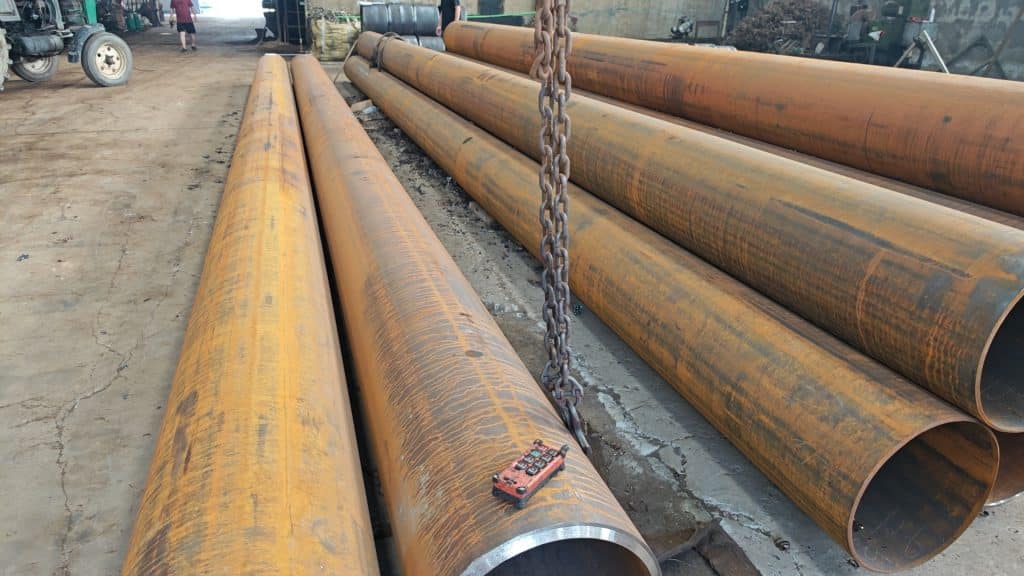
Three major measurements characterize large diameter steel pipe. OD from 16 inches to over 56 inches for demanding industrial usage. The wall thickness is what determines the pressure bearing capability and structural strength . Schedules range from Schedule 10 to XXS ( super exceptionally strong ) . Pipe lengths depend upon the manner of manufacture and the needs for transportation. Lengths are usually single random (18-25 feet), double random (38-40 feet) or special lengths intended to minimize field welding and expedite building timelines.
The precise dimensional specifications of ASTM A671 Electric Fusion Welded (EFW) steel pipe are well known. The pipes are made of pressure vessel grade steel plates and retain exact dimensions for all CC60, CC65, CC70, CD70, CFA65 and CFE70 classes. The electric fusion welding process results in a complete penetration weld and uniform plate width is required to maintain uniform pressure ratings across the whole pipe body. Procurement teams also use additional dimensional frameworks to assure supplier compliance and worldwide compatibility across various production sources such as API 5L, standard pipe dimension specs and appropriate dimensional standards.
Dimensional Tolerance Requirements
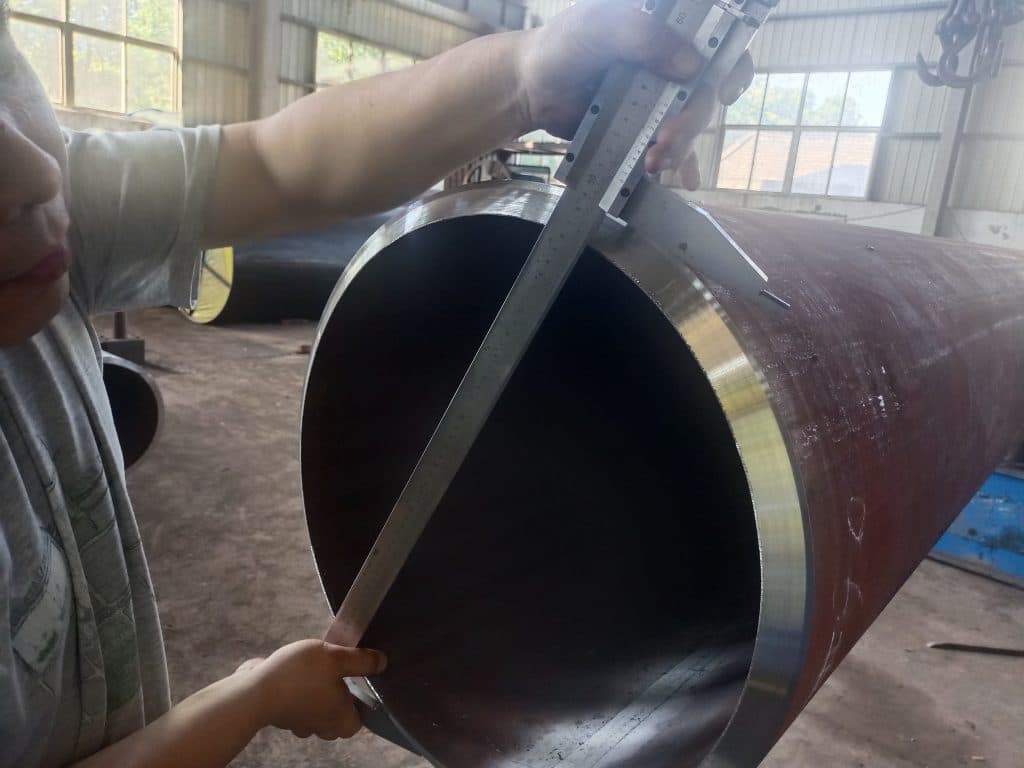
Tolerance specs set reliable suppliers apart from mediocre manufacturers. Standard and precision applications often specify OD tolerances of ±1% to ±0.5% for large diameter welded tubing . Wall thickness tolerances of +12.5%/-0% allow for manufacturing variance and yet provide the minimum level of structural integrity required by code. Ovality is the difference between the greatest and smallest diameters . This should not be more than 1 % of nominal OD to fit in properly during installation . LONGMA’s procedures are ISO 9001 certified and these tolerances are guaranteed by constant dimensional checking at many stages of the manufacturing.
Material Types and Their Dimensional Impact
The dimensional accuracy of a large diameter steel pipe is directly controlled by the choice of material and the way in which it is made.
Material Selection and Welded Manufacturing
Material selection has a significant impact on dimensional stability and performance. API 5L carbon steel pipes provide consistent dimensions for usage at ambient temperatures. ASTM A671 pipes are made from pressure vessel specification steel plates with enhanced dimensional uniformity resulting from controlled rolling and normalized heat treatment. Such a regulated manufacture assures homogenous mechanical qualities and dimensional precision over the whole pipe length. The improved low temperature toughness of this material grade is important for LNG facilities at -162°C where thermal shrinkage and brittle fracture are critical issues for structural integrity.
EFW (Electric Fusion Welded) manufacture creates large diameter steel pipe with improved dimensional accuracy compared to conventional processes. The procedure begins with carefully cut pressure vessel plates, with prepared and aligned edges. A limited region is heated by high frequency current and plate edges are fused together under regulated pressure, creating a continuous longitudinal weld. This means the breadth of the plate is uniform across the weld zone and there are no dimensional inconsistencies that are typical of previous production processes. Radiographic testing (RT) and ultrasonic testing (UT) are used to verify full penetration welds, ensuring consistent pipe body integrity along the length. This provides dimensional dependability for high pressure applications in challenging industrial settings.
Coating Impact on External Dimensions
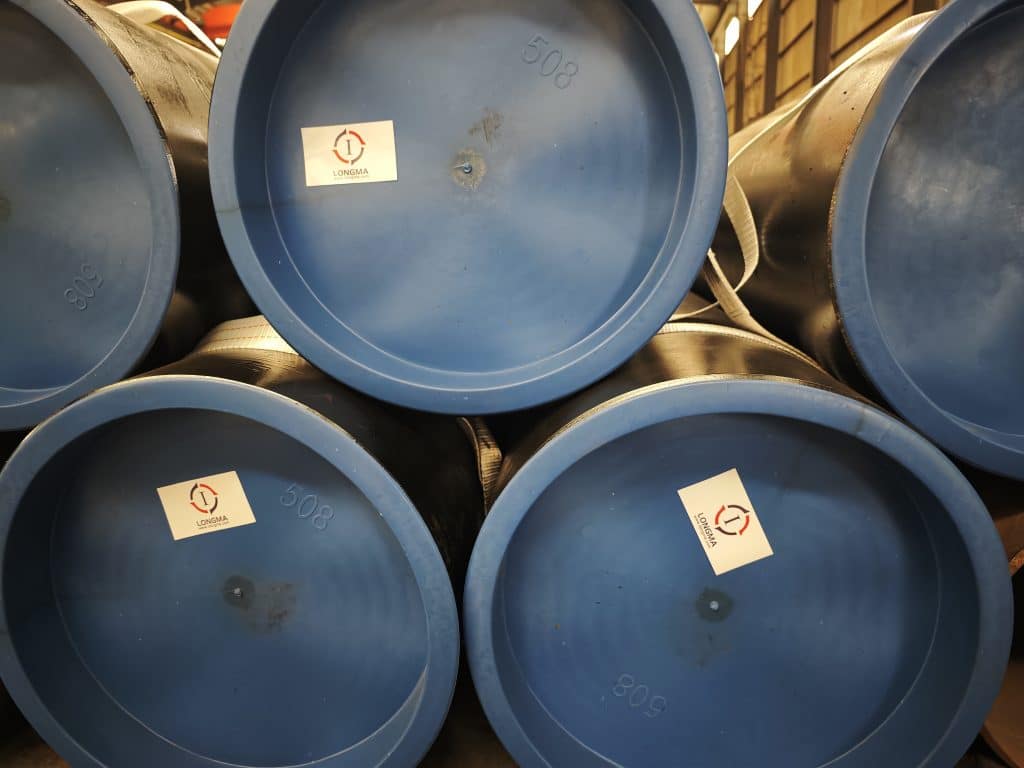
Protective coatings increase thickness to the outside diameter of pipe and this must be taken into account during design and procurement. For example, fusion bonded epoxy (FBE) coatings generally add 12 to 16 mils (0.3 to 0.4 mm) to OD, while three-layer polyethylene (3LPE) systems add 80 to 120 mils (2 to 3 mm). These dimensional variances should be taken into consideration when determining clearances, support spacing and storage requirements for coated pipe. ASTM A671 Pipes are suitable for different coating processes with beveled ends which are within dimensional tolerances after coating process providing appropriate fit-up during field installation and welding operations.
Applications and Dimensional Requirements
Dimension needs differ among industries. In long-distance pipeline projects, the dimensions are set to particular values to optimize the flow efficiency and structural integrity. The primary application areas are summarized in the table below:
| Application | Typical Diameter Range | Wall Thickness | Key Notes |
| Oil & Gas Transmission | 24 to 48 inches | Determined by applicable pipeline design code | CD70 and CFA65 classes provide enhanced low-temperature toughness for northern pipelines, ensuring dimensional stability under thermal stress. |
| Petrochemical & LNG | 16 inches and larger | From 6 mm and up | Custom pipe lengths reduce field welds, minimizing potential leak points and accelerating installation time. |
| Power Generation | 32 to 60 inches | Relatively thin walls for low-pressure cooling water service | CC60 and CC65 classes provide adequate strength and weldability for high-volume, low-pressure applications. |
The maximum permissible operating pressure ( MAOP ) is based on the critical diameter to wall thickness . The greater the pressure the thicker the walls, but this increases material cost and welding complexity. Wall thickness for headers and manifolds handling cryogenic fluids in refineries and LNG facilities is selected based on internal pressure and external stress from thermal cycling to provide very uniform dimensions for thermal contraction without stress concentration areas. Dimensional precision becomes very important in cases when many pipe sections join together with condensers and heat exchangers with set nozzle spacing.
We produce pipes of OD 16 in and greater and with thickness from 6 mm and larger, offering flexible solutions for different applications in petrochemical processes. The cooling water system is hydrostatically tested before shipment to verify dimensional stability under pressure, therefore preventing any surprises in the field during installation and commissioning.
Comparison and Decision-Making Based on Dimensions
To choose the proper material and dimensions package, one has to evaluate the available choices against the requirements of the project.
Steel pipe has more dimensional flexibility than concrete and plastic in big projects. Concrete pipe is available up to 144 inches in diameter but cannot provide the pressure capacity or dimensional accuracy of steel. HDPE pipe is corrosion resistant but has a high co-efficient of expansion and dimensional calculations are difficult in above ground installations. Large diameter steel pipe has uniform dimensions across broad temperature ranges, greater pressure ratings per unit wall thickness and the stiffness necessary for above ground or hanging installations. Steel is the best option when dimensional stability has a direct impact on the system performance and long term operational dependability.
Seamless pipe has uniform dimensions, although most manufacturers make it only up to 24 inches in diameter. Electric Fusion Welded pipe is available in diameters to 56 inches and beyond, with dimensional tolerances similar to those of seamless goods. ASTM A671 pipe is examined by RT and UT of the longitudinal weld to meet or exceed the requirements of pressure vessel specifications for dimensional uniformity and joint integrity. EFW technology offers the best balance between dimensional precision and manufacturability for large diameters with stringent tolerances, and is an economical solution for the manufacture of big-bore pipe in harsh industrial environments.
The best dimensions must be chosen by carefully considering the project characteristics. Calculations of flow rates reveal the minimal internal diameter required to keep velocity within acceptable bounds. Design pressure and temperature determine the appropriate wall thickness by using the calculations given in the relevant code. Transportation limitations may restrict the length of the pipe, particularly for distant project locations accessible only by specialized modes of transport. The installation technique determines the desired dimensions—longer pieces need more lifting gear but cut down on weld joints and assembly time. Early supplier participation allows procurement managers to match dimensional needs with production capabilities and project logistics so that expensive specification revisions are not necessary during construction.
Conclusion
Successful industrial infrastructure projects are distinguished from expensive blunders by understanding large diameter steel pipe parameters. The outside diameter, wall thickness, length and tolerance standards should be aligned with the application requirements, material attributes and manufacturing capabilities. ASTM A671 EFW pipe exemplifies the ability of contemporary production methods to attain the exacting dimensions needed for pressure vessel applications. Procurement choices must include dimensional requirements, quality certificates, logistical planning and supplier verification to guarantee dependable system performance. The dimensional framework of this handbook gives engineers and procurement specialists the confidence to specify, source and install large diameter steel pipe for challenging industrial applications.
FAQ
1. What dimensional standards apply to large diameter steel pipe verification?
Standards for the sizes of large diameter steel pipes are set by API 5L, ASTM A671/A671M, standard pipe dimension specifications, and applicable dimensional standards. These rules spell out nominal sizes, schedules for wall thickness, length ranges, and acceptable errors. ASTM A671 is a standard that covers electric fusion welded pipe made from plates that are suitable for pressure vessels. It has specific size requirements to make sure that the pipe works with ASME pressure vessel codes. In purchase orders, procurement teams should include the relevant standard and make sure that the supplier’s certifications show that the products meet the required tolerances for size.
2. How does wall thickness relate to pressure rating and service life?
According to applicable process piping code and other related design codes, the connection between wall thickness and pipe pressure capacity is direct. When walls are thicker, they can handle more stress, which lets them have higher internal pressure ratings. The thickness of the walls also affects the corrosion allowance, which is the amount of material that can be lost over time while the structure stays intact. For instance, a 24-inch OD pipe with a wall thickness of 0.500 inches can withstand more pressure than a wall thickness of 0.375 inches, and it has more material to break down through rust in harsh settings. When choosing the right wall thickness, you need to think about both the original cost and the long-term longevity and safety margins.
3. Can custom dimensions be manufactured for specific project requirements?
In the making of large diameter steel pipes, custom dimensional requirements are often met. As long as the tools can handle it, ASTM A671 production can use unique mixtures of diameter, wall thickness, and length. To make custom dimensions, you need to include specifics like tolerance requirements, end preparation details, and testing protocols. Lead times for unique measurements are typically longer than for standard sizes, to allow for material sourcing and production scheduling. For special sizes, the minimum order quantity depends on the amount of material needed and the number of tools that need to be made. The minimum generally reflects what makes a production run cost-effective, so buyers should confirm current MOQ with the supplier for their specific size.
Partner with LONGMA for Precision Large Diameter Steel Pipe Solutions
Your project’s success depends on how well you choose the large diameter steel pipe manufacturer. Our large-scale manufacturing facility is where LONGMA combines extensive experience on EPC projects with advanced EFW manufacturing skills. Our ASTM A671 pipe production ensures precise measurements that are confirmed by RT/UT inspection, full material traceability, and certified material test certificates. We keep a large inventory of standard dimensions ready for prompt delivery, and our engineering team works together to make custom dimensions that meet the exact needs of your project. Procurement professionals at leading energy and industrial companies worldwide trust our measurements and paperwork to be correct. You can talk to our technical team about your size requirements, get approved test results, or set up a facility check by emailing info@ilongma.com. We are a trusted supplier of large diameter steel pipes, and we can turn your size needs into solutions that are delivered on time and meet your quality standards.