- 1. Wall Thickness of X42 Pipe
- 2. Key Mechanical and Chemical Properties Affecting Wall Thickness Selection
- 3. Comparing X42 Pipe Wall Thickness with Other Grades and Materials
- 4. Procurement Considerations for API 5L X42 Pipes with Respect to Wall Thickness
- 5. Practical Applications and Maintenance: Why Wall Thickness Matters
- 6. Conclusion
- 7. FAQ
- 8. Partner with a Trusted API 5L X42 Pipe Manufacturer
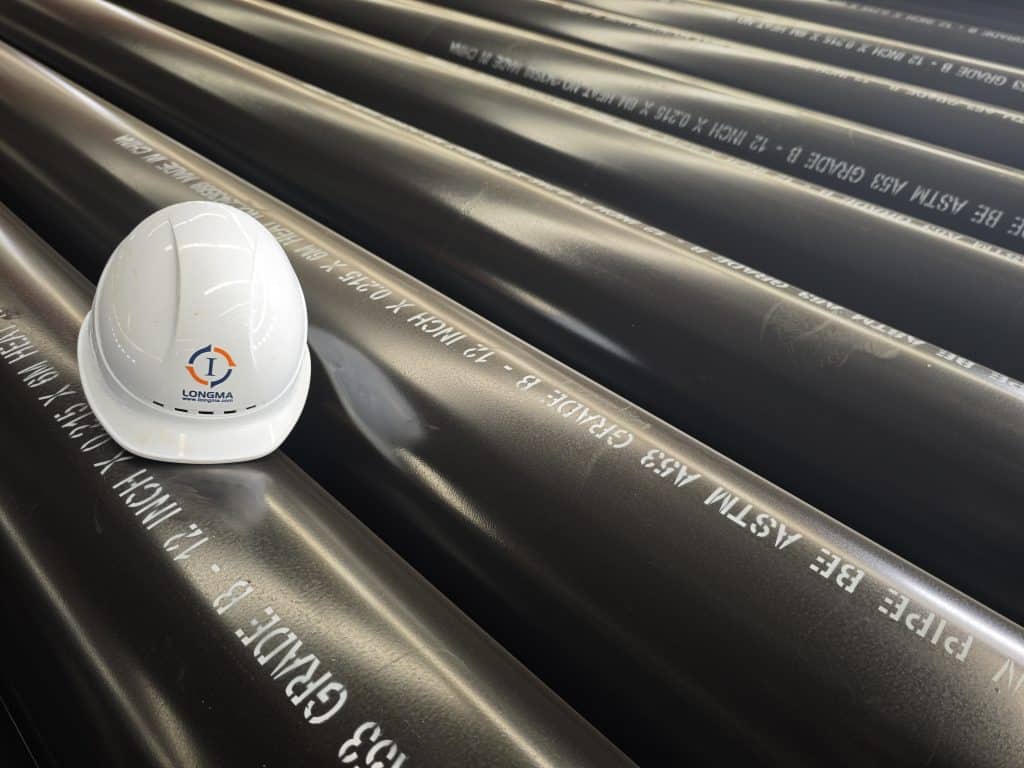
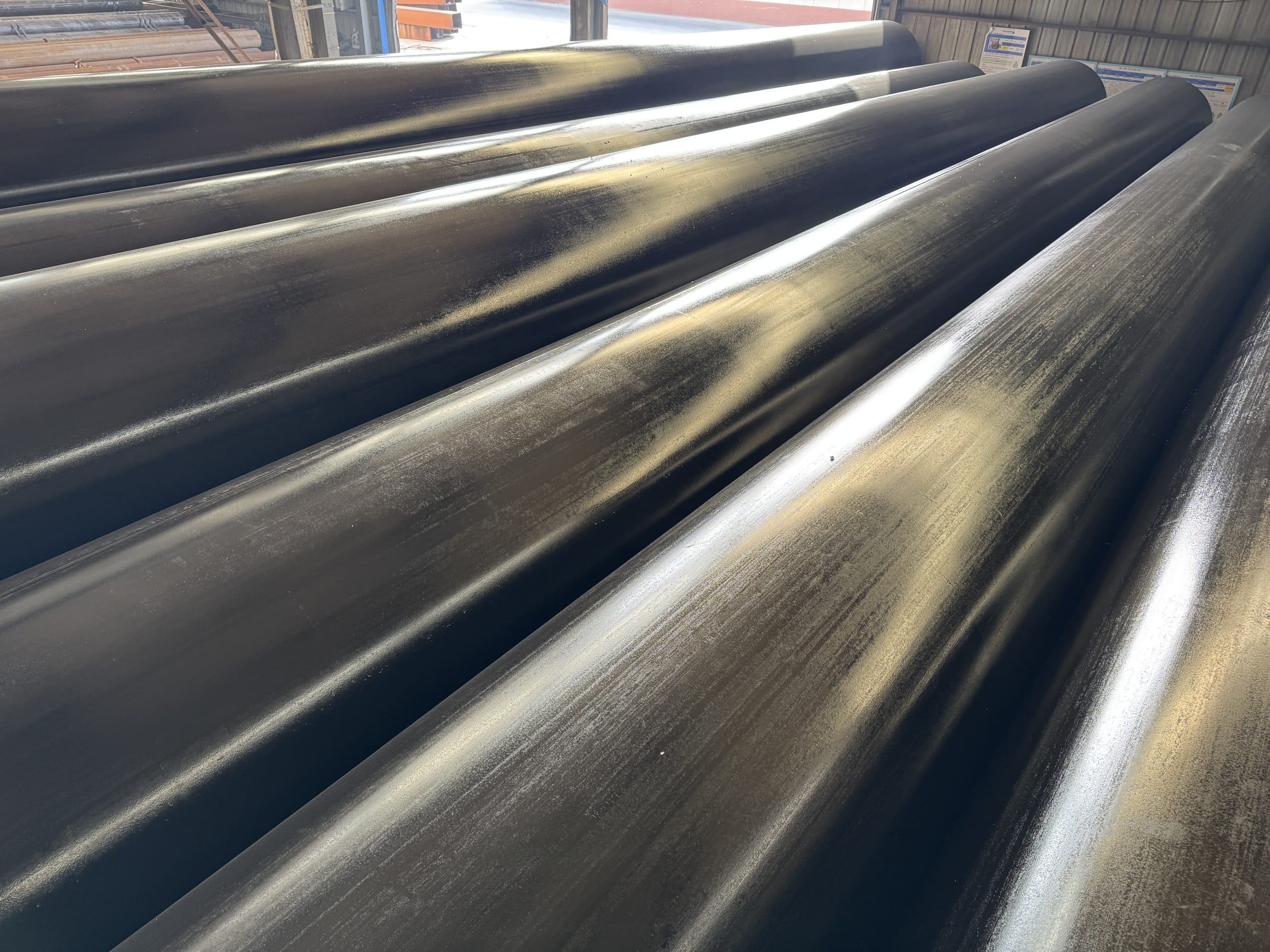
Knowing the wall thickness characteristics is important in designing pipeline materials for oil, gas or water transmission projects. The wall thickness of API 5L X42 pipe is from 4mm to 100mm depending on the diameter and operating pressure. The marking “X42” means a minimum yield strength of 42,000 psi (290 MPa). Wall thicknesses are standard under API 5L schedules . PSL2 has stronger dimensional control than PSL1 . A 12-inch X42 pipe is typically 6.35mm (Schedule 20) up to 33.32mm (Schedule 160) in thickness, per ASME B36.10M.
Wall Thickness of X42 Pipe
Wall thickness is the most important factor in pipeline safety. Barlow’s Formula helps engineers calculate minimum wall thickness from working pressure, pipe diameter, and material yield strength. For API 5L X42 pipe, this ensures the pipe handles internal pressure plus regulatory safety margins.
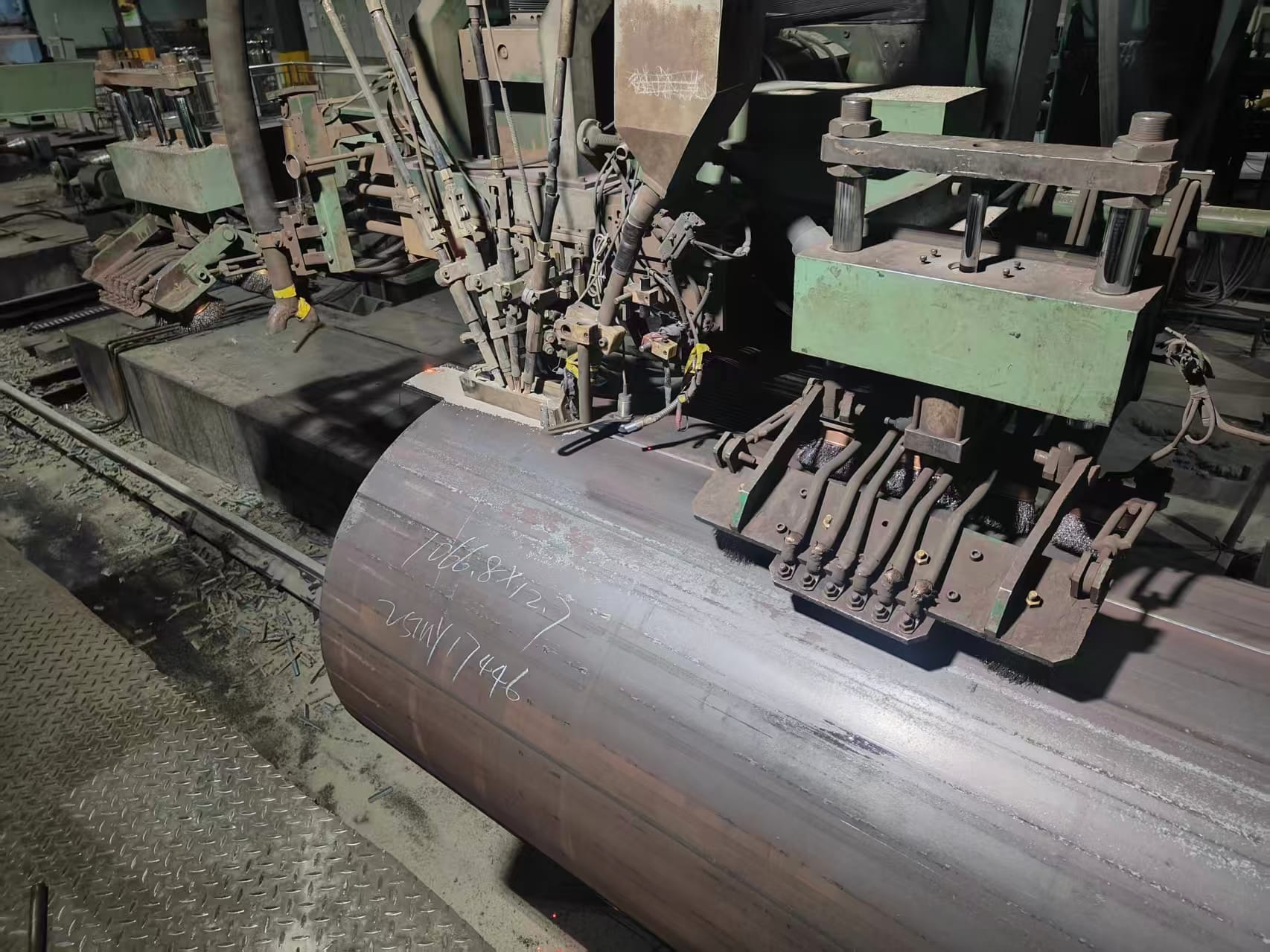
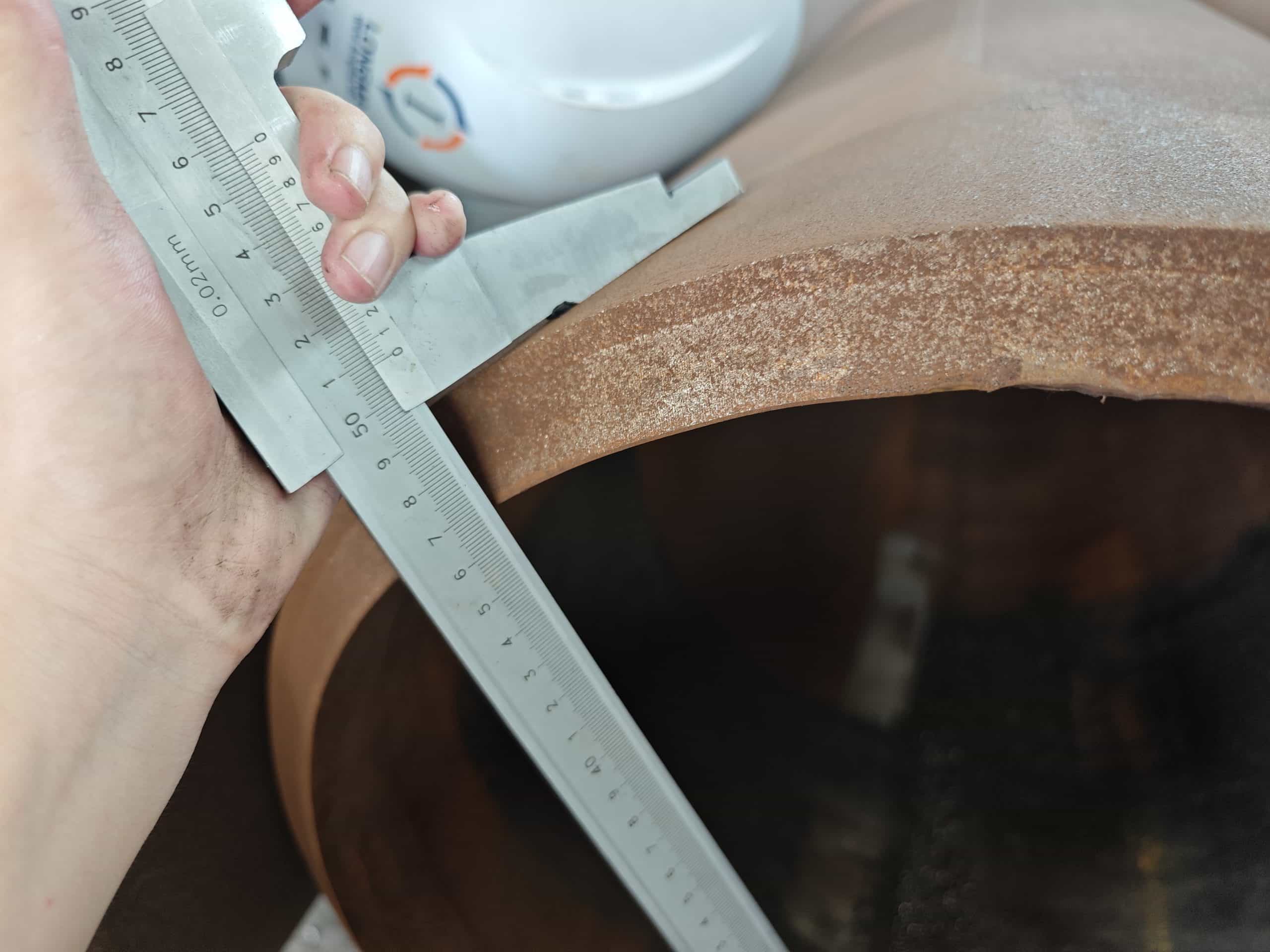
API 5L sets tight rules for wall measurement. Manufacturers use ultrasonic thickness gages at several points around the pipe’s diameter. PSL1 allows wall thickness variation of +15% to -12.5%, fine for most transmission lines. PSL2 limits tolerances to +/-10%, critical for high-pressure service where dimensional accuracy affects pressure ratings. In LONGMA’s LSAW and ERW production, automatic thickness stations check every 500 mm along the pipe length. This real-time monitoring catches deviations early—even a 1 mm difference on thick-walled pipes can compromise a project.
The pipe schedule system keeps wall thickness consistent relative to nominal pipe size. Schedule numbers (SCH 10, 20, 40, 80, 160) denote thickness categories—higher schedules mean thicker walls. For API 5L, engineers often specify exact thickness rather than a schedule, especially above 24 inches. For API 5L X42, consider these real-life examples:
| Nominal Pipe Size | Wall Thickness Range | Schedule Notes |
| 8-inch | 3.76 mm to 23.01 mm | Schedule 10 to Schedule 160 |
| 16-inch | 6.35 mm to 40.49 mm | Most 16-inch pipes fall in this range |
| 36-inch | 6.35 mm to 31.75 mm | No formal ASME schedule at this size – wall thickness is specified directly |
Key Mechanical and Chemical Properties Affecting Wall Thickness Selection
Material properties and wall thickness interact continuously in engineering. The chemical makeup of API 5L X42 steel determines not only base strength but also fabrication properties, affecting the maximum practical thickness.
Chemical Composition and Mechanical Properties
Carbon (≤0.26% for PSL1, ≤0.24% for PSL2), manganese, and silicon are tightly controlled in API 5L X42 pipe. Lower carbon improves weldability, vital when field crews join thick-walled sections. Carbon equivalent (CE) predicts weld cracking risk; API 5L X42 keeps CE below 0.43%, allowing welding without preheating in normal temperatures. Manganese content (1.20–1.60%) strengthens the solid solution, letting manufacturers reach yield strength without excessive wall thickness. This lets API 5L X42 pipe match Grade B pressure ratings at about 15% less weight—a major benefit when transport costs matter.
These properties explain why API 5L X42 suits pipeline materials:
| Property | X42 PSL1 | X42 PSL2 | Engineering Significance |
| Minimum Yield Strength | 290 MPa (42,100 psi) | 290 MPa | Governs pressure rating via Barlow’s equation |
| Tensile Strength | 415 MPa (60,200 psi) | 415 MPa | Safety margin against unexpected overpressure |
| Elongation | 21% minimum | 21% minimum | Ductility reserve during installation bending |
With these specs, engineers can calculate the exact minimum wall thickness for a given pressure. A 24-inch API 5L X42 pipeline at 1,000 psi needs about 9.5 mm—thinner than Grade B’s ~11 mm, yet much cheaper than X52. Because thickness drives steel weight, these mechanical values directly govern material budgets on large line pipe purchases.
Heat Treatment and Wall Consistency
Modern ERW and LSAW manufacturing uses controlled heat treatment to keep microstructure uniform across the wall. ERW pipes normalize the weld seam online after high-frequency induction welding, while LSAW pipes receive post-weld heat treatment to remove residual stress in thick walls. LONGMA’s production lines hold temperature within ±10°C during heat treatment, confirmed by destructive hardness tests. When reviewing mill test certificates, purchasing managers should verify heat treatment parameters match project requirements.
Comparing X42 Pipe Wall Thickness with Other Grades and Materials
Choosing the right grade means balancing strength, fabrication cost, and total project cost. In the API 5L range, API 5L X42 pipe has clear advantages over nearby specifications.
| Grade | Yield Strength | Wall Advantage vs. X42 | Cost Impact |
| X42 | 290 MPa (42,100 psi) | Baseline for comparison | Baseline pricing |
| X46 | 320 MPa | About 10% thinner walls at the same pressure | 8–12% higher manufacturing cost |
| X52 | 360 MPa | About 20% thinner walls (15 mm vs. 12 mm on 36-inch at 1,200 psi) | 15 to 18% higher per-ton price |
Stainless steel resists corrosion better but costs 300–400% more than carbon steel, making it economical only in highly corrosive environments. A 316L stainless pipe needs walls about as thick as API 5L X42, at far higher cost per meter. The practical answer is coated API 5L X42 pipe—3LPE, FBE, or internal epoxy linings. This lasts 25 to 30 years in mildly corrosive conditions at one-third the lifetime cost of stainless steel. For sour gas (H2S), the X42S grade with limited sulfur and NACE MR0175 compliance is used.
Procurement Considerations for API 5L X42 Pipes with Respect to Wall Thickness
Strategic line pipe procurement requires understanding how thickness specifications ripple through pricing, inventory, and supplier capabilities.
Cost Impact, Inventory, and Lead Times
Steel is priced by weight, so wall thickness is the dominant cost factor. Material cost rises linearly—a 12% increase in wall thickness raises steel costs about 12%, with freight up proportionally. Installation costs create trade-offs: thinner walls use less material but need careful handling; thicker walls cost more up front but ease welding and allow more corrosion allowance. Value engineering on our projects shows the optimum wall thickness usually exceeds minimum pressure requirements by 10 to 15 percent, balancing material cost with long-term reliability.
Stock supply varies by diameter and wall thickness. Standard sizes like 8-inch Schedule 40 or 12-inch Schedule 60 ship from stock in 7 to 10 days. Custom specs with non-standard thicknesses or diameters above 36 inches need 45–60 day production campaigns. LONGMA keeps more than 50,000 tons of API 5L stock, from 4 to 72 inches diameter with commonly requested thicknesses. This strategic stock supports project emergencies and schedule accelerations for EPC partners in Central Asia and South America. Involving suppliers early secures the best delivery times. Sharing estimated thickness needs 90 days before order release can cut lead times by 30 to 40 percent.
Custom Wall Thickness Orders and Supplier Capabilities
Non-standard wall thicknesses are sometimes needed for special pressure profiles or corrosion allowance. Production method matters: ERW is cost-effective up to 24 inches diameter with thickness-to-diameter ratios below 6%. Under 16 inches, wall thickness accuracy is ±0.5 mm. Our ERW lines handle custom thicknesses in 0.5mm steps, keeping API 5L tolerances through precision roll forming. LSAW handles diameters from 16 to 72 inches and nearly any thickness—we have made 100mm wall sections for ultra-high-pressure service. Custom thicknesses require steel plates to exact dimensions, adding 15 to 20 days to lead times. The JCOE process meets exact thickness needs through precise plate edge preparation.
Quality-conscious buyers should confirm the supplier’s non-destructive testing capability matches project needs, since thick-walled sections require full cross-section UT scanning. With production capabilities understood, the next question is how real-world applications translate these thickness choices into operating reliability, maintenance planning, and long-term asset integrity.
Practical Applications and Maintenance: Why Wall Thickness Matters
Real-world pipeline performance validates wall thickness calculations, showing how design decisions affect operational reliability.
Application-Specific Thickness Requirements and Coating Systems
Different transmission uses require different wall thickness optimization. Crude oil trunk lines typically operate at 600 to 1,200 psi with low corrosion risk. Wall thickness selection considers cost while allowing 10-15% for corrosion. API 5L X42 pipe with 8–12 mm walls is most common, ranging 16 to 36 inches. 3LPE coating and flow-improving internal linings extend service life beyond 30 years.
| Application | Operating Pressure | Typical Wall Thickness | Key Considerations |
| Crude oil trunk lines | 600 to 1,200 psi | 8–12 mm | 10-15% corrosion allowance, 16 to 36 inches, 3LPE coating, service life beyond 30 years |
| Natural gas gathering systems | 300–600 psi | 6 to 9 mm | X42S grade for H2S, better coating systems, regular inline inspections |
| Water transmission lines | 100 psi working pressure plus 400 psi surge events | 9mm wall on a 12-inch line | Water hammer analysis when pumps trip or valves close |
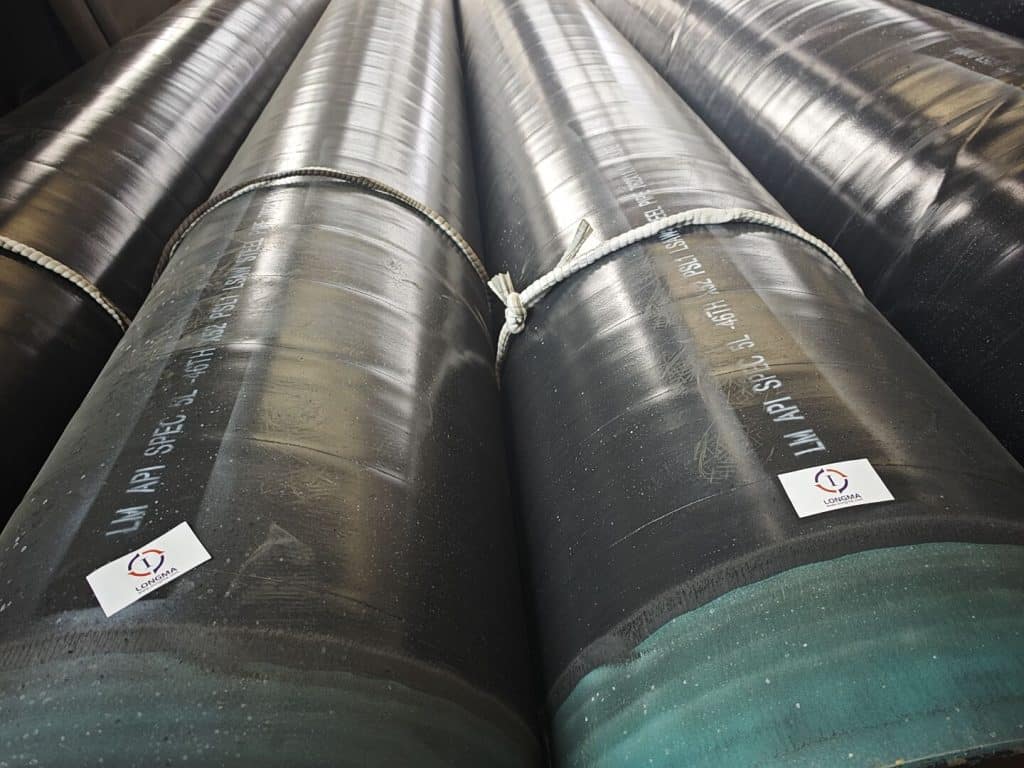
Protective coatings extend pipe life by stopping external corrosion that would reduce wall thickness below safe levels. Coating choice depends on burial conditions and cathodic protection design. Common coating systems include fusion-bonded epoxy (20 to 25 years in benign soils), three-layer polyethylene (30 to 35 years in harsh groundwater environments), and polypropylene systems (temperatures up to 80°C). Proper application requires surface preparation to NACE standards and controlled curing, with adhesion and holiday checks along the full coated length.
Inspection Protocols and Wall Thickness Monitoring
Proactive maintenance includes regular wall thickness surveys using ultrasonic measurements on set grids. Many jurisdictions require inline inspection runs every 5 to 7 years on pipelines above certain diameter and pressure thresholds. Advanced inline inspection finds wall thickness variations with accuracy of ±0.3mm, revealing corrosion or mechanical damage. Trending data predicts remaining service life, enabling cost-saving condition-based maintenance.
Our quality documentation includes baseline wall thickness measurements at 1-meter intervals for future integrity assessments. Backed by EN 10204 3.1/3.2 material test certificates, this supports asset management and eases insurance processing. Repeated surveys build the trending history that converts thickness readings into actionable maintenance decisions over the pipeline’s service life.
Conclusion
Choosing wall thickness for API 5L X42 pipe requires balancing engineering requirements, cost, and long-term operating needs. Understanding how material grade, manufacturing precision, and application needs interact lets you make decisions that maximize project value. For medium-pressure oil, gas, and water transmission, X42 remains the standard choice—strong, weldable, and cost-effective. Robust quality control and testing by qualified manufacturers turn wall thickness standards into reliable field performance over decades.
FAQ
1. What is the standard wall thickness for API 5L X42 pipe?
Wall thickness ranges roughly from 4 mm to 100 mm depending on diameter, Schedule, and design pressure (heavier walls above the standard Schedule series are made to order). Within the common Schedule 20 to Schedule 80 range: 8-inch pipe runs 6.35 to 12.70 mm thick, 16-inch pipe runs 7.92 to 21.44 mm thick, and 24-inch pipe runs 9.53 to 30.96 mm thick, per ASME B36.10M dimensional tables.
2. How does wall thickness affect API 5L X42 pipe pricing?
Since prices are based on weight, the cost of materials goes up or down proportionally with the width of the wall. A 15% rise in width means that the cost of steel goes up by about 15%, plus freight costs go up by the same amount. But walls that are thicker might lower the cost of installation because they are easier to handle and need fewer welding passes.
3. Can API 5L X42 pipe wall thickness be customized?
Custom wall thickness requirements can be met by manufacturers using ERW (up to 24 inches diameter) and LSAW (16 to 72 inches diameter) production methods. Depending on how the steel plates are bought and when they are made, custom orders usually add 15 to 30 days to standard lead times.
4. What quality certifications verify X42 pipe wall thickness accuracy?
For API 5L approval, measurements must be checked against the limits specified. The EN 10204 3.1 or 3.2 material certificates show the actual thickness that was measured at several points. If a project needs independent quality confirmation, a third-party review by SGS, Bureau Veritas, or Intertek can add to the proof.
Partner with a Trusted API 5L X42 Pipe Manufacturer
Since 2003, LONGMA has provided reliable API 5L line pipe solutions to the global energy sector. Our 230,000-square-meter factory produces more than 500,000 tons of ERW and LSAW pipe annually, in sizes from 4 to 72 inches with wall thicknesses from 4 to 100 mm. Whether you need standard specifications with 7-day delivery from stock or custom-engineered solutions with exact wall thickness tolerances, our team supports everything from specification review to third-party inspection. With EN 10204 3.1/3.2 material test certification, comprehensive non-destructive testing, and proven use by EPC companies like SINOPEC and PEMEX, your pipeline will meet strict technical standards. Contact our engineering team at info@ilongma.com to discuss your API 5L X42 pipe needs.