- 1. How Galvanized Coating Protects Steel
- 2. Applications Where Galvanized Pipe Is Commonly Considered
- 3. Where Galvanizing Is Usually Not the Default
- 4. Galvanized vs FBE and 3LPE
- 5. Specification and Quality-Control Checklist
- 6. Can Galvanized Pipe Be Welded?
- 7. A Procurement-Focused Decision Rule
- 8. LONGMA Coating Support
- 9. FAQ
Galvanizing is valuable where zinc can provide barrier and sacrificial protection, especially for exposed utility and building-service pipe. It is not a universal pipeline coating: buried transmission lines, aggressive liquids, high temperatures and some potable-water conditions usually require a different material or a purpose-designed coating system.
How Galvanized Coating Protects Steel
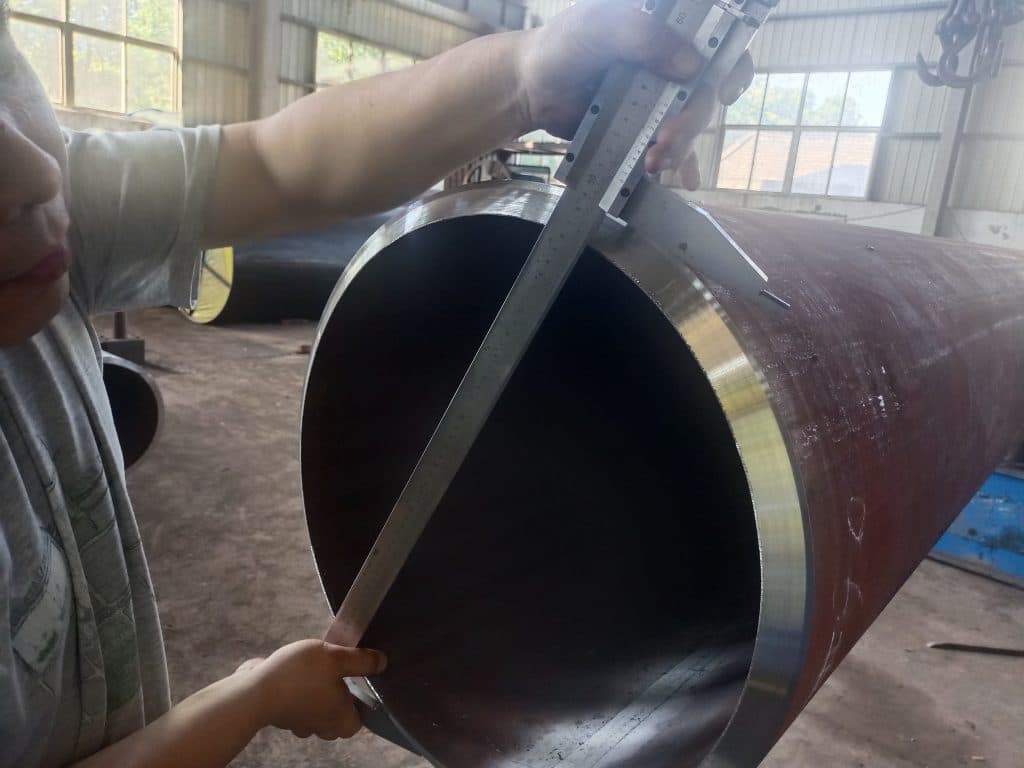
Hot-dip galvanizing forms zinc and zinc-iron alloy layers on steel. The coating acts as a barrier and also provides limited sacrificial protection at small damaged areas. Performance depends on coating mass/thickness, environment, water chemistry, temperature, fabrication details and handling. “Self-healing” should be understood as local sacrificial protection—not physical regrowth of lost zinc.
For pipe, the applicable product/coating standard must be chosen carefully. ASTM A53/A53M covers black and hot-dip zinc-coated seamless and welded pipe in its stated size range. ASTM A795/A795M covers black and hot-dip zinc-coated steel pipe for fire-protection use. ISO 1461:2022 and ASTM A123/A123M address fabricated articles but have scope limitations; ISO 1461 explicitly excludes tube and pipe galvanized in automatic plants. A purchase order should therefore cite the pipe product standard and the coating requirements that actually apply to the manufacturing route.
Applications Where Galvanized Pipe Is Commonly Considered
| Application | When galvanizing can be appropriate | Checks before specification |
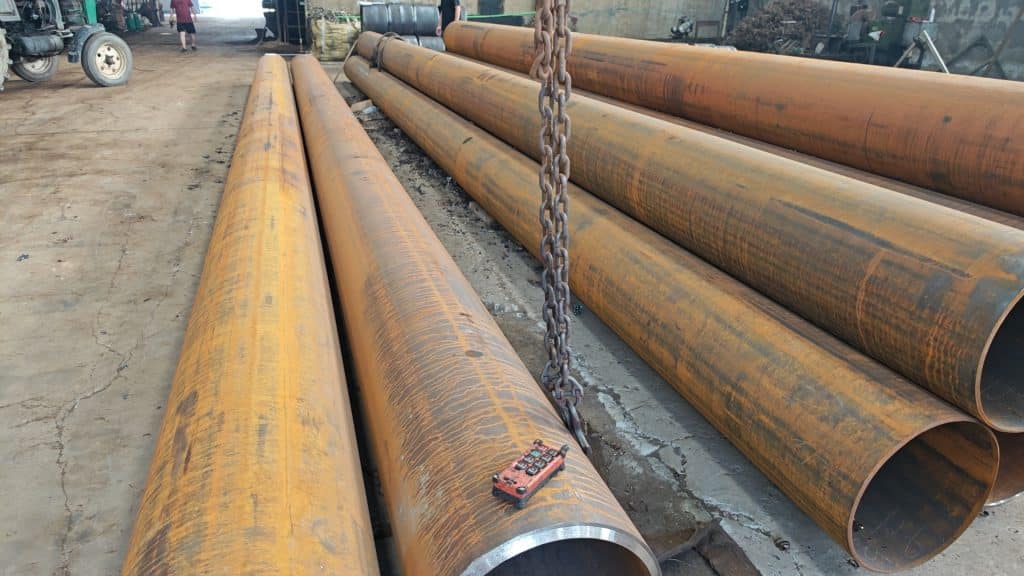
| Aboveground utility pipe | Outdoor or humid exposure with compatible, non-aggressive contents | Atmospheric corrosivity, drainage, cut-end repair and connection method. |
| Fire-protection piping | Where the adopted fire code, listing and project specification permit black or galvanized steel pipe | System type, trapped water, microbiologically influenced corrosion risk, listings and internal corrosion-control plan. |
| Building services | Selected compressed-air, mechanical and noncritical water services | Fluid chemistry, temperature, hygiene rules and local plumbing code. |
| Structural/transport components | Posts, poles, handrails, supports and drainage components | These are often fabricated articles rather than pressure pipelines; use the correct galvanizing standard. |
| Temporary or moderate-duty field lines | Short, accessible lines in a compatible environment | Inspection access, repair plan and consequence of failure. |
Where Galvanizing Is Usually Not the Default
- Long-distance buried oil and gas transmission pipelines: coating systems such as FBE, 3LPE or 3LPP are normally selected with cathodic protection under the project pipeline-coating standard.
- Aggressive soils or continuously wet burial without a validated design: zinc consumption can be rapid and service life cannot be inferred from atmospheric exposure data.
- Strong acids, strong alkalis or fluids chemically incompatible with zinc.
- High-temperature service above the qualified limit of the zinc system and connected components.
- Potable-water systems where local regulations, water chemistry or lead-content requirements do not support galvanized steel.
- Services where internal zinc contamination is unacceptable or where dissimilar-metal coupling creates galvanic-corrosion risk.
Galvanized vs FBE and 3LPE
| System | Typical strength | Typical fit | Important limitation |
| Hot-dip galvanized zinc | Barrier plus sacrificial protection; robust handling resistance | Aboveground/moderate environments and specified building-service pipe | Not a universal buried-pipeline solution; zinc loss varies greatly with environment. |
| FBE | Strong adhesion and corrosion barrier; compatible with many buried-pipeline designs | Buried or submerged steel pipelines when designed to the applicable standard | Requires controlled blast cleaning, application, holiday testing and repair. |
| 3LPE/3LPP | FBE primer plus adhesive and tough polyolefin outer layer | Long-life buried pipelines needing mechanical and moisture resistance | System selection depends on operating temperature, field-joint coating and cathodic-protection design. |
| Liquid epoxy/paint | Flexible shop or field application | Aboveground maintenance systems and some internal linings | Performance is highly dependent on surface preparation, film thickness and curing. |
Specification and Quality-Control Checklist
- State the base-pipe specification, grade, size, wall thickness and manufacturing route.
- State whether the coating is internal, external or both, and identify the applicable coating/product standard and edition.
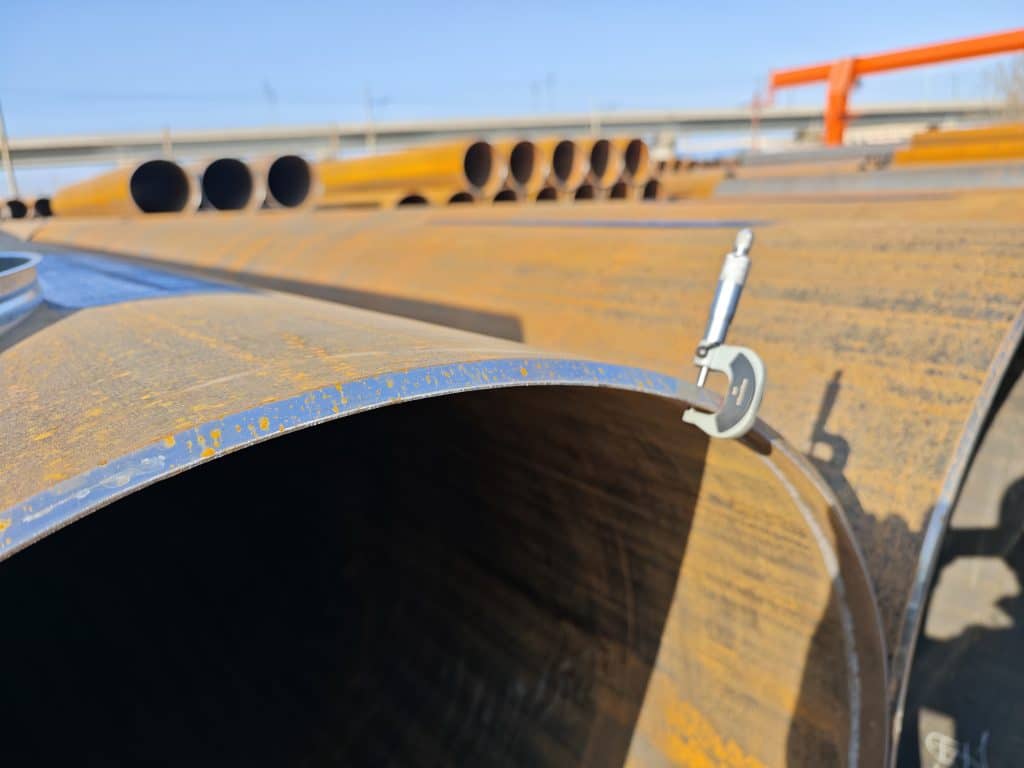
- Specify coating mass or thickness using the correct table for the product and material thickness; avoid a universal “85 μm minimum” statement.
- Define appearance, bare-area, adhesion and repair acceptance criteria, plus the sampling plan and measurement method.
- Address venting and drainage for fabricated assemblies, distortion risk, threaded ends, grooves, bevels and field-weld areas.
- Confirm packaging and handling: padded lifting, dry storage, separation from incompatible metals and repair of damaged areas.
- For buried steel, coordinate the coating with electrical isolation, cathodic protection, field-joint coating and holiday testing.
Can Galvanized Pipe Be Welded?
It can be welded only under an approved procedure with appropriate fume controls. Zinc near the weld is damaged or removed and the affected area must be repaired using an accepted method. Threaded, flanged or grooved connections may reduce coating damage, but connection choice must still meet the pressure, fatigue, fire and code requirements.
A Procurement-Focused Decision Rule
Choose galvanized pipe when the environment is compatible, zinc offers a clear life-cycle advantage, and the relevant product/code permits it. Choose FBE or multilayer polyolefin systems when a buried transmission pipeline requires a continuous engineered coating integrated with cathodic protection. If internal corrosion controls the design, evaluate the conveyed fluid and internal lining separately; an external zinc coating does not solve internal corrosion.
LONGMA Coating Support
LONGMA lists galvanized, zinc-coated, FBE and 3PE steel pipe among its coating solutions. For an accurate proposal, buyers should provide the base-pipe standard, service medium, operating temperature, installation environment, coating standard, required thickness, field-joint method and inspection plan. Final suitability remains subject to the project engineer and governing code.
FAQ
Is galvanized pipe recommended for direct burial?
Not by default. Soil resistivity, pH, moisture, chlorides, stray current and drainage can rapidly change zinc consumption. A corrosion engineer should compare a validated galvanized design with a pipeline-grade coating and cathodic-protection system.
Is galvanized pipe mandatory for fire sprinklers?
Requirements vary by the adopted code, system type, product listing and project specification. Galvanized steel can improve resistance in some conditions, but it does not eliminate trapped-water or microbiologically influenced corrosion.
Does every hot-dip galvanized pipe need an 85 μm coating?
No. Minimum coating requirements depend on the applicable standard, product category and material thickness. A universal value can create a noncompliant purchase specification.