- 1. The Short Answer
- 2. How ASTM A671 Designations Work
- 3. Where ASTM A671 May Fit in an LNG Facility
- 4. What the Purchase Specification Must Define
- 5. Quality Control That Matters for Low-Temperature Service
- 6. Verified LONGMA Evidence—Use It Within Its Actual Scope
- 7. Commercial Value Without Overclaiming
- 8. Why Discuss the Project With LONGMA Early
- 9. FAQ
ASTM A671 pipe can be used in parts of an LNG facility when the selected grade, class, impact requirements and design code support the actual minimum design metal temperature. It should not be promoted as automatically suitable for liquid LNG at about −162°C; primary cryogenic service requires a separate, project-specific material qualification.
The Short Answer
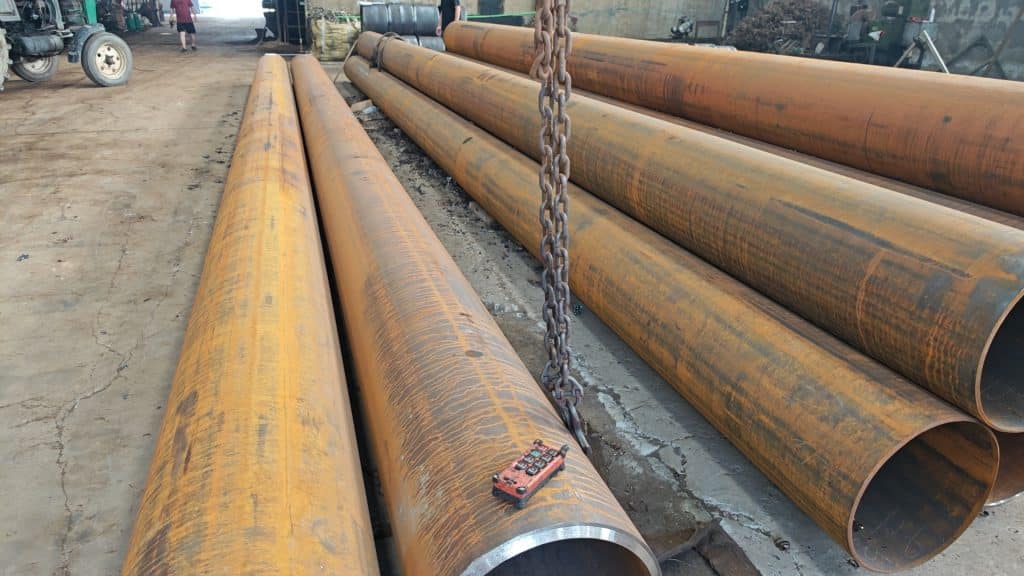
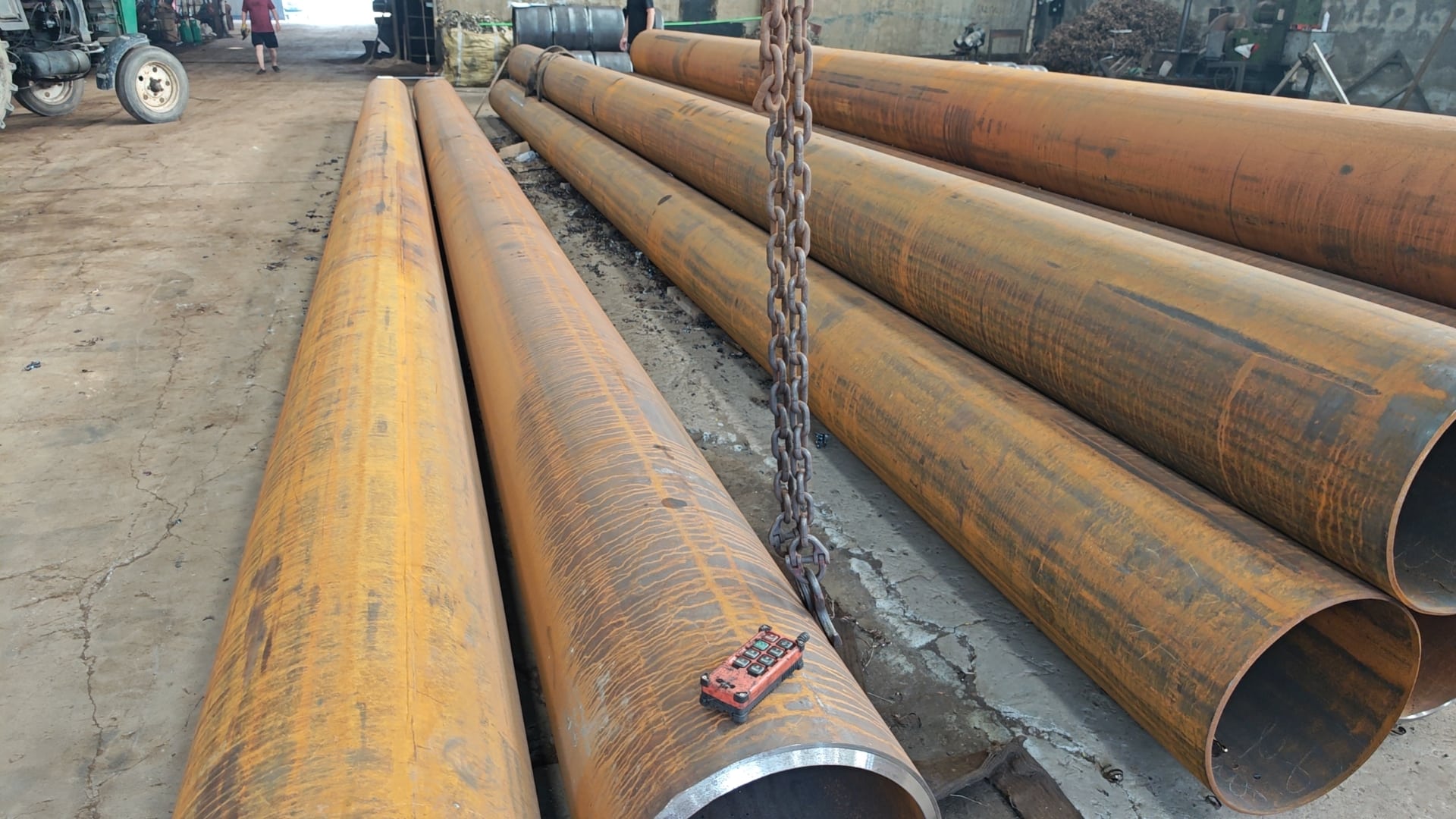
ASTM A671/A671M covers electric-fusion-welded steel pipe made with added filler metal from pressure-vessel-quality plate for high-pressure service at atmospheric and lower temperatures. This makes it relevant to large-diameter piping in LNG projects, especially utility, vapor, refrigerant or other lower-temperature systems. But an LNG terminal contains many temperature zones. A material acceptable for one zone may be unsafe in another.
The most important editorial correction is therefore to distinguish “used in an LNG project” from “in direct liquid LNG service.” Direct exposure to LNG near −162°C commonly drives the design toward materials specifically qualified for cryogenic toughness, such as selected austenitic stainless steels, 9% nickel steel systems or other code-approved materials. ASTM A671 may be considered only when the exact plate grade/product designation and completed weld procedure satisfy the code and project requirements at the stated MDMT.
How ASTM A671 Designations Work
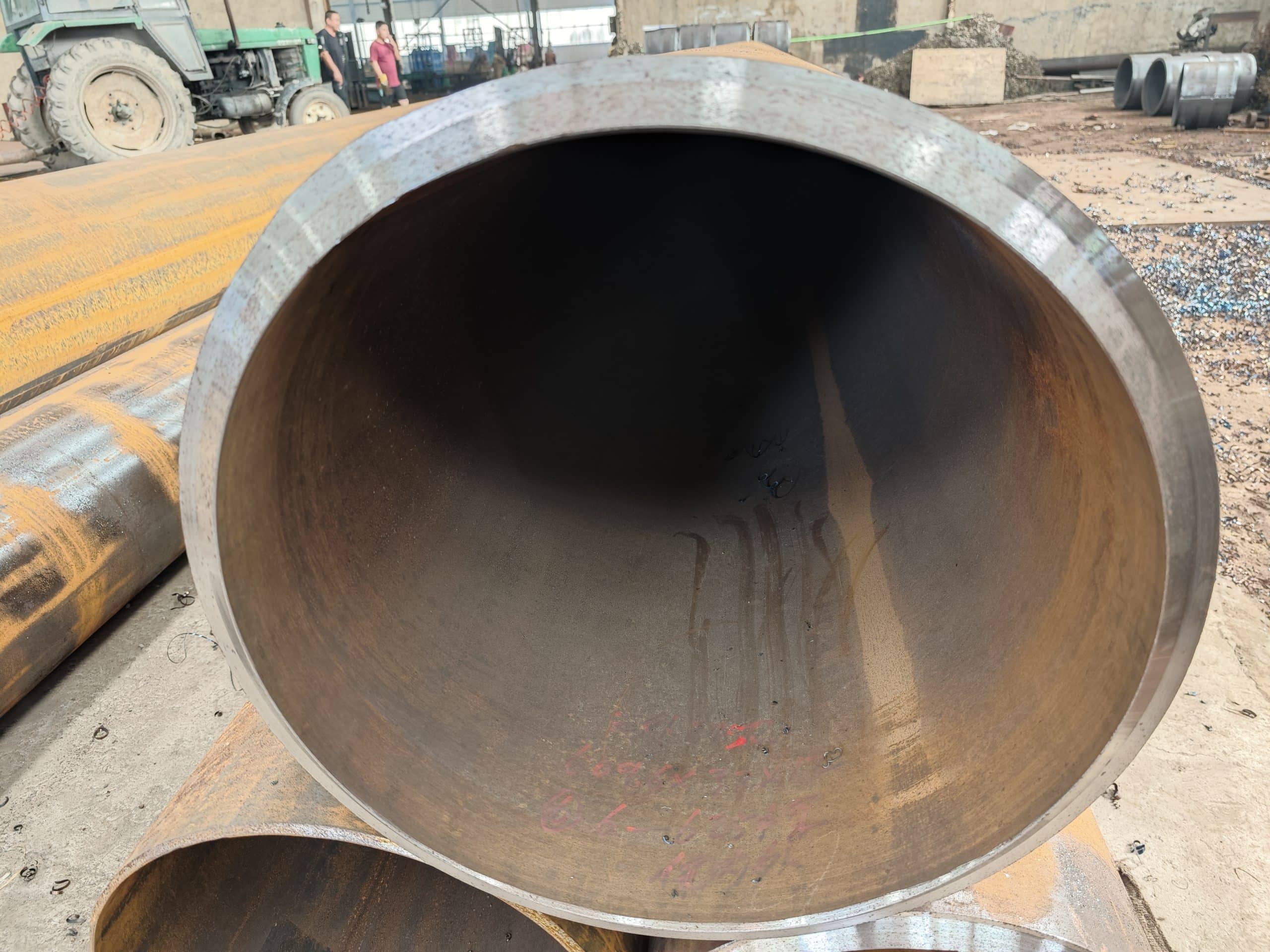
ASTM A671 does not use class names such as “CC class” or “CF series” as a temperature ladder. The grade identifies the plate specification/type and strength level; the class identifies heat treatment during pipe manufacture and the required radiographic examination and pressure testing. The numeric part of a designation such as CC60 relates to the specified minimum tensile-strength level—not minimum yield strength and not a temperature rating.
| Item | What it tells the buyer | What it does not prove |
| Grade (example: CC60) | Underlying pressure-vessel plate type/strength designation | Automatic suitability at −162°C. |
| Class (example: 22) | Specified combination of heat treatment, radiography and pressure testing | Material grade or guaranteed cryogenic toughness. |
| Supplementary impact requirement | Purchaser-defined impact testing when invoked, including stated test conditions | Whole-system compliance unless base metal, weld metal, HAZ and field welds are addressed. |
| MTC/inspection certificate | Actual reported chemistry, mechanical tests and traceability | Design-code acceptance by itself. |
Where ASTM A671 May Fit in an LNG Facility
| LNG facility area | Potential role for ASTM A671 | Engineering caution |
| Ambient or moderately cold utilities | Large-diameter welded process/utility piping where code-listed material properties satisfy MDMT | Verify depressurization and upset temperatures. |
| Boil-off gas or vapor systems | Possible where the calculated minimum metal temperature remains within qualified limits | Vapor lines can cool substantially during operation or blowdown. |
| Refrigerant systems | Possible for selected temperature ranges and media | Each refrigerant circuit has different temperature, pressure and toughness demands. |
| Liquid LNG transfer/primary containment | Do not assume suitability from A671 designation alone | Requires cryogenic material and welding qualification at or below the design temperature. |
| Buried export pipeline outside cryogenic zone | Possible only if the pipeline design code, grade and coating system are appropriate | Line-pipe specification and fracture-control requirements may govern instead. |
What the Purchase Specification Must Define
- Applicable design code and edition, piping class/PMS, service fluid, design pressure and MDMT.
- Complete ASTM A671 grade and class; nominal size, wall thickness, length, tolerances and ends.
- Required impact-test temperature, specimen location, orientation and acceptance criteria, including weld metal and heat-affected zone where required.
- Welding procedure qualification, consumable classification, preheat/interpass controls and any code- or project-required heat treatment.
- Radiographic and ultrasonic examination scope, acceptance criteria and personnel qualification.
- Hydrostatic test requirements and any permitted alternative agreed before production.
- Inspection document type, traceability, third-party witness/hold points and data-book format.
- External/internal coating only after confirming compatibility with operating temperature and installation environment.
Quality Control That Matters for Low-Temperature Service
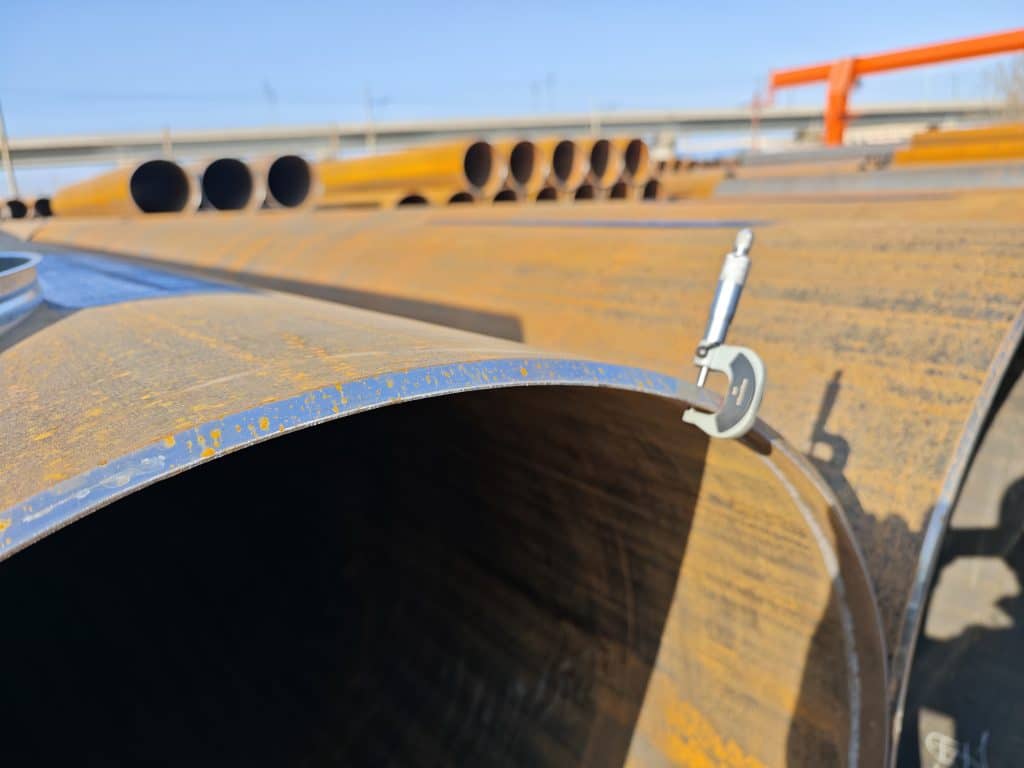
The factory weld is only one part of the integrity chain. Plate laminations, weld discontinuities, heat-treatment variation, incorrect consumables and uncontrolled field welding can all reduce low-temperature reliability. A robust inspection and test plan should connect plate receipt, forming, welding, heat treatment, NDE, mechanical testing, hydrostatic testing, dimensions and marking to a unique pipe identity.
Impact-test temperature and acceptance criteria must come from the design basis. Phrases such as “Charpy tested,” “cryogenic grade,” or “full RT/UT” are incomplete unless the test temperature, specimen location, acceptance standard and coverage are stated. Likewise, a coating such as FBE or 3LPE is normally selected for buried external-corrosion protection; it should not be described as automatically suitable for contraction cycles at liquid-LNG temperature.
Verified LONGMA Evidence—Use It Within Its Actual Scope
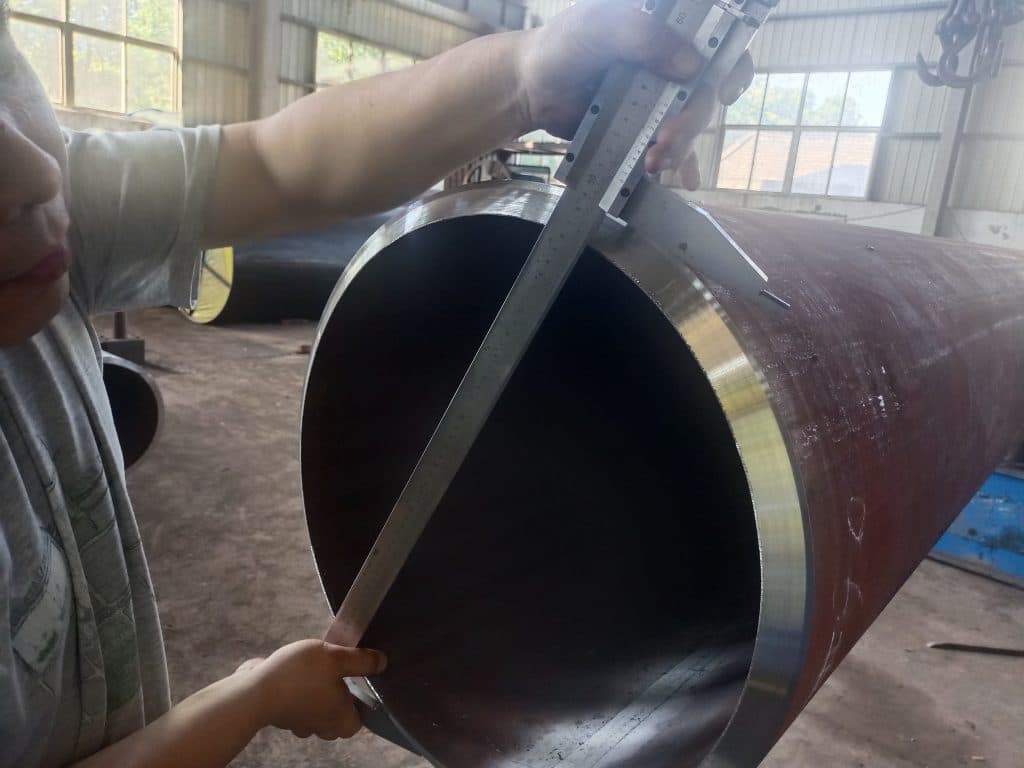
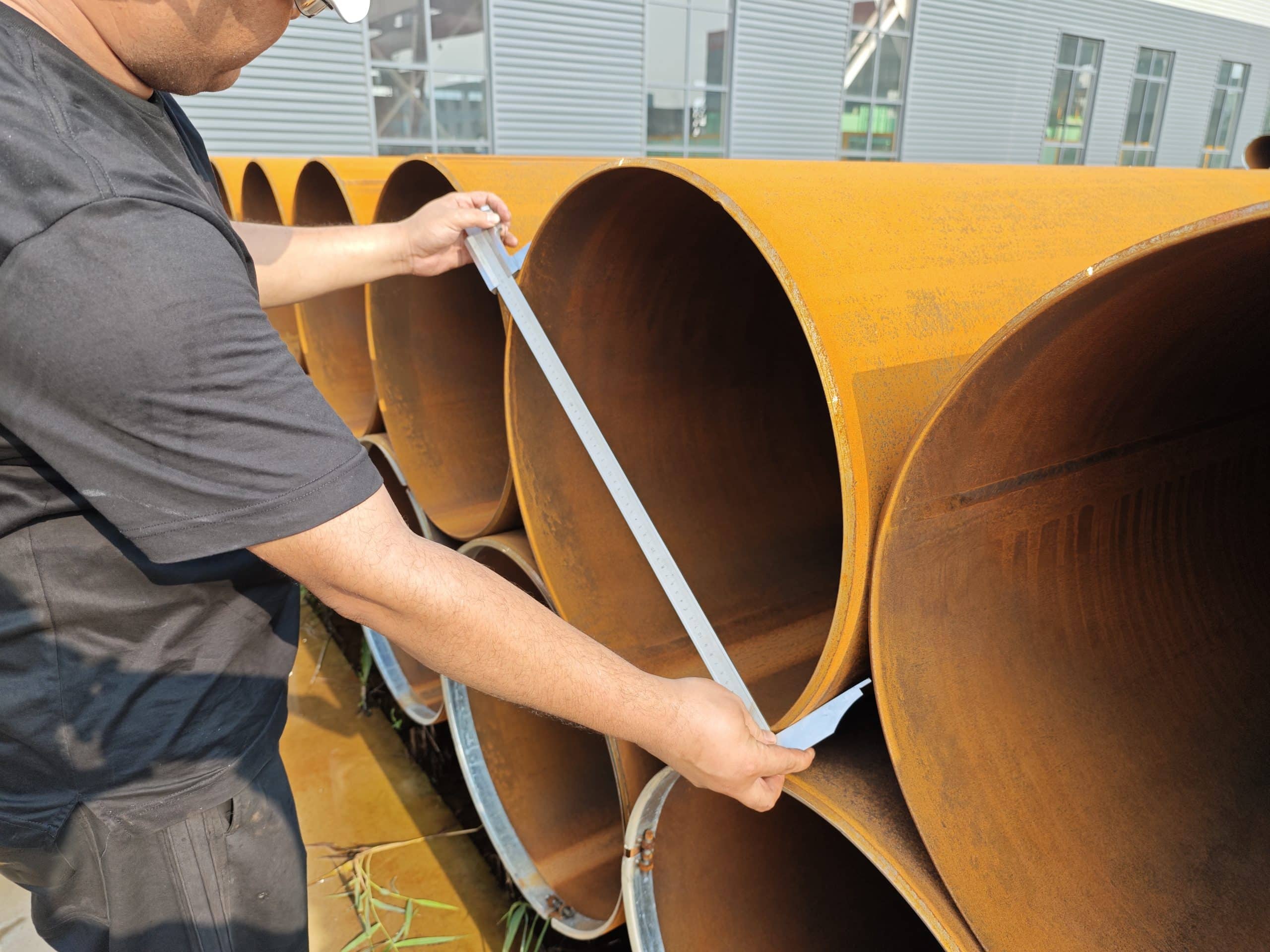
LONGMA has published a shipment record for ASTM A671 Grade CC60 Class 22 pipe with Supplementary Requirement S2 at −46°C, size 1066.8 × 12.7 × 12,000 mm. This is useful evidence of large-diameter A671 production and purchaser-specified low-temperature impact testing. It is not evidence of qualification for −162°C liquid LNG service, and the website article should preserve that distinction.
Commercial Value Without Overclaiming
For appropriate temperature zones, plate-built A671 pipe can offer large-diameter availability, tailored wall thickness and project-specific lengths. Commercial comparison should be made on a like-for-like basis that includes grade/class, impact testing, NDE, heat treatment, documentation, coating, field welding and risk. Unsupported statements such as “40–60% cheaper,” “25-year mean time between failures,” or named LNG project performance should not be published without auditable project data and customer permission.
Why Discuss the Project With LONGMA Early
Early technical review helps determine whether ASTM A671 belongs in the project piping class and which manufacturing/test options must be quoted. LONGMA can review the requested dimensions, grade/class, S2 impact requirement, NDE, hydrostatic testing, ends and documentation. The final material selection and allowable design conditions must be approved by the project engineer under the governing code.
FAQ
Can ASTM A671 CC60 be used at −162°C?
The designation CC60 does not establish a −162°C rating. Suitability would require code acceptance and project qualification of the plate, finished pipe, factory weld and field welds at the applicable MDMT. Do not specify it for liquid LNG based only on the A671 title.
Does Class 22 mean the pipe is a low-temperature grade?
No. Class relates to the manufacturing heat-treatment and examination/testing combination defined by ASTM A671. Grade and class must both be specified, and impact testing is addressed separately when required.
Is ASTM A671 pipe seamless-equivalent?
No. It is welded pipe. Full-penetration welding and NDE can provide high integrity, but “equivalent to seamless” is an engineering conclusion that depends on the design code, service and acceptance criteria—not a general ASTM claim.