- 1. External and Internal Protection Serve Different Purposes
- 2. How External Coatings Protect Buried Steel Water Pipe
- 3. How Internal Linings Support Water Quality
- 4. What NSF/ANSI/CAN 61 Does—and Does Not—Mean
- 5. Selecting a Coating System
- 6. Application and Inspection Controls
- 7. Maintenance and Service-Life Expectations
- 8. Relevant Standards
- 9. Working with LONGMA
- 10. FAQ
Pipeline coating systems can help protect steel water pipelines in two different ways. External coatings limit contact between the steel and the surrounding soil or water, while internal linings separate the steel from the conveyed water. These functions should not be confused: an external coating protects the pipe structure, whereas an internal lining that contacts drinking water must also meet the applicable health and regulatory requirements.
No coating makes a pipeline maintenance-free or guarantees a fixed service life. Performance depends on product qualification, surface preparation, application, curing, installation, water chemistry, cathodic protection, and inspection throughout service.
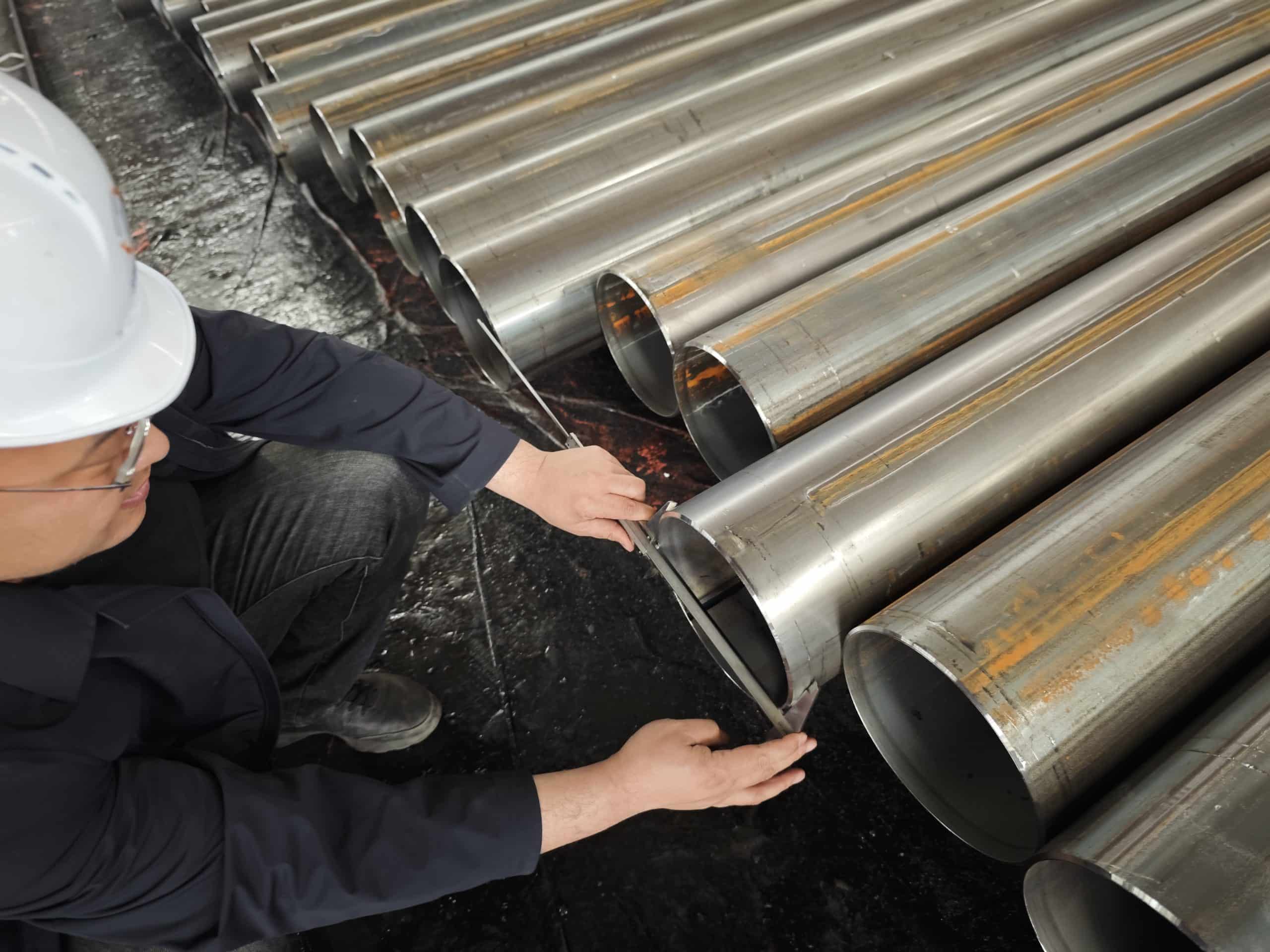
External and Internal Protection Serve Different Purposes
| Coating location | Primary function | Key procurement question |
| External | Reduce soil-side or water-side corrosion and resist handling or installation damage | Is the system qualified for the installation environment and compatible with cathodic protection? |
| Internal | Limit contact between steel and conveyed water and help maintain a smooth bore | Is the exact lining product certified or approved for the intended potable-water use? |
How External Coatings Protect Buried Steel Water Pipe
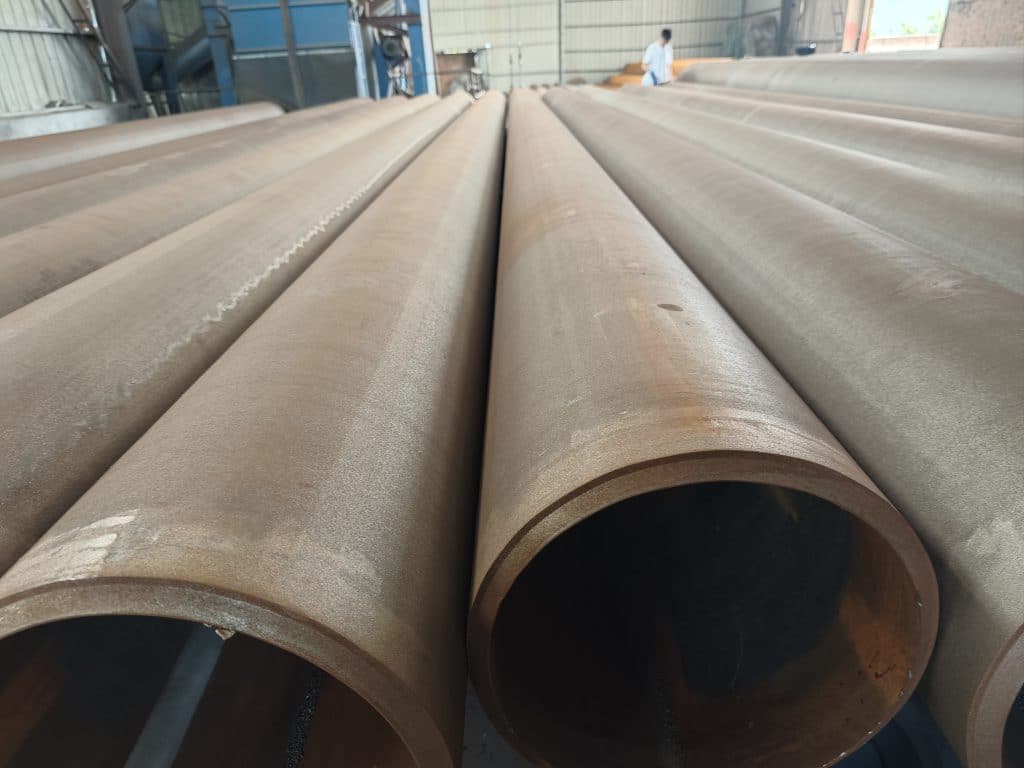
Buried steel can corrode when coating defects expose it to moisture, oxygen, salts, microorganisms, or stray-current conditions. An external coating reduces the area of steel exposed to this environment. For buried systems, the coating is commonly designed to work with—not replace—cathodic protection.
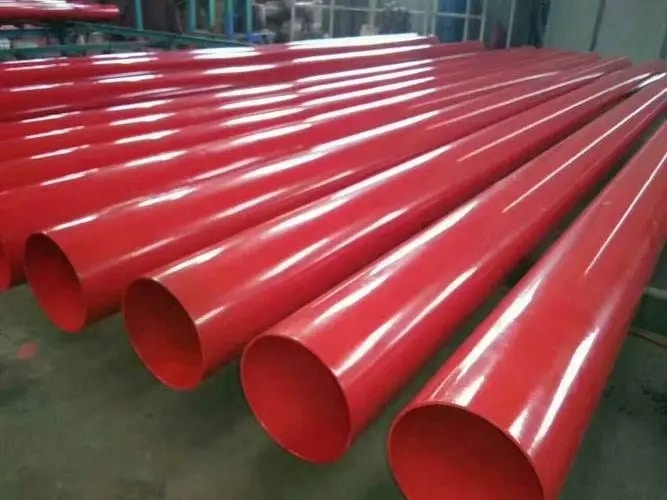
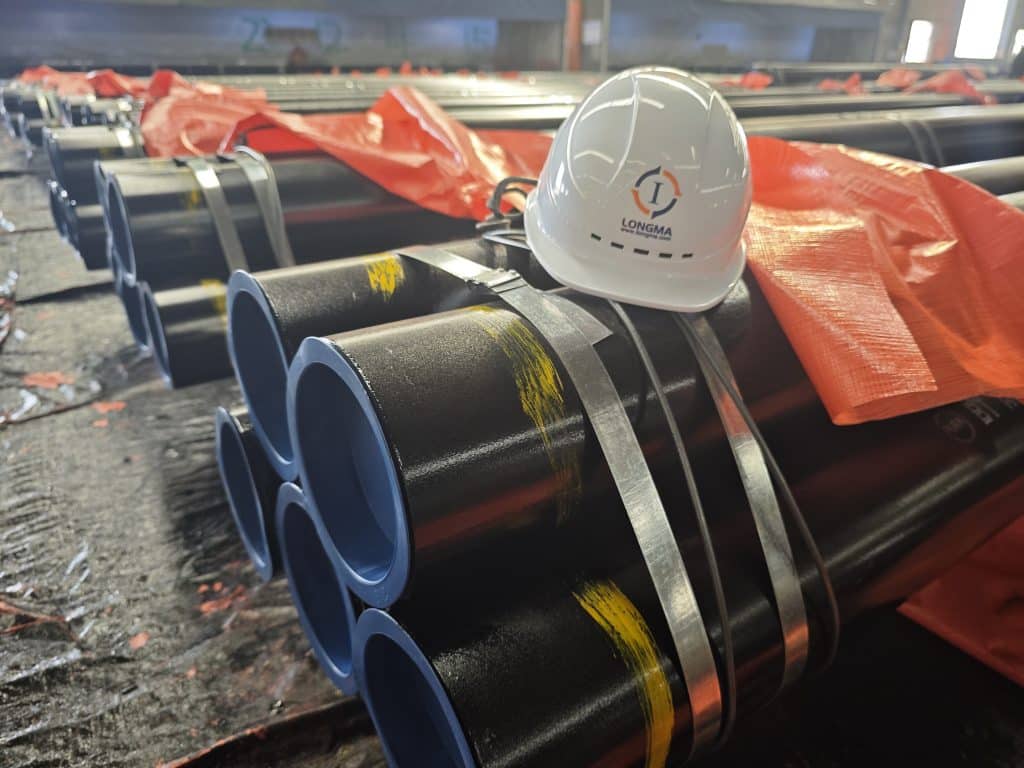
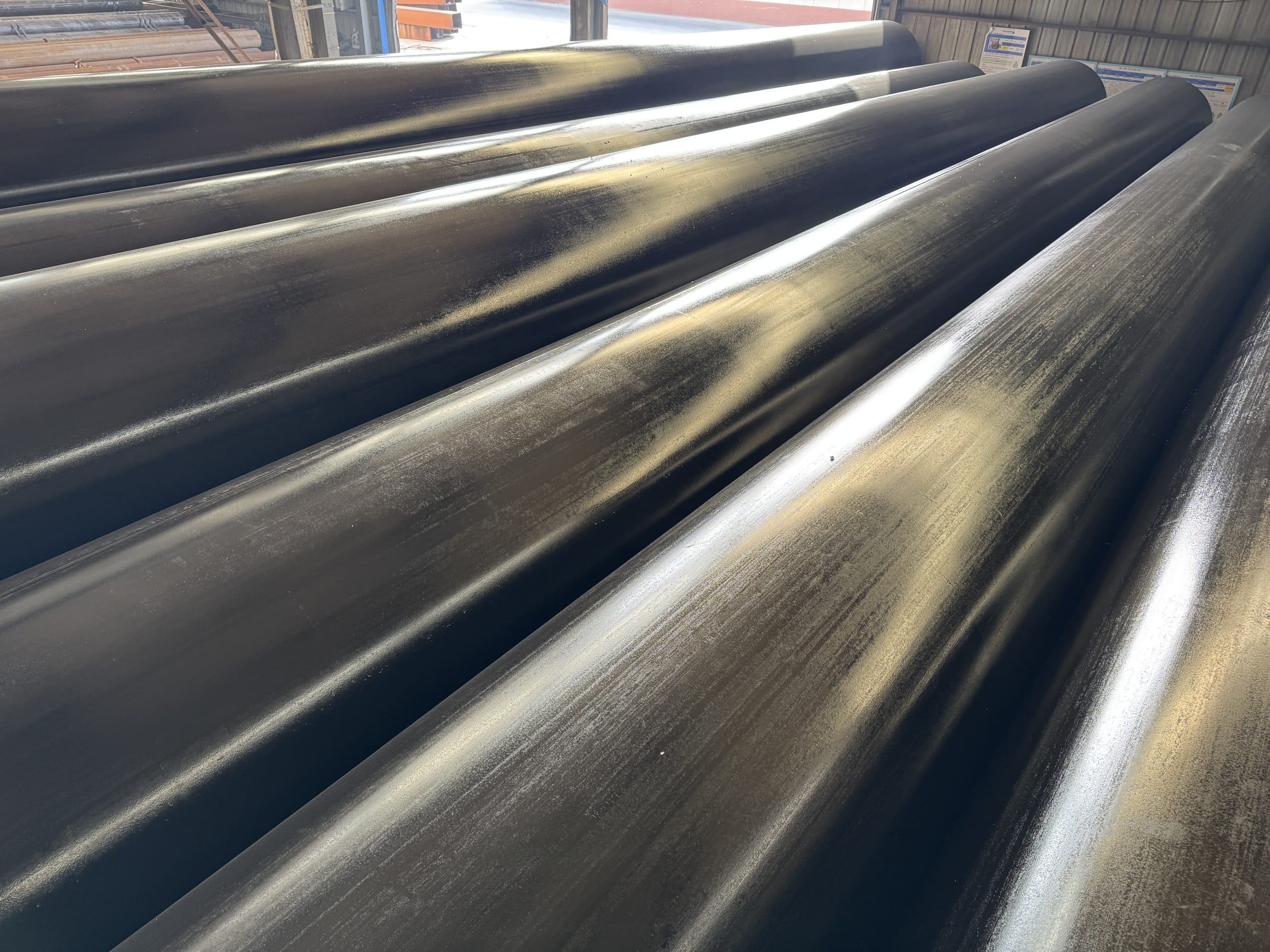
FBE and three-layer polyethylene (3LPE) may be considered for external protection, depending on the owner’s specification. FBE provides a bonded corrosion barrier. A 3LPE system combines an epoxy-based primer, an adhesive layer, and a polyethylene top layer to provide corrosion protection together with added mechanical resistance. The specified thickness and performance limits must be taken from the selected standard and project conditions, not from a universal value.
How Internal Linings Support Water Quality
An internal lining can reduce direct contact between steel and water, help control tuberculation, and maintain a smoother hydraulic surface. Liquid epoxy and FBE are among the systems that may be specified for steel water pipe, but suitability depends on the exact coating product, application conditions, pipe size, water chemistry, and applicable approval.
For drinking-water contact, material type alone is not enough. The purchaser should verify that the specific coating formulation and its intended use conditions are covered by an accepted certification or regulatory approval. Cure time, maximum surface-area-to-volume ratio, temperature, and other use restrictions may be part of the certification listing.
What NSF/ANSI/CAN 61 Does—and Does Not—Mean
NSF/ANSI/CAN 61 establishes health-effects requirements for materials, components, and products that contact drinking water. Certification evaluates whether contaminants extracted from a specific product comply with the applicable criteria. It does not mean “zero leaching,” and the standard does not establish structural performance, taste and odor performance, or resistance to microbial growth.
Therefore, statements such as “all epoxy is food grade,” “epoxy prevents biofilm,” or “the coating is completely safe” should not be used without product-specific evidence. Procurement teams should verify the manufacturer, trade name, production location, size range, end use, and any limitations shown in the current certification listing.
Selecting a Coating System
| Project factor | Why it matters | What to confirm |
| Coating location | Determines whether drinking-water contact approval is relevant | External coating, internal lining, or both |
| Water chemistry | pH, disinfectants, dissolved gases and ions can affect exposed steel and coating compatibility | Design-water data and coating supplier limits |
| Soil and installation | Backfill, handling and trenchless installation can damage external coatings | Mechanical protection and repair procedure |
| Operating conditions | Temperature, pressure cycling and flow can affect system selection | Qualified operating range |
| Regulatory jurisdiction | Acceptance requirements vary by country and water authority | Applicable approvals and current certificates |
| Inspection plan | Defects can compromise an otherwise suitable system | Surface preparation, thickness, holidays, cure and repairs |
Application and Inspection Controls
- Review the pipe, welds, and surface for conditions that could affect coating.
- Prepare the steel to the cleanliness and surface profile required by the coating procedure.
- Monitor environmental conditions and application temperature where applicable.
- Apply and cure the coating within the product manufacturer’s approved limits.
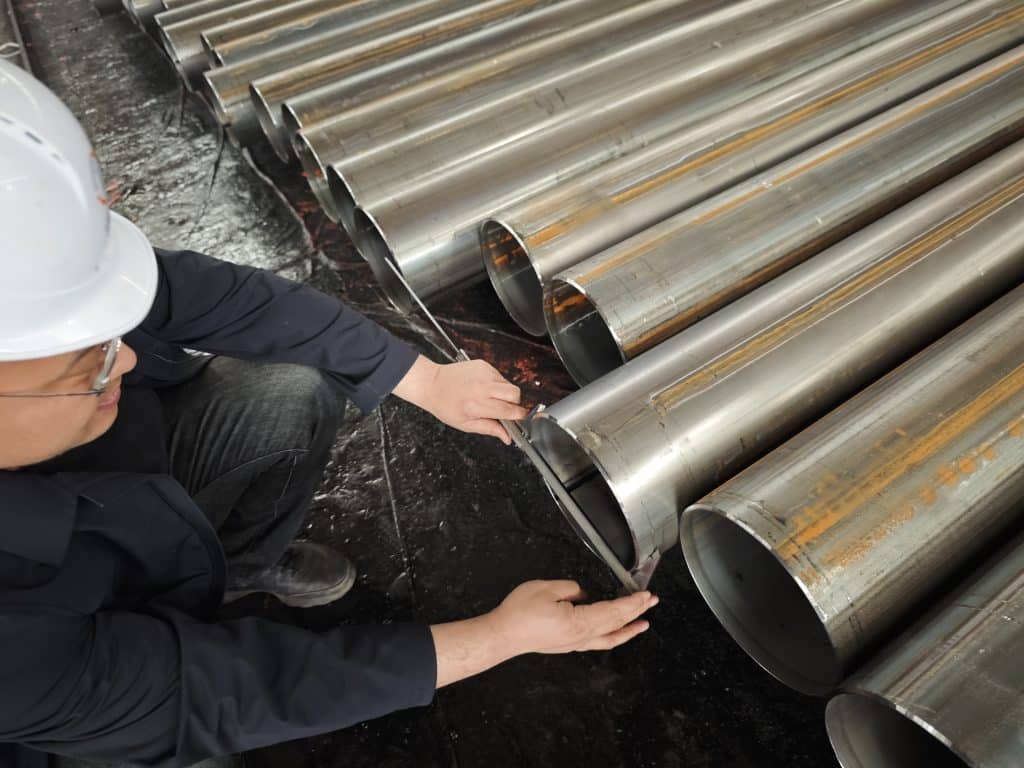
- Inspect visual condition, thickness, continuity, and repair areas using the specified methods.
- Maintain traceability between pipe identification, coating batch, application records, and inspection results.
Maintenance and Service-Life Expectations
A fixed 30-, 40-, or 50-year coating life should not be promised without a project-specific design basis. Expected performance is influenced by coating quality, installation damage, cathodic protection, water chemistry, operating conditions, and maintenance. Inspection frequency should be established by the pipeline owner’s integrity-management program and applicable regulations—not by a generic five- or ten-year interval.
Relevant Standards
- NSF/ANSI/CAN 61: health-effects evaluation for products and materials in contact with drinking water.
- AWWA C210: liquid-epoxy coating systems for the interior and exterior of steel water pipelines.
- AWWA C213: FBE coating for the interior and exterior of ductile-iron and steel water pipe and fittings.
- ISO 21809-1: external three-layer polyolefin coatings for pipeline transportation systems within its stated scope.
- ISO 21809-2: external single-layer FBE for oil and gas pipeline transportation systems within its stated scope.
The applicable edition, owner amendments, local drinking-water regulations, and project specification should be confirmed at the time of procurement.
Working with LONGMA
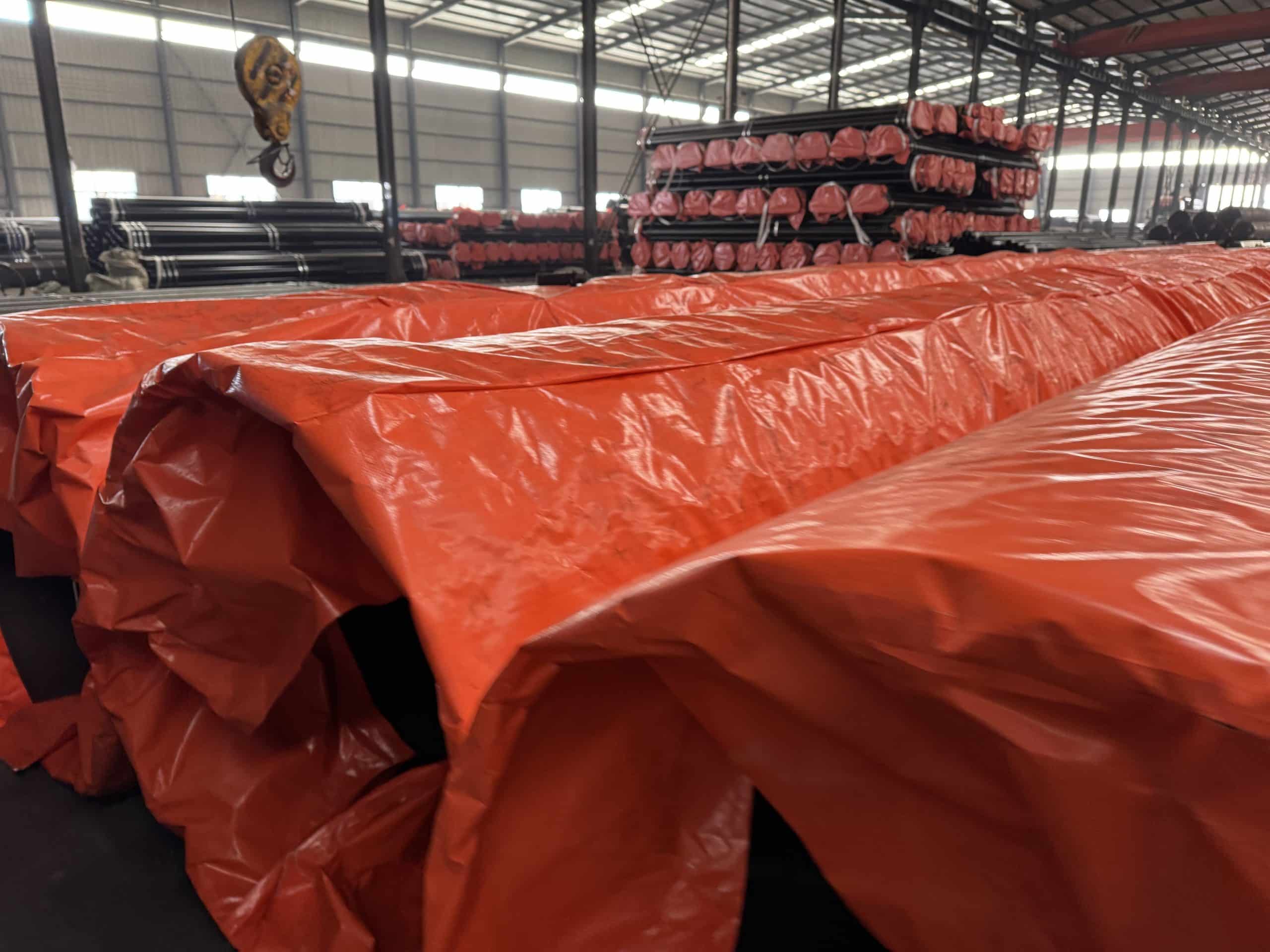
LONGMA supplies round ERW and LSAW steel pipe for water and infrastructure projects. Where coating is requested, the company can review pipe dimensions, service conditions, coating location, applicable standard, inspection requirements, documentation, and delivery needs. Specific coating availability and potable-water certification must be confirmed against the proposed product and project before order acceptance.
FAQ
Are epoxy coatings suitable for drinking-water pipe?
They may be suitable when the exact product is certified or approved for the intended potable-water contact conditions and is applied and cured according to the approved procedure.
Does an external 3LPE coating contact drinking water?
Normally no. External 3LPE protects the outside of buried or submerged steel pipe. The internal lining is the component that directly contacts conveyed water.
How often should coated water pipelines be inspected?
The owner should set the interval through an integrity-management program based on risk, water and soil conditions, cathodic-protection data, operating history, and regulatory requirements.
Request Project Review
For a quotation, provide the pipe standard and grade, dimensions, internal or external coating requirement, drinking-water approval requirements, inspection plan, quantity, and destination. Contact: info@ilongma.com.