- 1. How ERW and LSAW Pipe Are Manufactured
- 2. Typical Advantages and Limitations
- 3. Pressure Is Not Determined by the Welding Route Alone
- 4. PSL1, PSL2 and Project-Specific Requirements
- 5. Inspection and Documentation
- 6. Coating and Corrosion Protection
- 7. Practical Selection Guide
- 8. FAQ
- 9. Is LSAW always stronger than ERW pipe?
- 10. Can ERW pipe be used for sour service?
- 11. Does every API 5L PSL2 pipe require the same impact-test temperature?
- 12. Is an API Monogram license mandatory for every API 5L purchase?
- 13. Source API 5L ERW and LSAW Pipe from LONGMA
API 5L ERW vs LSAW pipe selection is not simply a choice between a cheaper pipe and a stronger pipe. Both manufacturing routes can produce qualified line pipe when the selected grade, product specification level, dimensions, testing plan, and project requirements are correctly specified. The practical decision depends on diameter, wall thickness, design calculations, service environment, order quantity, inspection requirements, and delivery schedule.
This guide compares the two welded pipe routes and explains what procurement teams should confirm before issuing an RFQ.
How ERW and LSAW Pipe Are Manufactured
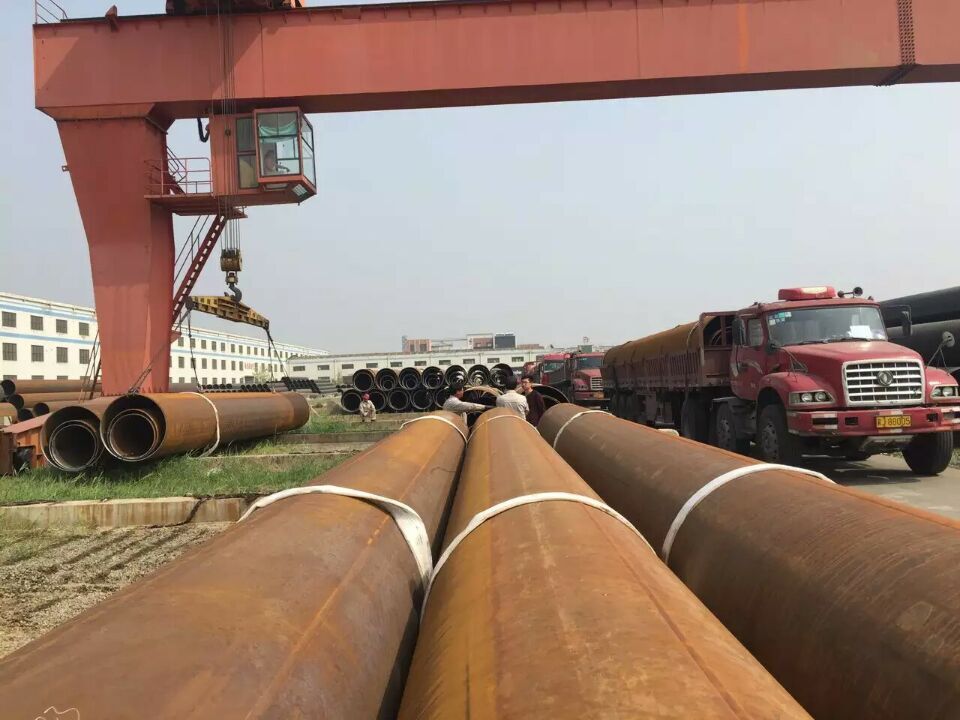
ERW pipe is normally produced from hot-rolled coil. The strip is progressively formed by rolls into a cylindrical shape, and its edges are joined by electric resistance welding. Modern line-pipe mills commonly use high-frequency welding. The process does not normally require filler metal. After welding, the external and internal flash is controlled as applicable, the weld area is heat treated when required by the product specification, and the pipe is sized and straightened.
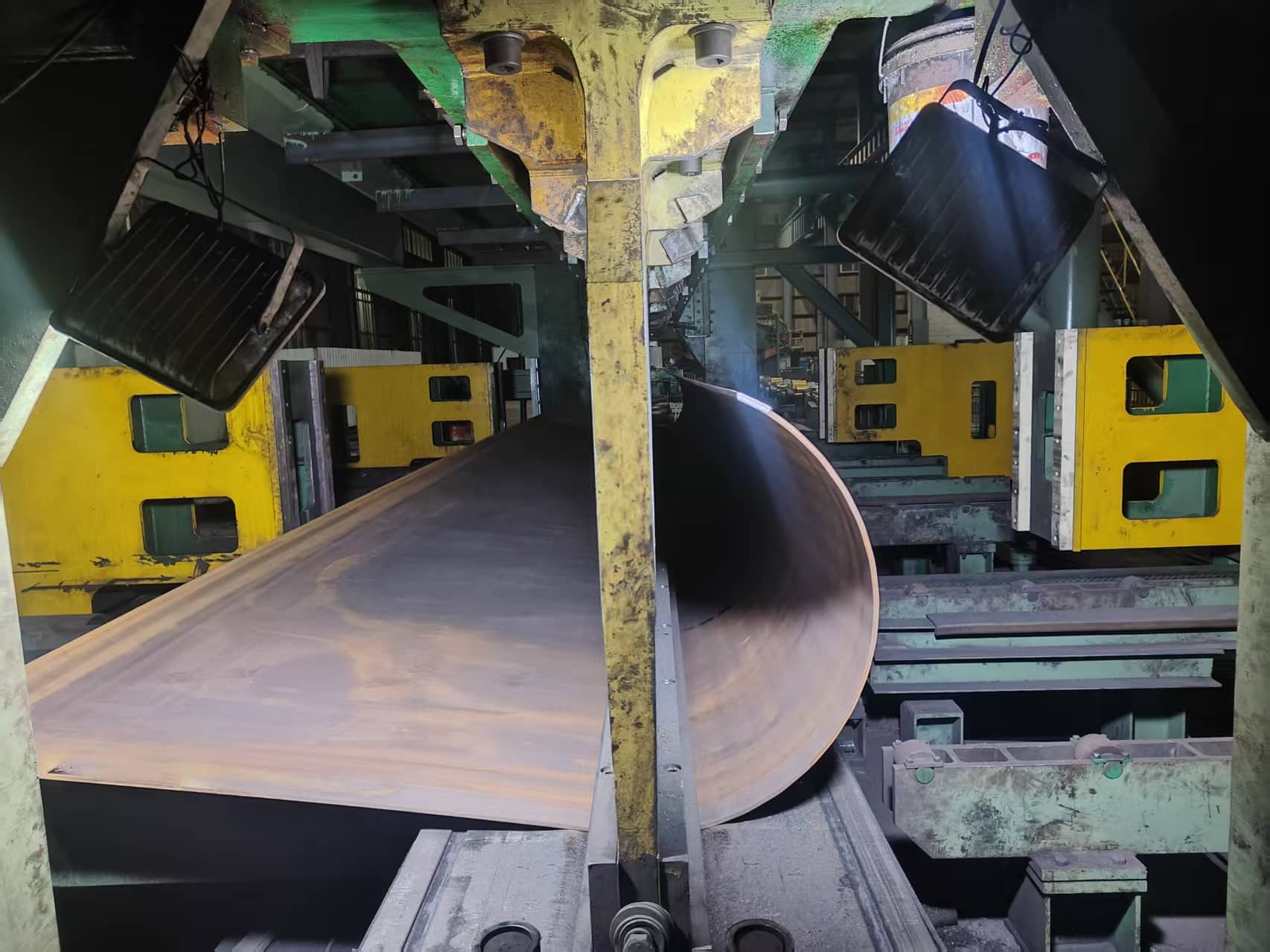
LSAW pipe is formed from steel plate. JCOE and UOE are common forming routes. The longitudinal seam is welded by submerged arc welding from the inside and outside using filler metal and flux. Plate-based production allows manufacturers to address many large-diameter and heavy-wall orders, but the available range depends on the mill’s forming presses, welding equipment, plate supply, and qualification scope.
API Spec 5L recognizes seamless and several welded manufacturing routes. In specification language, longitudinal submerged arc welded pipe is generally identified as SAWL. “LSAW” remains the widely used commercial term.
Typical Advantages and Limitations
| Decision factor | ERW or HFW pipe | LSAW or SAWL pipe |
|---|---|---|
| Starting material | Hot-rolled coil | Steel plate |
| Seam process | Electric resistance or high-frequency welding, normally without filler metal | Inside and outside submerged arc welding with filler metal |
| Typical commercial position | Small- and medium-diameter, repeat-volume orders | Medium- and large-diameter or heavier-wall orders |
| Dimensional considerations | Continuous forming and sizing can provide consistent geometry | Plate quality and controlled forming are important to roundness and alignment |
| Productivity | Continuous production generally supports high output | Individual plate forming and longer weld cycles generally reduce throughput |
| Main quality focus | Edge preparation, heat input, bond line, weld-area heat treatment and online NDT | Plate laminations, forming strain, seam geometry, consumables and SAW discontinuities |
| Cost tendency | Often economical where coil and mill capability match the order | Often higher because of plate input and forming and welding cycles |
| Important limitation | Available OD and wall thickness depend on coil and mill capability | Minimum economical quantity and plate availability may affect price and schedule |
These are typical commercial tendencies, not universal limits imposed by API Spec 5L. LONGMA’s available ERW and LSAW dimensions should therefore be confirmed against the current product catalogue and the exact inquiry.
Pressure Is Not Determined by the Welding Route Alone
It is inaccurate to state that ERW pipe is suitable only below a fixed pressure or that LSAW pipe automatically has a higher pressure rating. The allowable operating pressure is established by the applicable pipeline design code and project specification. Key inputs include outside diameter, specified wall thickness, material strength, design factor, temperature pits, longitudinal-joint factor where applicable, corrosion allowance, dimensional tolerance, and the relevant load cases.
An ERW pipe may be acceptable for a demanding service when its dimensions, grade, manufacturing qualification, toughness, NDT, and design calculations meet the project requirements. Conversely, selecting LSAW does not remove the need for those calculations or inspections. A supplier should not recommend a manufacturing route solely from the operating pressure stated in an email.
PSL1, PSL2 and Project-Specific Requirements
API Spec 5L provides PSL1 and PSL2. PSL2 introduces additional controls, including tighter chemical and mechanical requirements, maximum property limits for relevant grades, traceability, toughness requirements where applicable, and more extensive inspection requirements. The exact provisions must be checked against the edition invoked by the purchase order.
As of 2026, API has published information concerning the 47th Edition update. Buyers and manufacturers should confirm the applicable edition and the API Monogram transition requirements instead of assuming that every new order is governed by the 2018 edition. ISO 3183:2019 supplements API Spec 5L, 46th Edition, with stated exceptions; it should not be cited as though it automatically incorporates a later API edition.
For H2S-containing service, the purchaser must define the environment and the required qualification. API 5L Annex H, ISO 15156, NACE TM0284, NACE TM0177, and owner specifications may be relevant, but the required HIC, SSC, hardness, chemistry, and acceptance criteria depend on the specified route. The presence of H2S does not justify inserting one universal hardness or sulfur limit into every order.
Inspection and Documentation
The inspection plan should follow the specified API 5L edition, PSL, manufacturing route, and purchase order. It may include:
- review of steel coil or plate certificates and heat traceability;
- chemical analysis and tensile testing;
- Charpy V-notch or DWTT testing when required;
- automated ultrasonic or electromagnetic inspection appropriate to ERW/HFW seams;
- ultrasonic and/or radiographic examination of SAW seams as specified;
- inspection of pipe ends and plate or pipe body for relevant imperfections;
- hydrostatic testing of each pipe unless an expressly permitted alternative has been agreed;
- dimensional, visual, coating, marking, and final document review.
EN 10204 Type 3.1 or 3.2 documentation should be requested when required by the contract. A Type 3.2 certificate involves validation by the purchaser’s authorized representative or an independent inspection representative designated under the applicable arrangement; it should not be described as an automatic requirement for every API 5L order.
Coating and Corrosion Protection
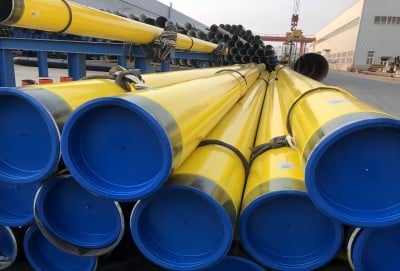
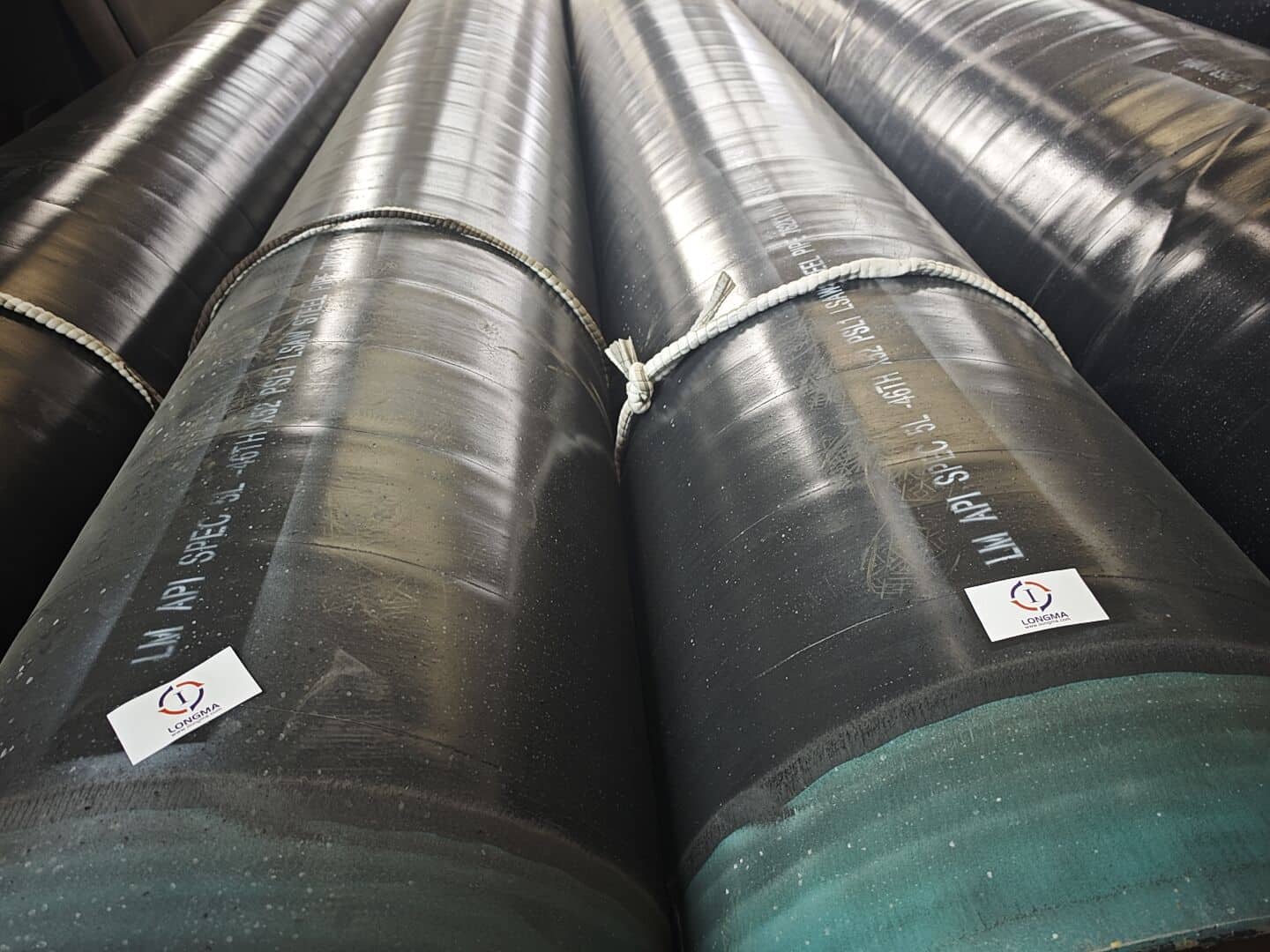
ERW and LSAW pipe can both receive FBE, three-layer polyethylene, three-layer polypropylene, or liquid coating systems when the pipe surface, geometry, coating procedure, and intended service are compatible. Coating selection should consider operating temperature, soil or water conditions, cathodic protection, handling loads, installation method, field-joint coating, and repair procedures.
For factory-applied extruded polyethylene coatings, procurement documents should check the current DIN 30670-1:2024 or the specified edition of ISO 21809-1 rather than automatically citing DIN 30670:2012. Compliance with a coating standard does not by itself guarantee a fixed service life; installation damage and the integrity of the complete corrosion-control system remain decisive.
Practical Selection Guide
ERW is often commercially attractive when the required diameter and wall thickness fit the mill’s qualified coil-based range, especially for repeat quantities, gathering systems, distribution networks, water transmission, and other projects that value production efficiency.
LSAW is often considered when the order requires large diameter, heavy wall, plate-specific properties, demanding fracture-control requirements, or a plate-based manufacturing route required by the owner. In the overlapping size range, neither process should be selected by habit. Compare the approved manufacturing procedure, dimensional capability, toughness data, NDT plan, delivery schedule, and total installed cost.
Before requesting a quotation, provide at least the following:
- applicable standard and edition;
- grade, PSL and delivery condition;
- outside diameter, wall thickness, length and quantity;
- design code, design pressure and temperature;
- medium and H2S or CO2 conditions;
- toughness, HIC, SSC or hardness requirements;
- NDT and hydrostatic-test requirements;
- coating system, cutback and field-joint requirements;
- inspection-document type and third-party hold points;
- destination, delivery date and packing requirements.
For schedule planning, LONGMA may offer common stock sizes within 7 to 30 days, while non-stock LSAW dimensions commonly require 30 to 45 days. These are commercial planning figures rather than standard requirements; the confirmed production and shipping schedule belongs in the quotation.
FAQ
Is LSAW always stronger than ERW pipe?
No. Strength is specified by grade and verified through product testing. Manufacturing route affects available dimensions and the quality-control approach, but it does not replace grade, wall-thickness, toughness, or design calculations.
Can ERW pipe be used for sour service?
It may be used when the project permits that manufacturing route and the ordered pipe meets the specified sour-service qualification, chemistry, hardness, cracking-test, NDT, and documentation requirements.
Does every API 5L PSL2 pipe require the same impact-test temperature?
No. Test requirements and temperatures depend on the applicable edition, grade, size, service, annexes, and purchase order. The design minimum temperature and fracture-control plan must be communicated to the manufacturer.
Is an API Monogram license mandatory for every API 5L purchase?
The API Monogram is a voluntary licensing program, although many purchasers require monogrammed products. The purchase order should state whether monogramming and a currently valid license are mandatory.
Source API 5L ERW and LSAW Pipe from LONGMA
LONGMA has manufactured welded steel pipe since 2003 and supplies round ERW and LSAW products for oil, gas, water, structural, and industrial projects. The company operates facilities covering approximately 230,000 square meters. Its annual output exceeded 1,000,000 tons by the end of 2023. LONGMA has a registered capital of RMB 176 million and has supplied customers including SINOPEC, CNPC, PEMEX, PDVSA, and PTTEP. Stock products may be delivered in as little as seven days, subject to grade, dimensions, quantity, coating, inspection, and destination.
Commercial data and project references should be evaluated together with the order-specific technical package. Contact LONGMA at info@longma-group.com with the complete pipe schedule and project specification to confirm the available manufacturing route, dimensions, inspection plan, coating, price, and delivery schedule.