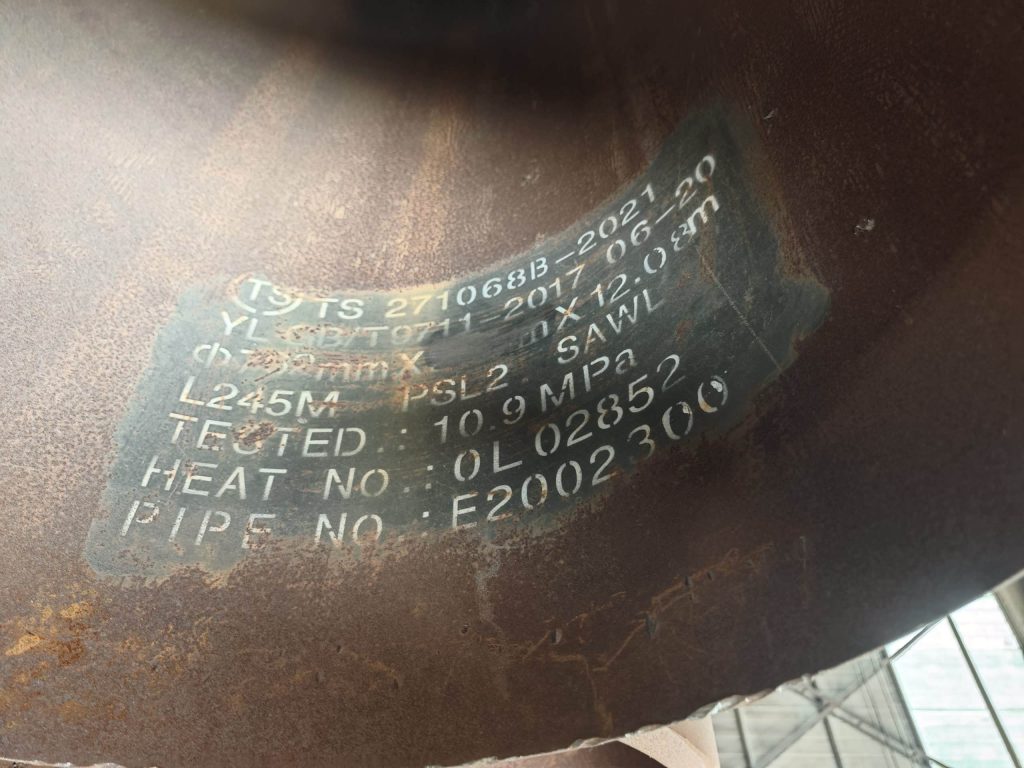
- 1. What Are the Main Corrosion Risks for Natural Gas Pipeline Steel Pipes?
- 2. How to Select Steel Pipes for Natural Gas Pipelines?
- 3. External Coating and Internal Corrosion Control Require Different Strategies
- 4. What Quality Tests Are Important During Steel Pipe Manufacturing?
- 5. How Can Buyers Reduce Long-Term Procurement Risks?
- 6. How Does LONGMA Help Reduce Procurement Risks?
- 7. FAQ: Natural Gas Pipeline Steel Pipe
- 8. Conclusion
Natural gas pipelines operate continuously under pressure and changing temperature conditions. Steel pipes may be exposed to CO₂, H₂S, moisture, soil, stray currents, and other factors that can accelerate corrosion. Corrosion can lead to wall thinning, pitting, cracking, leakage, and even unplanned shutdowns.
Therefore, natural gas pipeline steel pipe selection should not simply focus on choosing a higher steel grade. A reliable solution should consider the gas composition, operating conditions, corrosion environment, mechanical properties, and overall corrosion protection system.
What Are the Main Corrosion Risks for Natural Gas Pipeline Steel Pipes?
Corrosion in natural gas pipelines can generally be divided into internal corrosion and external corrosion.
Internal corrosion is mainly associated with moisture, CO₂, and H₂S in the transported gas. When CO₂ and water are present together, the risk of internal corrosion can increase. H₂S-containing environments require additional consideration of sulfide stress cracking (SSC), hydrogen-induced cracking (HIC), and other hydrogen-related damage mechanisms.
External corrosion is more common in buried pipelines and can be affected by soil moisture, salts, stray currents, and damage to the external coating.
| Corrosion Environment | Main Risk | Protection Approach |
| CO₂ + water | Internal and localized corrosion | Fluid control and material selection |
| H₂S environment | SSC, HIC and related damage | Sour-service material selection |
| Moist soil | External corrosion | Coating + cathodic protection |
| Coating damage | Localized corrosion | Coating inspection and field joint protection |
Therefore, steel pipe corrosion protection should not rely on a single measure. Material selection, process control, coating, cathodic protection, and operational monitoring should work together.
How to Select Steel Pipes for Natural Gas Pipelines?
The first step in material selection should be understanding the operating conditions rather than simply choosing a steel grade.
Key information should include:
- Design pressure and wall thickness;
- Design temperature;
- Pipe diameter and operating conditions;
- CO₂ and H₂S content;
- Presence of free water;
- Whether the pipeline is buried or above ground;
- Expected service life.
For example, X65 has a higher specified strength level than X52, but it should not automatically be considered “more corrosion resistant.” Steel grade primarily addresses structural strength, while corrosion performance also depends on material condition, service environment, and protection measures.
For natural gas containing H₂S, material suitability for sour service should be evaluated according to the actual operating conditions. The ISO 15156 series provides important guidance for material selection and cracking mechanisms in H₂S-containing environments.
The right natural gas pipeline steel pipe is the material whose properties are properly matched to the actual service conditions.
External Coating and Internal Corrosion Control Require Different Strategies
For buried natural gas pipelines, common external coating systems include 3LPE and 3LPP. ISO 21809-1:2018 specifies requirements for factory-applied three-layer polyethylene and polypropylene coating systems for buried or submerged pipelines.
However, an external coating should not be considered a permanent barrier.
Coatings can be damaged during transportation, lifting, welding, backfilling, and installation. Therefore, coating integrity inspection and field joint coating quality are essential. Where applicable, cathodic protection can be used together with the coating system to reduce corrosion risks at coating defects.
Internal corrosion requires a different approach. Depending on the gas composition and operating conditions, control measures may include gas dehydration, appropriate material selection, corrosion inhibitors where applicable, and continuous corrosion monitoring.
In simple terms:
External corrosion protection addresses the soil and surrounding environment, while internal corrosion control addresses the transported gas. They should not be treated as the same problem.
What Quality Tests Are Important During Steel Pipe Manufacturing?
Corrosion protection does not begin after the steel pipe leaves the factory. Material quality, welding quality, and manufacturing control all contribute to long-term pipeline reliability.
Chemical Composition Testing
Chemical analysis verifies that elements such as C, Mn, Si, P, and S comply with the applicable purchasing requirements. It also provides important information for evaluating strength, weldability, and special service requirements.
Tensile and Impact Testing
Tensile testing verifies yield strength, tensile strength, and elongation, while impact testing evaluates toughness at the specified test temperature.
It is important to remember that high strength does not automatically mean high corrosion resistance. Mechanical properties and corrosion performance are different aspects of material evaluation.
UT/RT Non-Destructive Testing
Ultrasonic testing (UT) and radiographic testing (RT), where specified, can help identify internal discontinuities in the pipe body or weld. For welded steel pipes, weld quality and the heat-affected zone require particular attention.
Hydrostatic Testing
Hydrostatic testing verifies the pressure integrity of the finished pipe under specified test conditions. However, it cannot replace chemical analysis, mechanical testing, or non-destructive testing.
A robust quality control process should therefore establish a traceable chain:
Raw Material → Forming/Welding → NDT → Mechanical Testing → Hydrostatic Testing → Dimensional Inspection → Product Traceability
How Can Buyers Reduce Long-Term Procurement Risks?
When purchasing natural gas pipeline steel pipes, buyers should not compare suppliers only by price per ton. The supplier’s ability to provide reliable quality evidence is equally important.
Key questions include:
- Can the raw material be traced back to the original heat?
- Is the steel pipe manufacturing process stable and controlled?
- Does the manufacturer have an internal laboratory?
- Does NDT cover the requirements of the project?
- Can MTCs and inspection reports be linked to specific products?
- Does the supplier have experience with similar pipeline applications?
- Are the coating and field joint protection requirements clearly defined?
For B2B procurement, traceable inspection data is more valuable than a general quality promise.
How Does LONGMA Help Reduce Procurement Risks?
With more than 20 years of steel pipe manufacturing experience, LONGMA focuses on process control and internal laboratory testing to strengthen product quality management.
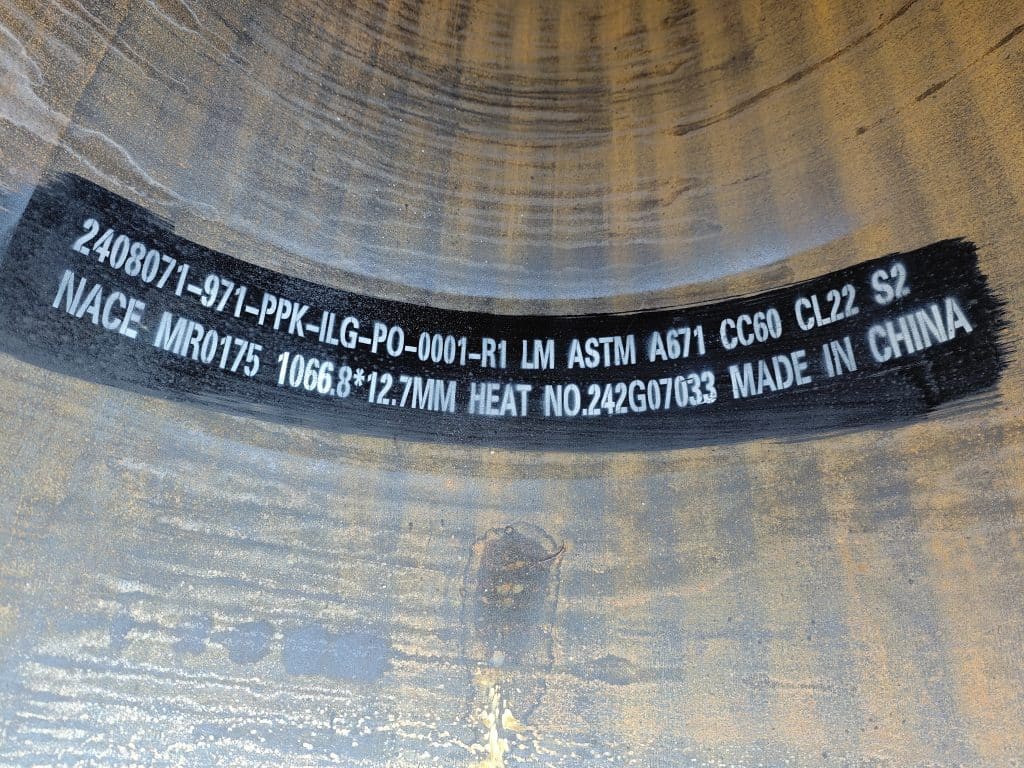
From raw material inspection through forming, welding, testing, and final delivery, LONGMA emphasizes establishing a complete quality data chain. Depending on project requirements, quality control can cover chemical composition, mechanical properties, dimensional inspection, non-destructive testing, and hydrostatic testing.
For buyers, this means that product quality can be evaluated through raw material information, inspection results, and batch traceability, rather than relying only on a general statement of product quality.
This verifiable approach provides greater value for industrial procurement and helps customers reduce quality and delivery risks.
FAQ: Natural Gas Pipeline Steel Pipe
- Is X65 always better than X52?
Not necessarily. X65 has a higher strength level, but material selection also depends on pressure, temperature, wall thickness, toughness, weldability, and corrosion conditions.
- Does an API 5L steel pipe mean that it will not corrode?
No. API 5L primarily specifies requirements for line pipe products. Actual corrosion performance depends on the transported gas, external environment, coating system, cathodic protection, and operating conditions.
- Why does H₂S-containing natural gas require special material selection?
H₂S can increase the risk of SSC, HIC, and other hydrogen-related cracking mechanisms. Therefore, material suitability for sour service should be evaluated based on the actual service conditions and applicable project requirements.
- Can 3LPE completely replace cathodic protection?
It should not be assumed. External coating and cathodic protection are complementary corrosion-control measures. The appropriate combination depends on pipeline design and project requirements.
- What should buyers focus on when purchasing natural gas pipeline steel pipes?
Four factors should receive particular attention:
Is the material suitable for the service conditions? Is manufacturing consistently controlled? Is inspection sufficient? Can the product be fully traced?
Conclusion
Corrosion protection for natural gas pipeline steel pipes is not simply a matter of selecting a particular steel grade or adding an external coating. It is a systematic process involving material selection, manufacturing, inspection, corrosion protection, and operational management.
A proper natural gas pipeline steel pipe selection strategy should begin with CO₂, H₂S, moisture, pressure, temperature, and pipeline environment, followed by the selection of steel grade, wall thickness, manufacturing process, and corrosion protection system.
For buried pipelines, the external coating and cathodic protection strategy should be considered together. For internal corrosion, gas composition, moisture control, and material compatibility are critical.
With more than 20 years of steel pipe manufacturing experience, LONGMA combines manufacturing process control with internal laboratory testing to support consistent product quality. Instead of comparing steel pipes only by price, buyers can reduce long-term project risks by selecting products that are properly matched to their actual operating conditions and supported by reliable quality control and traceability.