- 1. Manufacturing Routes
- 2. Comparison for Procurement
- 3. Strength and Pressure Capacity
- 4. PSL and Toughness Requirements
- 5. Sour Service Does Not Have One Universal Recipe
- 6. Cost, Availability and Lead Time
- 7. Selecting the Appropriate Route
- 8. Project Case LSAW X70 for a Cross-Country Gas Line
- 9. Supplier Qualification Checklist
- 10. FAQ
- 11. Is seamless API 5L pipe always safer than welded pipe?
- 12. Can welded pipe meet high-pressure pipeline requirements?
- 13. Can ERW or LSAW pipe be used in sour service?
- 14. Does LONGMA manufacture seamless pipe?
- 15. Request an API 5L Welded Pipe Quote from LONGMA
API 5L seamless and welded pipe can both be used in pipeline transportation systems when the selected product complies with the applicable specification, design code, and project requirements. A weld seam does not automatically make a pipe weaker, and the absence of a seam does not automatically make a pipe suitable for every critical service.
The practical choice depends on size availability, wall thickness, grade, product specification level, toughness, service environment, inspection requirements, quantity, and project economics. LONGMA manufactures round ERW and LSAW welded pipe; it does not present seamless pipe as an in-house manufacturing product. This article therefore provides a selection comparison while focusing on the controls buyers should apply to welded line pipe.
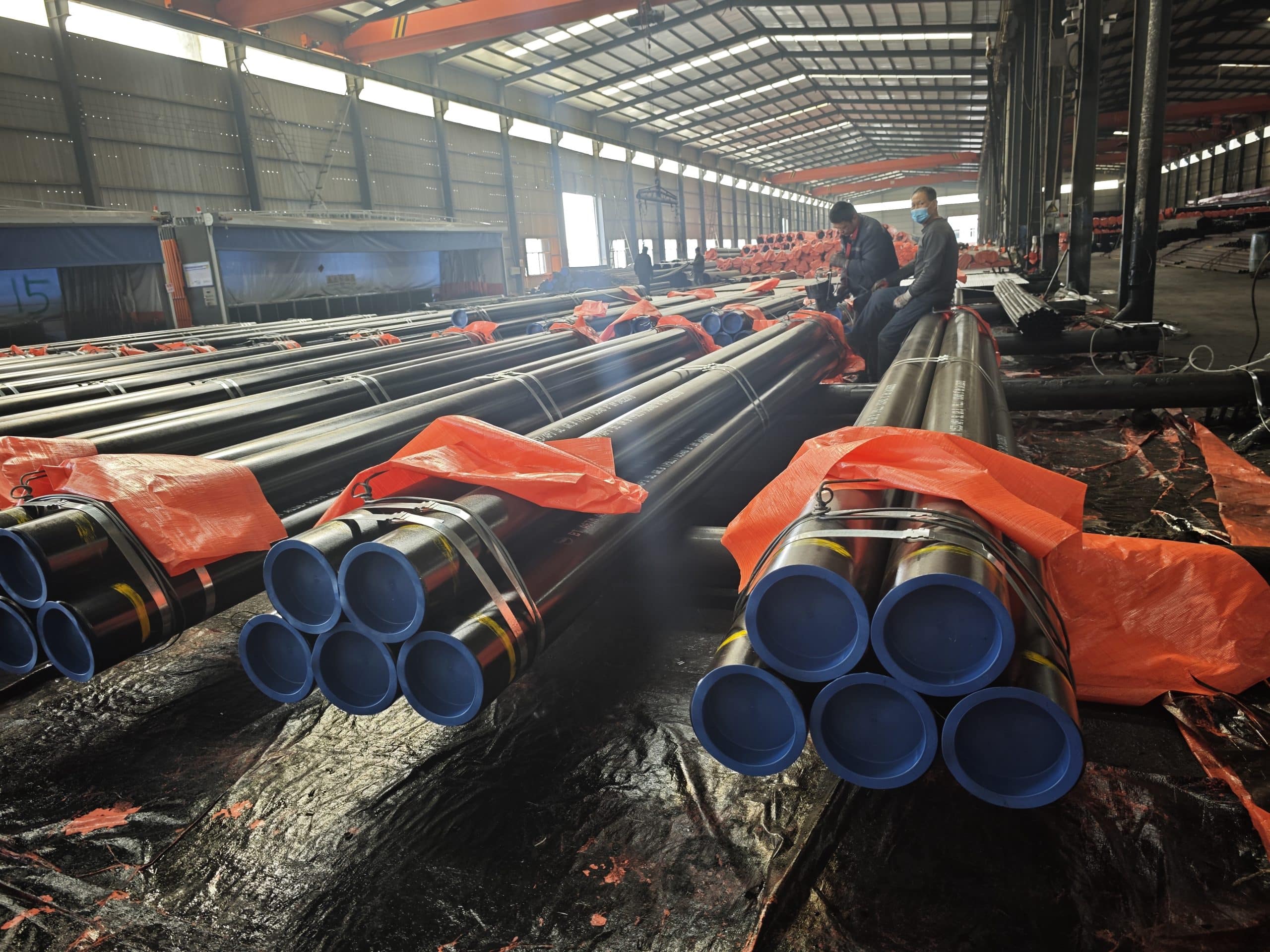
Manufacturing Routes
Seamless pipe starts from a solid billet that is heated, pierced, elongated, rolled, sized, and heat treated as required. Because it has no longitudinal weld, it avoids weld-specific discontinuities. However, seamless production still requires careful control of eccentricity, wall-thickness variation, surface quality, heat treatment, and mechanical properties.
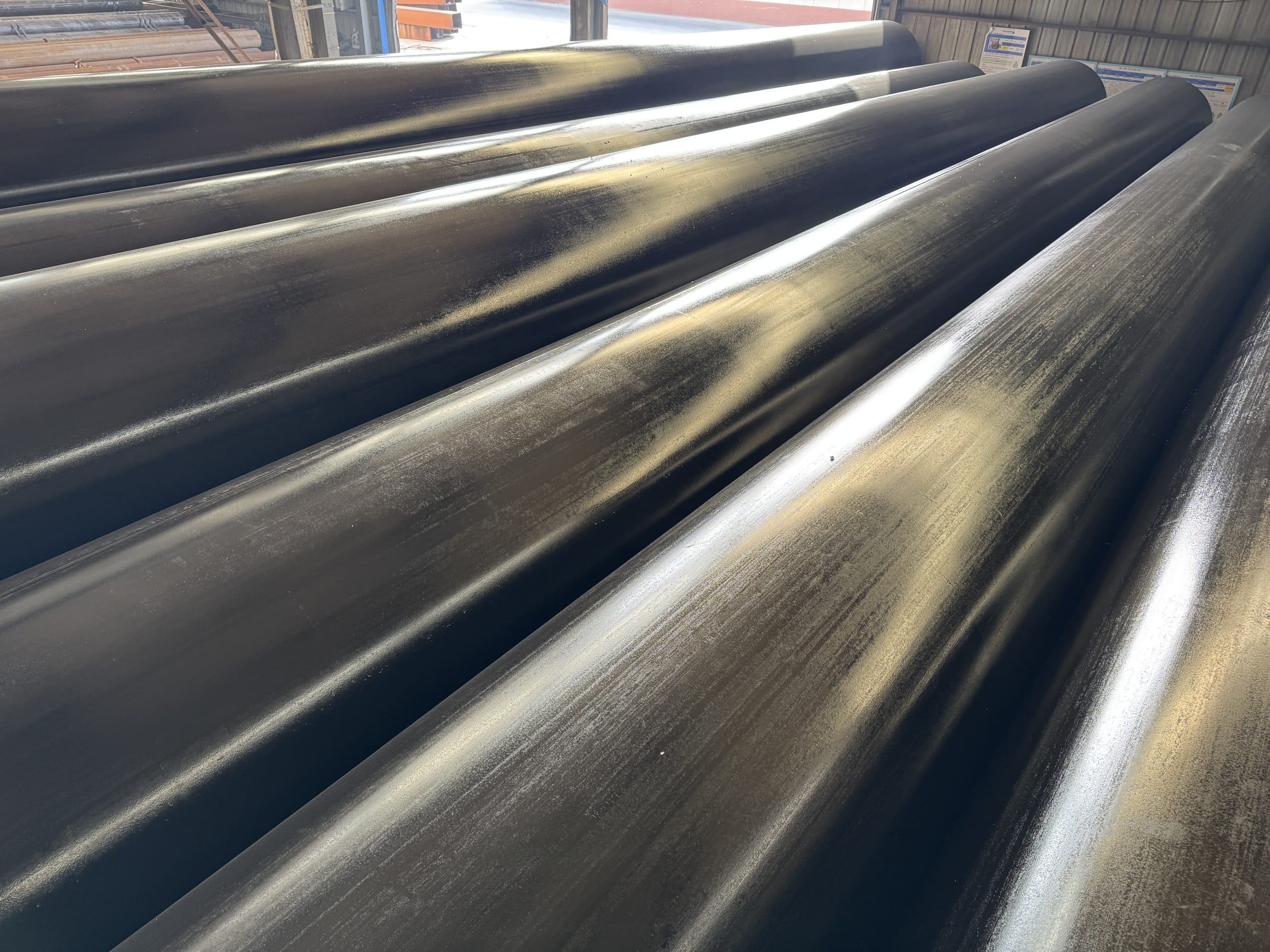
Welded API 5L pipe is formed from coil or plate and joined along a longitudinal seam. Two widely purchased routes are:
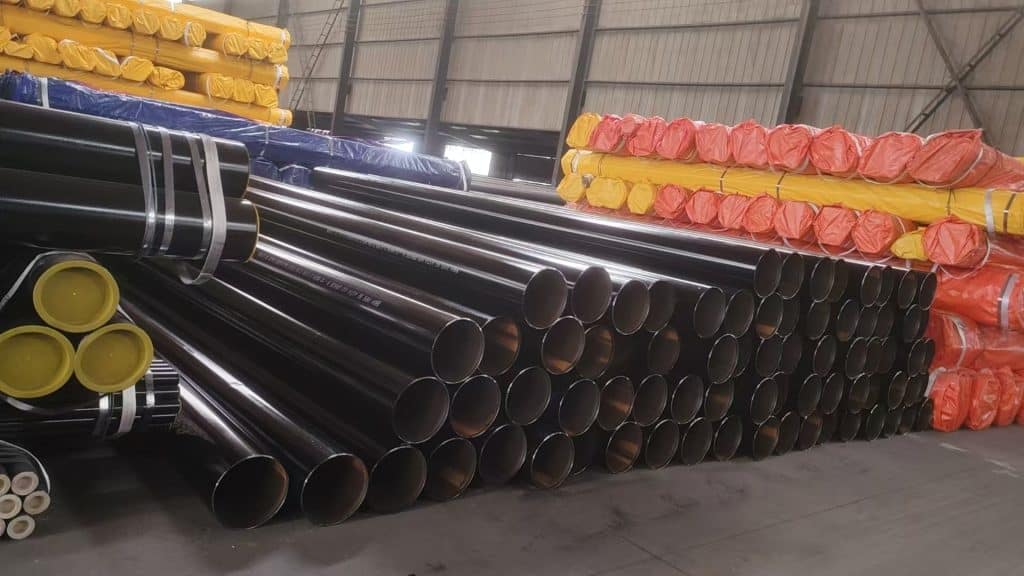
- ERW/HFW:coil is continuously roll-formed and the edges are joined by resistance or high-frequency welding, normally without filler metal.
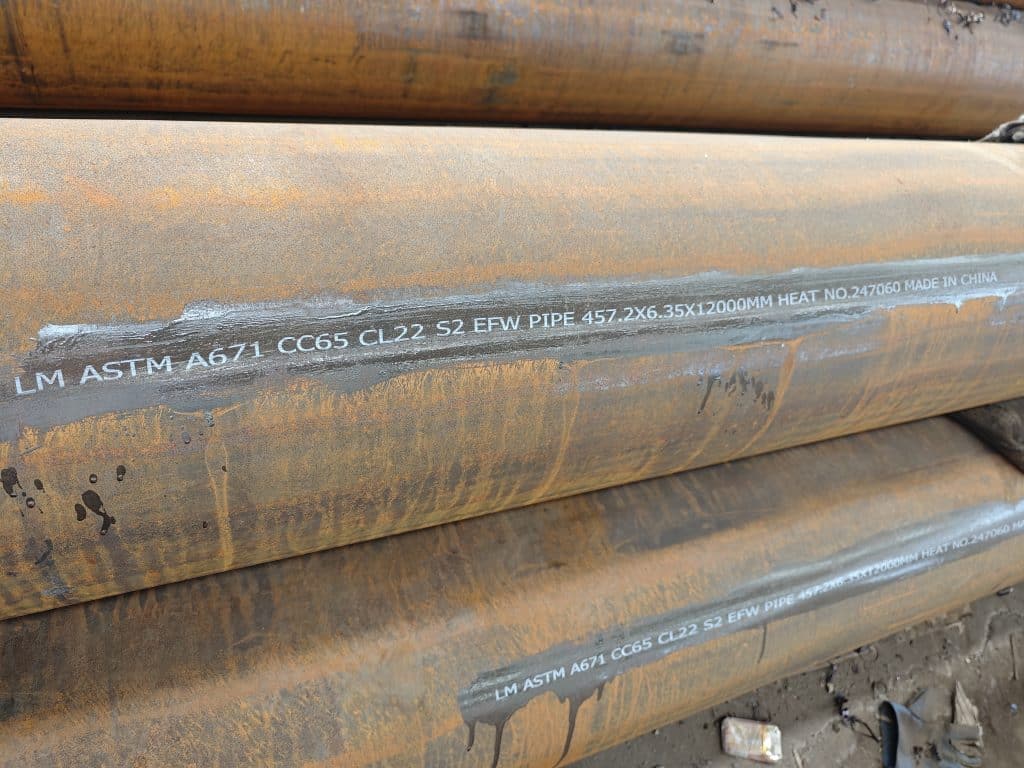
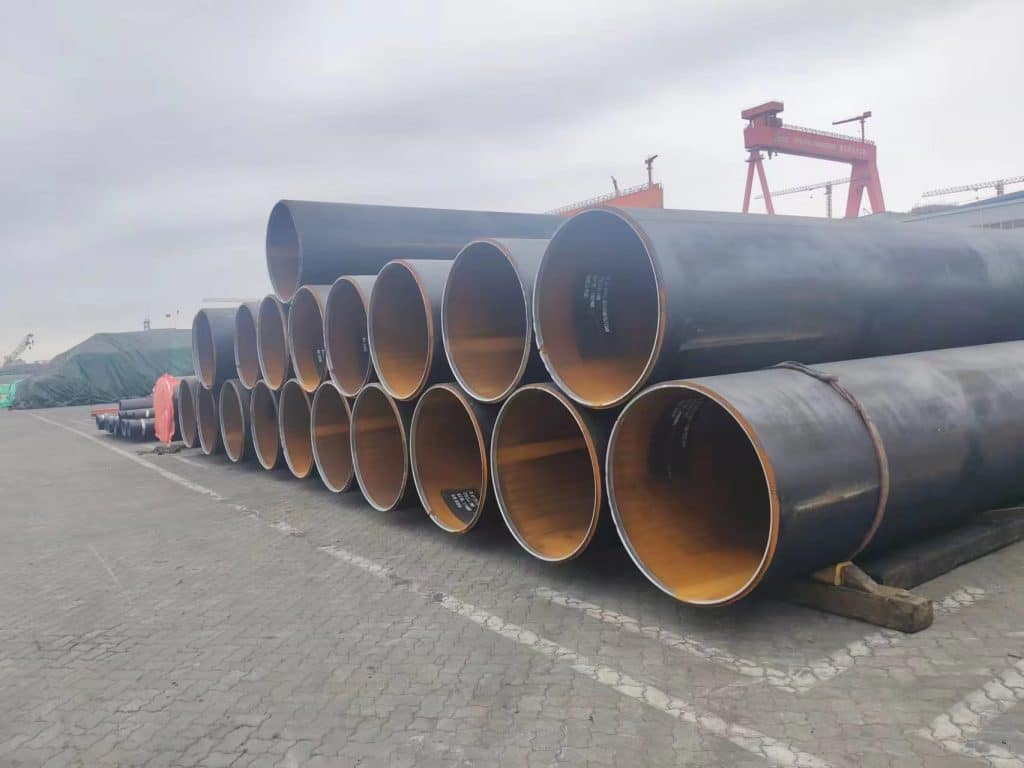
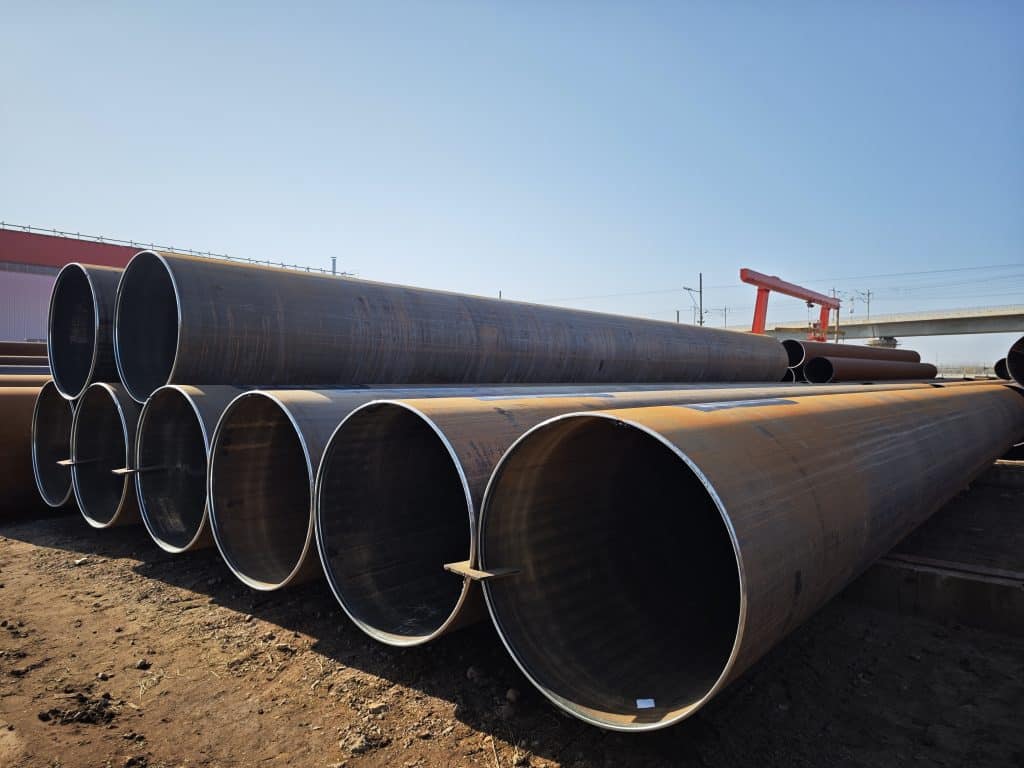
- LSAW/SAWL:plate is formed, commonly by JCOE or UOE equipment, and the longitudinal seam is submerged-arc welded from the inside and outside with filler metal.
These routes are subject to different process controls and NDT techniques, but all finished products must meet the requirements specified for their grade, PSL, dimensions, and manufacturing route.
Comparison for Procurement
| Factor | Seamless pipe | ERW/HFW pipe | LSAW/SAWL pipe |
| Starting material | Billet | Hot-rolled coil | Plate |
| Longitudinal seam | None | Resistance or high-frequency seam | Submerged-arc seam |
| Typical market position | Small and medium diameters, special wall combinations, applications or owners that specify seamless | Repeat-volume small and medium diameters within mill capability | Medium and large diameters, heavier walls and plate-based requirements |
| Main production controls | Piercing, eccentricity, rolling, heat treatment and surface quality | Edge quality, heat input, bond line, weld-area heat treatment and online NDT | Plate laminations, forming, alignment, consumables, weld profile and seam NDT |
| Dimensional tendency | Wall-thickness eccentricity requires attention | Continuous sizing can provide consistent geometry | Controlled plate forming supports many large-diameter orders |
| Commercial tendency | May carry a premium in some sizes | Often efficient for high-volume orders | Economical for many large-diameter projects compared with limited seamless supply |
The table describes common market tendencies, not universal manufacturing limits. Available ranges must be confirmed with the selected mill.
Strength and Pressure Capacity
It is misleading to say that seamless pipe is inherently stronger than welded pipe. API 5L specifies mechanical-property requirements for the ordered grade and PSL. A qualified welded pipe must meet the applicable tensile, toughness, dimensional, hydrostatic, and NDT requirements.
At the same time, “same grade” does not mean two pipes automatically have the same allowable operating pressure. Pressure design depends on diameter, wall thickness, specified minimum yield strength, design and temperature factors, longitudinal-joint factor where applicable, corrosion allowance, tolerances, and the governing code. Seamless and welded alternatives should be compared using the same design basis and actual ordered dimensions.
LSAW pipe is not universally post-weld heat treated. Heat treatment depends on the material, delivery condition, manufacturing procedure, product specification, and purchase order. Likewise, seam inspection should not be described as 100% UT and 100% RT for every order. The required technique and coverage must follow the applicable API 5L edition and any supplementary owner requirements.
PSL and Toughness Requirements
API Spec 5L includes PSL1 and PSL2. PSL2 provides additional controls over chemistry, mechanical-property ranges, traceability, toughness where applicable, and inspection. Test temperature and acceptance criteria are not universal values that can be assumed for every PSL2 product. They depend on the standard edition, grade, size, annexes, design temperature, and project fracture-control requirements.
The purchase order must identify its governing edition. API published information about the API Spec 5L 47th Edition update in 2026. ISO 3183:2019 remains a published standard that supplements API Spec 5L, 46th Edition, subject to its stated exceptions. Procurement documents should not combine edition numbers and table references without checking compatibility.
Sour Service Does Not Have One Universal Recipe
For H2S-containing environments, material selection starts with defining the service. ISO 15156-2 addresses cracking-resistant carbon and low-alloy steels for oil and gas production and natural-gas treatment environments. It supplements rather than replaces the relevant design code.
Where API 5L Annex H or an owner sour-service specification is invoked, the order may include limits and tests for chemistry, hardness, HIC, SSC, weld procedure, inclusion control, and NDT. Requirements such as sulfur below 0.003%, calcium treatment, a single hardness ceiling, and both HIC and SSC testing should not be presented as mandatory for every sour-service pipe without confirming the applicable specification.
Cost, Availability and Lead Time
Seamless pipe may cost more than welded pipe in some comparable sizes, particularly where the seamless supply base is limited. However, a permanent 20%–40% premium cannot be treated as a technical fact. Price varies with steel market conditions, grade, dimensions, quantity, testing, coating, origin, logistics, and delivery date.
The existing project commercial data and delivery examples may remain in marketing content, but they should be presented as project-specific results rather than universal benchmarks. A seven-day stock delivery does not imply that a custom PSL2, sour-service, heavy-wall, or coated order can follow the same schedule.
Selecting the Appropriate Route
Seamless pipe may be preferred when the project specification requires it, when the target size is readily available from a qualified seamless mill, or when eliminating a longitudinal seam is part of the owner’s risk strategy.
ERW/HFW is often considered for small- and medium-diameter line pipe where coil-based production, dimensional repeatability, and high output are commercially advantageous. The buyer should examine weld-area heat treatment, online NDT capability, destructive test results, and qualification history.
LSAW/SAWL is frequently evaluated for medium- and large-diameter or heavier-wall line pipe, particularly when plate properties, low-temperature toughness, or demanding dimensional combinations are required. Buyers should review plate ultrasonic testing, forming control, qualified welding procedures, consumable control, seam NDT, pipe-end inspection, and hydrostatic records.
Offshore or subsea service cannot be reduced to “LSAW plus 3LPE.” The pipe route and coating system depend on external-pressure resistance, collapse, fatigue, installation method, concrete weight coating, thermal insulation, field joints, cathodic protection, and the owner’s specification.
Project Case LSAW X70 for a Cross-Country Gas Line
A Central Asian EPC contractor sourced 48-inch OD × 22 mm wall LSAW X70 PSL2 pipe for a 200 km natural-gas transmission corridor. The owner’s specification required a DWTT shear area of at least 85% at −10°C and project Charpy testing at −40°C. The order used qualified PSL2 plate with certified CEV not exceeding 0.38, 100% UT and RT of the seam, and hydrostatic testing. Bureau Veritas witnessed the inspection, the shipment was completed within 38 days, and the reported cost per ton was 31% below the seamless alternative considered during procurement.
This case is retained as a specific project record. Its test coverage, acceptance values, delivery time, and cost comparison are not general API 5L requirements and should not be applied to another order without reviewing its specification.
Supplier Qualification Checklist
Before placing an order, confirm:
- standard, edition, grade, PSL and manufacturing route;
- API Monogram requirement and current license scope, if specified;
- approved manufacturing procedure and inspection and test plan;
- coil, plate, or billet traceability;
- chemical, tensile, toughness, HIC or SSC requirements;
- NDT technique, coverage, acceptance level and personnel qualification;
- hydrostatic-test pressure and hold time;
- dimensional tolerances and pipe-end requirements;
- coating qualification, holiday testing, cutback, handling and repair;
- EN 10204 Type 3.1 or 3.2 documentation and third-party hold points, when contractually required.
An API Monogram license is a strong supplier-qualification indicator and is required when monogrammed product is ordered, but API describes the Monogram Program as voluntary. It should not be called the minimum legal accreditation for every line-pipe purchase.
FAQ
Is seamless API 5L pipe always safer than welded pipe?
No. Safety depends on correct design, compliant material, manufacturing quality, inspection, installation, corrosion control, and operation. Both seamless and welded pipe can be suitable when properly specified and qualified.
Can welded pipe meet high-pressure pipeline requirements?
Yes, when the selected grade, wall thickness, dimensions, manufacturing route, qualification, inspection, and design-code calculations meet the project requirements. “High pressure” alone does not determine the pipe route.
Can ERW or LSAW pipe be used in sour service?
Potentially, but only when the project permits the route and specifies the required material controls, hardness, cracking tests, NDT, and documentation for the defined H2S environment.
Does LONGMA manufacture seamless pipe?
LONGMA’s manufacturing focus is round ERW and LSAW welded steel pipe. Buyers seeking an API 5L welded-pipe solution can submit their project specification for a manufacturing-range and compliance review.
Request an API 5L Welded Pipe Quote from LONGMA
LONGMA has manufactured welded steel pipe since 2003 from facilities covering approximately 230,000 square meters. Its annual output exceeded 1,000,000 tons by the end of 2023. The company supplies round ERW from 4 to 24 inches OD and LSAW from 16 to 72 inches OD, in grades from Grade B through X80, PSL1 and PSL2, subject to order review. It can coordinate project-specific testing, coating, documentation, and third-party inspection requirements. Stock sizes may ship in as little as seven days and special specifications may be produced within 45 days, subject to quotation confirmation.
The retained commercial examples and project records should be understood in their original project context. For a current quotation, send the complete pipe schedule, design conditions, inspection specification, coating requirement, destination, and required delivery date to info@longma-group.com.