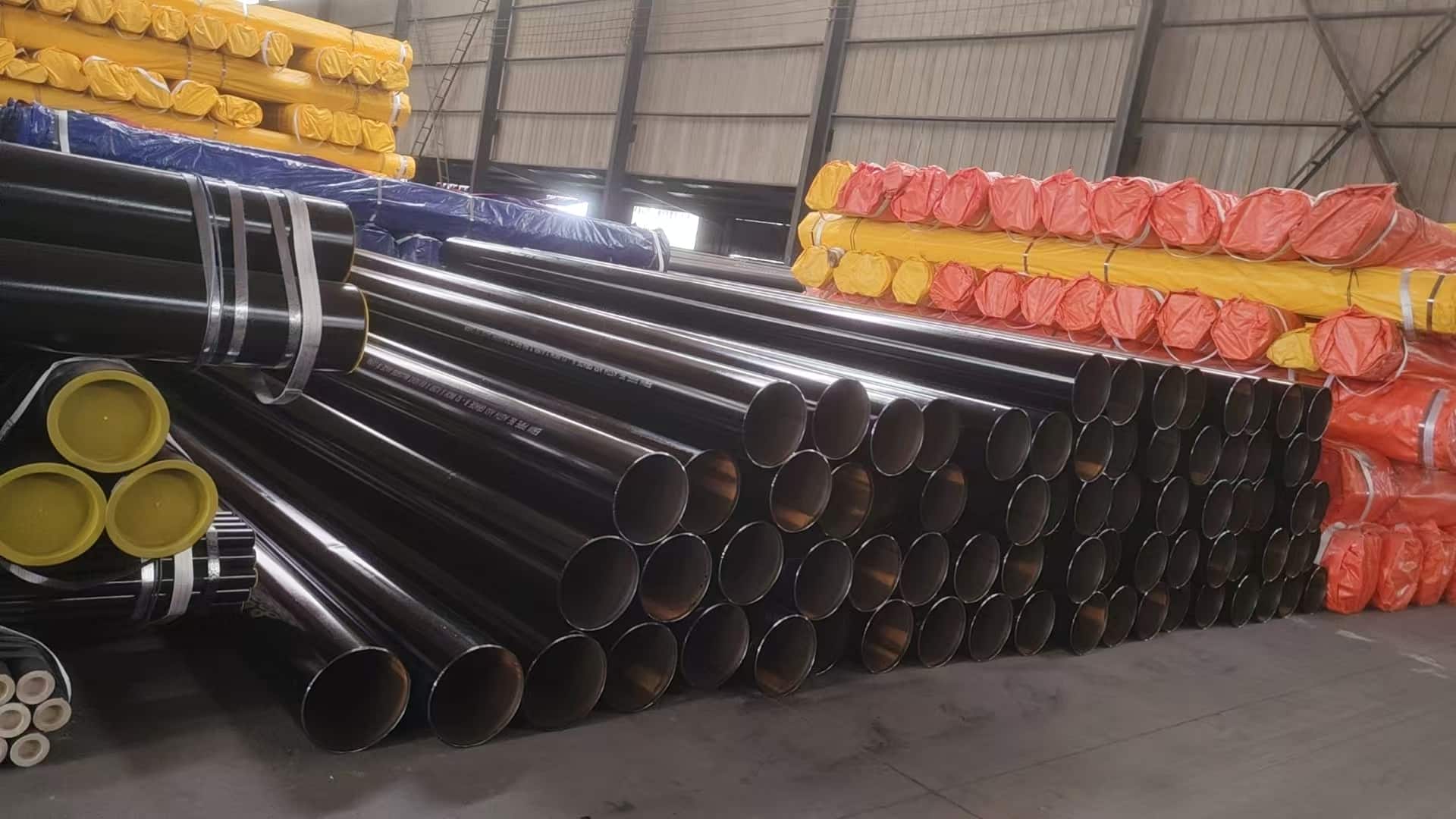
- 1. Why Does Natural Gas Transmission Impose Such Strict Requirements on Steel Pipe?
- 2. Natural Gas Pipe Selection: Matching Pipe Type and Steel Grade to Service Conditions
- 3. ERW vs LSAW vs Seamless Pipe: In-Depth Comparison for Gas Transmission
- 4. Critical Construction Control Points: Four Stages That Cannot Be Overlooked
- 5. Natural Gas Pipe NDT: Five Inspection Methods Fully Explained
- 6. Natural Gas Pipe Procurement Risk Control Checklist
- 7. FAQ: Natural Gas Pipeline Steel Pipe — Common Procurement Questions
- 8. About LONGMA: Specialist Supplier of Natural Gas Transmission Steel Pipe
Applications: Long-Distance Transmission Pipelines · Urban Gas Distribution Networks · LNG Facilities · High-Pressure Compressor Stations · Subsea Gas Pipelines
Industry data indicates that more than 60% of pipeline failures are directly linked to material selection, welding quality, or construction control deficiencies. As global natural gas demand continues to grow — driving expansion of long-distance transmission pipelines, high-pressure city gas networks, and LNG infrastructure — the question of how to select the right steel pipe to international standards, and how to establish a robust construction and quality control framework, is central to ensuring safe, long-term pipeline operation.
This guide covers pipe selection logic, ERW / LSAW / seamless pipe comparison, critical construction control points, a full breakdown of NDT inspection methods, and a procurement risk checklist — providing a complete technical reference for EPC contractors and buyers to minimize selection and construction risk.
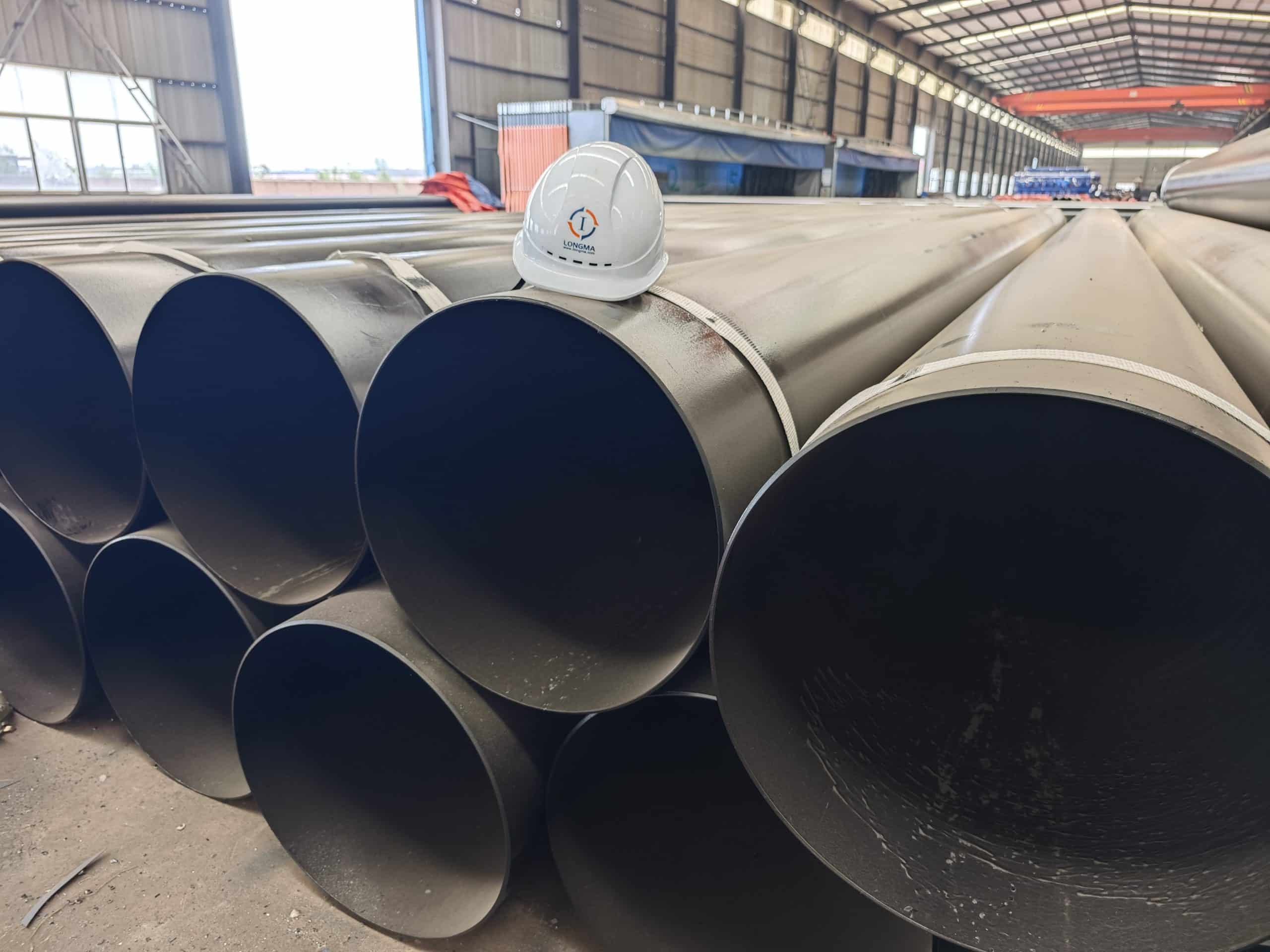
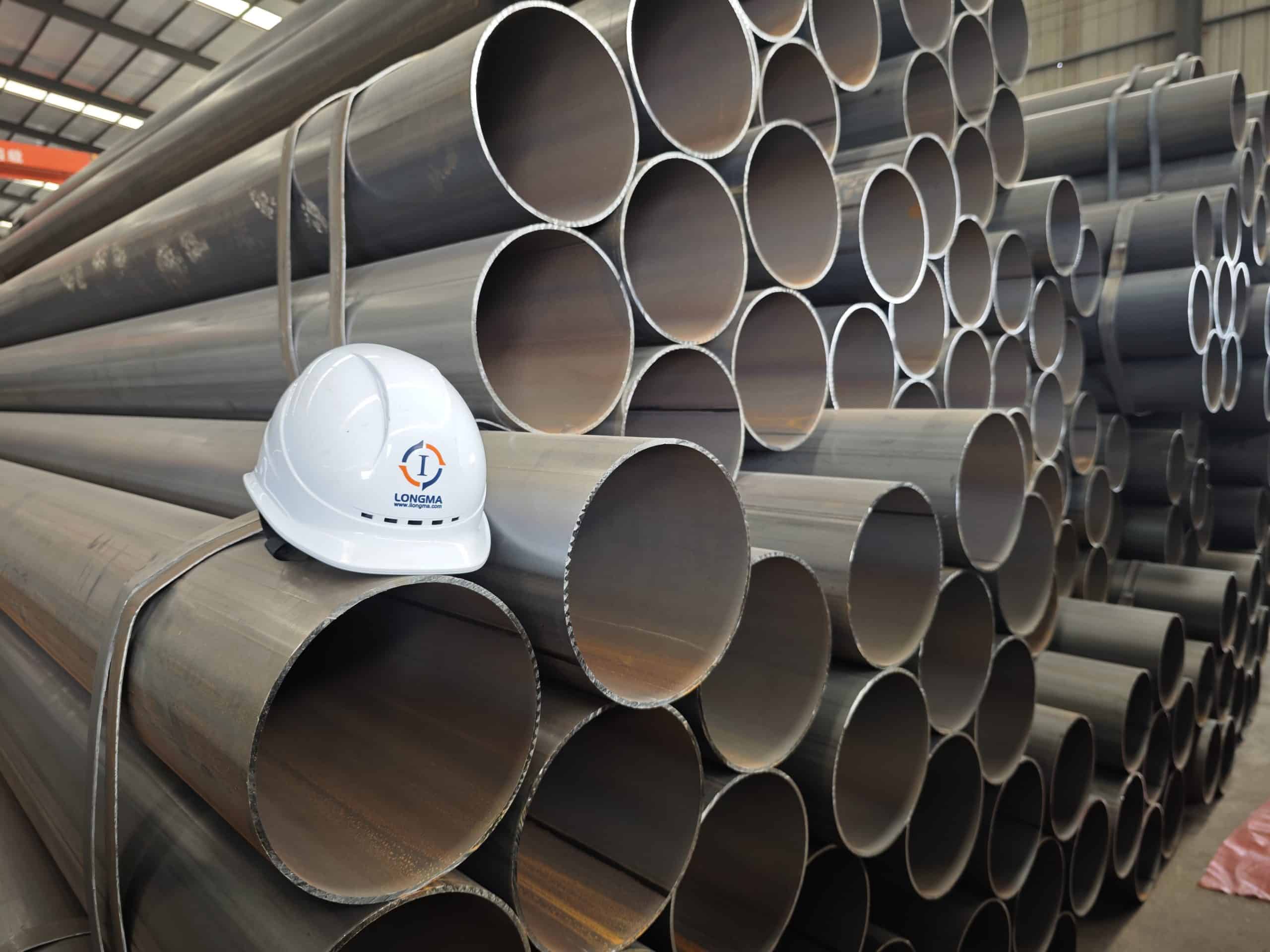
Why Does Natural Gas Transmission Impose Such Strict Requirements on Steel Pipe?
Natural gas pipelines operate under high sustained pressure, carry a continuous flow, and are designed for service lives typically exceeding 30 years. A single leak can trigger a major safety incident and severe financial loss. This combination of operating conditions requires natural gas transmission pipe to simultaneously satisfy all six of the following performance requirements:
| Performance Requirement | Engineering Significance | Applicable Standard |
| High Yield Strength | Withstands high-pressure gas without deformation | API 5L X65/X70 grade requirements |
| Low-Temperature Impact Toughness | Prevents brittle fracture in cold-region or cryogenic service | API 5L PSL2 Charpy impact testing |
| Excellent Weldability | Field welding without cold cracking | Carbon Equivalent (CE) control |
| Corrosion Resistance | Resists soil, moisture, and H₂S corrosion | 3PE / FBE coating + cathodic protection |
| Dimensional Accuracy | Ensures precise alignment at field girth welds | API 5L Section 10 dimensional tolerances |
| Quality Traceability | Supports full lifecycle pipeline integrity management | EN 10204 3.1 MTC + NDT record archiving |
Standards commonly specified on major international natural gas projects: API 5L PSL2 / ISO 3183 / ASTM A53 (city distribution) / ASTM A106 (station piping) / ASTM A671 (special pressure applications). Of these, API 5L PSL2 has become the global default procurement standard for natural gas transmission pipe.
Natural Gas Pipe Selection: Matching Pipe Type and Steel Grade to Service Conditions
Service conditions vary significantly across different parts of a gas transmission system. The selection matrix below can be used directly for early-stage specification confirmation:
| Application Scenario | Recommended Pipe Type | Common Steel Grade | Core Requirements |
| Long-distance transmission mainline | LSAW pipe | API 5L X65 / X70 | High strength; reliable weld seam; 100% NDT |
| Urban gas distribution network | ERW pipe | API 5L B / X52 | Cost-optimized; easy to install; consistent batch quality |
| High-pressure compressor station | Seamless pipe | ASTM A106 Gr.B | High-temperature, high-pressure resistance; no weld seam risk |
| LNG facilities | LSAW pipe | X70 PSL2 (low-temperature grade) | Low-temperature impact toughness is the priority; CVN testing mandatory |
| Subsea gas pipelines | LSAW pipe | X65 / X70 PSL2 | Fatigue resistance; corrosion resistance; high dimensional accuracy |
💡 For natural gas mainlines with pipe diameter ≥ 20 inches (508 mm), LSAW is the international default choice — its stable weld performance and high dimensional accuracy are unmatched. For smaller-diameter city distribution networks, ERW is typically the more cost-effective option.
ERW vs LSAW vs Seamless Pipe: In-Depth Comparison for Gas Transmission
The three pipe types most commonly specified for natural gas transmission projects each have defined application boundaries. The comparison below provides a quick reference for narrowing procurement scope:
| Comparison Item | ERW Pipe | LSAW Pipe | Seamless Pipe |
| Manufacturing Method | High-frequency resistance welding | Double-sided internal/external submerged arc welding | Piercing + hot rolling |
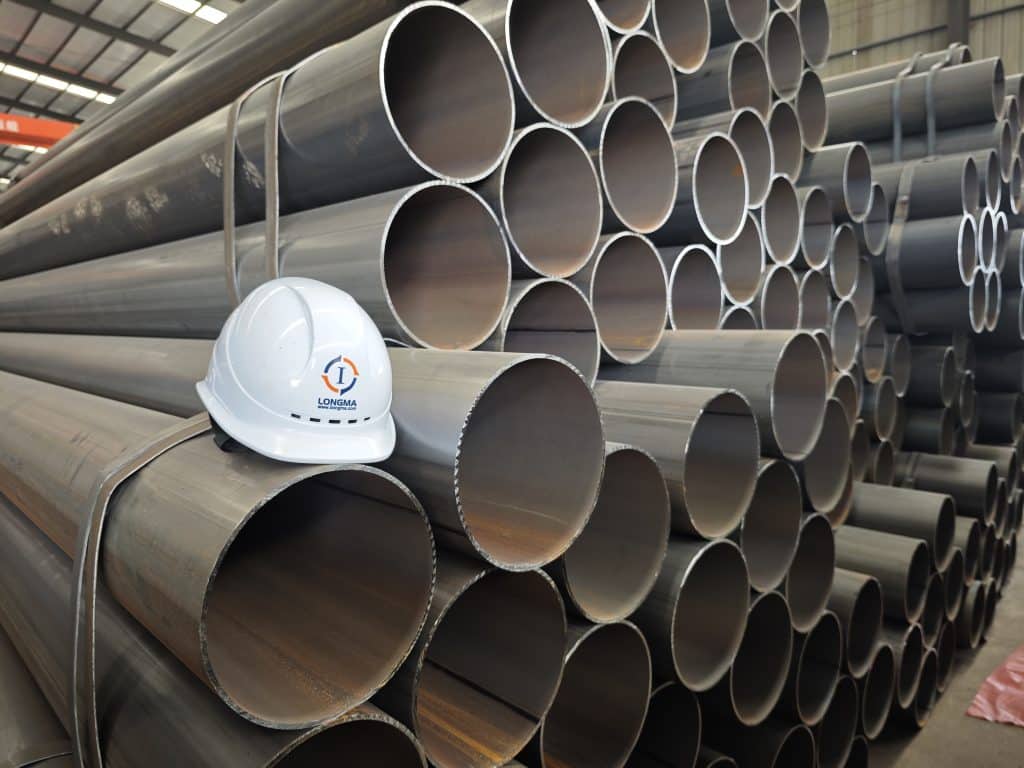
| Maximum Applicable Diameter | Small to medium (≤ 24″) | Extra-large (up to 60″+ available) | Medium (≤ 24″) |
| Weld Seam Characteristics | Weld seam present; NDT verified | Weld seam; double-sided, deep penetration | No weld seam; continuous pipe body |
| High-Pressure Performance | Good (PSL2 up to X65) | Excellent (X65/X70 mainstream) | Excellent (suited for high-pressure stations) |
| Low-Temperature Impact Toughness | Meets PSL2 requirements | Excellent; suited for LNG cryogenic service | Good |
| Dimensional Accuracy | High; consistent across large batches | Excellent; meets the strictest engineering specs | Good; uniform wall thickness |
| Overall Cost | Low; best value for high-volume orders | Medium; best total cost for large-diameter pipe | High; suited for small batches or special service |
| Gas Transmission Suitability | City networks / small-medium diameter mainlines | Primary choice for large-diameter high-pressure mainlines | Station piping / fittings / special applications |
Critical Construction Control Points: Four Stages That Cannot Be Overlooked
4.1 Incoming Pipe Inspection
Every batch of pipe arriving on site must complete the following acceptance checks. Each pipe should be assigned a unique traceability number; any non-conforming items must be immediately segregated:
| Inspection Item | What to Check | Reference Standard |
| Mill Test Certificate (MTC) | Heat number, chemical composition, and mechanical properties match the purchase order | EN 10204 3.1 |
| Visual Inspection | Pipe ends free of flattening, scoring, and laminations; coating undamaged | API 5L Section 10 |
| Dimensional Inspection | Outside diameter, wall thickness, ovality, straightness | API 5L Section 10 |
| Coating Inspection | Coating thickness, adhesion, Holiday Test (spark test) | DIN 30670 / ISO 21809 |
| Marking Verification | Stenciled markings on pipe end match MTC document number | API 5L Section 11 |
4.2 Welding Procedure Qualification (WPS / PQR)
All field girth welding on natural gas pipelines must be executed in accordance with a qualified Welding Procedure Specification (WPS). Any parameter deviation can introduce cold cracking or weld defects:
| Control Element | Specific Requirement | Risk if Neglected |
| WPS/PQR Documents | Qualified per API 1104 or ASME Section IX | Welds without a valid WPS cannot be traced or defended |
| Preheat Temperature | For X65/X70, calculated from CE value — typically ≥ 100°C | Insufficient preheat leads to hydrogen-induced cold cracking (HIC) |
| Interpass Temperature | Maintained within specified range (typically ≤ 250°C) | Excessive interpass temperature causes grain coarsening and toughness loss |
| Heat Input | Strictly executed within WPS-specified range | Too low: lack of fusion; too high: HAZ softening |
| Consumable Matching | Strength level not below base material; batch traceable | Strength mismatch or incompatible composition |
| Welder Qualification | Qualified per API 1104 / ASME Section IX | Unqualified welders must not perform production welding |
4.3 Anti-Corrosion Coating Application
Once a buried gas pipeline is backfilled, the anti-corrosion coating is essentially inaccessible for inspection or repair. Coating quality control during construction is therefore irreversible:
| Coating Type | Characteristics | Typical Application | Mandatory Inspection Items |
| 3PE (Three-Layer Polyethylene) | Excellent mechanical damage resistance; most widely used globally | Buried mainline pipe | Coating thickness / adhesion / Holiday Test |
| FBE (Fusion-Bonded Epoxy) | Good bond to concrete; widely used for field joints | Bends, field joints, special nodes | Coating thickness / pinhole detection |
| Dual-Layer FBE (DL-FBE) | Integrated primer and bond coat; superior overall performance | High-corrosivity soil zones | Coating thickness / adhesion / cathodic disbondment |
| Polyurethane Insulation Coating | Combined thermal insulation and corrosion protection | Road crossings, river crossings, special conditions | Insulation thickness / outer casing integrity |
4.4 Lowering-In, Backfill, and Pressure Testing
After pipe laying is complete, pressure testing is the final quality gate before commissioning:
| Control Stage | Requirement | Purpose |
| Trench Inspection | No hard objects on trench bottom; uniform pipe bedding | Prevents coating damage and stress concentration |
| Backfill Control | Fine soil first for 30 cm; compacted in layers | Prevents pipe displacement and coating damage |
| Hydrostatic Test (Strength Test) | Typically 1.25 × design pressure; hold for 4 hours minimum | Verifies overall pipeline pressure-bearing capacity |
| Leak Test | Reduce to design pressure; inspect all joints for leaks | Confirms sealing integrity and weld quality |
| Cathodic Protection Commissioning | Install anodes or impressed current system; measure protection potential | Initiates long-term electrochemical corrosion protection |
Natural Gas Pipe NDT: Five Inspection Methods Fully Explained
Major natural gas projects typically require 100% nondestructive testing. Different methods detect different defect types and must be used in combination:
| NDT Method | Purpose | Execution Summary | Key Standards |
| Ultrasonic Testing (UT) | Internal cracks, incomplete penetration, slag inclusions, laminations | Surface prep → calibrate reference block → probe scanning → defect location → acceptance evaluation | API 5L Annex E / ASTM E213 |
| Radiographic Testing (RT) | Weld interior: porosity, slag inclusions, incomplete penetration (image record) | Position radiation source → expose → develop image → film evaluation | ASTM E94 / ASME Section V |
| Magnetic Particle Testing (MT) | Surface and near-surface cracks, undercut | Magnetize → apply magnetic particles → observe indications → evaluate | ASTM E709 / ISO 17638 |
| Liquid Penetrant Testing (PT) | Open surface micro-cracks, pinholes | Clean → apply penetrant → remove excess → apply developer → inspect | ASTM E165 / ISO 3452 |
| Hydrostatic Test | Full-pipe pressure capacity and sealing integrity | Seal ends → fill with water, purge air → pressurize → hold → inspect → record | API 5L Section 10 |
⚠️ API 5L PSL2 mandates full-length weld seam UT inspection on every pipe, plus mandatory Charpy impact testing. If PSL2 is not explicitly stated in the purchase order, the supplier may deliver to PSL1 — resulting in inspection coverage that falls below project requirements.
Natural Gas Pipe Procurement Risk Control Checklist
The checklist below summarizes the seven most commonly overlooked risk categories in international procurement. It can be used directly for supplier qualification assessment and RFQ drafting:
| Risk Type | Common Manifestation | Recommended Prevention |
| Product level not specified | PO states only “API 5L” without PSL1 or PSL2 designation | Explicitly state API 5L PSL2 and edition year in the PO |
| MTC missing or not traceable | Heat number on MTC does not correspond to physical pipe | Require EN 10204 3.1; verify heat numbers against packing list |
| Insufficient NDT coverage | Only hydrostatic test; no UT or RT reports provided | Require 100% weld seam UT + sampled RT; obtain report reference numbers |
| Impact testing omitted | No Charpy impact test requirement stated | For low-temperature or LNG projects, explicitly specify CVN test temperature and minimum energy |
| Coating quality undocumented | No coating thickness report or Holiday Test records | Require full anti-corrosion application report and spark test records |
| WPS/PQR documents absent | Only product MTC provided; no welding procedure documents | SAW pipe must be supplied with corresponding WPS/PQR documents |
| Third-party inspection not arranged | No SGS / BV / TÜV witnessing specified | Name the inspection body and key hold points in the PO |
FAQ: Natural Gas Pipeline Steel Pipe — Common Procurement Questions
Q1: What is the practical difference between API 5L PSL1 and PSL2 for gas pipeline projects?
PSL1 establishes baseline requirements for chemical composition and mechanical properties, with relatively flexible NDT and impact testing provisions. It is appropriate for non-critical applications such as low-pressure city distribution networks. PSL2 mandates carbon equivalent (CE) control, full-length weld seam UT inspection, Charpy impact testing at a specified temperature with a minimum energy requirement, and stricter chemical composition upper limits. PSL2 is the industry-standard requirement for high-pressure long-distance natural gas transmission.
Q2: How should I choose between X65 and X70 steel grade?
X65 has a minimum yield strength of 450 MPa; X70 is 483 MPa. The higher strength of X70 allows a thinner wall at the same operating pressure, reducing steel tonnage and transportation cost — making it well-suited for very long-distance or high-pressure projects. However, X70 imposes stricter welding procedure requirements, higher preheat temperatures, and more demanding construction quality control. The selection should be based on a combined assessment of design pressure, line temperature, and the construction team’s welding capability.
Q3: How is the corrosion protection service life of a gas pipeline guaranteed?
Anti-corrosion service life depends on three factors working together: coating type, application quality, and the ongoing effectiveness of the cathodic protection system. A properly applied 3PE coating system with effective cathodic protection typically achieves a design life of 30–50 years. The critical control points are: coating thickness compliant with specification, zero Holiday Test defects, field joint quality consistent with the mainline coating, and cathodic protection potential maintained continuously within the protection range (below −0.85 V vs. Cu/CuSO₄ reference electrode).
Q4: What quality advantage does LSAW double-sided welding provide?
LSAW pipe uses double-sided submerged arc welding — typically internal pass first, then external (or vice versa) — so both the inner and outer weld surfaces are fully filled with deposited metal. Compared to single-sided welding, this double-sided approach significantly reduces the risk of incomplete penetration and lack of fusion at the weld root. The resulting weld cross-section carries higher pressure-bearing capacity, which is why double-sided LSAW is the default choice for high-pressure long-distance gas pipelines.
Q5: How can I verify that a supplier genuinely has API 5L PSL2 production capability?
Verify from the following angles: ① Request historical MTC samples for API 5L PSL2 products — including Charpy impact test data; ② Confirm the validity and qualification scope of WPS/PQR documents; ③ Verify that production equipment has full-length in-line UT inspection capability; ④ Request an explanation of the NDT report numbering system and heat number traceability logic; ⑤ Arrange a factory audit or pre-shipment witnessing by SGS, BV, or TÜV — this is the most direct and reliable verification method available.
About LONGMA: Specialist Supplier of Natural Gas Transmission Steel Pipe
LONGMA has over 20 years of experience manufacturing ERW and LSAW steel pipe, serving as a stable supplier for long-distance gas transmission pipelines, urban gas distribution networks, and LNG infrastructure projects:
▸ Multi-standard certification: API 5L (PSL1/PSL2) / ISO 3183 / ASTM A53 / ASTM A106 / ASTM A671
▸ ERW pipe for city distribution networks + LSAW large-diameter high-pressure mainline pipe, covering X52 through X70 steel grades
▸ 100% in-line weld seam UT + hydrostatic testing + sampled RT / MT — complete NDT system
▸ Full in-house laboratory: chemical / PMI / tensile / Charpy impact / hardness / metallographic / dimensional — complete coverage
▸ EN 10204 3.1 Mill Test Certificates with full heat number and NDT report traceability throughout the supply chain
▸ 3PE / FBE anti-corrosion coating services with Holiday Test and adhesion test records
▸ Third-party inspection support: SGS / BV / TÜV / DNV — on-site witnessing and pre-shipment inspection available
If you are selecting steel pipe for a natural gas transmission project or have a specific procurement requirement, contact LONGMA for: pipe selection guidance · specification confirmation · sample MTC · NDT reports · project quotation.