- 1. EN 10219: The Basic Framework for Cold-Formed Welded Hollow Sections
- 2. Common Hollow-Section Shapes
- 3. Circular Hollow Sections (CHS): Why Round Geometry Is Widely Used
- 4. SHS and RHS: Important Industry Profiles, but Not LONGMA Supply Products
- 5. How Geometry Changes Structural Selection
- 6. Grades and Material Verification Under EN 10219
- 7. Dimensional Tolerances: Avoid Oversimplifying EN 10219-2
- 8. Surface Protection and Galvanizing
- 9. Procurement Checklist for Customized CHS
- 10. FAQ
- 11. LONGMA: Round EN 10219 Steel Pipe and CHS Supply
Customized structural hollow sections are selected primarily by cross-sectional geometry, load path, connection design, manufacturing route, and the governing structural standard. Under EN 10219, the most familiar profiles are Circular Hollow Sections (CHS), Square Hollow Sections (SHS), and Rectangular Hollow Sections (RHS); EN 10219-2:2019 also covers elliptical hollow sections. Each geometry behaves differently under bending, compression, torsion, and connection loading, so “customized hollow section” should describe an engineering choice rather than simply a non-standard size.
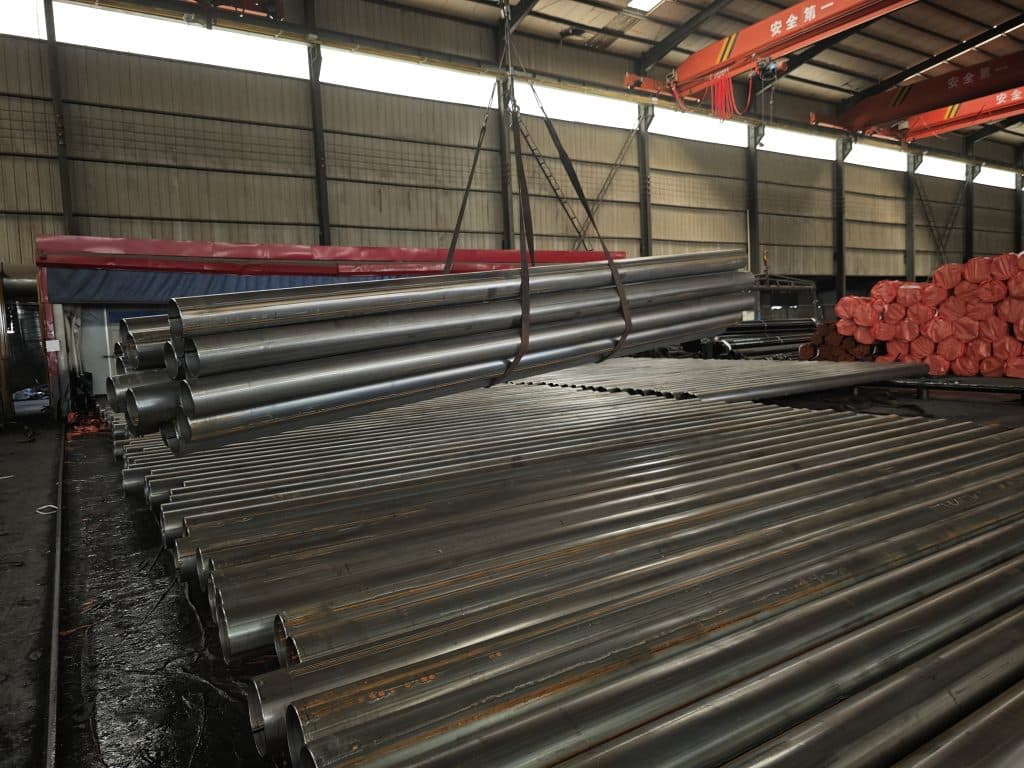
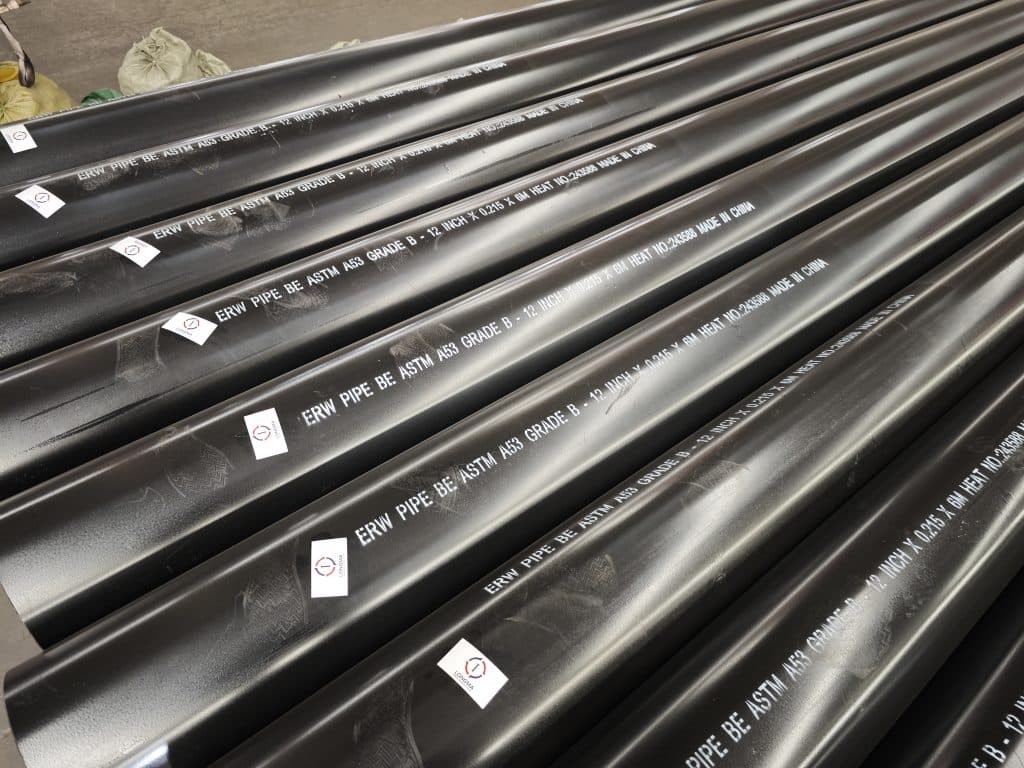
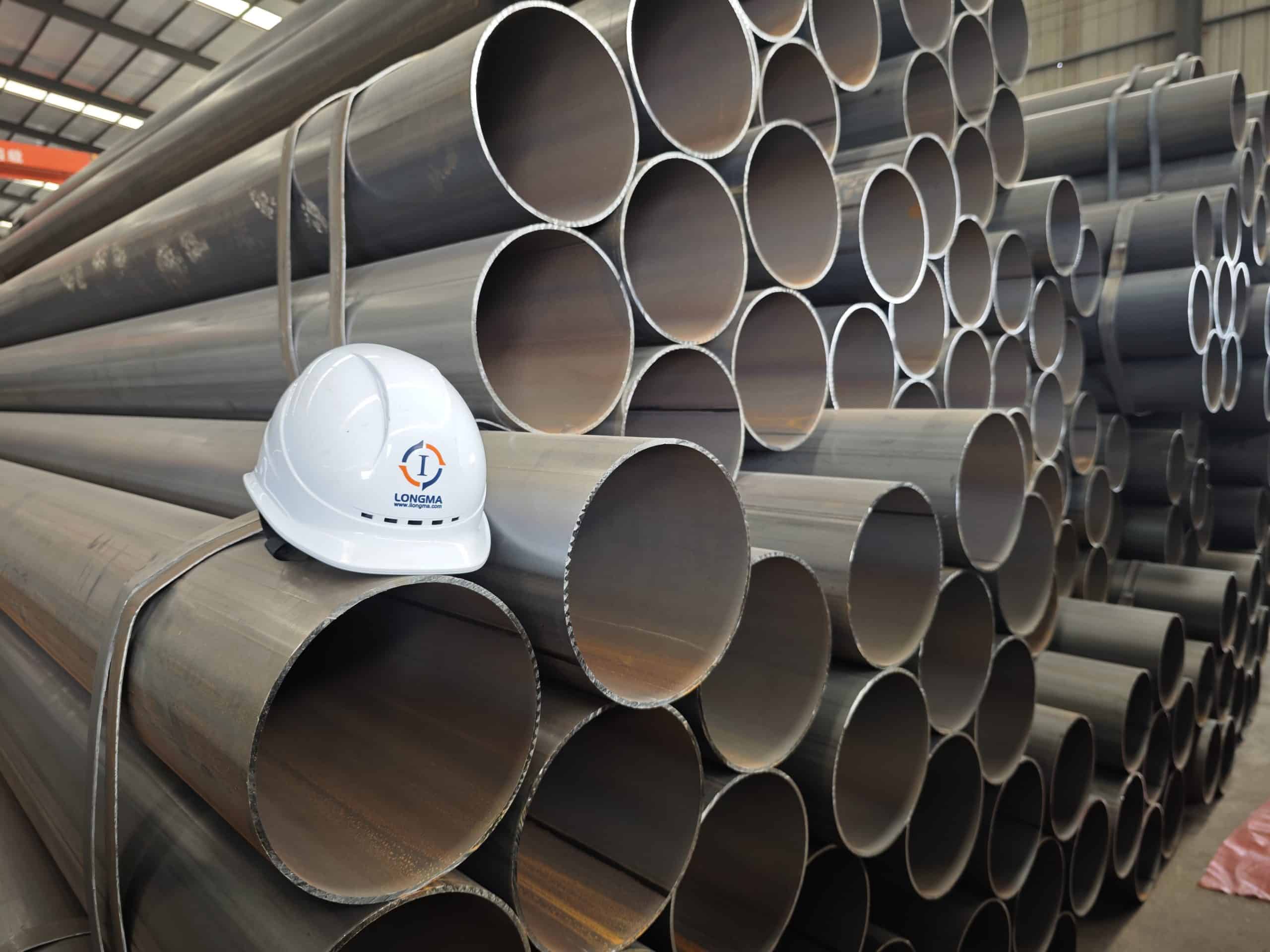
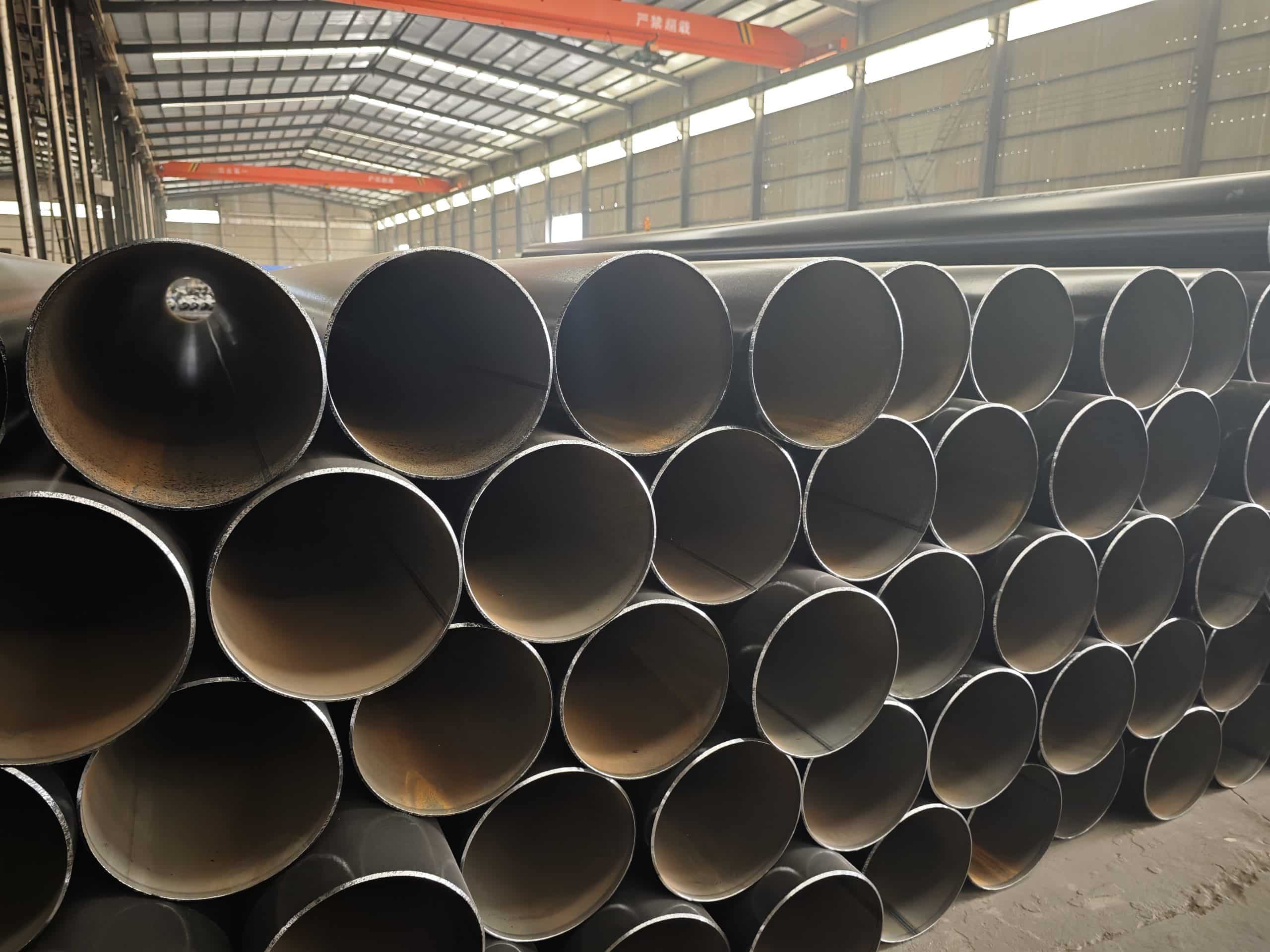
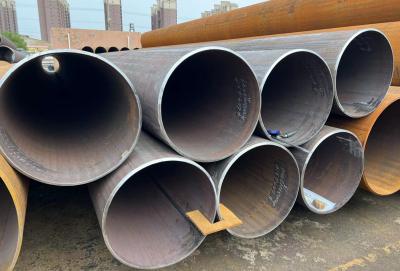
For LONGMA customers, one product boundary is especially important: LONGMA specializes in round steel pipe and Circular Hollow Sections (CHS) produced by ERW and LSAW routes. It does not manufacture SHS or RHS. This article therefore explains the common hollow-section shapes for procurement education while focusing the supplier discussion on round CHS products.
EN 10219: The Basic Framework for Cold-Formed Welded Hollow Sections
EN 10219 is the European standard series for cold-formed welded structural hollow sections. BS EN 10219-1:2006 remains the current Part 1 for technical delivery requirements, while BS EN 10219-2:2019 is the current Part 2 covering tolerances, dimensions, and sectional properties. According to BSI, Part 2 covers circular, square, rectangular, and elliptical sections, with wall thicknesses up to 40 mm within the dimensional scope of that standard.
The standard defines product requirements; it should not be confused with a manufacturer’s individual production range. For example, a mill may supply only part of the sizes covered by EN 10219. Product pages should therefore separate “standard scope” from “LONGMA available size range” rather than presenting a mill capability as if it were the limit of the EN standard.
Common Hollow-Section Shapes
| Profile | Geometry | Typical structural behavior | Common uses |
| CHS | Circular cross-section | Uniform geometry around the circumference; efficient for torsion and multi-directional loading | Columns, trusses, towers, piling, offshore and energy structures |
| SHS | Four equal sides | Similar section properties about the two principal axes; convenient flat faces for connections | Frames, columns, architectural structures, modular fabrication |
| RHS | Two pairs of unequal sides | Different section properties about major and minor axes; useful when one bending direction dominates | Beams, trusses, frames, supports |
| Elliptical hollow section | Elliptical cross-section | Directional section properties with architectural and aerodynamic advantages in selected designs | Architectural structures and specialist structural applications |
Circular Hollow Sections (CHS): Why Round Geometry Is Widely Used
CHS has no weak orientation created by corners and provides the same outside geometry in every radial direction. This makes round sections attractive for columns, tubular trusses, towers, piles, offshore structures, wind-related applications, and projects where aerodynamic or torsional behavior matters. Connection design still requires engineering verification, but CHS can provide an efficient combination of strength, stiffness, appearance, and material use.
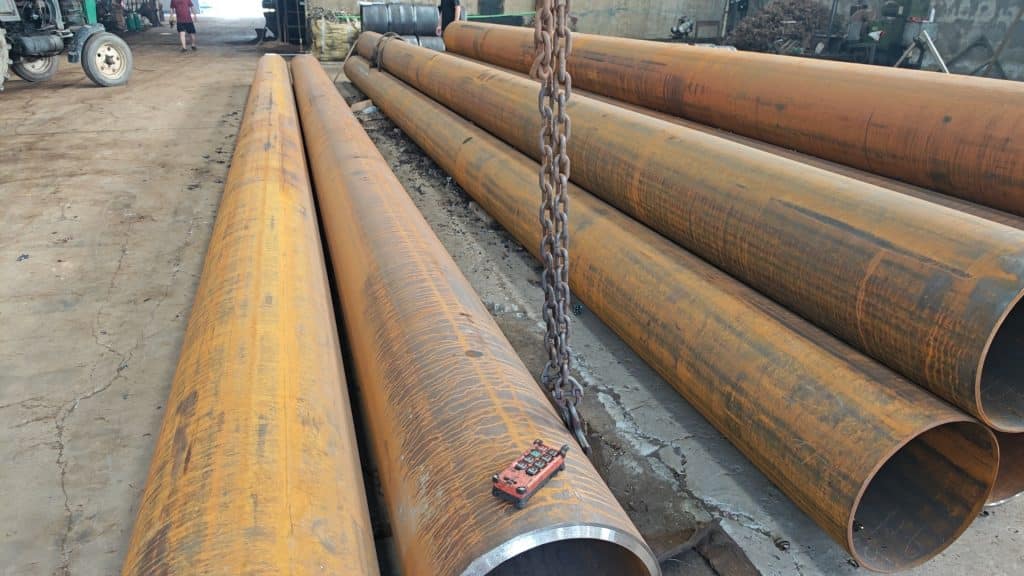
For large-diameter structural pipe, buyers should also consider manufacturing route. ERW is typically used within the dimensional range supported by the specific mill line, while LSAW is commonly used for larger diameters and heavier wall requirements. The applicable EN 10219 grade, dimensional tolerance, weld quality requirements, and project-specific NDT should be agreed before production.
SHS and RHS: Important Industry Profiles, but Not LONGMA Supply Products
SHS and RHS are important structural products in the global hollow-section market. Their flat faces can simplify certain connections, cladding details, and modular fabrication. RHS can also be oriented so that its stronger axis aligns with the principal bending direction. These are valid engineering reasons to specify SHS or RHS on some projects.
However, they should not be presented as LONGMA manufacturing capabilities. LONGMA’s website content should describe SHS and RHS only for comparison or educational purposes and should direct product inquiries toward CHS and other round ERW/LSAW steel pipe products. This avoids attracting buyers for products that the company does not manufacture.
How Geometry Changes Structural Selection
| Selection factor | CHS | SHS | RHS |
| Torsional behavior | Generally favorable because of closed circular geometry | Closed section with symmetric square geometry | Closed section; behavior depends on geometry and axis |
| Bending about principal axes | Same geometric properties in every radial direction | Same section properties about the two principal axes for an ideal square section | Different section properties about major and minor axes |
| Connection surfaces | Curved surface requires suitable connection detailing | Flat faces simplify many plate/bolt details | Flat faces; orientation must be controlled |
| Aerodynamic profile | Favorable for many exposed tubular structures | More bluff than circular sections | More bluff and direction-dependent |
| LONGMA supply | Yes — round ERW/LSAW products within confirmed mill capability | No | No |
Structural efficiency cannot be determined from shape alone. The engineer must also consider member length, wall thickness, steel grade, local buckling, connection details, fatigue, corrosion environment, fabrication, and the relevant design code such as Eurocode 3.
Grades and Material Verification Under EN 10219
Common EN 10219 grades include S235JRH, S275J0H, S355J0H, S355J2H, and fine-grain steel grades where applicable to the project. Grade designations communicate strength and, for relevant grades, impact-toughness requirements. Buyers should avoid selecting a grade based only on nominal yield strength; design temperature, welding procedure, impact requirements, section size, and project specifications also matter.
For procurement, the material certificate should match the ordered grade and product. EN 10204 3.1 inspection documents are commonly specified to provide traceability of chemical composition and mechanical test results. Where the project requires additional impact testing, NDT, dimensional inspection, or third-party witnessing, those requirements should be stated in the purchase order and ITP.
Dimensional Tolerances: Avoid Oversimplifying EN 10219-2
EN 10219-2:2019 contains detailed tolerances for outside dimensions, wall thickness, straightness, length, mass, concavity/convexity, corner profiles, and other geometric characteristics depending on section type. It is therefore misleading to summarize the entire standard as a universal “±10% wall-thickness tolerance” rule for every hollow section. Procurement documents should reference the applicable table and section type, then confirm any tighter project tolerances separately.
The same principle applies to size ranges. BSI identifies EN 10219-2:2019 dimensional scope up to 2,500 mm outside diameter for circular sections, with separate limits for square, rectangular, and elliptical sections. LONGMA’s commercial availability is narrower and should be confirmed against the company’s actual production capability for each inquiry.
Surface Protection and Galvanizing
Hollow sections used outdoors may require corrosion protection such as coating or galvanizing. The correct specification depends on the product form, coating process, service environment, and project requirements. ISO 1461:2022 applies to hot-dip galvanized coatings on fabricated iron and steel articles, but ISO explicitly excludes tube and pipe that are hot-dip galvanized in automatic plants. For that reason, an SEO article should not cite ISO 1461 as a universal galvanizing standard for every steel pipe product.
When corrosion protection is required, buyers should identify the actual coating process and applicable coating specification rather than assuming that every galvanized hollow section is governed by the same standard. Service life should also not be stated as a fixed number without considering zinc thickness, exposure category, maintenance, and environmental conditions.
Procurement Checklist for Customized CHS
- Confirm that the required product is circular/round and within the manufacturer’s verified production range.
- Specify EN 10219 grade, outside diameter, wall thickness, length, quantity, and required delivery condition.
- Define dimensional tolerances and any project-specific requirements beyond EN 10219-2.
- Specify NDT, mechanical testing, impact testing, and inspection-document requirements.
- State coating or galvanizing requirements using the correct coating standard for the actual process.
- Request EN 10204 3.1 documentation and traceability where required by the contract.
- Confirm third-party inspection, packing, marking, and delivery requirements before order placement.
FAQ
What are the most common hollow-section shapes?
The most familiar structural hollow sections are CHS, SHS, and RHS. EN 10219-2:2019 also includes elliptical hollow sections within its scope.
Does LONGMA manufacture SHS or RHS?
No. LONGMA focuses on round steel pipe and Circular Hollow Sections (CHS), using ERW and LSAW manufacturing routes within its confirmed product capability.
Is EN 10219-1:2006 still current?
BSI lists BS EN 10219-1:2006 as the current Part 1 for technical delivery requirements. BS EN 10219-2:2019 is the current Part 2 for tolerances, dimensions, and sectional properties.
Can CHS, SHS, and RHS be substituted for each other?
Not without engineering review. Different geometries have different section properties, connection details, local-buckling behavior, and load-path implications.
Can customized CHS sizes be ordered?
Yes, when the requested dimensions and grade are within the mill’s manufacturing capability and the applicable standard/project requirements. Availability, minimum quantity, and lead time should be confirmed at quotation stage rather than assumed from a generic schedule.
LONGMA: Round EN 10219 Steel Pipe and CHS Supply
LONGMA has more than 20 years of steel-pipe manufacturing experience and focuses on round ERW and LSAW steel pipe, including structural applications. The production site covers approximately 230,000 m² and annual output exceeds 500,000 tons. For EN 10219 inquiries, LONGMA should be considered for circular/round products only; the company does not manufacture square or rectangular hollow sections.
Depending on the order, quality documentation can include EN 10204 3.1 inspection certificates, dimensional inspection, mechanical testing, weld NDT, hydrostatic testing where applicable to the ordered product specification, and coordination with third-party inspection agencies. Buyers can submit the required grade, OD, wall thickness, length, quantity, coating, inspection, and destination requirements for technical review and quotation.
Contact: info@ilongma.com