- 1. How Seamless and ERW Pipes Are Manufactured
- 2. Four Practical Identification Methods
- 3. Seamless vs ERW/HFW: Practical Comparison
- 4. Do Not Confuse ERW/HFW with LSAW
- 5. Pressure and Service Suitability
- 6. Sour-Service Verification
- 7. Receiving Inspection Workflow
- 8. Conclusion
- 9. FAQ
- 10. Source Your ERW and LSAW Pipe from LONGMA
The most reliable way to distinguish seamless (SMLS) pipe from electric resistance welded/high-frequency welded (ERW/HFW) pipe is to combine physical inspection with product marking and mill documentation. A longitudinal weld indication can suggest ERW/HFW manufacture, but visual appearance alone is not always conclusive because modern weld seams may be trimmed, heat treated and covered by coating.
How Seamless and ERW Pipes Are Manufactured
Seamless Pipe
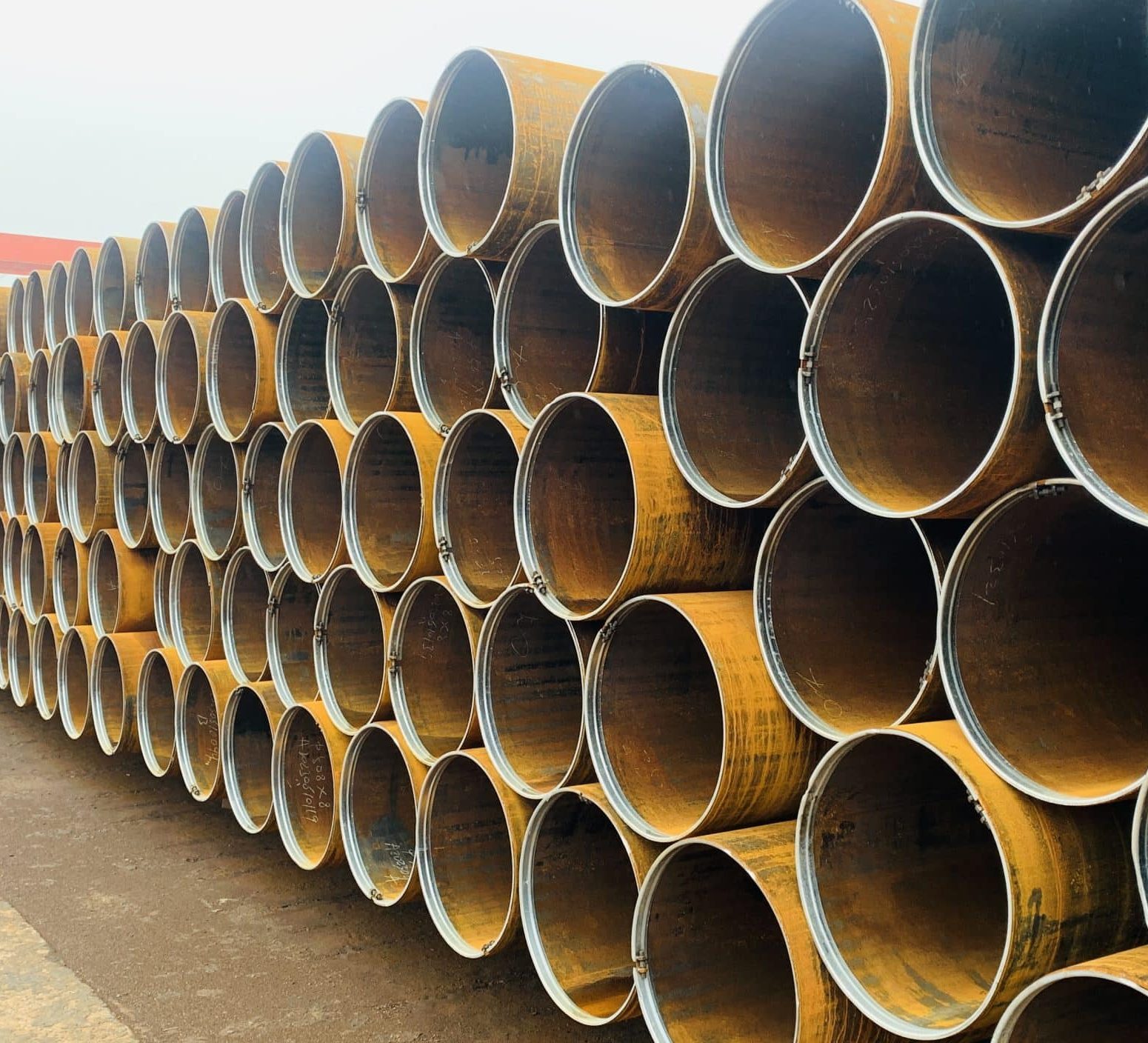
Seamless pipe is produced from solid steel starting material that is pierced and rolled or otherwise processed into a hollow tube without a longitudinal weld seam. Manufacturing route and finishing operations vary by product standard and size.
ERW/HFW Pipe
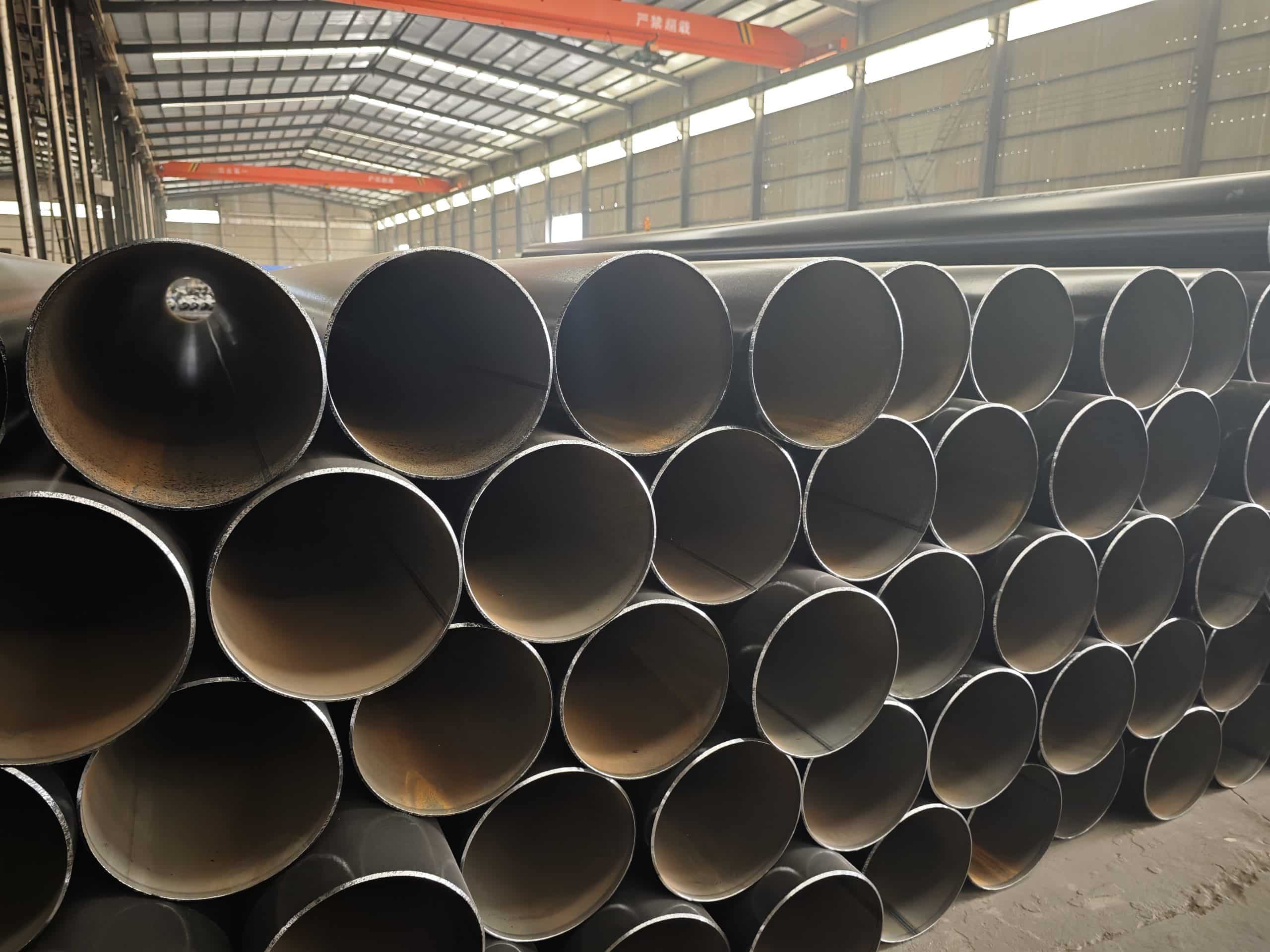
ERW/HFW pipe is formed from strip or coil and joined along the longitudinal edges by resistance/high-frequency welding. The production process does not use conventional arc-welding filler metal for the longitudinal seam. Depending on the applicable product specification, grade and manufacturing route, weld-zone heat treatment and NDT requirements may apply.
Four Practical Identification Methods
1. Check Product Marking First
For certified material, start with the pipe marking required by the applicable product specification and purchase order. Marking can identify the specification, grade and manufacturing process or product type. Because markings can be damaged or covered by coating, they should be checked against the MTC and purchase documents rather than used in isolation.
2. Inspect the Longitudinal Seam
ERW/HFW pipe has a longitudinal weld line by definition. On some pipes, an internal flash-trim indication or subtle longitudinal feature can be visible. On well-finished or coated pipe, however, the seam may be difficult to see. Seam visibility is therefore a screening clue, not absolute proof.
3. Verify the MTC and Traceability
The MTC is normally the strongest routine procurement check. Match the heat number, pipe number or batch identification on the pipe to the certificate and confirm the stated manufacturing process. For EN 10204 inspection documents, use the document type required by the purchase order; 3.1 and 3.2 are different inspection-document routes and should not be treated as interchangeable.
4. Use NDT Records When Required
For critical purchases, manufacturing and NDT records can provide additional confirmation. Ultrasonic or electromagnetic inspection may be used for weld-seam examination depending on the product specification. NDT is primarily a quality-control method; it should not be presented as the first or only method for a buyer to identify pipe type.
Seamless vs ERW/HFW: Practical Comparison
| Parameter | Seamless Pipe | ERW/HFW Pipe |
| Longitudinal weld seam | None | Present |
| Starting material | Solid steel starting material/billet | Steel strip or coil |
| Primary identification | Marking + MTC + absence of longitudinal weld | Marking + MTC + longitudinal weld/manufacturing records |
| Wall-thickness behavior | Depends on manufacturing route, size and applicable specification | Often benefits from controlled strip thickness, but tolerances depend on the applicable specification |
| Typical selection factors | Service, size, grade, temperature, pressure, availability and code requirements | Service, size, grade, pressure, availability, weld requirements and code requirements |
Wall-thickness tolerance should not be used as a universal identification rule. API 5L tolerances vary with product type, size and specified wall thickness, and the 47th Edition should be consulted for current requirements. A simple statement such as ‘ERW is ±12.5% and seamless is wider’ is not sufficiently reliable for identification.
Do Not Confuse ERW/HFW with LSAW
ERW/HFW and LSAW are both welded-pipe categories, but they use different welding processes. LSAW means longitudinal submerged-arc welded pipe and should not be described as a type of electric resistance welded pipe. If the purpose of an inspection is specifically to distinguish seamless from ERW/HFW, LSAW should be treated as a separate manufacturing category rather than mixed into the ERW definition.
Pressure and Service Suitability
It is also misleading to identify pipe type by assuming that seamless is always for high pressure and ERW is only for lower pressure. Suitability depends on the governing design code, product specification, grade, dimensions, temperature, toughness, manufacturing quality, NDT and service environment. API Spec 5L covers both seamless and welded line pipe; the current 47th Edition includes updated requirements in areas including HFW pipe quality.
Sour-Service Verification
Sour-service compliance cannot be confirmed by checking only one sulfur limit, one hardness value or the presence of an ‘S’ suffix. Buyers should verify the exact product specification, project data sheet, applicable ISO 15156/NACE MR0175 requirements and any specified HIC/SSC testing, hardness, chemistry and manufacturing controls. The required limits depend on the material and service conditions.
Receiving Inspection Workflow
- Check the purchase order and required product specification.
- Read the pipe marking and record the heat/batch/pipe identification.
- Match the identification to the MTC.
- Confirm the manufacturing process stated in the documentation.
- Perform a visual seam check as a supporting inspection.
- Review required NDT and hydrostatic-test records for critical line-pipe orders.
- Escalate any mismatch between markings, MTC and physical condition before material release.
Conclusion
For procurement and QA/QC teams, the safest way to identify seamless versus ERW/HFW pipe is documentation first, physical inspection second. A longitudinal seam is a useful clue, but certified marking, traceable MTC information and required manufacturing/NDT records provide stronger evidence. This approach reduces the risk of material substitution and avoids relying on oversimplified clues such as diameter, pressure rating or wall-thickness tolerance.
FAQ
- Can you always see the ERW seam?
No. Seam trimming, heat treatment, surface finishing and coating can make it difficult to see. Confirm the manufacturing process from marking and traceable documentation.
- Is seamless pipe always stronger than ERW pipe?
No universal conclusion can be made from manufacturing route alone. Required properties depend on the grade, product specification, dimensions, testing and service conditions.
- Can wall-thickness tolerance identify ERW versus seamless pipe?
Not reliably. Tolerances vary by standard, product type and dimensions, so they should be verified from the applicable specification rather than used as a visual identification rule.
- Is LSAW a type of ERW pipe?
No. LSAW uses submerged-arc welding, while ERW/HFW uses resistance/high-frequency welding. They are distinct manufacturing processes.
Source Your ERW and LSAW Pipe from LONGMA
LONGMA focuses on round ERW and LSAW steel pipe. The production base covers approximately 230,000 square meters, with annual production exceeding 500,000 tons. For each order, buyers should define the applicable specification, grade, dimensions, manufacturing process, inspection level, coating and documentation requirements so that the supplied pipe can be verified against the purchase specification.