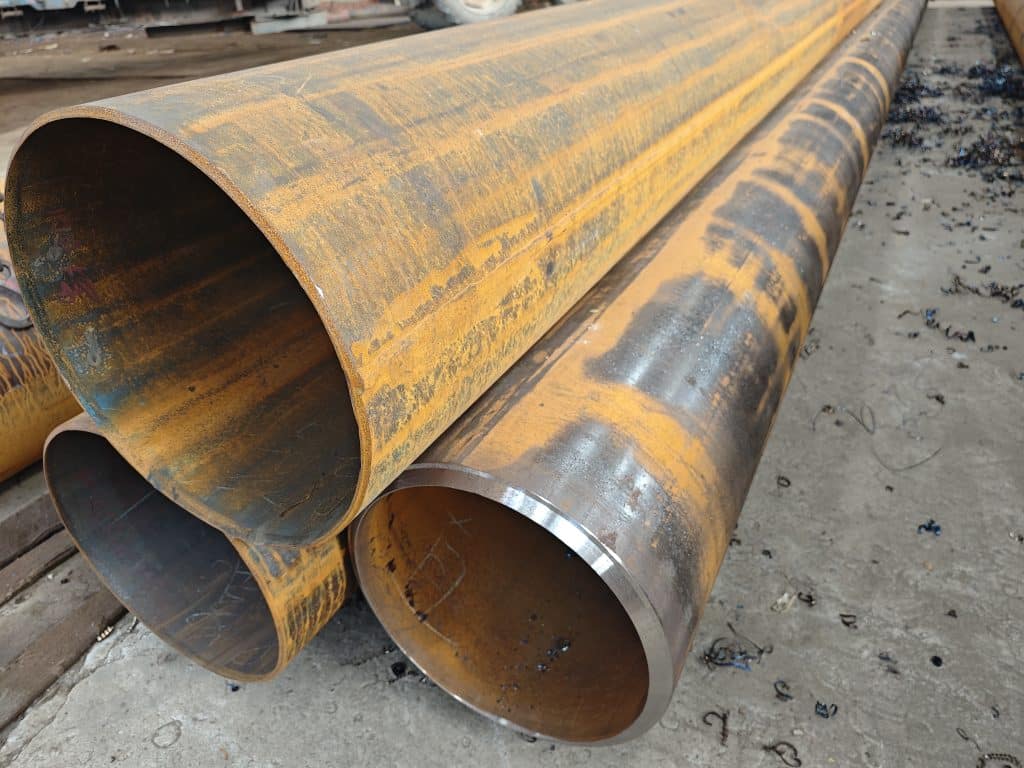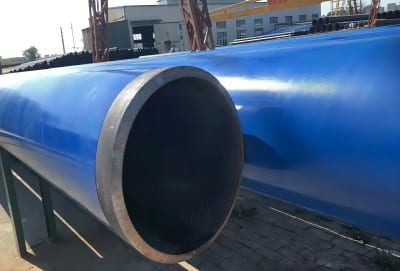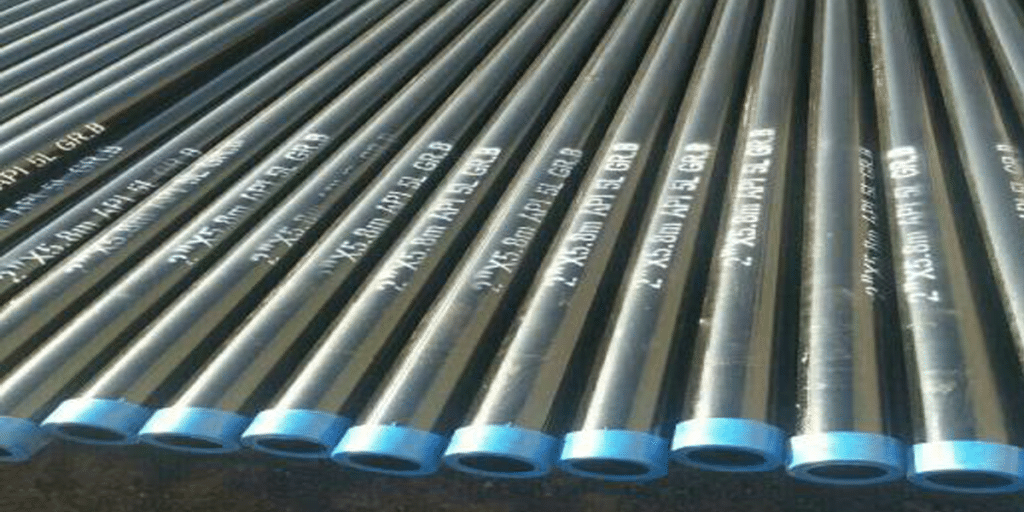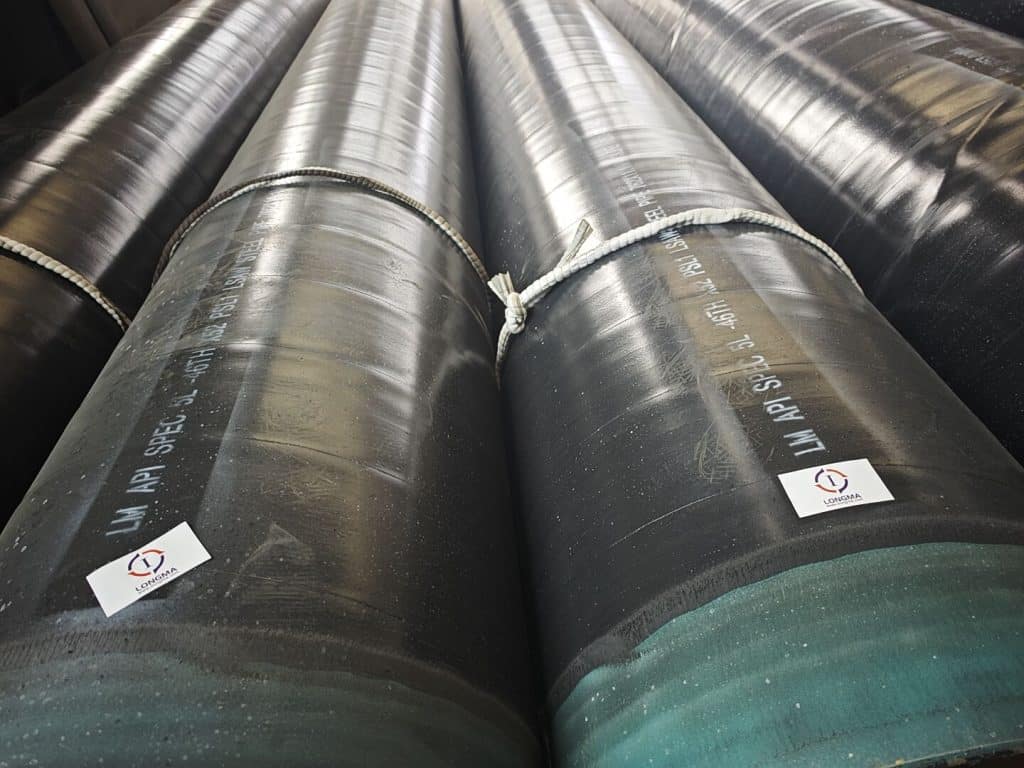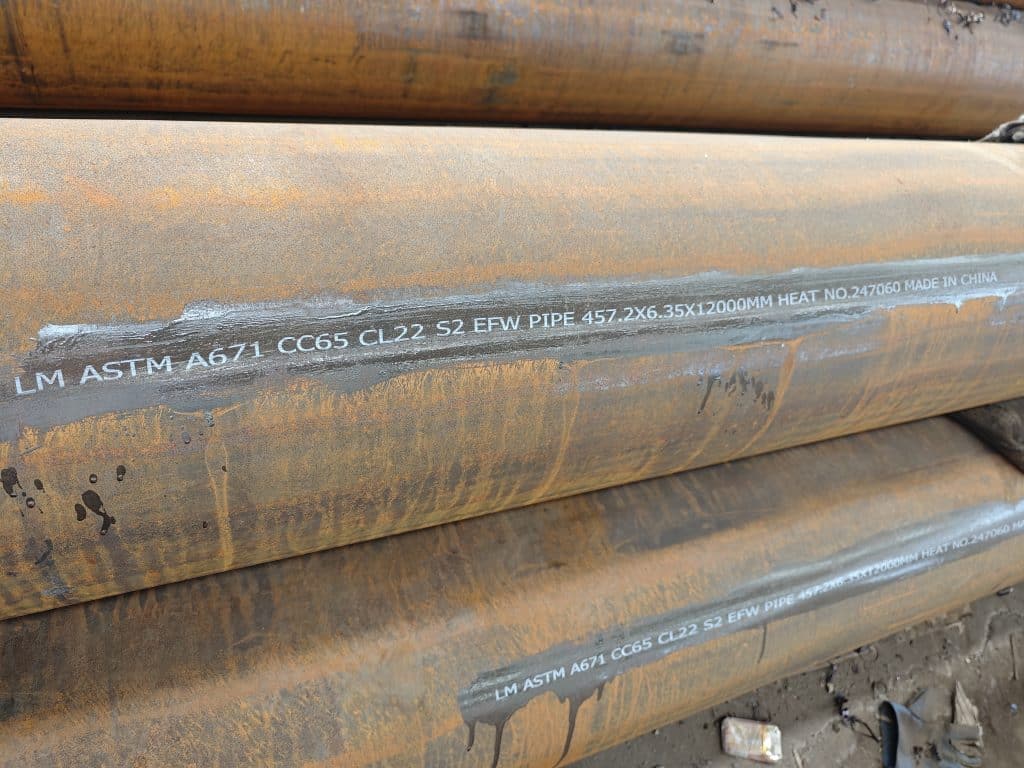
Circular steel hollow sections are made by forming steel strip or plate into a round profile, joining the longitudinal seam by a controlled welding process, sizing the pipe, and verifying that the finished product meets the ordered structural standard. The exact route depends on the diameter, wall thickness, grade, and mill equipment. This article focuses on round circular hollow sections within LONGMA’s ERW and longitudinal submerged-arc-welded product scope.
AS/NZS 1163 covers cold-formed structural steel hollow sections in circular, square, and rectangular forms. LONGMA’s published AS/NZS 1163 range is round pipe, so the manufacturing and procurement guidance below is limited to circular hollow sections. The standard’s wider scope should not be confused with the manufacturer’s product range.
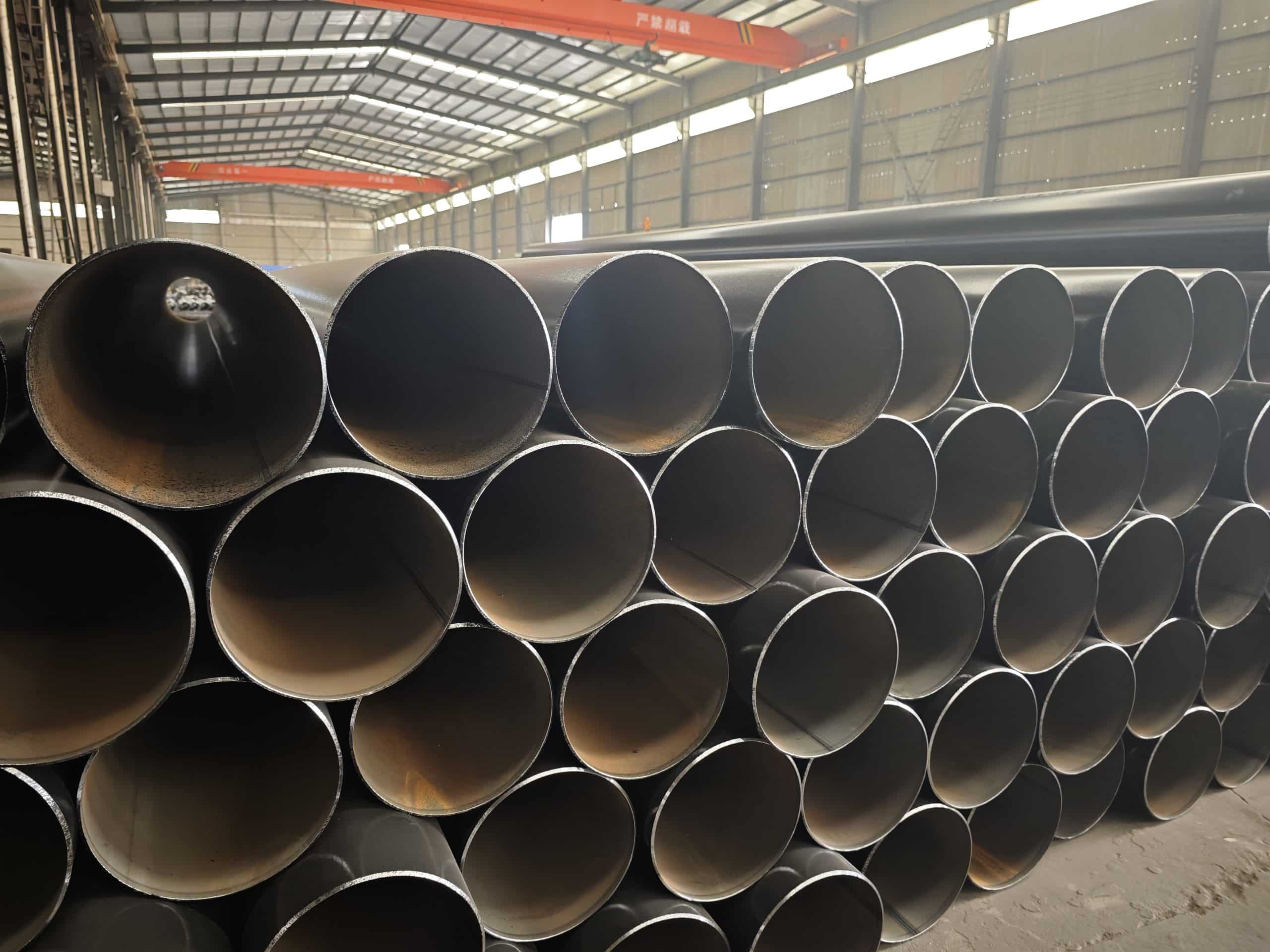
Materials and Manufacturing Route
Production begins with steel coil or plate ordered to the required grade and delivery condition. Incoming identification and certificates are reviewed, and the material is checked under the mill’s quality plan before release to production. Chemical composition, thickness, surface condition, and traceability must support the finished-product requirements.
ERW production is typically coil-fed. The strip is uncoiled, levelled, and formed progressively through rolls until its edges meet. High-frequency electric resistance heating and squeeze pressure create the longitudinal weld. The process parameters are controlled for the material, product size, and mill equipment, so one universal welding-frequency range does not apply to every product.
For larger diameters and heavier walls, longitudinal submerged-arc welding can form plate into a cylindrical shell and weld the longitudinal seam, commonly using submerged-arc welding from the required sides. ERW and LSAW are distinct manufacturing routes. The purchase order and material certificate should identify the applicable process rather than using “welded pipe” as the only description.
Forming Welding and Sizing
During forming, the mill controls edge alignment, roundness, and local deformation so the open profile can be welded consistently. In ERW production, heat input, squeeze force, edge condition, and line speed affect weld quality. In LSAW production, forming accuracy, joint preparation, fit-up, welding parameters, consumables, and heat input are controlled through qualified procedures.
The weld zone and heat-affected zone are not assumed to be identical to the parent steel. Instead, the manufacturing process and finished pipe are tested to demonstrate compliance with the ordered product specification. Where the standard requires flattening, bend, tensile, impact, or other tests, acceptance is based on the specified method and criteria.
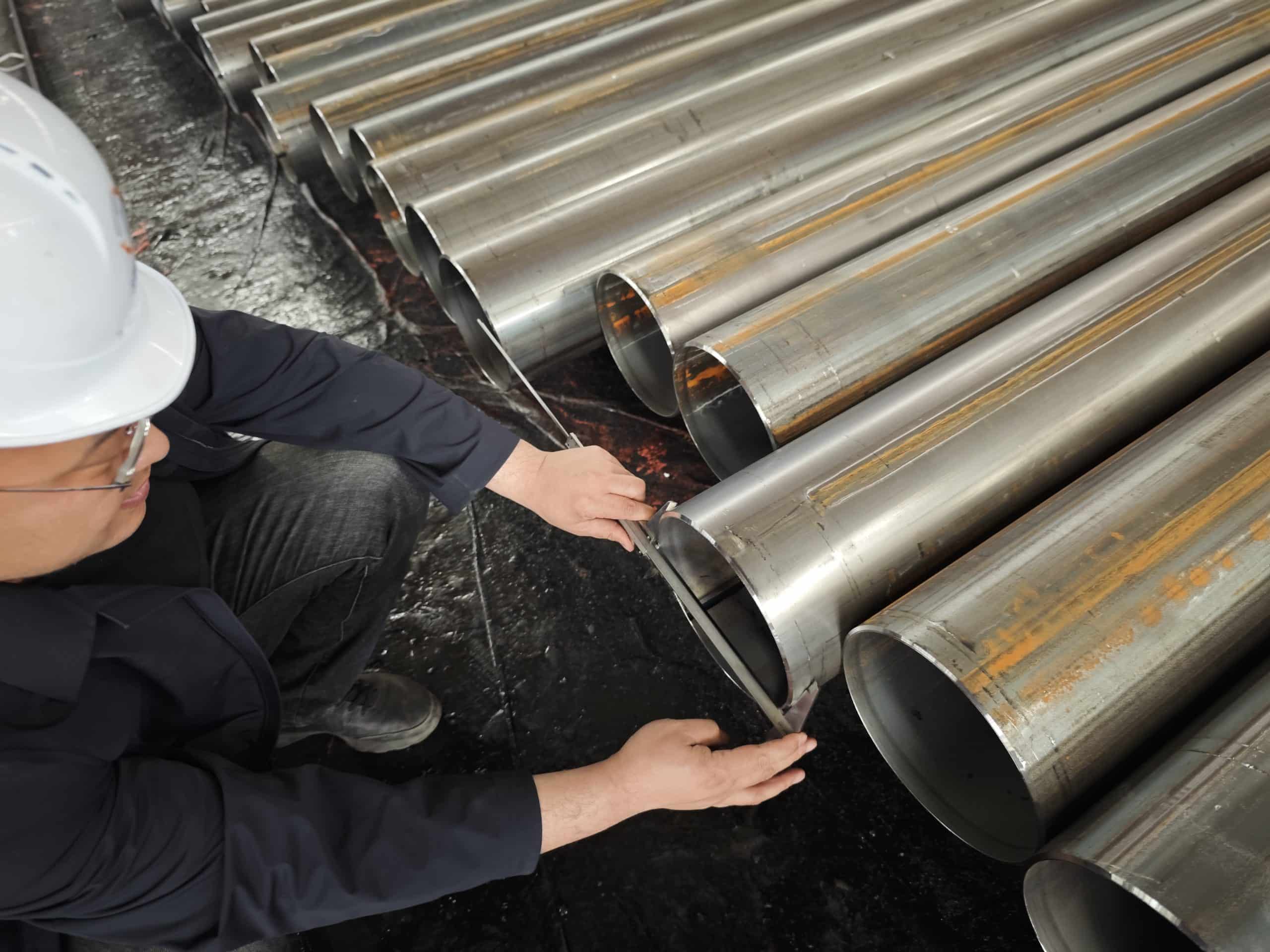
After welding, sizing rolls or mechanical calibration establish the final outside diameter and improve roundness. Straightening and end finishing follow as required. Dimensional tolerances are checked against the product standard and purchase order. Values should be taken from the governing edition because tolerance rules can depend on product shape, size, and measurement method.
Testing Inspection and Traceability
Inspection is planned around the material grade, manufacturing route, dimensions, standard, and contract. The mill links the finished pipe to its incoming material and production records so that test results can be traced to the relevant heat or batch. Identification must remain legible through testing, coating, packing, and dispatch.
| Control point | Purpose |
| Incoming material review | Confirms identity, chemistry, dimensions, surface condition, and documentation before production. |
| Process control | Records forming and welding variables under the approved manufacturing plan. |
| Dimensional inspection | Checks outside diameter, wall thickness, length, straightness, roundness, and end condition as applicable. |
| Weld examination | Uses the examination method and acceptance criteria required for the manufacturing route and product specification. |
| Mechanical testing | Verifies tensile and other required properties; L0 grades also require compliant impact-test evidence. |
| Final documentation | Connects markings, heat or batch identity, inspection results, and the specified inspection certificate. |
EN 10204 3.1 certificates are often requested because they provide specific inspection results validated by the manufacturer’s authorized inspection representative independent of the manufacturing department. They can support project documentation, but they are not automatically a legal requirement for every Australian approval. A 3.2 document requires the additional validation defined in EN 10204 and must be agreed before production.
AS NZS 1163 Grade and Impact Requirements
AS/NZS 1163 includes multiple grades for cold-formed structural hollow sections. The number in a grade such as C350 identifies the strength level, while an L0 suffix indicates specified Charpy V-notch toughness at 0°C. Grade selection must follow the structural design and project specification; it should not be assigned from a simple list of building types.
C350 and C350L0 share the same nominal strength level, but C350L0 includes the L0 impact requirement. Similarly, selecting a higher-strength grade does not by itself establish suitability for dynamic loading, fatigue-sensitive details, cold service, welding, or galvanizing. These questions depend on the complete design and fabrication requirements.
A carbon-equivalent value can inform welding assessment, but it does not prove that preheat is unnecessary. Preheat and welding procedure decisions also depend on wall thickness, hydrogen control, heat input, restraint, joint design, consumables, ambient conditions, and the applicable fabrication standard. Fabricators should use a qualified welding procedure rather than rely on a generic carbon-equivalent threshold.
Comparing AS NZS 1163 with ASTM A500 and EN 10219
AS/NZS 1163, ASTM A500, and EN 10219 all address structural tubing or hollow sections, but they are not interchangeable labels. Each standard defines its own grades, manufacturing provisions, dimensions, tolerances, sampling, tests, marking, and conformity documentation. For LONGMA’s round-pipe scope, any ASTM A500 comparison must use the requirements for round structural tubing rather than values for square or rectangular shapes.
If a project specifies AS/NZS 1163, an EN 10219 or ASTM A500 certificate does not automatically demonstrate compliance. An alternative product requires review under the design, contract, and applicable regulatory acceptance process. It is also inaccurate to claim that every alternative will be rejected or that review will always add a fixed number of weeks.
How to Source Circular Hollow Sections
A useful inquiry identifies the governing standard and edition, grade, circular shape, outside diameter, wall thickness, length, end finish, surface condition, coating, quantity, marking, inspection document, required non-destructive examination, mechanical tests, impact tests, dimensional records, and third-party inspection points. If hot-dip galvanizing is required, the buyer should specify the coating standard and coordinate venting, drainage, fabrication, surface condition, and post-galvanizing inspection with the fabricator and galvanizer.
LONGMA’s official website lists AS/NZS 1163 round pipe in C250, C350, and C450 L0 grade families, with an outside-diameter range of 114.3 to 1,422 mm. Wall thickness, length, manufacturing route, tests, and coating must be confirmed for the specific order rather than inferred from another product page. LONGMA also reports a 230,000 m² production site and annual output exceeding 500,000 tonnes by the end of 2022. Contact enquiry@ilongma.com for a technical review and quotation.
Frequently Asked Questions
Does AS NZS 1163 cover only circular hollow sections
No. It covers cold-formed structural steel hollow sections in more than one shape. This article focuses on circular hollow sections because that is the relevant LONGMA product scope.
Are all circular hollow sections made by ERW
No. ERW is common for coil-fed production, while longitudinal submerged-arc welding can be used for larger-diameter or heavier-wall products. The appropriate route depends on the ordered specification, size, material, and mill capability.
Is the weld identical to the parent metal
The weld and heat-affected zone result from a different thermal history. Compliance is established through controlled manufacturing and the inspections and tests required by the product specification, not by assuming identical microstructure or properties.
Does a low carbon equivalent eliminate preheat
No. Carbon equivalent is one input to welding engineering. Thickness, hydrogen, heat input, restraint, joint design, consumables, and temperature also affect the qualified welding procedure and any preheat requirement.
What documentation should accompany the pipe
The required documentation should be stated in the purchase order. It may include an EN 10204 3.1 or 3.2 inspection document, traceable chemistry and mechanical results, dimensional records, weld-examination records, impact results for L0 grades, coating records, and third-party inspection reports.