- 1. AS/NZS 1163 Steel Pipe and Hollow Section Sizes
- 2. AS/NZS 1163 Steel Grades
- 3. CHS, SHS and RHS Under AS/NZS 1163
- 4. How to Select the Correct Australian Steel Pipe Size
- 5. AS/NZS 1163 Compared With Other Structural Hollow Section Standards
- 6. Documentation and Quality Verification
- 7. Choosing Steel Pipe for Australian Projects
- 8. Frequently Asked Questions
Choosing the correct steel pipe size is an important part of structural steel procurement in Australia and New Zealand. For structural applications, the required dimensions, steel grade, manufacturing requirements, and documentation should be considered together rather than selecting a pipe based only on outside diameter or wall thickness.
For cold-formed structural steel hollow sections, one of the key standards used in Australia and New Zealand is AS/NZS 1163:2016, Cold-formed structural steel hollow sections. The standard covers circular hollow sections (CHS), square hollow sections (SHS), and rectangular hollow sections (RHS), together with requirements for dimensions, mass, manufacturing, chemical composition, mechanical properties, testing, and marking.
AS/NZS 1163 Steel Pipe and Hollow Section Sizes
AS/NZS 1163 is a structural hollow section standard rather than a general-purpose pipe standard. When a project specifies AS/NZS 1163, the required section type, outside dimensions, wall thickness, grade, length, and other requirements should be checked against the project specification and the applicable requirements of the standard.
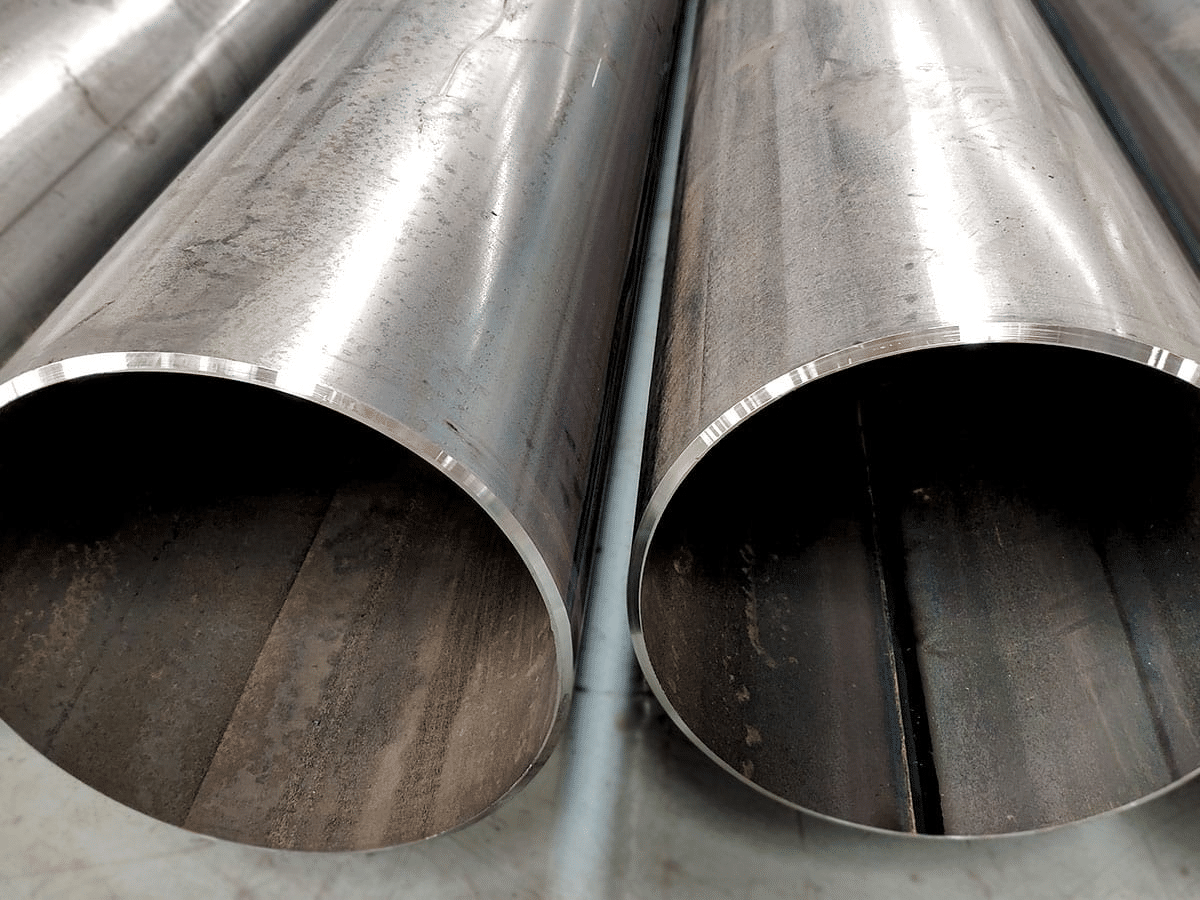
For circular hollow sections, sizes are specified by outside diameter and wall thickness. The standard also contains dimensional and mass information for rectangular and square hollow sections. The actual sizes available from a manufacturer can vary according to production equipment and product range, so a listed size should not automatically be assumed to be available from every supplier.
For procurement, a complete specification should normally identify:
- Section type, such as CHS
- Outside diameter or section dimensions
- Nominal wall thickness
- Steel grade
- Required length
- Surface condition or coating requirements where applicable
- Inspection and testing requirements
- Required material documentation
This approach helps ensure that the ordered product corresponds to the structural design rather than relying on nominal pipe size alone.
AS/NZS 1163 Steel Grades
AS/NZS 1163 includes C250, C350, and C450 grades, with corresponding L0 grades where the low-temperature impact requirements apply. The minimum yield strengths are 250 MPa, 350 MPa, and 450 MPa respectively, while the minimum tensile strengths are 320 MPa, 430 MPa, and 500 MPa.
| Grade | Minimum Yield Strength | Minimum Tensile Strength |
| C250 | 250 MPa | 320 MPa |
| C350 | 350 MPa | 430 MPa |
| C450 | 450 MPa | 500 MPa |
For C250L0, C350L0, and C450L0, the standard specifies Charpy V-notch impact testing at 0°C, with the required absorbed energy specified by the standard.
The appropriate grade should be selected according to the structural design and project requirements. A higher nominal yield strength does not by itself mean that one grade is suitable for every application.
CHS, SHS and RHS Under AS/NZS 1163
AS/NZS 1163 covers three main hollow-section configurations:
- CHS — Circular Hollow Sections
- SHS — Square Hollow Sections
- RHS — Rectangular Hollow Sections
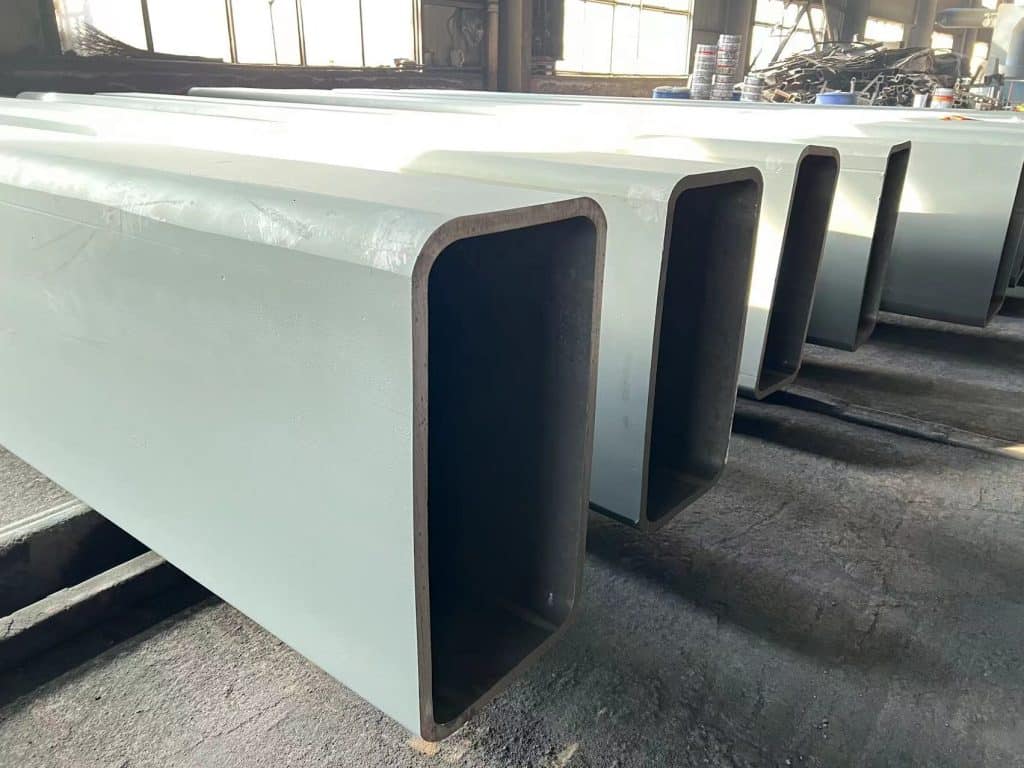
CHS is commonly selected where a circular cross-section is appropriate for the structural design, while SHS and RHS provide different geometric characteristics for structural members and connections.
For a project requiring circular steel pipe, the procurement specification should clearly state that CHS is required. This is particularly important because the term “steel pipe” can refer to products covered by different standards depending on whether the application is structural, pressure-related, water-related, or intended for another service.
How to Select the Correct Australian Steel Pipe Size
Selecting a steel pipe size should start with the structural requirements rather than the nominal diameter alone.
- Confirm the applicable standard
Determine whether the project requires AS/NZS 1163 or another pipe or hollow-section standard. AS/NZS 1163 is specifically concerned with cold-formed structural steel hollow sections.
- Confirm the section dimensions
For CHS, the outside diameter and wall thickness should be specified. For SHS and RHS, the outside dimensions and wall thickness should be identified.
- Select the required grade
The structural engineer should establish the required strength grade based on the design loads and applicable design standard.
- Confirm testing and documentation
Material documentation should correspond to the ordered product and the contractual requirements. Chemical composition, mechanical properties, dimensional inspection, impact testing where applicable, and other required inspection records should be reviewed before acceptance.
- Check actual product availability
Standard dimensions and project-specific requirements should be confirmed with the manufacturer before issuing a purchase order. This avoids selecting a theoretical size that is not available within the required production range.
AS/NZS 1163 Compared With Other Structural Hollow Section Standards
Australian and New Zealand projects may involve international suppliers, so procurement teams sometimes compare AS/NZS 1163 with standards such as ASTM A500 or EN 10219.
These standards should not be treated as automatically interchangeable. They have different requirements for grades, dimensions, manufacturing, testing, tolerances, and documentation.
| Standard | Typical Product Scope |
| AS/NZS 1163 | Cold-formed structural steel hollow sections |
| ASTM A500/A500M | Cold-formed welded and seamless carbon steel structural tubing |
| EN 10219 | Cold-formed welded structural hollow sections of non-alloy and fine grain steels |
A similar nominal size or similar yield strength does not automatically establish technical equivalence. If an alternative standard is proposed, the project engineer, purchaser, and relevant approval authority should confirm its acceptability before substitution.
Documentation and Quality Verification
For structural steel procurement, the material certificate should be traceable to the supplied product and should contain the information required by the applicable specification and purchase order.
Depending on the project, documentation may include:
- Material test certificates
- Heat or batch identification
- Chemical analysis
- Tensile test results
- Impact test results where required
- Dimensional inspection records
- Product marking and traceability records
- Applicable inspection reports
EN 10204 defines types of inspection documents used for metallic products. An EN 10204 inspection document should therefore be understood as documentation of inspection results rather than as a replacement for the product standard itself.
Choosing Steel Pipe for Australian Projects
The correct steel pipe size cannot be determined from diameter alone. A suitable specification should connect the section dimensions with the applicable standard, grade, design requirements, testing, and documentation.
For Australian and New Zealand structural projects, AS/NZS 1163 provides the relevant framework when cold-formed structural steel hollow sections are specified. The required CHS, SHS, or RHS dimensions and grade should always be confirmed against the project drawings and specifications before procurement.
LONGMA has more than 20 years of steel pipe manufacturing experience and focuses on round ERW and LSAW steel pipe. With a factory area of approximately 230,000 m² and annual output exceeding 500,000 tons, LONGMA supports steel pipe procurement for different international project requirements. For project-specific dimensions, grades, testing, and documentation requirements, contact the technical team at info@ilongma.com.
Frequently Asked Questions
What is AS/NZS 1163?
AS/NZS 1163:2016 is the Australian and New Zealand standard for cold-formed structural steel hollow sections. It covers CHS, SHS, and RHS products and specifies requirements including dimensions, chemical composition, mechanical properties, testing, and marking.
What grades are included in AS/NZS 1163?
The standard includes C250, C350, and C450 grades, together with the corresponding L0 grades. The minimum yield strengths are 250 MPa, 350 MPa, and 450 MPa respectively.
Does AS/NZS 1163 cover circular steel pipe?
AS/NZS 1163 covers circular hollow sections (CHS), as well as square and rectangular hollow sections. Whether a particular pipe should be specified to AS/NZS 1163 depends on its structural application and the project requirements.
Are AS/NZS 1163 and ASTM A500 interchangeable?
No. The two standards have different requirements. Any substitution should be reviewed and approved according to the applicable project specification and engineering requirements.