- 1. What Is Pipe Beveling?
- 2. Why Is Carbon Steel Pipe Beveled?
- 3. What Determines the Bevel Angle?
- 4. Mechanical Beveling and Thermal Cutting
- 5. Pipe Beveling and Welding Quality
- 6. What Should Buyers Specify When Ordering Beveled Carbon Steel Pipe?
- 7. Can Carbon Steel Pipe Be Used Without a Bevel?
- 8. Beveling Carbon Steel Pipe for Pipeline Applications
- 9. Quality Inspection of Beveled Pipe Ends
- 10. Conclusion
- 11. Frequently Asked Questions
Carbon steel pipe is often beveled before it is joined by butt welding. Pipe beveling prepares the pipe end with the geometry required for the specified welding joint. Proper end preparation provides suitable access for the welding process and helps establish the required root opening, groove geometry, and weld profile.
ASME B16.25, Buttwelding Ends, covers the preparation of buttwelding ends of piping components. It includes requirements for welding bevels, internal and external shaping of heavy-wall components, and dimensions and tolerances for different types of end preparation.
The exact bevel configuration should not be selected from a single universal angle. It depends on the applicable standard, pipe dimensions, wall thickness, welding procedure, joint design, and project requirements.
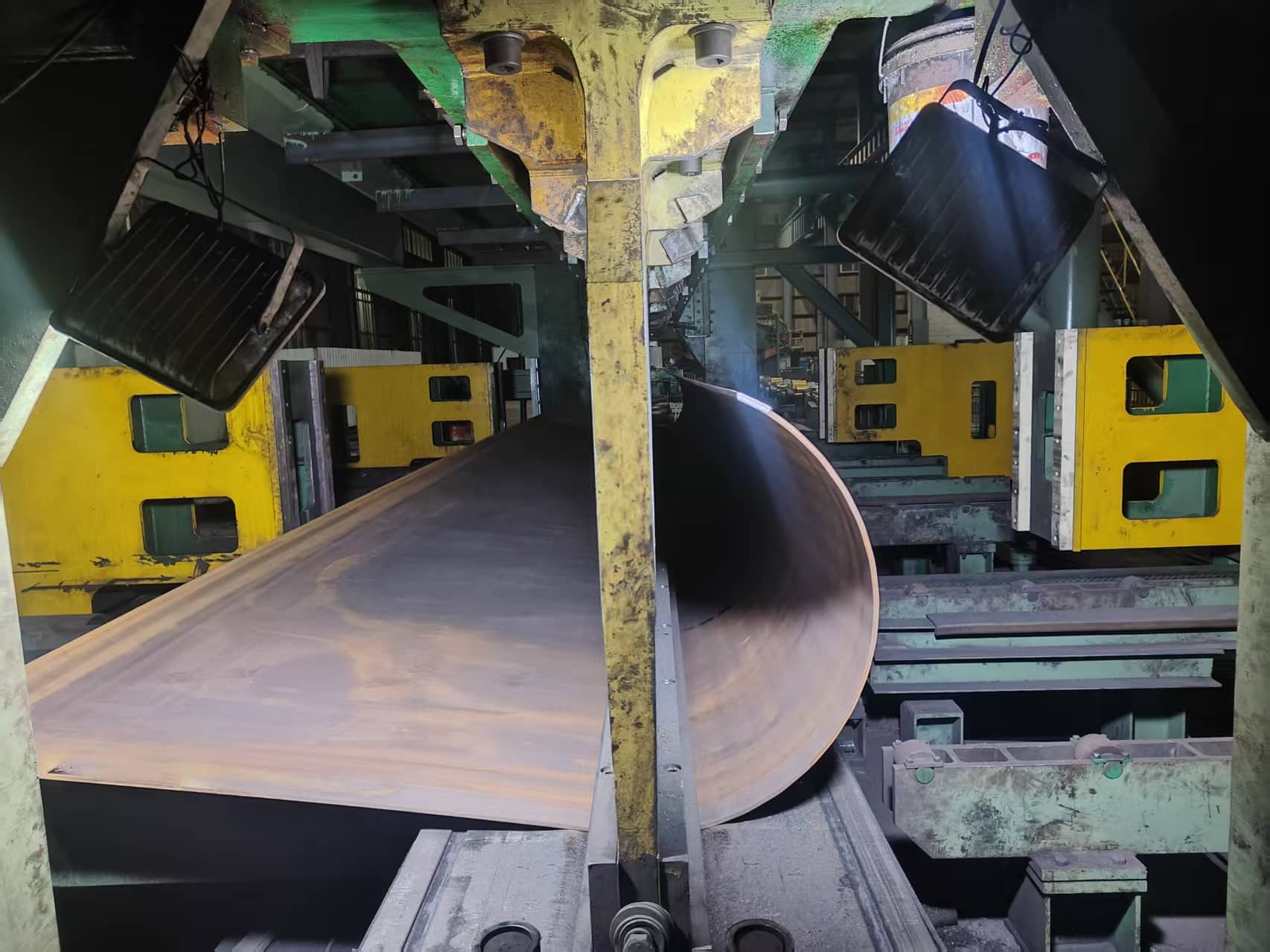
What Is Pipe Beveling?
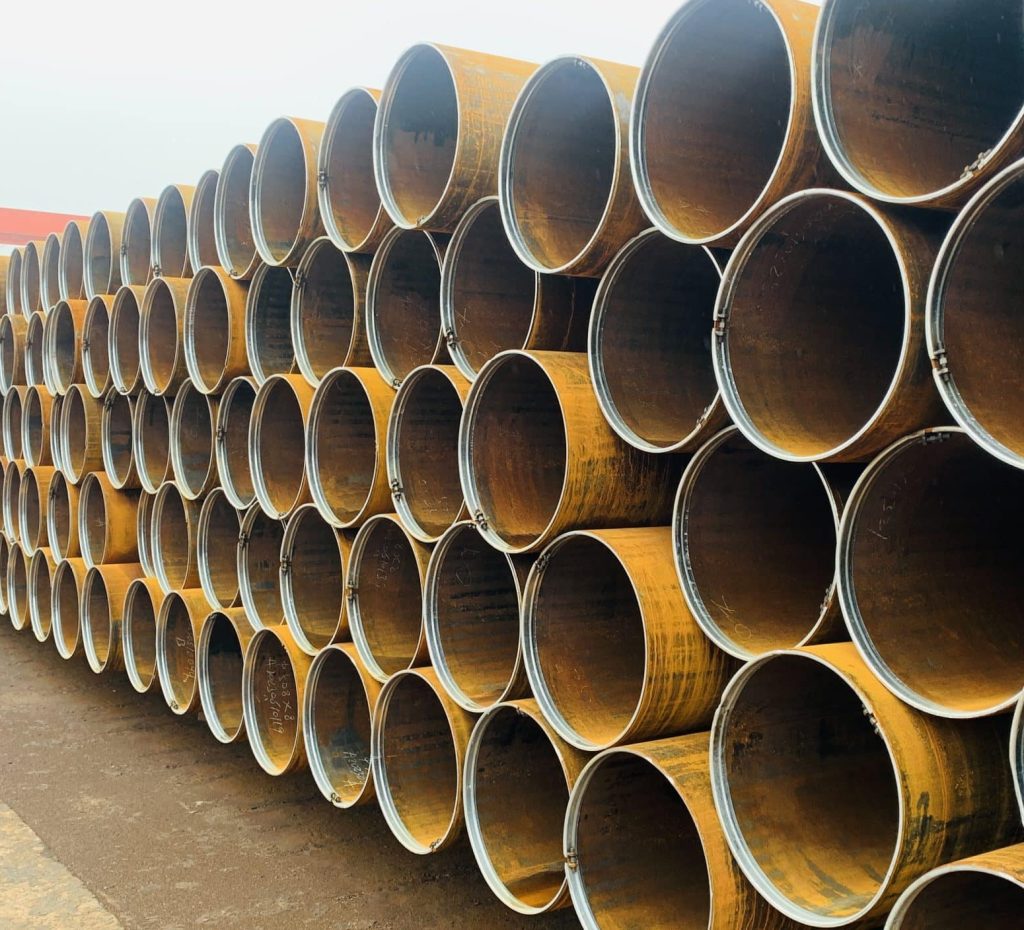
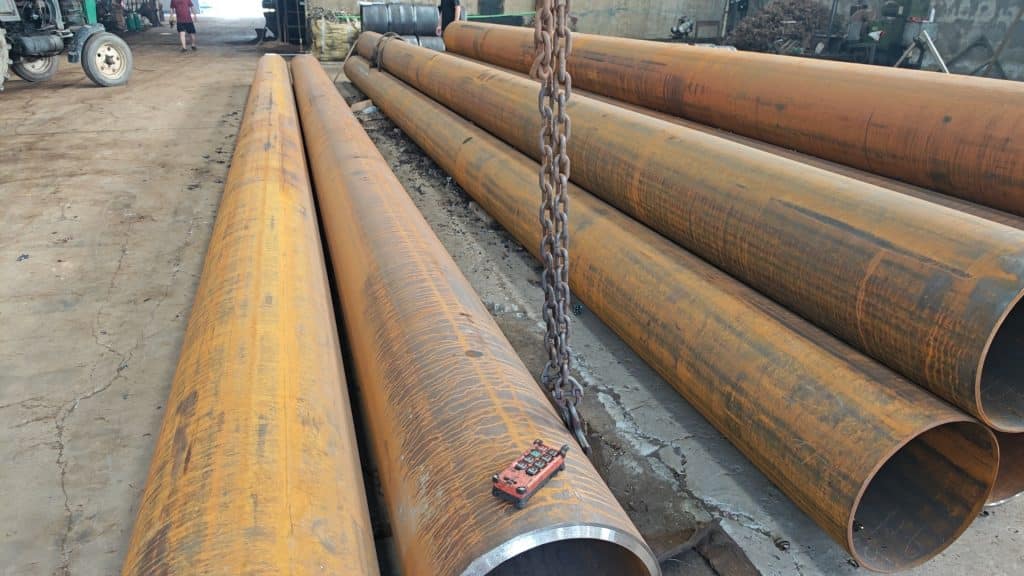
Pipe beveling is the process of machining or cutting the end of a pipe to create a specified weld preparation.
A square-cut pipe end provides a different joint geometry from a beveled end. For butt welding, the end preparation must provide sufficient access for the welding process and allow the required weld to be deposited through the joint.
Common weld-end preparations include different groove configurations, depending on the application and welding procedure. The selected geometry may include a bevel angle, root face, root opening, and other dimensions.
ASME B16.25 provides requirements for buttwelding end preparation, including welding bevels and the preparation of internal ends.
Why Is Carbon Steel Pipe Beveled?
- To Prepare the Pipe for Butt Welding
The primary purpose of beveling is to create the required end geometry for a butt-welded joint.
A properly prepared joint allows the welding procedure to achieve the required weld penetration and fusion. The actual joint geometry should correspond to the qualified welding procedure and applicable project requirements.
- To Provide Access to the Root of the Joint
For many butt-welding applications, the weld must be deposited through the joint from the pipe end. A suitable groove provides the access required for the welding process.
The required groove configuration depends on factors such as wall thickness, welding process, joint design, and whether backing or other welding arrangements are used.
- To Control the Weld Joint Geometry
Bevel angle, root face, and root opening affect the geometry of the weld joint. Incorrect dimensions can make it more difficult to achieve the required welding parameters and weld quality.
For this reason, pipe end preparation should be controlled during manufacturing and checked against the applicable specification before welding.
- To Support Consistent Welding
Consistent pipe-end preparation is particularly important when many pipe joints must be welded under the same welding procedure.
When the pipe ends have consistent dimensions, welding personnel can work with a more predictable joint configuration. This can be important for automated or mechanized welding as well as conventional welding operations.
What Determines the Bevel Angle?
There is no single bevel angle that applies to every carbon steel pipe.
The required bevel geometry may depend on:
- Pipe wall thickness
- Pipe diameter
- Welding process
- Welding procedure specification
- Joint design
- Root opening
- Root face
- Backing arrangement
- Applicable product standard
- Applicable project specification
ASME B16.25 establishes requirements for buttwelding ends, but the final end preparation used on a project should also be consistent with the applicable welding procedure and engineering requirements.
For this reason, a statement such as “all carbon steel pipe should have a 37.5° bevel” is not appropriate as a general rule.
Mechanical Beveling and Thermal Cutting
Pipe ends can be prepared using different manufacturing methods.
Mechanical Beveling
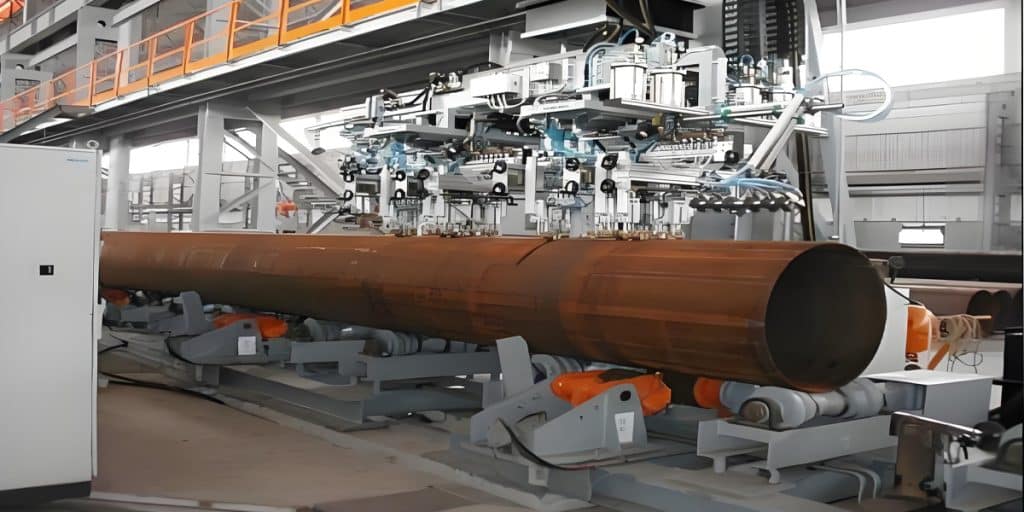
Mechanical beveling uses machining or other mechanical methods to produce the specified pipe-end geometry. It can provide controlled dimensions and a suitable surface for the specified welding preparation.
Thermal Cutting
Thermal cutting methods can also be used in appropriate circumstances. When thermal cutting is used, the resulting surface condition and heat-affected area should be considered in accordance with the applicable welding procedure and project requirements.
The appropriate preparation method depends on the pipe specification, manufacturing process, welding requirements, and quality requirements of the project.
Pipe Beveling and Welding Quality
Pipe beveling is only one part of weld preparation. A properly beveled pipe does not by itself guarantee a satisfactory welded joint.
Welding quality also depends on:
- Qualified welding procedures
- Qualified welding personnel where required
- Correct joint fit-up
- Appropriate welding parameters
- Suitable welding consumables
- Surface cleanliness
- Preheating or heat treatment where required
- Required non-destructive examination
ASME BPVC Section IX establishes requirements related to the qualification of welding, brazing, and fusing procedures and personnel within its scope.
Therefore, pipe beveling should be considered as one element of a controlled welding process rather than as an independent guarantee of weld quality.
What Should Buyers Specify When Ordering Beveled Carbon Steel Pipe?
When a project requires beveled pipe ends, the purchase specification should clearly identify the required end preparation.
Important information may include:
- Pipe material specification
- Grade
- Outside diameter
- Wall thickness
- Pipe length
- End preparation
- Bevel geometry
- Root face
- Root opening where applicable
- Applicable welding or project specification
- Inspection requirements
- Surface condition
- Coating cutback requirements where applicable
The supplier should manufacture and inspect the pipe ends according to the agreed specification.
For coated pipeline pipe, the relationship between the pipe-end bevel and coating cutback should also be addressed in the project coating specification. The exposed weld area needs to remain suitable for welding, while the coating system must be restored after welding according to the applicable coating procedure.
Can Carbon Steel Pipe Be Used Without a Bevel?
Yes, depending on the joint type and application.
Not every pipe connection is a butt-welded connection. Different joining methods may use different end configurations. For example, socket-welded, threaded, flanged, or other connection arrangements do not necessarily require the same pipe-end preparation as a butt-welded joint.
When two pipe ends are to be joined by butt welding, the required end preparation should be established according to the applicable standard and welding procedure.
Therefore, whether a carbon steel pipe needs beveling depends primarily on the intended connection method and project requirements.
Beveling Carbon Steel Pipe for Pipeline Applications
In pipeline construction, pipe ends are commonly prepared for welding because individual pipe joints are assembled through circumferential butt welding.
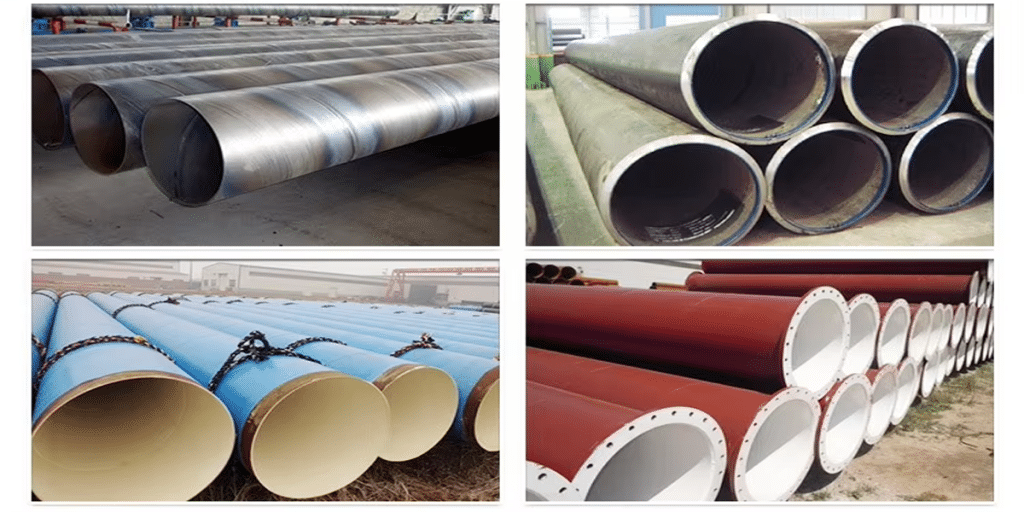
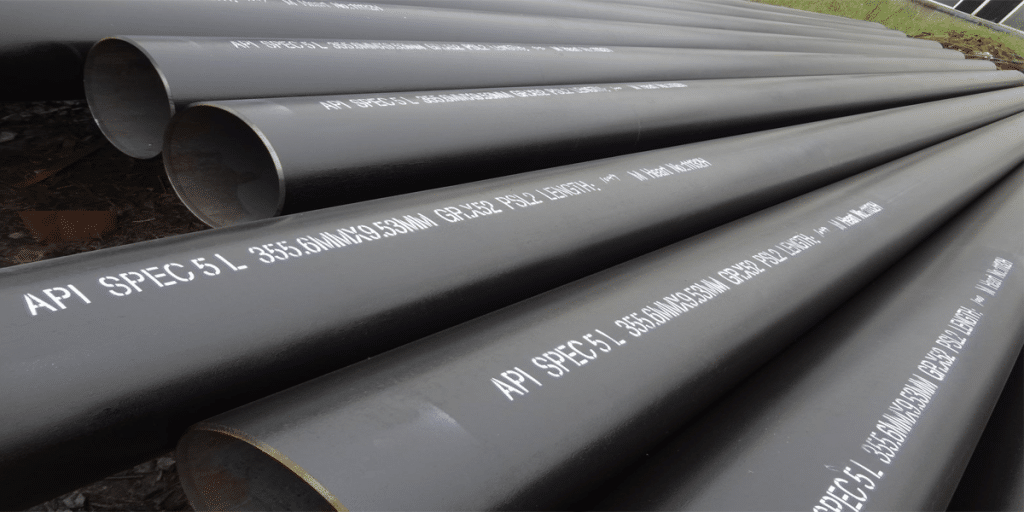
For line pipe manufactured to a specification such as API 5L, the pipe-end preparation should comply with the applicable product and project requirements. The welding procedure then establishes the requirements for joint preparation and welding.
The pipe grade, diameter, wall thickness, welding process, and project specification should all be considered when determining the appropriate end preparation.
Quality Inspection of Beveled Pipe Ends
Before shipment or installation, the prepared pipe ends can be inspected according to the applicable inspection specification.
Typical checks may include:
- Pipe outside diameter
- Wall thickness
- Bevel geometry
- Root face
- End condition
- Surface condition
- Pipe identification and traceability
Additional inspection or non-destructive examination should be carried out when required by the applicable product specification or purchase order.
The inspection requirements should be established before production so that the supplier and purchaser have the same acceptance criteria.
Conclusion
Carbon steel pipe is beveled primarily to prepare the pipe end for a specified butt-welding joint. A suitable bevel provides the required weld groove geometry and helps the welding process achieve the specified joint configuration.
The bevel angle and other end-preparation dimensions should not be treated as universal values. They depend on the applicable standard, pipe dimensions, welding procedure, joint design, and project requirements.
ASME B16.25 provides requirements for buttwelding end preparation, including welding bevels and related dimensions and tolerances.
For carbon steel pipe procurement, buyers should specify the material, dimensions, end preparation, applicable welding requirements, inspection requirements, and documentation clearly. This helps ensure that the delivered pipe is suitable for the intended fabrication and installation process.
LONGMA has more than 20 years of steel pipe manufacturing experience and produces round ERW and LSAW steel pipe. With a factory area of approximately 230,000 m² and annual output exceeding 500,000 tons, LONGMA provides carbon steel pipe solutions for international project requirements. For pipe dimensions, grades, end preparation, inspection, and other project specifications, contact info@ilongma.com.
Frequently Asked Questions
What is the purpose of beveling carbon steel pipe?
Beveling prepares the pipe end for a specified butt-welding joint. It creates the required groove geometry for the welding process.
Is every carbon steel pipe required to be beveled?
No. Beveling requirements depend on the connection method and project specification. Butt-welded joints generally require an appropriate end preparation, while other connection methods may use different end configurations.
Does ASME B16.25 specify pipe beveling?
ASME B16.25 covers the preparation of buttwelding ends of piping components, including welding bevels and related dimensions and tolerances.
Is there one standard bevel angle for carbon steel pipe?
No. The required bevel geometry depends on the applicable standard, wall thickness, joint design, welding procedure, and project requirements.
What should be checked on a beveled pipe end?
The applicable inspection may include bevel geometry, root face, pipe dimensions, surface condition, end condition, and product traceability. The exact acceptance criteria should come from the applicable specification and purchase order.