- 1. What Determines X52 Pipe Pressure Capacity?
- 2. Why There Is No Single Pressure Rating for X52
- 3. API 5L X52 PSL1 and PSL2
- 4. Chemical Composition and Weldability
- 5. Manufacturing Route, Inspection, and Corrosion Protection
- 6. Purchasing X52 Line Pipe
- 7. Conclusion
- 8. Frequently Asked Questions
- 9. LONGMA Steel Pipe
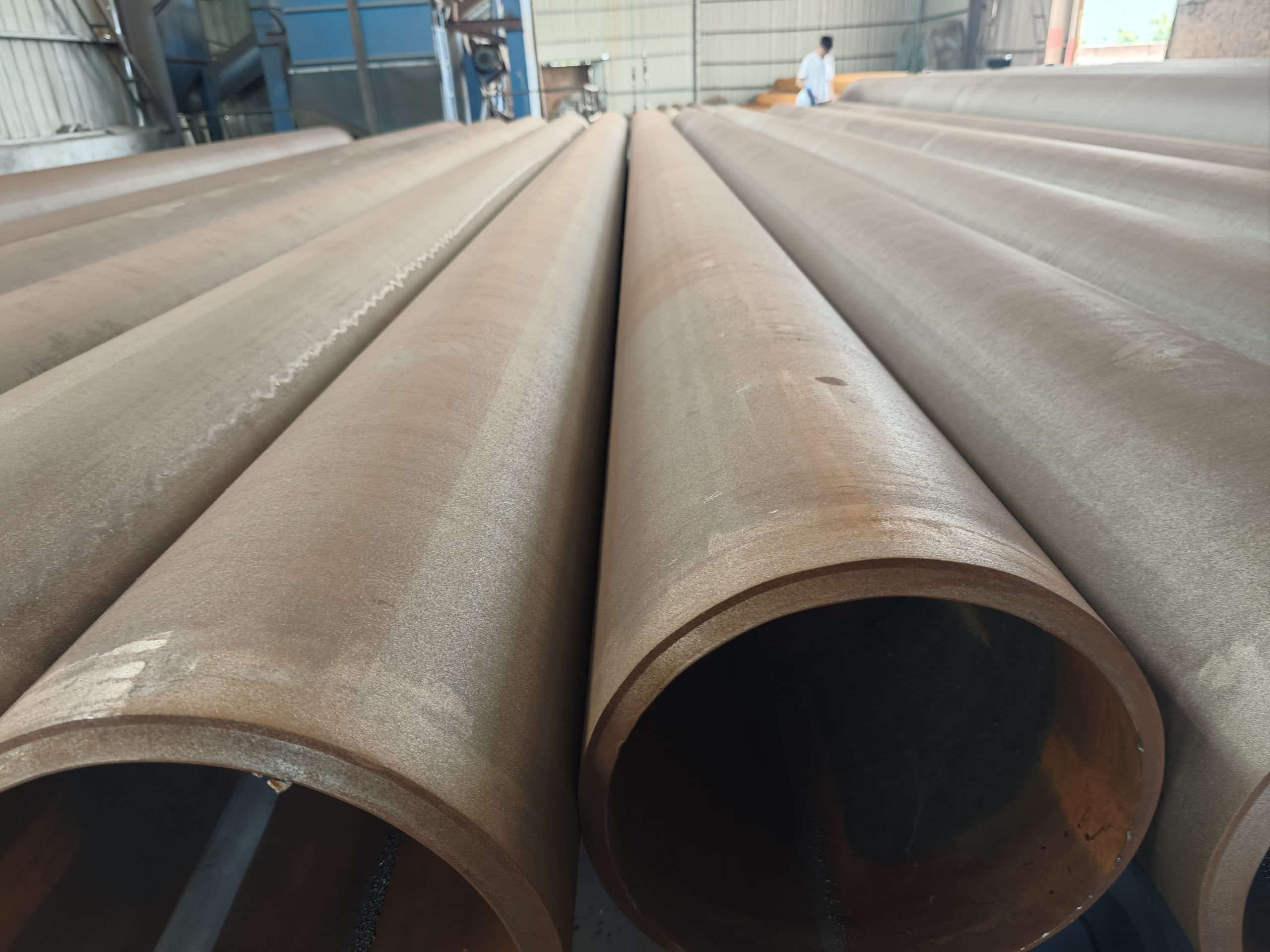
API 5L X52 is a line-pipe steel grade with a specified minimum yield strength of 52 ksi (approximately 359 MPa). The applicable edition of API Specification 5L and the ordered product specification level should be checked when confirming mechanical-property requirements. The grade name alone does not define a single pressure rating.
The pressure that a pipeline may operate at depends on outside diameter, wall thickness, material properties, design code, design factor, weld-joint factor where applicable, temperature effects, corrosion allowance, manufacturing tolerances, and other project conditions. A pressure value should therefore be presented only with the assumptions and calculation method clearly stated.
What Determines X52 Pipe Pressure Capacity?
Pipeline pressure design is not determined by yield strength alone. Engineers first identify the governing pipeline code and the applicable design conditions. They then use the code’s prescribed equations and factors to determine required wall thickness or allowable pressure. The calculation may need to account for design factor, longitudinal joint factor, temperature derating, corrosion allowance, external loads, and other relevant conditions.
A simplified Barlow-type relationship is sometimes used to explain the influence of pressure, diameter, wall thickness, and material strength. However, simplified equations should not be presented as a complete ASME B31.4 or ASME B31.8 design calculation unless all applicable code requirements and definitions have been addressed. Units must be consistent, and nominal wall thickness should not be treated as fully available for pressure containment when tolerances or corrosion allowance apply.
Why There Is No Single Pressure Rating for X52
Two X52 pipes can have different pressure capacities if their diameters, wall thicknesses, product specifications, or design conditions differ. A thicker wall generally permits a higher calculated pressure under otherwise equivalent conditions, while a larger diameter can change the pressure design result. The governing design code and its factors also affect the result.
For that reason, an article or quotation should not assign a universal operating-pressure range to a pipe based only on a nominal diameter and wall thickness. Any worked example should state the exact outside diameter, nominal and design wall thickness, applicable code and edition, design factor, joint factor, temperature factor, corrosion allowance, and other assumptions. The result should then be checked by a qualified pipeline engineer against the complete governing requirements.
API 5L X52 PSL1 and PSL2
API 5L includes product specification levels PSL1 and PSL2. The requirements differ in areas such as chemical composition, mechanical properties, testing, and inspection. The exact requirements depend on the applicable edition, product form, grade, and order conditions. The current purchase specification and the relevant API 5L tables and clauses should be consulted rather than relying on a generalized summary.
PSL2 should not be treated as automatic proof that a pipe is suitable for every severe or sour-service environment. Where wet hydrogen sulfide or other demanding service conditions are present, the project must specify the applicable material-selection and qualification requirements. API 5L provisions for sour-service line pipe and ISO 15156 should be considered where they fall within the project’s scope. Required testing and acceptance criteria must be defined by the applicable standard and purchase specification.
Chemical Composition and Weldability
Weldability depends on more than one carbon-equivalent value. Material chemistry, wall thickness, ambient conditions, welding process, hydrogen control, restraint, heat input, and the qualified welding procedure can all affect the need for preheating and other precautions. A single carbon-equivalent threshold should not be used to guarantee that preheating is unnecessary.
Field welding should follow a qualified welding procedure and the applicable project requirements. The procedure should define joint preparation, consumables, preheat and interpass controls where required, and inspection. Applicable qualification standards and project specifications should be identified in the construction documents.
Manufacturing Route, Inspection, and Corrosion Protection
ERW and LSAW are different manufacturing routes, and the available dimensions depend on the manufacturer’s equipment and production range. Selection should be based on the required diameter, wall thickness, steel grade, manufacturing specification, inspection requirements, and project qualification criteria—not on a universal size boundary between the two processes.
Inspection requirements must be taken from the applicable edition of API 5L and the purchase specification. The required non-destructive examination method and extent can depend on pipe type and applicable requirements; it is not accurate to state that every X52 pipe universally requires the same combination of full-length UT, end RT, and other testing. Hydrostatic testing and other inspection obligations should likewise be verified against the governing requirements.
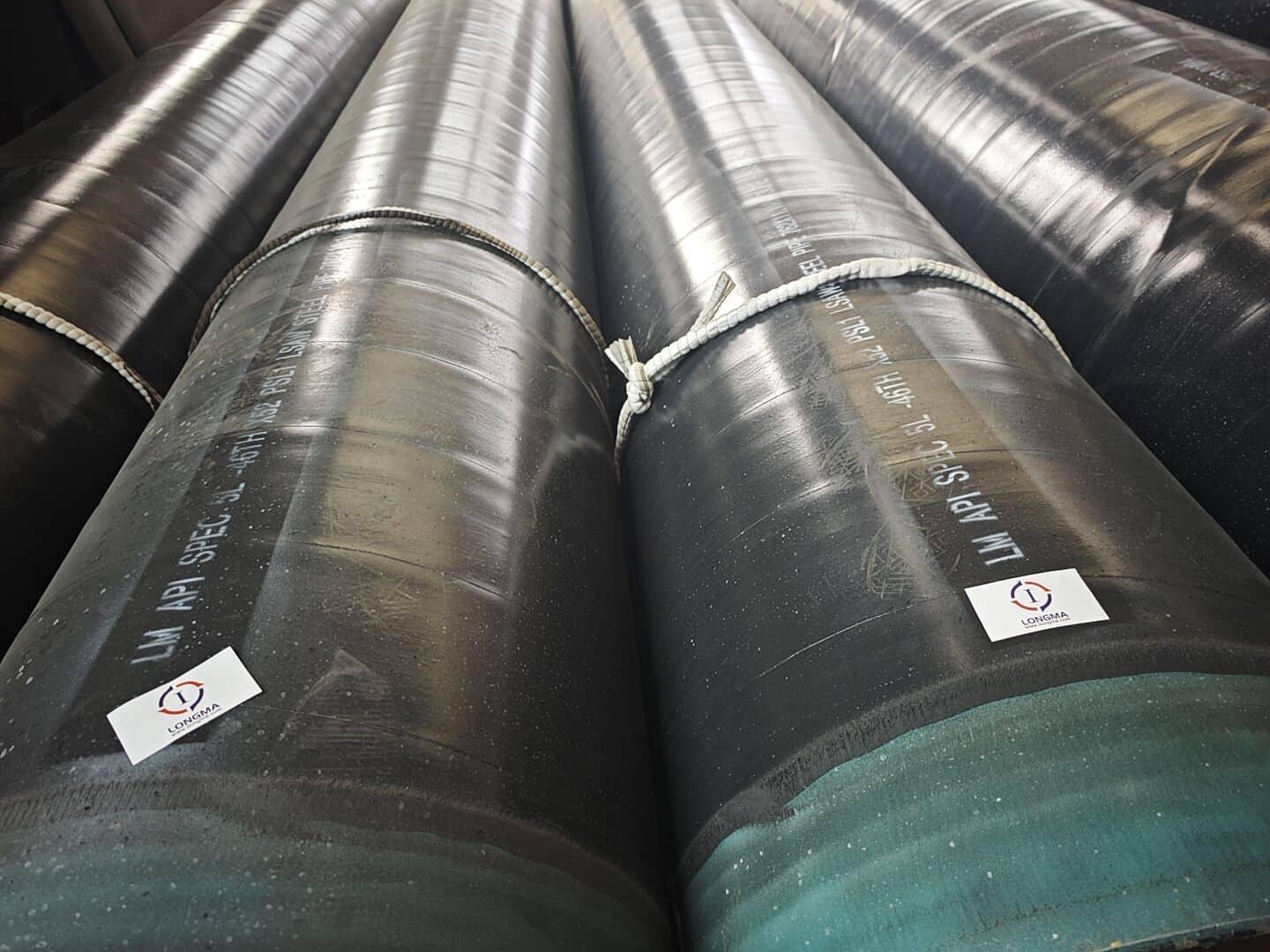
External coatings such as 3LPE or fusion-bonded epoxy may be selected as part of a corrosion-control system. Their suitability and expected performance depend on the coating specification, surface preparation, application quality, operating conditions, handling, and inspection. Coating alone should not be used to promise a fixed service life. Cathodic protection and monitoring may also form part of the pipeline’s corrosion-management strategy where appropriate.
Purchasing X52 Line Pipe
Before ordering X52 line pipe, confirm the following items in the enquiry and purchase order:
- Applicable edition of API 5L, grade, and PSL.
– Outside diameter, nominal wall thickness, length, and dimensional tolerances.
– Manufacturing process and any project qualification requirements.
– Design conditions and any additional material or sour-service requirements.
– Required chemical and mechanical tests, non-destructive examination, and hydrostatic testing.
– Inspection documents, traceability, marking, and any third-party inspection requirements.
– Coating or lining specification, where applicable.
EN 10204 Type 3.1 or Type 3.2 inspection documents should be requested where required by the contract. These document types should not be confused with product certification or an API Monogram licence. If API Monogram status is required, the purchaser should verify the supplier’s current authorization and its scope independently.
Conclusion
API 5L X52 is a line-pipe grade, not a fixed pressure class. Its pressure capacity must be calculated for the actual pipe dimensions and the governing pipeline code, using the applicable design factors and project conditions. PSL, sour-service requirements, welding, inspection, and corrosion protection must be specified and verified separately as appropriate.
For a dependable procurement decision, align the design basis, product specification, inspection plan, and documentation requirements before placing an order. Avoid relying on generic pressure ranges or assuming that a steel grade or product specification level alone guarantees suitability for a particular pipeline.
Frequently Asked Questions
What is the pressure rating of API 5L X52 pipe?
There is no single rating for all X52 pipes. It depends on pipe diameter, wall thickness, the governing design code, design factors, temperature, corrosion allowance, and other project conditions.
Does PSL2 automatically make X52 suitable for sour service?
No. Sour-service suitability depends on the applicable material-selection requirements, service environment, project specification, and required qualification or testing. PSL2 alone is not a universal guarantee.
Are ERW and LSAW X52 pipes interchangeable?
Not automatically. Both may be available for line-pipe applications, but the selected product must meet the specified dimensions, manufacturing requirements, grade, inspection scope, and project qualification criteria.
What documents should be checked before purchase?
Check the required material inspection documents, traceability, test results, product-standard conformity, and any project-specific inspection or certification requirements. Confirm API Monogram authorization separately if it is required for the order.
LONGMA Steel Pipe
LONGMA manufactures round steel pipe products using ERW and LSAW processes. For an X52 line-pipe enquiry, provide the required API 5L edition, PSL, dimensions, manufacturing route, inspection scope, and any project-specific service or coating requirements so that the applicable product range and documentation can be confirmed. LONGMA’s factory area is 230,000 m² and its annual output exceeds 500,000 tonnes. Product availability, certifications, and order-specific compliance should be confirmed with the company.
For technical and commercial enquiries, contact info@ilongma.com.